Step into one of the world’s most enchanting urban labyrinths on a walking tour of Fes Medina. Unlike sterile museum exhibits, this UNESCO World Heritage site pulses with life—ancient traditions coexist seamlessly with daily routines that have remained largely unchanged for centuries. The Fes Medina is the world’s largest car-free urban area, home to over 200,000 residents who navigate its 9,000 winding alleyways with the ease of people who’ve learned every shortcut from birth.
A guided walking tour cuts through the confusion that overwhelms first-time visitors. Without local knowledge, many travelers spend hours doubling back on unmarked streets, their phone GPS rendered useless in the dense urban fabric. With an experienced guide, however, these same streets transform from a source of frustration into gateways of discovery.
Why Fes Walking Tours Matter: Beyond the Typical Tourist Experience
The Fes Medina presents a genuine challenge to visitors: how to explore without becoming hopelessly lost or missing the city’s most meaningful landmarks. While self-guided exploration is certainly possible, it rarely delivers the depth of understanding that a local guide provides.
Here’s what makes guided Fes walking tours genuinely valuable:
Authentic Navigation Without Frustration
The medina’s labyrinthine design wasn’t created for modern navigation—it evolved for defensive purposes and crowd management. Your guide knows not just the main arteries, but the quieter passages where workshops and family homes cluster away from commercial zones. This distinction matters because it separates genuine cultural immersion from the sanitized tourist trail.
Access to Hidden Layers
Tourist maps highlight the obvious attractions. Local guides reveal the context that brings those attractions to life. They point out why a particular fountain was positioned in a certain square, which family has operated a leather workshop for five generations, or what specific trade flourished in each neighborhood. This narrative dimension transforms sightseeing into storytelling.
Responsible Cultural Exchange
Quality guides operate as cultural ambassadors rather than commercial facilitators. The best tours explicitly avoid pushing you into overpriced shops or coercive purchase situations. Instead, they facilitate genuine conversations with artisans, allowing you to understand why traditional methods persist in a modern world.
What You’ll Experience: An Hour-by-Hour Breakdown
Meeting Your Guide
Your guide collects you from a predetermined point—typically the iconic blue Bab Boujloud gate or your hotel. Rather than launching directly into facts, the best guides begin by reading the group. Are you interested primarily in history? Architecture? Practical craftsmanship? Food culture? Your guide adjusts the day’s narrative focus accordingly, rather than delivering a one-size-fits-all monologue.
The Royal Palace and Historical Markers
Walking deeper into the medina, you’ll reach the external walls of Fes’s Royal Palace—the most visible symbol of royal authority in the old city. Its famous seven bronze doors and intricate zellige tilework represent the pinnacle of Moroccan craftsmanship. While non-Muslims cannot enter, your guide explains the palace’s significance in Fes’s evolution from a medieval trading hub to an imperial capital.
Nearby stands the Mellah, the historic Jewish quarter. This neighborhood contains a crucial but often overlooked chapter in Moroccan history: the coexistence and eventual displacement of Moroccan Jewish communities. A thoughtful guide frames this honestly, neither romanticizing historical tolerance nor glossing over documented tensions.
The Heart of Religious and Intellectual Life
The Bou Inania Madrasa stands as perhaps the medina’s most stunning architectural achievement. Built in the 14th century, this Islamic school survives as a masterpiece of carved cedar, intricate plasterwork, and serene courtyards. Even non-Muslim visitors can enter and experience the meditative quality that Islamic architecture intentionally cultivates.
Equally important (though visible only from the exterior) is the Al-Qarawiyyin Mosque and University—recognized by Guinness as the world’s oldest continuously operating institution of higher learning, founded in 859 CE. Your guide contextualizes what this means: while European universities were still centuries from existence, scholars here were already debating philosophy, mathematics, and theology.
Artisan Quarters and Living Heritage
Rather than rushing past workshops, quality guides pause to observe craftsmanship in action. Blacksmiths hammer copper; potters work clay at hand-wheels unchanged for centuries; weavers operate looms that appear medieval by modern standards. The crucial point: these aren’t performances for tourists. These are working trades where younger generations still apprentice with elders, maintaining skills through genuine economic necessity rather than folkloric preservation.
Your guide should explain the economics honestly. Why does traditional copper work survive despite cheaper industrial alternatives? Largely because wealthy Moroccan patrons and international buyers value handmade authenticity. This economic reality is what keeps traditions alive, rather than government cultural subsidies.
The Tanneries: Sensory and Historical Reality
The Chouara and Diwane tanneries represent Fes’s most famous (and most infamous) attraction. Dating to the 11th century, these open-air vats use vegetable dyes and natural tanning methods that modern industrial tanneries abandoned decades ago.
Your guide will hand you fresh mint leaves—not as a gimmick for photos, but because the ammonia and other chemical odors are genuinely intense. Observing leather being processed in these vats is visually striking: workers stand waist-deep in colored liquid, manipulating hides with practiced efficiency. This isn’t a degrading profession—tanners occupy respected positions in Fes society and command reasonable wages.
What makes this moment significant? It’s direct exposure to pre-industrial production at scale. Most travelers encounter handicraft only in finished form. Here, you witness the messy, olfactory, labor-intensive reality of creating luxury goods without modern machinery.
Lunch and Free Exploration
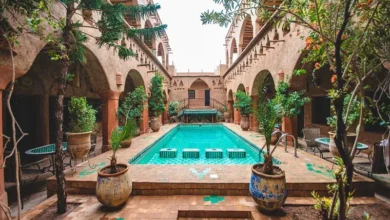
Rather than dictating a specific restaurant, good guides recommend based on your preferences and group size. They may suggest a family-run establishment in a traditional riad where you’ll eat tagine or couscous surrounded by locals, or a more tourist-friendly venue if you prefer easier communication. This flexibility distinguishes genuine local knowledge from scripted tours.
After lunch, whether you return to your guide or explore independently is your choice. This freedom matters because it respects that travel styles vary—some people thrive on structure; others need unscheduled time for serendipitous discovery.
Foundouks and Lesser-Known Monuments
Before concluding, your guide leads you through a traditional foundouk (caravanserai)—ancient hostelries where merchants and their animals once lodged during trade expeditions. These structures reveal how the medieval Fes Medina functioned as a commercial clearing house for trans-Saharan trade. Understanding this economic history transforms the city from an aesthetic attraction into a window onto forgotten economic systems.
You’ll also pass working bakeries where shared communal ovens serve entire neighborhoods—a tradition preserved because it remains economically viable and socially functional, not because tourists expect it.
Return and Practical Guidance
As your tour concludes, your guide offers practical information: how to navigate Moroccan trains versus buses, optimal seasons for visiting (generally March–May and September–November), and honest assessments of what to expect regarding hassling, safety, and cultural differences.
Why Professional Guides Elevate the Experience
- Safety and Practical Navigation: Yes, independent travelers can navigate the medina alone, but doing so consumes time and generates frustration. Professional guides compress two hours of lost turns into a cohesive narrative journey.
- Context That Transforms Observation: Standing in front of the Bou Inania Madrasa, you can observe architectural details independently. Understanding why specific geometric patterns appear, what religious principles they encode, and how this building compared to contemporary Islamic architecture elsewhere—that depth requires expertise.
- Genuine Cultural Connection: Your guide’s relationships with local artisans, shop owners, and restaurant proprietors facilitate conversations that independent visitors rarely access. When a guide introduces you to a carpet weaver and you subsequently spend 20 minutes discussing traditional dyeing techniques, you’re experiencing the medina as something other than a backdrop for photographs.
- Responsible Tourism: Ethical guides actively discourage exploitative interactions. They refuse to pressure you toward purchases, discourage tipping street performers who aggressively target tourists, and navigate sensitive topics (like the Mellah’s history or current gender dynamics in traditional workshops) with nuance rather than superficial romanticism.
What’s Included and What Costs Extra
- Professional English-speaking local guide
- 3–4 hour structured walking tour
- Hotel pickup and drop-off (depending on location)
- Access to artisan workshops and public spaces
- Narrative context and historical information
- Entrance fees to attractions (usually $3–8 USD per site)
- Lunch and beverages
- Tips for your guide
- Personal shopping or additional purchases
- Optional activities not specified in your booking
Pricing Context
Quality guided tours in Fes cost between $40–80 USD per person for small groups, or $80–150 for private tours. Cheaper options exist, but they often compress the itinerary, skip nuanced explanation, or guide you directly toward commission-generating shops. Premium guides (those with university credentials in history or architecture, or those recognized by tourism boards) typically cost $100–150+ but provide substantially deeper expertise.
The relationship between price and quality matters here. Your guide’s income directly correlates with their ability to invest time in research, maintain updated knowledge of current scholarship, and approach the work as a profession rather than a side gig.
Practical Preparation Before Your Tour
Footwear and Physical Fitness
Expect to walk 15,000–20,000 steps over 3–4 hours on uneven, narrow stone pathways. Comfortable, supportive shoes with good grip are essential. Many visitors underestimate the physical demand—bringing a colleague or family member in poor cardiovascular condition can slow the entire group.
Weather Considerations
Fes in summer (June–August) is intensely hot. Temperatures regularly exceed 35°C (95°F) in the narrow medina, where shade is limited. Spring and fall offer optimal conditions. Even in cooler months, bring water and sun protection.
Cultural Sensitivity
The medina remains a functioning neighborhood, not a museum exhibit. Residents use public spaces for daily activities—washing clothes, children playing, informal gatherings. Photograph respectfully, ask permission before photographing individuals, and remember that you’re a guest in someone’s community, not visiting an attraction.
Language and Communication
English-speaking guides are reliable, though you’ll encounter locals who speak primarily French or Arabic. Learning basic greetings and respectful phrases in Arabic can enrich casual interactions—guides often appreciate tourists making this effort.
Choosing Your Guide: What Matters
The difference between an adequate guide and an exceptional one hinges on several factors:
Passion for Their City
Exceptional guides genuinely love Fes and want you to understand what makes it significant. Listen for whether they discuss the medina as a living place where they have roots, or whether they’ve memorized a script. The distinction becomes obvious within the first 20 minutes.
Expertise Beyond Memorization
Can your guide engage with follow-up questions? Do they reference historical sources, acknowledge scholarly debates, or admit when something remains uncertain? Knowledge built from genuine study diverges noticeably from memorized talking points.
Authentic Connections
Does your guide actually know the artisans you visit, or are they escorting you into commercial workshops on commission? Authentic relationships manifest in the ease of conversation and the willingness of artisans to discuss their work on their own terms rather than as a sales pitch.
Transparency About Limitations
Good guides acknowledge what they don’t know. They admit discomfort discussing certain topics, correct their own errors, and resist oversimplifying complex history for the sake of narrative convenience.
Ready to book your Fes walking tour?
Contact Mouhssine on WhatsApp Mouhssine – Licensed Tourism Guide (Ministry Reference: 2898)
+212 671 437 971
The Bottom Line: Is a Guided Tour Worth It?
For most visitors, the answer is unambiguously yes. The Fes Medina is too complex and too rich in layered meaning to navigate effectively without guidance. Even experienced travelers find that local expertise reveals dimensions they would have missed entirely.
What makes a tour genuinely valuable isn’t the destinations themselves—you can identify those on a map. What matters is understanding why these places matter, how they interconnect, and what role they played in Moroccan intellectual, commercial, and spiritual history.
✨ A quality guide transforms a confusing walk through crowded streets into a coherent narrative that makes sense of what you’re observing. That transformation justifies the investment.