Where the Sky Touches the Ancient Earth
Discover the soul of Morocco through immersive Atlas Mountains tours — guided by culture, shaped by nature, and remembered forever.
Few landscapes on earth carry the weight of history and the lightness of open sky in equal measure. The Atlas Mountains of Morocco do exactly that — cradling ancient Berber civilizations beneath summits that pierce the clouds.
Planning Atlas Mountains tours is not merely booking a hike — it is choosing to step into a living geography of terraced villages, cedar-scented valleys, and trails worn smooth by generations of Berber shepherds. Whether you are drawn by the call of adventure or the desire to understand a culture that predates written history, Morocco’s Atlas range delivers an experience unlike anywhere else on earth.
Why the Atlas Mountains Belong on Every Morocco Itinerary
Morocco is a country of remarkable contrasts — cosmopolitan medinas, wind-sculpted Sahara dunes, and dramatic Atlantic coastlines. Yet it is the Atlas range that ties them all together, both literally and spiritually. Stretching over 2,500 kilometres across North Africa, the Atlas Mountains form the spinal column of Morocco’s interior, rising to their greatest heights in the High Atlas where Toubkal, the tallest peak in North Africa at 4,167 metres, presides over a wilderness of staggering beauty.
Before setting off, it’s worth knowing a few basics. If you’re asking yourself where Morocco is located, it sits in the northwest corner of Africa, just 14 kilometres from southern Spain across the Strait of Gibraltar — making it one of the most accessible African destinations for international travellers.
High Atlas Peaks
Ascend Toubkal and surrounding summits with expert local mountain guides, safe ropes, and proper alpine logistics.
Berber Village Stays
Sleep in traditional guesthouses, share meals with local families, and witness craftsmanship techniques passed down across centuries.
Valley Trekking
Wander through the Ourika, Aït Benhaddou, and Azzaden valleys — each a distinct ecosystem of waterfalls, meadows, and wildlife.
Cultural Immersion
Join local artisans, attend village markets, taste hand-pressed argan oil, and experience Amazigh traditions firsthand.
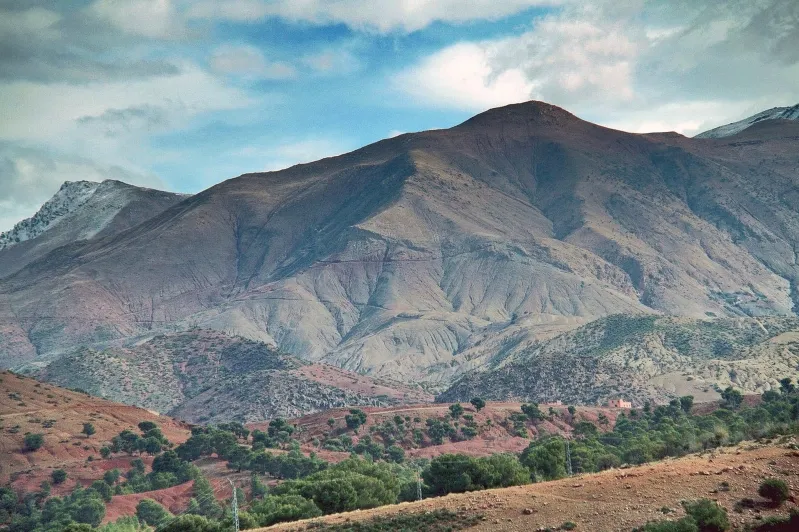
High Atlas Hiking: A Trekker’s True Paradise
There is a particular kind of silence that exists only at altitude — the kind that lets you hear your own heartbeat and the distant bells of a grazing herd at the same time. High Atlas hiking places you inside that silence, surrounded by a geology that has been unfolding for 300 million years.
Our Atlas Mountains Tours Morocco hiking programmes are built for genuine exploration rather than tick-box tourism. Small groups, experienced bilingual guides, and routes that genuinely take you away from the crowds form the foundation of every trip. You will cross high passes — known locally as tizis — traverse rocky moonscapes, drop into green-floored gorges, and arrive at remote villages where hospitality is offered without condition.
For Every Level of Trekker
- Beginner day walks through the Ourika Valley with gentle elevation gain and family-friendly pacing
- Intermediate multi-day circuits through Azzaden and Aït Mizane valleys, sleeping in mountain refuges
- Advanced summit expeditions to Toubkal and neighbouring peaks, requiring basic alpine fitness
- Winter ascents for experienced mountaineers seeking the Atlas under snow — a rare and extraordinary experience
“In the Atlas, the mountain does not simply exist around you — it exists within you. Every step carries the weight of centuries.”
— Mouhssine ELIOUJ, Licensed Mountain Guide · Ref. 2898Berber Villages: Living Museums of the Atlas
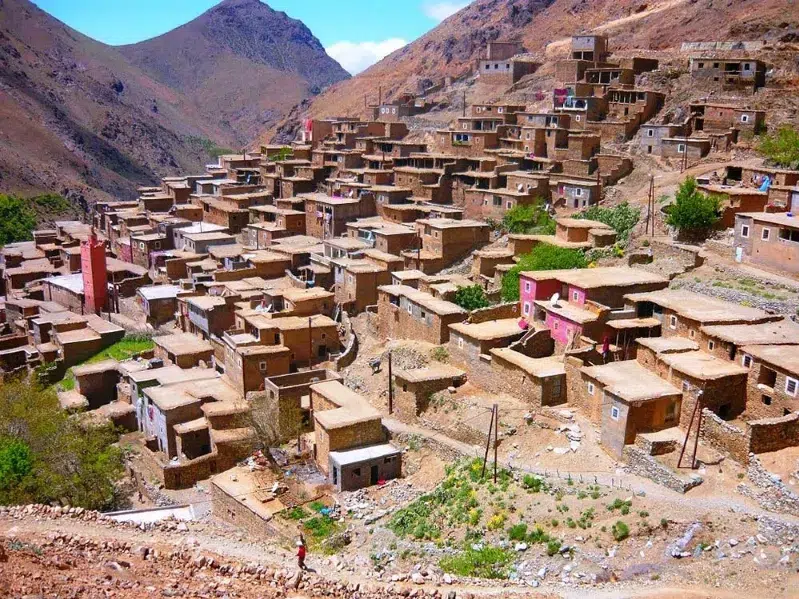
The Amazigh — known to the world as Berbers — are the indigenous people of North Africa, and the Atlas Mountains remain their spiritual and cultural heartland. Visiting a Berber village on any of our Atlas Mountains tours is not a staged encounter. It is real life, opened generously to curious travellers.
You will be welcomed into stone homes that have stood for centuries, offered sweet mint tea and msemen flatbread beside a woodfire, and introduced to the quiet rhythms of daily life — women weaving geometric carpets on upright looms, men returning from the fields as the sun dips behind a ridge, children calling greetings across cobbled alleys. These are the details no photograph captures fully, and no itinerary can adequately prepare you for.
Understanding what currency Morocco uses before your trip is a practical first step — the Moroccan Dirham (MAD) is the official currency, and having small notes available is particularly appreciated in mountain villages where card machines are nonexistent.
Guided Atlas Treks: Beyond the Beaten Trail
The Atlas range is large enough that most visitors barely scratch the surface. Our guided atlas treks are specifically designed to take you beyond the well-worn routes — to hidden gorges, forgotten caravanserai, and viewpoints that do not yet appear on travel blogs. This is the Atlas for the genuinely curious.
Each guided trek is led by a licensed local mountain guide with intimate knowledge of the terrain, weather patterns, and cultural protocols of the region. They speak the language of the mountains and the language of the people who call them home. That combination — local knowledge paired with genuine hospitality — is what transforms a trek into an education.
Morocco is home to a remarkable collection of cities worth exploring beyond the mountains. Consulting a complete list of cities in Morocco can help you build a broader itinerary that pairs your Atlas experience with time in Marrakech, Fes, or the coastal gem of Essaouira.
Marrakech: The Perfect Gateway to Atlas Adventures
Just 60 kilometres separate the rooftop terraces of Marrakech’s Jemaa el-Fna from the first Atlas foothills. That proximity makes the city the natural launchpad for day excursions and extended Atlas Mountains Tours Morocco itineraries alike. You can wake to the sound of the call to prayer in the medina and be breathing mountain air before midmorning.
Our Marrakech-based departures cover everything from sunrise drives to the Ourika Valley — where a string of waterfalls reward a short riverside walk — to full-week expeditions deep into the High Atlas. The contrast between the sensory richness of the Red City and the vast quietude of the mountains is, in itself, one of travel’s great pleasures.
Travellers sometimes ask about safety before committing to a Morocco trip. We encourage you to read an honest, up-to-date assessment of whether Morocco is safe for tourists — the short answer is yes, especially in the Atlas Mountains, where communities are welcoming and crime against visitors is exceptionally rare.
Atlas Valleys: Nature at its Most Eloquent
If the peaks represent the Atlas at its most dramatic, the valleys reveal it at its most tender. Carved by snowmelt rivers over millennia, these long green corridors are where life concentrates in the mountains — where almond and walnut trees form tunnels of shade, where rosemary and thyme grow wild along the path edges, and where the sound of water is never far away.
The Ourika Valley is the most accessible, making it ideal for day trippers from Marrakech. The Aït Benhaddou corridor connects the mountains to the desert fringe and the ancient kasbahs of southern Morocco. The Azzaden Valley, less visited and more serene, rewards those willing to commit to at least two days on foot.
Each valley has its own character, its own rhythm, and its own species of silence. Choosing between them is the kind of problem you will be happy to have.
Frequently Asked Questions
The Atlas Mountains are not a destination you visit once and consider done. They are a place you return to — because each season repaints the valleys, because the people age with a grace that deepens every conversation, and because the mountains themselves seem to reveal something new with every visit. Your first Atlas Mountains tour is, in the truest sense, just the beginning.