There is no better way to understand Marrakech than to walk through it slowly, with someone who knows its every alley by heart. Our Marrakech souk walking tour is a 3–4 hour immersion into the medina’s living fabric — its markets, workshops, communal ovens, and centuries-old trades — guided by a licensed local expert who treats the city not as a backdrop but as a story worth telling properly.
This is not a rushed group tour. It is a carefully paced cultural experience designed for travelers who want to understand what they are looking at, engage with artisans on their own terms, and leave with memories — and images — that go far beyond the surface of Morocco’s most famous imperial city.
Where Every Alley Tells a Story
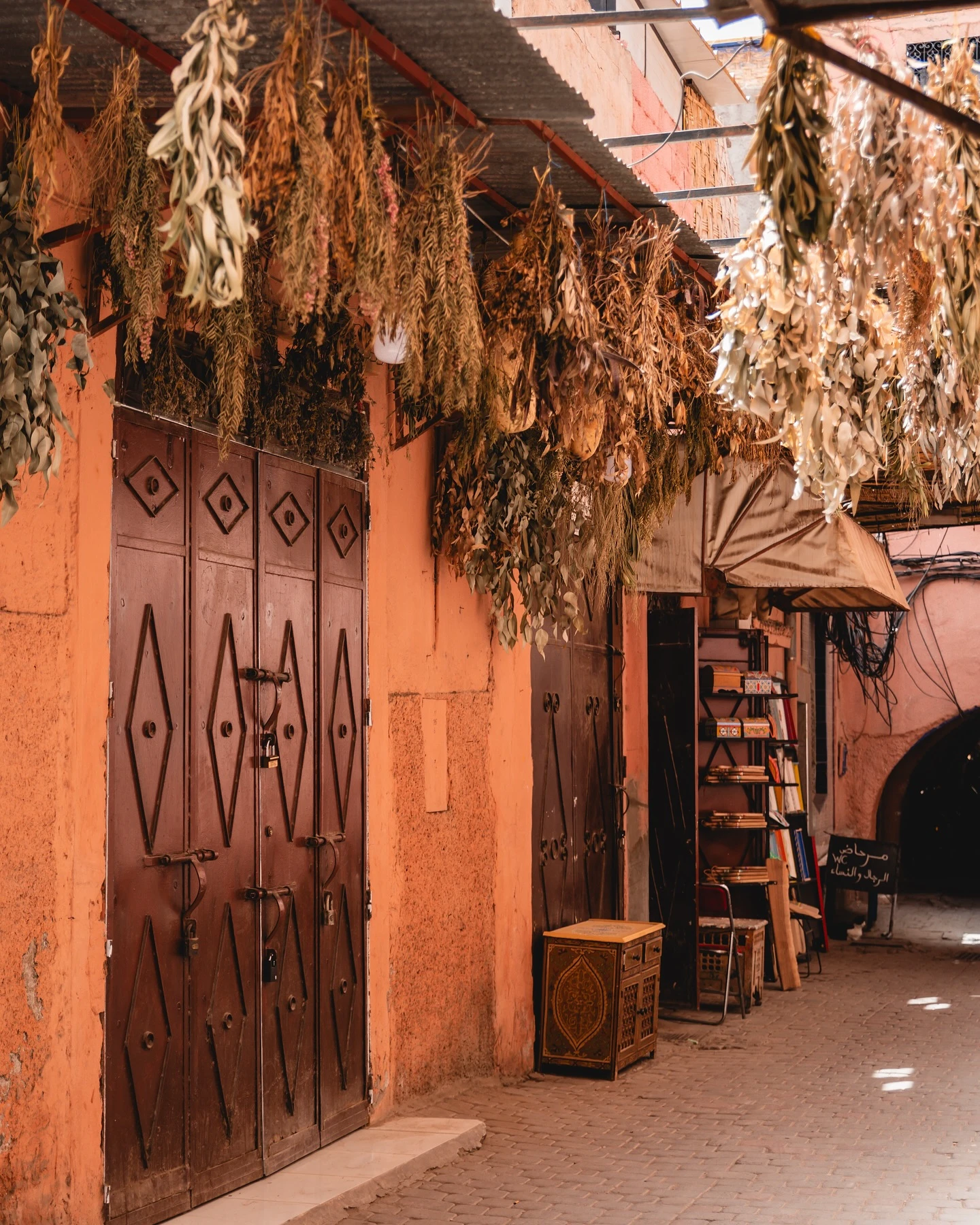
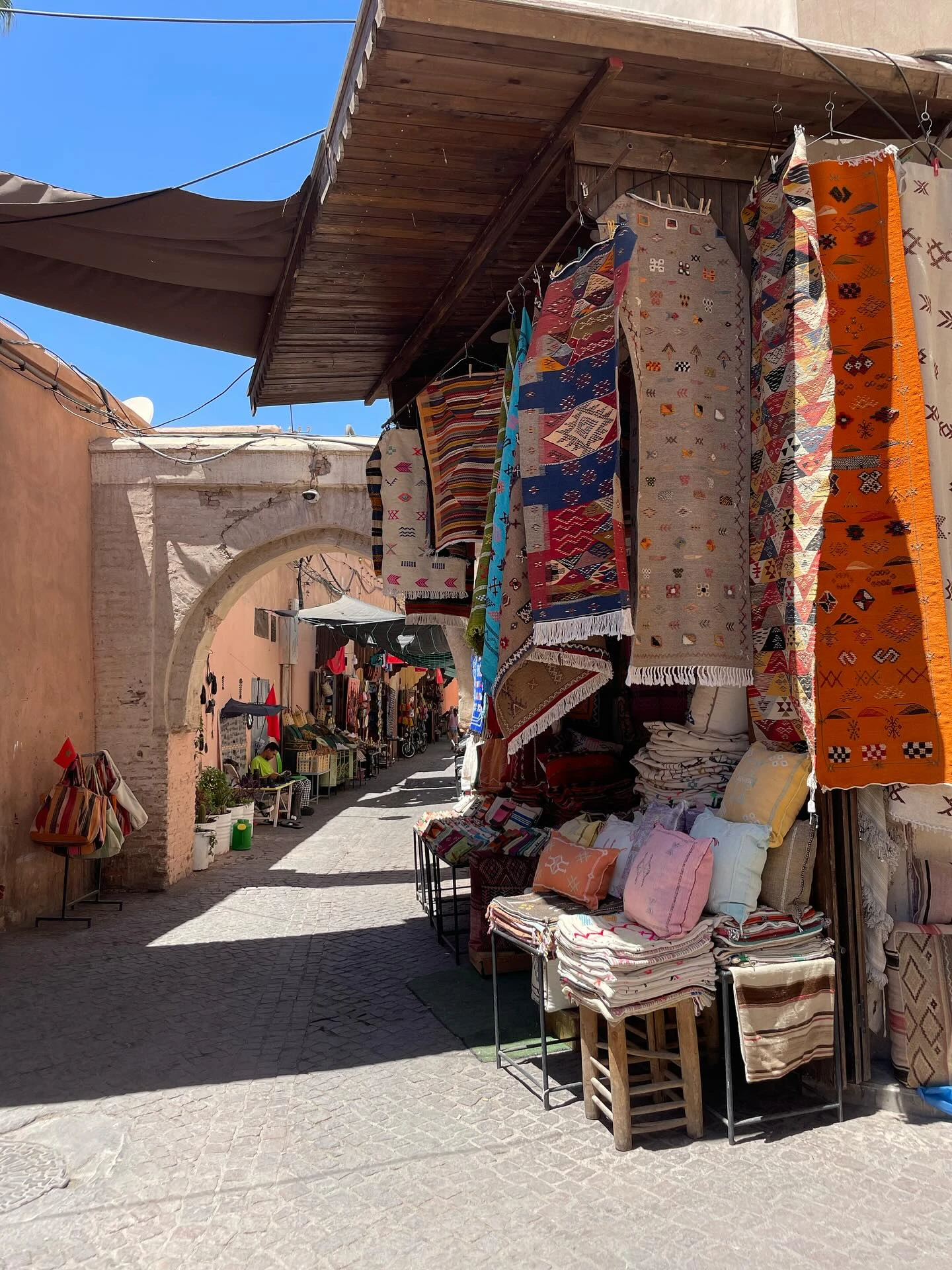
Traditional Moroccan Market Crafts & Trades
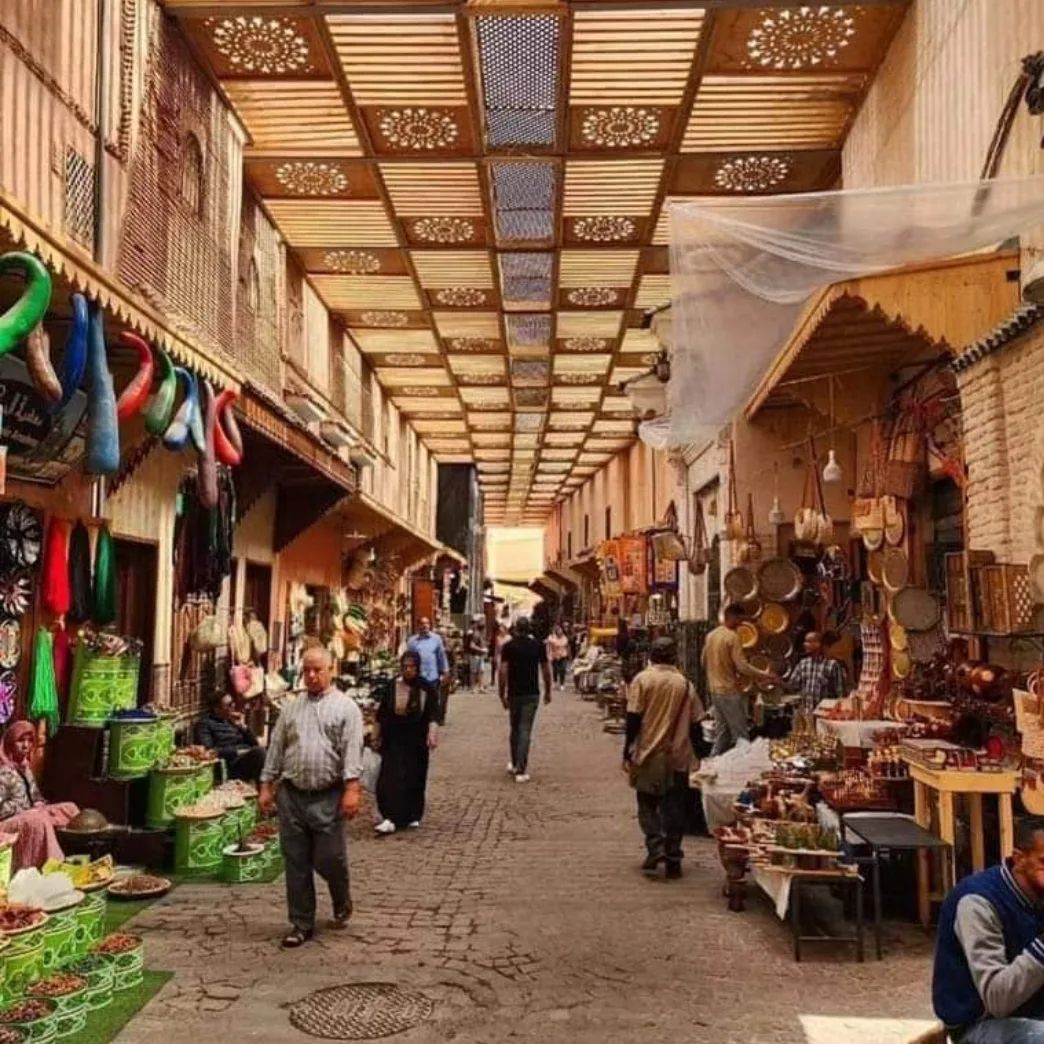
Each souk in Marrakech is dedicated to a single craft — a tradition that has organised the medina’s commerce for centuries.
Leather & Babouches
Visit the leather souk where traditional Moroccan slippers are cut and sewn by hand using techniques unchanged for generations. The smell of tanned hide and cedar oil fills the air.
Textiles & Embroidery
Explore markets of woven fabrics, traditional caftans, and hand-embroidered cloth where colour and pattern carry deep cultural meaning in Moroccan society.
Metalwork & Lanterns
Hear hammers ringing on copper and brass as artisans shape lanterns, trays, and decorative pieces — the rhythmic soundtrack of a craft quarter that never stops moving.
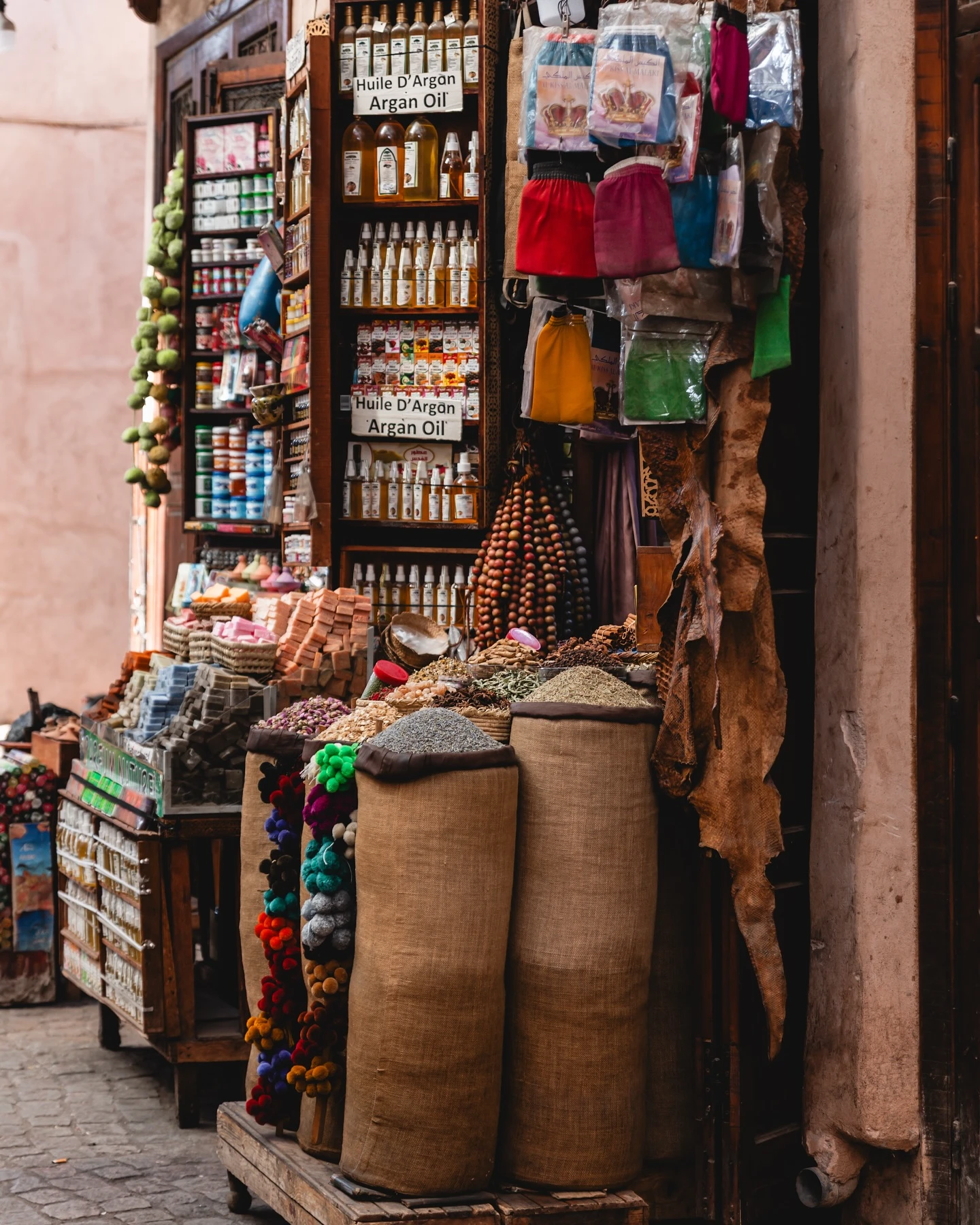
Spices & Medicinal Herbs
Enter the spice souk where pyramids of cumin, ras el hanout, and dried rose petals create a sensory experience that is entirely unlike anything else in the world.
Pottery & Ceramics
Observe the shaping, firing, and hand-painting of traditional tagines, plates, and tiles in workshops where the techniques trace directly back to medieval Moroccan craft guilds.
Cedar Woodworking
The woodworkers’ souk is aromatic and quietly extraordinary — intricate marquetry, carved furniture, and decorative panels emerging from a handful of basic tools.
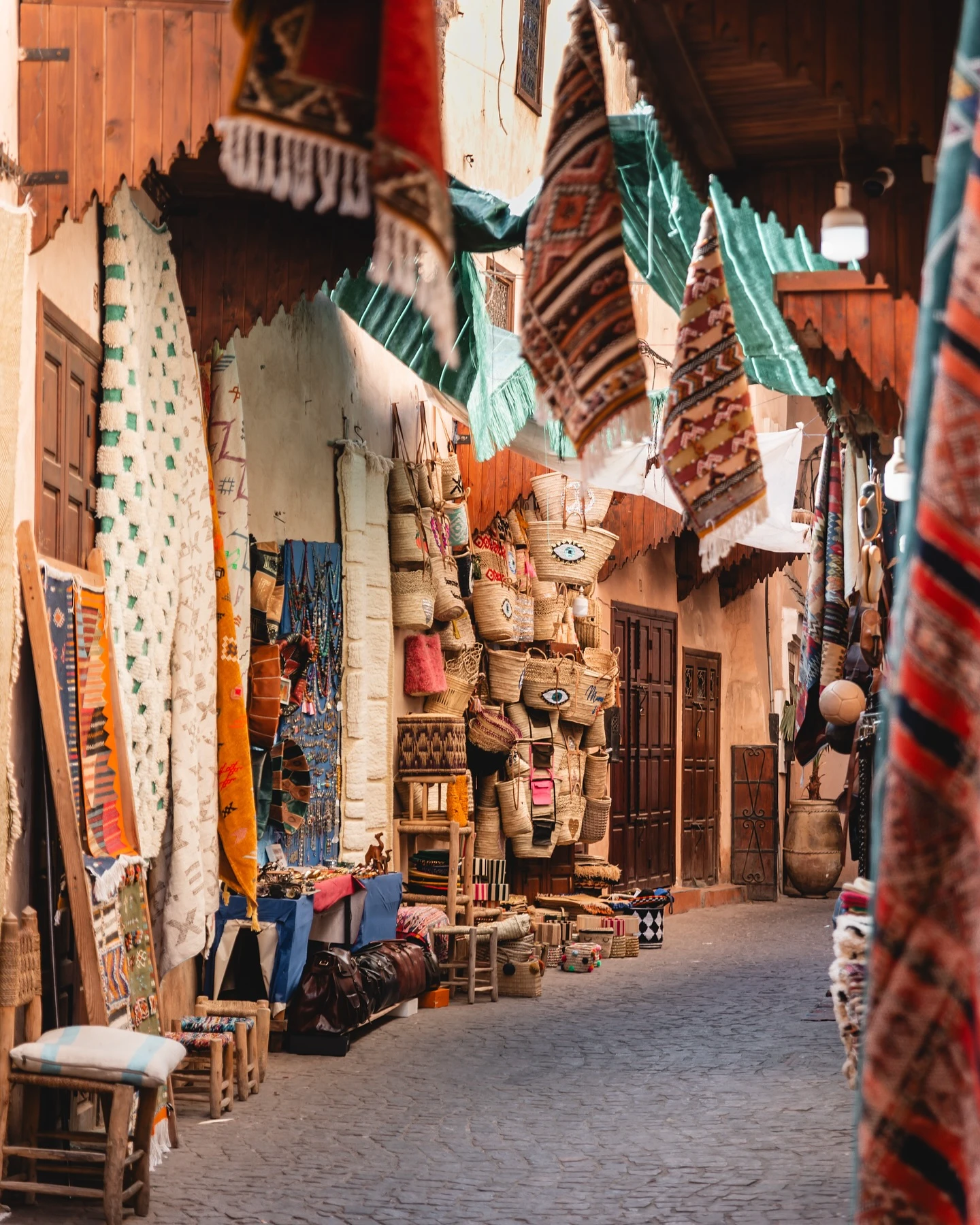
The Carpet Market — The Art of Berber Weaving
The carpet souk is one of the most visually and culturally rich stops on any Marrakech souk walking tour. At Souk Zrabi, master weavers work at traditional looms producing pieces that carry the visual language of their specific Berber tribe, region, and generation. No two carpets are identical.
The daily carpet auction — held after the third prayer — has taken place in this same quarter for hundreds of years. To watch it is to witness commerce as ritual.
Your guide will introduce you to the principal carpet traditions you will encounter:
- Beni Ourain — minimalist ivory and black geometric patterns on natural undyed wool, from the Middle Atlas mountains
- Azilal — vivid, irregular patterns often incorporating recycled fabric threads, made by women in the High Atlas
- Taznakht — warm reds and oranges reflecting the specific palette of the Draa Valley
- Vintage Berber pieces — antique carpets carrying decades of social and symbolic history within their patterns
The Visual Language of the Souks
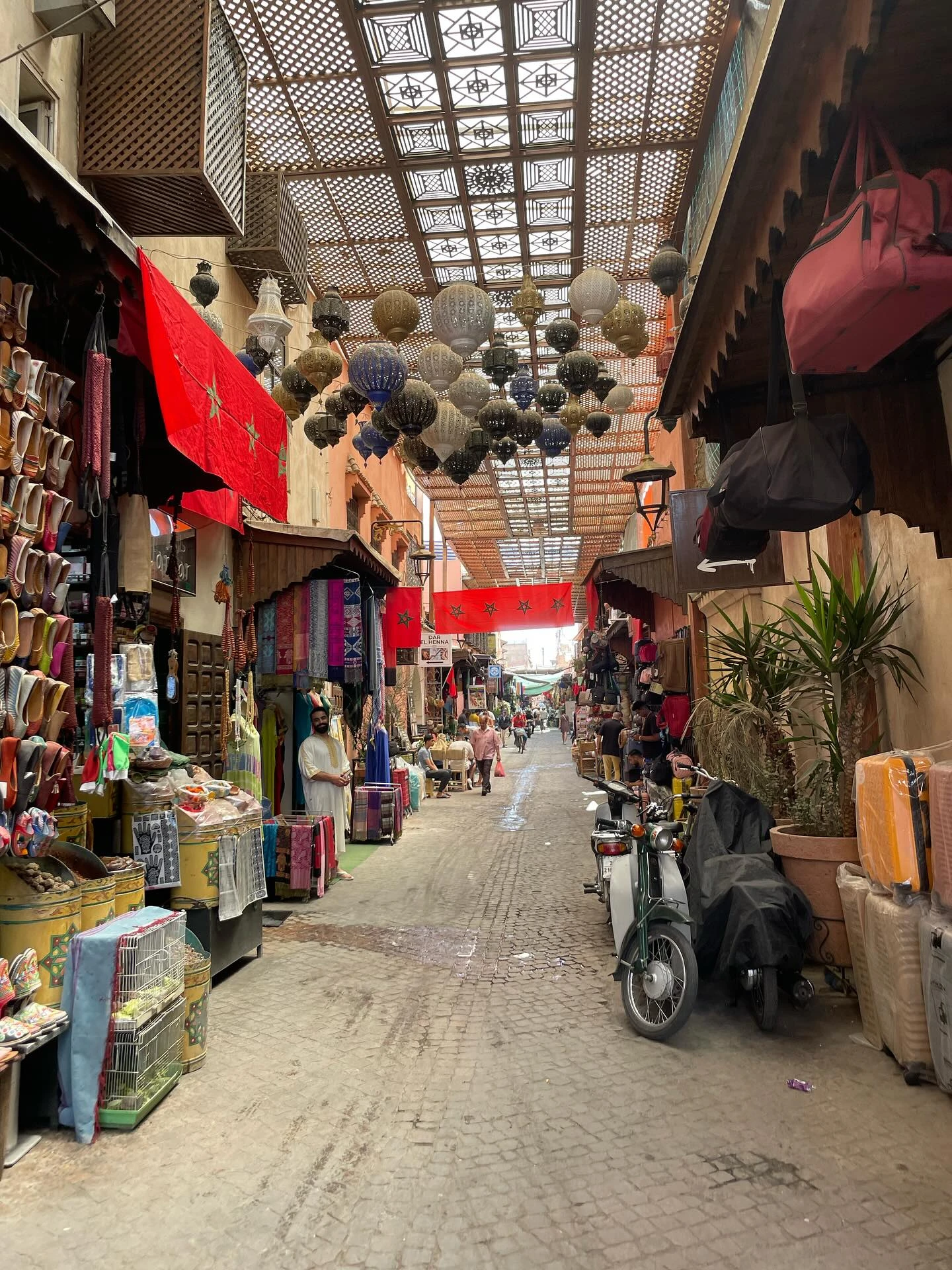
The Local Bakery — Bread as Community Ritual
One of the most quietly moving stops on the tour is a visit to a neighbourhood fernachi — the communal wood-fired oven that serves an entire quarter of the medina. Families prepare their dough at home and bring it here to be baked, collecting it hours later with a numbered token. The oven has been burning continuously, in this fashion, for centuries.
In Moroccan culture, bread — khobz — is considered sacred. It is placed on the table before any guest and removed last. It is never wasted, never thrown away, and never eaten standing over a sink. Understanding this changes the way you see an entire country.
During this stop you will observe the baking process, learn about the cultural significance of bread in Moroccan family life, and experience the warmth — literal and social — of a neighbourhood institution that tourism has not yet managed to domesticate.
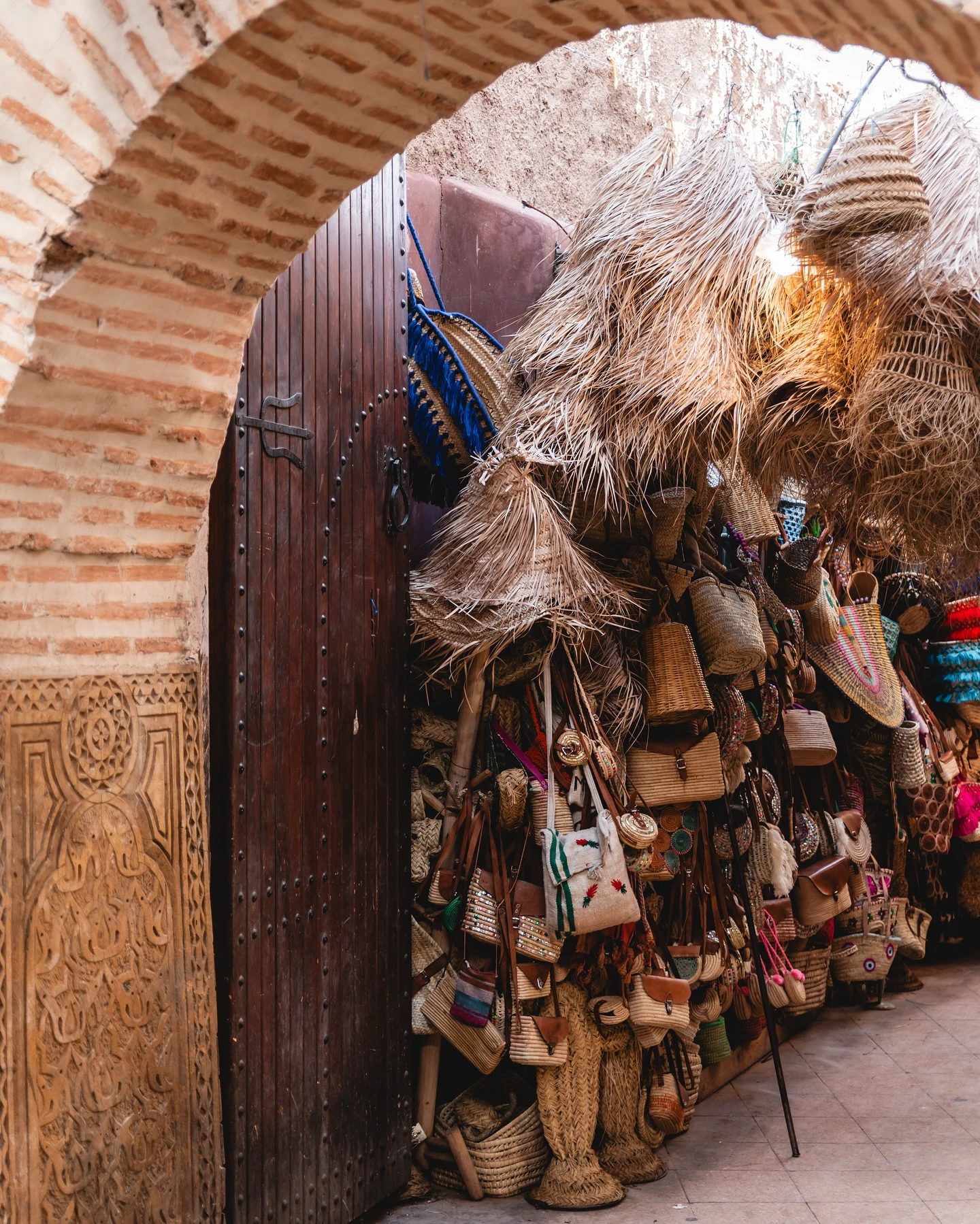
The Square — UNESCO Intangible Heritage of Humanity
Recognised by UNESCO in 2001 as a Masterpiece of the Oral and Intangible Heritage of Humanity, Jemaa el-Fnaa is not simply a square. It is a living performance space that has operated continuously since the 11th century, shifting its character across the hours of the day in ways that reward patient observation over rushed photography.
Most tourists see Jemaa el-Fnaa once, in the evening, and think they have seen it. Our guide shows you three different cities occupying the same ground within a single day.
Your guide explains how the square transforms across the day — the quiet commerce of the morning, the rising energy of midday, and the full theatrical spectacle of the evening, when Gnaoua musicians, halqa storytellers, and smoke from the food stalls all converge into something that cannot be adequately described, only experienced.
Bargaining — The Art of Respectful Negotiation
Bargaining in the Marrakech souks is not a competition. It is a form of social exchange — a small theatre of offer and counter-offer that has structured commerce in this part of the world for longer than most Western shopping traditions have existed. Approached with good humour and genuine curiosity, it is one of the most enjoyable interactions the medina offers.
Your guide will walk you through the cultural principles that govern negotiation in the souks — not as a set of tactics to win a transaction, but as a way of engaging respectfully with the merchant in front of you:
- Always greet before asking a price — a handshake and a salam cost nothing and change everything
- Show genuine interest in the craft before discussing its value
- Know your maximum before you begin — not as a ceiling but as clarity of intention
- Accept tea if it is offered — refusing is rude; accepting creates no obligation
- Be willing to walk away without frustration — a good merchant respects a clean exit
- Never bargain for an item you have no intention of buying — it wastes everyone’s time and erodes trust
Your Tour, Hour by Hour
Hotel or Riad Pickup
Your licensed guide meets you at your accommodation for a brief introduction, tour overview, and a few words about how to move through the medina respectfully and enjoyably.
Jemaa el-Fnaa — First Encounter
You enter the square in its quietest morning mood and begin to understand its structure, history, and daily transformation. This is not the square you will see in photographs — it is better.
Souk Semmarine — The Main Artery
Enter through the covered gateway of the souk’s principal artery and begin moving deeper into the medina, with your guide providing context for everything you see: architecture, trade routes, guild history.
Specialist Souks — Leather, Carpet, Metal, Spice
The most immersive part of the tour. You move between craft quarters with time to observe, ask questions, and engage with artisans who are genuinely at work, not performing for tourists.
The Neighbourhood Bakery
Visit a communal wood-fired oven in a residential quarter where local families still bring their bread dough each morning — a practice unchanged for centuries.
Artisan Workshops
Observe master craftspeople in pottery, woodworking, and metalwork — direct access to working studios that most visitors never find.
Bargaining in Practice
With your guide present as interpreter and cultural guide, you have the opportunity to negotiate for items that interest you — with full confidence and cultural context.
Return to Jemaa el-Fnaa
The tour concludes at the square, now in full midday activity. Your guide offers recommendations for the afternoon and evening, including where to eat, what to avoid, and where the best light falls at sunset.
Marrakech Medina — Where the Tour Takes Place
What Sets This Experience Apart
Licensed Professional Guide
Officially licensed by the Ministry of Tourism (Ref. 2898). Accurate cultural interpretation, not performance for tips.
Small, Private Groups
Limited group sizes allow for real conversations, genuine access, and a pace that suits you rather than a bus schedule.
Hidden Access
Communal ovens, private riad courtyards, working artisan studios — places that are closed to unaccompanied visitors.
Cultural Respect
Every interaction on this tour is built on a foundation of genuine respect for local life — not extraction of photo opportunities.
Book Your Marrakech Walking Tour
Contact our licensed guide directly to reserve your date.
+212 671 437 971