
The souks of Marrakech are not a market with a Moroccan theme. They are eighteen distinct trade quarters — the blacksmiths’ souk, the slipper souk, the spice square, the carpet market — that have operated continuously for over a thousand years in the same buildings, by the same methods, in the same alleyways. Arriving without a plan means leaving with tourist trinkets. Arriving with knowledge means leaving with objects worth keeping for decades.
This guide covers the best things to buy in the Marrakech souk — product by product, with honest pricing, authentication tests, and clear answers to the questions every traveller should ask before spending a single dirham.
The best souvenirs from Marrakech are the ones you will still use in ten years — a leather bag that has moulded to your shape, a carpet that anchors a room, a spice blend that returns you to a specific alley every time you open the jar.
Eight Things Worth Your Dirhams
Eight product categories with genuine craft value — and the knowledge to buy them well.
Brass Lanterns
Hand-chased pierced metal that casts geometric shadow patterns when lit. Souk Haddadine only.
Argan Oil
Morocco’s most celebrated export — and its most reliably faked souvenir. Three tests before you buy.
Berber Carpets
Six to eight weeks of hand-weaving, each pattern tied to a specific tribe and region. The souk’s best investment.
Leather Goods
Babouches, bags, and belts in vegetable-tanned leather that improves with age. Avoid anything near Jemaa el-Fnaa.
Ceramics
Marrakchi red-clay pottery in ochre and terracotta — earthy, rustic, and genuinely priced.
Spices
Ras el hanout, saffron, and cumin at Rahba Kedima. The lightest, most useful souvenir in the medina.
Berber Jewelry
Silver and semi-precious stone pieces with tribal character. Hallmarks and the magnet test are non-negotiable.
Baskets & Woodwork
Handwoven palm-leaf baskets from Souk Chouari. Pack flat, lightweight, genuinely beautiful.
What to Know Before You Buy
The Most Atmospheric Object in Any Moroccan Home
Moroccan lanterns are made in a single quarter — Souk Haddadine, the blacksmiths’ street — where you can watch craftsmen pierce and hammer patterns into metal sheets by hand. Lit in a room, they project intricate geometric shadows across every surface. Nothing transports an interior more directly into the spirit of Marrakech.
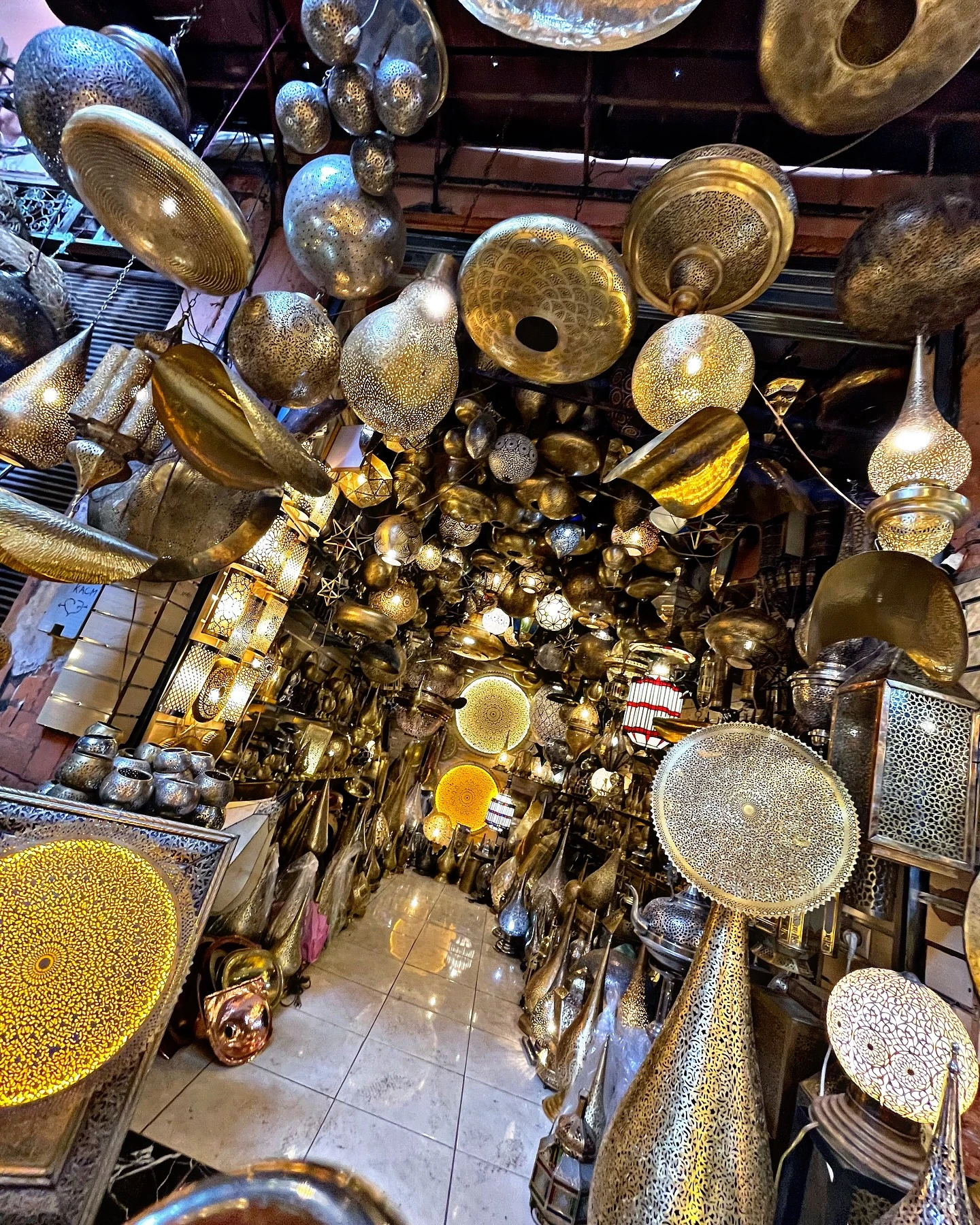
- Small decorative lanterns (aluminium)85–250 MAD · $8–25
- Genuine hand-chased brass350–1,500 MAD · $35–150
- Large floor statement lanterns1,500–4,000 MAD · $150–400
Morocco’s Liquid Gold — Handle With Caution
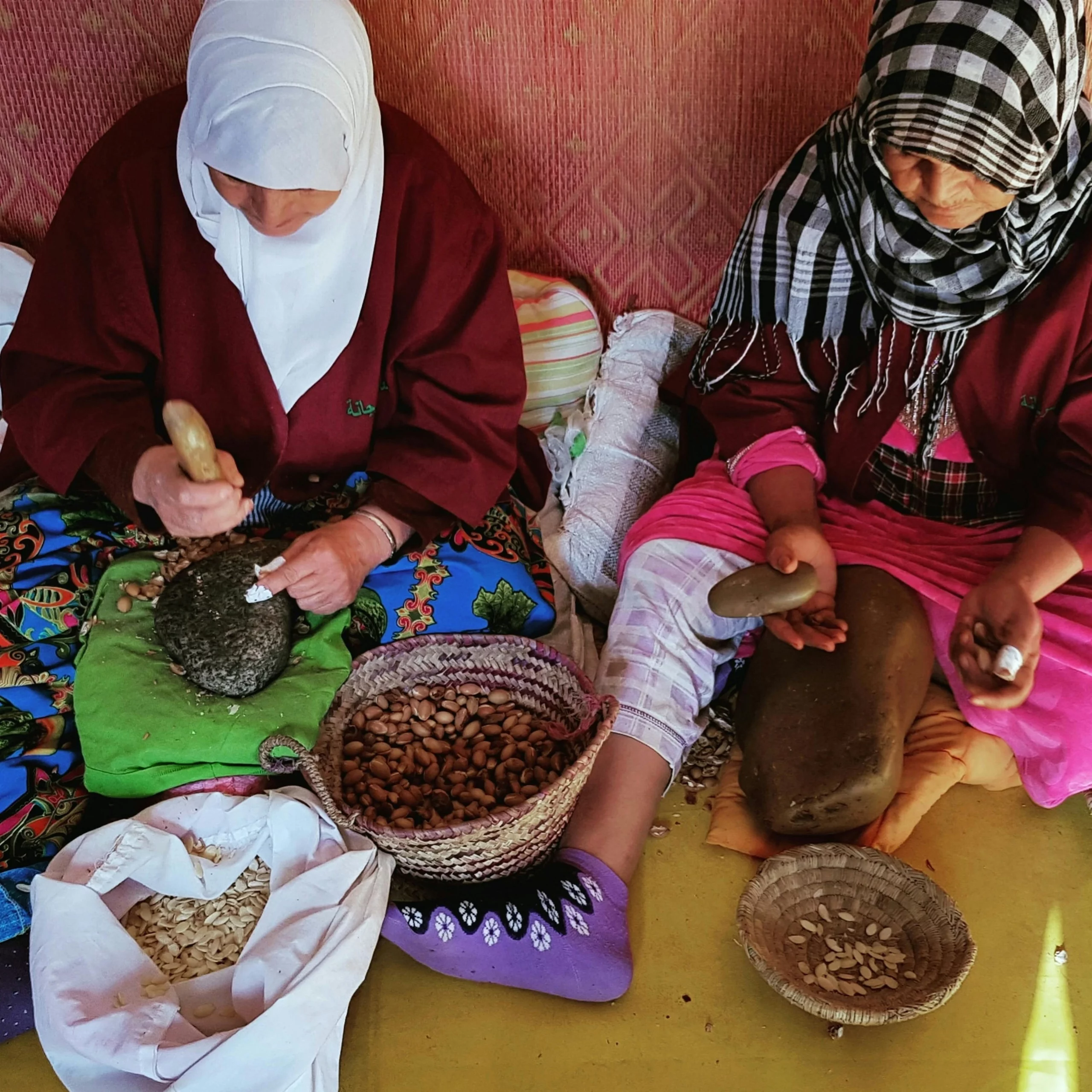
Argan oil is genuinely valuable and the souk’s most reliably faked product. Bottles that look authentic may contain little to no actual argan oil. The safest purchase is from a supermarket such as Carrefour, where purity is guaranteed and prices are transparent. If you buy in the souk, three tests are available before any money changes hands.
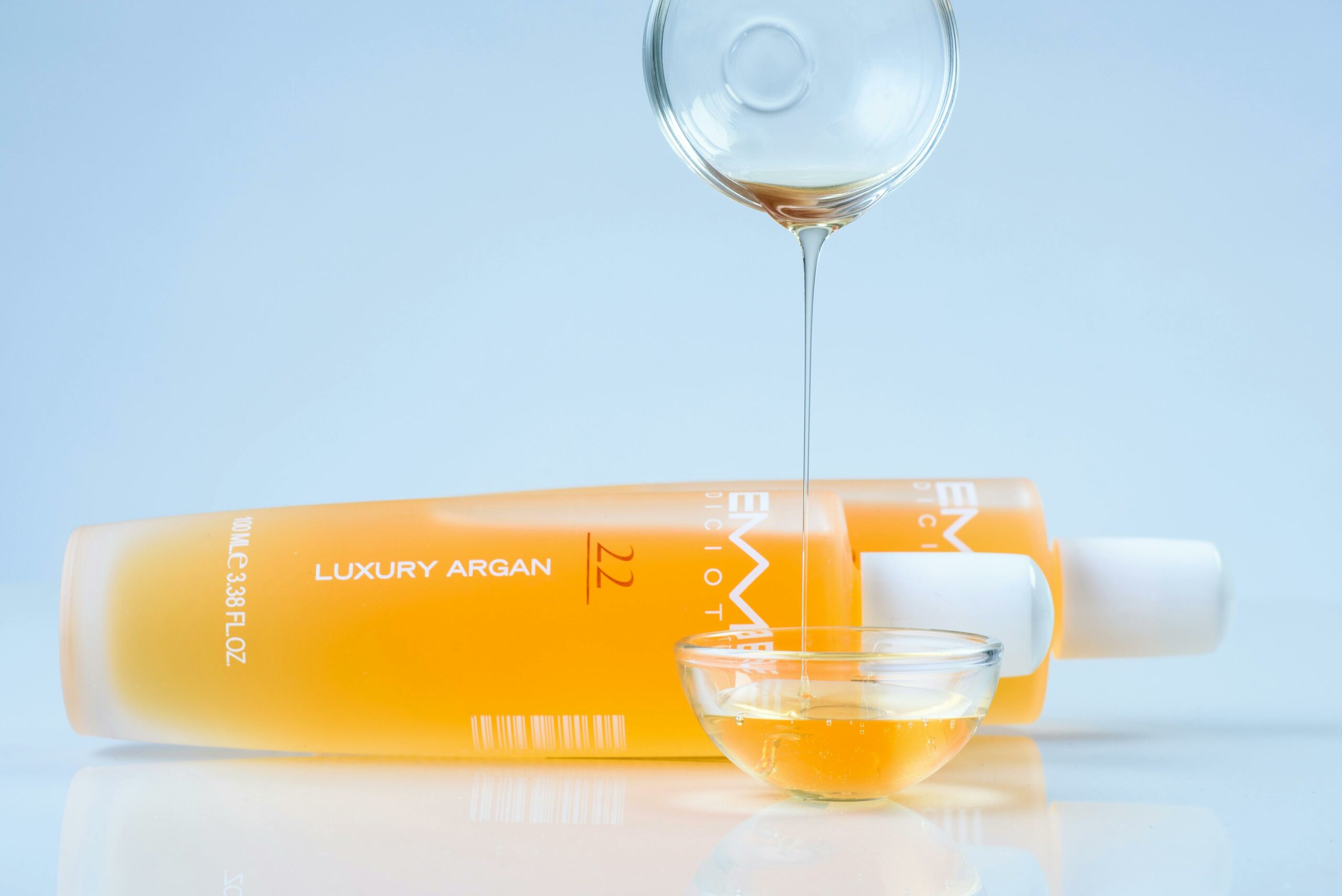
- Shake the bottle — real argan oil does not foam. Foam means soapy additives
- Smell it — genuine argan oil has a distinct nutty aroma. No smell means no argan
- Check the colour — cosmetic grade should be light amber. Colourless oil is heavily diluted
The Souk’s Finest Investment
A genuine Berber carpet takes six to eight weeks to hand-weave. Each pattern carries a visual language tied to the specific tribe, village, and weaver — Beni Ourain geometric on ivory wool from the Middle Atlas, Azilal abstract forms, Tiflet in saturated multi-colour. No two authentic pieces are identical. The best are objects of real beauty that last multiple generations.
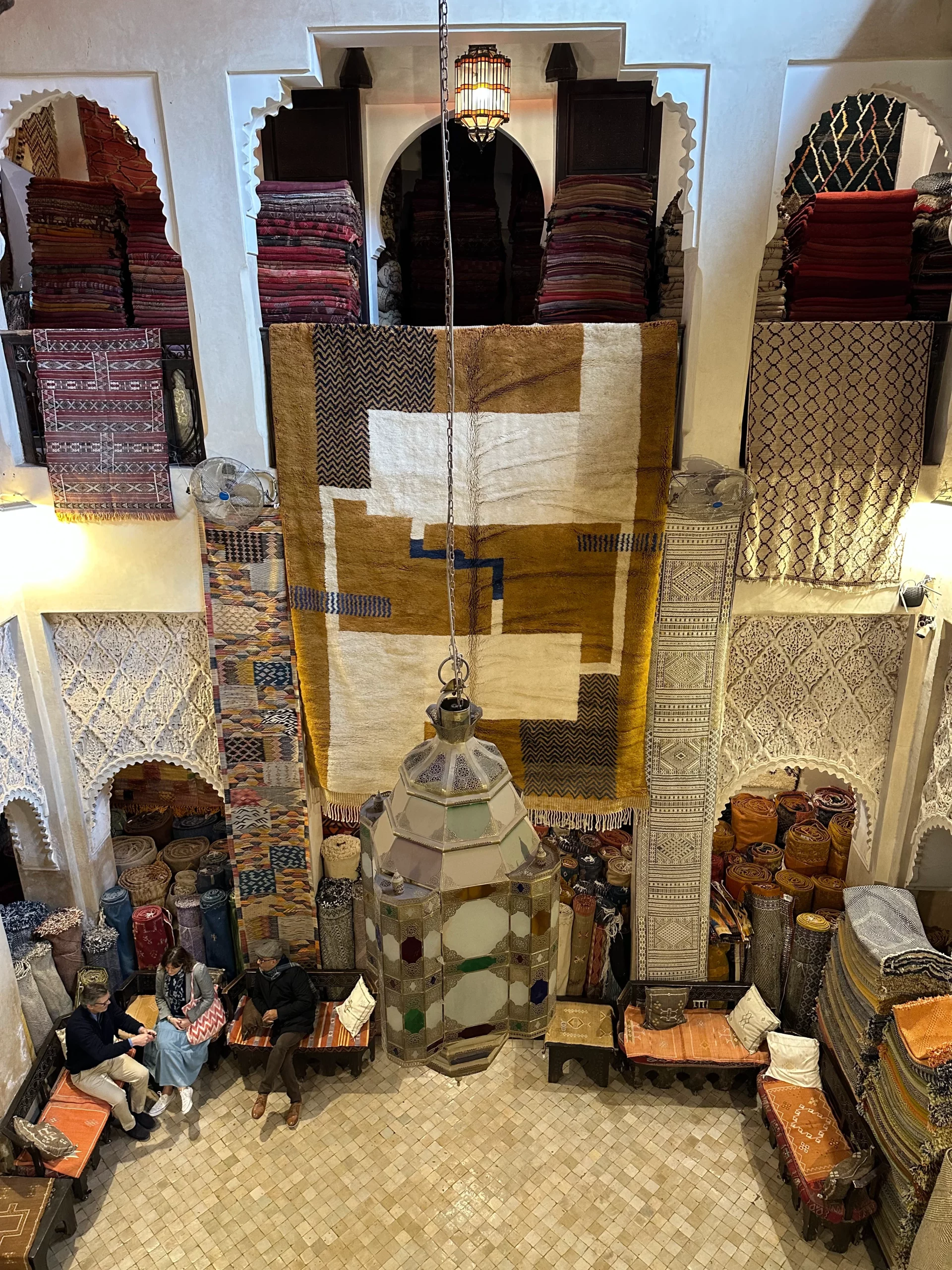
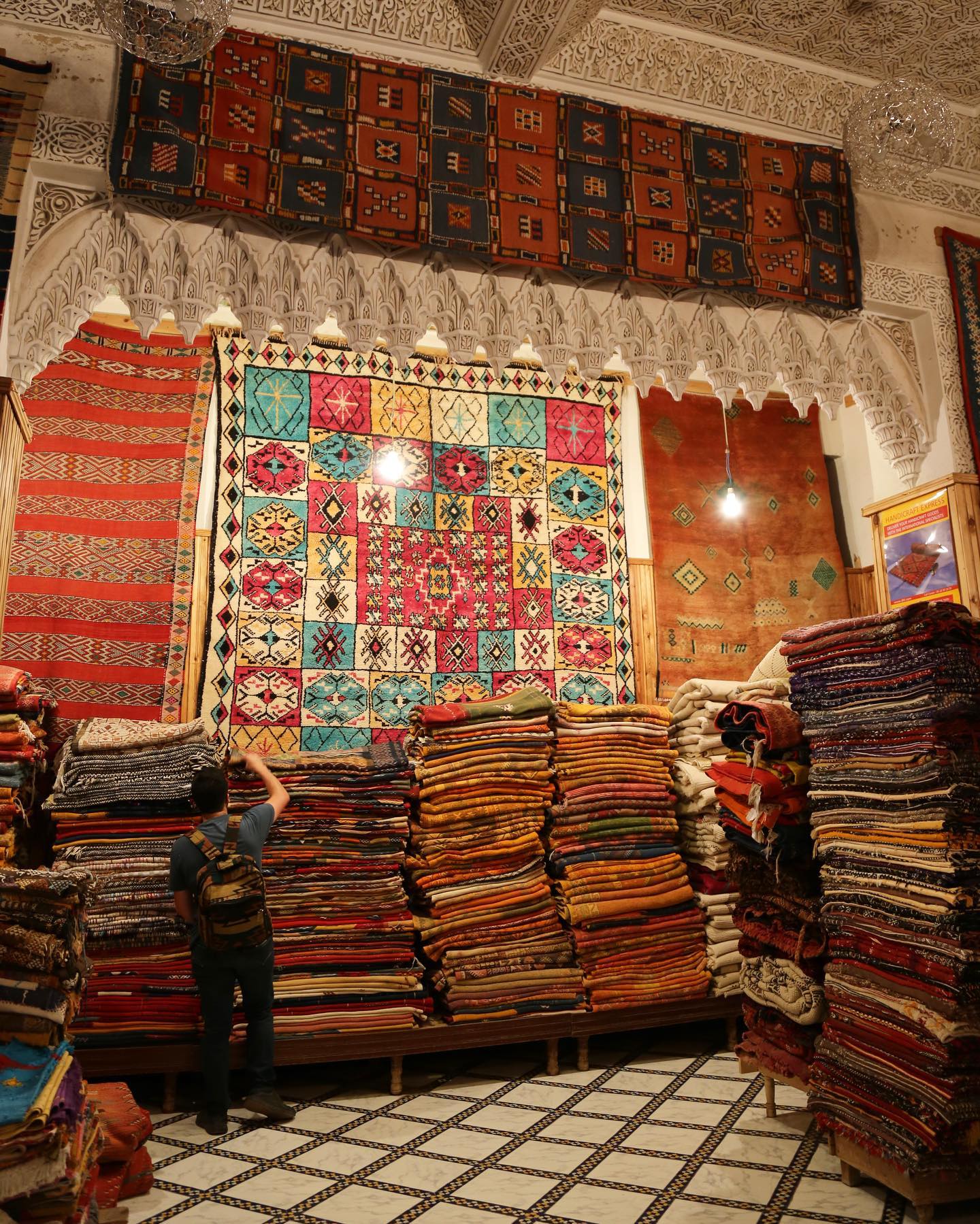
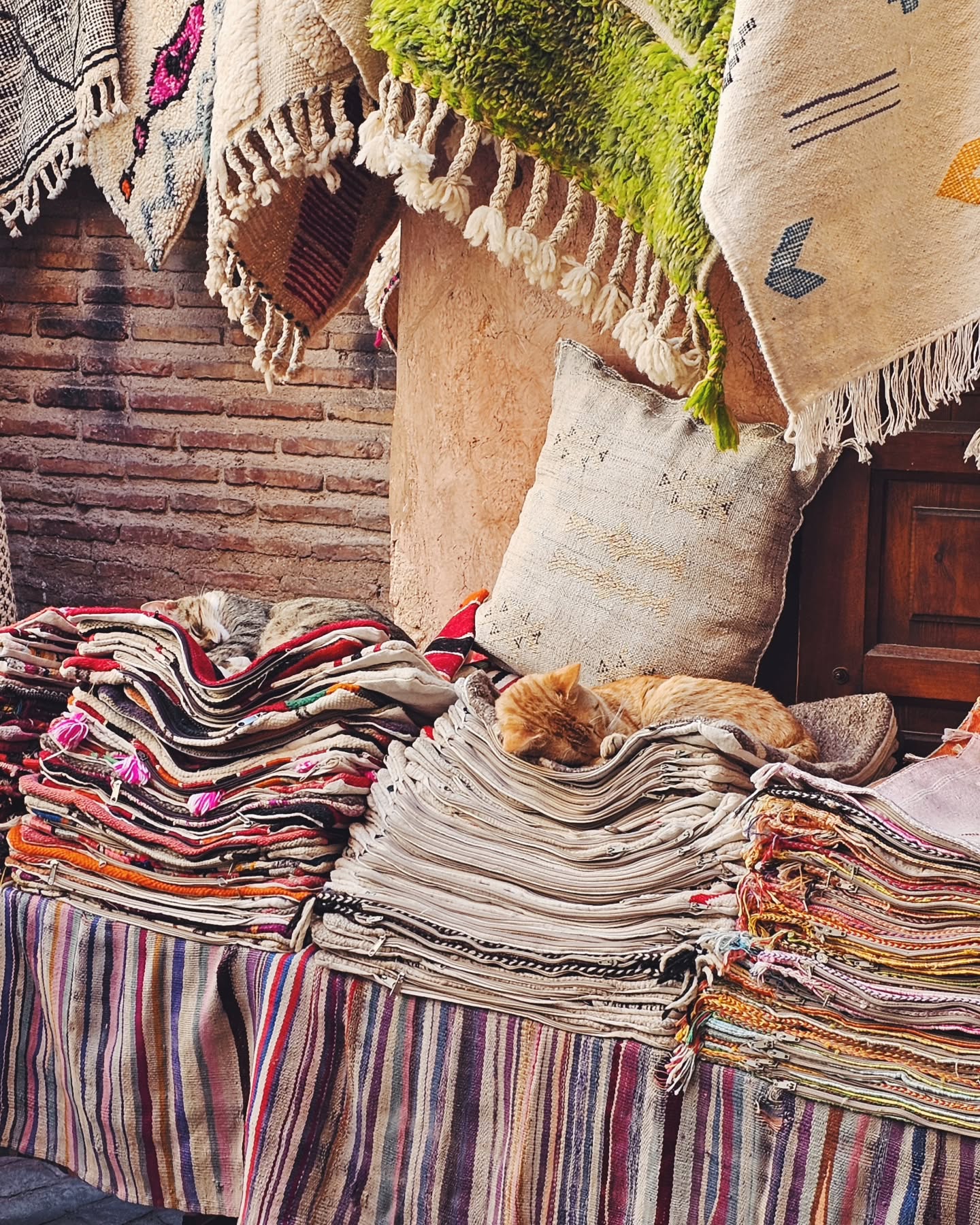
- Small silk rug (suitcase-friendly)300+ MAD · from $30
- Medium Beni Ourain (ivory + geometric)800–2,000 MAD · $80–200
- Large Atlas statement piece2,000–5,000+ MAD · $200–500+
- Claims of “100-year-old antique” — modern rugs are routinely aged artificially with tea, sun, and chemicals
- Several identical pieces displayed side by side — identical patterns indicate machine production
- Prices that seem impossibly low for the stated size and material
Handmade, Wearable, Improving With Age
Moroccan leather craftsmanship is built on centuries of tanning tradition using natural vegetable dyes and pomegranate bark rather than synthetic chemicals. The result is leather that develops character over time. Babouches (traditional slippers), bags, belts, and poufs are the most practical purchases.
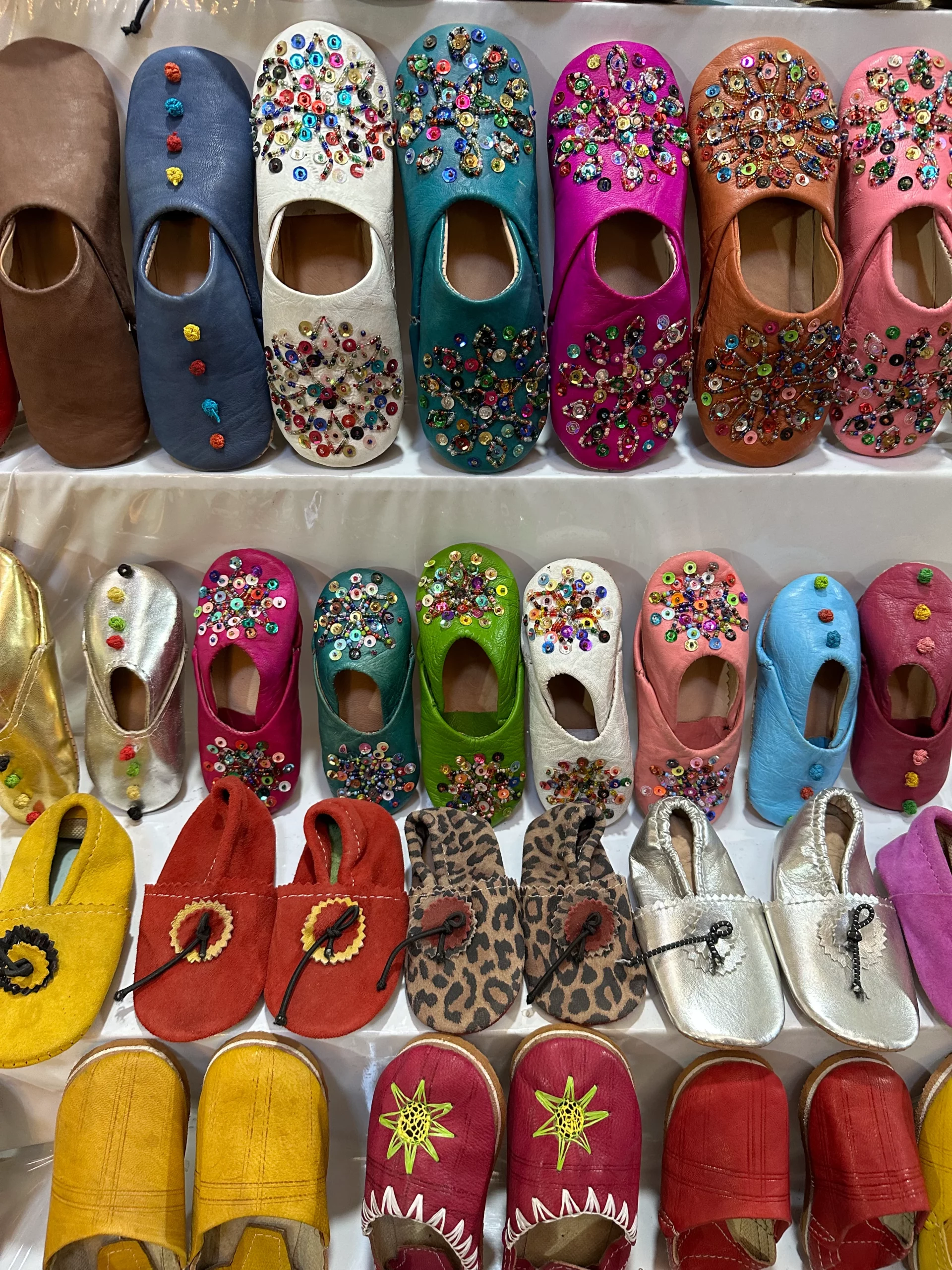
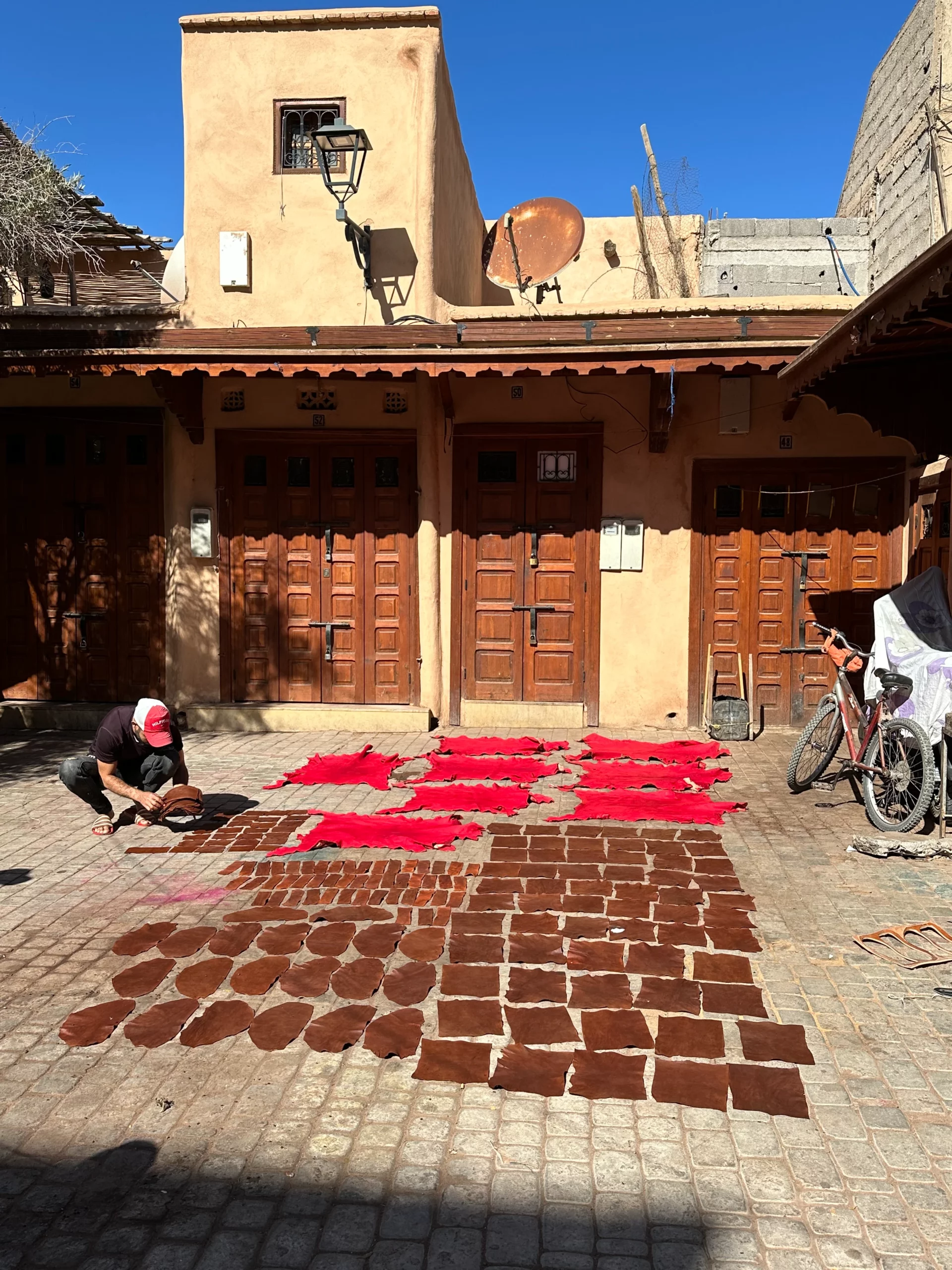
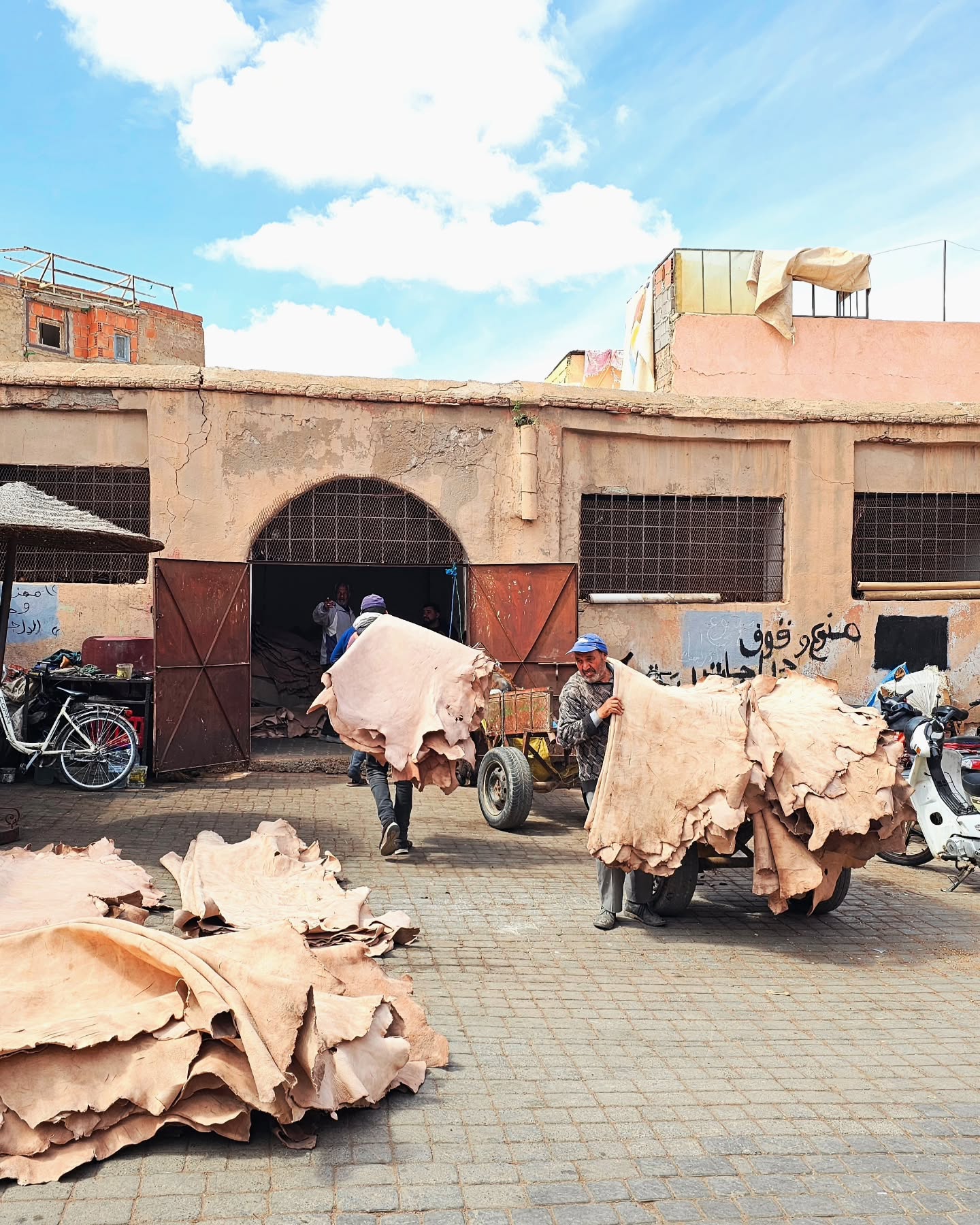
- Handmade babouches (leather slippers)80–150 MAD · $8–15
- Leather bags & backpacks200–600+ MAD · $20–60+
- Belts & wallets100–300 MAD · $10–30
- Leather poufs (buy unfilled, pack flat)150–200 MAD · $15–20
Earthy, Regional, Genuinely Priced
Marrakech ceramics use local red clay with bold patterns in ochre, terracotta, and muted green — very different from the refined cobalt blue-and-white of Fes. They are rustic in the best sense: built to be used, not just displayed. Small bowls are lightweight enough for carry-on luggage.
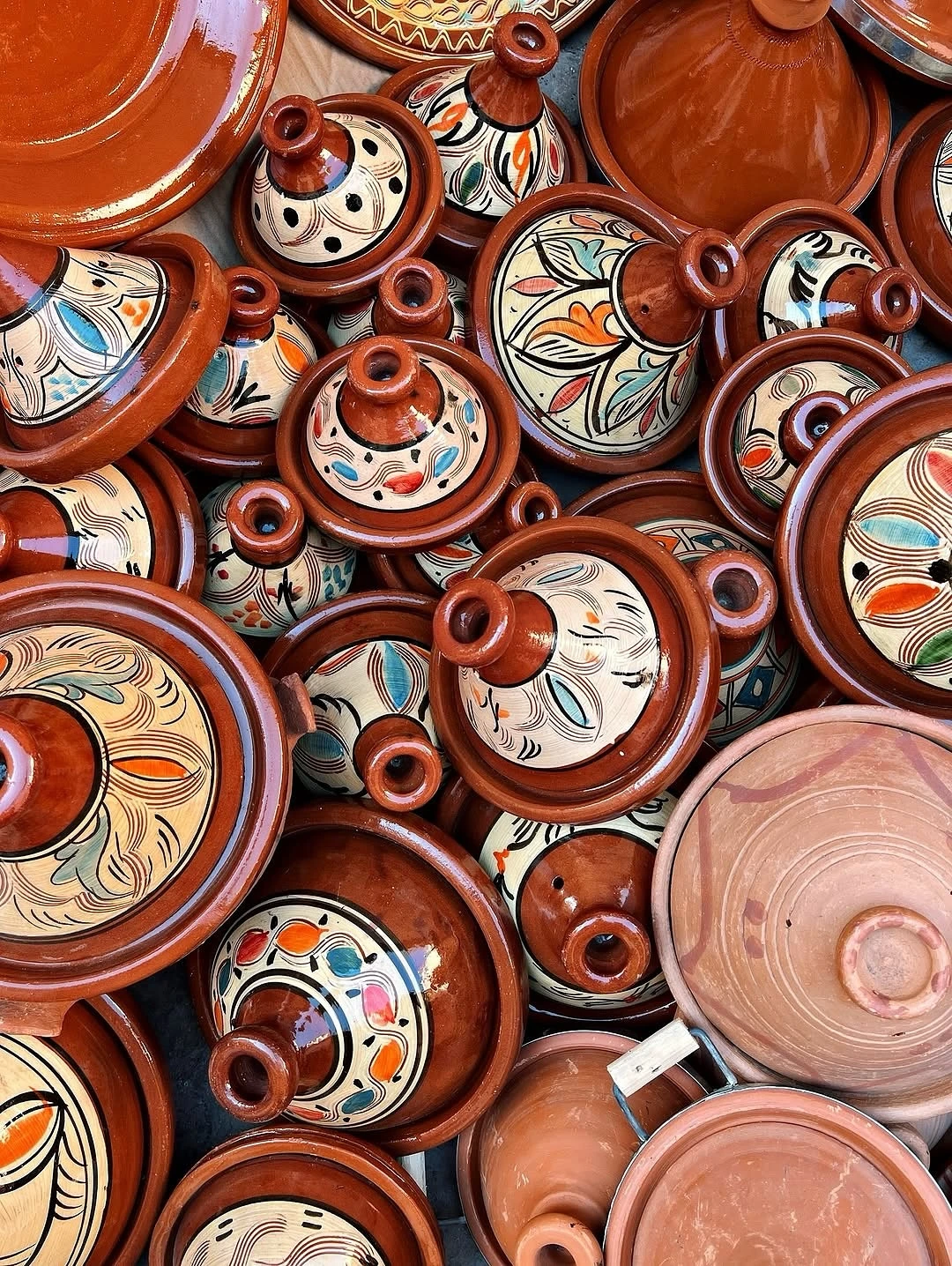
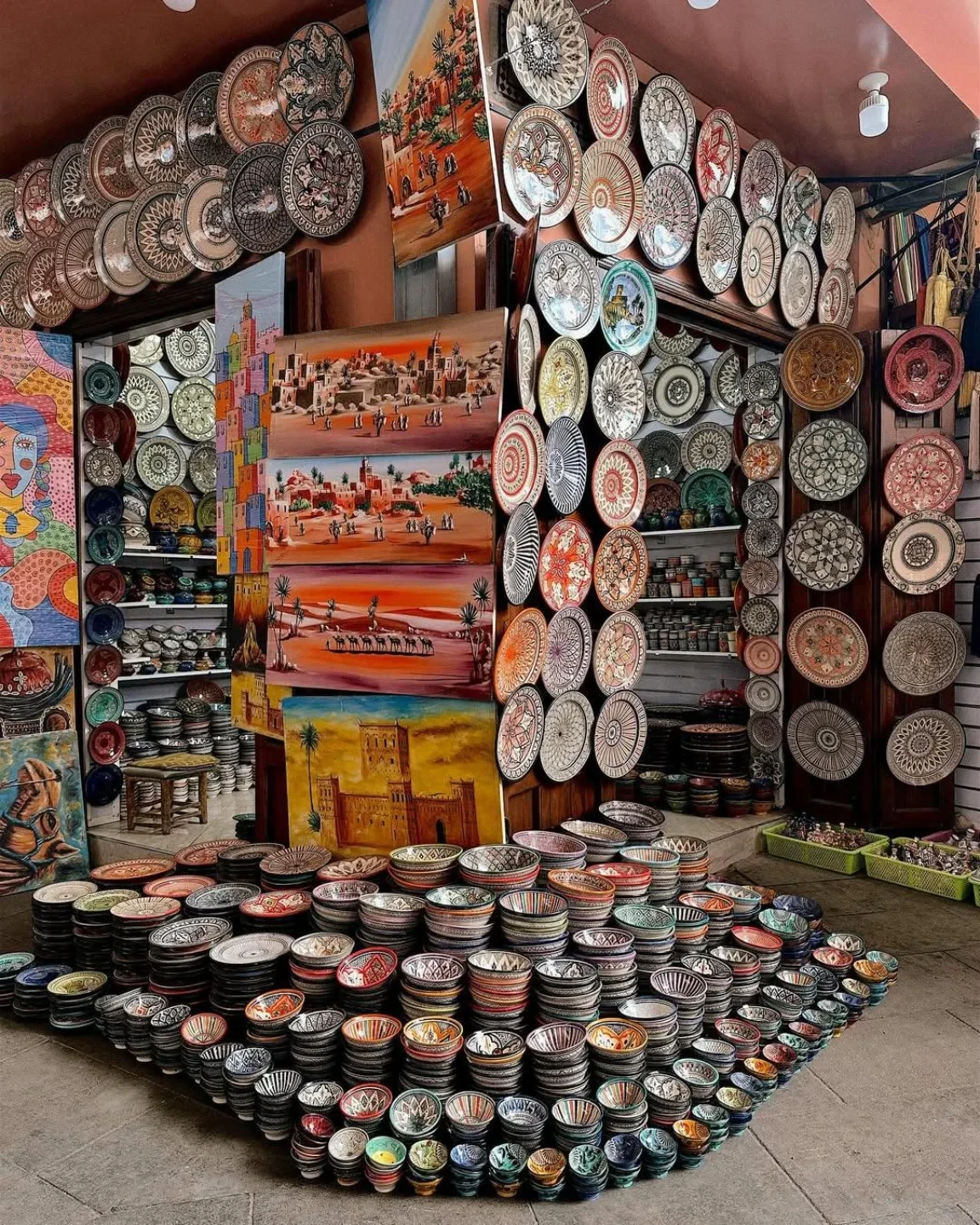
- Small decorative bowls & plates20–50 MAD · $2–5
- Hand-painted ceramics50–120 MAD · $5–12
- Tagine pots (cooking-grade)20–150 MAD · $2–15
- Large decorative pieces150–500+ MAD · $15–50+
The Lightest, Most Useful Souvenir in the Medina
Spices are the easiest purchase in the souk — lightweight, inexpensive, genuinely useful at home, and the closest thing to a portable memory that exists. A jar of ras el hanout opened months later in another city returns you immediately to Rahba Kedima. Buy loose, from vendors with visible foot traffic, and open every container before you pay.
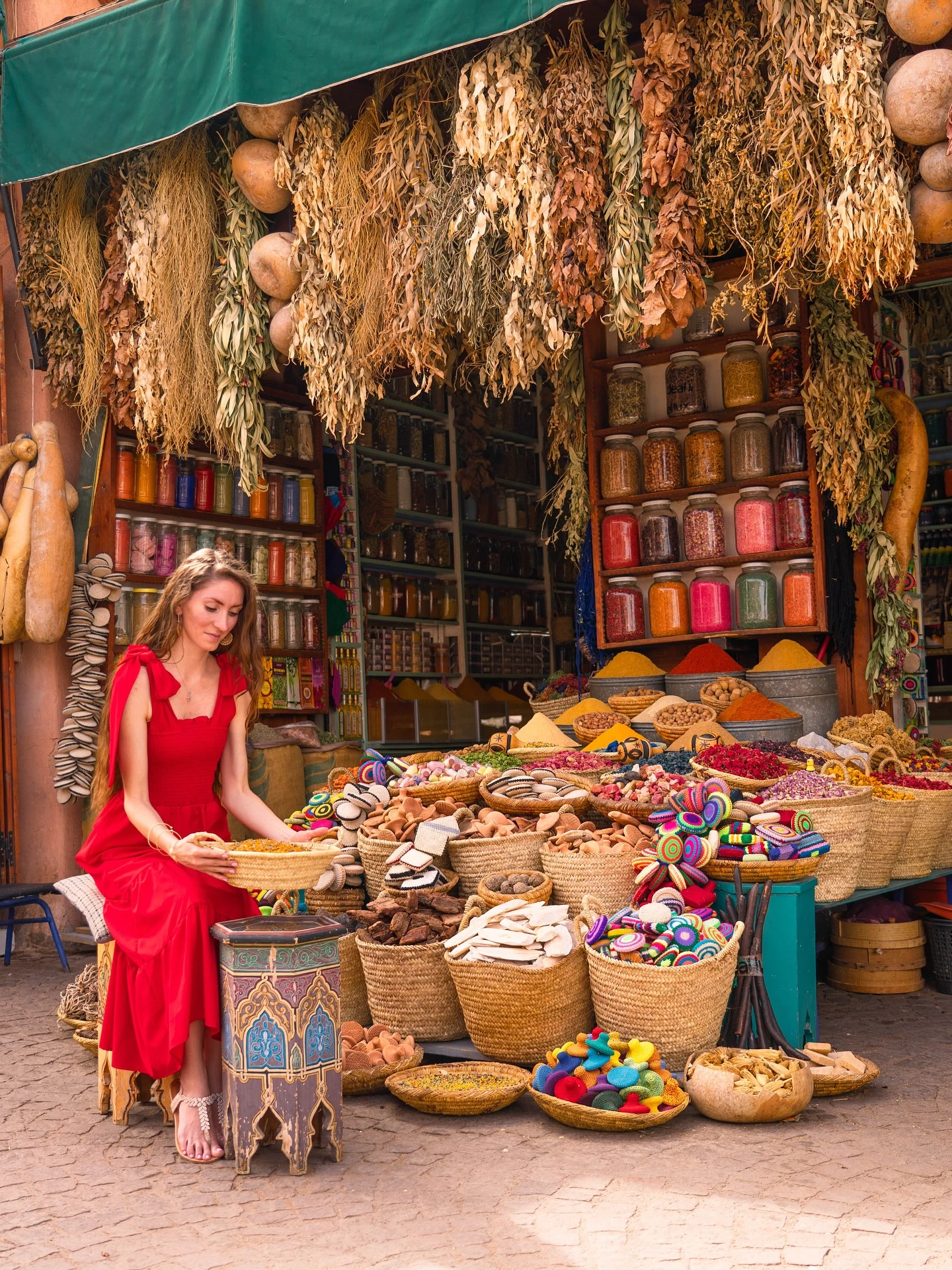
- Ras el hanout (per 100g)30–80 MAD · $3–8
- Saffron (per 1g)30–80 MAD · $3–8
- Cumin, coriander, cinnamon (per 100g)30–50 MAD · $3–5
- Dried rosebuds40–70 MAD · $4–7
Beautiful Pieces — If You Know What to Look For
Moroccan tribal jewelry ranges from machine-pressed tourist pieces to investment-grade artisan work in genuine silver with semi-precious stones. The aesthetic — chunky pendants, amber beads, coral inlay, geometric engraving — is unmistakably distinctive. The challenge is that “Berber silver” and “ethnic silver” are terms widely used for alloys containing nickel and lead rather than actual silver.
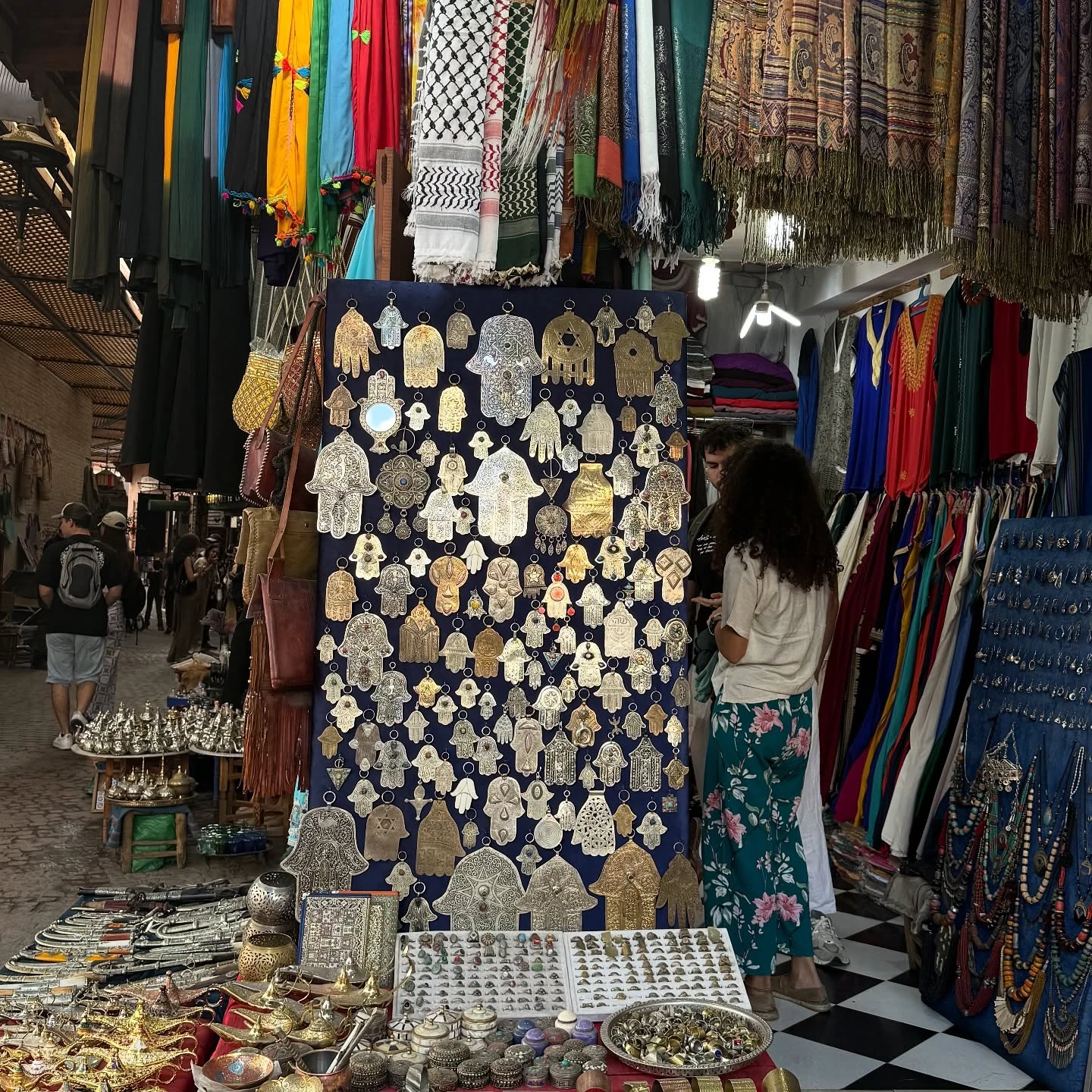
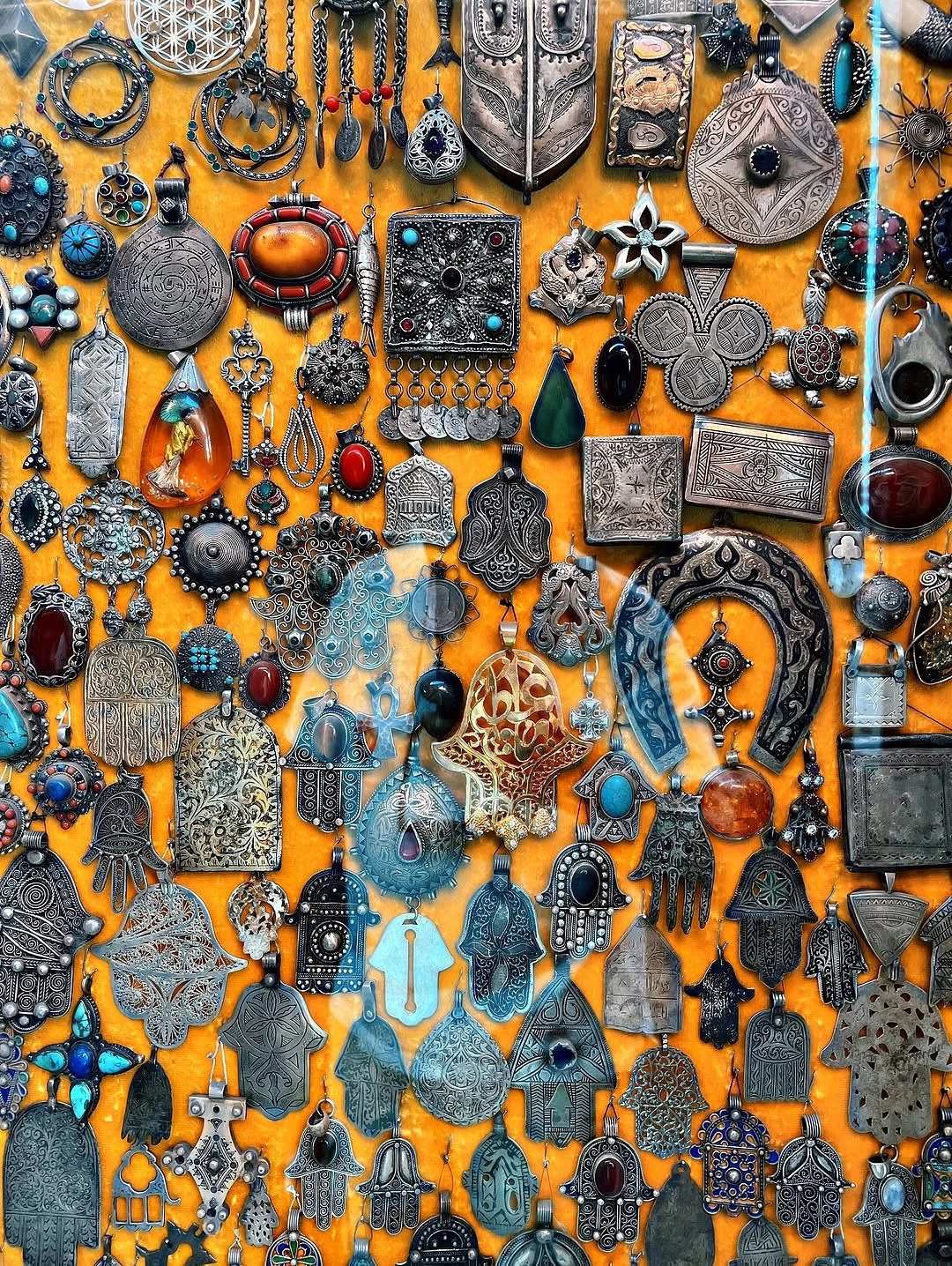
- Genuine sterling silver bracelet600–2,200 MAD · $60–220
- Berber necklace (certified silver)1,800–4,000 MAD · $180–400
- Hamsa amulet350–1,000 MAD · $35–100
- Decorative replica pieces (plated alloy)150–500 MAD · $15–50
- Hallmark: Look inside for “800,” “925,” or “950.” No number means no certified silver
- Magnet: Real silver is non-magnetic. Anything that sticks is not silver
- Weight: Genuine silver is dense. Unusually light pieces are plated
- Craftsmanship: Handmade pieces show irregular soldering and visible asymmetry. Machine-perfect finishes indicate mass production
Authentic vs. Mass-Produced
The decisive markers, product by product — everything you need before a vendor says a word.
| Product | Authentic Markers | Red Flags |
|---|---|---|
| Leather goods | Hand-stitching with variation, soft dense feel, organic smell | Machine-perfect seams, stiff texture, synthetic chemical odour |
| Carpets | Passes flame test (wool), knot irregularities, asymmetrical pattern | Synthetic fibre catches flame, uniform repeating patterns, identical adjacent pieces |
| Ceramics | Hand-painted variations, uneven glaze, slight asymmetry | Perfectly uniform, printed decals, “Made in China” on base |
| Spices | Strong aroma when opened, loose presentation, visible texture | Sealed containers with no smell, unnaturally uniform colour |
| Jewelry | Hallmarks “800”/”925″/”950,” heavy, non-magnetic, hand-engraved | No hallmarks, lightweight, sticks to magnet, machine-perfect finish |
Where to Go for What
Each souk specialises in a single craft. Knowing which quarter to head for saves time and improves prices.
The souk’s widest thoroughfare. Use it for orientation, then branch into specialist alleys where prices are lower and craftsmanship is more visible.
The aromatics quarter. Less touristy than Semmarine, more specialised. The best place to buy argan oil if you prefer the souk to a supermarket.
An open plaza where vendors arrange spices, herbs, and rosebuds in colour-graded mounds. Visit early morning for the best light and freshest atmosphere.
The blacksmiths’ souk — loud, atmospheric, entirely authentic. Watch artisans hammer patterns into brass in real time, then buy at honest prices.
The slipper souk, where babouches in every colour and leather grade are hand-stitched on site. The most reliable place to buy footwear in the medina.
The dedicated leather-goods souk near the tanneries. Noticeably lower prices than near Jemaa el-Fnaa for equivalent quality.
The carpet quarter at Place des Épices. The widest selection in the city; vendors are knowledgeable about regional origins.
The dedicated jewelry market inside the covered kissarias. Hallmarks and the magnet test before any serious purchase.
Near Ben Youssef Madrasa — dedicated pottery souk with the widest range of Marrakchi ceramics, from small bowls to full tagine sets.
Asking Price vs. Fair Price
Souk prices are opening positions, not final prices. This is what a well-negotiated transaction looks like.
| Item | Asking Price (MAD) | Fair Price (MAD) | USD (approx.) |
|---|---|---|---|
| Leather babouches | 200–300 | 100–150 | $10–15 |
| Small tagine pot | 40–80 | 20–50 | $2–5 |
| Argan oil · 150 mL | 250–400 | 150–200 | $15–20 |
| Silk or cotton scarf | 100–150 | 50–70 | $5–7 |
| Ceramic bowl (hand-painted) | 100–200 | 50–120 | $5–12 |
| Brass lantern (small) | 350–500 | 200–250 | $20–25 |
| Spices per 100g | 60–100 | 30–50 | $3–5 |
| Medium Beni Ourain carpet | 2,500–4,000 | 1,000–2,000 | $100–200 |
How to Bargain in the Marrakech Souk
Bargaining in Marrakech is not adversarial. It is a social ritual that both parties understand and genuinely enjoy. Approached with patience and good humour, it is one of the most memorable interactions the medina offers.
- Research before engaging. Walk several stalls and note price ranges before any serious approach. Your hotel concierge can also provide a fair baseline for common items.
- Let the vendor quote first. If you name a price first, they anchor higher. Wait for their opening number before saying anything.
- Start at 50% of the asking price. Not as an insult — as a clear signal that you understand how the exchange works. An offer at half price is respected, not offensive.
- Move gradually. Each round, split the difference slightly in their favour. The final price typically lands around 55–65% of the opening ask.
- Stay calm and friendly throughout. Aggression ends deals. A smile and patience get you further than any pressure tactic.
- Bundle for leverage. Buying two or three pieces from the same vendor gives genuine negotiating power — 10–20% off a combined price is entirely reasonable.
- Walk away when stuck. Politely excuse yourself. Vendors often call you back with a better number. If they don’t, the price was fair.
- Visit late in the day. As closing time approaches, motivation to close a deal increases. Late afternoon is consistently the most flexible window for negotiation.
- Pay in Moroccan dirhams. Cash in local currency consistently delivers better prices than card payments or foreign currency.
- Stop when you are satisfied. The goal is a price you are genuinely happy with. Both parties should finish with good will.
Eight Common Traps
- 01Fake antiques. Modern pieces routinely aged artificially with tea, sun, and chemicals and sold as “100+ year-old” tribal artefacts. Unless buying from a certified dealer, ignore all antique claims entirely.
- 02The free gift that isn’t free. Unsolicited tea, mint, or small objects come with invisible expectations. Accepting creates social pressure to buy. Politely decline if you are not genuinely interested.
- 03Sealed saffron. Never buy sealed containers. Always open the jar and smell it first. No strong aroma means you are buying safflower or dyed grass at saffron prices.
- 04Diluted argan oil. The foam, smell, and colour tests are all available to you. If a vendor refuses to let you open the bottle, walk away.
- 05Machine-made carpets sold as handwoven. Synthetic fibre presented as wool, uniform patterns as tribal work. The lighter test takes five seconds and eliminates every counterfeit.
- 06Unmarked jewelry. Silver without hallmarks is not certified silver. No marks plus a magnetic response equals a polite exit.
- 07Commission-based “guides.” Men offering to show you the “best shop” near Jemaa el-Fnaa are working on commission. Their recommendations lead to marked-up prices. Navigate independently or use a booked tour.
- 08Artificially identical artisan items. If every piece in a display looks exactly the same, it is factory-produced. Real artisan work varies because it is made by human hands.
Best Times to Shop
The souk’s rhythm changes through the day. Timing your visit correctly changes everything.
The Ideal Window
Quietest, coolest, best light. Vendors in good spirits — motivated by the first-sale-of-the-day tradition considered blessed in Moroccan culture. Most negotiating flexibility.
The Second Window
Good energy. Vendors motivated to close sales before sunset. Slightly busier than morning but still comfortable. Excellent afternoon light.
Avoid
Peak heat, prayer hour, lunch breaks. Many stalls partially closed. Narrow alleys in intense sun. The souk at its least rewarding.
Questions
- Is shopping in the Marrakech souk safe?The main souks around Jemaa el-Fnaa are well-policed and safe during daylight and into the evening. The primary hazard is motorcycles and scooters moving at speed through narrow alleys — they do not slow for pedestrians. Standard urban awareness is sufficient throughout the medina.
- How much should I bargain?For items under 500 MAD, the fair price is typically 50–70% of the asking price. For higher-value items — carpets, quality jewelry — 40–60% of the opening ask is a realistic outcome. The goal is a price you are genuinely satisfied with, not the theoretical minimum.
- Should I buy argan oil in the souks?Tourism experts generally advise against it due to widespread dilution and counterfeiting. If you prefer to buy in the souk, use Souk el Attarine specialists with visible foot traffic, apply all three tests, and open every bottle before committing. Carrefour supermarket provides a reliable guaranteed alternative.
- How can I tell if a carpet is genuinely handmade?The lighter test is definitive: hold a flame briefly to a loose edge thread. Wool does not ignite; synthetic fibre burns and melts with a plastic smell. Beyond that, look for knot irregularities, slight asymmetry, and natural colour variation — all evidence of human hands.
- Is Moroccan souk jewelry real silver?Quality varies enormously. Look for hallmarks — “800,” “925,” or “950” — stamped inside the piece. Apply the magnet test: real silver does not respond. Pieces described as “Berber silver” without hallmarks are likely alloys containing nickel and lead rather than certified silver.
- Can I ship large purchases home from Marrakech?Yes. DHL and FedEx operate in Marrakech and provide reliable international shipping with tracking and insurance. Many carpet and ceramic vendors have established courier arrangements — ask for a written quote before buying and confirm what is covered in the event of damage.
- What is the best souk for a first-time visitor?Use Souk Semmarine for orientation only, then branch into the specialist quarters: Souk el Attarine for spices and argan, Souk Smata for babouches, Souk Cherratine for bags, Souk Zrabi for carpets. Specialist souks offer better prices, more knowledgeable vendors, and a far more authentic atmosphere.
See the Medina With Someone Who Knows It
A guided walking tour changes the entire experience — direct access to artisan workshops, cultural context, and no commission traps.
Eight years guiding visitors through the Marrakech souk. His knowledge of every quarter — its craft traditions, its fair prices, its hidden workshops — is the difference between a rushed shopping trip and a genuinely memorable afternoon in the medina.
+212 671 437 971