
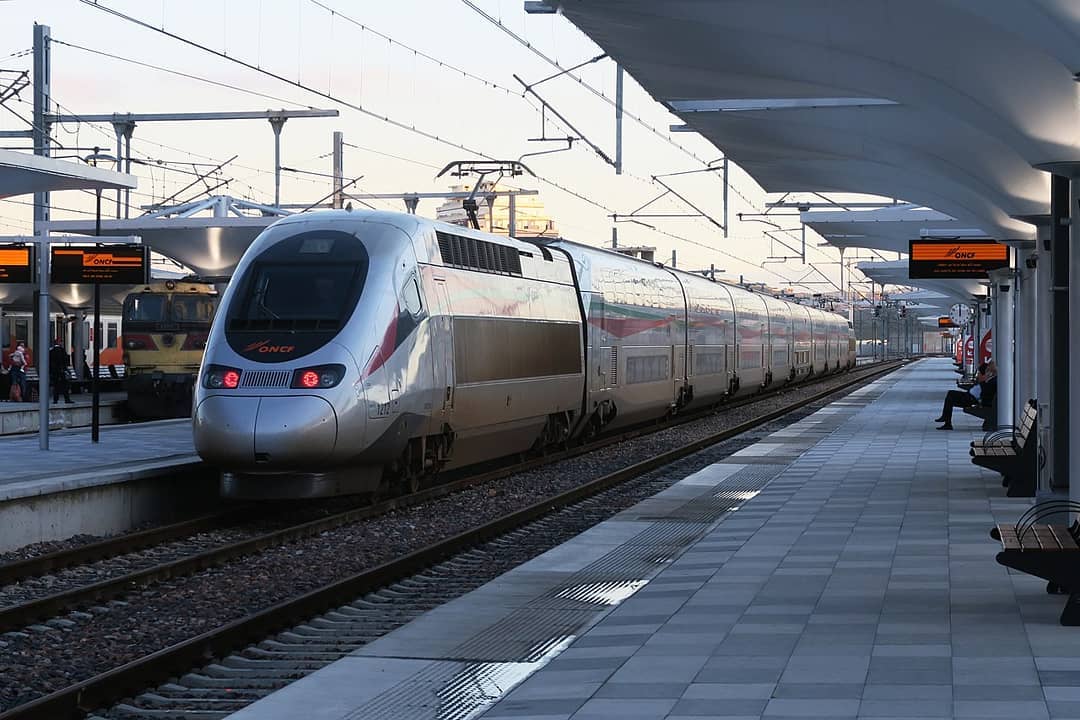
Africa’s first high-speed rail line doesn’t just connect cities — it rewrites the entire idea of getting around Morocco. The Al Boraq, the country’s flagship Morocco high-speed train, slices through the Atlantic coastal plains at up to 320 km/h, turning what was once a tedious four-hour journey between Casablanca and Tangier into something closer to a relaxed, scenic 2h 10m ride with a glass of mint tea in hand. If you’re planning a trip and want to move between Morocco’s cities quickly, comfortably, and affordably, this guide is everything you need to know before you board.
What Is the Al Boraq — and Why Does It Matter? ↑
Launched in November 2018, Al Boraq (البراق — named after the mythical winged creature of Islamic tradition) is operated by ONCF, Morocco’s national rail company. It is the first high-speed railway on the African continent and represents a landmark infrastructure investment of more than €2 billion, developed in partnership with France’s SNCF.
The train runs on a dedicated high-speed track between Tanger-Ville and Kénitra, seamlessly connecting to the conventional ONCF network onward to Rabat and Casablanca. For travellers, that translates into one of the most civilised ways to experience the Moroccan interior — watching olive groves and white farmhouses blur past your window at speeds that would have seemed impossible just a decade ago.
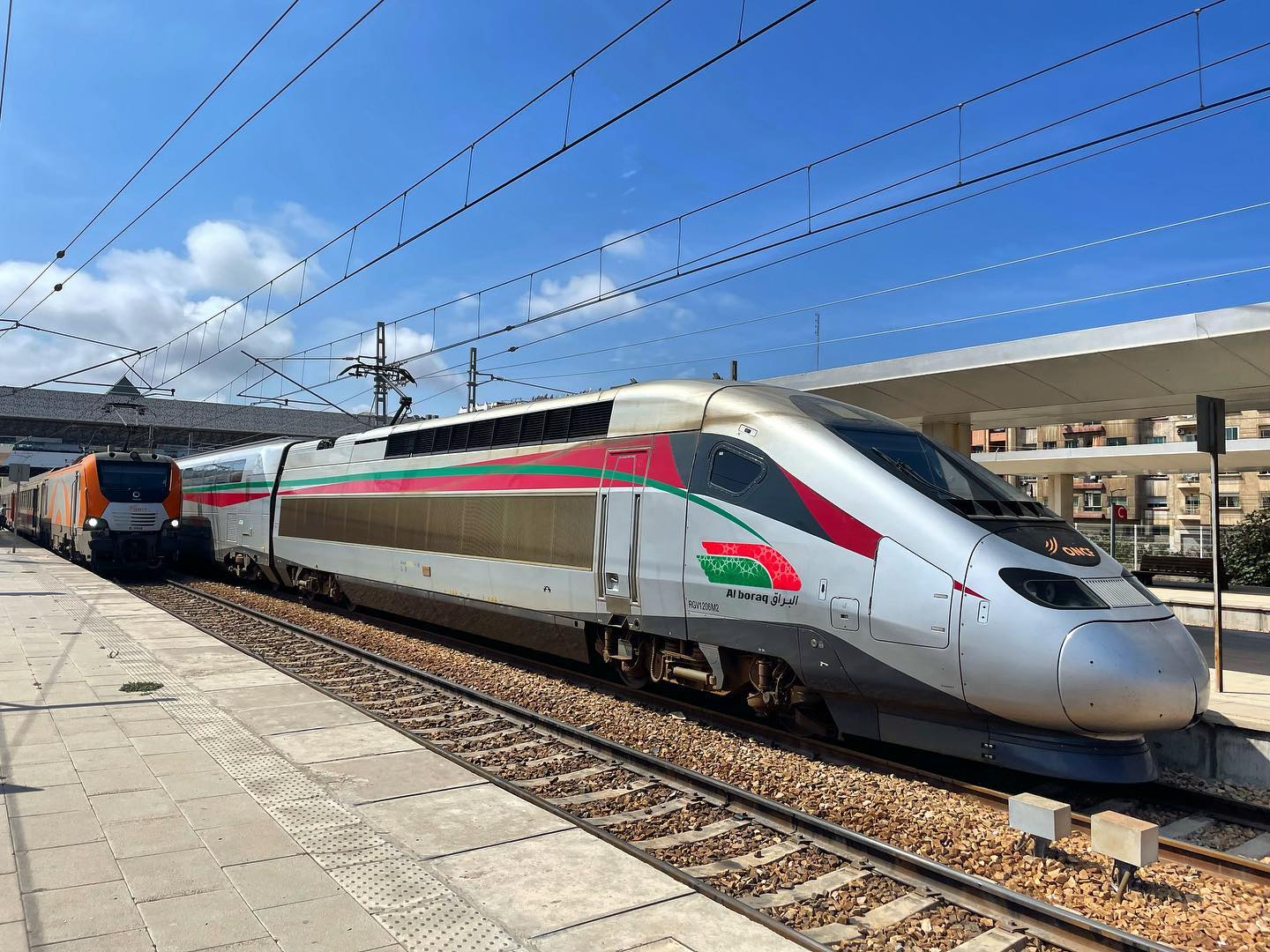
Al Boraq at Tanger-Ville station — Morocco’s pride in motion.
🔑 Quick Facts
- Operator: ONCF (Office National des Chemins de Fer)
- Max speed: 320 km/h (commercial cruising ~200–250 km/h)
- Dedicated HSR track: Tanger–Kénitra (186 km)
- Fleet: Alstom Avelia Euroduplex trainsets
- Launched: November 15, 2018
Al Boraq Routes, Stops & Journey Times ↑
The core Al Boraq route runs from Tangier south to Casablanca, with intermediate stops that open up Morocco’s Atlantic coast in a single, smooth sweep. Below is the full picture of where the train goes and roughly how long each leg takes.
| From | To | Approx. Time | Type |
|---|---|---|---|
| Tangier | Kénitra | ~1 h 20 min | HSR |
| Tangier | Rabat Agdal | ~1 h 45 min | HSR + Conv. |
| Tangier | Casablanca Voyageurs | ~2 h 10 min | HSR + Conv. |
| Casablanca | Rabat | ~35–40 min | Conv. fast |
| Kénitra | Tangier | ~1 h 20 min | HSR |
The Casablanca to Tangier Train: The Flagship Run ↑
The Casablanca to Tangier train is the journey most international visitors ask about — and rightfully so. Historically, getting between Morocco’s economic capital and the gateway to the Strait of Gibraltar required either a domestic flight, a long car ride, or a three-to-four-hour conventional train trip. The Al Boraq cut all of that down to roughly two hours and ten minutes, with none of the airport security theatre.
Trains depart multiple times a day in both directions. Services typically begin in the early morning and run until late evening, giving you genuine scheduling flexibility whether you’re catching a morning flight from Tangier Ibn Battouta Airport or arriving by ferry from Spain. Always check the ONCF official website for the most current timetable, as seasonal additions are common.
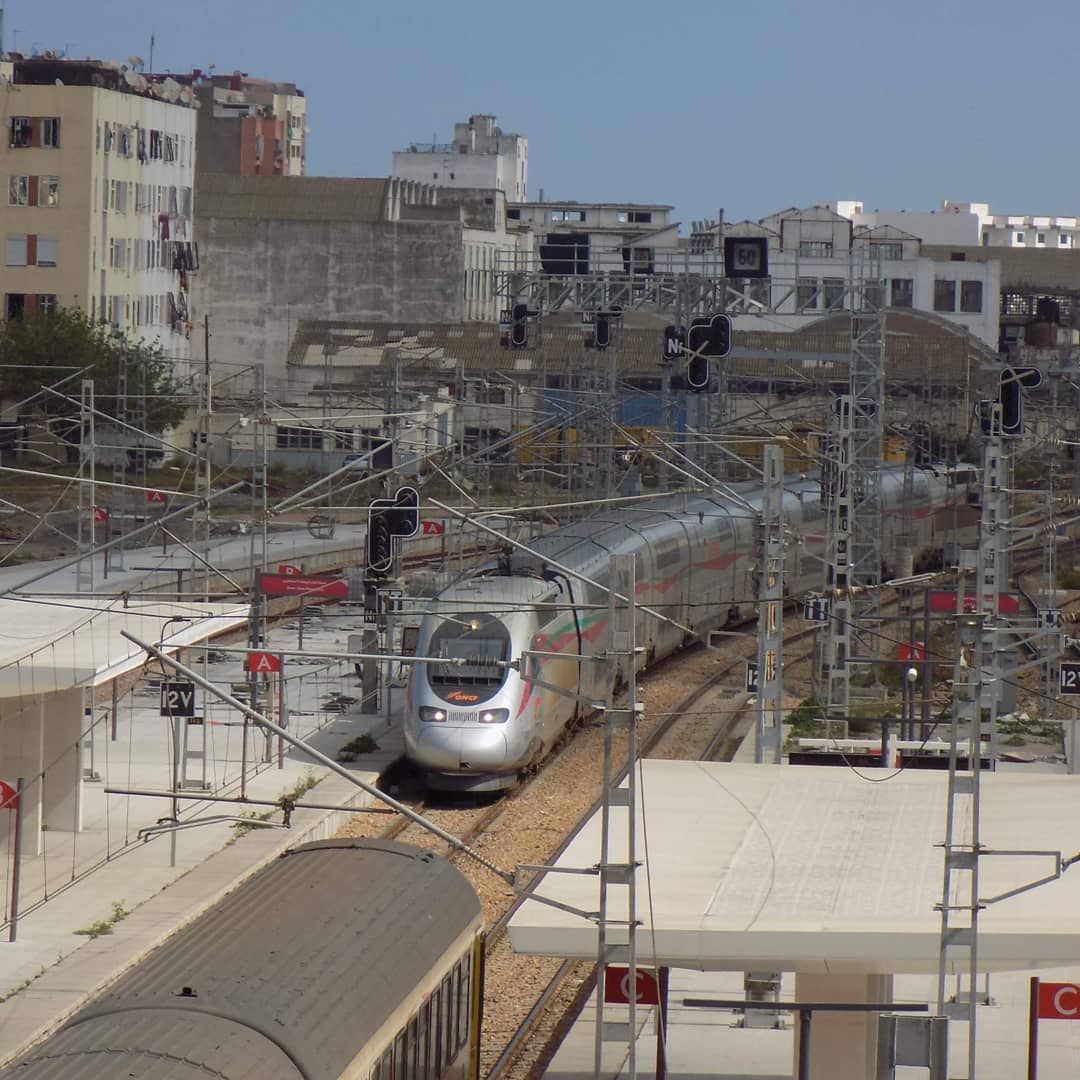
The countryside between Casablanca and Tangier, seen from Al Boraq’s panoramic windows.
ONCF Tickets for Foreigners: How to Book & What to Expect ↑
One of the most common questions from international travellers is: can I actually book this online from abroad? The answer is yes — though it helps to know the system first.
Booking Online via ONCF ↑
Ticket Classes & Pricing ↑
| Class | Casablanca ↔ Tangier (approx.) | What You Get |
|---|---|---|
| 2nd Class | 95–115 MAD | Numbered reclining seats, AC, clean carriages |
| 1st Class | 155–200 MAD | Wider seats, more legroom, quieter carriage |
| Business / Club | 220–300 MAD | Premium seating, at-seat service on select trains |
💡 Traveller’s Note on Currency
All ONCF fares are priced in Moroccan Dirham (MAD). If you’re unsure about the local currency before you travel, the article on what currency Morocco uses covers everything you need — exchange rates, ATMs, and which cards work at ticket machines.
📅 Book Ahead for Peak Periods
Trains fill up fast during Eid holidays, summer (July–August), and long weekends. Book at least 3–5 days in advance for first class, and 1–2 weeks ahead if you’re travelling in high season. There’s no surcharge for online booking — prices are identical to the station window.
The On-Board Experience: What Luxury Train Travel in Morocco Actually Looks Like ↑
Luxury train travel Morocco-style doesn’t mean chandeliers and a white-gloved maître d’. It means something arguably more appealing: genuine efficiency wrapped in quiet comfort. The Alstom Avelia Euroduplex trainsets that make up the Al Boraq fleet are the same double-deck, high-speed trainsets used across Europe’s TGV network — clean, modern, and well-maintained.
Seating
Reclining seats in all classes. 1st class offers noticeably more legroom and a calmer atmosphere. Numbered reservations mean no scramble for places.
Air Conditioning
All carriages are fully air-conditioned — a genuine luxury when Moroccan summers push 38°C on the Atlantic plains.
Power & Wi-Fi
Charging points are available at most seat clusters. On-board Wi-Fi exists but connectivity varies — download what you need before boarding.
Food & Drinks
A small café-bar carriage sells hot drinks, pastries, and sandwiches. Prices are reasonable; bring your own snacks if you’re particular.
Luggage
Overhead racks handle standard carry-on luggage. Larger bags fit in designated end-of-carriage areas. No luggage check-in required.
Accessibility
Dedicated spaces for passengers with reduced mobility and accessible toilets on each train.
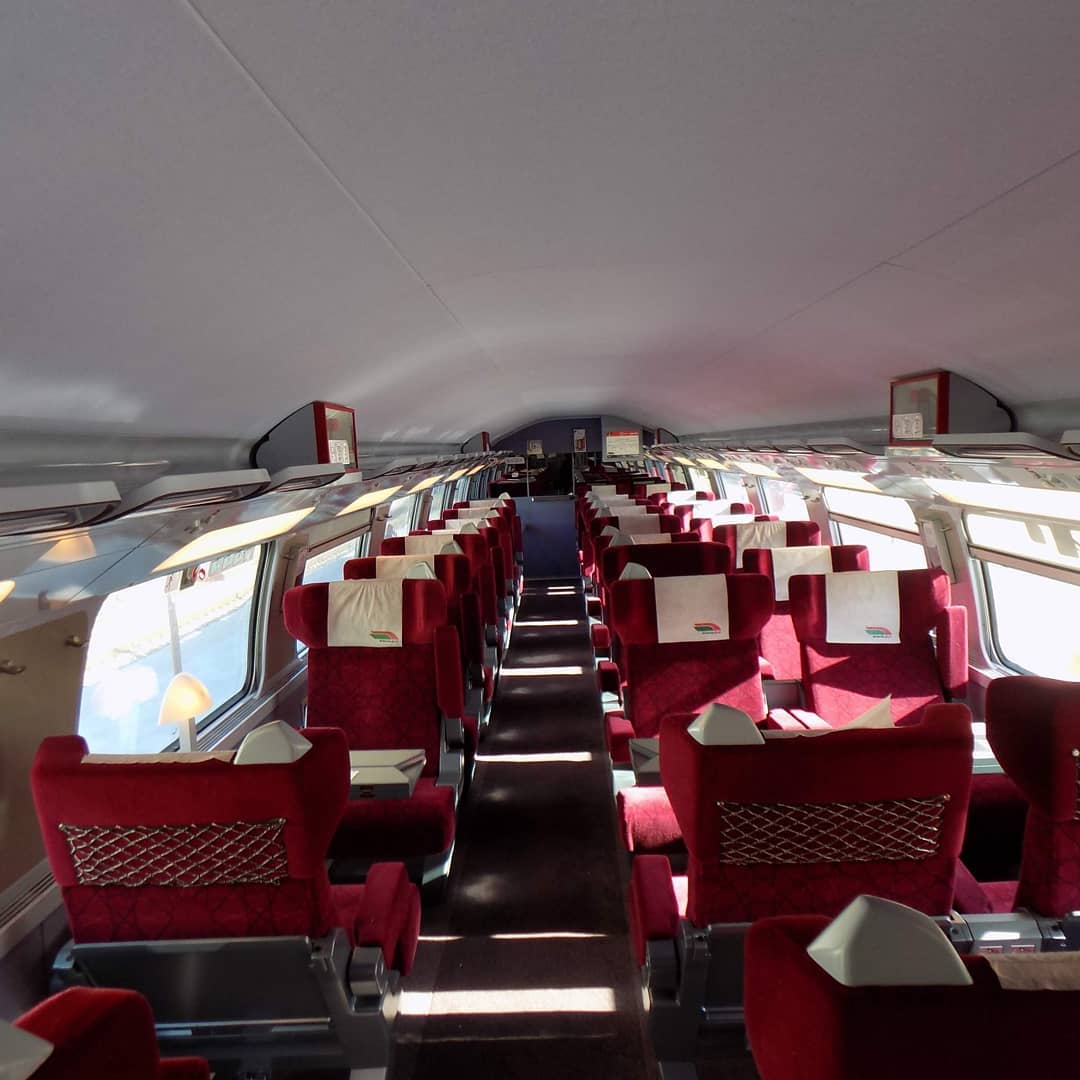
First class aboard Al Boraq — quiet, spacious, and a world away from the airport security queue.
Practical Tips for a Smooth Journey ↑
At the Station ↑
- Arrive 15–20 minutes early. Moroccan stations don’t have lengthy security checks — just platform access — but finding the right platform in a busy station like Casa-Voyageurs takes a moment.
- Check the departure boards carefully. Al Boraq trains are listed alongside conventional trains. Look for “TGV” or “Grande Vitesse” labels in the departure information.
- Keep your ticket accessible. Conductors check tickets 10–20 minutes after departure. Your phone screen is perfectly fine.
Safety & Security ↑
Moroccan trains are generally safe and well-policed. That said, standard travel common sense applies: keep valuables in your front bag or on your person, don’t leave luggage unattended, and be aware of your surroundings at busy stations. For a broader picture of what to expect as a visitor, the guide on Morocco is safe to visit is worth reading before you travel. If you’re worried about being targeted as a tourist, especially around train stations, the resource covering common tourist scams in Morocco will help you stay one step ahead.
Getting To and From the Stations ↑
- Casablanca: Casa-Voyageurs is connected by the Casablanca Tramway. Petit taxis and Careem (rideshare) are widely available outside.
- Rabat: Rabat Agdal and Rabat-Ville are both central and easy to navigate by taxi or on foot.
- Tangier: Tanger-Ville station sits close to the medina. The port (for Spain ferries) is about 10 minutes by taxi.
Train vs. Flight vs. Bus: Honest Comparison ↑
| Factor | Al Boraq Train | Domestic Flight | Long-Distance Bus |
|---|---|---|---|
| Casablanca–Tangier | ~2 h 10 min door-to-train | ~3–3.5 h total (airport time) | ~4.5–5.5 h |
| Cost | Low–Mid | Mid–High | Very Low |
| City-centre access | ✅ Station in the city | ❌ Airport far out | ✅ Terminal usually central |
| Comfort | ✅ Spacious, AC, chargers | ⚠️ Varies by carrier | ⚠️ Long ride, less leg room |
| Luggage limits | ✅ None (reasonable bags) | ❌ Strict weight limits | ✅ Generous |
| Scenery | ✅ Atlantic plains, farms, hills | ❌ Clouds only | ✅ Good but slower |
For most routes where Al Boraq operates, the train wins on almost every dimension for the independent traveller. The only scenario where a domestic flight makes sense is a very long north-to-south journey — say, Tangier to Marrakech — where ONCF’s conventional network would take five-plus hours and Al Boraq doesn’t yet extend south of Casablanca.
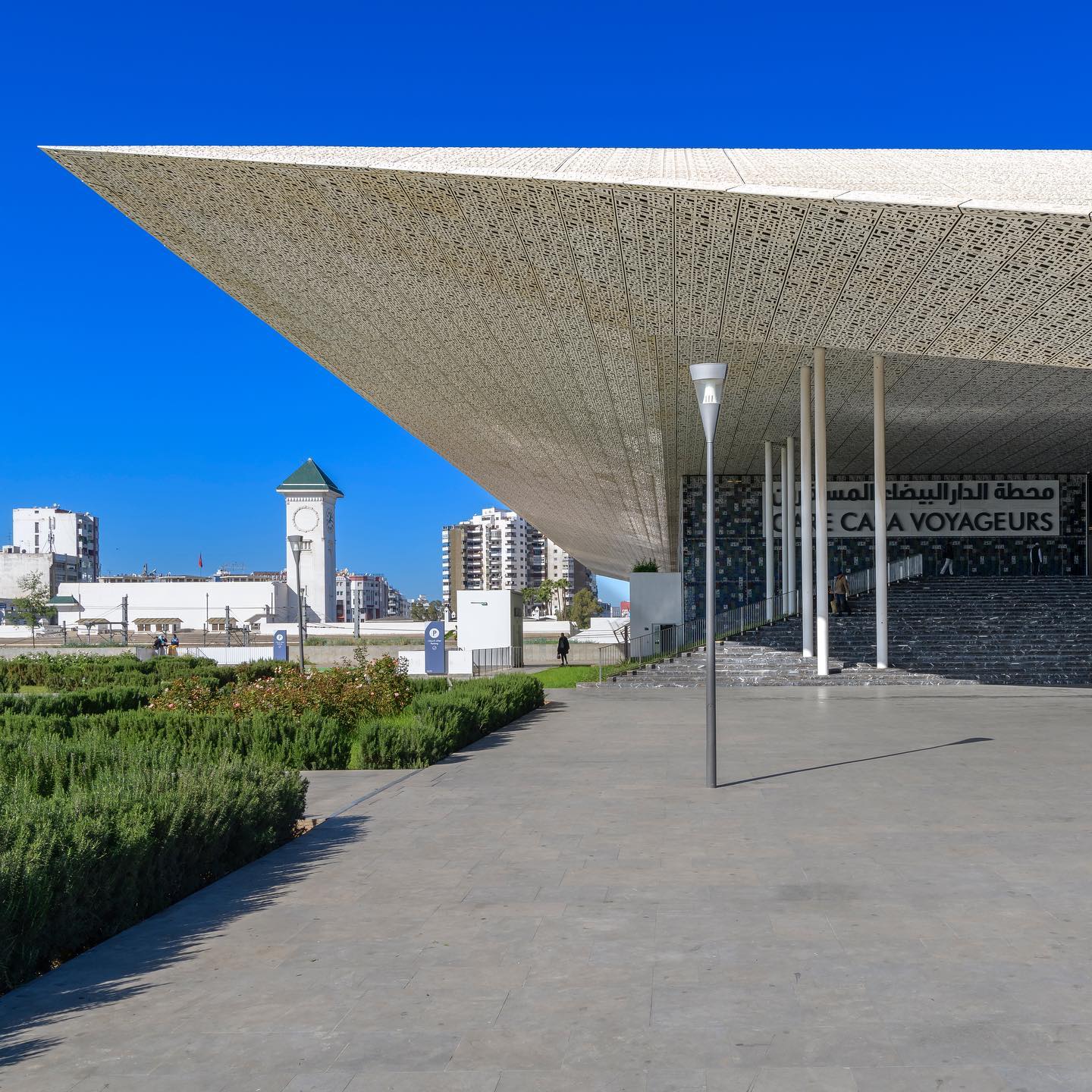
Casa-Voyageurs in Casablanca — the main hub where Al Boraq meets the broader ONCF network.
Key Stations Along the Al Boraq Route ↑
Understanding which station serves which part of each city will save you time and the occasional taxi confusion. Here’s a quick rundown of the main stops.
🏙️ Tanger-Ville
The northern terminus. The revamped station opened alongside the Al Boraq launch — elegant, modern, and a short walk from the Grand Socco and the medina. The easiest station in Morocco for first-time arrivals.
🏙️ Kénitra
Where the dedicated high-speed track ends and the conventional line to Rabat and Casablanca begins. The transition is seamless — you stay on the same train. Kénitra itself is a pleasant, low-key city worth knowing if you’re visiting northern Morocco.
🏙️ Rabat Agdal / Rabat-Ville
Two stations serve Morocco’s capital. Agdal is newer and slightly more convenient for the southern residential districts; Rabat-Ville sits at the edge of the medina. Al Boraq trains typically stop at Agdal.
🏙️ Casablanca Voyageurs
The main intercity hub of Morocco’s largest city. Well connected by tram and taxi to the Hassan II Mosque, the Corniche, and the city’s business districts. Don’t confuse it with Casa-Port (the secondary station closer to the old medina).
Morocco’s rail network is steadily expanding southward. Plans to extend high-speed rail toward Marrakech are in various stages of development — potentially transforming travel between Moroccan cities even further within the next decade.
Frequently Asked Questions ↑
The Al Boraq isn’t just an efficient way to travel — it’s a statement about where Morocco is headed. Boarding a Morocco high-speed train that crosses an entire country in two hours, past whitewashed towns and Atlantic farmland, for the price of a decent lunch, is one of those small travel moments that quietly recalibrates your expectations. If you’re mapping out a trip between Tangier and Casablanca — or anywhere along Morocco’s Atlantic spine — skip the airport. Take the train. You’ll arrive better rested, right in the city centre, and with a far more honest sense of the country you’ve just crossed.