A Journey From the Medina to the Sahara
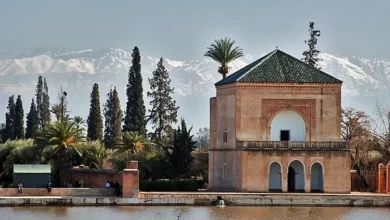
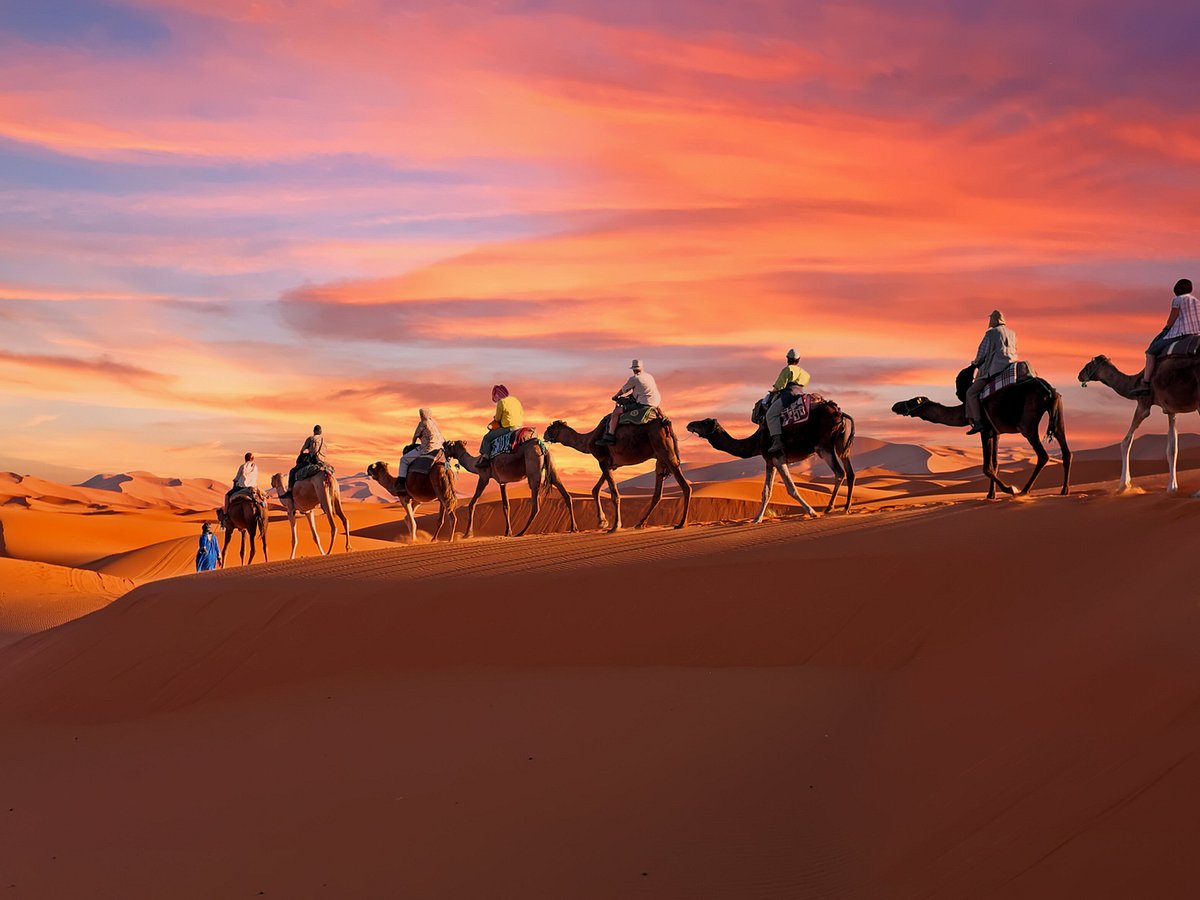
There is a particular kind of silence you only find in the Sahara — the kind that settles over you as a camel moves softly through amber dunes and the horizon melts into shades of copper and rose. This 3-day tour from Marrakech to Merzouga is designed for travellers who want to experience that silence, along with everything the road south has to offer: fortified kasbahs, cinematic gorges, ancient palm oases, and the raw poetry of the Moroccan desert.
The journey begins in Marrakech, one of the great cities of Morocco, and threads through the High Atlas Mountains before dropping into the pre-Saharan valleys. By the second evening, you are riding a camel into the heart of Erg Chebbi, where dunes rise 150 metres above the desert floor. By the third morning, you have watched the sun ignite those same dunes from your camp — a sight that never quite leaves you.
This itinerary is unhurried, beautifully paced, and led by a licensed Moroccan guide who speaks your language and knows these landscapes intimately. Every stop is meaningful. Nothing is filler.
Highlights of the Route
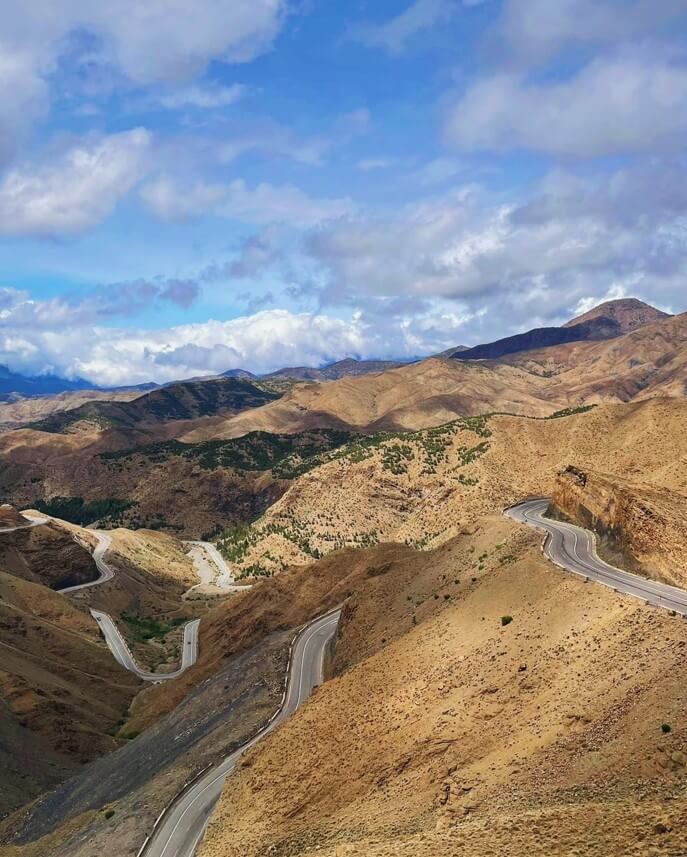
Tizi n’Tichka Pass
A serpentine ascent to 2,260 m through Berber villages and panoramic Atlas vistas — one of Morocco’s most dramatic mountain roads.
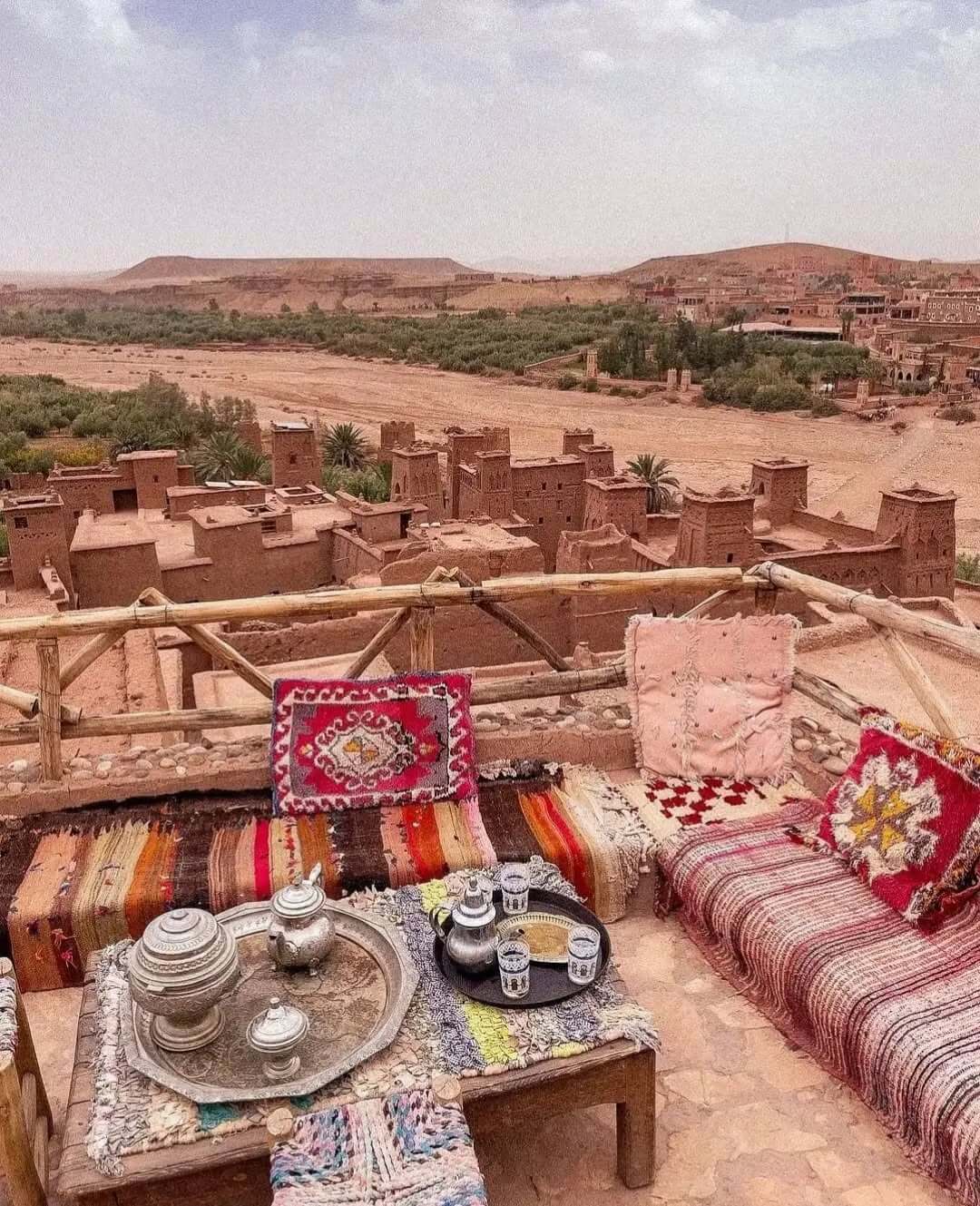
Ait Ben Haddou Kasbah
This UNESCO World Heritage ksar, built from pisé earth, has stood for centuries and appeared in more than twenty major films and series.
Ouarzazate
Africa’s film capital. Visit the Taourirt Kasbah and, if time allows, the Atlas Film Studios where much of Game of Thrones was shot.
Valley of Roses
In spring, the road through Kelaat M’Gouna fills with the scent of Damascena roses. Year-round, the valley is a study in lush green against raw rock.
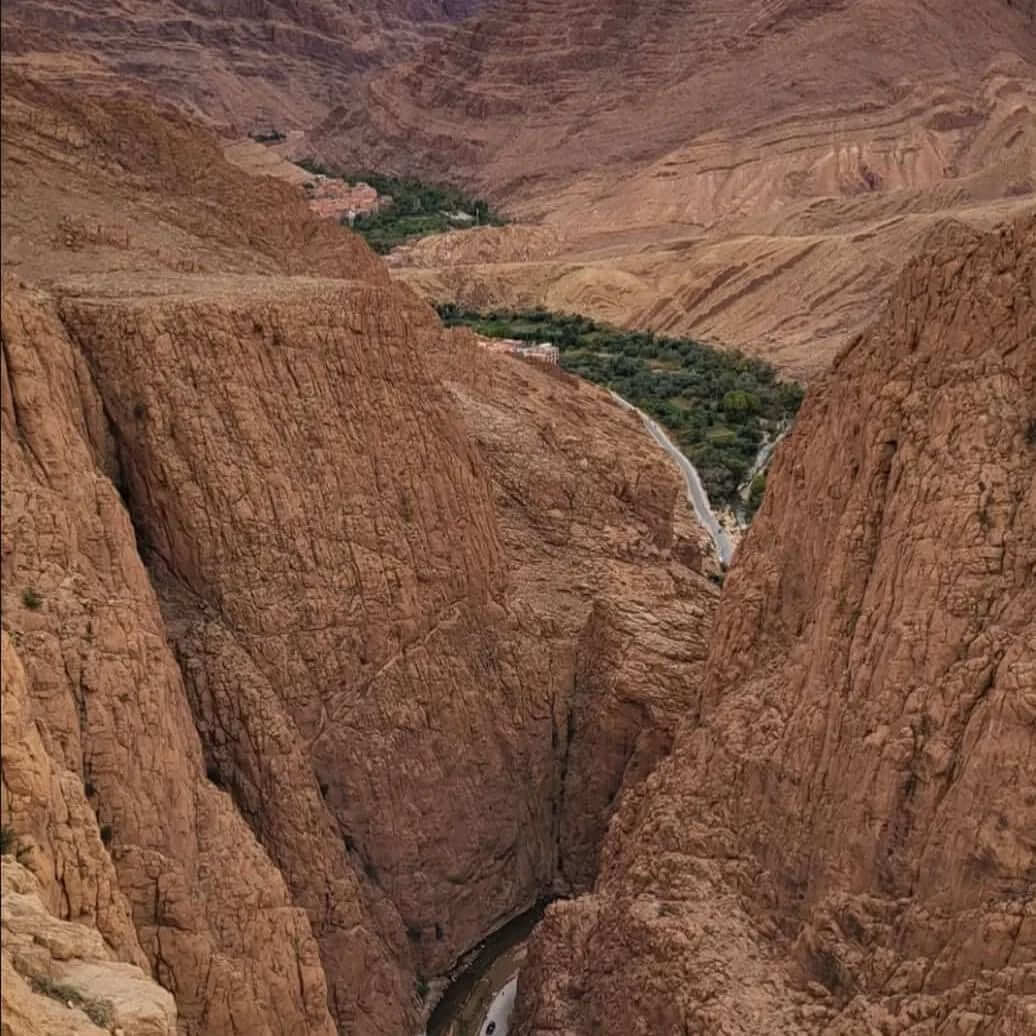
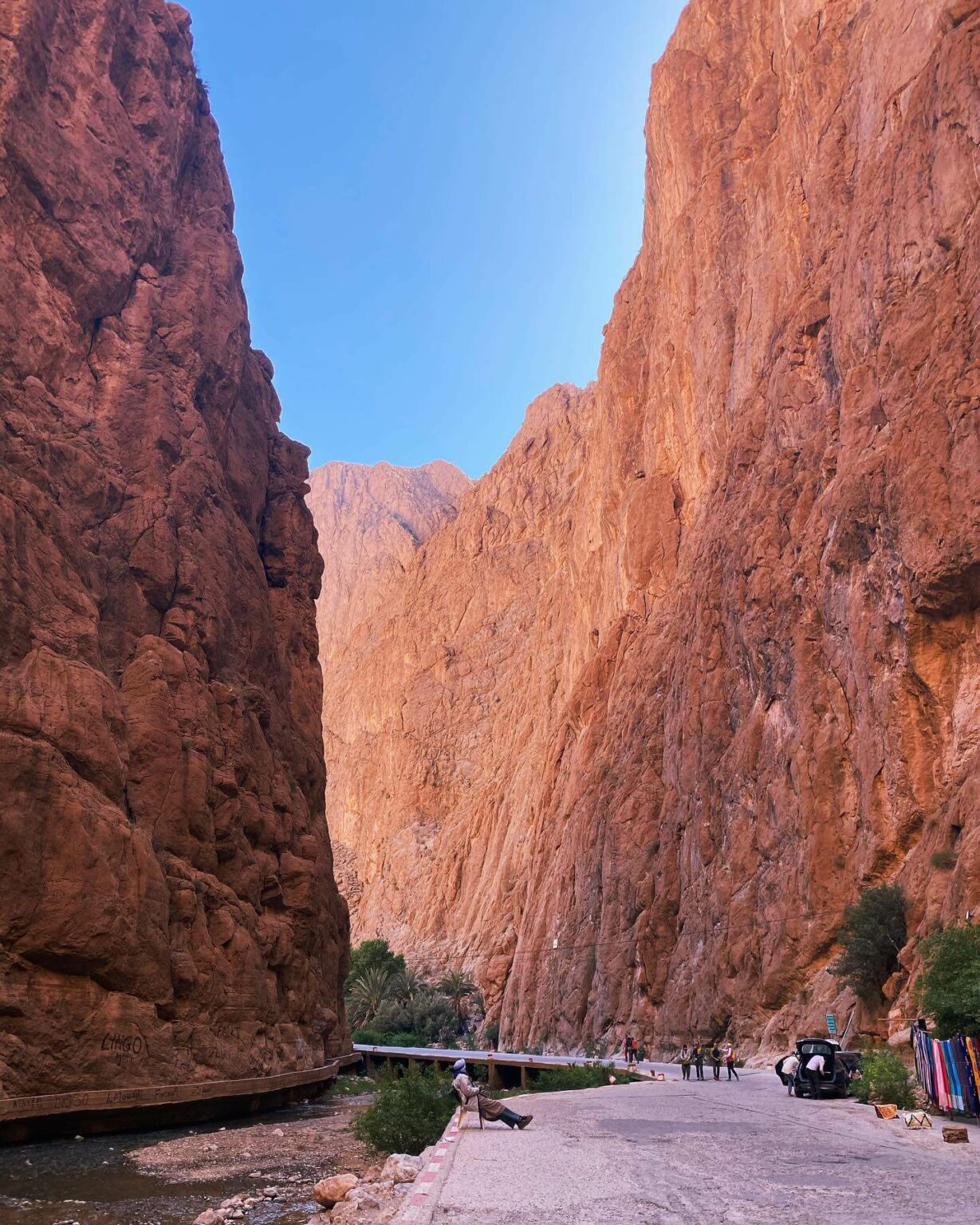
Todra & Dades Gorges
Sheer limestone walls rising 300 m above a narrow river — a landscape that feels carved by something far older and larger than human imagination.
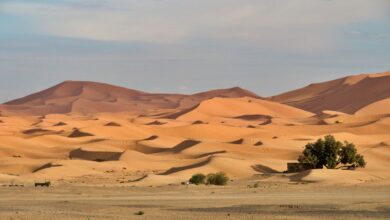
Erg Chebbi Dunes
The centrepiece of the whole journey: a camel trek at sunset into a sea of golden dunes, followed by a night under an impossibly clear desert sky.
Landscapes Along the Way
Detailed Itinerary
Marrakech → Ait Ben Haddou → Ouarzazate → Dades Gorges
Your driver meets you at your Marrakech riad or hotel at eight in the morning. The city dissolves quickly once you gain altitude on the road south, replaced by the raw geology of the High Atlas — ochre rock, patchy snow in winter, traditional Berber villages clinging to ridgelines. The Tizi n’Tichka pass is the visual crescendo of this first section, and the views from the top are worth every hairpin bend.
Ait Ben Haddou appears mid-morning, its towers of compacted earth glowing against a sky that always seems wider here. You have enough time to cross the river on foot, climb through the lower ksar, and take in the rooftop panorama before continuing to Ouarzazate. The city earns its nickname — the Atlas Film Studios and the Taourirt Kasbah are fascinating even for travellers who have never seen the films made here.
The afternoon drive through the Skoura palmery and the Valley of Roses is gentle and fragrant. By evening you reach Dades Gorges, where the hotel sits beside terracotta cliffs lit amber in the last light. Dinner is a slow affair — tagine, fresh bread, mint tea — exactly the kind of meal the day has earned.
Dades Gorges → Todra Gorge → Erfoud → Merzouga Dunes
Breakfast with a gorge view, then east along the Route of a Thousand Kasbahs. The Todra Gorge is the morning’s centrepiece — a slot canyon where the walls lean so close together you feel the temperature drop. Spend as much time here as you like. Some travellers walk the canyon floor in twenty minutes; others stay an hour and barely notice the time passing.
The road from Todra to Erfoud passes through prehistoric landscape. Erfoud itself is famous for its fossil workshops — ammonites and trilobites emerge from polished black marble, some 350 million years old. A brief stop in Rissani, the cradle of Morocco’s ruling Alaouite dynasty, completes the history of the day.
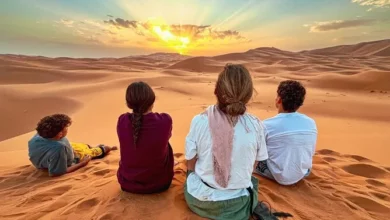
And then, near Merzouga, the dunes appear. There is no gradual introduction — Erg Chebbi rises from the flat hamada without warning, a wall of gold against blue sky. Your camel waits. The sunset trek lasts roughly ninety minutes, moving deeper into the dunes as the light shifts from gold to scarlet to violet. Camp is waiting: private tent, traditional dinner, a fire, Berber music, and above you, the Milky Way sharp enough to read by.
Merzouga → Draa Valley → Ouarzazate → Marrakech
Wake early enough to watch the sunrise paint the dunes — this is, in the opinion of most travellers who do it, the single most beautiful moment of the entire trip. Breakfast at camp, then camel back to the village and into the vehicle for the long drive home via the Draa Valley.
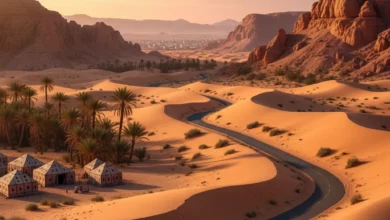
The Draa route is the more scenic return: Morocco’s longest river valley runs for over 1,100 km through an unbroken corridor of date palms, fortified granaries, and crumbling kasbahs. It is the kind of landscape you photograph continuously and never quite capture. Lunch in Agdez, a brief stop in Ouarzazate, and then the High Atlas again — this time with the afternoon sun behind you and Marrakech slowly gathering on the horizon. Arrival around seven in the evening.
Included & Not Included
- 🚗Private 4×4 or minibus with licensed multilingual driver
- 🏨Hotel in Dades Gorges — dinner, bed & breakfast
- 🏕️Luxury desert camp — private tent with en-suite bathroom
- 🐪Sunset & sunrise camel trekking in Erg Chebbi
- 🥘2 dinners & 2 breakfasts; vegetarian options available
- ⛽All fuel, motorway tolls & comprehensive vehicle insurance
- 🌰Visit to women’s argan oil cooperative
- 🍽️Lunch (good local options €8–15 per person)
- 🥤Personal drinks & bottled water
- 🎫Entrance fees — Ait Ben Haddou approx. €3
- 💶Gratuities for driver & local guides (€5–10/day suggested)
- 🛍️Shopping & personal expenses
Interactive Tour Map
What Sets This Tour Apart
Officially Licensed
Ministry of Tourism certified guide with 15+ years’ experience in southern Morocco.
Responsible Travel
We work directly with Berber communities and follow sustainable tourism practices.
Authentic Comfort
Desert camps with private facilities — genuine experience, no compromise on comfort.
Full Transparency
No hidden extras. The price you agree is the price you pay — everything itemised.
Safe & Insured
Morocco is very safe for tourists; all vehicles carry full insurance and first-aid kits.
4.9 / 5 Rating
350+ verified traveller reviews from Canada, Europe, the US, and beyond.
Book Directly — No Middleman
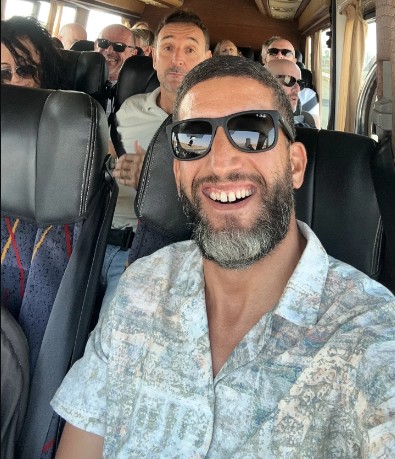
Mouhssine ELIOUJ
Mouhssine has guided hundreds of travellers through the landscapes of southern Morocco — from the High Atlas to the Erg Chebbi dunes. Born and raised in the region, he speaks English, French, Arabic, and Tamazight (Berber), and holds an official guide licence issued by the Moroccan Ministry of Tourism (Ref. 2898). He answers messages quickly, adapts itineraries to your pace, and has an uncanny gift for finding the right moment to stop and let the landscape speak for itself.
Before you travel, it is worth knowing what currency Morocco uses and how best to carry cash for tips and local markets — Mouhssine is happy to advise on practicalities like this when you get in touch.
WhatsApp MouhssineWhat Guests Are Saying
Three days that honestly changed how I see travel. The desert camp on night two was beyond anything I expected. Mouhssine was knowledgeable, funny, and genuinely cared that we had the best experience possible.
Every detail was handled perfectly. Ait Ben Haddou in the morning light, the Todra Gorge, then the dunes at sunset — it was perfectly paced and nothing felt rushed. Highly recommend booking directly.
I had done group tours before but this was private and it made all the difference. We stopped when we wanted, lingered at the gorge, and arrived at the dunes just as the light turned golden. Perfect.
FAQ
Review moroccantraveltrips
Scenery & Itinerary
Logistics & Comfort
Guide Expertise
Cultural Authenticity
Value for Money
EXCELLENT
3 Days Tour From Marrakech to Merzouga and the Dades Gorges