Best Sunsets in Morocco:
Where the Sky Becomes Art
From the Sahara’s golden dunes to Atlantic ramparts swept by sea wind — a definitive guide to Morocco’s most breathtaking sunset spots, photography techniques, seasonal timing, and experiences worth crossing continents for.
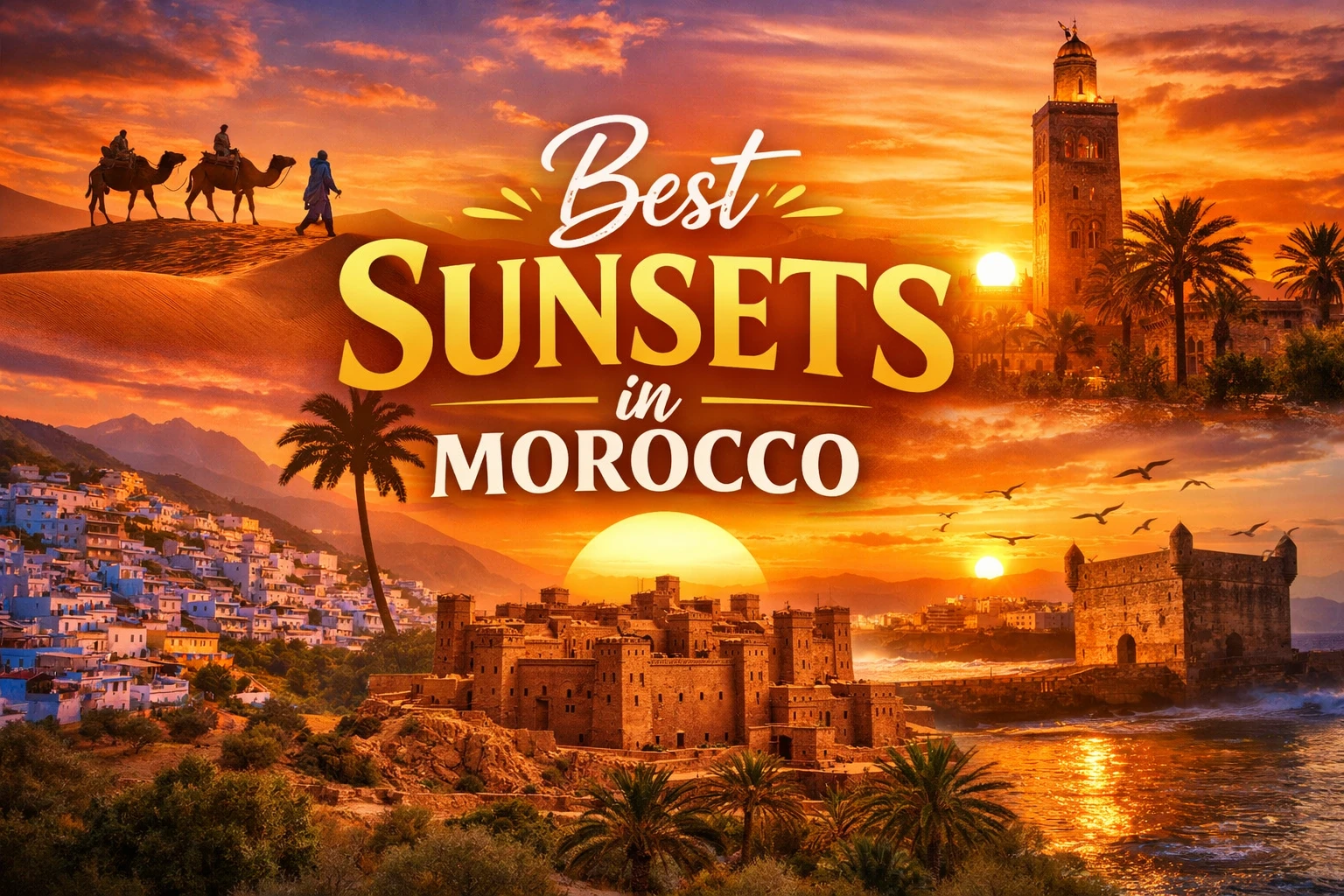
Morocco’s sunsets unfold across an extraordinary range of landscapes — desert, ocean, mountain, and medina — each offering a singular quality of light.
The best sunsets in Morocco belong to a rare category of travel experiences — the kind that stay with you long after you’ve returned home. Across a country spanning Atlantic coastline, Saharan ergs, Berber mountain valleys, and centuries-old medinas, Morocco offers a breadth of sunset settings unmatched anywhere else in North Africa or the Mediterranean. Each evening the sky undergoes an alchemy of light, and the specific character of that transformation depends entirely on where you position yourself to watch it.
This guide covers the eight finest Morocco sunset spots in precise detail: what makes each distinctive, when to visit, where to stand, what to photograph, and how to elevate the experience beyond simply watching the sky change colour. Whether you’re planning a first trip, a return visit, or a dedicated photography expedition, this is the resource you need.
- Sahara Desert — Merzouga & Erg Chebbi
- Essaouira — Atlantic Ramparts
- Chefchaouen — Spanish Mosque
- Agafay Desert — Near Marrakech
- Aït Ben Haddou — UNESCO Kasbah
- Legzira Beach — Natural Arches
- Ouzoud Waterfalls — Rainbow Mist
- Atlas Mountains — Imlil Valley
Why Morocco’s Sunsets Are Among the World’s Best top
A Convergence of Landscapes
Few countries can offer a sunset in a Saharan dune sea one day and an ocean sunset from a 300-year-old coastal fortification the next. Morocco’s geography spans roughly 1,500 kilometres from the Mediterranean south to the Sahara, and from the Atlantic coast east to Algeria — compressing a remarkable variety of light conditions, terrain, and atmosphere into a single country. The Sahara’s undulating dunes act as natural amphitheaters, magnifying every degree of light shift. The Atlantic coast delivers unobstructed ocean horizons where the sun disappears into the sea. The High Atlas creates dramatic ridge silhouettes and alpenglow. Each setting produces a fundamentally different sunset character.
Light Quality: Latitude and Aridity
Morocco occupies latitudes between 27°N and 36°N. At this position, golden hour — the hour before sunset — is extended relative to more equatorial destinations, producing softer, more raked light that sculpts surfaces and intensifies warm tones. Combined with the country’s low ambient humidity in the interior and south, the air carries minimal haze, allowing light to reach the eye with exceptional clarity and saturation. This is precisely why photographers describe Moroccan sunsets as looking almost processed — the unfiltered amber and ochre hues that require heavy post-production work elsewhere appear naturally here.
Cultural Depth
In Morocco, sunset is rarely a passive experience. The Maghrib call to prayer echoes across the medinas as the sky shifts to purple. Desert camps come alive with the sound of Gnawa music. Berber families on mountain terraces pour the second glass of mint tea. These layers of cultural atmosphere transform what could be merely a visual spectacle into something genuinely immersive — a moment where place, light, sound, and human presence converge.
The Eight Best Sunset Spots in Morocco top
1. Sahara Desert: Merzouga and Erg Chebbi
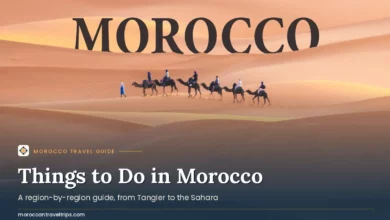
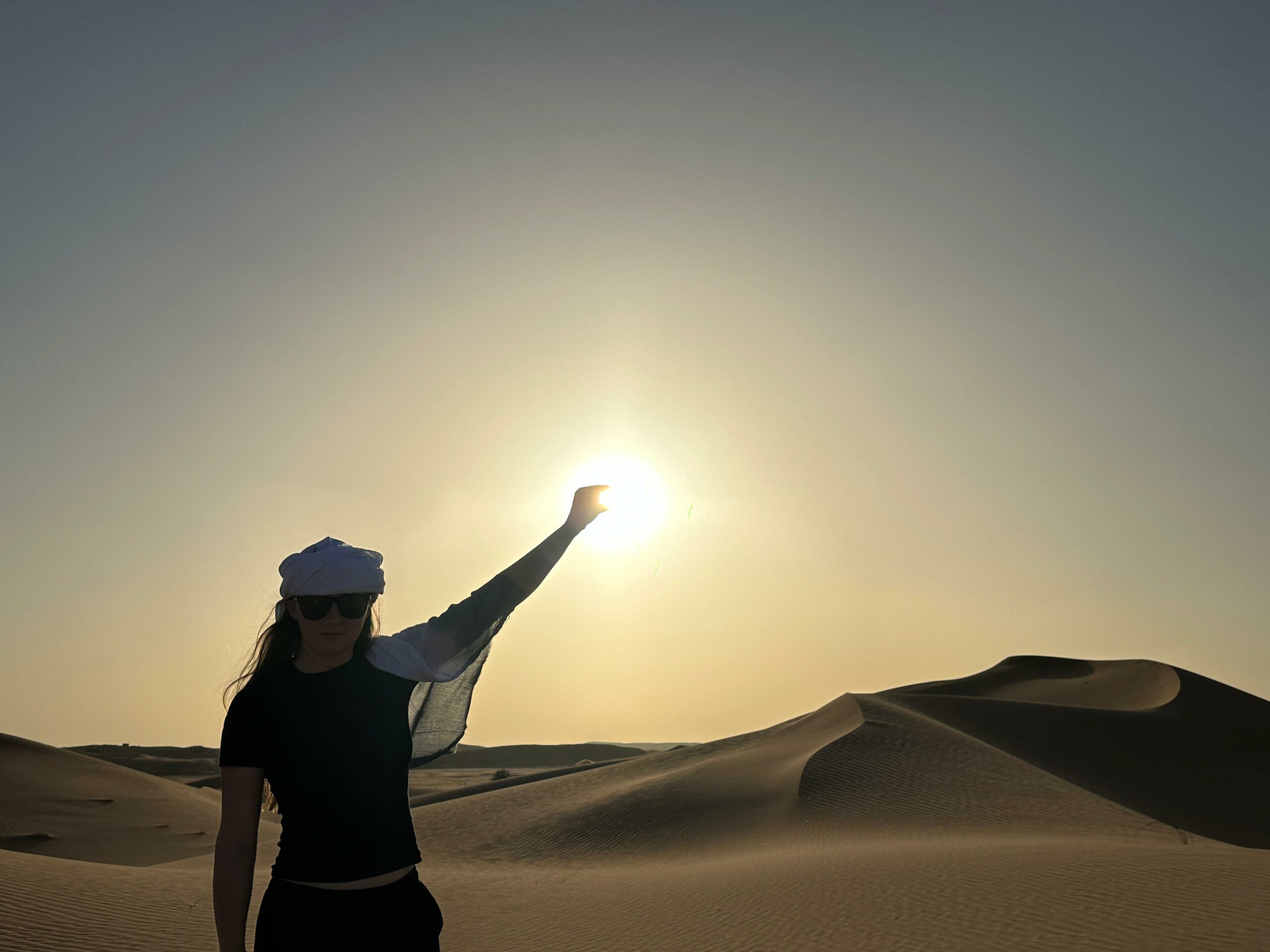
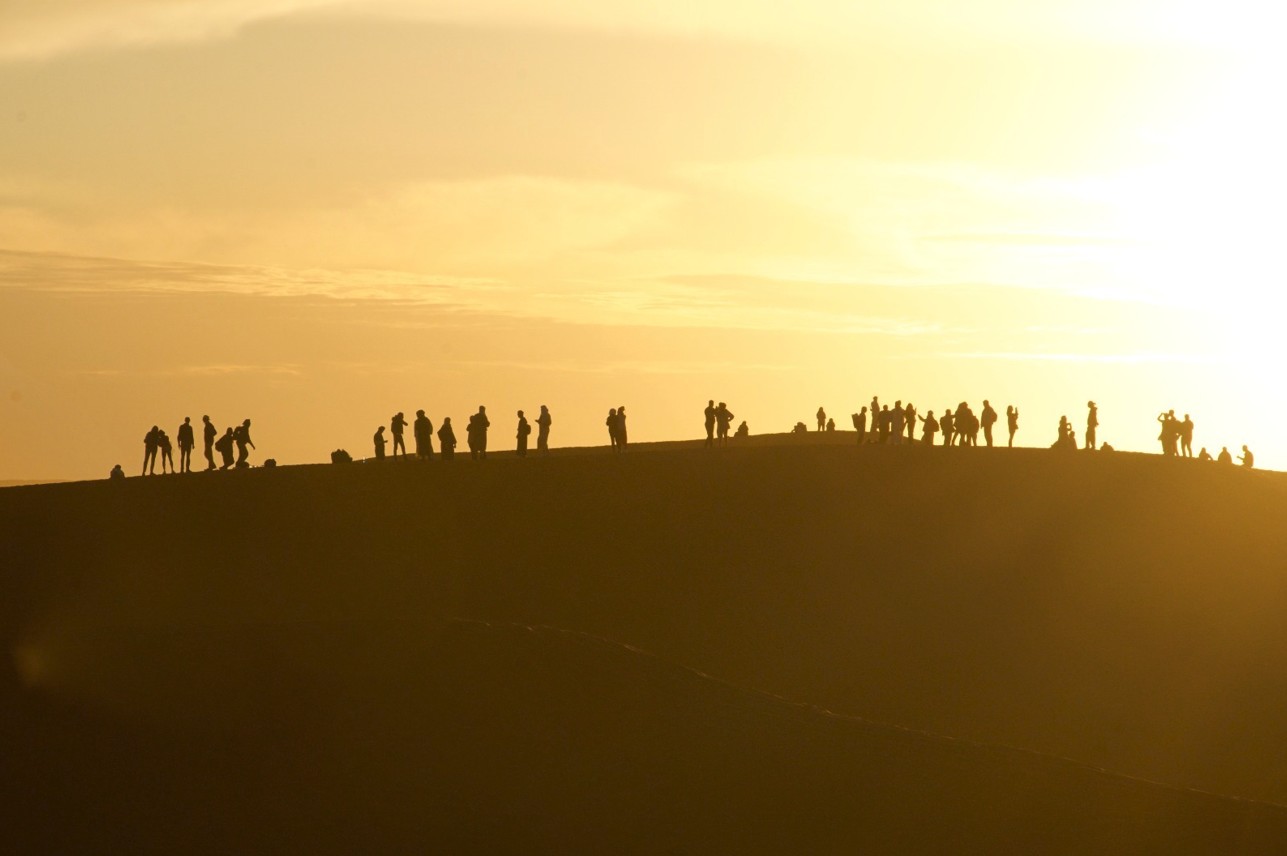
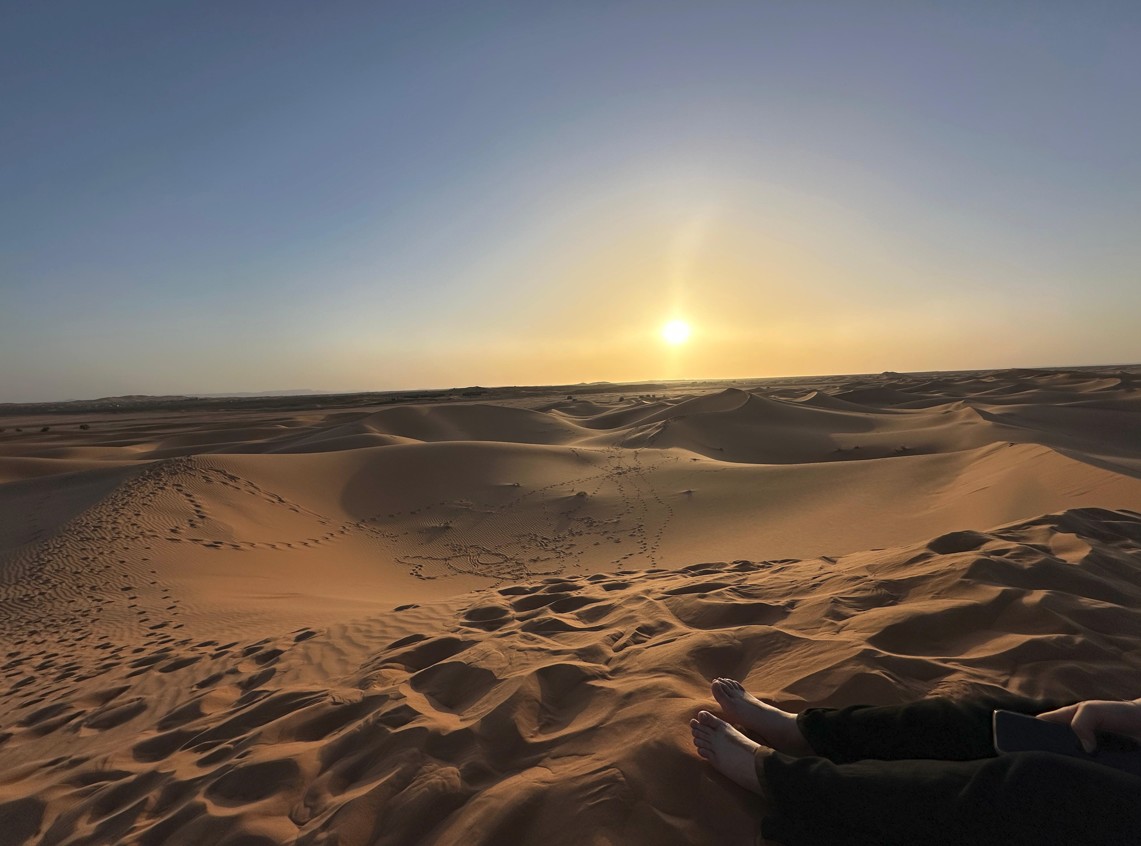
The Sahara sunset near Merzouga stands alone. Erg Chebbi’s dunes — some reaching 150 metres — undergo a complete chromatic transformation as the sun descends: the brilliant daylight gold deepens to amber, then to burnt sienna, then to a violet-tinged grey as the last light leaves the peaks. The rippled sand surface, sidelit during golden hour, produces graphic shadow patterns that change minute by minute. At the same time, temperatures drop perceptibly and the desert grows quiet in a way that feels almost theatrical.
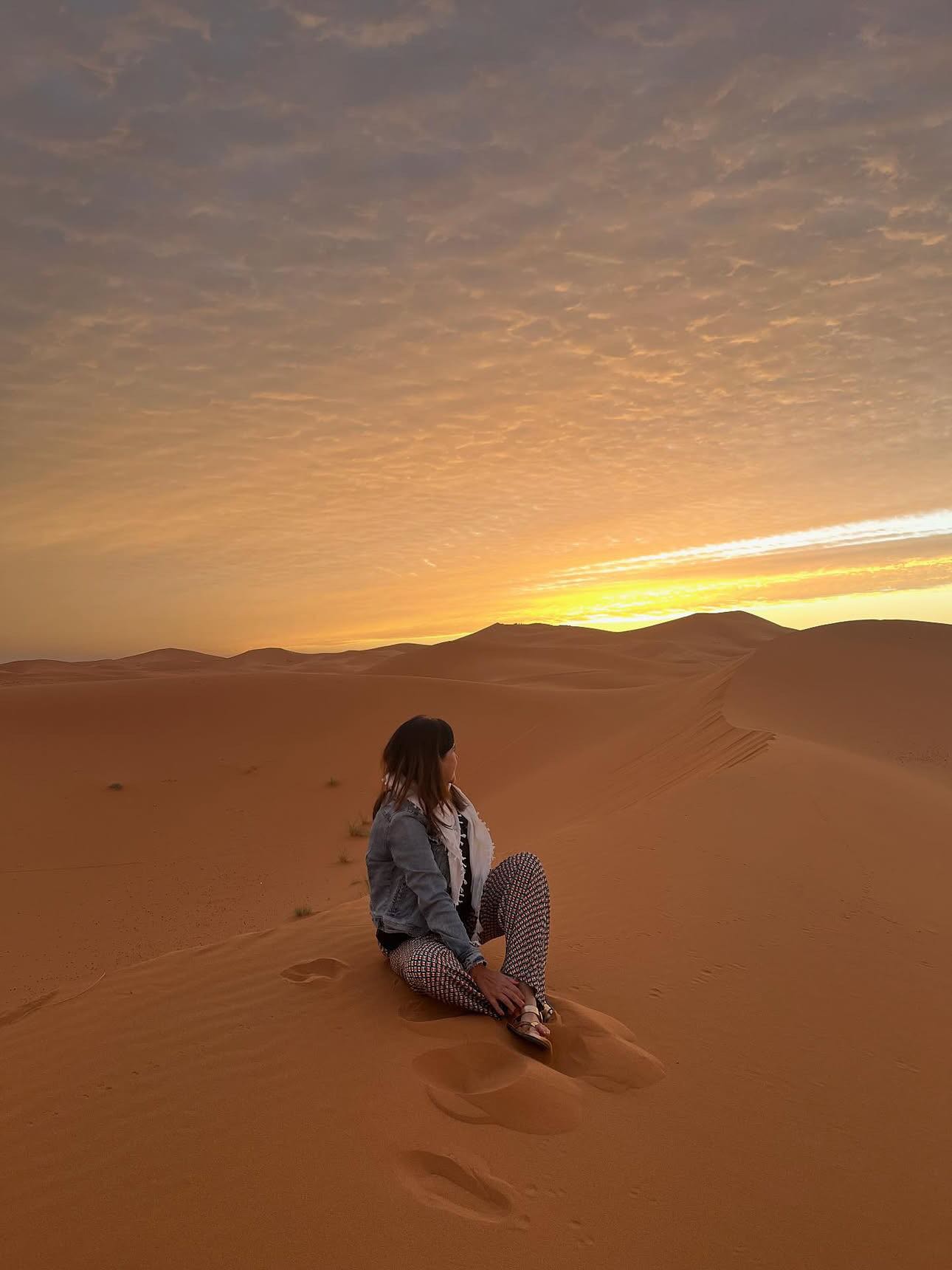
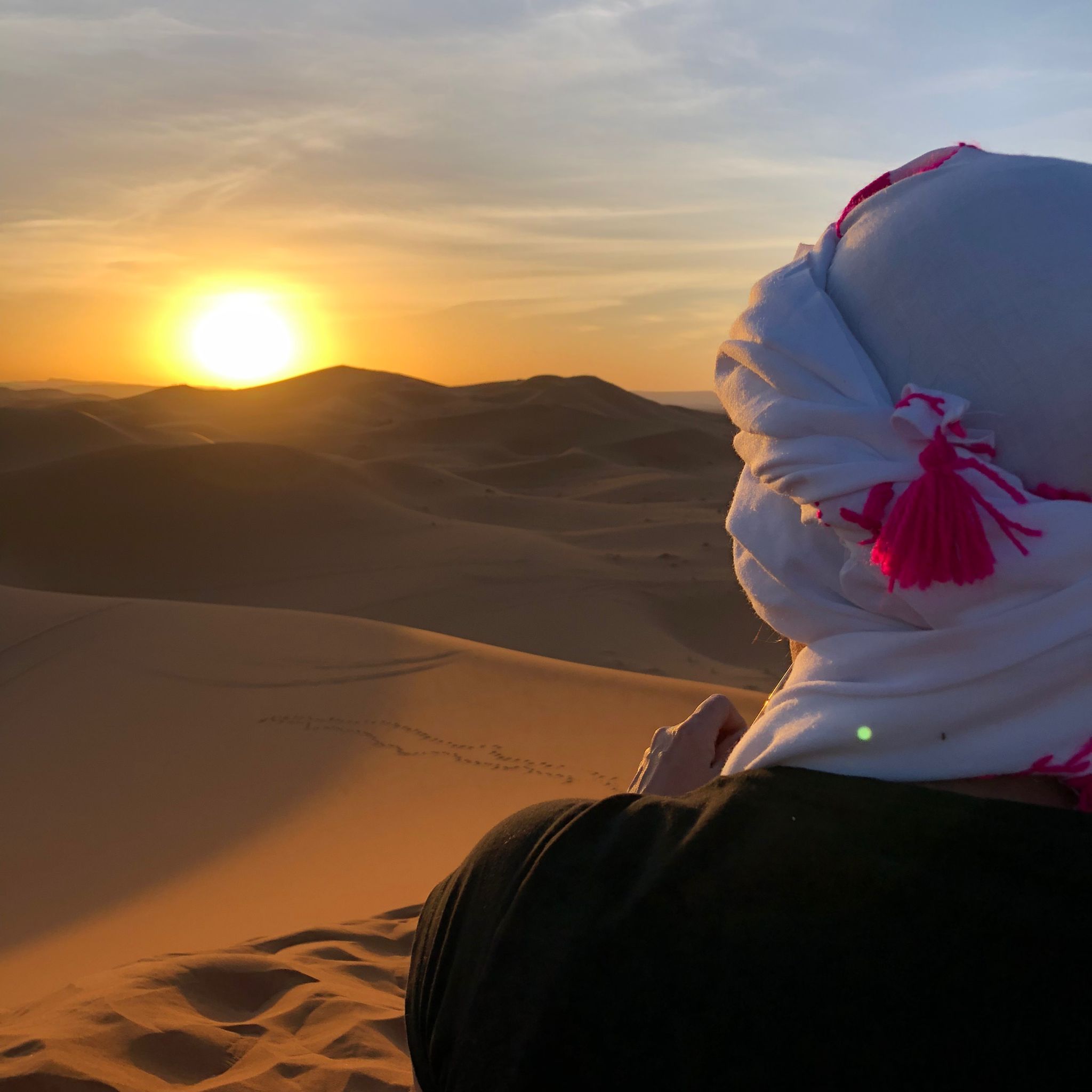
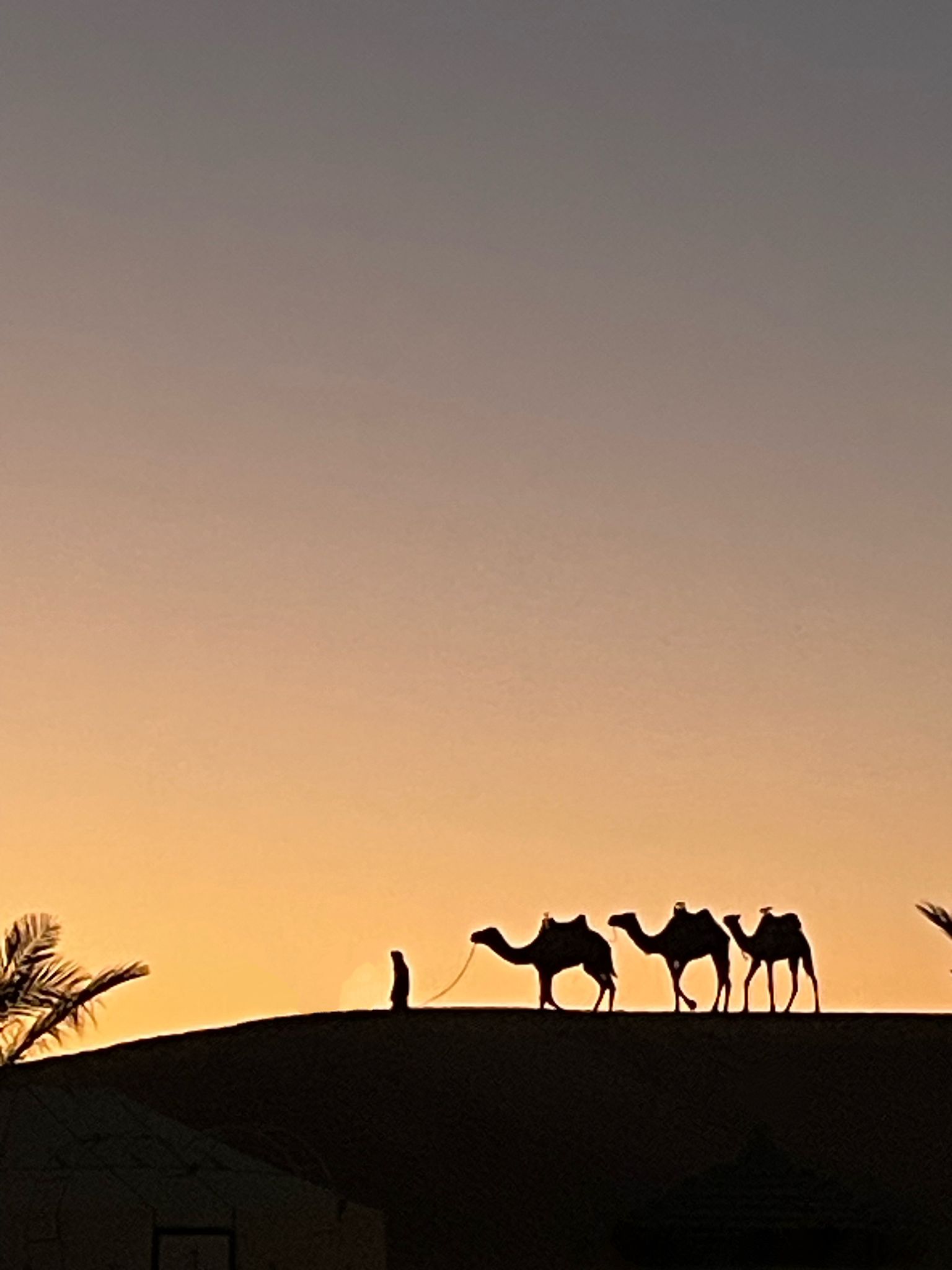
Standard sunset tours depart from Merzouga between 4:30 and 5:30 PM, with a 30–45 minute camel trek to an elevated ridge. Most travelers pair the Sahara sunset with an overnight stay at a desert camp, waking to a sunrise of equal drama and spending the intervening hours under a sky so dense with stars it requires no introduction. The drive from Marrakech takes 9–10 hours — a commitment most call their best decision of the trip.
For Erg Chebbi, use an ND graduated filter to balance the bright sky against the darker dune foreground. Position camel riders or a solitary dune ridge between your lens and the sun for silhouette exposures. Shoot from low to emphasise ripple texture. Continue shooting 25 minutes after the sun drops — the residual pink sky often surpasses the sunset itself.
Best time to visit: October through April. October is the optimum — daytime temperatures around 24°C, nights cool enough for meaningful stargazing, and exceptional light clarity. Avoid June through August when the Sahara regularly exceeds 38°C and the heat renders outdoor activity uncomfortable.
2. Essaouira: Atlantic Sunsets and Coastal Drama
Where Merzouga delivers desert warmth, Essaouira delivers something rawer: a wind-driven Atlantic sunset that feels slightly elemental. The 18th-century fortified ramparts — Sqala de la Ville — stretch along the ocean’s edge and serve as the city’s premier sunset platform. As the sun sinks directly into the sea, the sky layers in orange, rose, and purple while seagulls and chimney swifts trace silhouettes against the glow. Waves send mist across the stone battlements. It is, by any measure, one of the most cinematically composed sunset settings in the world.
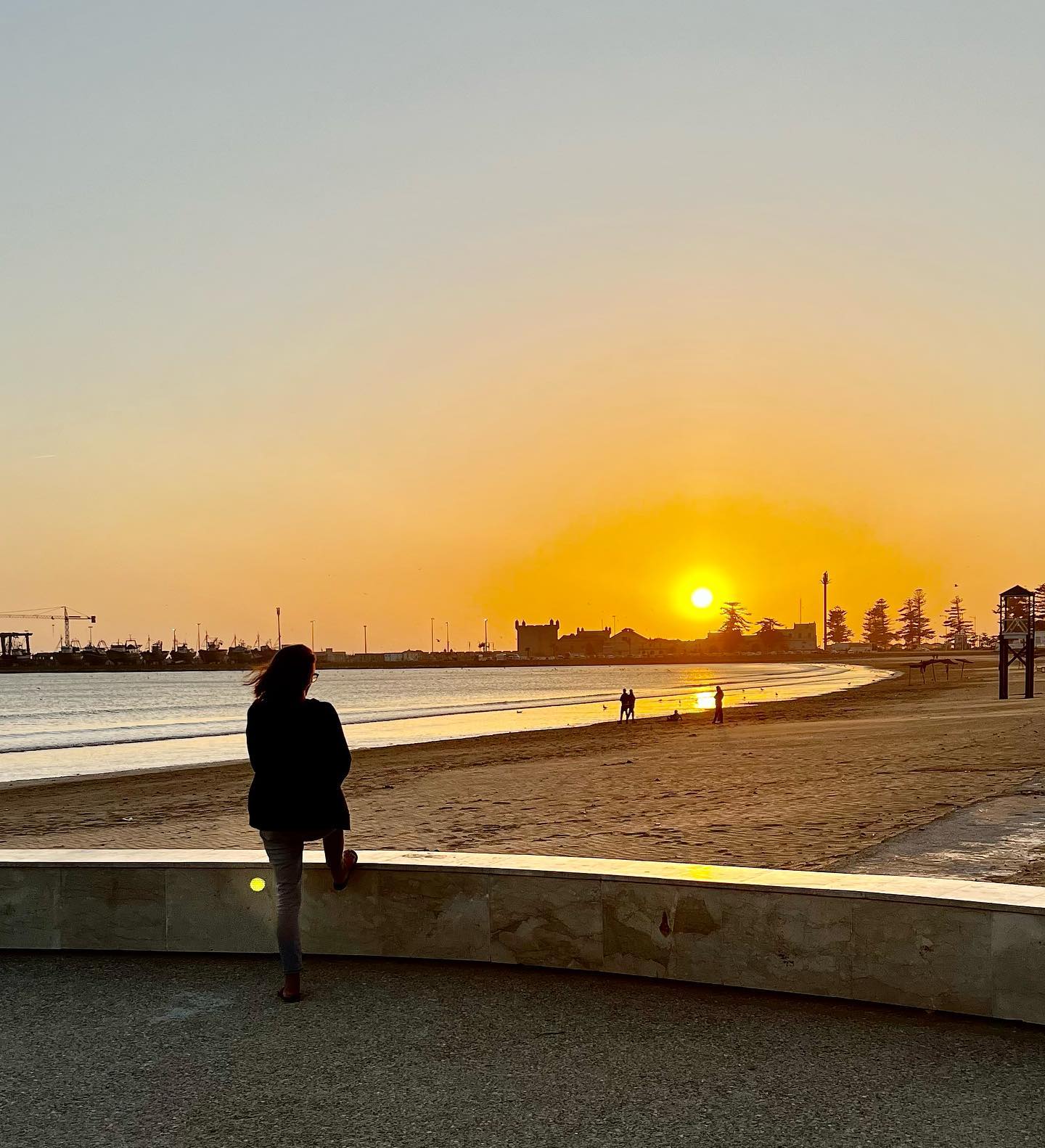
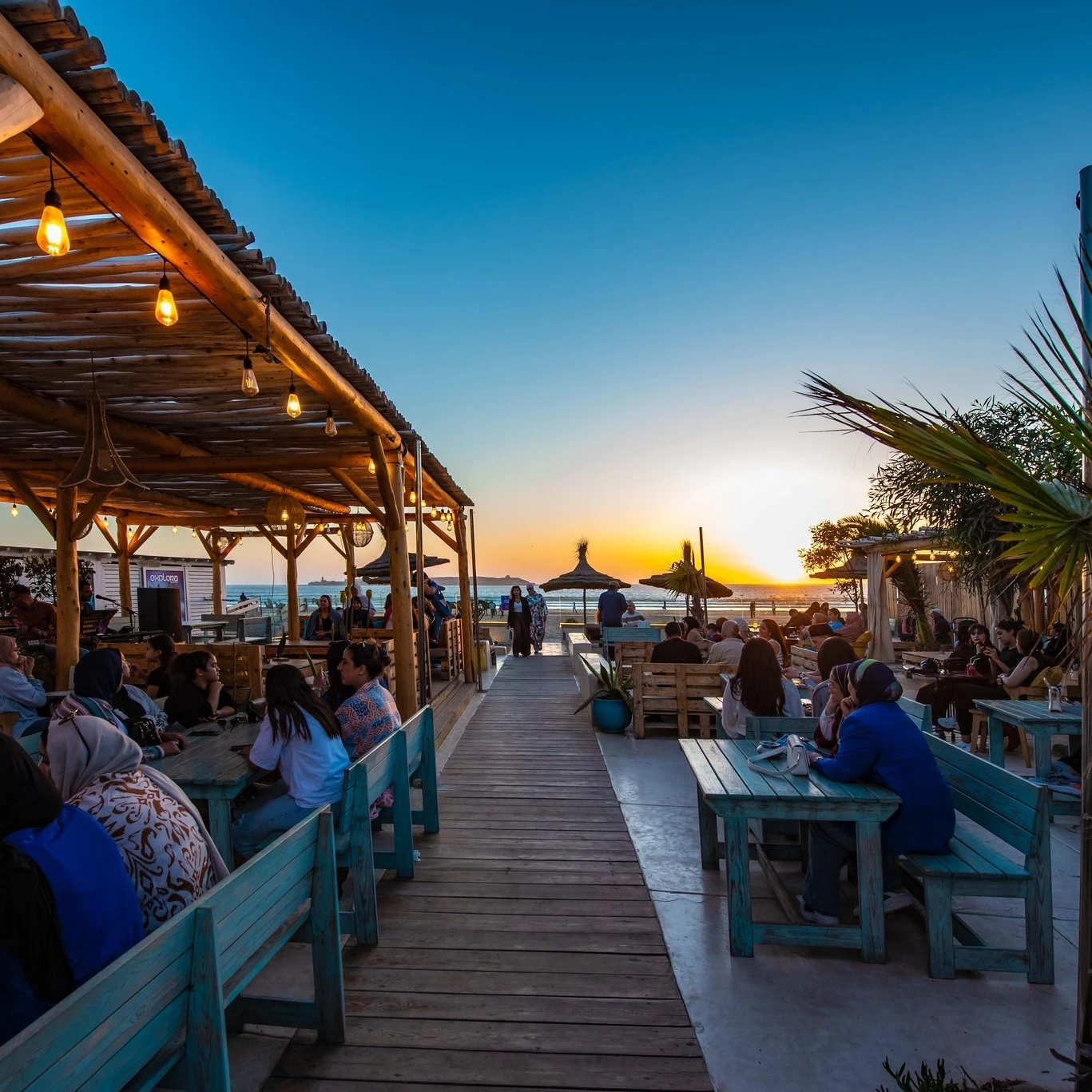
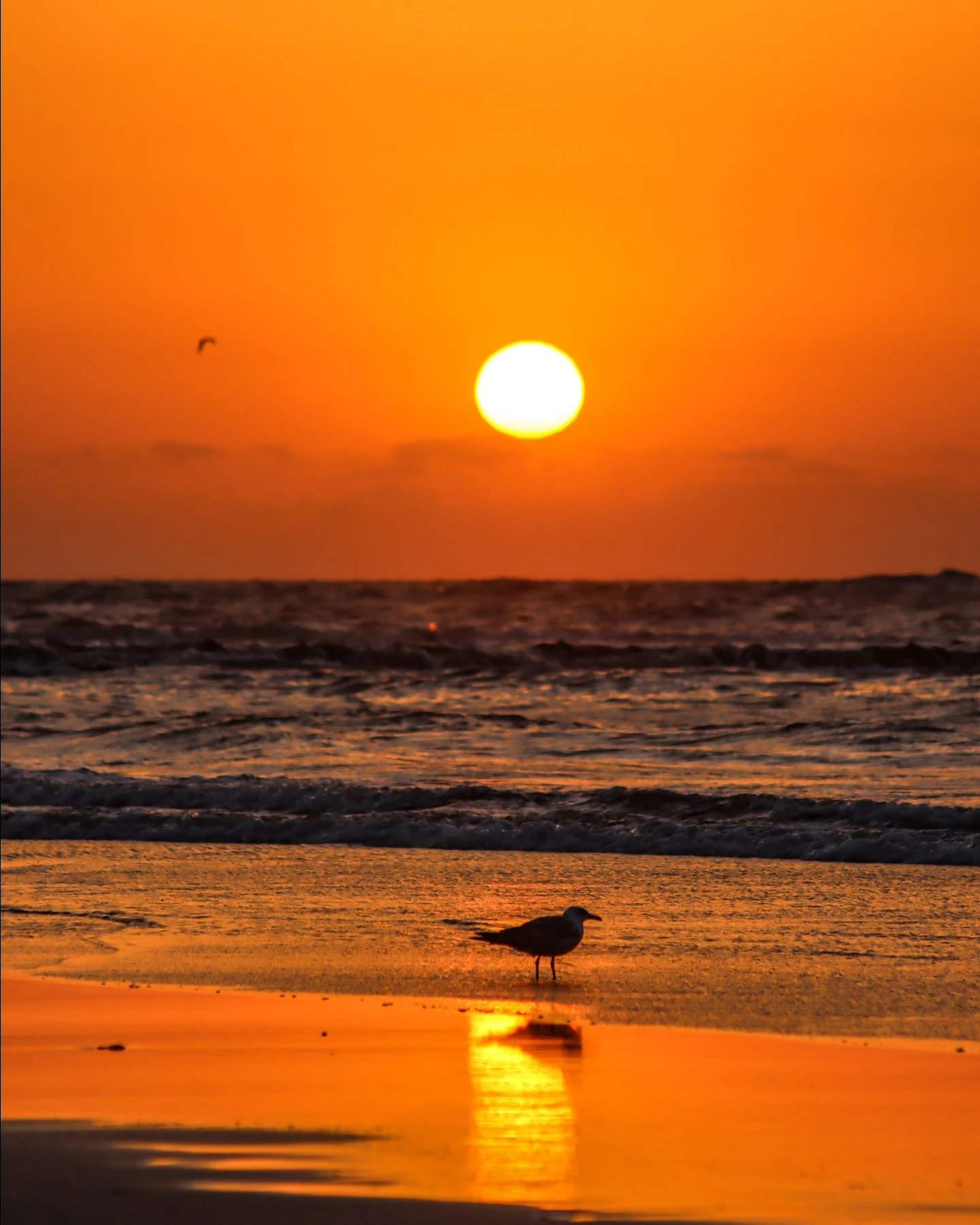
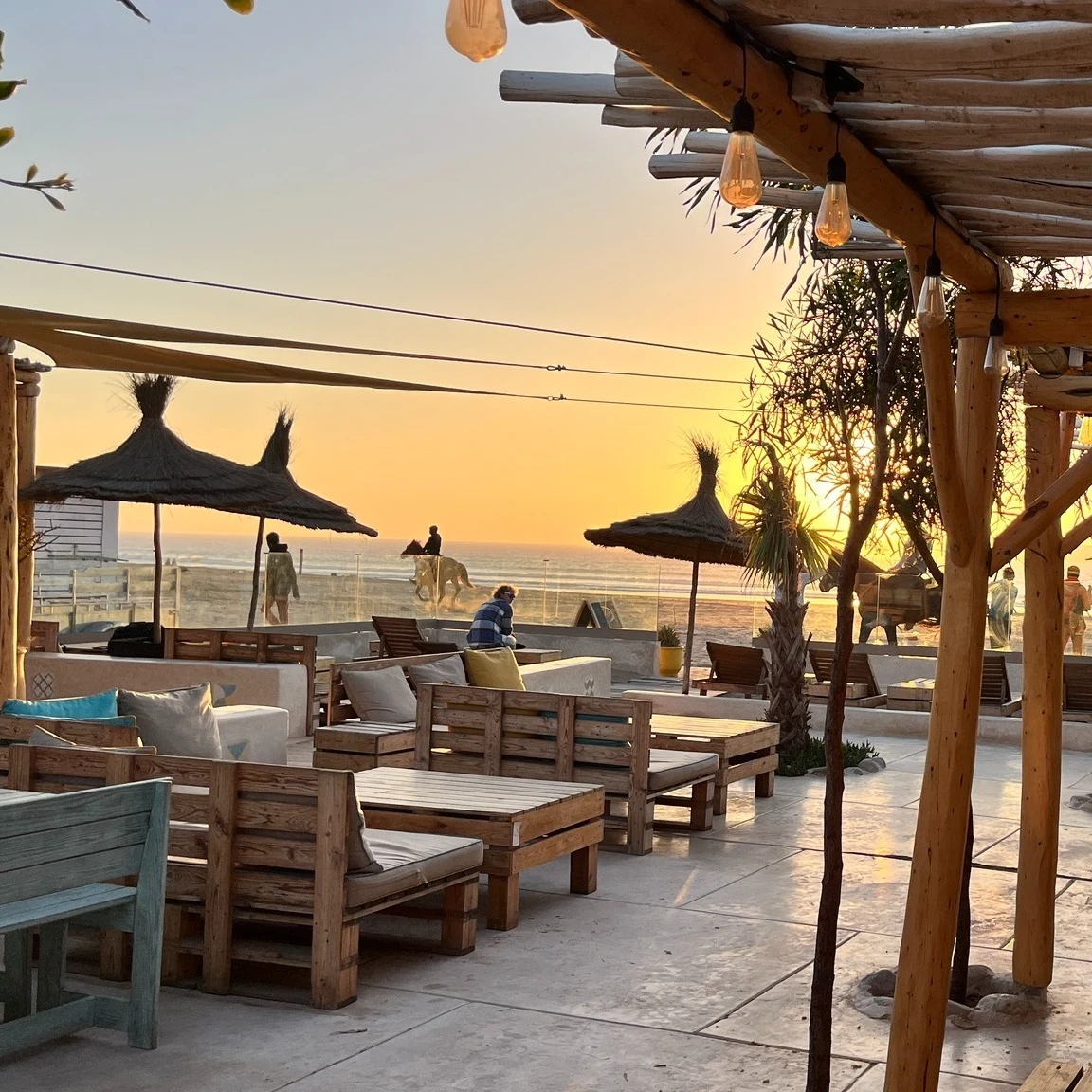
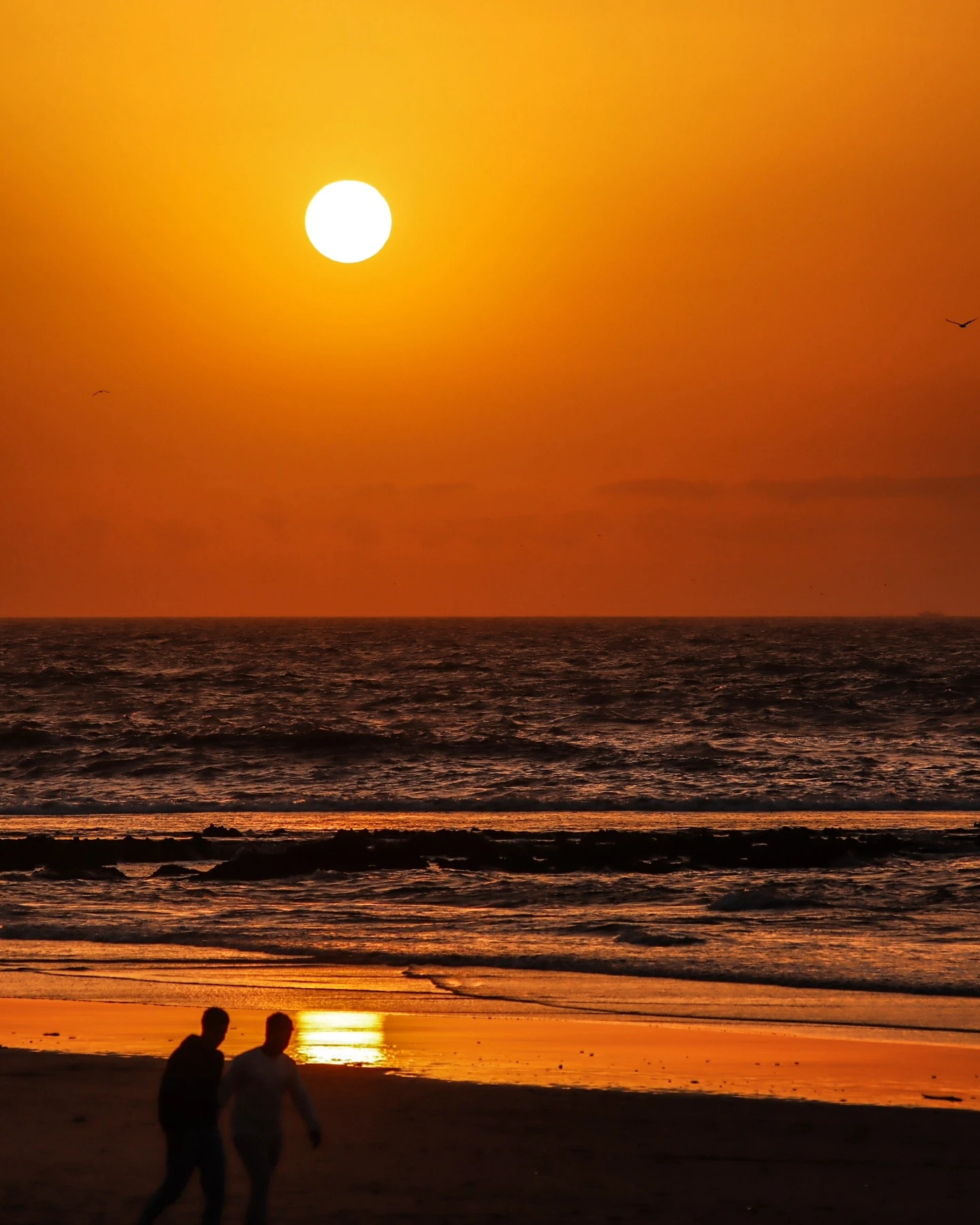
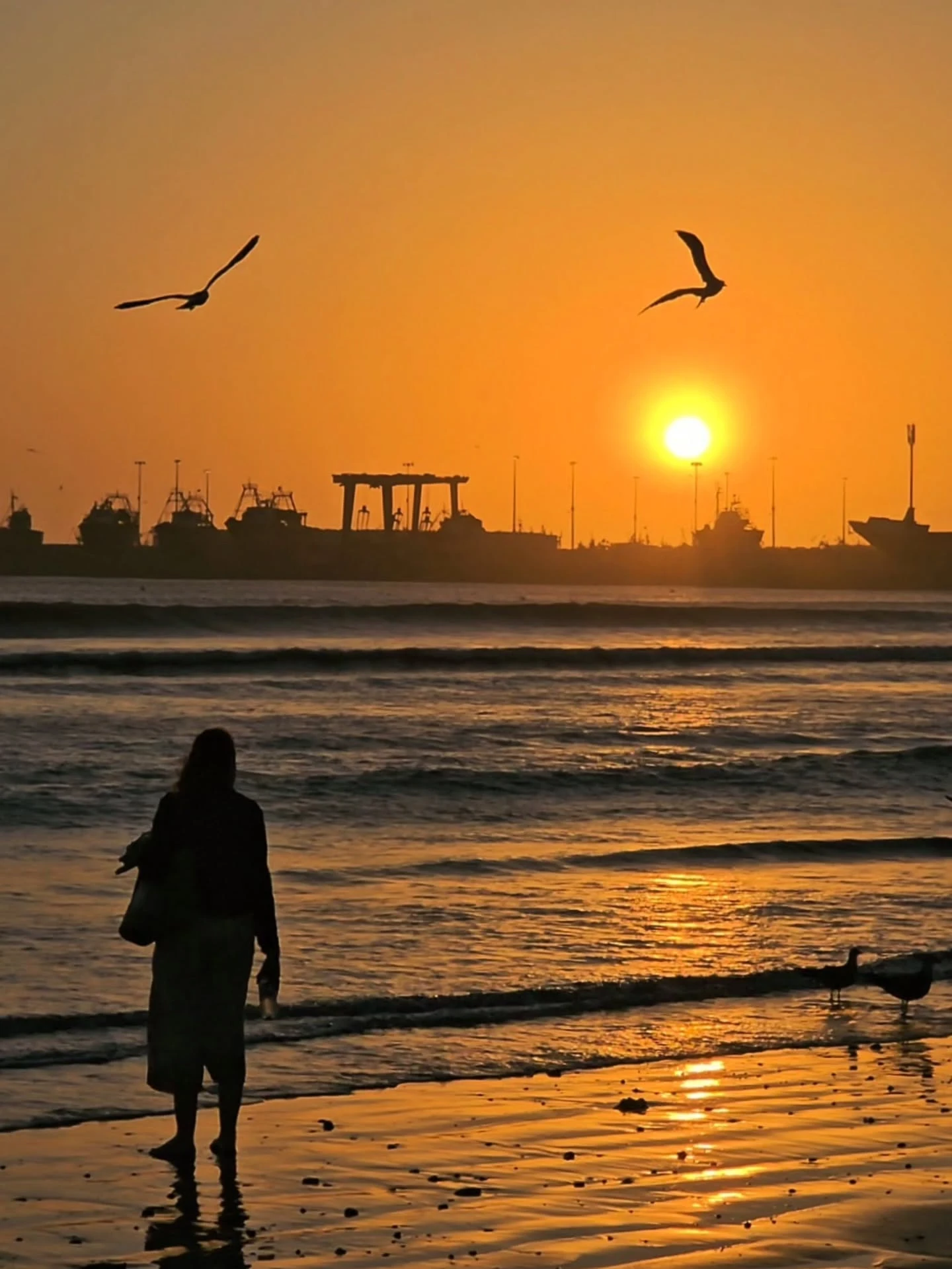
Arrive on the ramparts at least 30 minutes before sunset — the best positions fill quickly in high season. Rooftop restaurants including Taros and Il Mare offer booked sunset dining; request a west-facing terrace table when reserving. Essaouira’s persistent trade winds can be cold — carry a light layer regardless of season.
Best time to visit: April through November. The months of October and November are particularly prized — fewer crowds, clearer skies, and the softer autumn light that photographers favour.
3. Marrakech: Agafay Desert and Urban Rooftop Terraces
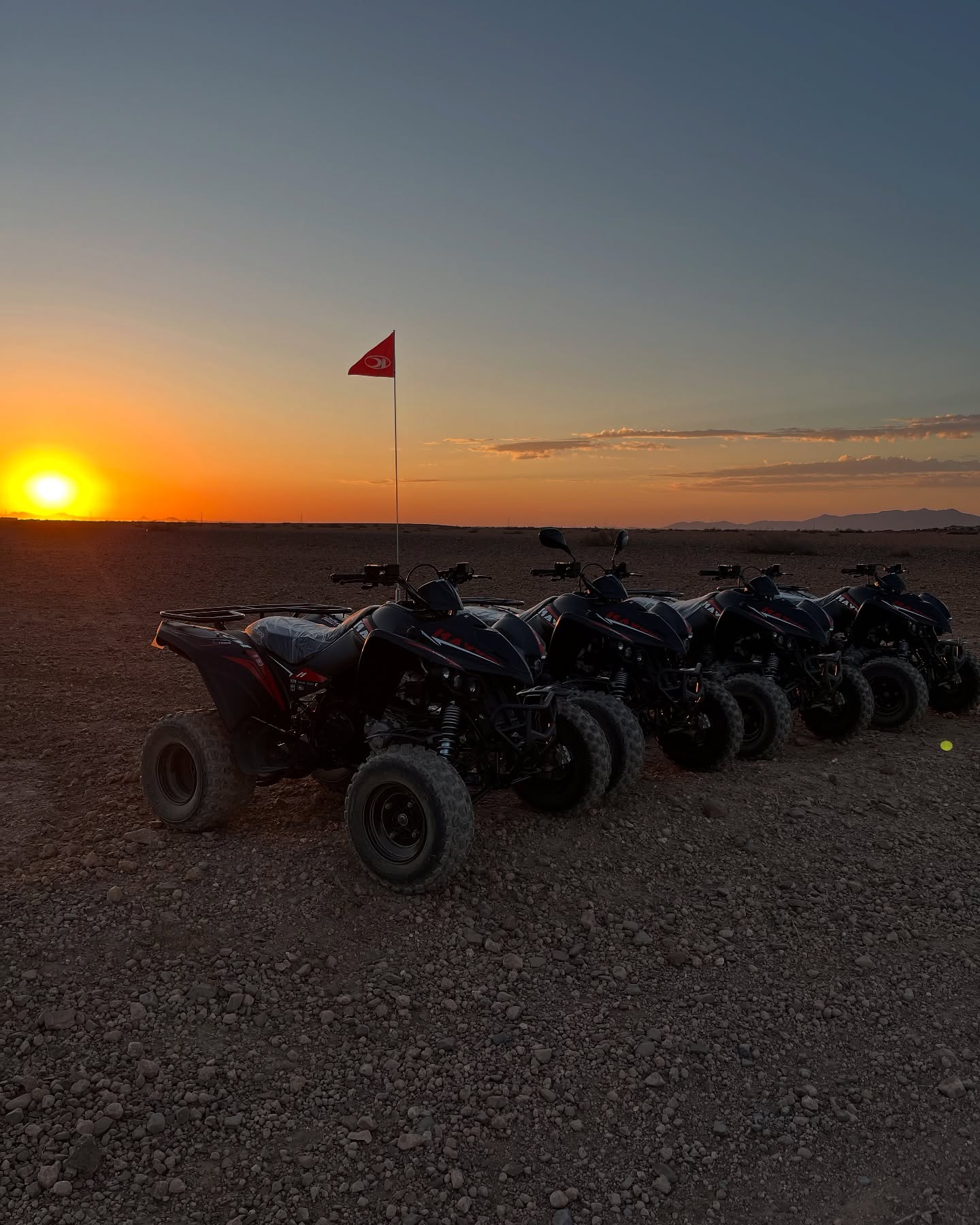
For a sunset requiring minimal travel, nothing in Morocco competes with the Agafay Desert’s accessibility. Located just 40 kilometres from Marrakech’s medina, Agafay is a lunar plateau of stony hills and rocky ridges with the snow-capped High Atlas as a permanent backdrop. Unlike the sandy Sahara, its arid geometry creates a more austere sunset palette — muted stone turning amber, the Atlas silhouetted against a sky that shifts from cobalt to deep rose. Most organised excursions include hotel pickup, a 4×4 transfer across the plateau, and a camel ride timed to end precisely as the sun meets the mountains.
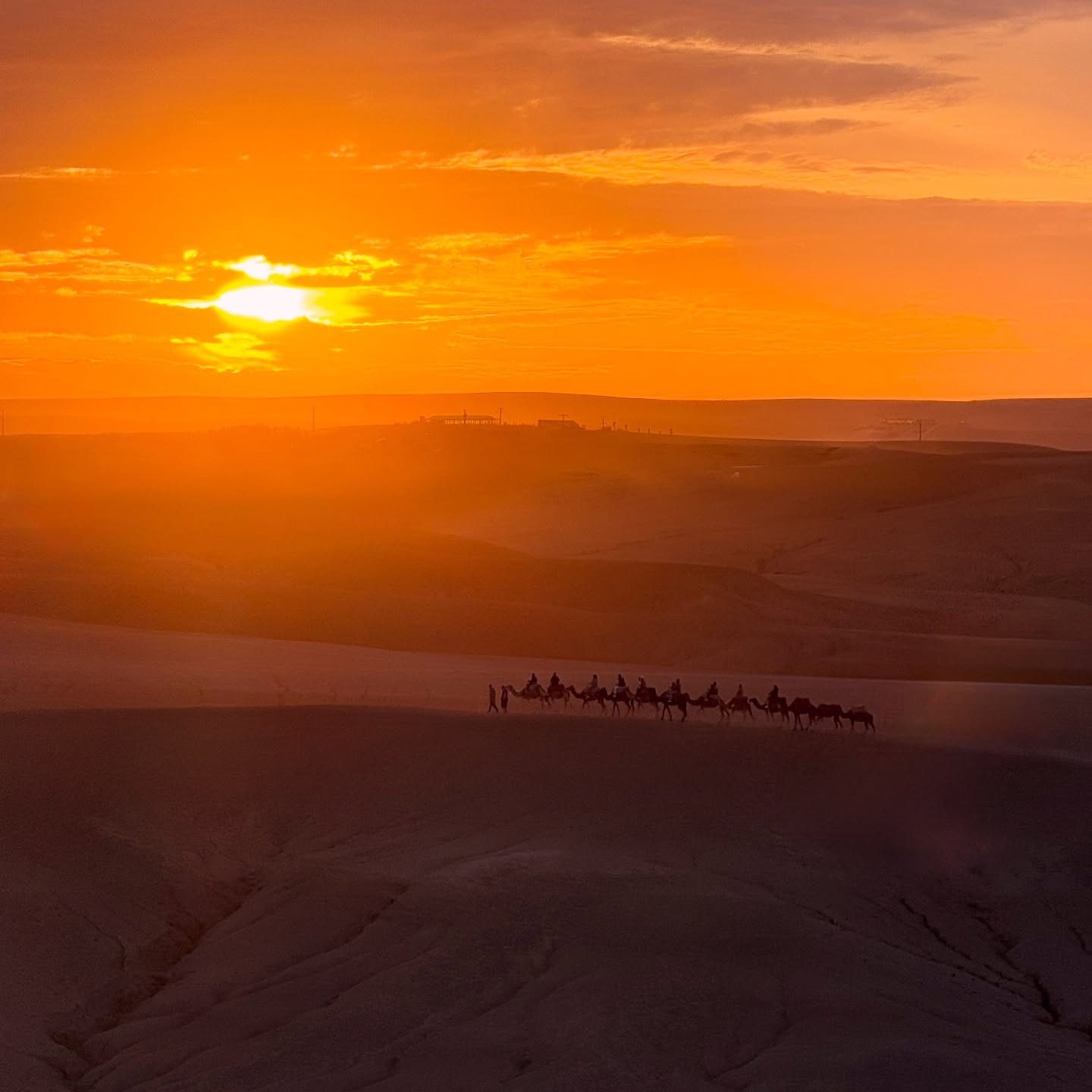
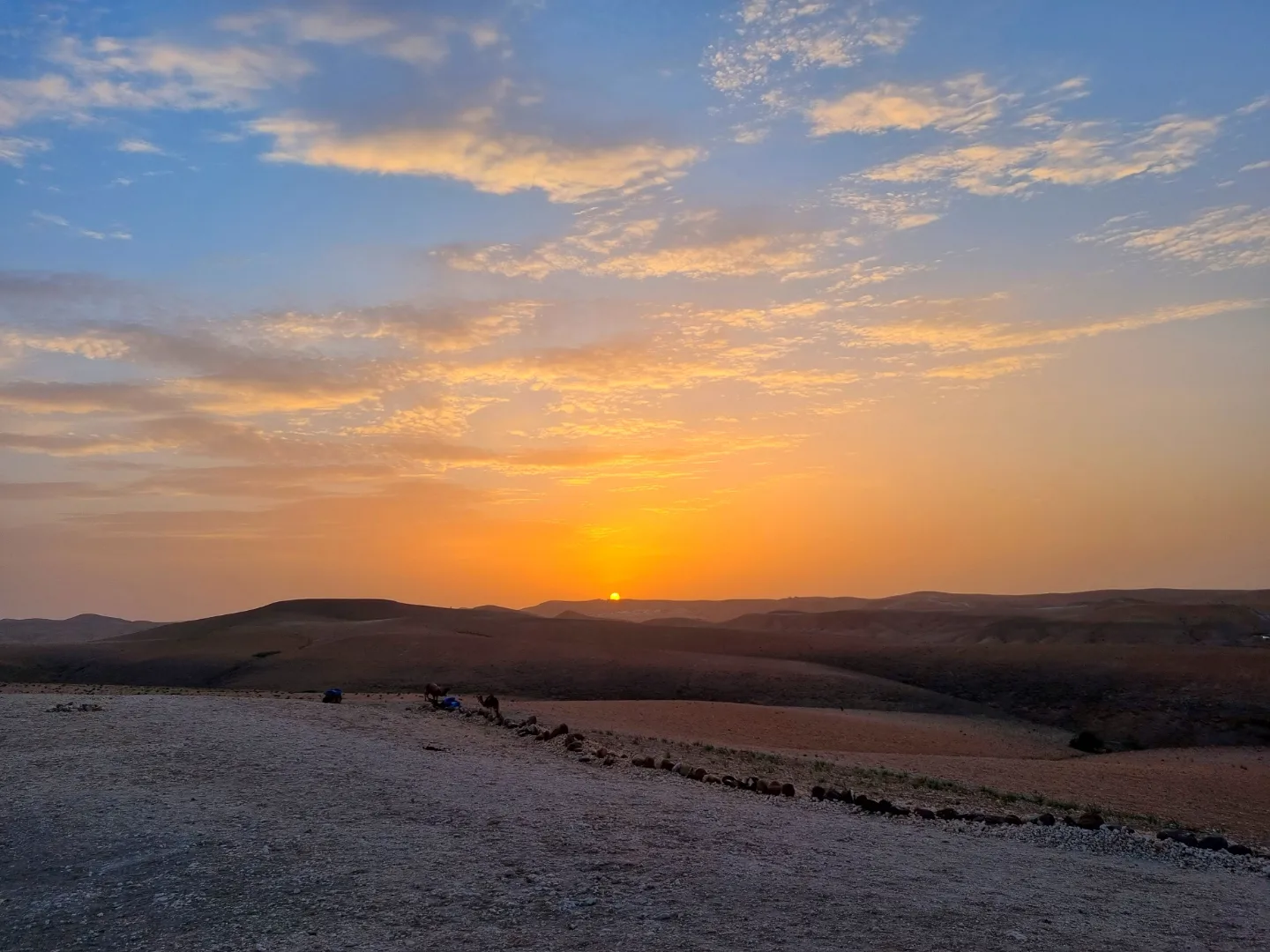
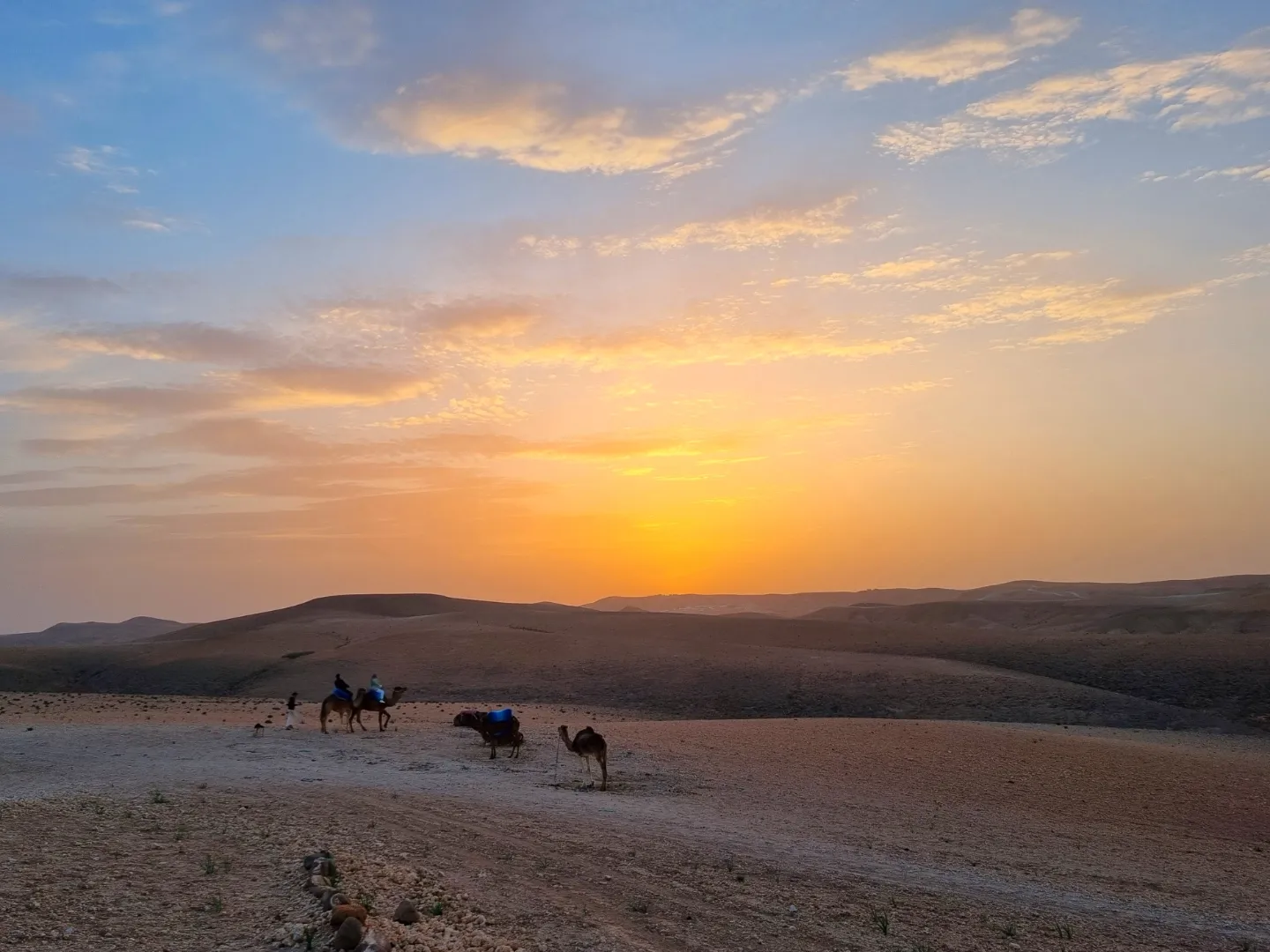
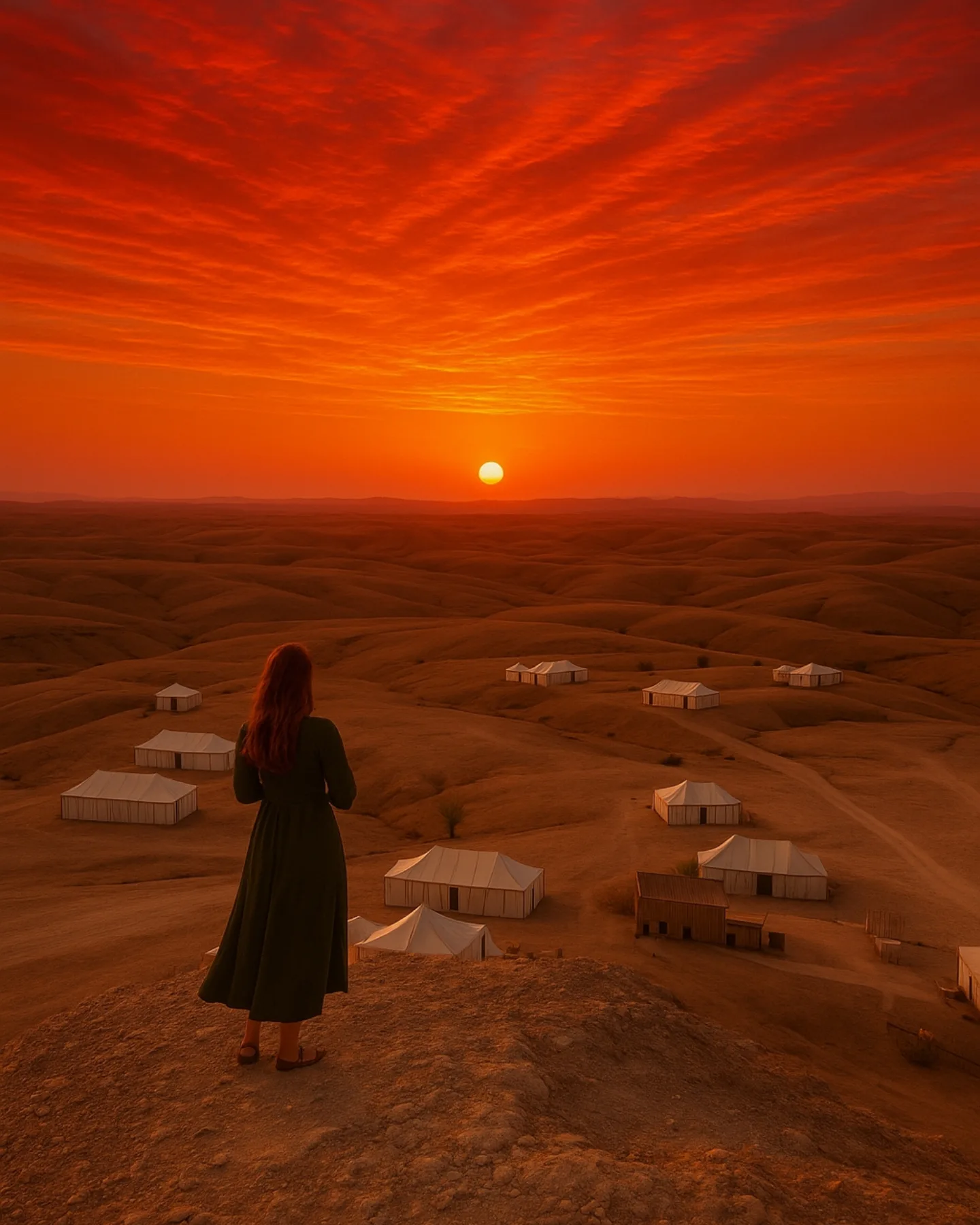
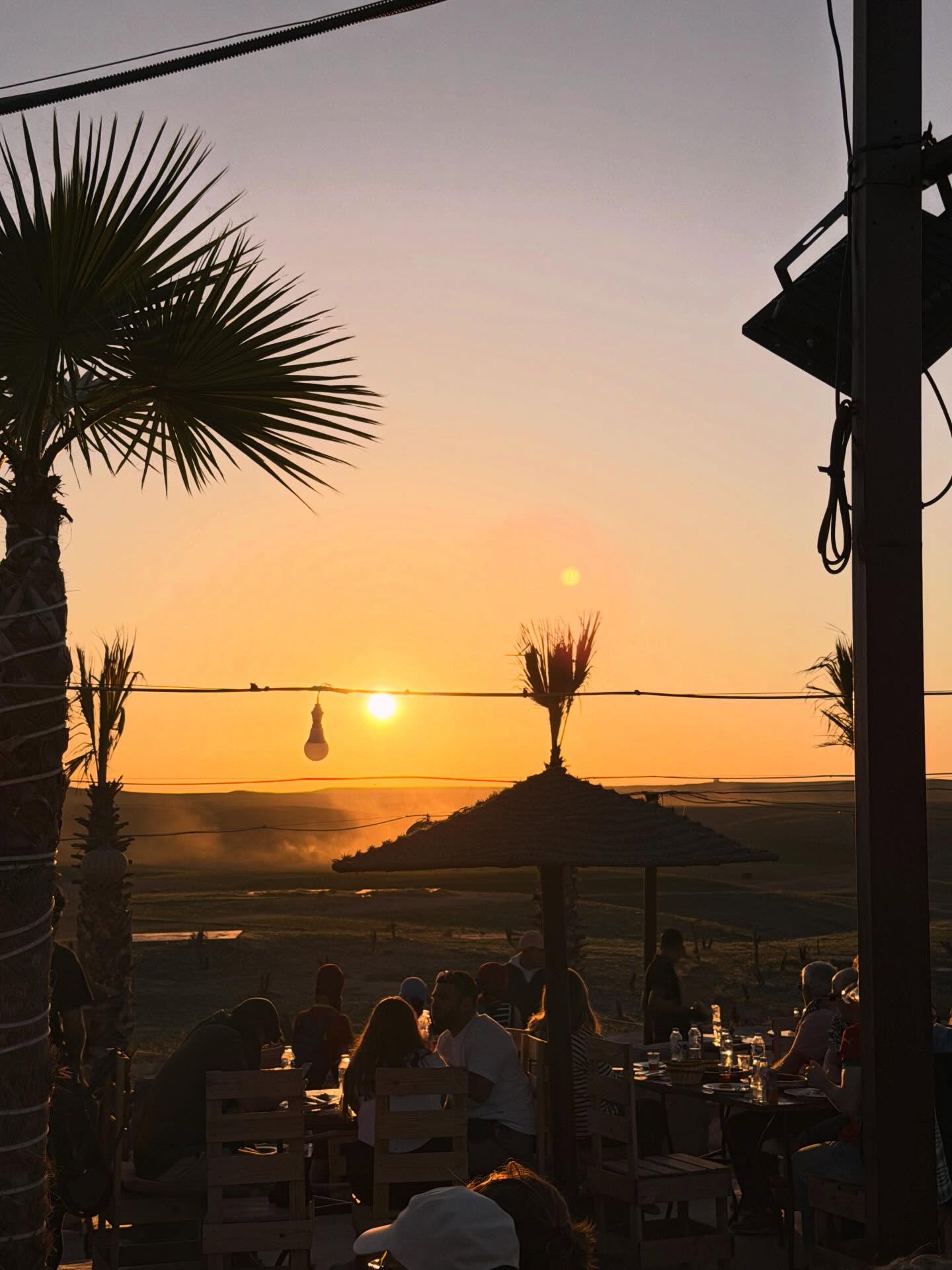
Agafay has become a preferred destination for couples. Private tent accommodations at select luxury camps include plunge pools and dedicated butler service — ideal for proposals, anniversaries, or any occasion requiring genuine seclusion.
Within Marrakech itself, rooftop restaurants framing the Koutoubia Mosque against the sunset sky represent the city’s most accessible sunset experience. Dardar Rooftop and several riad terraces in the medina offer west-facing positions to catch the final light with a glass of fresh juice or a traditional Moroccan tea service. Best time to visit: October and November for the most dramatic Atlas backdrops.
4. Chefchaouen: The Blue City’s Panoramic Hillside
Among all Morocco sunset spots, Chefchaouen offers the most chromatic contrast. The medina’s blue-washed architecture — walls and stairways painted in a spectrum of cobalt, indigo, and powder blue — responds to warm golden light in a way that produces an almost surreal visual effect: cold and warm tones occupying the same frame simultaneously, neither cancelling the other out. The Rif Mountains frame the town on three sides, and from the Spanish Mosque viewpoint above the city, the medina appears as a luminous blue jewel set against the darkening hills.
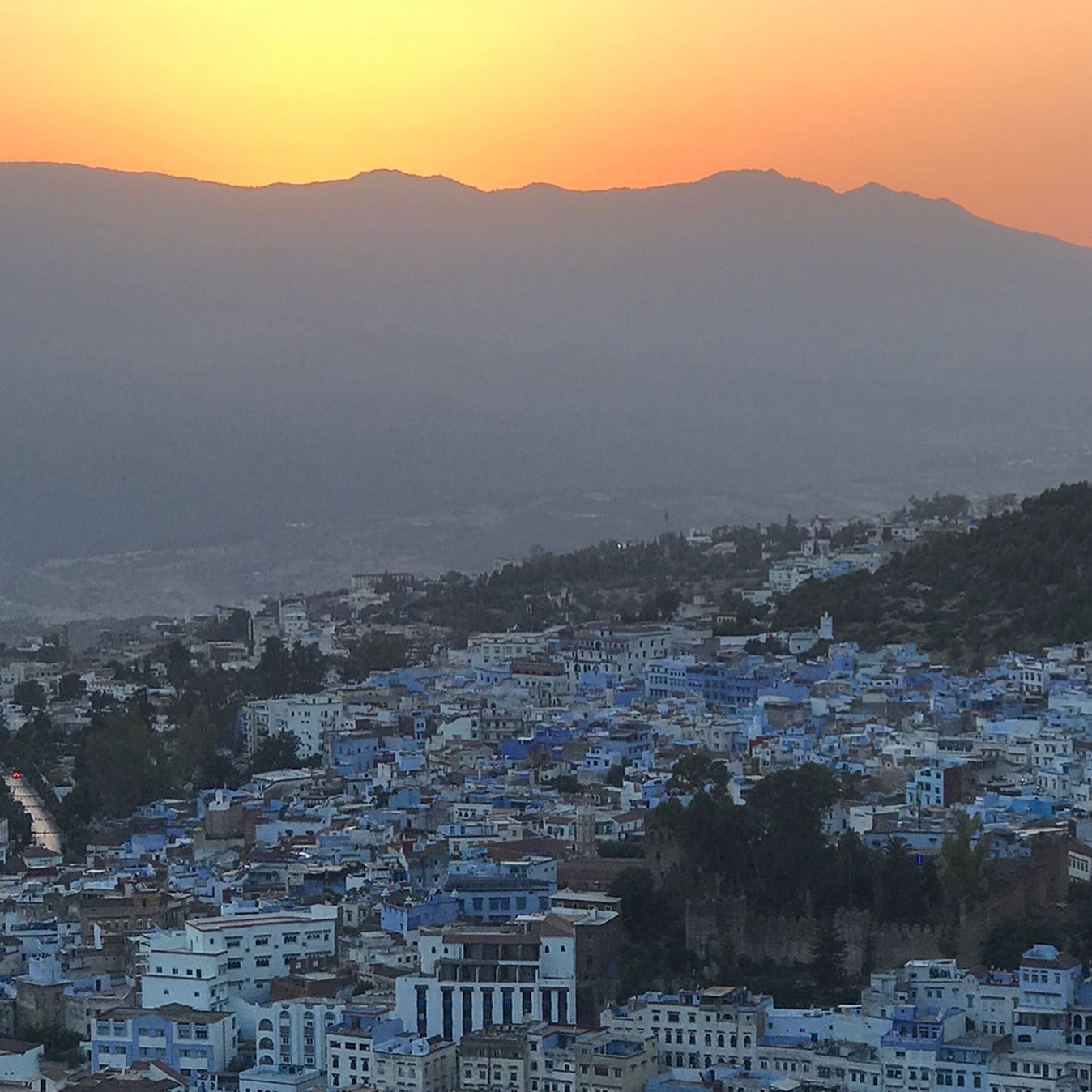
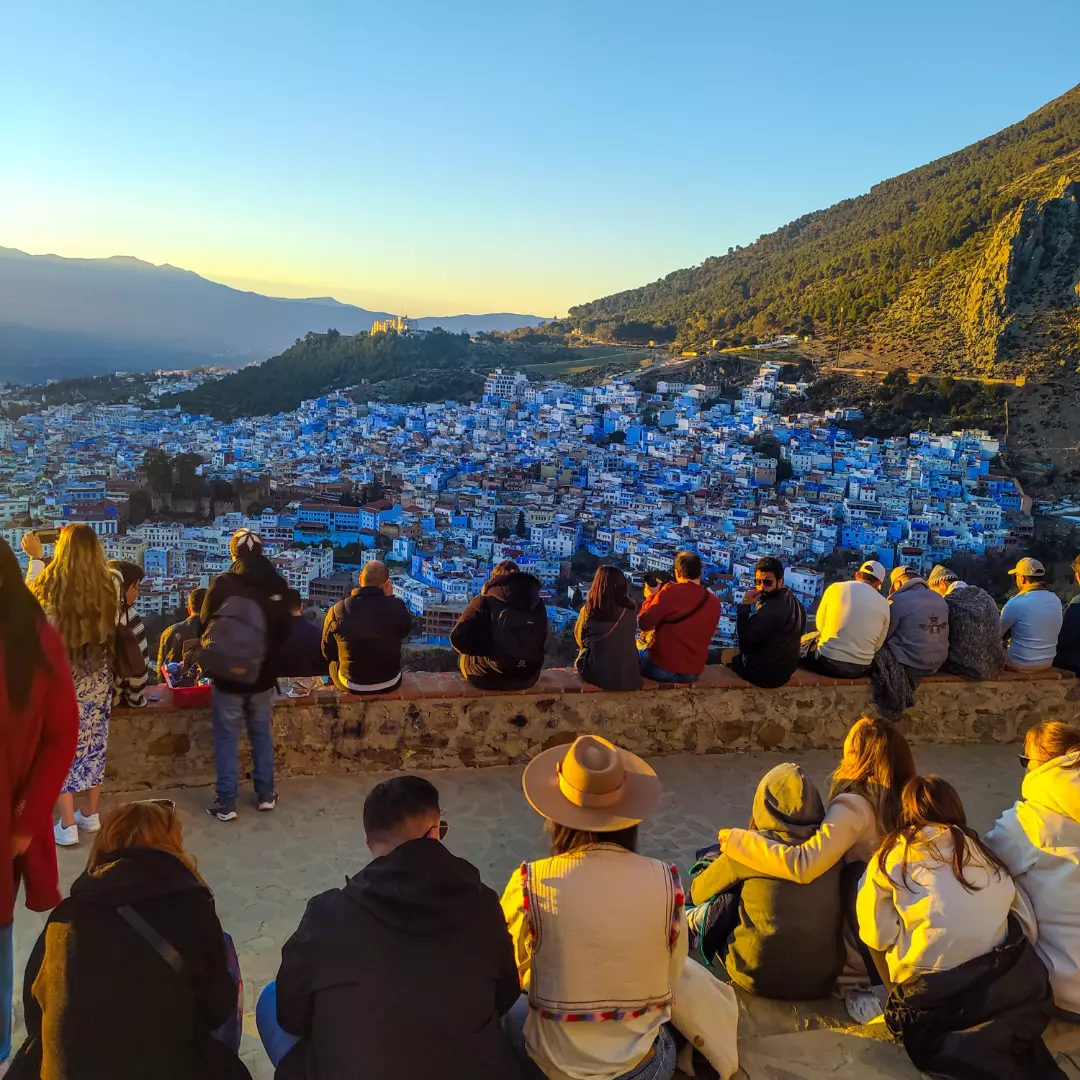
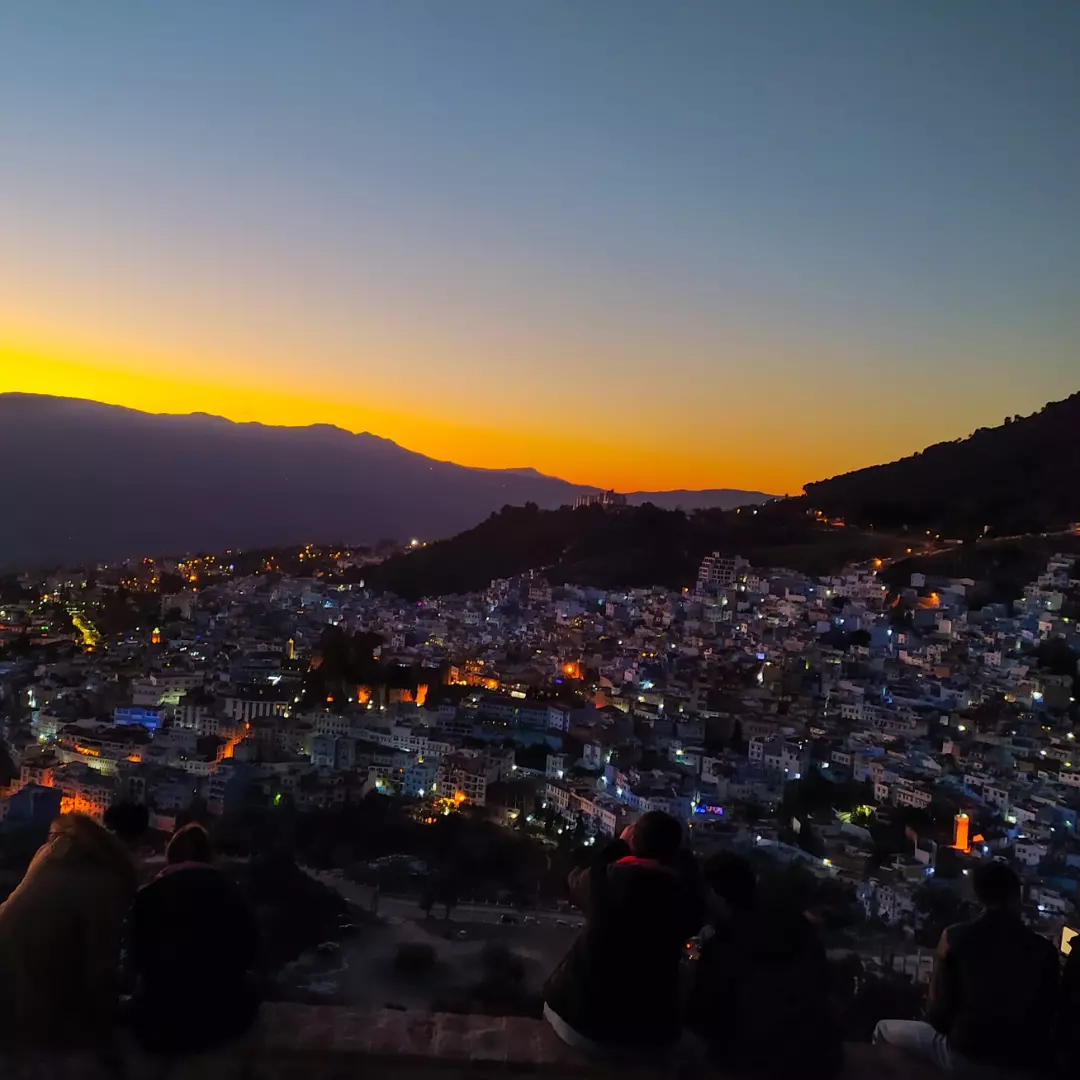
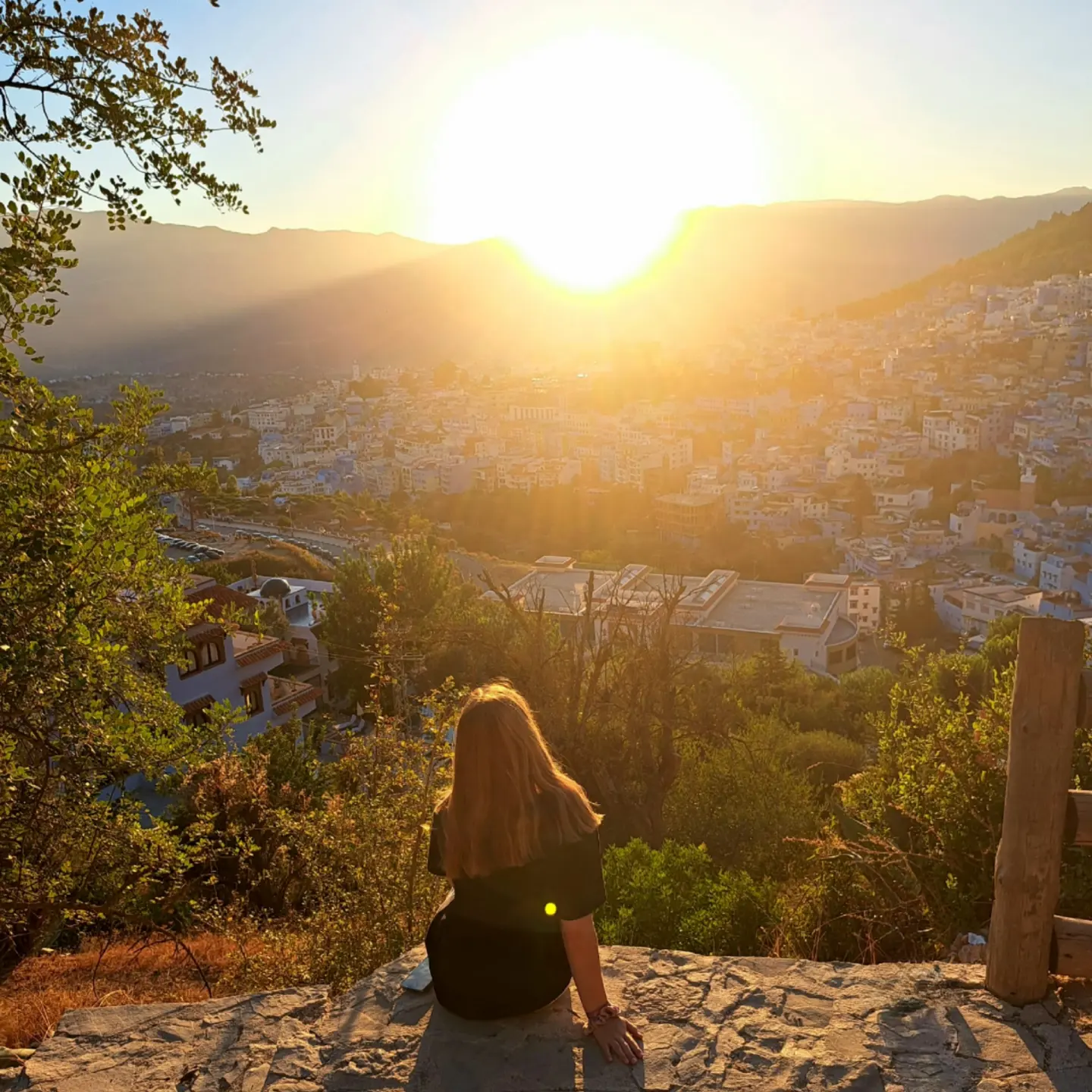
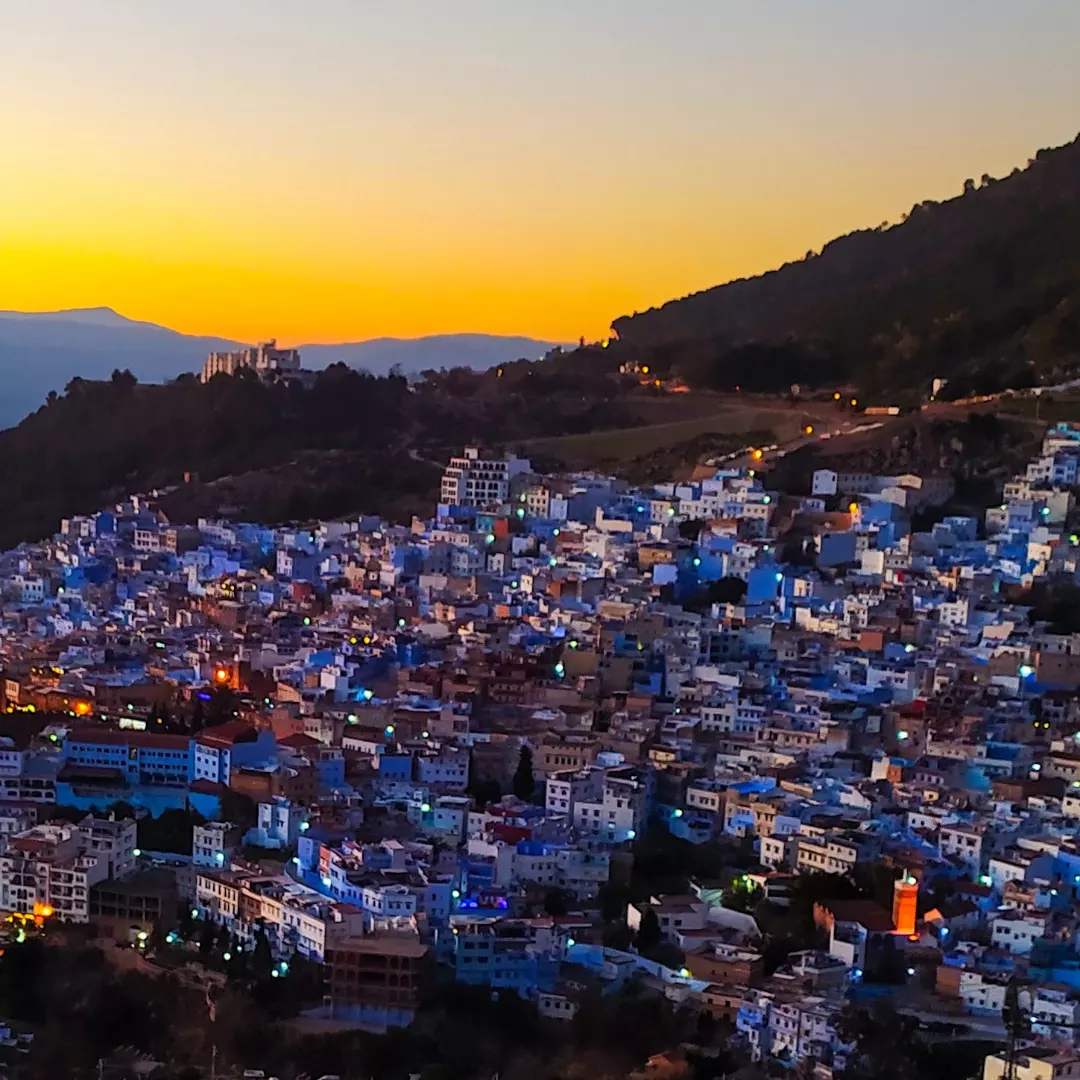
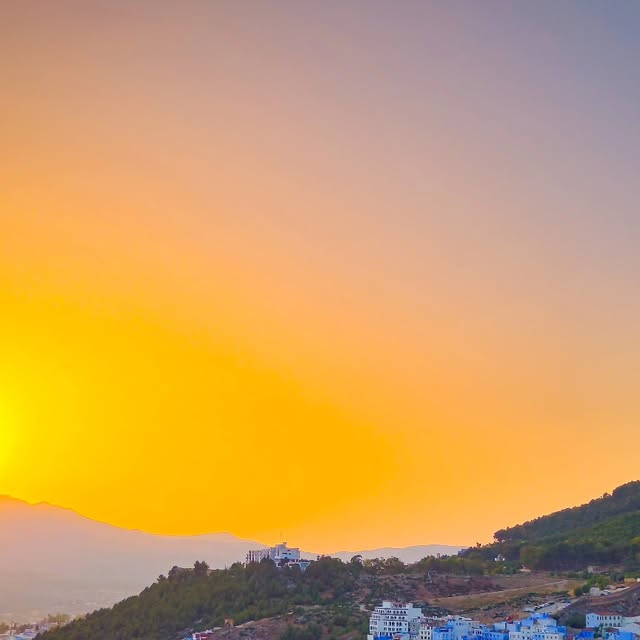
The hike from Bab El Onsar gate to the Spanish Mosque takes 30–40 minutes at a comfortable pace. Start the ascent at least 50 minutes before sunset to allow time for position and setup. Rooftop cafés within the medina offer a more relaxed alternative with mint tea and a wide-angle view of the roofline below. Best time to visit: Spring (March–May) and early autumn (September–November) for the clearest skies and most comfortable temperatures.
5. Legzira Beach: Sandstone Arches and Ocean Drama
On Morocco’s far southwestern coast, roughly 150 kilometres south of Agadir, Legzira Beach presents a scene of unusual geological drama. Towering red-sandstone arches — carved over millennia by Atlantic wave action — frame the ocean horizon in a way that no other Moroccan beach can claim. During sunset, warm light floods through each arch opening and reflects on the wet sand at low tide, creating mirror images of sky and stone that give photographers a composition requiring almost no creative input: the landscape does the work.
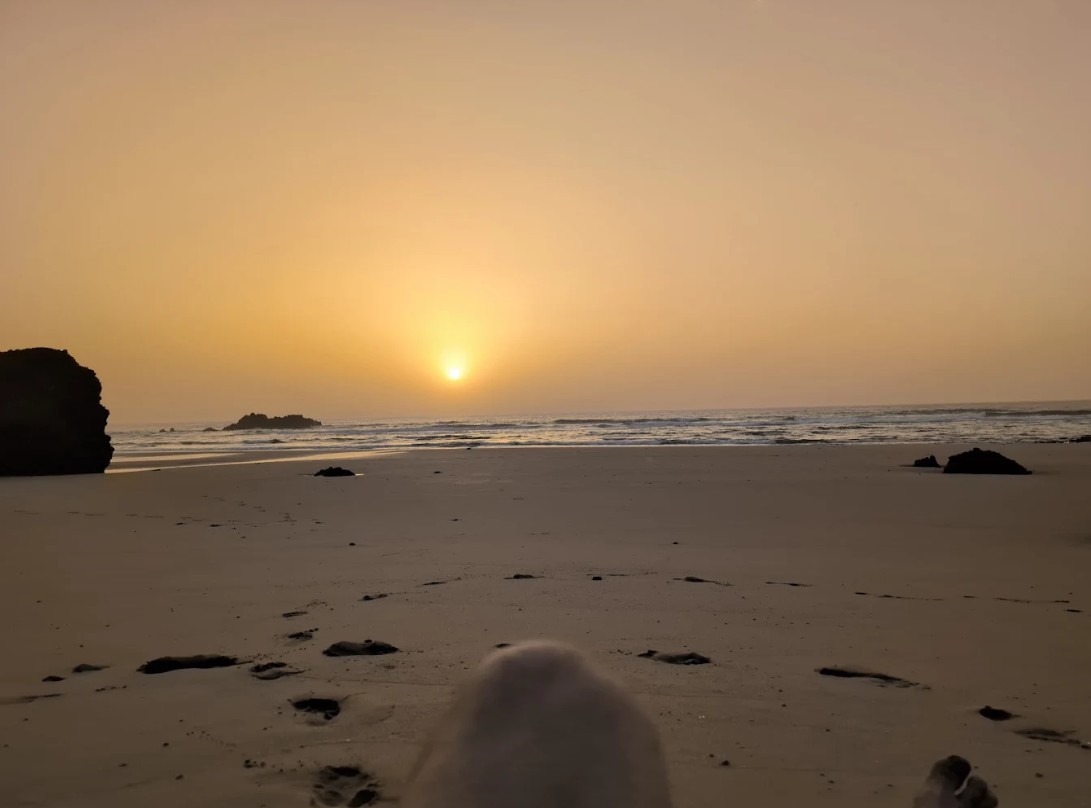
At high tide, the base of the arches is submerged and the approach is blocked entirely. Always check a tide table for Sidi Ifni (nearest reference point) before visiting, and plan to arrive at least 2 hours before sunset. A low-tide sunset at Legzira is one of the most rewarding photography experiences in Morocco; a high-tide visit is simply a walk to a viewpoint. Don’t guess — plan ahead.
Best time to visit: November through March for reliable low-tide afternoons; September–October offers warmer conditions with fewer visitors.
6. Aït Ben Haddou: Ancient Kasbah Against Desert Light
Aït Ben Haddou, the UNESCO World Heritage Site outside Ouarzazate, is one of the most physically striking locations in North Africa — a 12th-century mudbrick fortified village rising from the Ounila River valley in layered towers and ramparts. At sunset, the kasbah’s earthen walls glow with the same amber tones as the surrounding desert, as if the architecture were not built but grown from the ground itself. The most complete view comes from the opposite riverbank, accessible via a shallow ford or a footbridge upstream.
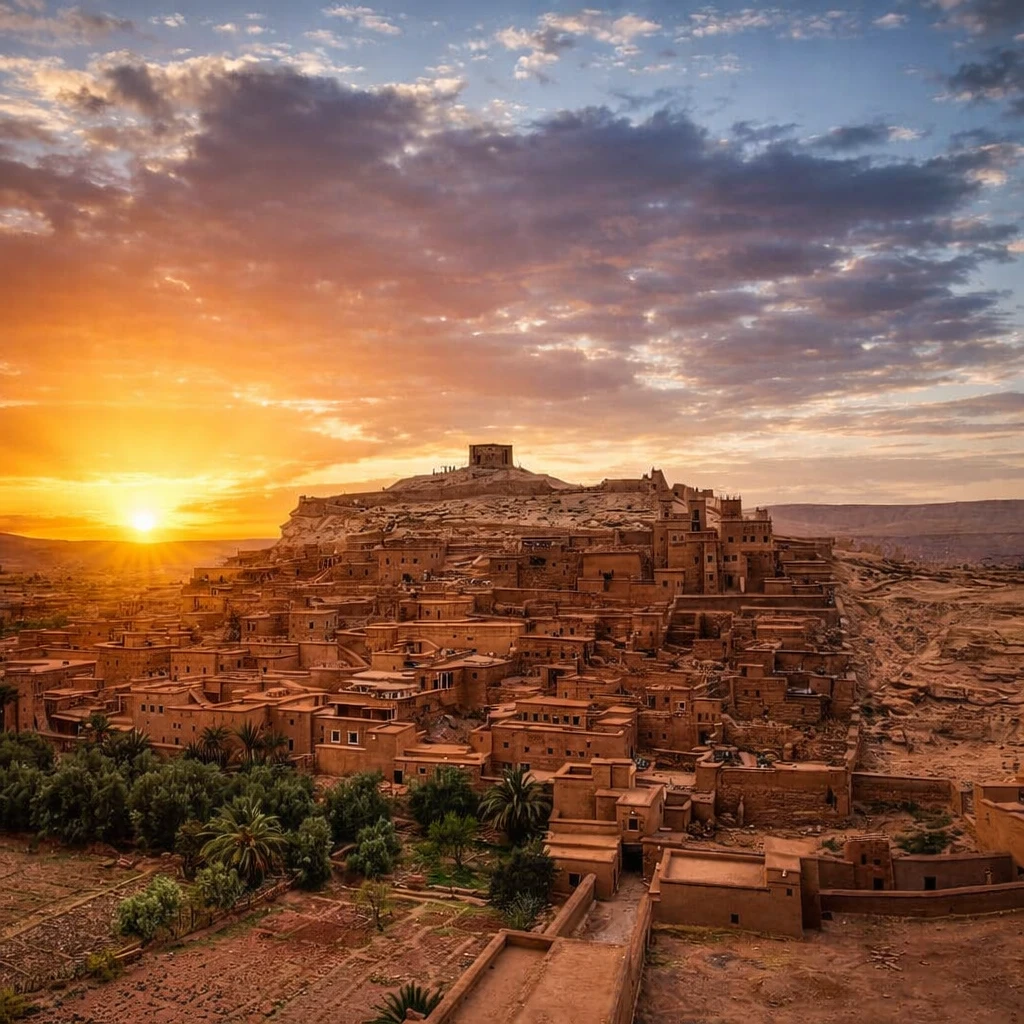
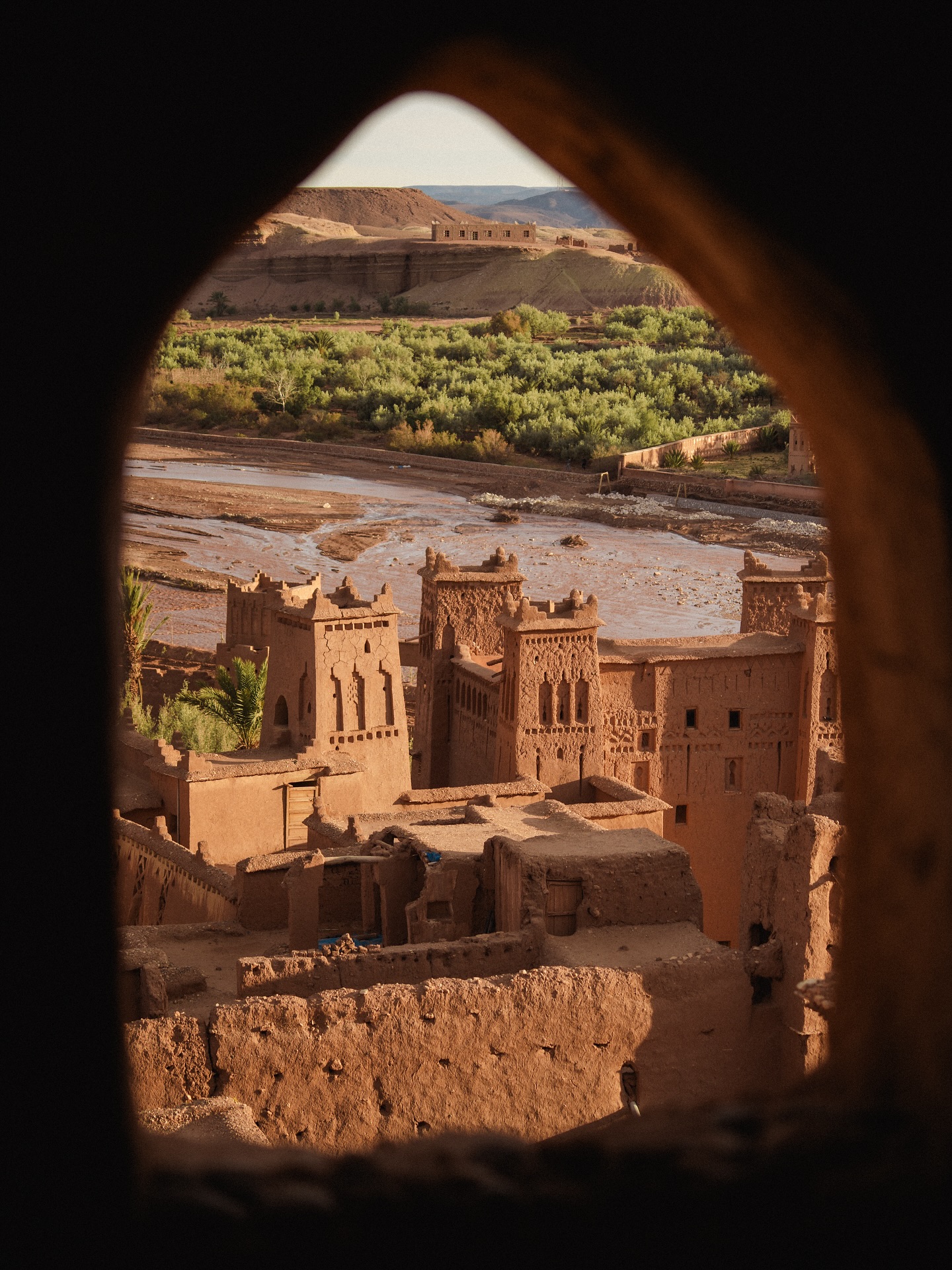
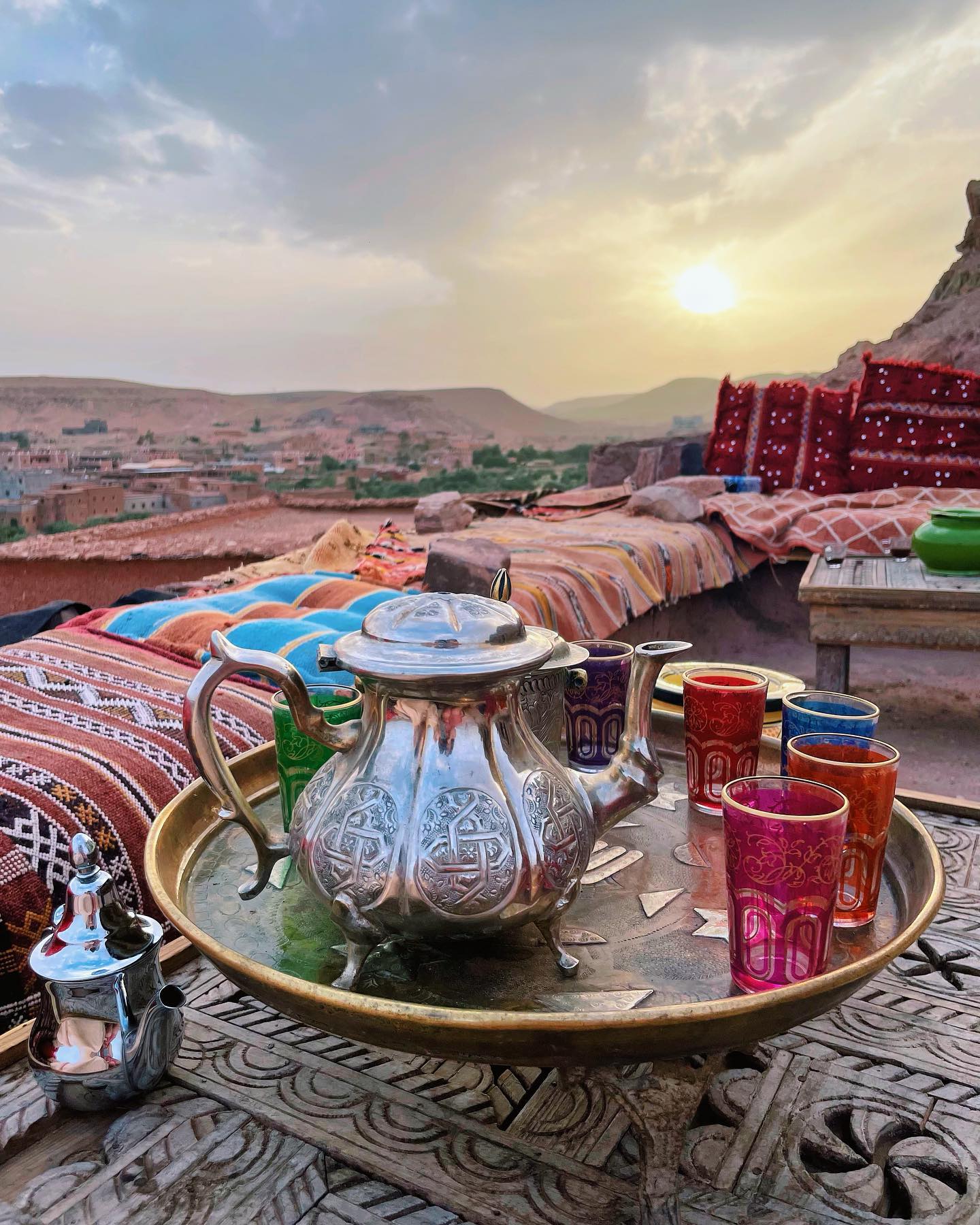
Riverside restaurants along the road adjacent to the kasbah offer excellent unobstructed western views. Aït Ben Haddou pairs naturally with a day in Ouarzazate and, for film enthusiasts, the nearby Atlas Studios. Best time to visit: Spring (March–May) and autumn (September–November).
7. Ouzoud Waterfalls: Mist, Rainbows, and Green Valley Light
Ouzoud Waterfalls, set within a verdant gorge in the Middle Atlas roughly 150 kilometres northeast of Marrakech, present a sunset experience of a completely different order. The falls cascade 110 metres over three tiers, and the constant mist they generate refracts the descending sun into full rainbow arcs with consistent predictability. The surrounding landscape — olive trees, oleander, and fig groves — glows in warm green and gold tones that distinguish Ouzoud sharply from Morocco’s more desert-orientated sunset spots.
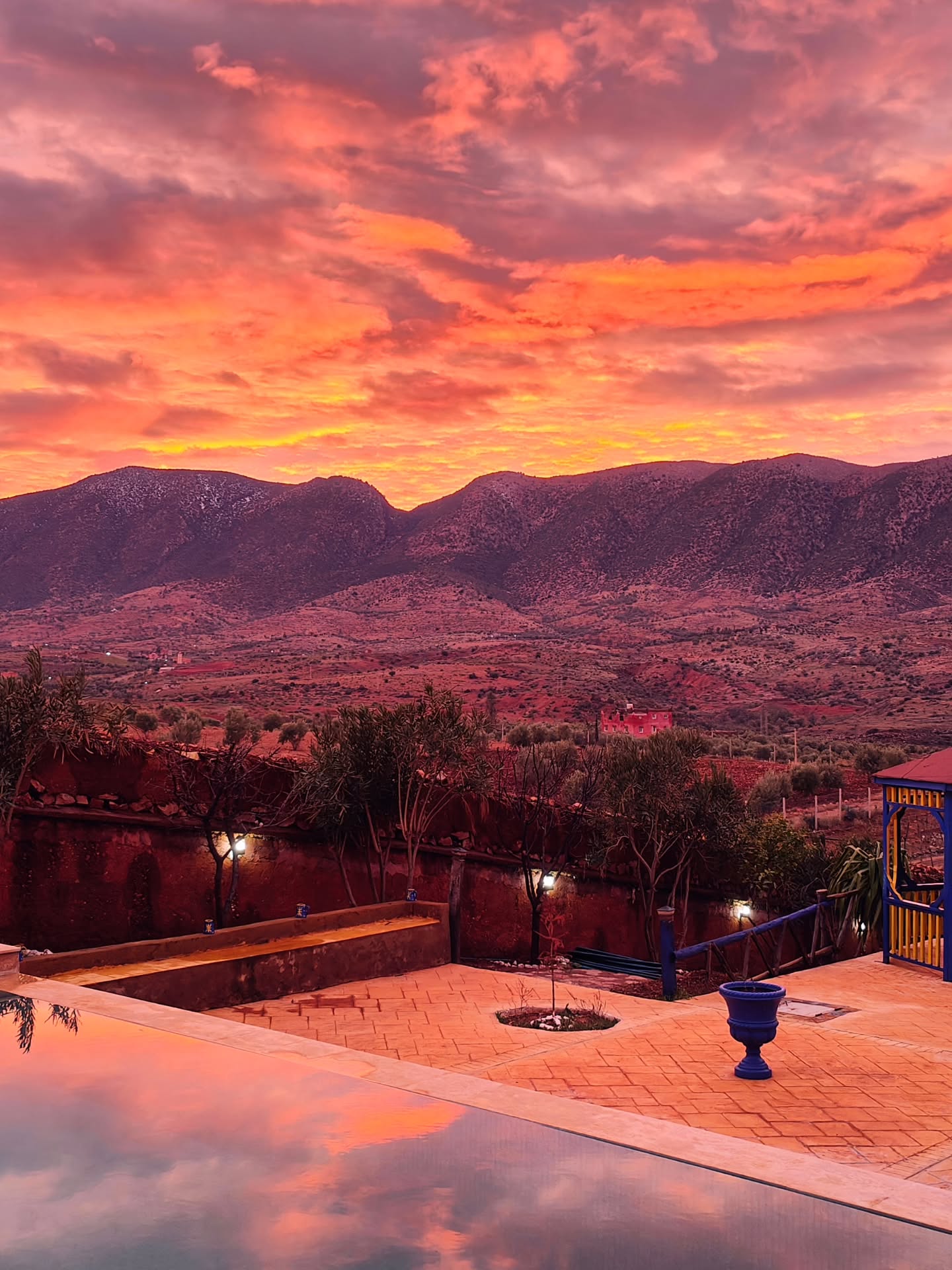
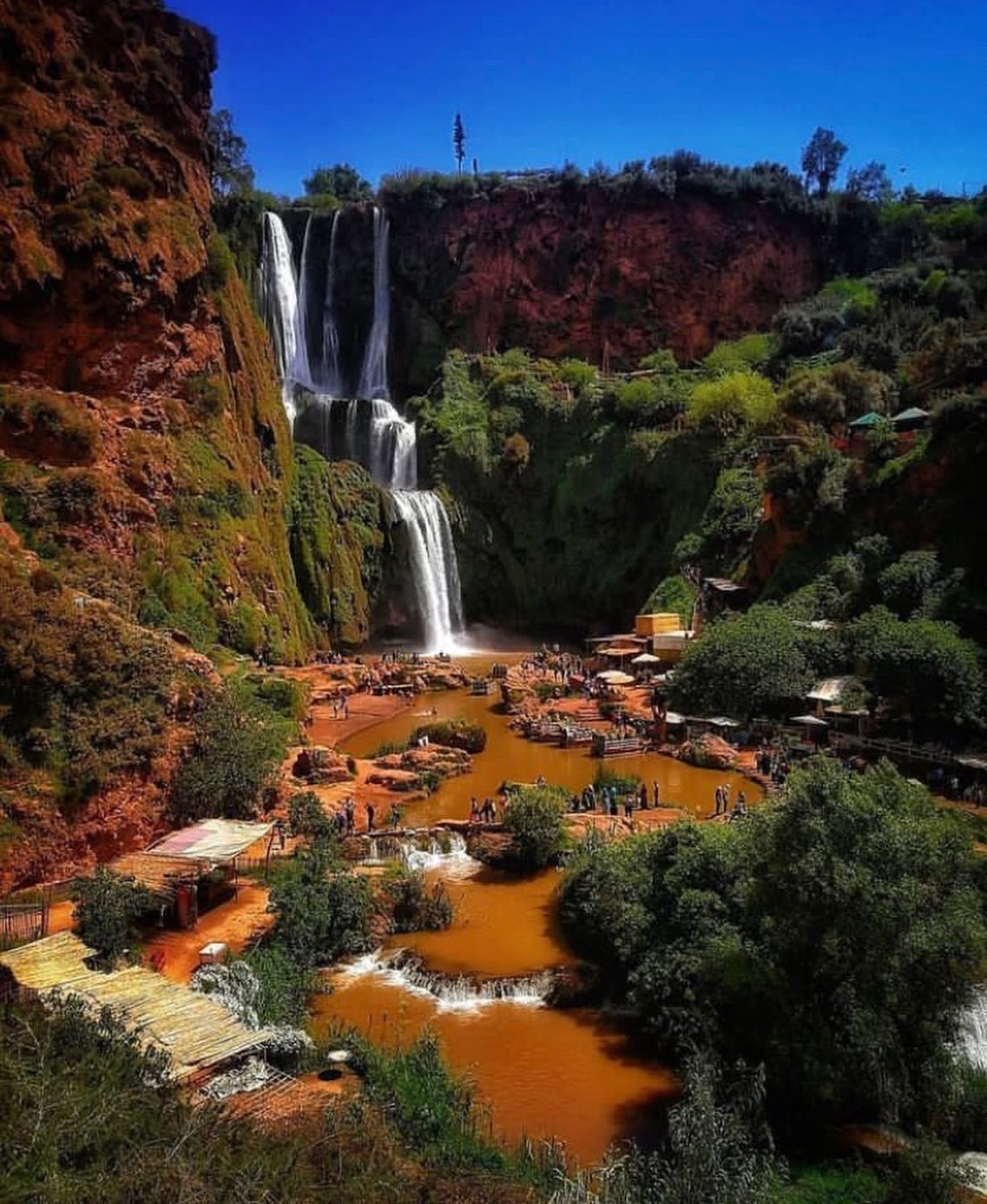
Ouzoud’s primary draw is the waterfalls and the resident Barbary macaque population, not the sunset per se. The sunset light is genuinely beautiful here — but it rewards those who stay until dusk after exploring the falls during the day. For a well-organised full day from Marrakech that includes the falls, wildlife, and sunset light, consider booking a guided day trip.
Use a tripod and set shutter speed between 1 and 4 seconds to render the falling water as smooth, silk-like flow. ND filters help when bright conditions persist near sunset. Shoot from the bottom-tier viewing platform for the fullest rainbow arc. Spring visits offer maximum water volume and wildflower growth in the valley.
Best time to visit: Spring (March–May) for peak water; early autumn (September–October) for comfortable temperatures and moderate visitor numbers.
8. Atlas Mountains: Elevation, Silence, and Alpenglow
Morocco’s High Atlas provides sunset experiences defined by elevation and immensity. As the sun descends, valley floors shadow while peaks catch the final light in rose and amber tones — a phenomenon photographers call alpenglow, produced when indirect sunlight scatters across the upper atmosphere and illuminates high-altitude snowfields and bare rock faces. The Imlil Valley, 60 kilometres south of Marrakech at 1,740 metres, serves as the ideal base for day hikes to viewpoints with panoramic ridge views. Many mountain guesthouses position terraces specifically to face the western ridgeline, making the experience accessible without strenuous effort.
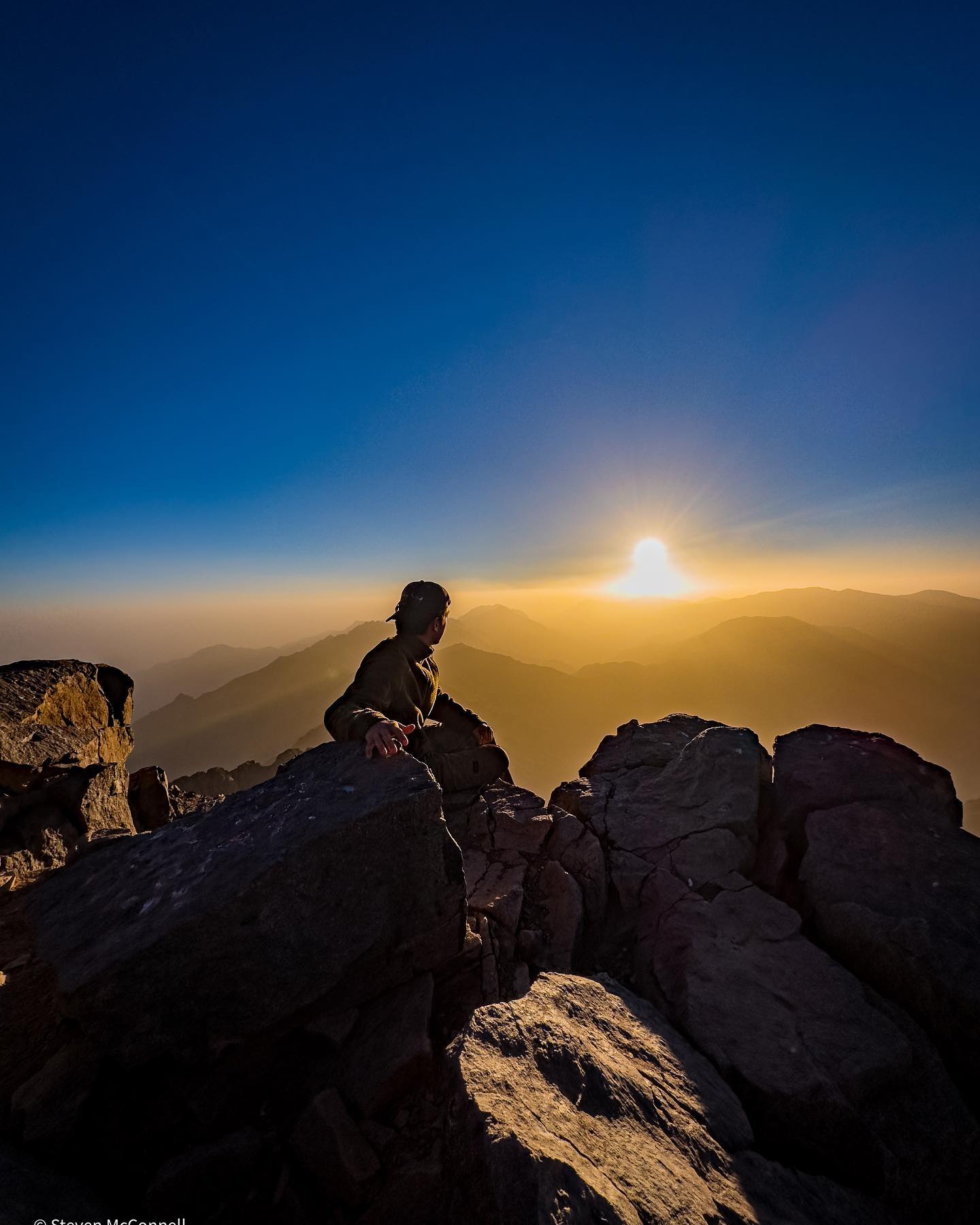
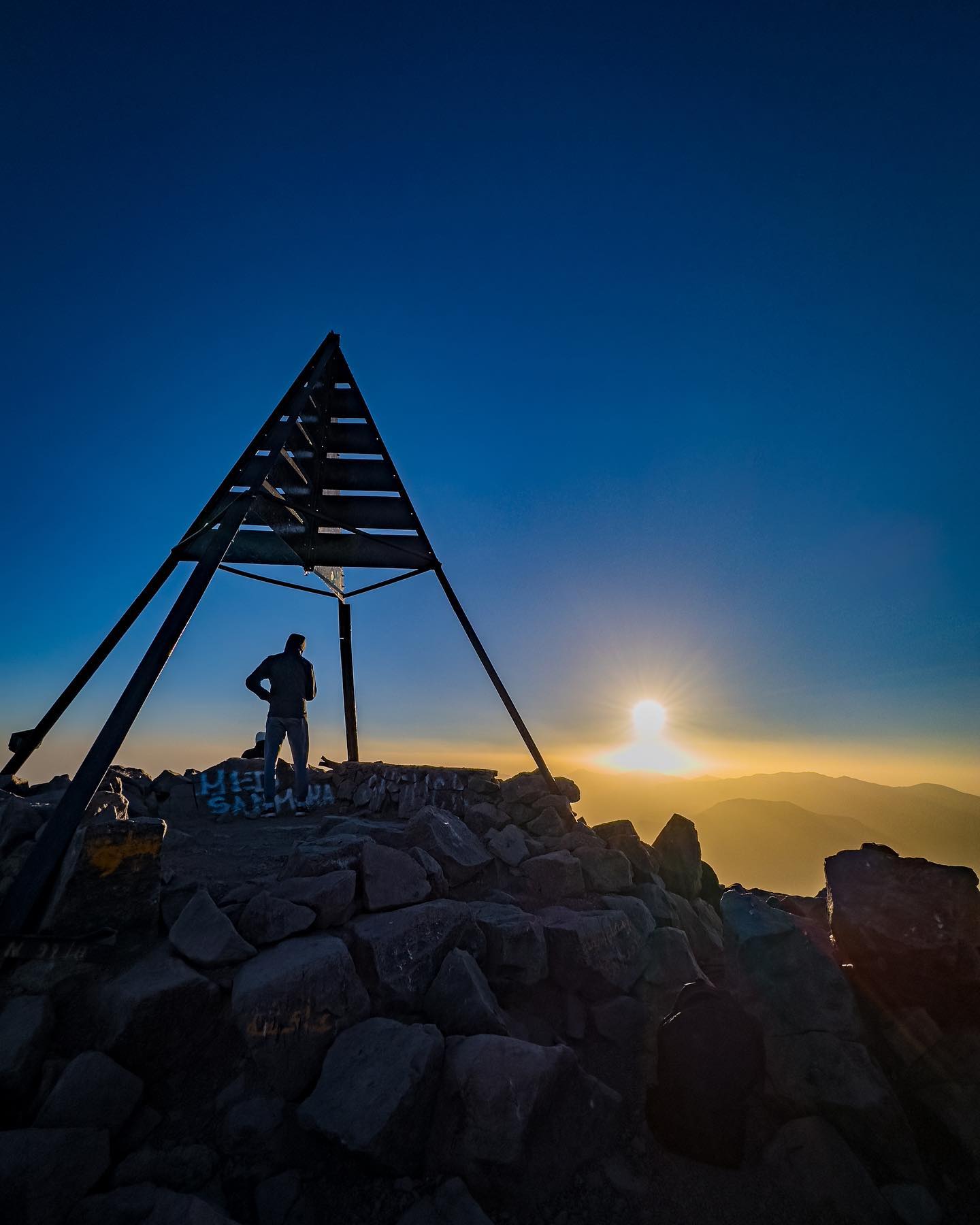
Berber village guesthouses in Imlil and the surrounding hamlets typically serve mint tea and homemade pastries on rooftop terraces in the evening — a sunset ritual that combines spectacular light with genuine cultural warmth. Best time to visit: April–June and September–October. Summer afternoons frequently bring thunderstorms that, while dramatic, limit access to viewpoints.
Quick Comparison: Morocco Sunset Spots top
Compare all eight destinations by type, distance from Marrakech, optimal season, and ideal visitor profile.
| # | Destination | Sunset Setting | From Marrakech | Best Season | Ideal For |
|---|---|---|---|---|---|
| 01 | Sahara — Merzouga | Desert dunes | ~9–10 hrs | Oct – Apr | Iconic experience |
| 02 | Essaouira | Atlantic ocean | ~3–4 hrs | Apr – Nov | Romance & photos |
| 03 | Chefchaouen | Blue city panorama | ~8–9 hrs | Mar–May · Sep–Nov | Photography |
| 04 | Agafay Desert | Rocky plateau + Atlas | ~40 km | Oct – Nov | Quick day trip |
| 05 | Aït Ben Haddou | Ancient kasbah valley | ~3 hrs | Sep – Nov | History & culture |
| 06 | Legzira Beach | Ocean + stone arches | ~5 hrs SW | Nov – Mar | Landscape photos |
| 07 | Ouzoud Waterfalls | Waterfall mist | ~2.5–3 hrs | Mar – May | Nature lovers |
| 08 | Atlas Mountains | Alpine alpenglow | ~1–2 hrs | Apr–Jun · Sep–Oct | Hikers & trekkers |
Best Season and Timing for Morocco Sunsets top
October
Daytime temperatures of 24–27°C, exceptional atmospheric clarity, and golden hour falling around 6:45–7:15 PM. Crowds are manageable, roads are clear, and virtually every Morocco sunset spot performs at its best. October is the consensus choice among photographers and experienced travelers alike.
Autumn Shoulder Months
September retains summer warmth with cleaner skies than peak season. November delivers softer, cooler light and richer colour saturation in the sky — many photographers actually prefer November for the quality of its post-sunset glow.
Bloom and Renewal
Wildflower blooms across the Atlas and Middle Atlas transform the landscape during spring. Light quality rivals autumn; the Ouzoud Waterfalls are at their most powerful. April is often cited as Morocco’s single best all-round travel month.
Dramatic and Uncrowded
Winter brings snowcapped Atlas peaks, pronounced cloud formations, and thin crowds. Sunsets arrive early — 6:15–6:45 PM — but the air is sharp and clear. A winter Sahara sunset, with cold night air and dense stars, is an experience apart.
Summer heat regularly exceeds 35°C in northern cities and 38°C in the Sahara and Agafay. All major tourist sites are at maximum capacity. Outdoor sunset activities, particularly in the desert, become physically demanding and logistically complex. Save Morocco for another season.
Sunset Photography Tips for Morocco top
Camera Settings
Aperture: f/8–f/16 for starburst sun effects. Shutter: 1/500s to freeze movement; 1–4s to blur water and emphasise motion. ISO: 100–400. White balance: Shoot RAW and adjust in post for maximum flexibility.
Composition Principles
Place the horizon in the upper third when landscape dominates; lower third when the sky is active. Lead lines — dune ridges, waves, fortress walls — pull the eye toward the sun. Foreground subjects at two to four times the scene depth create three-dimensional layering.
Timing Strategy
Golden hour begins roughly 60 minutes before sunset. The final 10 minutes before the sun crosses the horizon are when colour saturation peaks. Stay through blue hour (30–60 minutes after sunset) — the twilight palette is distinctly different and often the most emotionally resonant window.
Silhouettes
Camels, minarets, and lone figures between your lens and the sun produce powerful graphic images requiring no complex technique. Position your subject against the brightest part of the sky and expose for the background, leaving the foreground to fall to black.
The most defining images from Moroccan sunsets typically come in the final five minutes before the sun touches the horizon and the five minutes immediately after. Colour saturation spikes, shadows lengthen to their maximum, and the atmosphere begins its transition to twilight blue. Set your camera to continuous shooting during this window. You will discard most frames — but the keepers are worth it.
Essential Equipment Checklist
- Sturdy tripod — indispensable for consistent framing and long exposures after the sun drops
- ND graduated filter — critical for managing the contrast between bright sky and shadowed foreground
- Circular polarising filter — enhances sky saturation and reduces water glare
- Wide-angle lens (14–35mm) — encompasses desert and ocean expanses
- Telephoto lens (70–200mm) — compresses and isolates distant mountain peaks against sky
- Remote shutter release — eliminates camera shake during long exposures
- Extra batteries — cold desert nights drain battery performance significantly faster
Romantic and Cultural Sunset Experiences top
Desert Camp Dinners — Agafay and Sahara
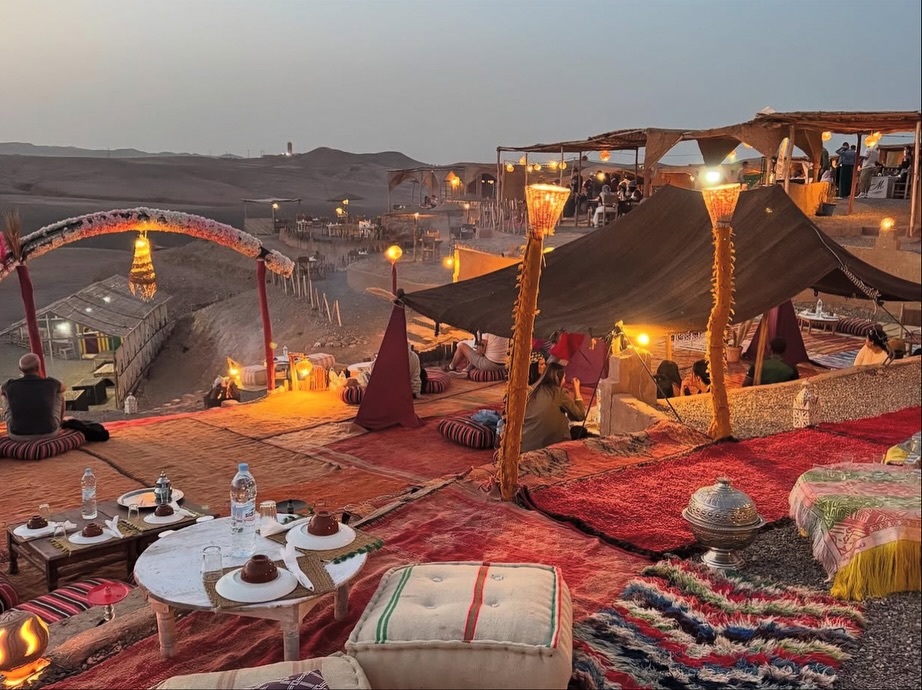
Both the Agafay and Sahara camps follow a sequence that has become a genuine Moroccan travel institution: sunset by camelback, arrival at camp as the sky transitions to deep blue, mint tea and traditional Berber bread around a central fire, then a dinner of slow-cooked tagine, couscous, and salads accompanied by live Gnawa or Amazigh music. For private camps, these evenings can be arranged with exclusive tents, plunge pools, and personalised menus — making them suitable for significant occasions as much as adventure travel.
Rooftop Dining in Marrakech and Essaouira
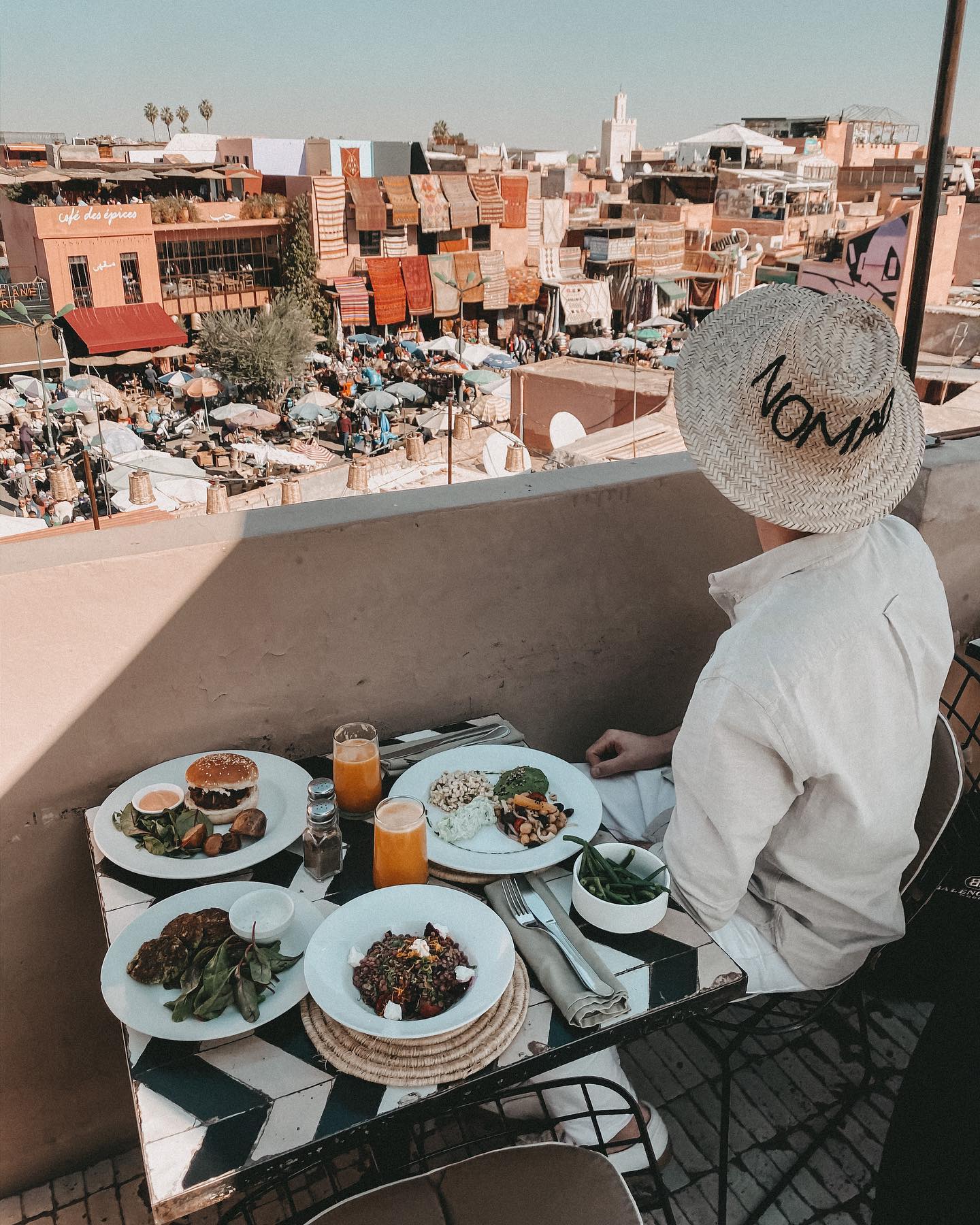
Morocco’s medinas are dense with rooftop restaurants positioned to exploit the evening skyline. In Marrakech, the best terraces frame the Koutoubia Mosque’s minaret against the western sky. In Essaouira, ocean-facing rooftops combine spectacular Atlantic views with some of the city’s finest seafood. Book at least a week in advance for popular venues, and request a west-facing terrace seat explicitly when reserving.
Camel Trekking at Golden Hour
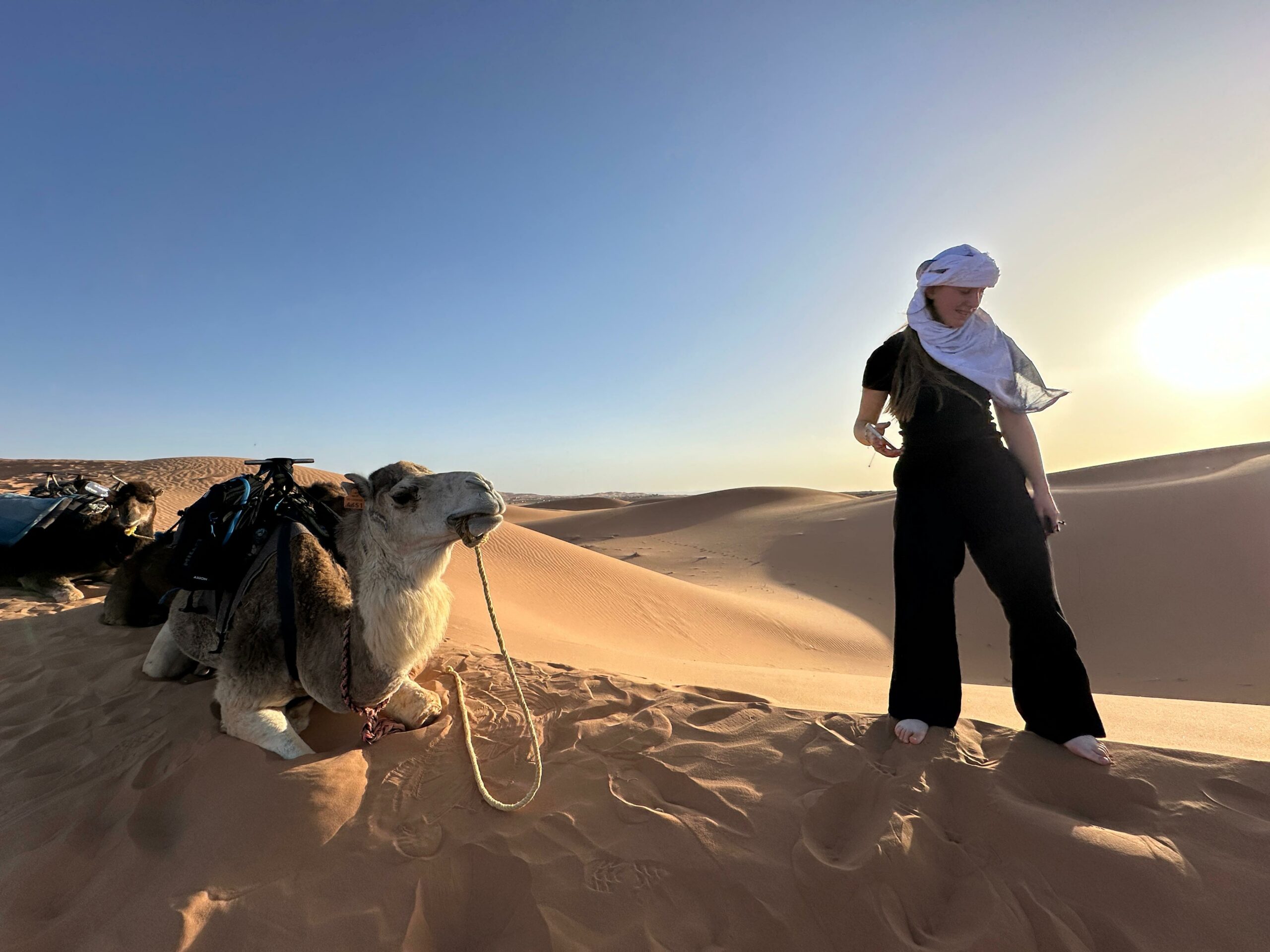
A sunset camel trek covers ground at a pace slow enough to observe every subtle shift in light and shadow. You’re elevated above the terrain, moving without engine noise, and the animal’s natural rhythm creates a meditative quality rare in structured tourism. The camel riders’ silhouettes, captured against the sunset sky, are among the most sought-after images in all of Morocco travel photography.
Berber Hospitality in the Atlas Villages
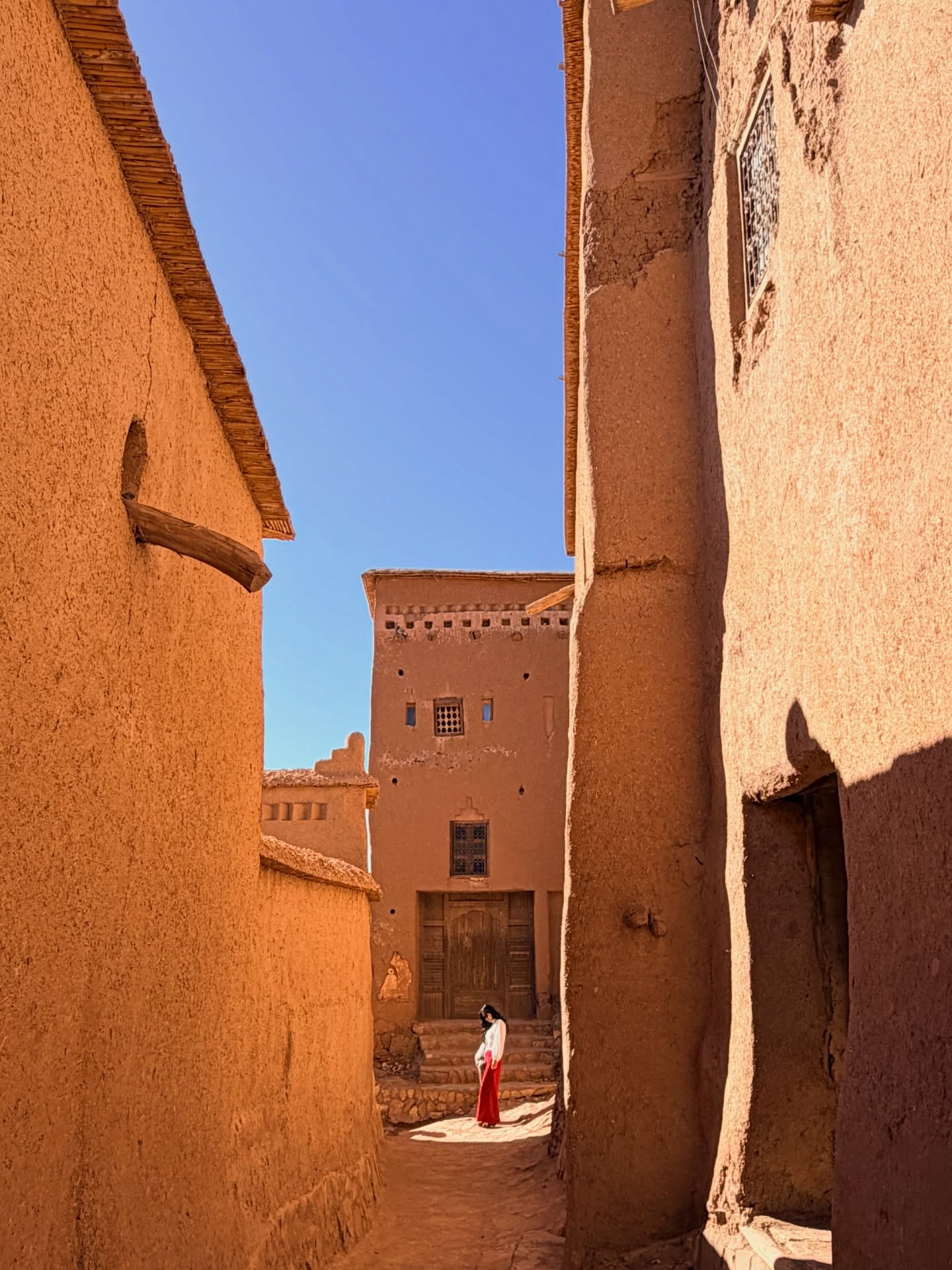
In the Atlas village guesthouses around Imlil, evenings frequently involve spontaneous invitations to join the household on the rooftop terrace. Fresh-mint tea is poured without asking. Conversation happens through gesture and the shared experience of watching the same sky change colours. These interactions — unscripted, genuinely hospitable, and impossible to replicate in a hotel lobby — represent Morocco at its most essential.
Plan with a Licensed Local Guide top
Morocco’s best sunset spots reward those who arrive at precisely the right vantage point, at the right moment — and understanding the subtleties of each location (which ridge, which restaurant terrace, which tide timing, which dune approach) is the difference between a good experience and an unforgettable one. A Ministry of Tourism-certified guide carries that knowledge and the cultural fluency to translate it into your specific itinerary.
Practical Travel Tips top
Safety and Preparation
Morocco is a safe destination by any regional standard, and sunset excursions in organised settings carry minimal risk. For detailed context, refer to our complete guide on safety for tourists in Morocco.
- Hydration: Carry a minimum of 2–3 litres of water per person for any outdoor desert or mountain excursion.
- Sun protection: High-SPF sunscreen, a wide-brimmed hat, and UV-protective sunglasses are essential from spring through autumn.
- Transport after dark: Use official metered taxis or pre-arranged transfers for any return journey after sunset. Avoid walking alone in unfamiliar medina alleyways late at night.
- Valuables: Use hotel safes for documents and spare cash. Carry only what you need when visiting public viewpoints.
- Female travelers: Modest dress (covered shoulders and knees) is appropriate in conservative areas and will reduce unwanted attention considerably.
Sunset Times by Season
Times vary significantly: summer (June–August) sunset falls between 8:30–8:45 PM. Autumn and spring (March–May, September–November) between 7:00–7:45 PM. Winter (December–February) between 6:00–6:45 PM. Always verify precise times for your specific travel dates using a dedicated sunset calculator, as exact timings shift by location within Morocco.
Photography Ethics and Cultural Respect
Request permission before photographing individuals — the Arabic phrase “Mumkin sura, min fadlik?” (May I take a photo, please?) is appreciated universally and almost always receives a warm response. Respect a refusal without comment. Photography within functioning mosques is generally prohibited across Morocco, with the notable exception of the Hassan II Mosque in Casablanca. In souks and markets, merchants and artisans should be asked before their workshops are photographed.
FAQ: Morocco Sunset Questions Answered top
The Sahara Desert near Merzouga consistently ranks as the most iconic and transformative sunset experience in Morocco. The scale of Erg Chebbi’s dune field, the colour progression through golden hour, and the post-sunset silence and starlight combine into something most travelers call the highlight of their entire Morocco trip. That said, Essaouira’s ocean sunsets, Chefchaouen’s chromatic contrast, and Agafay’s accessibility all have genuine claims on the title depending on your priorities.
The Agafay Desert (40 km) is the closest desert sunset option — easily reached in under an hour by car. Within Marrakech, rooftop restaurants facing the Koutoubia Mosque offer an accessible urban sunset experience. The Atlas Mountains (Imlil Valley, 60 km) provide a mountain alternative. All three are viable as day or evening excursions without overnight commitment.
Almost universally, yes — but no-one should make the drive for the sunset alone. The Sahara excursion is a multi-day experience: the scenic Draa Valley route, the kasbah towns of the south, an overnight desert camp, and the sunrise that follows. The sunset is the emotional centrepiece of a journey that rewards the full commitment. Most travelers who skip the Sahara cite it as their biggest Morocco regret.
October is the consensus choice: temperatures of 24–27°C, exceptional atmospheric clarity, golden hour around 6:45–7:15 PM, and moderate crowds. April and November rank closely behind. November specifically is favoured by landscape photographers for its richer sky colour saturation and longer post-sunset twilight duration.
A 7–10 day itinerary comfortably covers two or three. A practical sequence: Days 1–2 in Marrakech (Agafay or rooftop); Days 3–5 in the Sahara via the southern route (Ouarzazate / Aït Ben Haddou en route); Days 6–8 in Essaouira. Chefchaouen fits naturally with a north Morocco circuit that also includes Fes, adding 3–4 days to the above.
Yes, with standard precautions. Organised sunset tours to the Sahara, Agafay, Aït Ben Haddou, and Essaouira are conducted routinely without incident. For any return journey after dark from a remote location, use your tour operator’s provided transport or a pre-arranged licensed taxi rather than informal arrangements. For the full picture, read our guide on safety for Morocco tourists.
For accessible locations like Essaouira’s ramparts or Marrakech’s rooftops, a guide is not required. For the Sahara, Atlas trekking, or remote spots like Legzira, a Ministry-certified guide adds meaningful safety, logistical efficiency, and cultural depth. Mouhssine ELIOUJ (Official Licence Réf. 2898) is available via WhatsApp for personalised tour planning.
Ramadan 2026 runs from 28 February to 29 March. Restaurant availability during daylight hours is reduced, but sunset experiences remain fully accessible — and the iftar gathering at dusk, when families and communities break the day’s fast together, adds an extraordinary communal dimension to the evening. Book accommodation and tour logistics further in advance than usual during this period, as availability tightens across the country.
The Light That Stays With You top
The best sunsets in Morocco share a quality that’s difficult to articulate in advance but immediately recognisable upon arrival: they feel significant. Standing on Erg Chebbi’s dunes as the sand transitions from gold to violet, watching Essaouira’s ramparts turn copper against a sea-reflected sky, or sharing a pot of mint tea on an Imlil terrace as the Atlas peaks catch their final light — these moments carry a weight that photographs only partially preserve.
Morocco doesn’t offer one exceptional sunset location. It offers eight, each working through an entirely different visual and cultural register, each capable of becoming the image — or the memory — that defines a journey. The question isn’t whether to go. It’s where to go first.