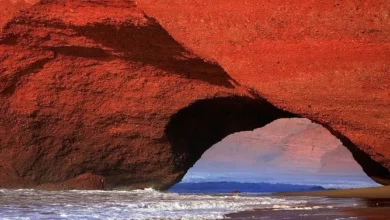
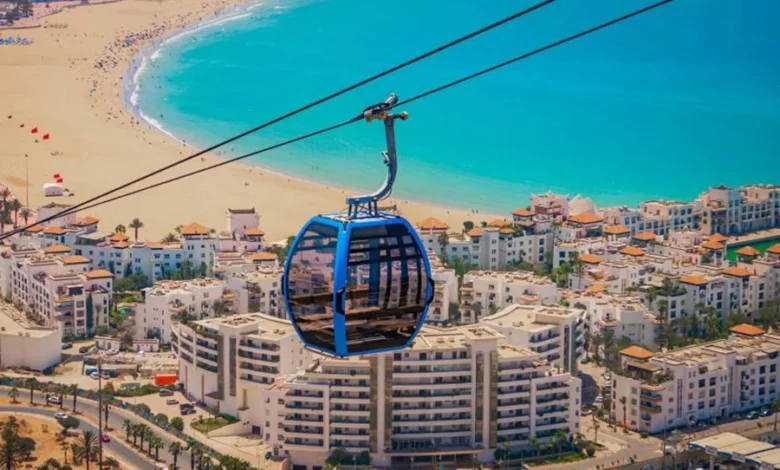
3 Days Agadir to Marrakech & Essaouira — The Complete Tour Guide
Everything you need to know to plan and enjoy one of Morocco’s most rewarding short tours: Atlantic coast beauty, Marrakech’s imperial grandeur, and Essaouira’s wind-swept creative spirit — all in seventy-two hours.
Table of Contents
Tour Overview↑ Contents
The 3 Days Agadir to Marrakech and Essaouira tour is one of Morocco’s most satisfying short itineraries — the kind that leaves you with a genuine sense of what this country is actually like, rather than a checklist of monuments you vaguely remember ticking. In just three days, you pass through three cities that could hardly be more different from one another, each revealing a different face of Moroccan life.
Agadir is where you start: a modern, open-air city rebuilt entirely after the devastating 1960 earthquake, now Morocco’s leading beach resort. From there the route moves inland to Marrakech — ancient, labyrinthine, sensory, and completely alive in a way that few cities in the world still manage to be. The journey finishes at Essaouira, a wind-battered Atlantic port where blue paint peels from 18th-century Portuguese ramparts and the smell of cedar wood mingles with salt air.
If you’ve been wondering where Morocco is and why it keeps appearing on everyone’s travel list — this itinerary provides a compelling answer. Morocco sits at the northwestern tip of Africa, separated from Europe by just 14 kilometers of ocean, and its position at the crossroads of Berber, Arab, and European cultures has produced a richness that rewards even the briefest visit.
Why This Tour Stands Out↑ Contents
Morocco’s cities each carry a distinct personality, and what makes this particular route work so well is the contrast. You’re not spending three days in the same medina or the same coastal resort — you’re moving through genuinely different atmospheres, each one resetting your sense of where you are and reminding you that Morocco is more layered than any single image of it suggests.
Marrakech is the city that tends to surprise people most. Photographs give you the shapes — the minarets, the square, the souks — but they don’t prepare you for the smell of cumin and rose water, the sound of a dozen languages overlapping in a covered lane, or the experience of stepping through an unremarkable wooden door into a riad courtyard with a fountain and orange trees and no noise at all. That contrast — the overwhelming city and the quiet interior — is what Marrakech is actually about.
Essaouira is something else entirely. Musicians and artists have been drawn here for decades, and the creative energy they brought has never quite left. The medina is smaller and more walkable than Marrakech’s, the pace is noticeably slower, and the Atlantic wind keeps everything cool even in summer. It’s the kind of town you extend your stay in without quite planning to.
A question that comes up frequently before booking is whether Morocco is safe to visit for tourists. The straightforward answer is yes — Morocco consistently ranks among the safest destinations in Africa and the broader Arab world, and a private guided tour like this one removes any navigational uncertainty, so you can spend your energy on the experience rather than logistics.
Day-by-Day Itinerary↑ Contents
What follows is an honest account of what the three days actually look like — the sights, the travel time, the pace, and the moments worth anticipating most.
01
Agadir → Marrakech
~3.5 hrs drive · Afternoon arrival · Evening medina & Jemaa el-Fnaa
Your driver meets you at your Agadir hotel or apartment in the morning. The road north follows the Souss valley through flat agricultural plains before the landscape opens into the pre-Atlas steppe — spare, ochre-colored country that has its own kind of beauty. The drive takes between three and three and a half hours depending on traffic, and the modern highway means most of it is smooth and unhurried.
You arrive in Marrakech in the early afternoon. Check-in to your riad — one of the city’s hidden courtyard guesthouses, tucked behind an anonymous door in the medina — and then head directly into the old city with your local guide. The destination is Jemaa el-Fnaa, the great central square that serves as Marrakech’s living room. In the afternoon it hums with orange-juice sellers and henna artists; by dusk it transforms into something closer to a theater, with storytellers, musicians, acrobats, and the smoke from a hundred food stalls rising into the darkening sky.
From the square, your guide leads you into the souks — a dense, covered network of lanes organized by trade. The spice souk, the leather quarter, the silversmiths’ lane, the carpet sellers. The sensory overload is real, but your guide keeps you oriented and helps you engage at your own pace. Dinner is at a riad restaurant nearby — the kind of candlelit setting that makes the first evening in Marrakech feel exactly right.
02
Marrakech Highlights → Road to Essaouira
Morning monuments · Argan forest road · Atlantic arrival
After breakfast, the morning belongs to two of Marrakech’s most iconic sites. Bahia Palace is a nineteenth-century complex built for the Grand Vizier Ba Ahmed — its name means “brilliance,” and the craftsmanship justifies it entirely. Zellij tilework, hand-carved cedar ceilings, and a sequence of courtyards that grow more intimate as you move deeper into the building. It’s a masterclass in Moroccan decorative arts and worth taking slowly.
Next is Majorelle Garden, the botanical garden originally created by French painter Jacques Majorelle in the 1920s and later saved and restored by Yves Saint Laurent. The combination of tropical plants, cobalt-blue structures, and the stillness that somehow persists despite the crowds makes it unlike anything else in Morocco. The adjacent Berber Museum is worth a visit too if time allows.
By late morning you’re back in the vehicle heading west. The drive to Essaouira takes around two and a half hours, and much of it passes through the argan forest — Morocco’s most distinctive and economically important ecosystem. Keep your eyes on the trees: it’s entirely common to see goats perched in the branches, grazing on argan fruit. The sight is so unlikely that first-time visitors often ask for the car to stop.
Essaouira appears from a distance as a white line on the clifftop above the Atlantic. Check into your hotel, and then the rest of the afternoon is yours. The old ramparts are an obvious first stop — wide enough to walk along, with cannons still pointing toward the sea and views that change completely depending on the light. The fishing port is active at any hour, with brightly painted blue boats and the smell of fresh catch. Or simply find a café in the main square and stay there until dinner.
03
Essaouira Morning → Return to Agadir
Free morning · Coastal road south · Late afternoon arrival
The final morning is deliberately kept open. Essaouira rewards wandering without a plan — its medina is compact enough that you’re never genuinely lost, and its streets are varied enough that an hour of walking turns up something new at every corner. Browse the art galleries clustered behind the ramparts, where local painters and sculptors show work alongside pieces by visiting artists from across Africa and Europe. Look for thuya wood marquetry — a traditional craft unique to this region, made from the beautifully grained root of the local cypress tree.
If the morning is clear and the wind is bearable (which it often isn’t), the long beach south of town is a memorable walk. The dunes extend for kilometers, and at low tide the wet sand reflects the sky with unusual clarity.
After lunch the drive back to Agadir follows the Atlantic coast road south, with ocean views for much of the route. You arrive in Agadir in the late afternoon, where your driver drops you at your hotel or directly at the airport. Three cities, three atmospheres, one coherent journey — and a clearer sense of what Morocco is actually about than most people manage to find in a week of independent travel.
What’s Included & Excluded↑ Contents
Here is exactly what the price covers and what remains your own responsibility — no ambiguity.
Included
- Private air-conditioned vehicle throughout
- Professional English-speaking driver
- Two nights in riads or quality hotels
- All meals: Day 1 lunch through Day 3 lunch
- Licensed local guides in Marrakech and Essaouira
- All entrance fees to monuments and sites
- Airport or hotel pick-up and drop-off in Agadir
Excluded
- Alcoholic and extra beverages
- Personal shopping and souvenirs
- Gratuities for driver and guides
- Optional activities outside the itinerary
- Travel insurance
Before you travel, it’s worth knowing what currency Morocco uses. The Moroccan dirham (MAD) is not freely convertible outside the country, so plan to exchange cash at the airport or at a bank upon arrival. Both Marrakech and Essaouira have reliable ATMs in and around the medinas.
Practical Travel Tips↑ Contents
A few things worth knowing before you arrive — gathered from years of guiding travelers through this exact route.
Best Season
Spring (March–May) and autumn (September–November) offer the most comfortable temperatures. Marrakech summers are hot; Essaouira stays breezy year-round.
Dress Code
Light breathable layers work across all three cities. Modest dress — covered shoulders and knees — is appreciated in medinas and at historical sites.
Language
French and Arabic are widely spoken. A few words of Darija — the Moroccan dialect — always land warmly with locals and open doors that might otherwise stay shut.
Photography
Always ask before photographing people. Most are happy to agree; a small gesture of respect usually results in more authentic, generous portraits anyway.
Bargaining
Negotiating prices in the souks is expected and part of the experience. Start at roughly half the asking price, stay good-humored, and meet somewhere in the middle.
Argan Oil
Buy from women’s cooperatives along the Essaouira road — better quality, fair trade, and directly supports the Berber communities who produce it.
Talk to a Licensed Guide↑ Contents
Planning a Morocco trip raises a lot of practical questions — and the best answers come from someone who knows the country from the inside. Mouhssine Eliouj is a certified Moroccan tour guide, licensed by the Ministry of Tourism, with years of experience guiding international travelers along the Atlantic coast and through the imperial cities. He can help you customize this itinerary, advise on accommodation, answer questions about timing and budget, or simply give you an honest perspective before you commit to booking anything.
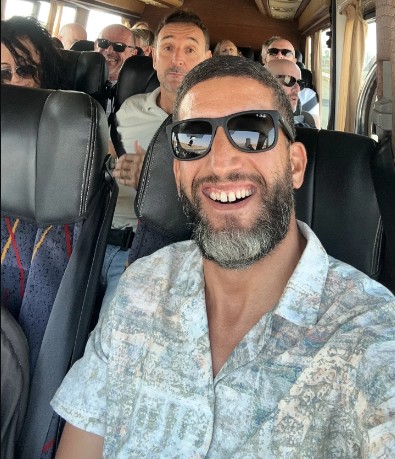
Mouhssine Eliouj
Ministry of Tourism — Certified GuidePassionate about Moroccan culture, history, and people, Mouhssine has guided hundreds of travelers through Marrakech, Essaouira, the Atlas, and the Sahara. His local knowledge, fluent English, and genuine enthusiasm make every journey feel personal and authentic rather than transactional.
🪪 License Ref. No. 2898 — Ministry of Tourism of Morocco
Chat on WhatsApp