7 Best Authentic Souks in Marrakech —
Where Locals Actually Shop
Go beyond the tourist crowds of Jemaa el-Fnaa and explore the living workshops, hidden alleys, and centuries-old trade quarters that make Marrakech’s medina truly unforgettable.
Wandering through a souk is one of those experiences that simply can’t be replicated anywhere else on earth — the smell of fresh leather, the sound of hammers on brass, the shock of color hanging from every beam. But not all of Marrakech’s markets deliver this equally. Knowing where the authentic souks in Marrakech are located — and how to navigate them like a local — is the difference between a staged shopping experience and a genuinely moving encounter with a living craft tradition. This guide, shaped by years on the ground, takes you to the seven souks where the real city still breathes.
Why Marrakech’s Souks Are in a Class of Their Own ↑ Top
Among all of Morocco’s great cities, Marrakech occupies a singular place in the imagination of travelers — and its souks are a large reason why. The medina here has been a hub of trans-Saharan trade since the 11th century. Tanners, dyers, weavers, coppersmiths, and perfumers have worked these narrow lanes for generations, passing skills from father to son in the same workshops.
What sets the best souks apart from the souvenir-heavy lanes near Jemaa el-Fnaa is the simple fact that real Marrakchis shop there. You’ll see grandmothers bartering for babouches, builders sourcing copper fittings, and restaurateurs buying spices by the kilo. That everyday energy is what makes exploring the authentic souks in Marrakech feel like a privilege rather than a performance.
The 7 Most Authentic Souks in Marrakech ↑ Top
The Dyers’ Souk (Souk Sebbaghine)
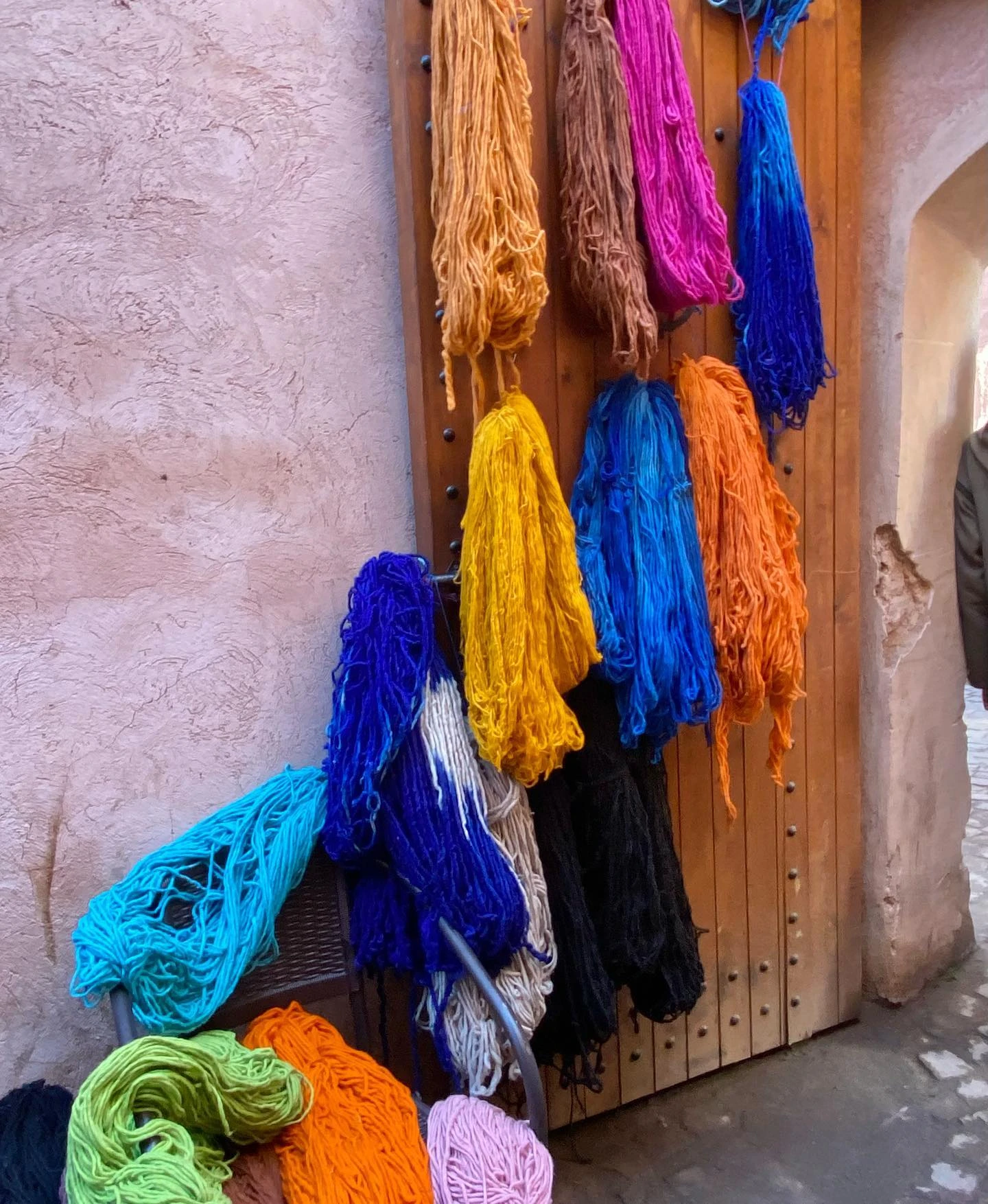
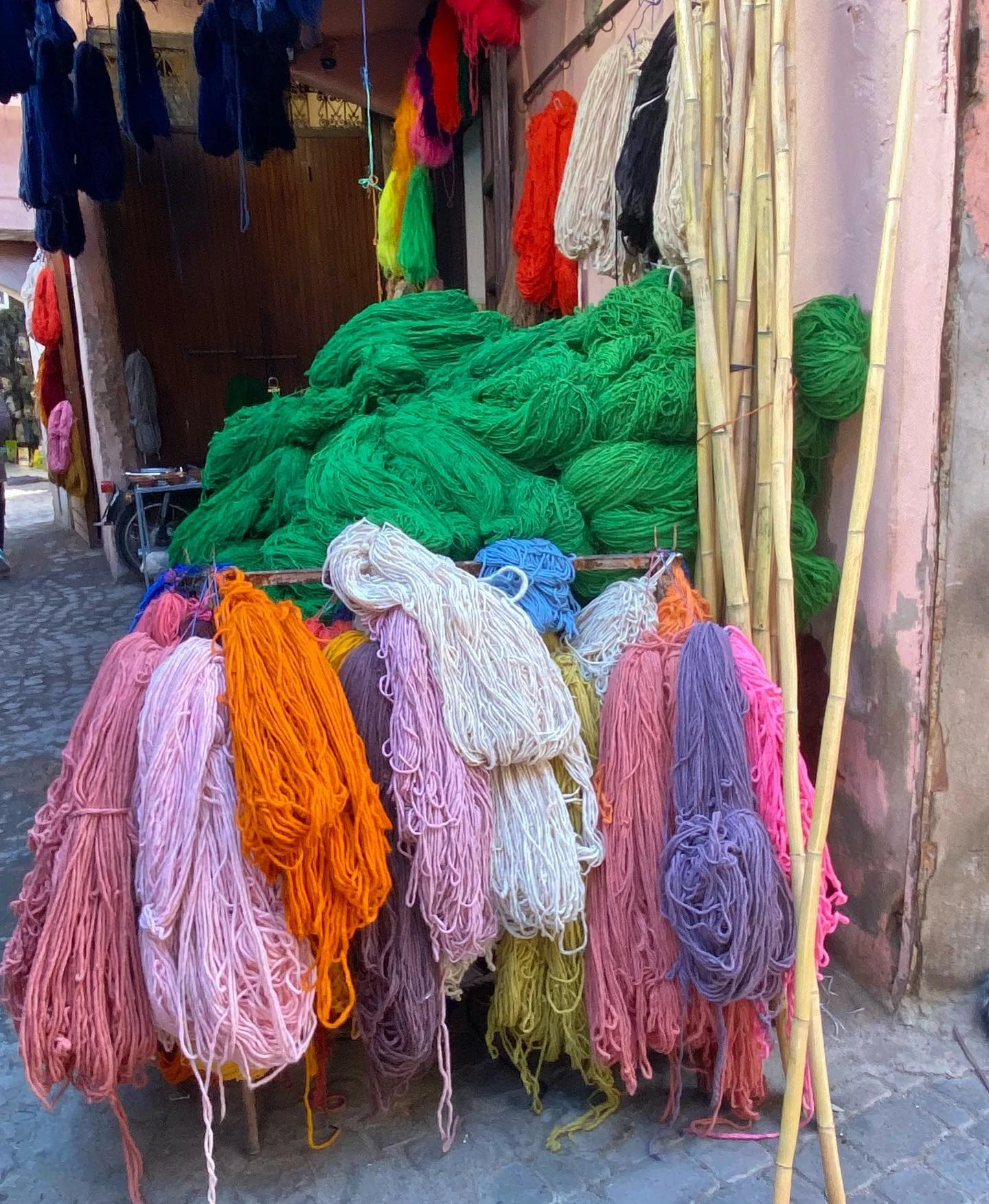
No single image of Marrakech is more striking than the Dyers’ Souk in full swing — hanks of wool and silk suspended like a painter’s palette above steaming vats of indigo, saffron, and pomegranate. This is one of the last working artisan souks in North Africa where you can watch the entire dyeing process unfold before your eyes, completely unstagey and utterly real.
Artisans use a blend of traditional plant-based dyes alongside modern pigments to achieve the vivid color range you see. They work in shifts, stirring enormous vats with long wooden poles, then wringing and hanging the dyed yarn on overhead lines to dry in the Marrakech sun. Arrive before 10 am to catch the most activity.
The Carpet Souk (Souk des Tapis)
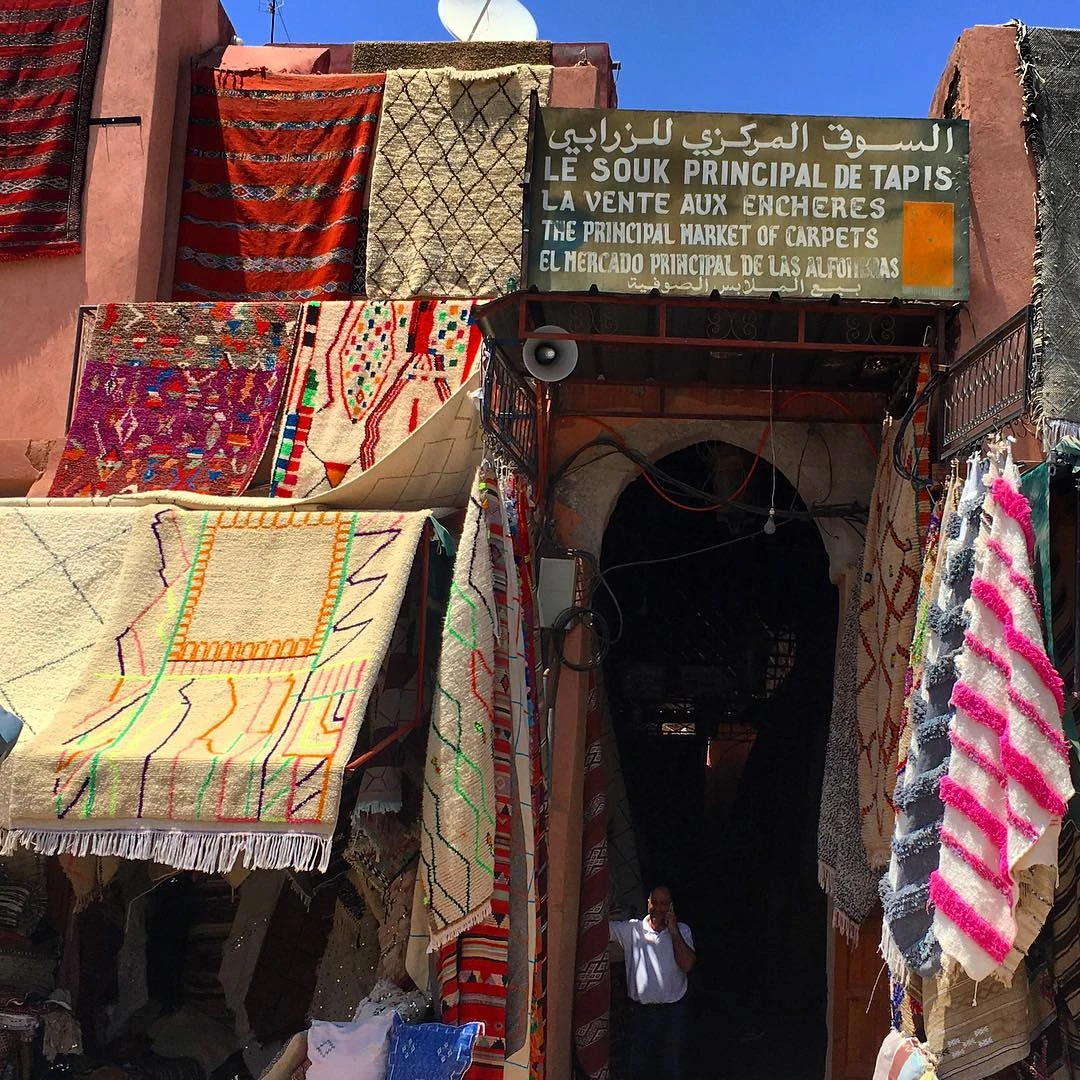
This is where Marrakchis actually furnish their homes. The Carpet Souk is a sprawling labyrinth of stacked rugs — Berber flatweaves from the Atlas Mountains, plush Beni Ouarain pieces in monochrome wool, geometric Azilal carpets in faded jewel tones, and kilims in every size imaginable. The atmosphere is calm by souk standards, with vendors happy to spread out dozens of rugs for you to inspect.
Quality varies significantly, so take your time. If something is described as “vintage,” ask about its age and region of origin — genuine antique pieces carry certificates. A reputable dealer will never pressure you, and bargaining here is not only expected but genuinely enjoyable. Budget anywhere from 300 MAD for a simple kilim to several thousand for a large hand-knotted Beni Ouarain.
The Coppersmiths’ Souk (Souk Haddadine)
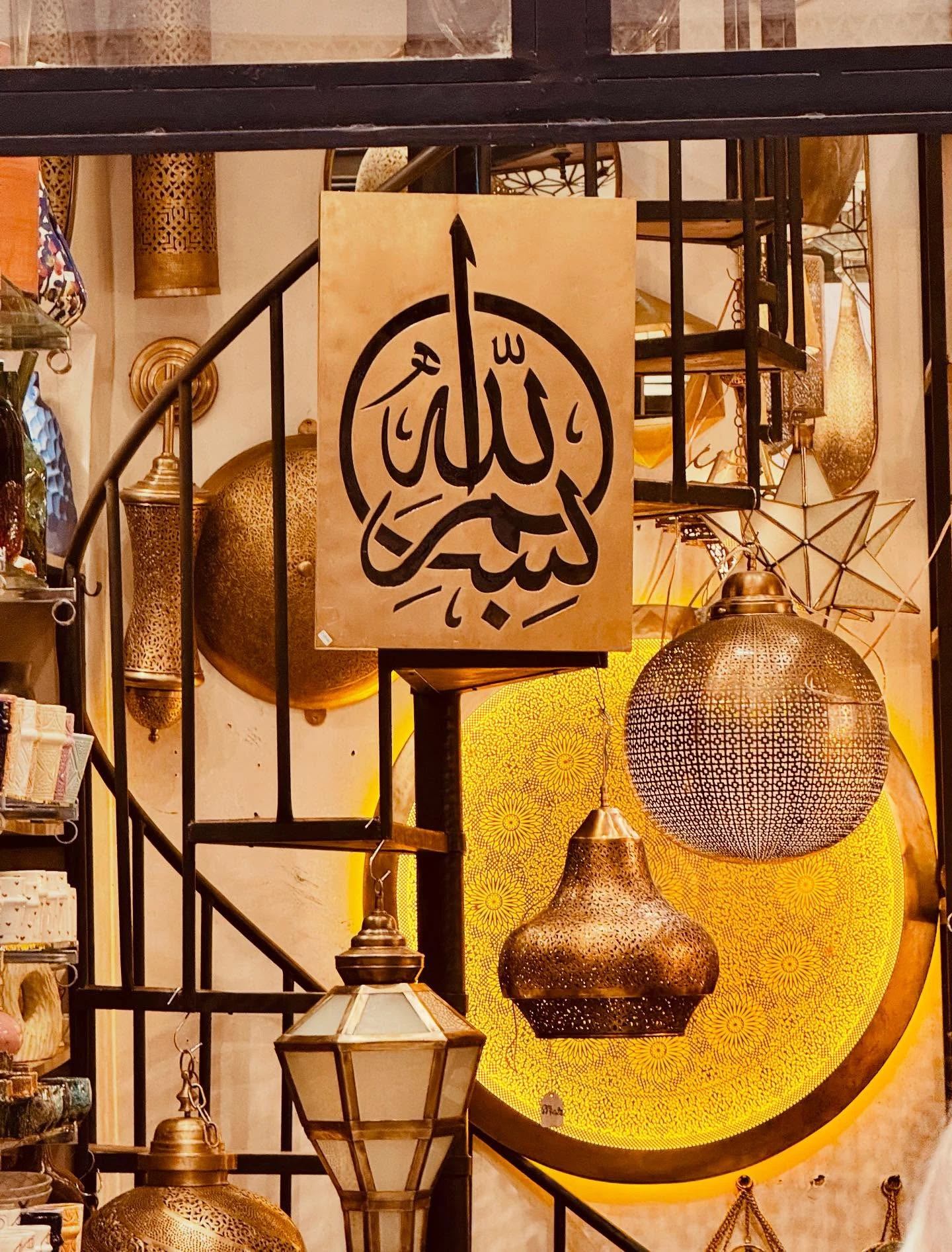
You hear the Coppersmiths’ Souk long before you see it. The rhythmic clang of hammers on metal echoes through the surrounding alleys, drawing you toward a quarter where craftsmen beat flat sheets of copper and brass into tagines, lanterns, serving trays, teapots, and architectural door hardware. The scale of what they produce — by hand, with remarkably simple tools — is astonishing.
This souk remains deeply functional: local cafés order their teapots here, riad owners commission custom lanterns, and construction suppliers stock fittings. It’s noisy, pleasantly chaotic, and genuinely working — not an exhibition. Buying directly from the maker ensures that your dirham goes straight to the artisan, not a middleman.
The Slipper Souk (Souk Smata)
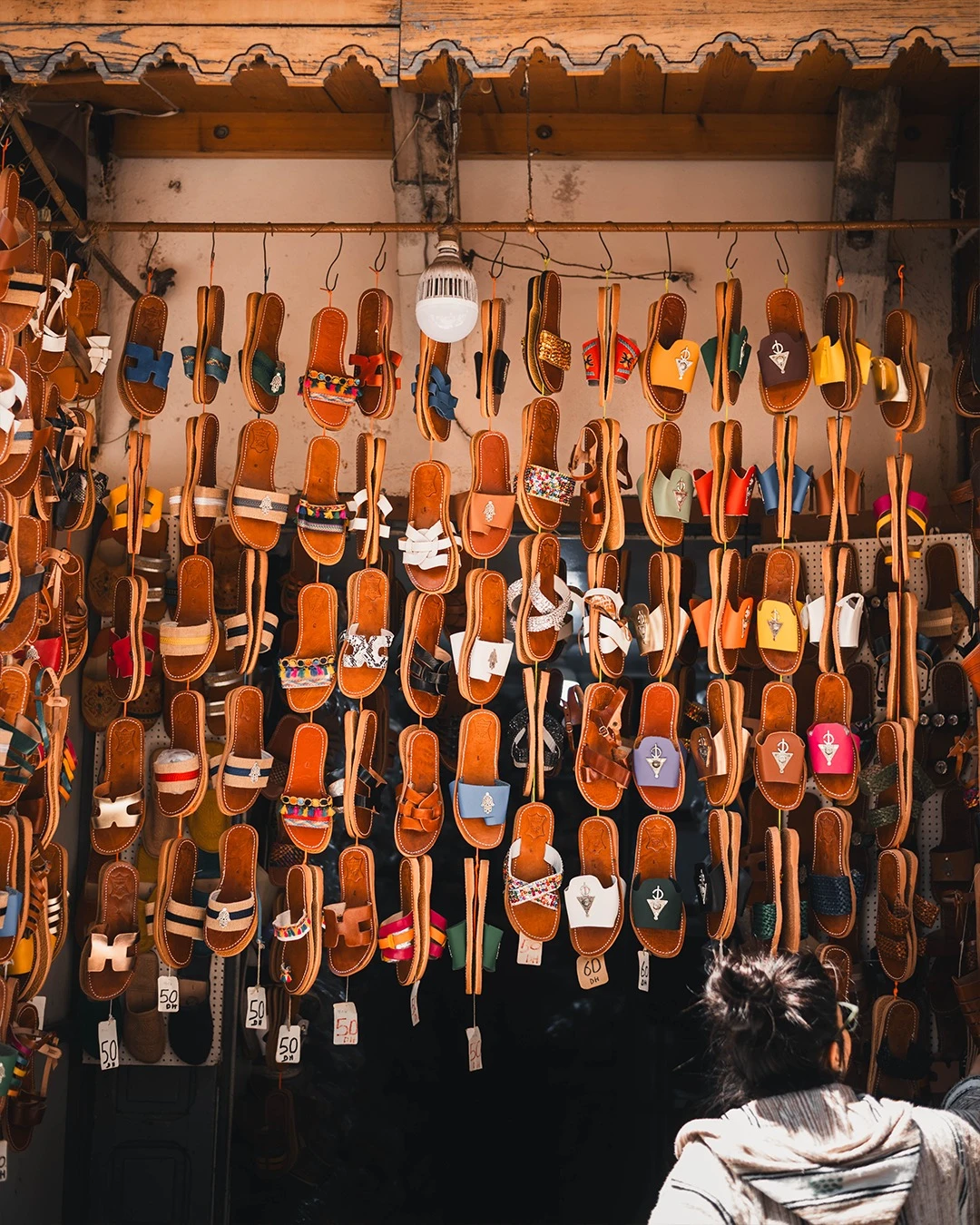
Morocco’s iconic pointed slippers — babouches — are made and sold here in their hundreds of thousands. Souk Smata is where Moroccans come for their own footwear, which means the prices are honest and the quality is real. You’ll find every variation: unlined summer babouches in soft goat leather, winter versions lined with wool, embroidered wedding slippers for women, and the sturdy flat-heeled type worn daily by men across the country.
Colors range from the traditional golden yellow (the artisanal standard) to modern pastels and rich jewel tones. A good pair of plain leather babouches runs between 80 and 200 MAD — substantially less than the tourist boutiques near the main square charge for identical items.
The Jewelry Souk (Souk des Bijoutiers)
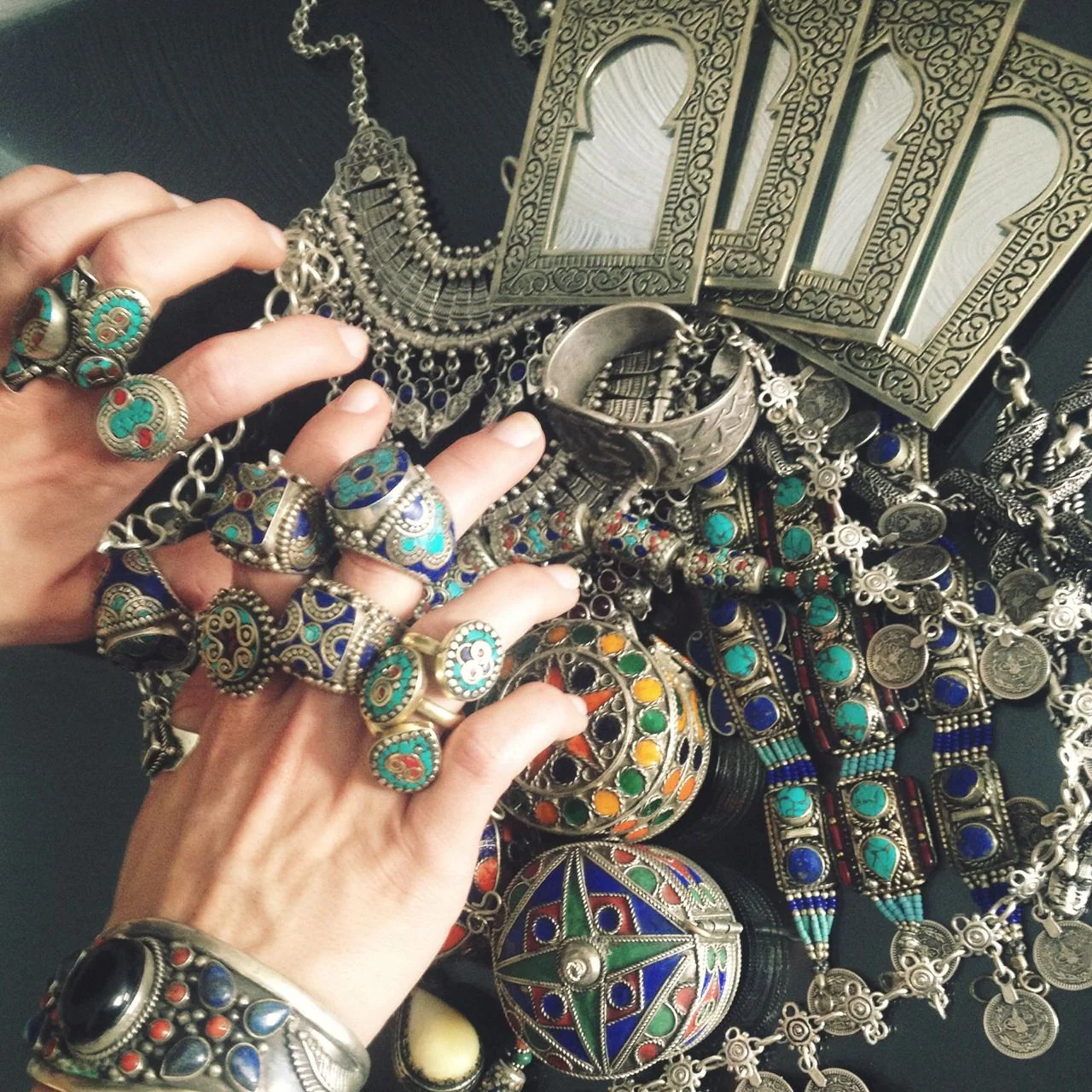
Far quieter than the tourist-facing jewelry stalls near the main drag, this quarter specializes in genuine Berber silverwork — chunky fibulas used as cloak pins, engraved pendants, thick silver cuffs, and intricate earrings inlaid with old amber, coral, and semi-precious stones. Many pieces here are antique or semi-antique, sourced from the Atlas Mountain communities where they were originally made.
Unlike gold jewelry, which is sold by weight at fixed prices, silver Berber pieces are priced by craftsmanship, age, and stone quality — making knowledge and patience your best currencies here. A knowledgeable guide is invaluable in this souk: the difference between genuine old amber and a resin imitation is invisible to the untrained eye.
The Spice Souk (Rahba Kedima)
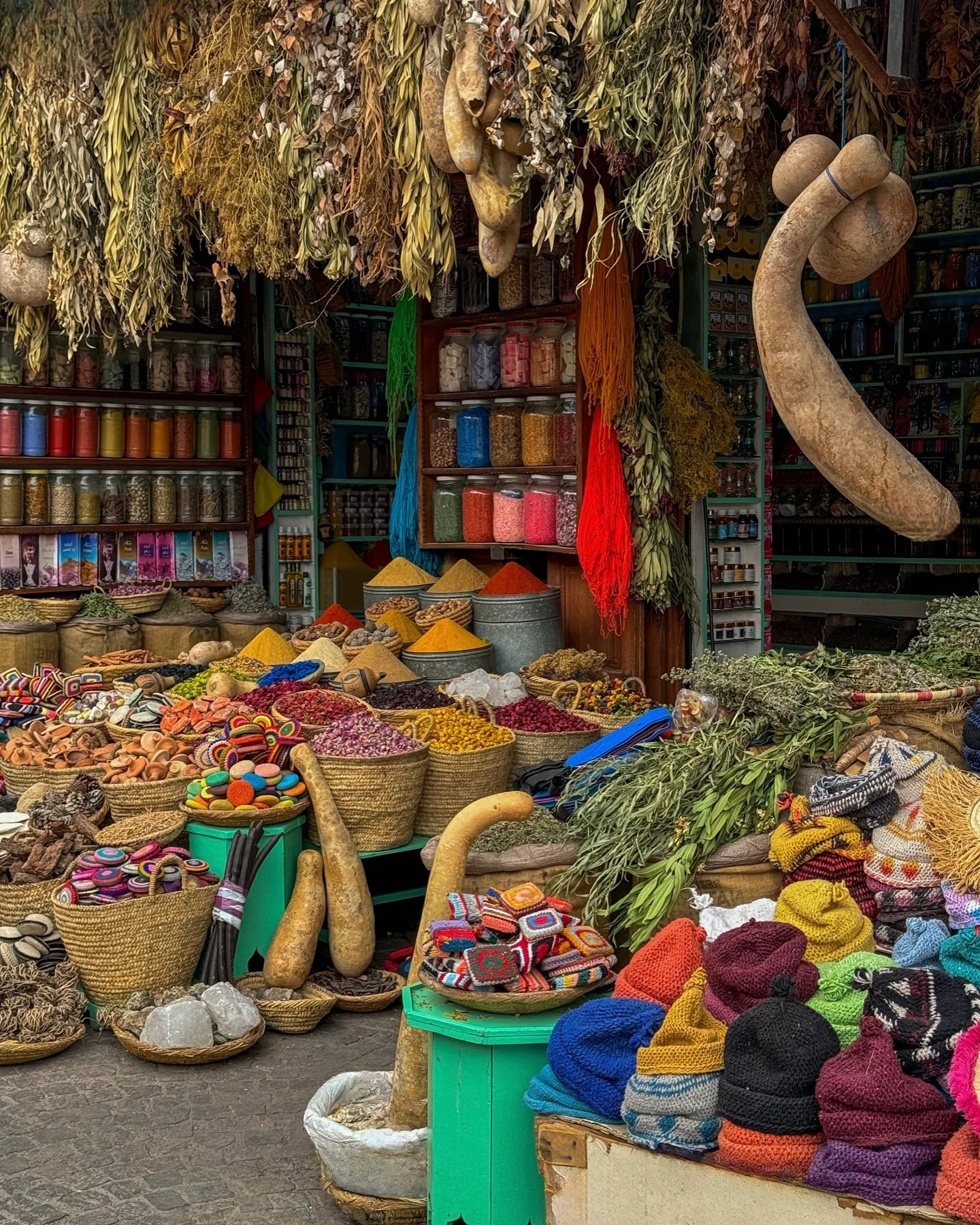
Rahba Kedima — the “old square” — opens suddenly out of the medina’s narrow lanes like a breath of color and scent. Stalls overflow with pyramids of cumin, ginger, paprika, and the complex blend known as ras el hanout, which can contain anywhere from 10 to 30 spices depending on the vendor’s family recipe. Alongside the spices, you’ll find argan oil, rose water, ghassoul clay, dried rose petals, and medicinal herbs that form the backbone of Moroccan home cooking and beauty rituals.
This souk is popular with tourists, but genuine vendors still dominate. Buy saffron here with confidence — Morocco is one of the world’s top producers, and Rahba Kedima sells the authentic Taliouine variety rather than the dyed imitations found in airport shops.
The Leather Goods Souk (Souk des Maroquiniers)
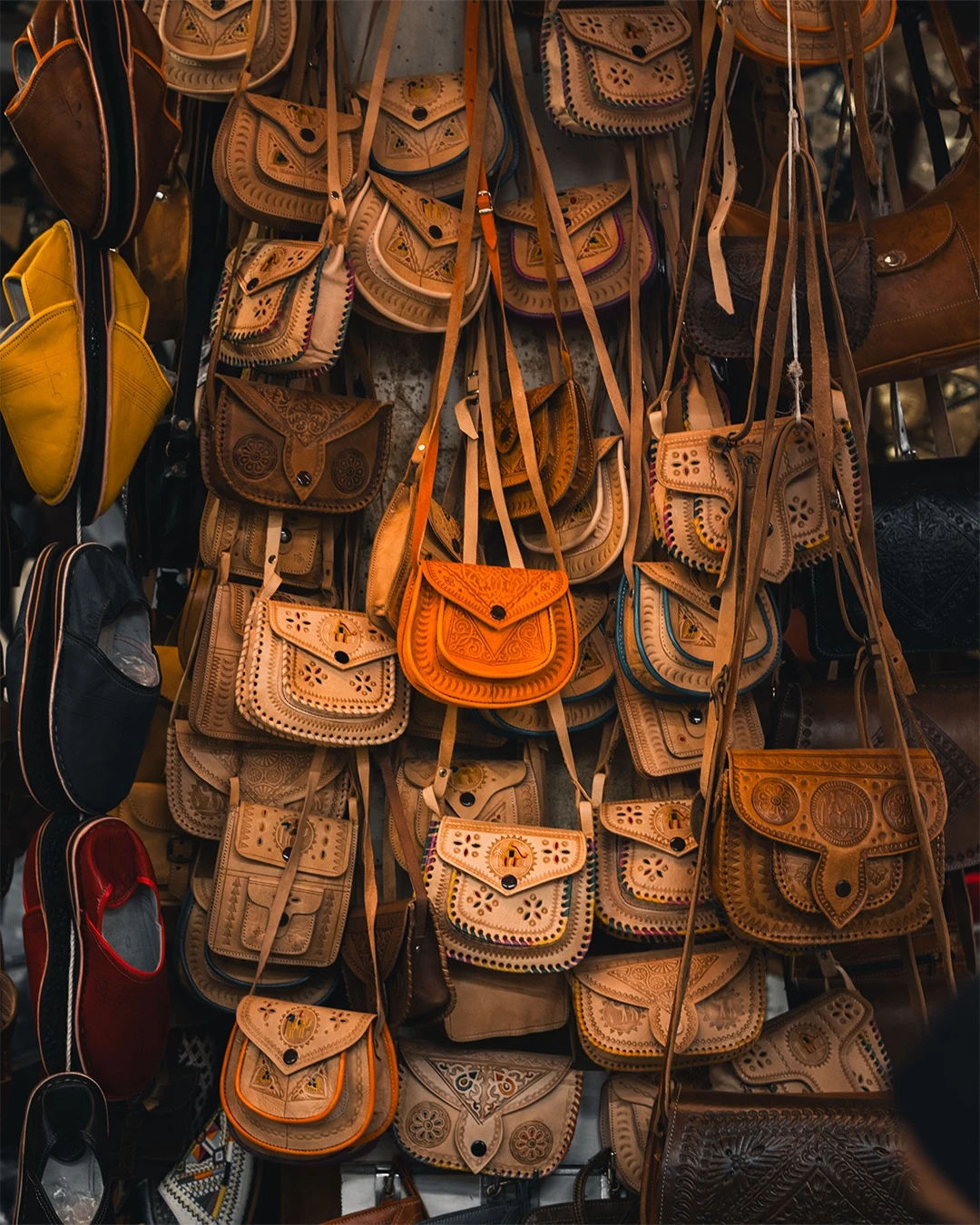
Moroccan leather has been exported to Europe for centuries — and for good reason. The tanneries that supply this souk use a centuries-old process: raw hides are soaked in pigeon dung to soften them, scraped and stretched, then dyed with natural pigments. The result is supple, aromatic leather that ages beautifully.
In the Leather Goods Souk, artisans stitch bags, cut belts, tool wallets, and even tailor jackets in compact workshops while customers watch. This is where the leather goods sold in Europe’s boutiques at ten times the price are actually made. Quality is easy to assess: press the leather between your fingers — genuinely full-grain leather springs back; bonded leather does not.
Essential Tips Before You Step Inside ↑ Top
The souks reward preparation. A few habits separate a rushed, over-priced visit from a relaxed, rewarding one. Morocco is very safe for tourists — including solo travelers — but the medina’s complexity means that knowing a few ground rules makes everything smoother.
Carry cash in small bills. Nearly all souk vendors work in cash only. The Moroccan Dirham (MAD) is the only accepted currency in the souks — ATMs near Jemaa el-Fnaa are your best option before entering the medina.
Bargaining is not optional — it’s cultural. Expect to open at 50–60% of the asking price. Never show strong enthusiasm before settling on a figure, and always be ready to walk away politely — this often prompts the vendor’s real best offer.
Visit between 9 am and 11 am. The souks come alive early but haven’t yet hit peak crowd density. Artisans are actively working, natural light is ideal for photography, and vendors are generally in a better mood before the midday heat.
Wear comfortable, flat shoes. The medina’s cobblestone lanes are uneven and occasionally wet. Skip heels and open sandals — closed, flat shoes or sneakers are ideal for hours of walking.
Always ask before photographing artisans. Most craftspeople are happy to be photographed if you ask first — often with a warm smile. Taking photos without permission is considered rude and will sour an otherwise positive interaction.
Don’t follow unsolicited “guides.” Anyone who approaches you in the street claiming to show you around for free is typically operating on commission. If you want a guide — and we strongly recommend one — book a licensed professional in advance.
Best Time to Visit the Souks ↑ Top
Timing your souk visit correctly shapes the entire experience. Here’s a quick breakdown by time of day and season:
What to Buy — and What to Skip ↑ Top
Marrakech’s souks produce genuinely world-class goods, but certain categories attract cheap imitations targeted at uninformed visitors. This table is your reference:
| Category | Worth Buying? | What to Look For | Typical Price (MAD) |
|---|---|---|---|
| Berber Carpets | ✅ Absolutely | Hand-knotted, natural wool, no synthetic shimmer | 300 – 5,000+ |
| Argan Oil | ✅ Yes | Cold-pressed, dark glass bottle, earthy smell | 80 – 200 / 100ml |
| Leather Goods | ✅ Yes | Full-grain leather, visible stitching, springs back when pressed | 100 – 600 |
| Saffron | ✅ Yes | Deep red threads, Taliouine origin label, strong floral aroma | 50 – 150 / gram |
| Copper Lanterns | ✅ Yes | Hand-punched, no plastic fittings, substantial weight | 80 – 400 |
| Babouches | ✅ Great value | Leather upper, clean stitching, flexible sole | 80 – 250 |
| Pre-packaged “Berber Blue” | ⛔ Skip | Tourists are often sold dyed powder as rare blue mineral | — |
| Fossil “Ammonites” | ⚠️ Caution | Many are carved from soft stone — buy only from specialist dealers | 50 – 500 |
Before heading into the souks, make sure you understand what currency Morocco uses and have enough Dirhams on hand — card readers are rare in the traditional souk quarters, and ATMs inside the medina can run out of notes on busy weekends.

Book a Private Souk Tour with a Licensed Guide
Exploring the authentic souks in Marrakech with a licensed local guide transforms the experience entirely. Mouhssine has spent years mapping the medina’s hidden workshops and cultivating relationships with artisan families who rarely welcome walk-in visitors. With him, you access dye vats, carpet-knotting rooms, and silversmith ateliers that most tourists never see.
Beyond access, a licensed guide protects you. He negotiates on your behalf without inflating prices for his own commission, steers you away from tourist-grade imitations, and ensures that every dirham you spend goes to a genuine craftsperson. Whether you’re planning a half-day introduction to the souks or a full immersive day covering multiple craft quarters, Mouhssine tailors the itinerary to your interests. Book directly via WhatsApp — response is typically within a few hours.
Chat with Mouhssine on WhatsAppFrequently Asked Questions ↑ Top
The authentic souks in Marrakech are not museum exhibits — they are living, working quarters that have operated without interruption for a thousand years. Each souk tells a specific story about human ingenuity, cultural continuity, and the quiet pride of a craft passed down through generations. Whether you leave with a hand-knotted carpet rolled under your arm or simply the memory of copper hammers and indigo steam, the experience changes how you think about making things by hand.
Morocco rewards those who look beneath the surface — and the souks of Marrakech are where that depth is most immediately, most beautifully on display. Plan well, bring cash, move slowly, and let the medina unfold at its own pace.