Is Morocco in Africa? The Complete Geography Guide
Morocco sits at one of the most fascinating crossroads on the planet, where Africa, the Arab world, and Europe meet within a single country. Here is the full picture, beyond a simple yes or no answer.
Quick Answer
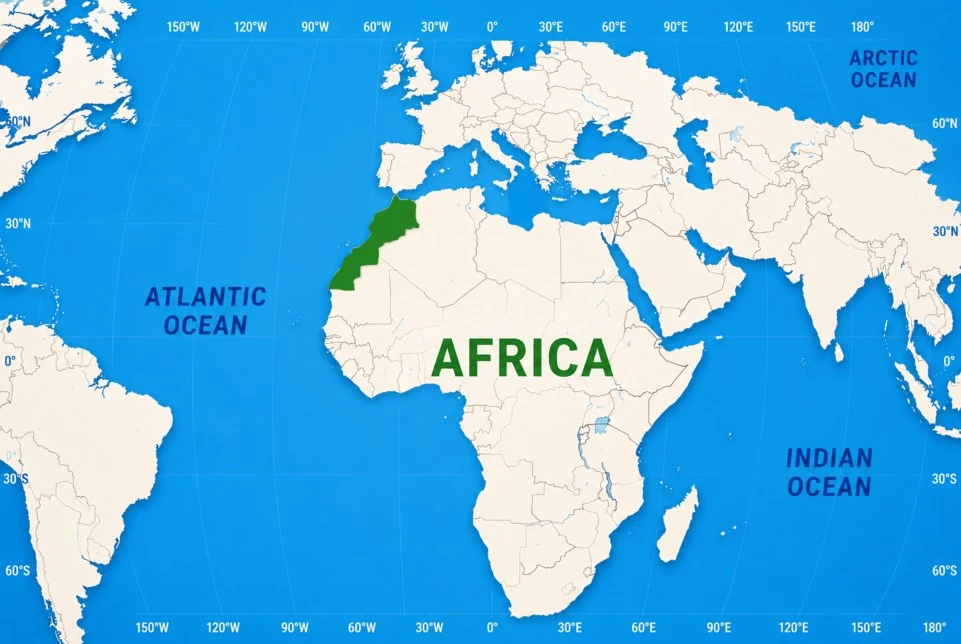
Yes, Morocco is in Africa. It occupies the northwestern corner of the continent, in the region known as North Africa or the Maghreb.
Morocco borders Algeria to the east and Mauritania to the south, faces the Mediterranean Sea along its northern coast, and opens onto the Atlantic Ocean to the west. It is the African country closest to Europe, separated from Spain by only 14 kilometers across the Strait of Gibraltar.
Is Morocco in Africa?
Yes
Which part of Africa?
North Africa
Distance to Europe?
Only 14 km
Capital city?
Rabat
Where Is Morocco Located on the African Continent? Top
Morocco sits at the far northwestern tip of Africa, in a region historians and geographers call the Maghreb. This term groups together the North African countries that share a common geographic and cultural backbone: Morocco, Algeria, Tunisia, Libya, and Mauritania. The country covers roughly 710,850 square kilometers, which makes it larger than Spain, and gives it one trait almost no other African nation shares: coastlines on two different bodies of water, the Atlantic Ocean and the Mediterranean Sea.
To the east and southeast, a long border runs along Algeria. To the south, the landscape softens into the Sahara before reaching Mauritania. To the north, the Strait of Gibraltar separates Morocco from Spain by a strip of water so narrow that on a clear day, the Spanish coastline is visible from Tangier. For a closer look at exactly where the country sits relative to its neighbors, this guide on where Morocco is located breaks down the geography step by step.
| Fact | Detail |
|---|---|
| Continent | Africa (North Africa / Maghreb region) |
| Capital city | Rabat |
| Land area | Approximately 710,850 km² |
| Closest European country | Spain, 14 km away via the Strait of Gibraltar |
| Coastlines | Atlantic Ocean and Mediterranean Sea |
| Official languages | Arabic and Amazigh (Berber) |
| Bordering countries | Algeria and Mauritania |
Is Morocco an Arab Country or an African Country? Top
The honest answer is that it is both, and then some. By geography, Morocco is unmistakably African. By language and membership in the Arab League, it also belongs to the Arab world. At the same time, the Amazigh people, often known as Berbers, are the indigenous population of Morocco, and their language, traditions, and presence remain central to daily life across the country, from the Rif mountains to the valleys of the Atlas.
Morocco does not fit neatly into one box. That is exactly what makes it one of the richest, most layered destinations on the continent.
Arabic fills the souks of Marrakech. Amazigh weavings hang in mountain villages of the High Atlas. Gnawa rhythms, rooted in West African heritage, echo through festivals in Essaouira. French colonial architecture lines the boulevards of Casablanca. Morocco is not a single Africa; it is several worlds layered into one country.
Why Do Americans Think Morocco Is Not in Africa? Top
This is one of the most common geography questions asked online, and it usually comes down to how Africa is taught and portrayed in American classrooms and media rather than anything about Morocco itself. School curriculums and pop culture often focus heavily on sub-Saharan Africa, savannahs, and wildlife documentaries, leaving North Africa largely out of the picture.
Add to that Morocco’s strong Arab and Islamic cultural identity, which many people associate instinctively with the Middle East, and the confusion becomes easy to understand. Morocco speaks Arabic, follows Islamic traditions in daily life, and trades heavily with Europe, none of which matches the imagery many Americans grew up associating with the word Africa. Geographically, though, the answer has never been in question: Morocco sits firmly on the African continent, in its northwestern corner.
Why Do So Many Travelers Get This Wrong? Top
It is a fair question. Many first-time visitors arrive expecting the landscapes often associated with equatorial Africa, lush jungle and open savannah, and instead find whitewashed medinas, snow-capped peaks, and old colonial cafes. The confusion usually comes down to three things.
- Media simplification. Africa is frequently shown as one uniform landscape, when it is in reality the most geographically and culturally diverse continent on Earth.
- Historical ties to the Mediterranean. North Africa, and Morocco especially, has long-standing connections to Andalusian Spain and the wider Middle East, alongside its African identity.
- Visible European influence. French is widely spoken, infrastructure feels modern, and the coast of Spain is visible from northern Morocco, all of which can surprise visitors carrying an outdated mental image of the continent.
None of this makes Morocco any less African. It simply reflects how varied the continent actually is.
Does Morocco Feel More European or African? Top
It feels like neither, and like both. Walking through the medina of Fes places you inside a medieval Islamic city unlike anywhere else on Earth. Driving through the Draa Valley surrounds you with palm groves and centuries-old kasbahs that feel deeply African. Step into the Maarif district of Casablanca, with its French-style boulevards and contemporary restaurants, and the picture shifts again.
The physical landscape tells the same story of in-between identity. Morocco’s terrain ranges from the snow-covered High Atlas Mountains, which feel closer to the Alps than anything stereotypically African, to the golden dunes of Merzouga and Chegaga at the edge of the Sahara Desert. A full breakdown of this range of landscapes is available in our guide to Morocco’s physical features.
A Culture Shaped by Several Worlds at Once Top
For travelers, this layered identity is one of Morocco’s greatest draws. Within a single afternoon in Marrakech, you can move from a centuries-old mosque to a rooftop riad terrace to a gallery of contemporary Moroccan art, and feel like you crossed several centuries and continents in a few hours. If you are mapping out where to experience this contrast firsthand, our list of cities in Morocco is a useful starting point.
Amazigh Heritage
The Berber people have lived in Morocco for thousands of years. Their language, art, and customs form the cultural bedrock of the country.
Arab and Islamic Influence
Arab traders and dynasties left behind grand medinas, intricate zellige tilework, and a long tradition of Islamic scholarship.
Sub-Saharan Roots
Gnawa music and ritual, rooted in the history of enslaved West Africans, is recognized by UNESCO as intangible cultural heritage.
European Legacy
A period of French and Spanish presence shaped architecture, cuisine, administration, and language in cities such as Casablanca and Tetouan.
Desert, Mountains, and Coastline: Morocco’s Natural Diversity Top
Part of what makes Morocco such a compelling answer to “is Morocco in Africa” is the sheer range of landscapes packed into one country. A few hours’ drive from Marrakech can take you from red-ochre plateaus through cedar forests where Barbary macaques play in the branches, up into High Atlas passes where snow can linger into spring.
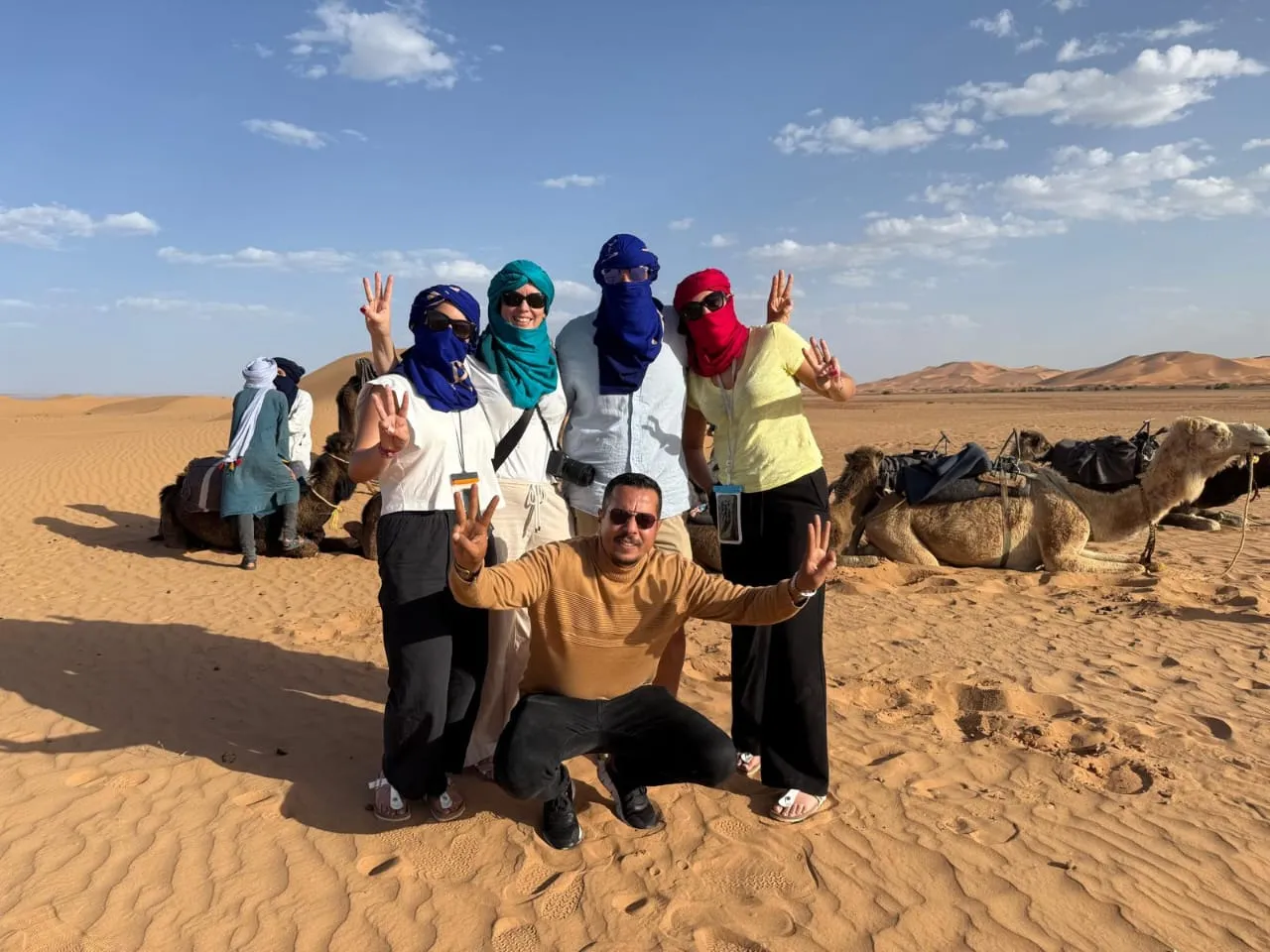
The Sahara, reached through desert towns such as Merzouga or M’Hamid, offers one of the most iconic experiences on the continent: sleeping under the stars in an erg of golden dunes. Further north, the Atlantic coast delivers dramatic clifftop views at Legzira and the blue-and-white harbor town of Essaouira, a place that feels borrowed from the edge of Europe.
Few countries anywhere offer a traveler a Saharan camp, a UNESCO-listed medieval medina, alpine mountain air, and Atlantic surf, all within the same national borders.
How Close Is Morocco to Europe? Top
Part of what makes Morocco so accessible, and so uniquely positioned within Africa, is how close it sits to Europe. At the Strait of Gibraltar, Morocco and Spain are separated by only 14 kilometers of open water, a crossing that takes well under an hour by ferry. From major European hubs such as London, Paris, or Madrid, direct flights to Marrakech, Casablanca, or Rabat typically take between two and three and a half hours.
This proximity has shaped Morocco for centuries through trade, migration, and cultural exchange. For modern travelers, it means a full North African adventure is reachable on a short flight, with a budget that feels closer to a European city break than a long-haul trip. Before you go, it helps to know what currency Morocco uses, since the Moroccan Dirham is a closed currency that cannot be purchased in most countries before arrival.
Morocco vs Other Popular North African Destinations
| Country | Flight time from London | Known for |
|---|---|---|
| Morocco | ~3.5 hours | Sahara desert, medinas, Atlas Mountains, Atlantic coast |
| Egypt | ~5 hours | Ancient monuments, Nile river cruises, Red Sea coast |
| Tunisia | ~3 hours | Mediterranean beaches, Roman ruins, Sahara access |
Frequently Asked Questions Top
Q. Is Morocco in Africa?
Yes. Morocco is located in the northwestern corner of the African continent, within the region known as North Africa.
Q. Is Morocco in Europe?
No. Morocco is not in Europe. It is an African country, although it lies remarkably close to the European continent, separated from Spain by just 14 kilometers.
Q. Is Morocco in the Middle East?
No. Morocco is not part of the Middle East. It is a North African country, though it shares language and cultural ties with the wider Arab world through the Arab League.
Q. Is Morocco Arab?
Morocco is a member of the Arab League and Arabic is an official language, but the country is also home to a large indigenous Amazigh (Berber) population, making its identity both Arab and Amazigh.
Q. Is Morocco African?
Yes. Morocco is fully and unambiguously an African country by geography, located on the African continent in its northwestern region.
Q. What continent is Morocco in?
Morocco is in Africa, specifically in the North African subregion known as the Maghreb, alongside Algeria, Tunisia, Libya, and Mauritania.
Q. Why do people think Morocco is in Europe?
Morocco’s short distance from Spain, its widespread use of French, and its modern infrastructure can give visitors a European impression, even though the country sits entirely on African soil.
Q. Is Morocco close to Spain?
Yes. Morocco and Spain are separated by only 14 kilometers across the Strait of Gibraltar, making them remarkably close neighbors despite being on different continents.
Q. Is Morocco part of the African Union?
Yes. Morocco is a member state of the African Union, which it rejoined in 2017 after several decades outside the organization.
Q. Why is Morocco culturally different from other African countries?
Africa is an extremely diverse continent, and Morocco’s Mediterranean climate, mountain geography, and centuries-long ties to Andalusian Spain and the Arab world give it a different cultural and architectural character than equatorial or sub-Saharan regions.
Q. Can you see Spain from Morocco?
Yes. On a clear day, the Spanish coastline is visible from northern Moroccan cities such as Tangier, due to the narrow 14 kilometer gap across the Strait of Gibraltar.
Q. Is Morocco the closest African country to Europe?
Yes. Thanks to its position at the Strait of Gibraltar, Morocco is the closest African country to the European continent, with only a short ferry ride separating it from Spain.
Why Morocco’s Location Makes It One of the World’s Most Fascinating Destinations Top
So, is Morocco in Africa? Unquestionably yes. But Morocco is more than a point on the African map. It is one of the continent’s most extraordinary countries, where deep history, striking natural diversity, and centuries of cultural exchange have produced something genuinely unlike anywhere else.
Its position at the meeting point of Africa, the Arab world, and Europe is not a contradiction. It is the very reason Morocco offers Saharan dunes, Atlas peaks, Mediterranean coastline, and centuries-old medinas within a single, accessible trip. Whether you are drawn to the heat of the desert, the winding lanes of a thousand-year-old medina, the cool air of the High Atlas, or the Atlantic swell off the Souss coast, Morocco in North Africa tends to exceed whatever travelers imagined beforehand.
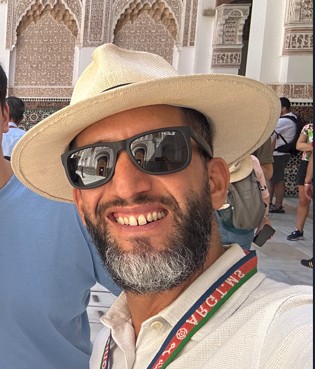
Licensed Moroccan Tour Guide · Ref. 2898
Mouhssine Eliouj
Planning a trip to Morocco? Message him on WhatsApp for itineraries, desert tours, and custom Marrakech excursions.
Contact details provided directly by the guide. Confirm trip details and pricing in writing before traveling.