The Most Breathtaking Places
to Watch the Sun Go Down
From Saharan dunes to Atlantic ramparts — a complete guide to Morocco’s finest sunset spots, photography tips, and unforgettable experiences.
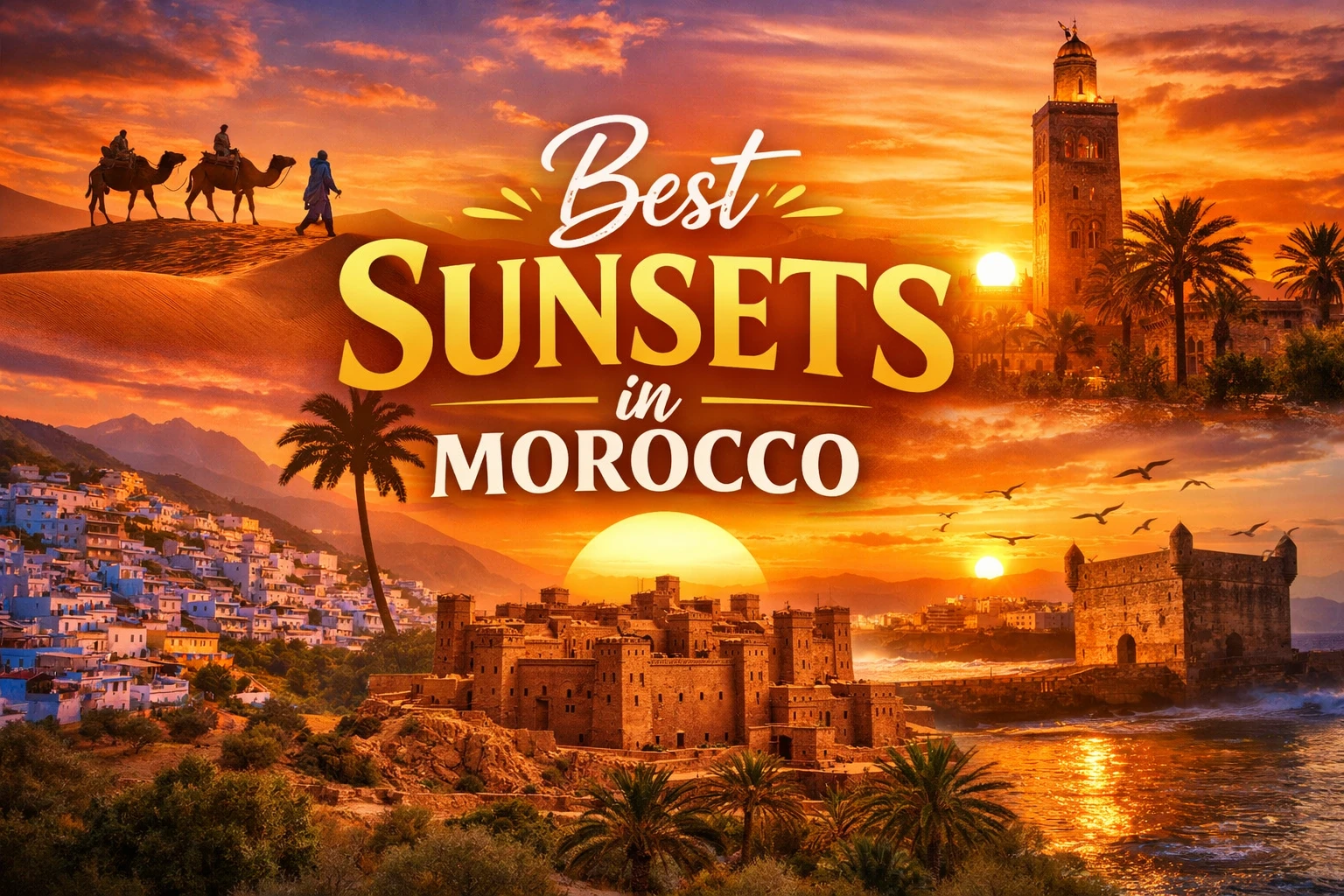
The best sunsets in Morocco rank among the most spectacular natural experiences on the planet. From the towering golden dunes of the Sahara to the windswept Atlantic ramparts of Essaouira, Morocco sunset spots deliver an almost alchemical transformation of sky and landscape every single evening. Whether you want to know where to watch sunset in Morocco for a romantic getaway, a photography trip, or a once-in-a-lifetime adventure, this guide covers every detail.
What makes Morocco’s sunsets so exceptional is the confluence of geography, climate, and light. Morocco’s unique geographical position, straddling the Atlantic Ocean and the Sahara Desert at the crossroads of Mediterranean and African influences, creates conditions where sunsets linger longer, burn brighter, and captivate more deeply than in most destinations worldwide.
- Sahara Desert, Merzouga & Erg Chebbi
- Essaouira Atlantic Ramparts
- Chefchaouen — Spanish Mosque View
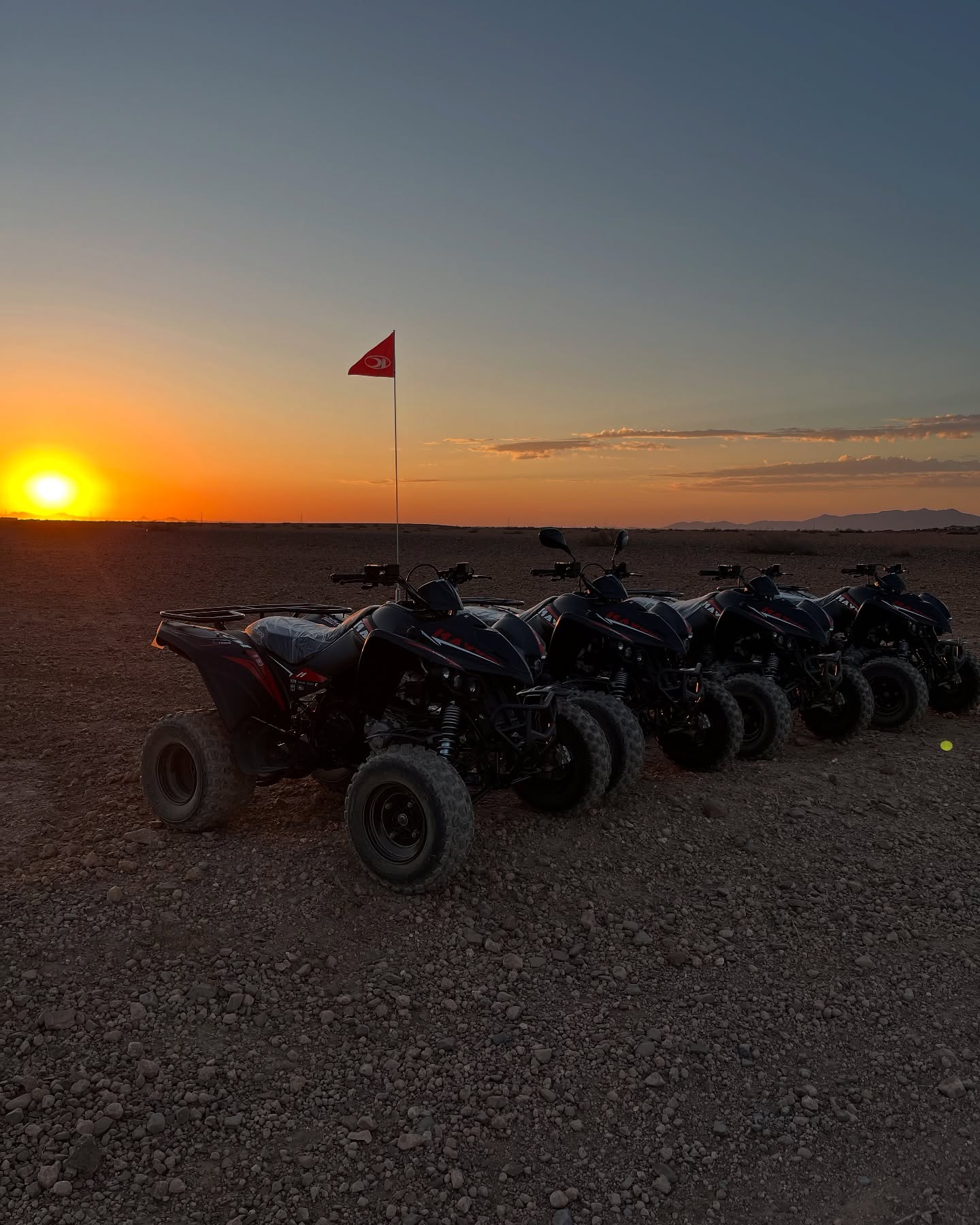
- Agafay Desert (near Marrakech)
- Aït Ben Haddou Kasbah
- Legzira Beach Natural Arches
- Ouzoud Waterfalls
- Atlas Mountains — Imlil Valley
Why Morocco Offers Some of the World’s Best Sunsets top
Geography: A Perfect Canvas for Light
Morocco’s diverse landscapes converge to create ideal sunset conditions. The Sahara Desert’s undulating dunes act as natural amphitheaters — as the light lowers, sand transforms from bright gold to deep amber, with shadows carving dramatic patterns across rippled slopes. The Atlantic Coast offers a different spectacle: the sun sinks directly into the ocean, turning the water to molten copper. The Atlas Mountains create backlit silhouettes and ridge-line drama, while coastal medinas catch the light at angles that intensify every warm hue.
Climate and Light Quality
Morocco’s relatively low humidity produces exceptionally clear air, allowing sunlight to travel through the atmosphere with minimal distortion — yielding the vibrant, saturated colours photographers dream of. Unlike equatorial regions where the sun drops quickly, Morocco’s latitude (27°–36° north) means the sun’s angle is shallow during golden hours, extending optimal lighting and intensifying colour saturation far longer than in most destinations.
Cultural Immersion Through Atmosphere
Sunsets in Morocco unfold against the backdrop of the call to prayer echoing from minarets, Berber music drifting from desert camps, and the gentle clinking of mint tea glasses. These evening rituals infuse every sunset with spiritual and cultural significance that elevates the experience beyond mere visual spectacle. Each city across Morocco offers its own distinct take on this ritual.
The Best Sunset Places in Morocco top
Sahara Desert: Merzouga and Erg Chebbi — Where Sand Becomes Gold
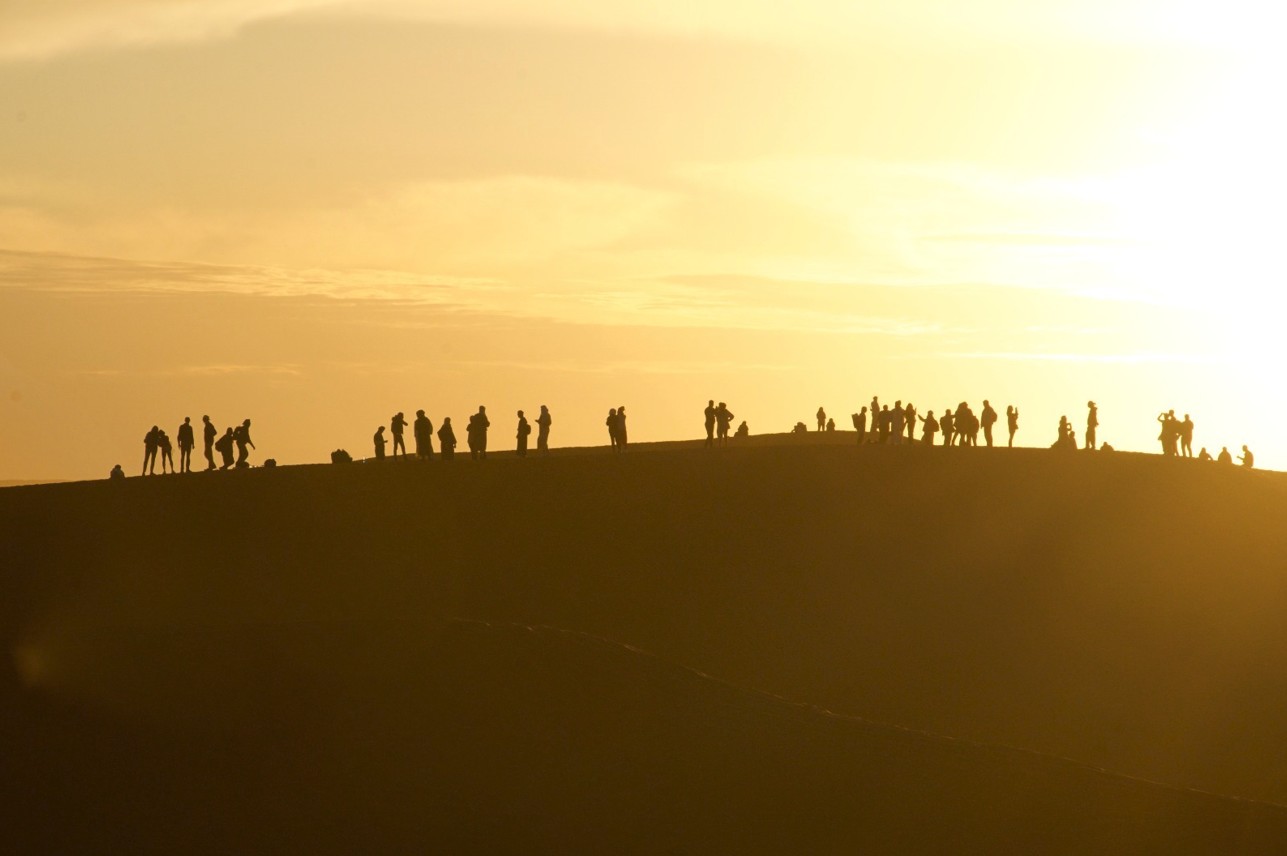
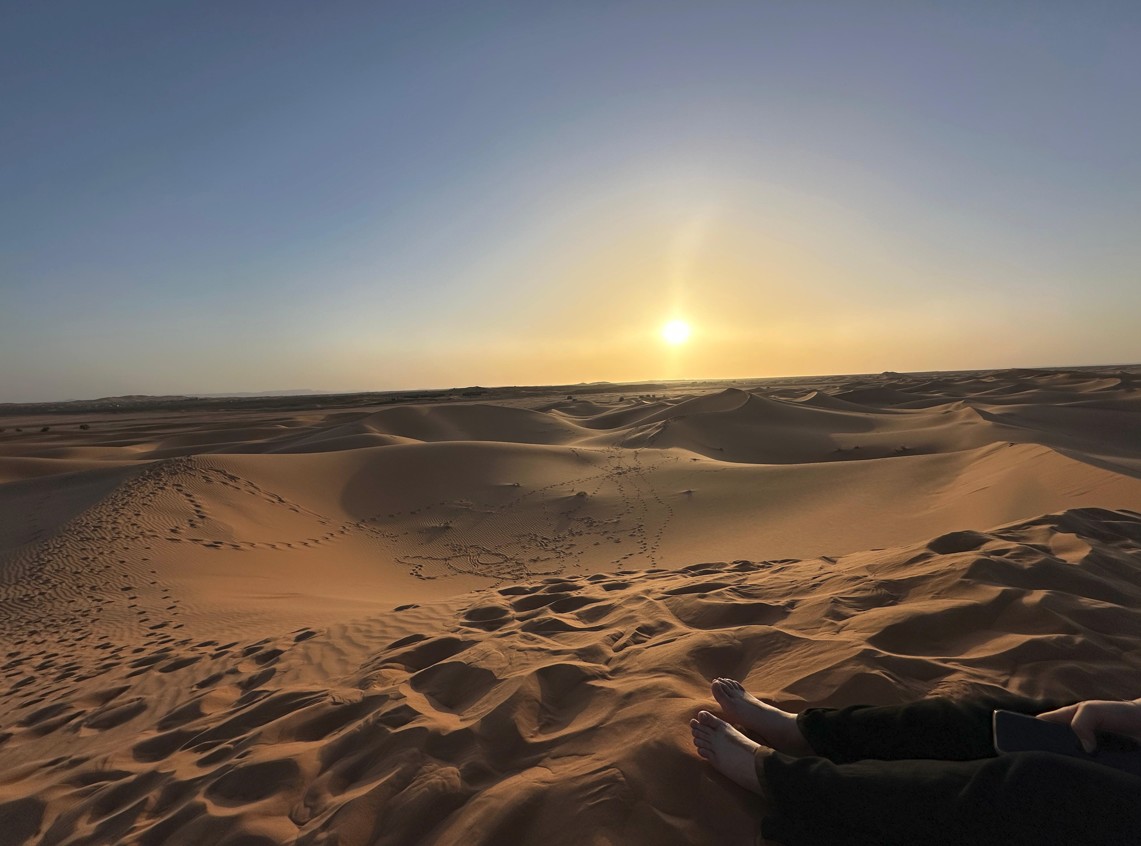
The Sahara Desert represents the defining sunset in Sahara experience. Near the town of Merzouga, the towering dunes of Erg Chebbi transform entirely as the sun descends — brilliant gold shifts through amber, burnt sienna, and eventually deep violet as shadows deepen across rippled surfaces. The experience is often described as watching the desert breathe.
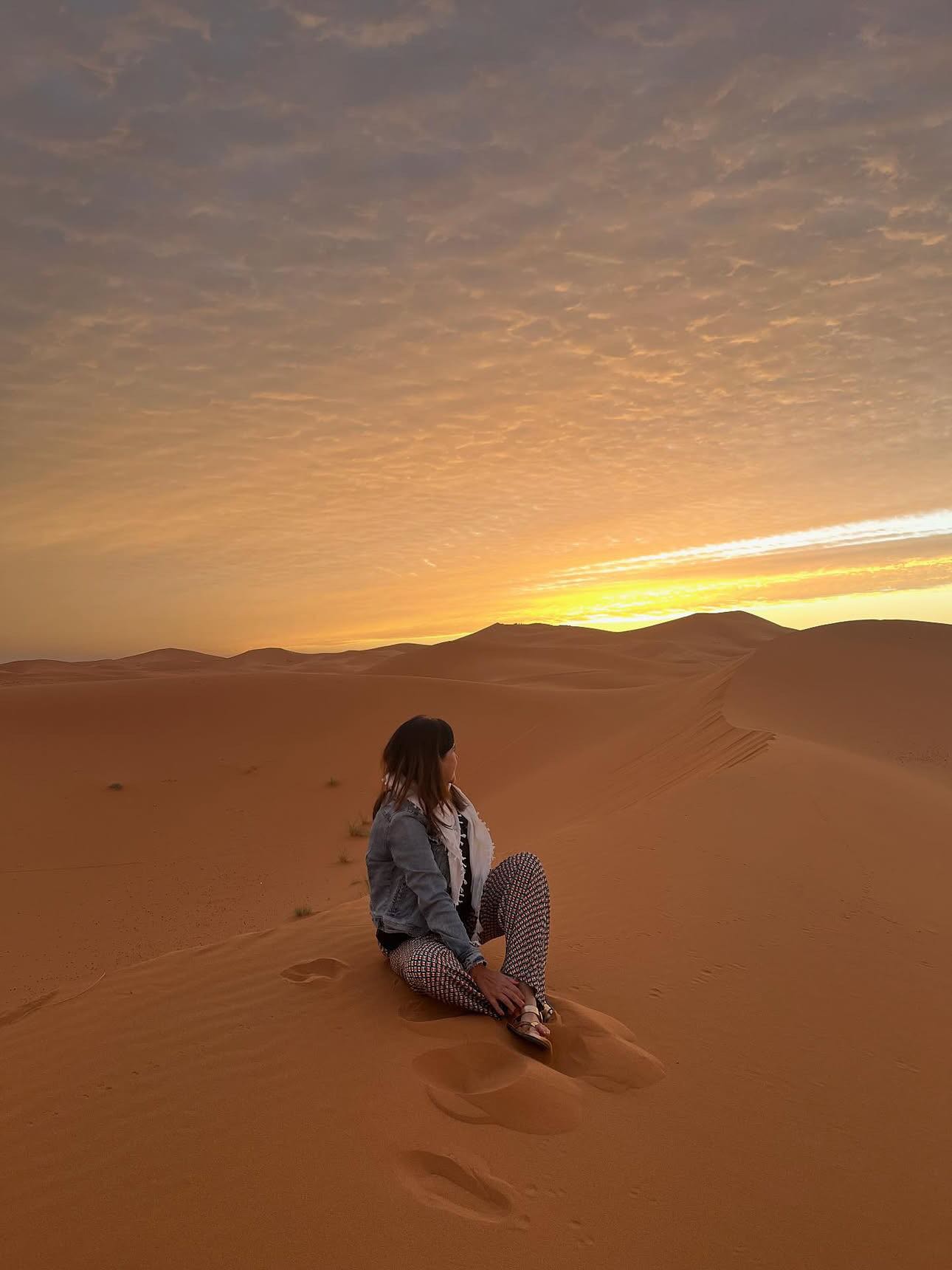
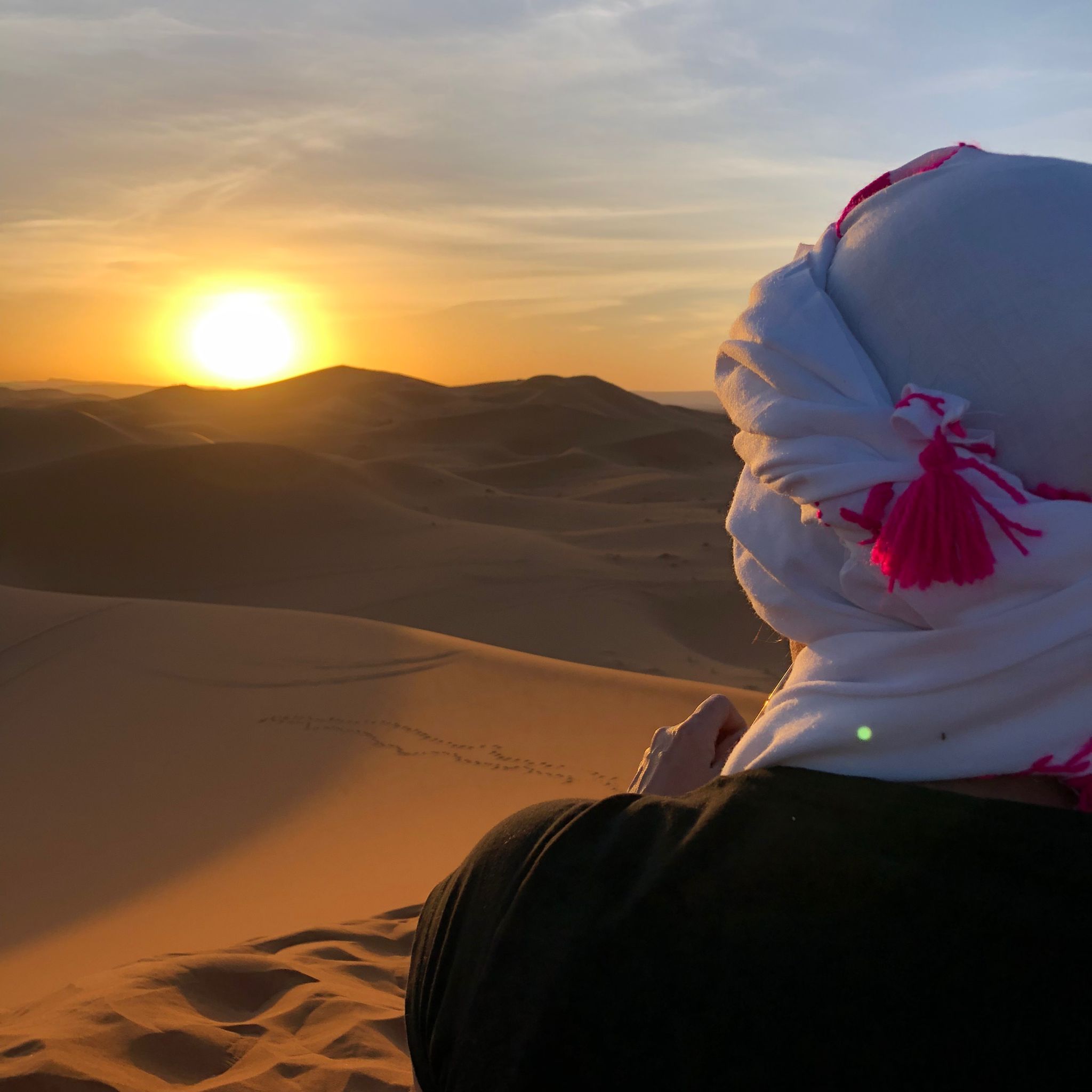
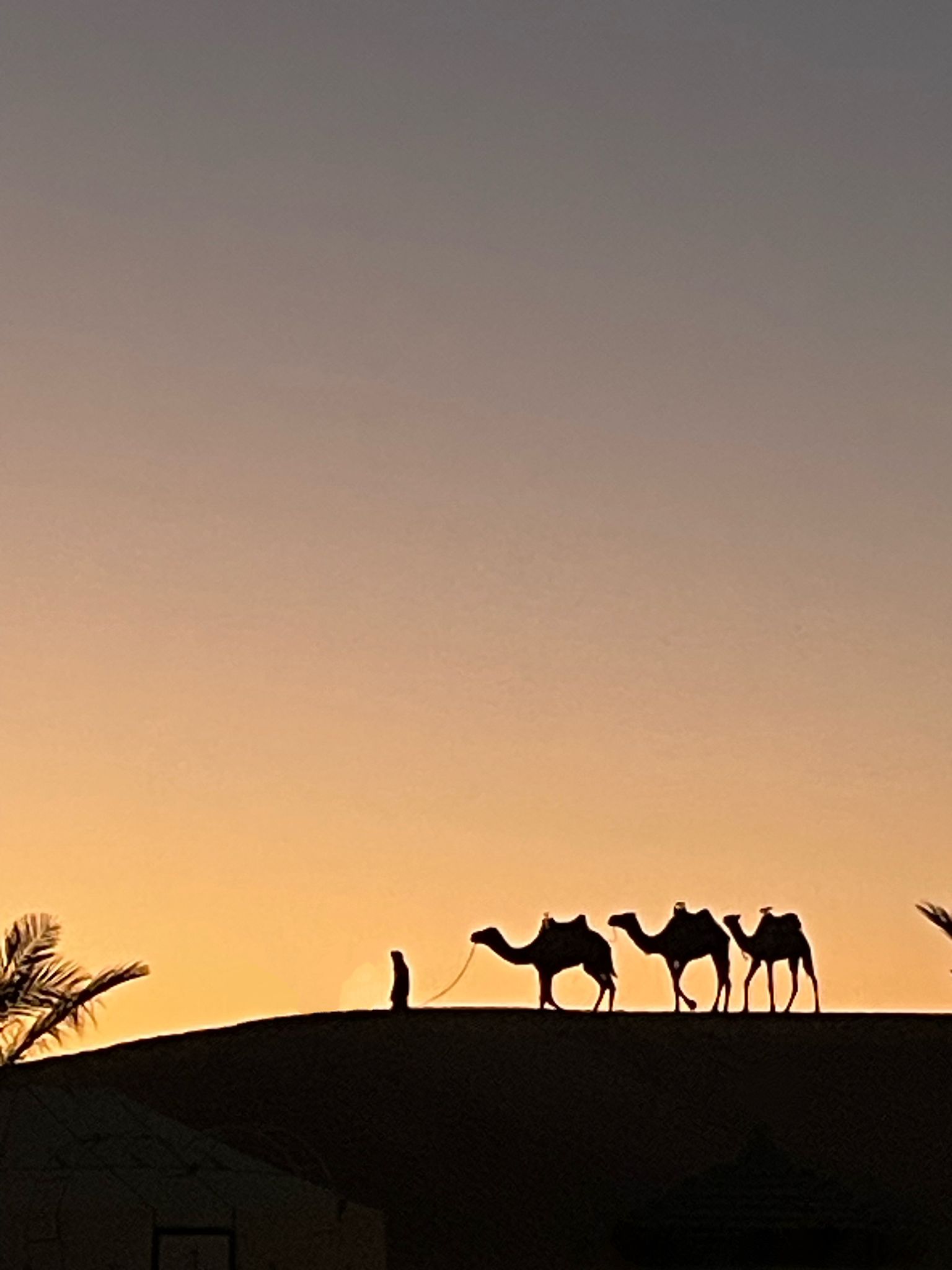
Sunset tours typically depart around 5:30 PM, involving a camel ride of 30–45 minutes to elevated vantage points. Most travelers combine the Sahara sunset with an overnight desert camp stay to also witness sunrise and the profound silence of the desert at night. The drive from Marrakech takes 9–10 hours, making this a multi-day commitment — and worth every kilometre.
The rippled sand patterns, when sidelit during golden hour, create striking linear compositions. Use a neutral density filter to manage the extreme brightness difference between sky and sand. Position camel riders or dune ridgelines against the sun for powerful silhouettes.
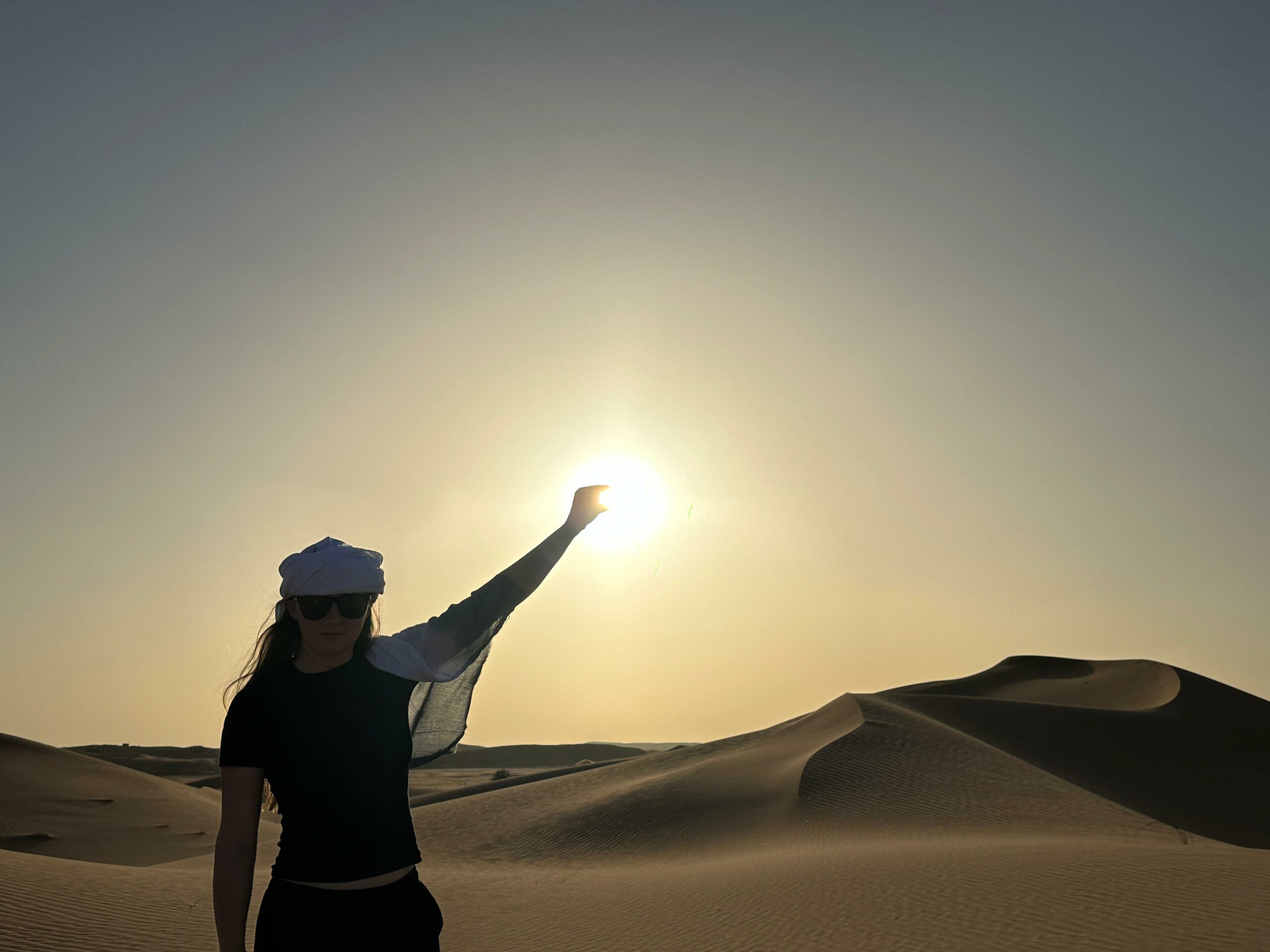
Best time of year: October through April. October is the gold standard — comfortable temperatures around 24°C, crisp nights ideal for stargazing. Avoid June–August when Sahara heat regularly exceeds 38°C.
Essaouira: Atlantic Sunsets with Ramparts and Coastal Drama
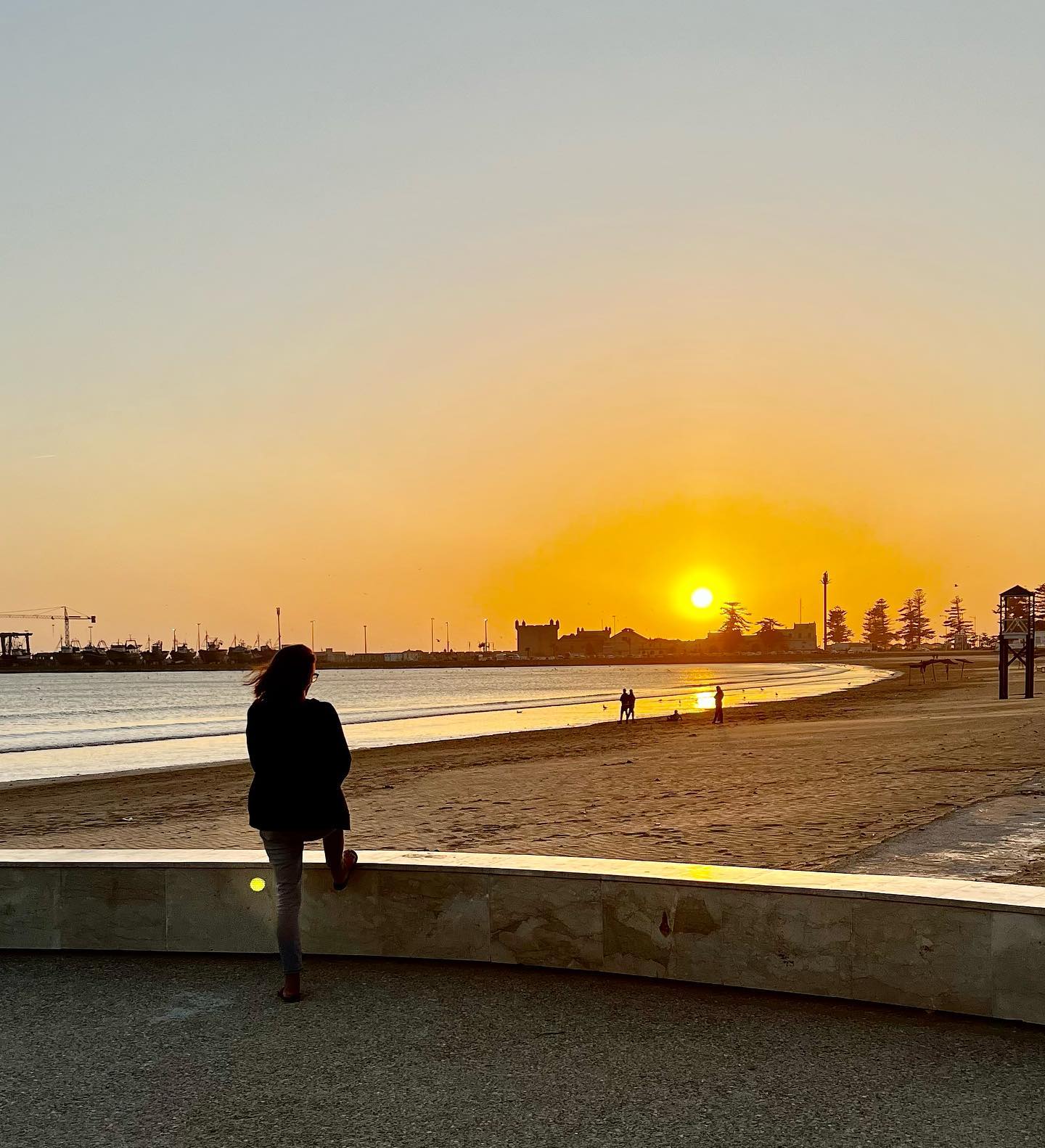
Perched on Morocco’s windswept Atlantic coast, Essaouira offers a starkly different aesthetic among Morocco sunset spots. As the sun sinks into the ocean, the sky ignites in orange and purple hues while seagulls cast silhouettes against the glow. The city’s 18th-century ramparts — fortified walls originally built to protect the ancient port — provide the most iconic vantage point. Arrive 30 minutes before sunset to secure a good position.
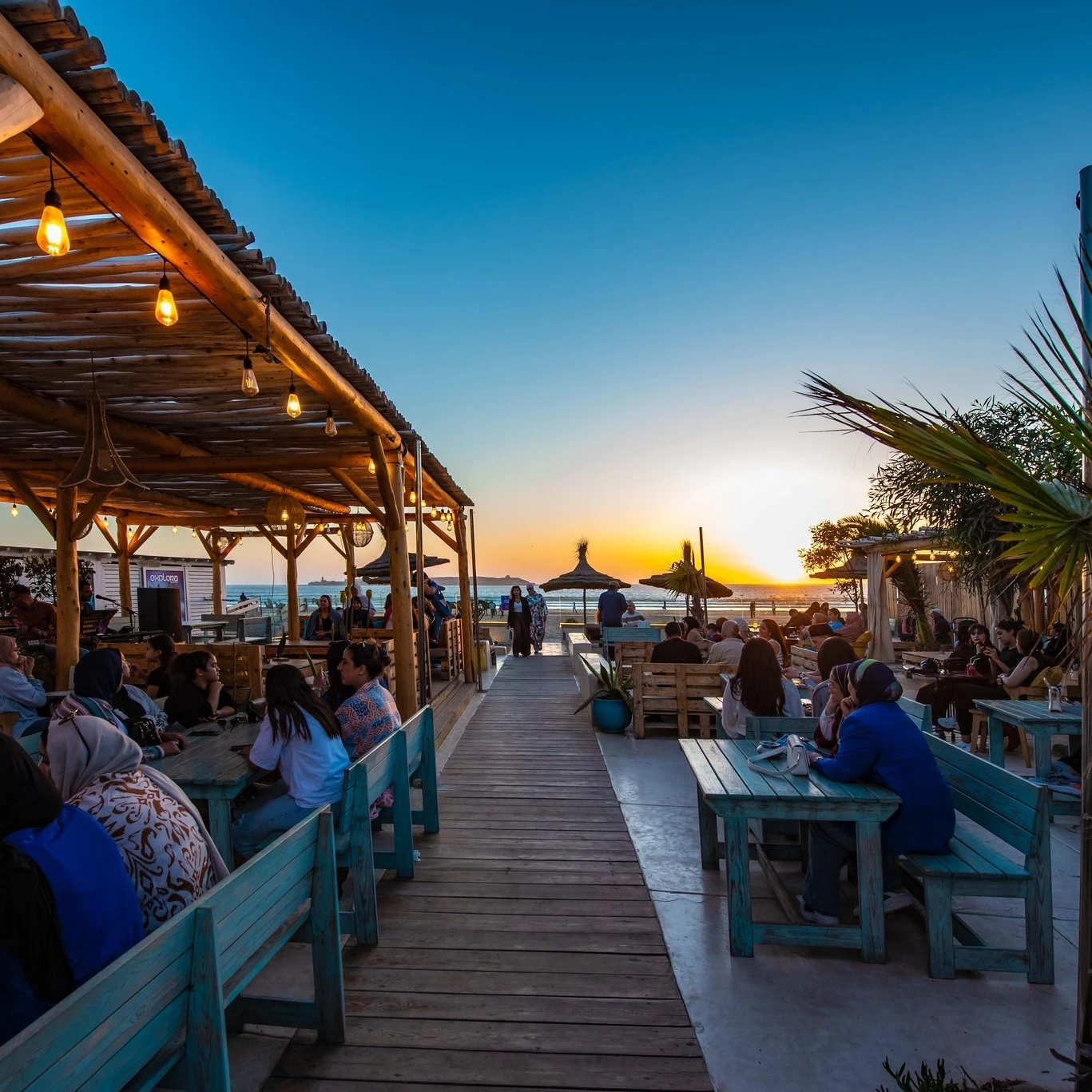
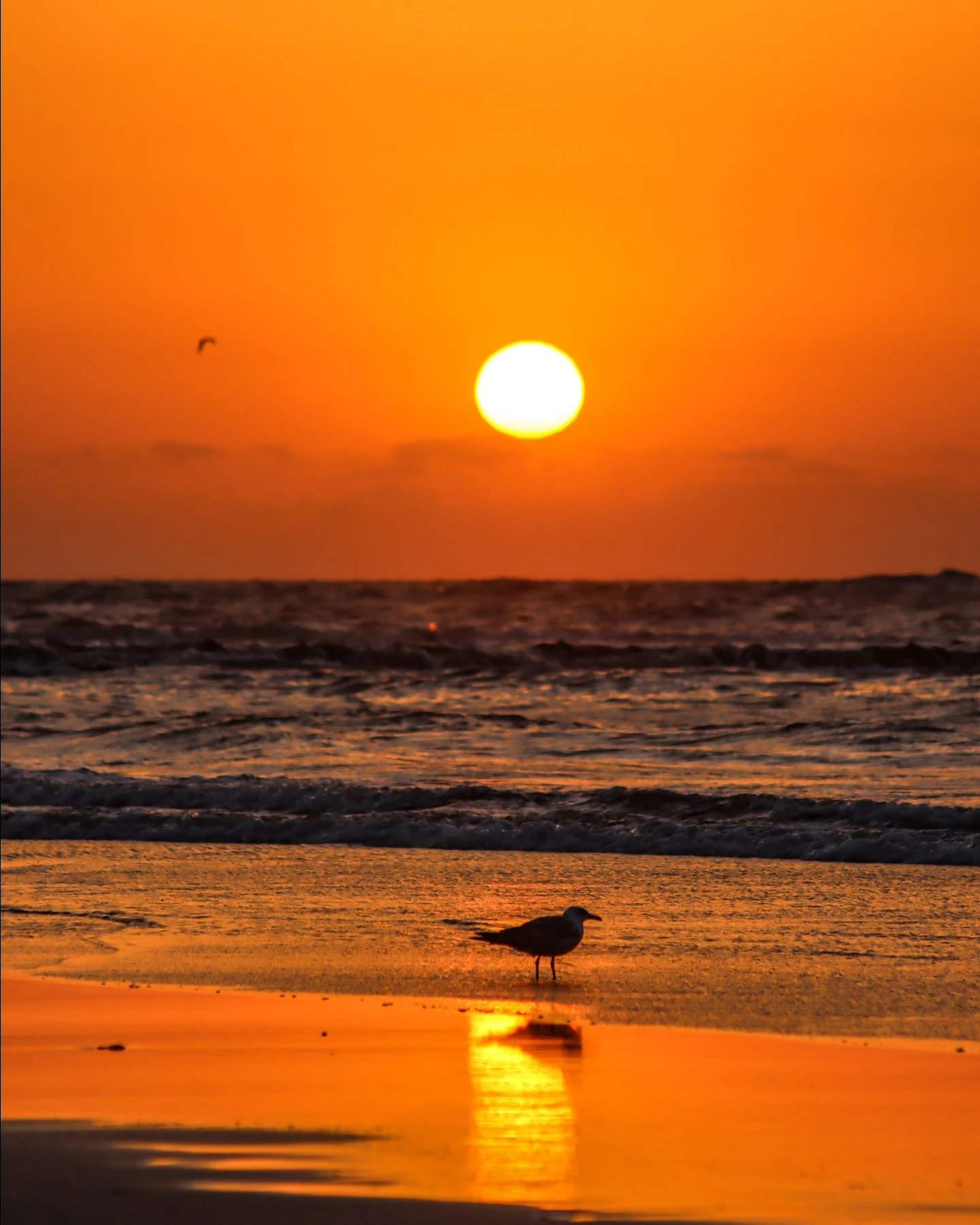
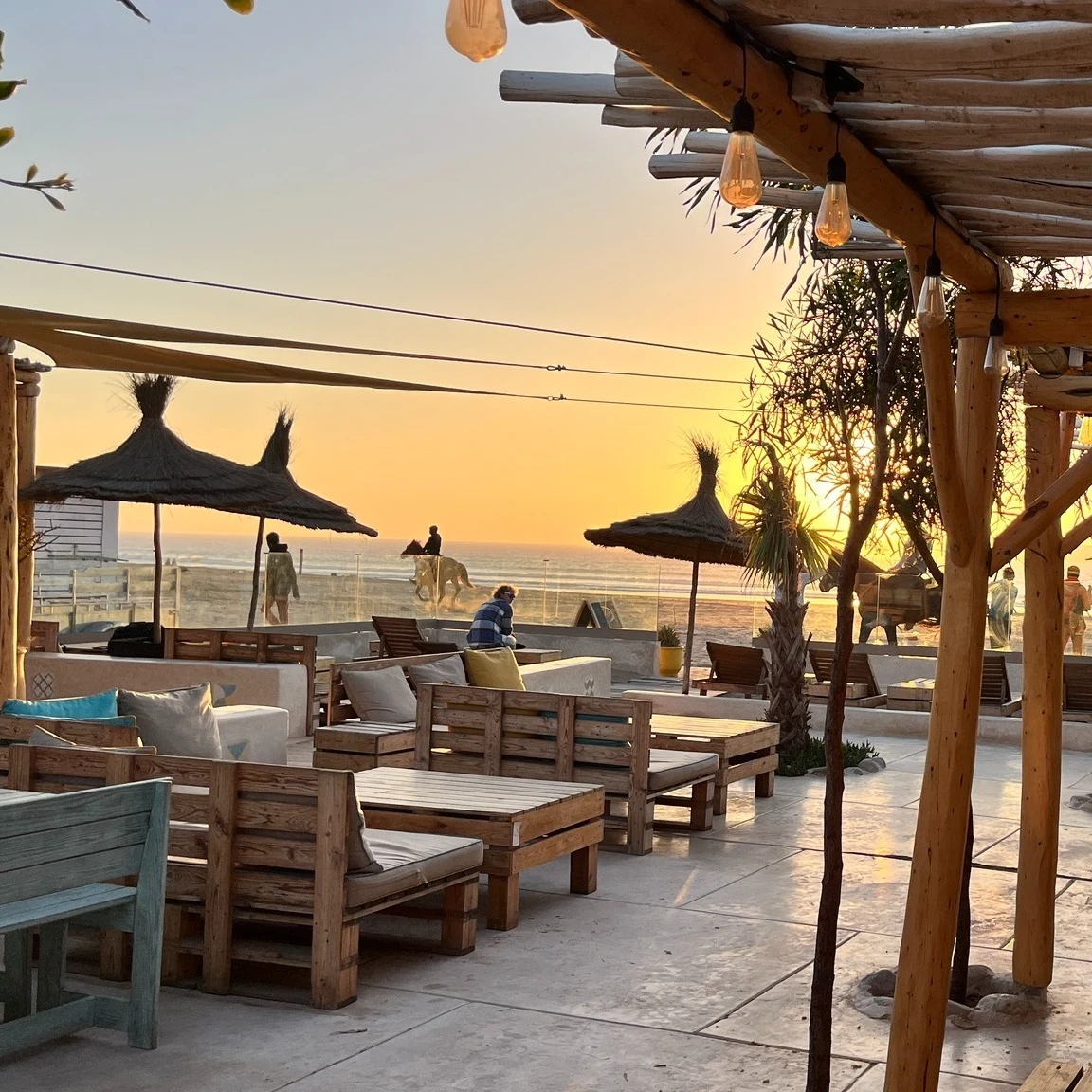
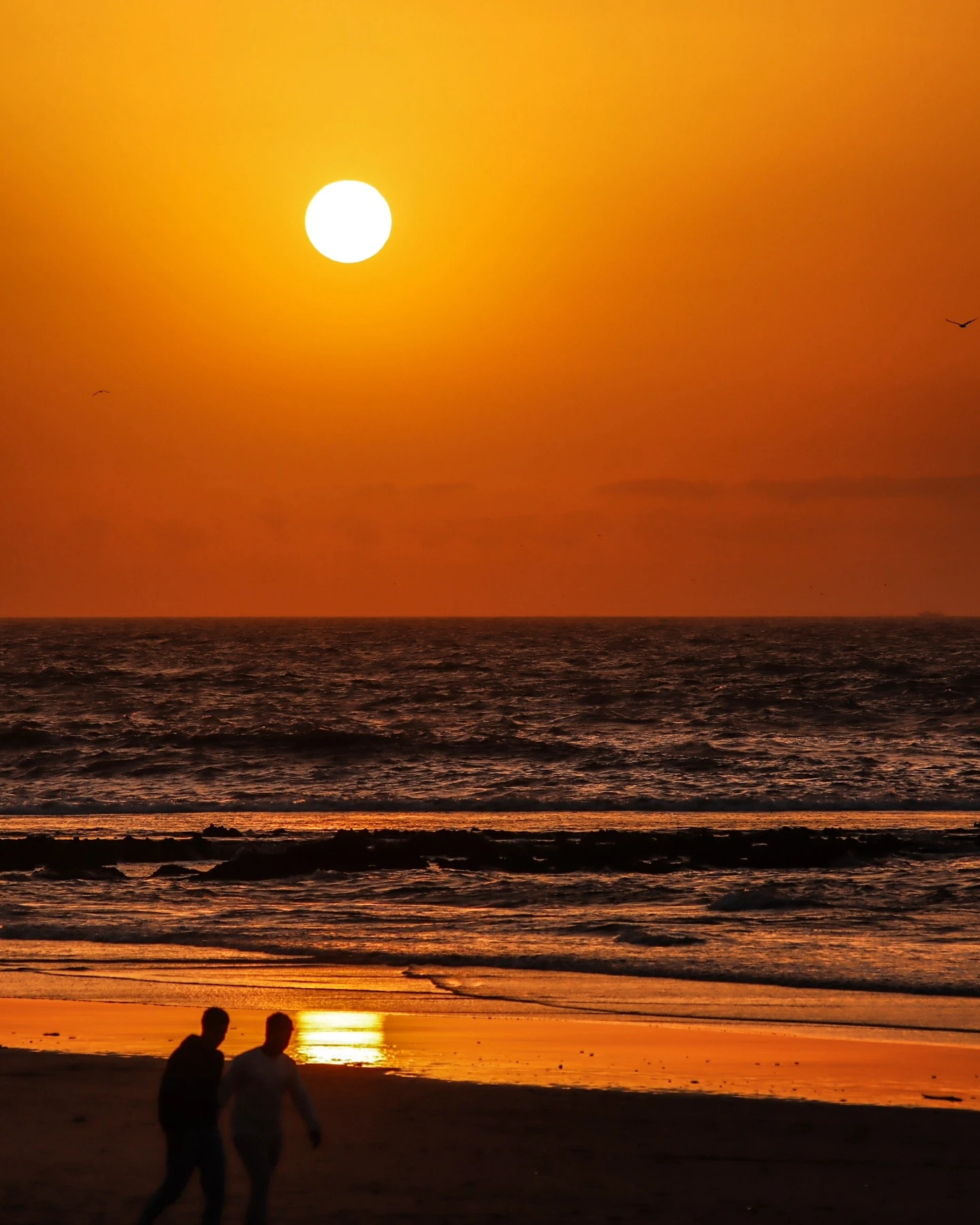
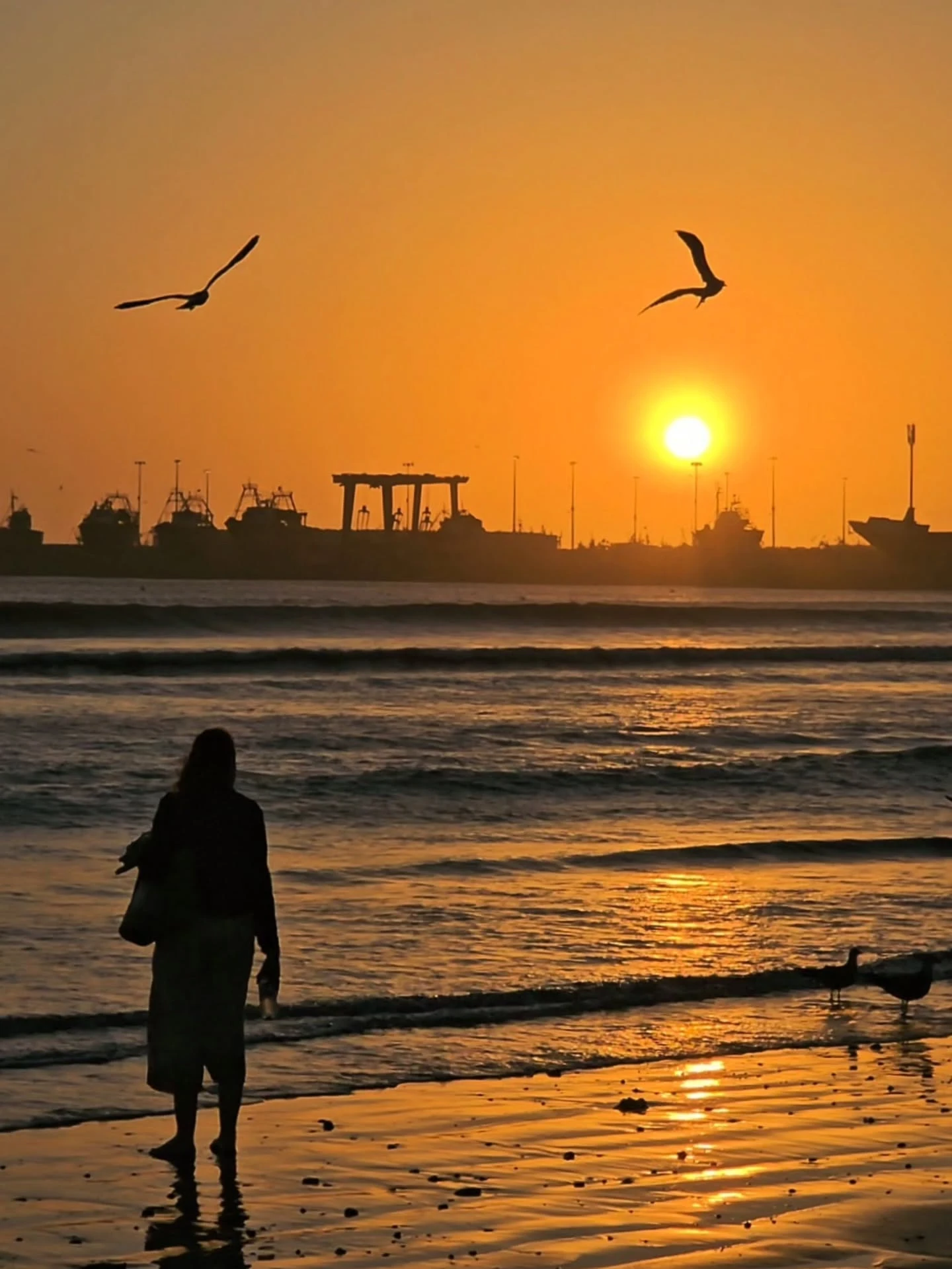
Rooftop restaurants like Taros and Il Mare offer reservation-based sunset dining with ocean views. Book ahead and request a west-facing terrace table. Weekday visits are significantly less crowded than weekends.
Best time of year: April through November. October–November combines pleasant temperatures with exceptional sky clarity.
Marrakech: The Agafay Desert and Urban Rooftop Magic
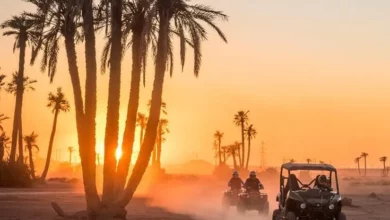
For those asking where to watch sunset in Morocco without multi-day travel, the answer is Marrakech. Just 40 km from the bustling medina lies the Agafay Desert — rocky, lunar terrain with rolling stone hills and the High Atlas Mountains as a dramatic backdrop. Most sunset experiences begin with hotel pickup around 3–4 PM, a 4×4 transfer through mountain passes, then a camel ride timed to conclude as the sun approaches the horizon.
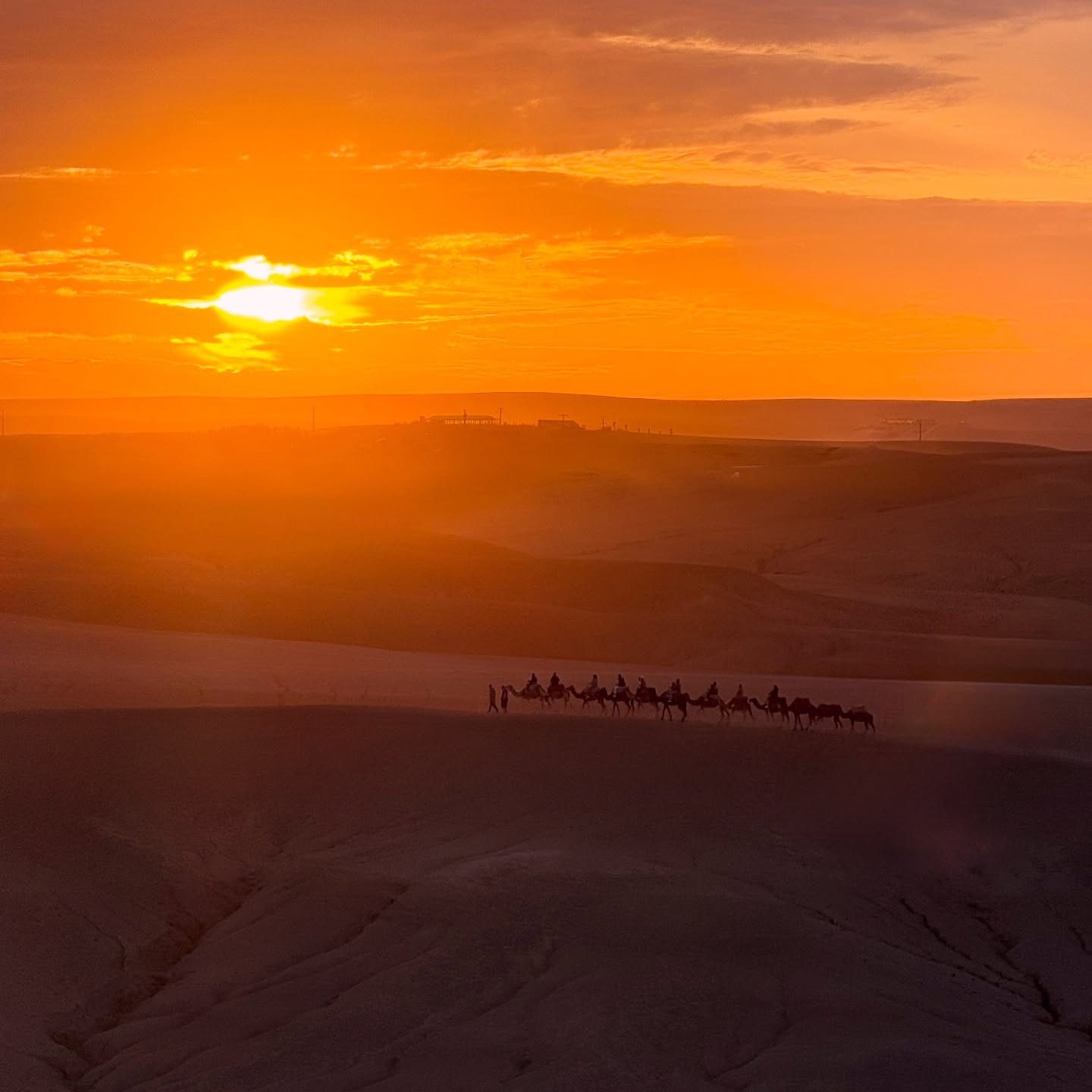
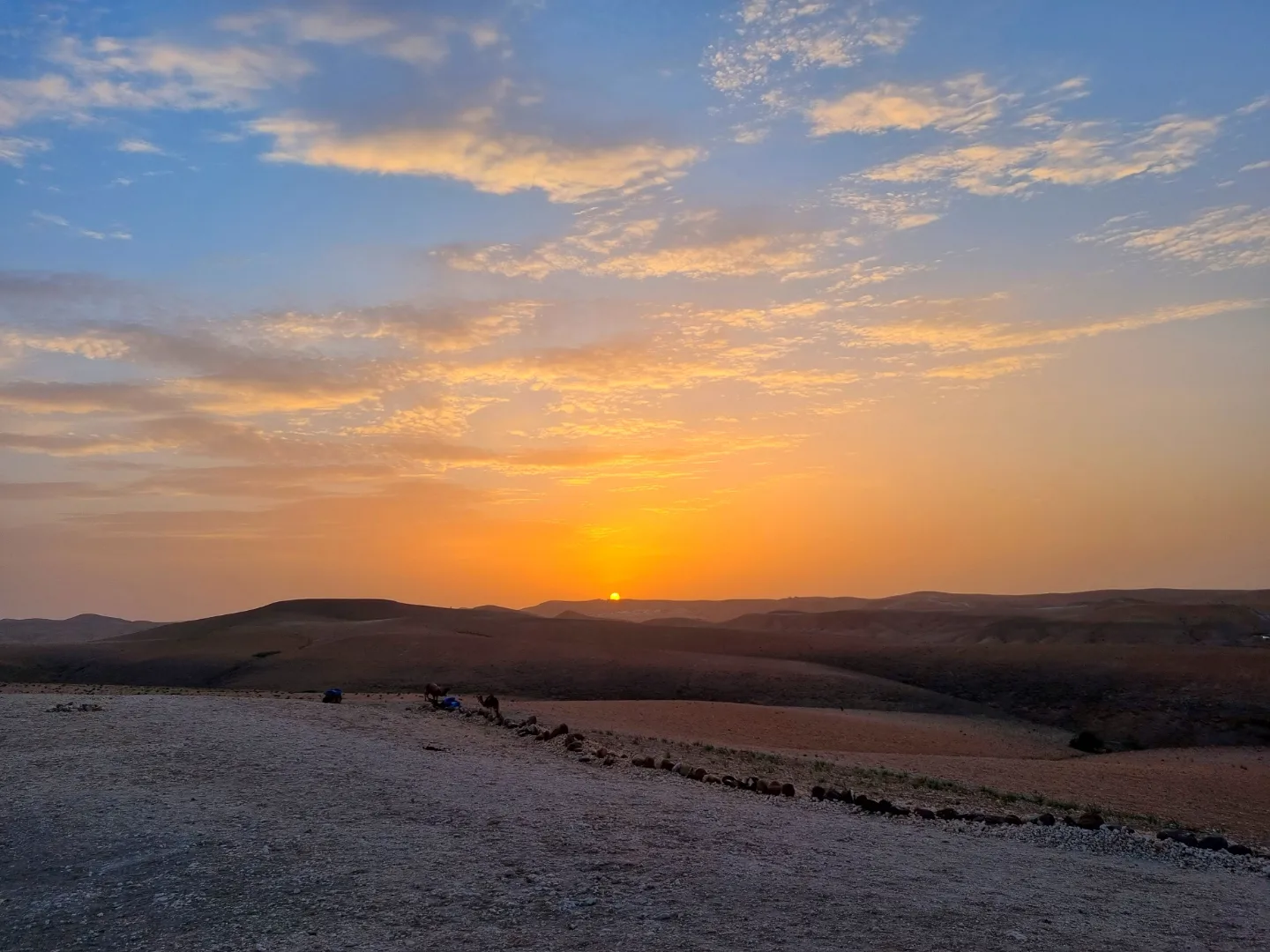
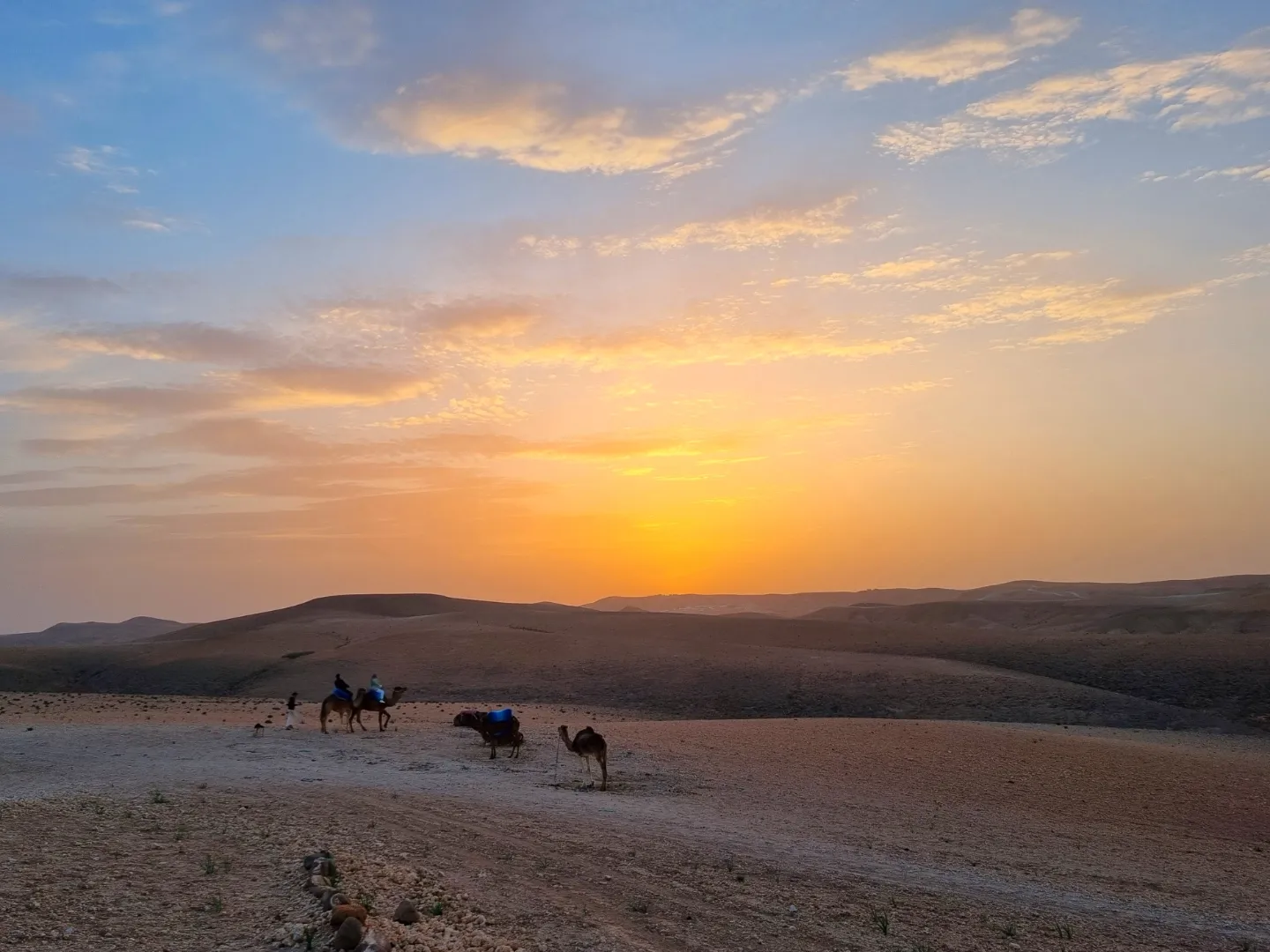
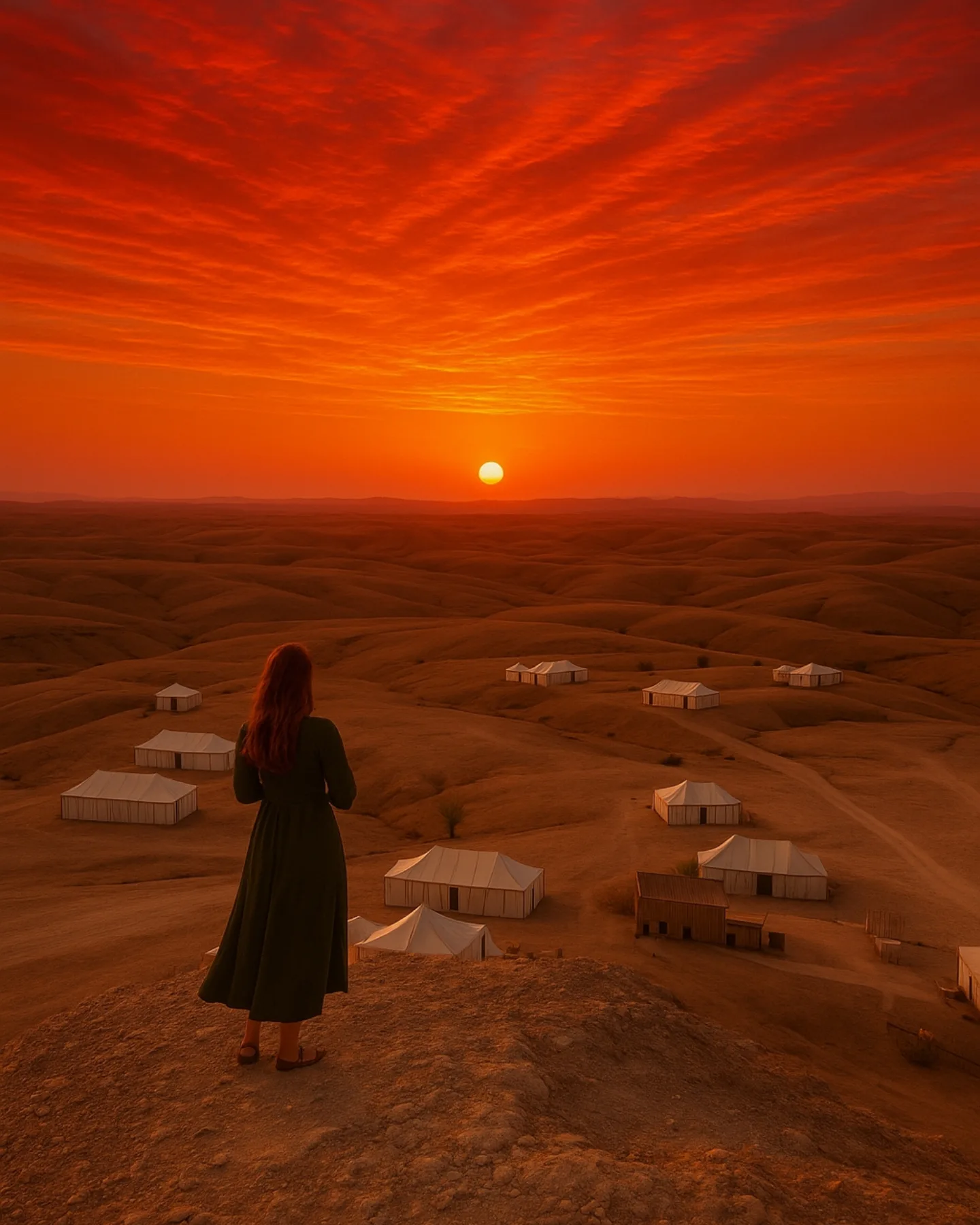
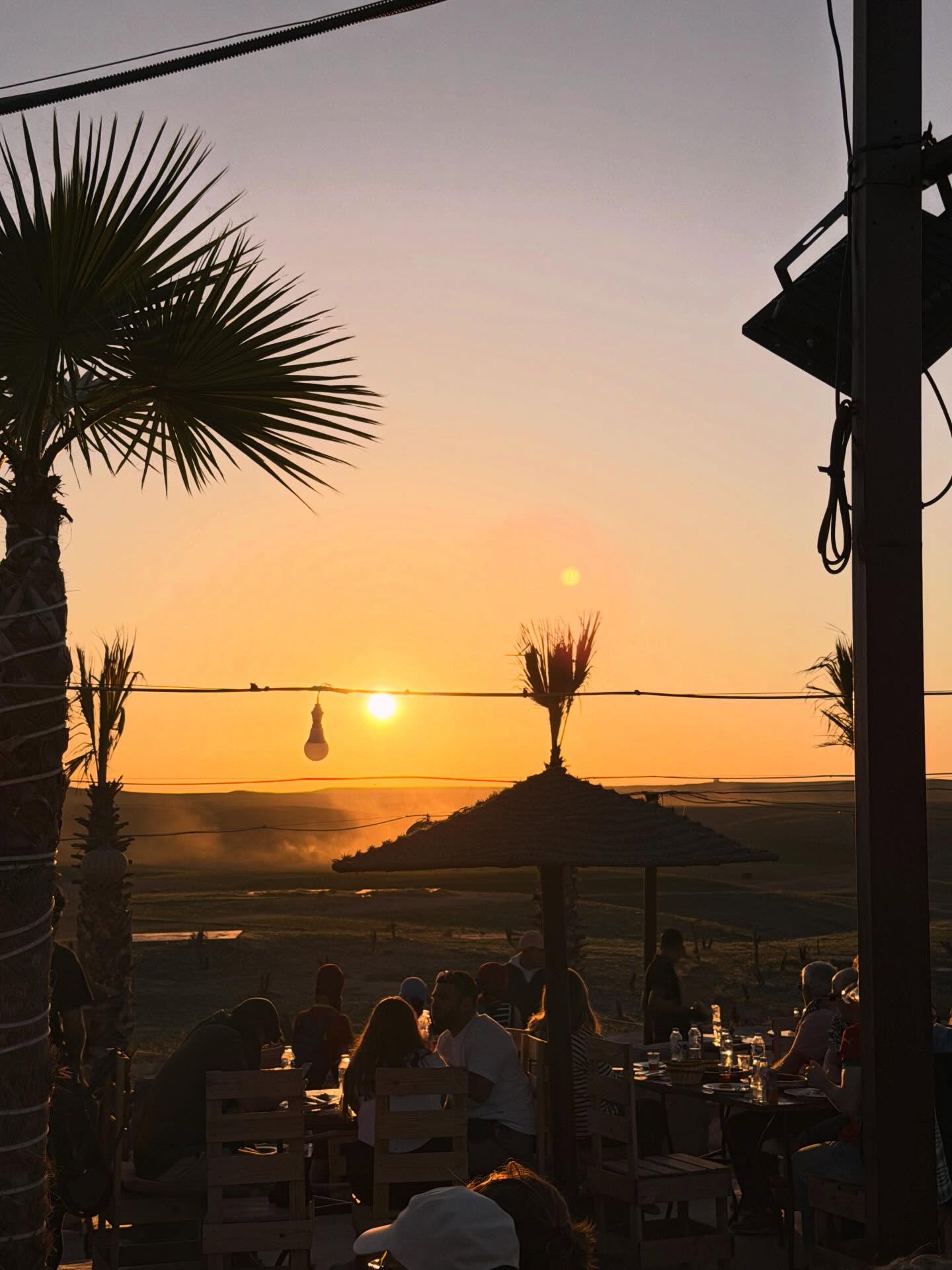
Agafay has earned a strong reputation as a couples’ destination. Private tent accommodations at select camps feature plunge pools and intimate settings — ideal for anniversaries or proposals.
For those based in the medina, rooftop restaurants like Dardar Rooftop deliver unparalleled views of the Koutoubia Mosque and distant Atlas Mountains silhouetted against the sunset in Marrakech sky. Best time of year: October–November.
Chefchaouen: The Blue City’s Panoramic Majesty
Chefchaouen’s entire medina, painted in varying shades of blue — from pale sky to deep indigo — becomes something almost surreal when warm golden light bathes its walls at sunset. The chromatic contrast is one of the most photographed moments in North Africa.
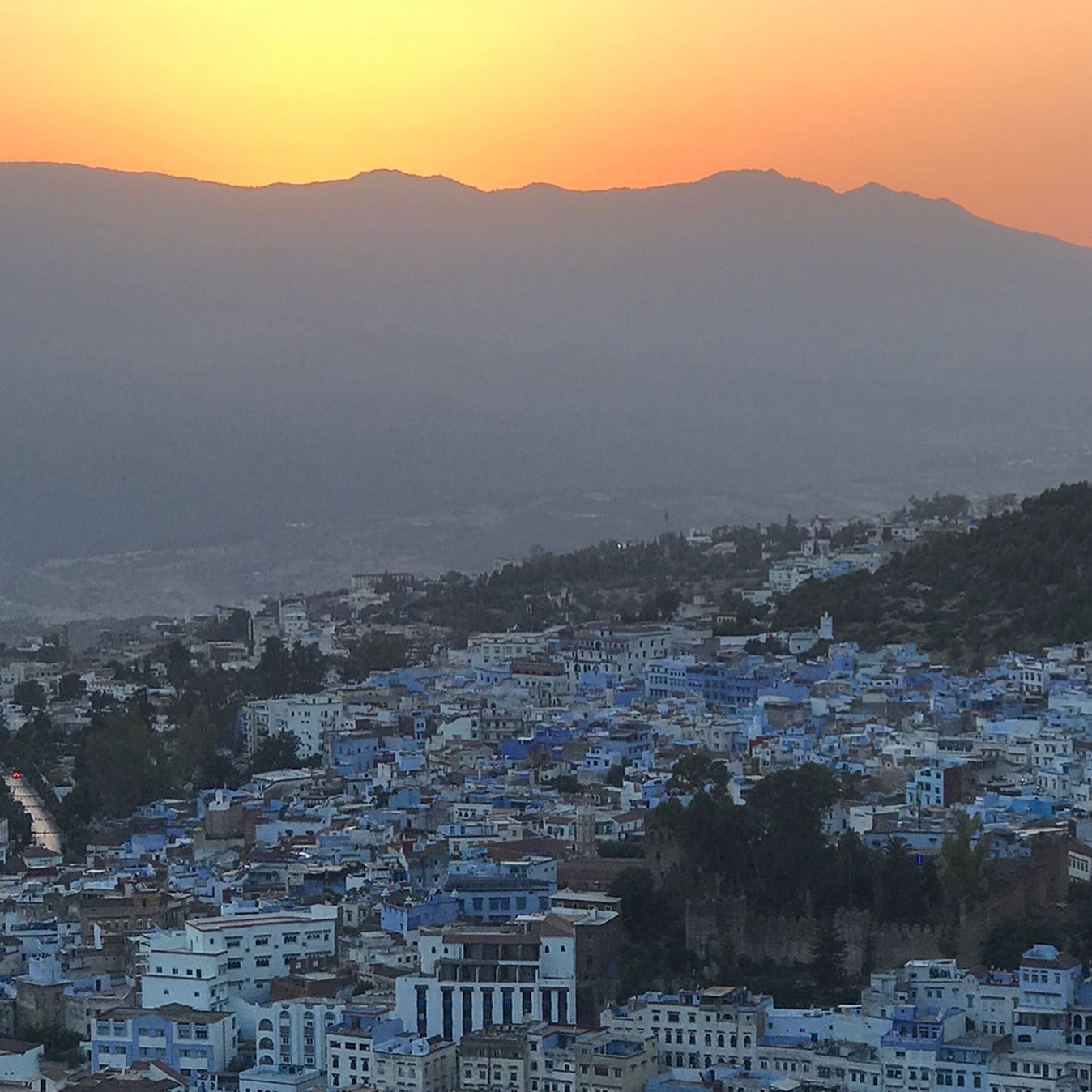
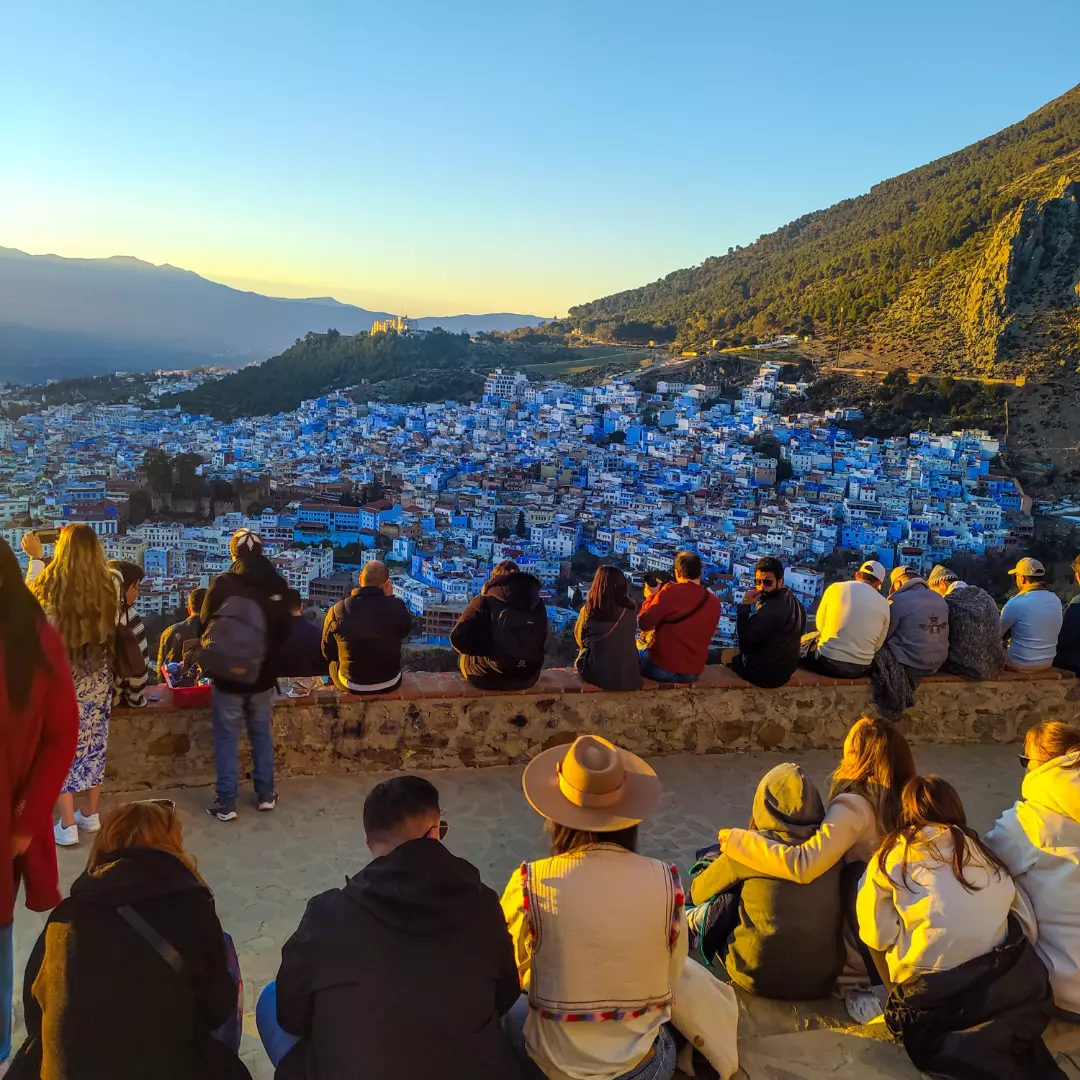
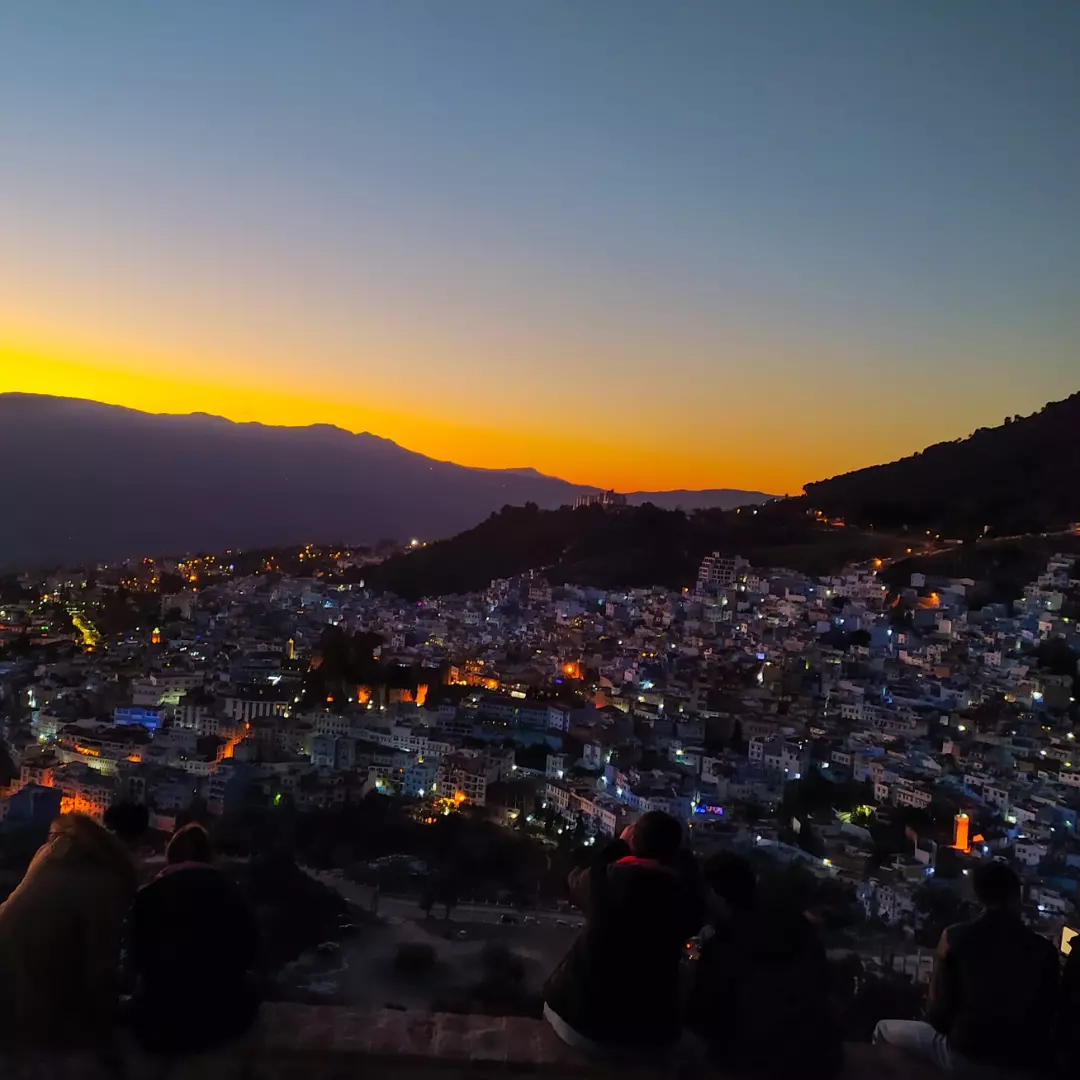
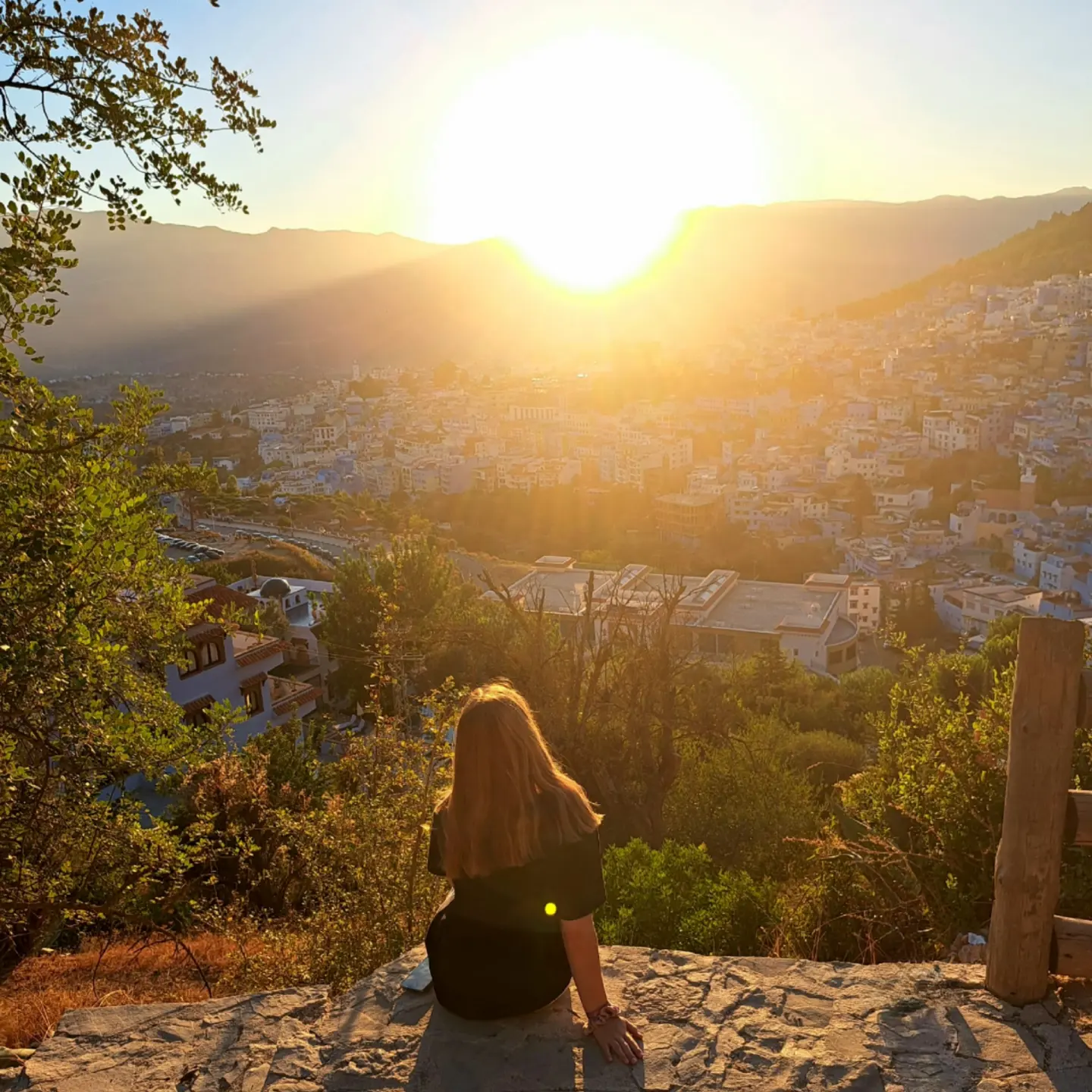
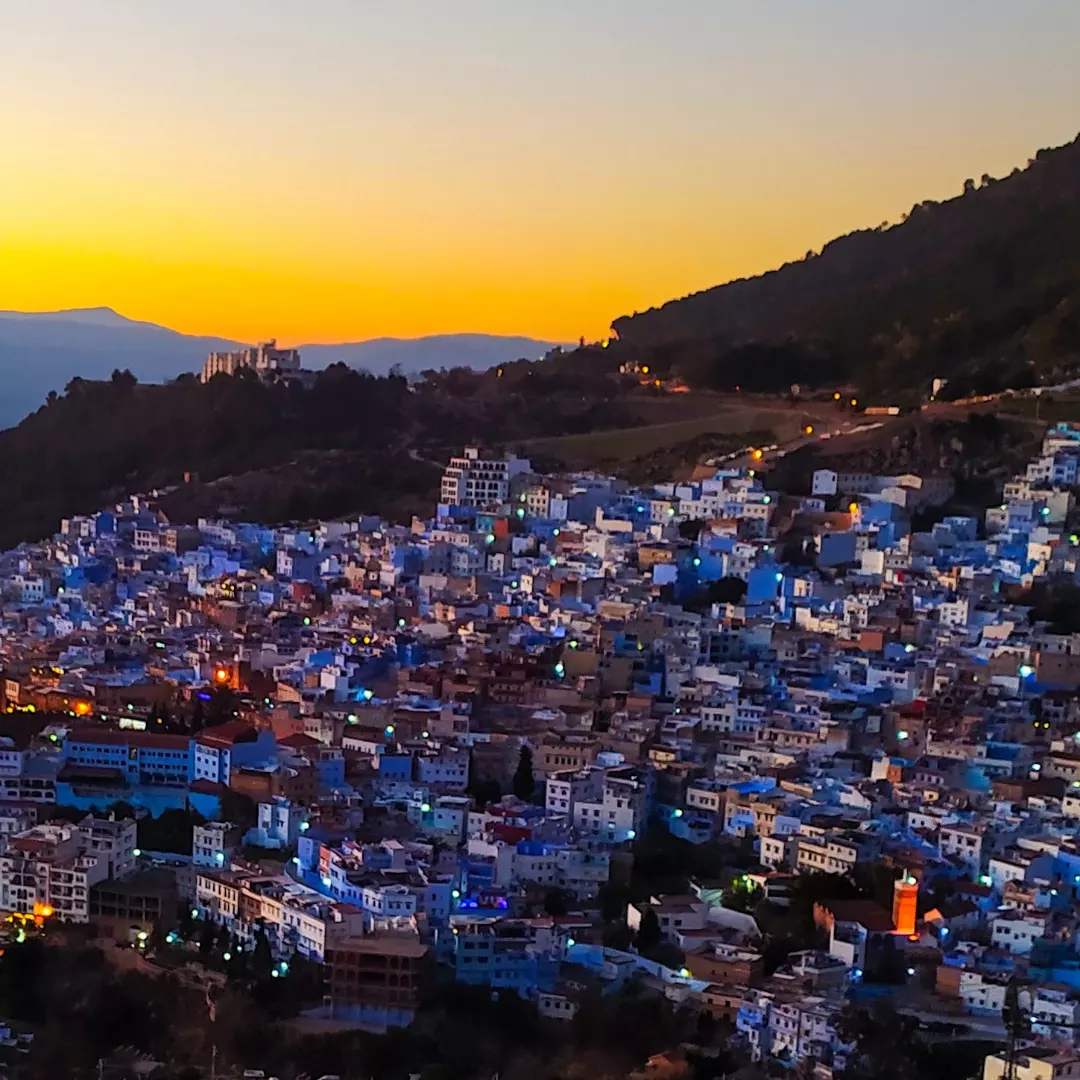
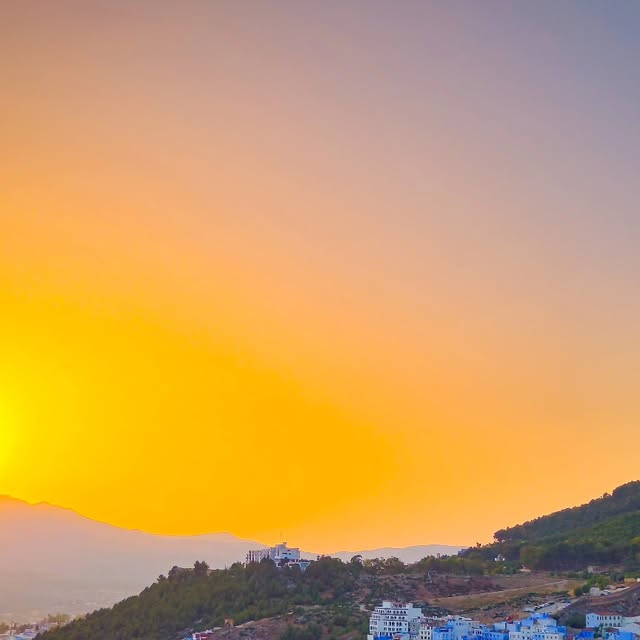
The Spanish Mosque, positioned on a hill to the southeast, is the premier sunset location. The hike from Bab El Onsar takes 30–45 minutes. Rooftop cafés throughout the medina offer accessible alternatives with mint tea and pastries. Best time of year: Spring (March–May) and autumn (September–November).
Legzira Beach: Natural Arches and Sculpted Drama
Near the town of Mirleft in southwestern Morocco, Legzira Beach is defined by towering red-sandstone arches carved by millennia of ocean erosion. As the sun descends, golden light pours through each arch’s opening — a natural frame that photographers queue to capture. At low tide, reflective wet sand multiplies the scene’s drama.

At high tide, water blocks access to the arch entirely. Always check tide tables before your visit and arrive at least 2–3 hours before sunset. Access is approximately 150 km south of Agadir by car.
Best time of year: November through March; September–October for solitude.
Aït Ben Haddou: Ancient Kasbah Against Desert Light
This UNESCO World Heritage Site near Ouarzazate is among Morocco’s most cinematic locations. The 11th-century mudbrick kasbah glows in warm amber tones as the sun descends over the river valley. The most iconic vantage point is the opposite riverbank, looking back at the illuminated village — available from riverside restaurants or dedicated viewpoints set up by tour operators.
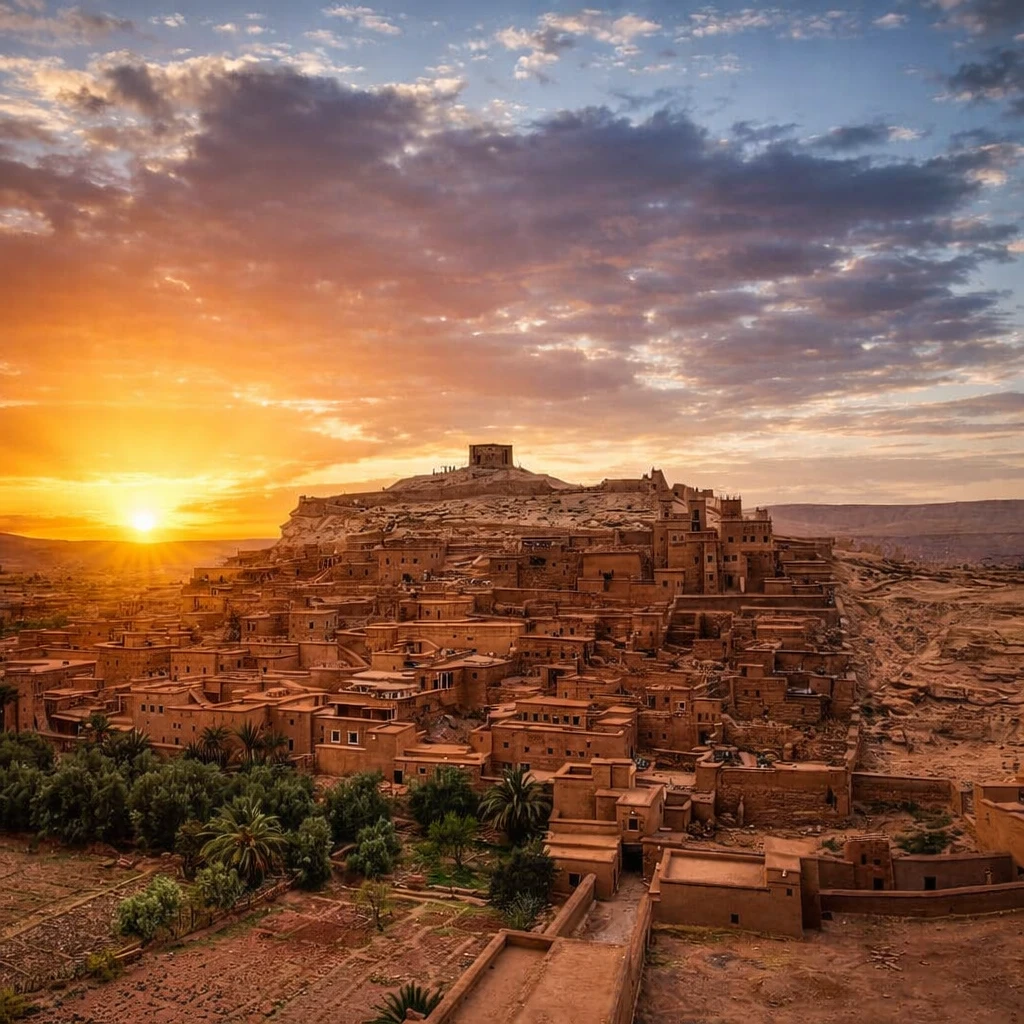
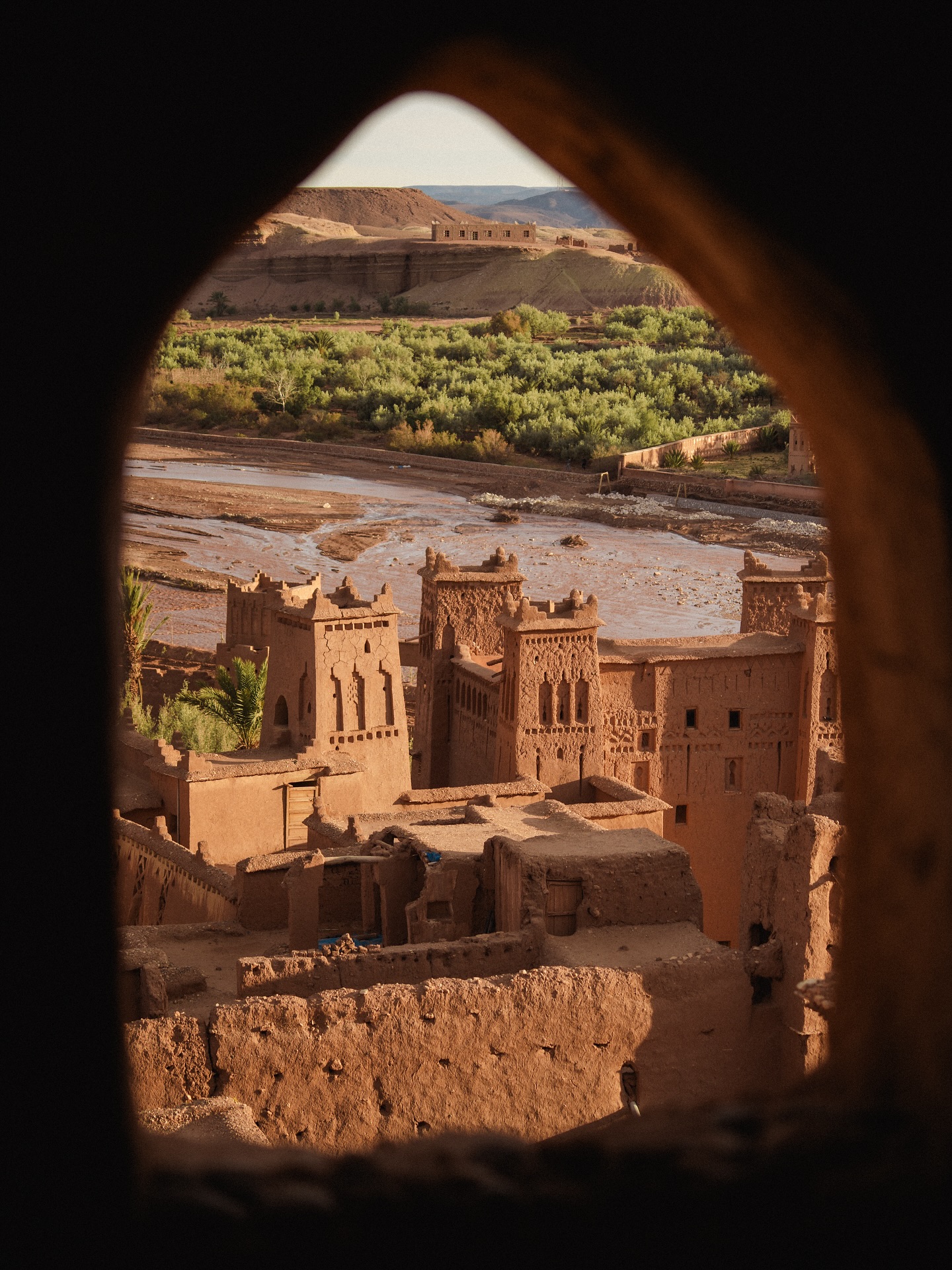
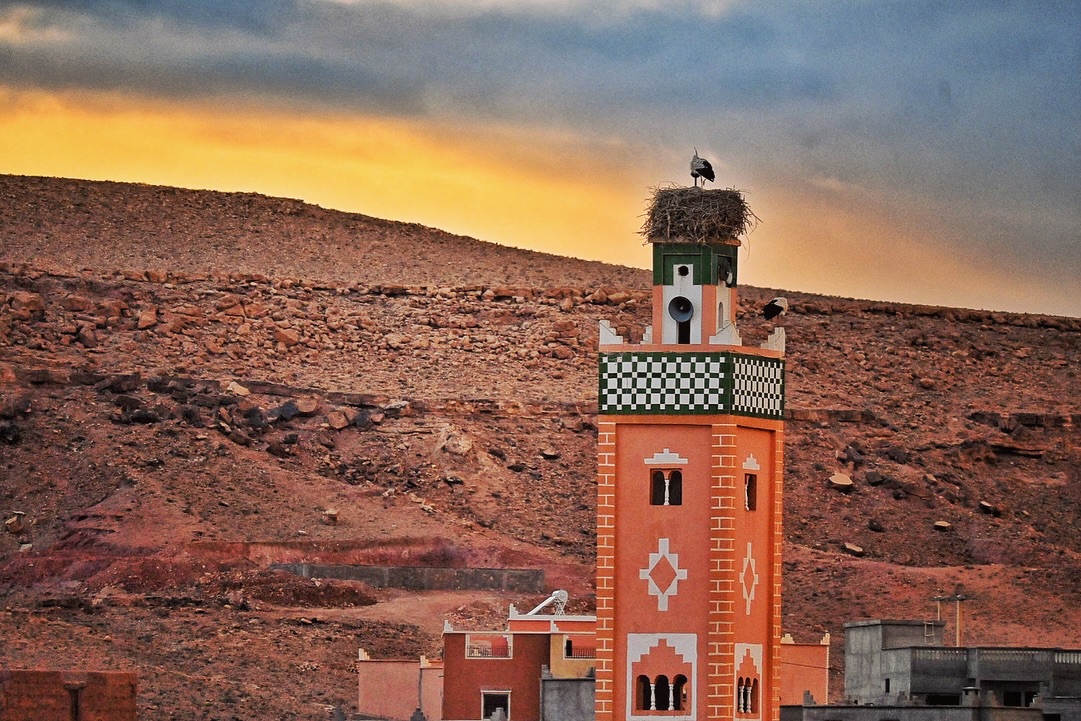
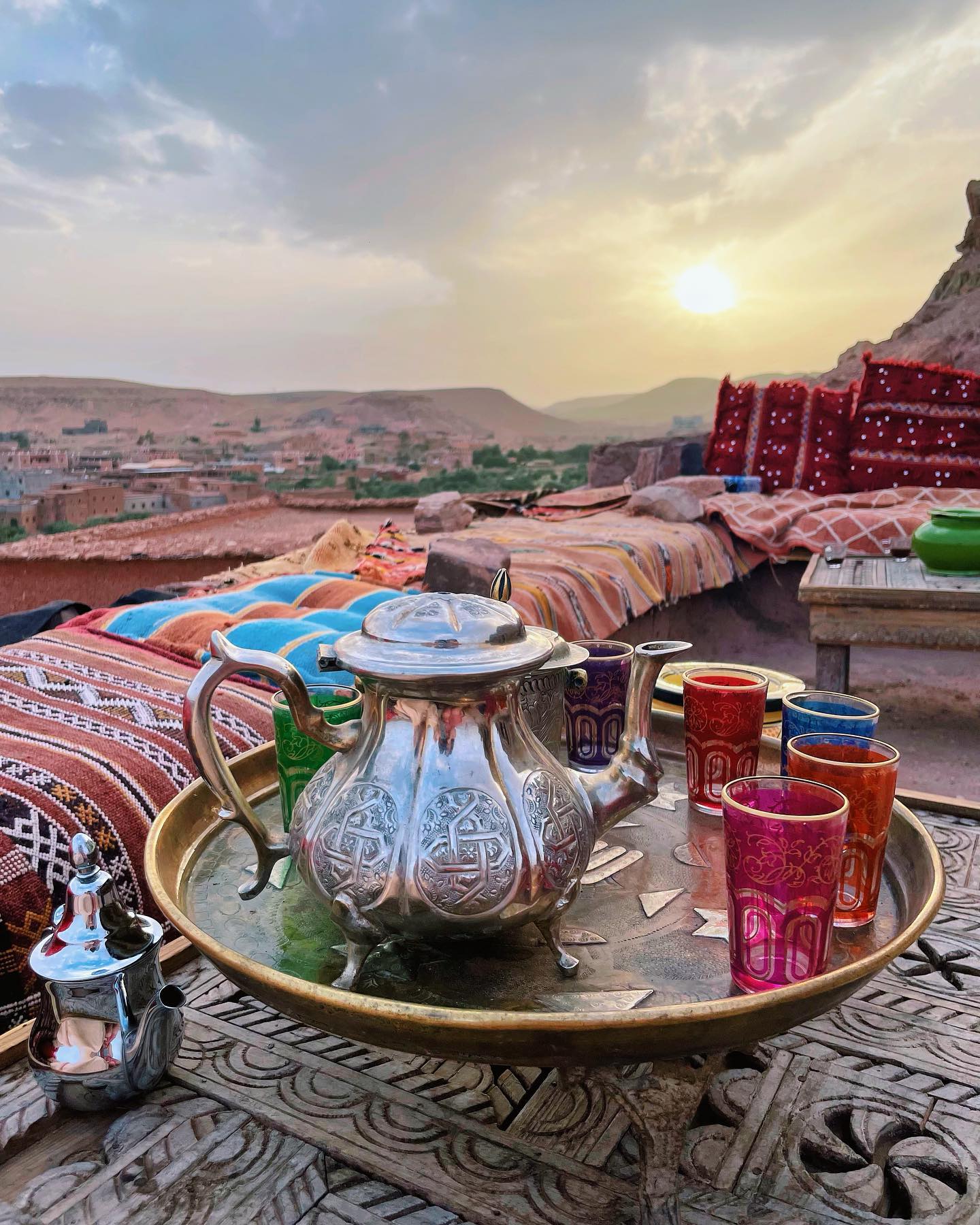
Best time of year: Spring (March–May) and autumn (September–November).
Ouzoud Waterfalls: Where Water Meets Light
Ouzoud Waterfalls cascade 110 metres over multiple tiers, surrounded by lush greenery and Barbary macaques. The mist created by the falling water refracts the setting sun, producing full rainbow arcs across the falls — a sunset spectacle entirely unlike any other on this list. Located 2.5–3 hours from Marrakech, the site is accessible by car or organised tour.
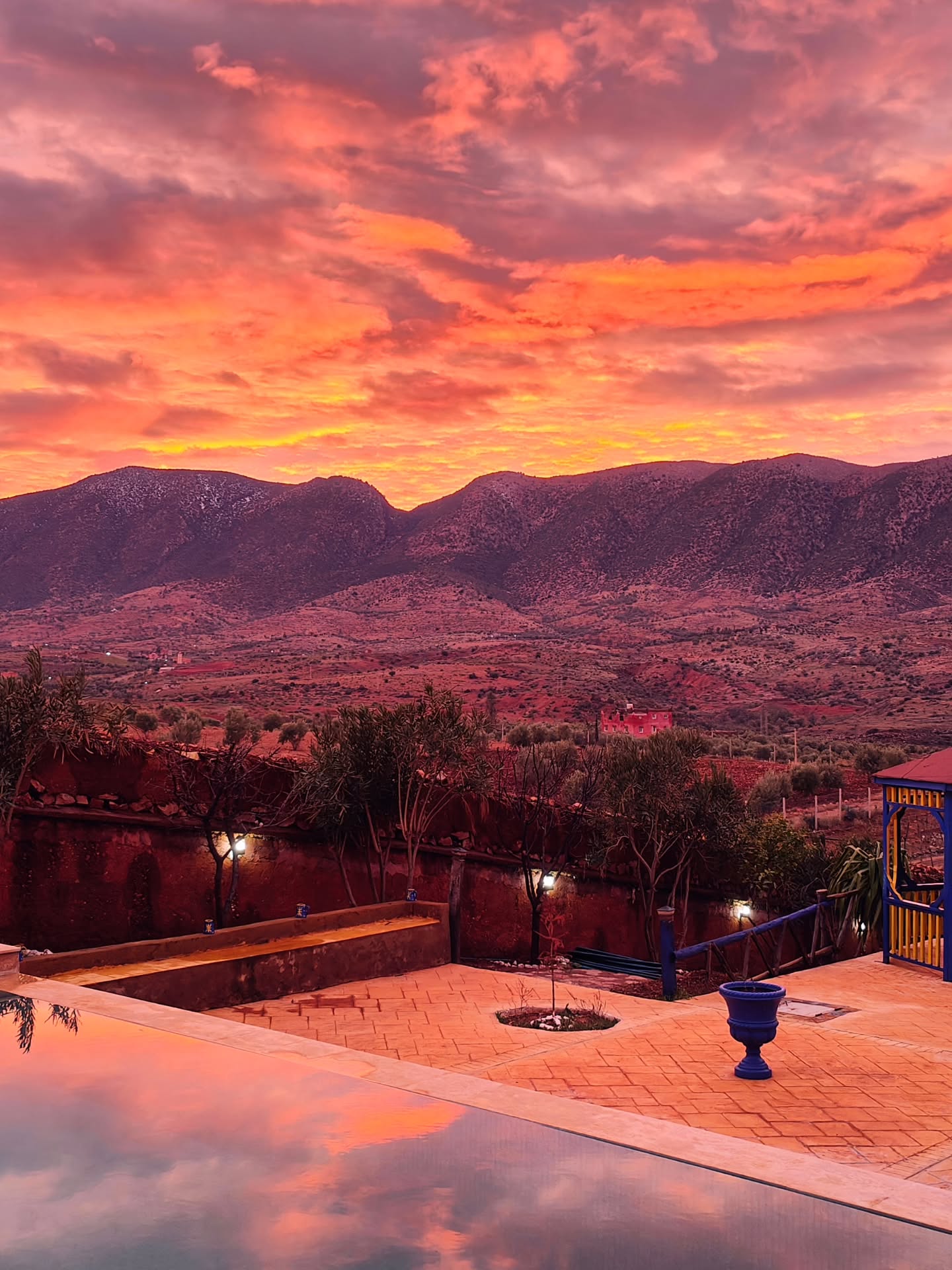
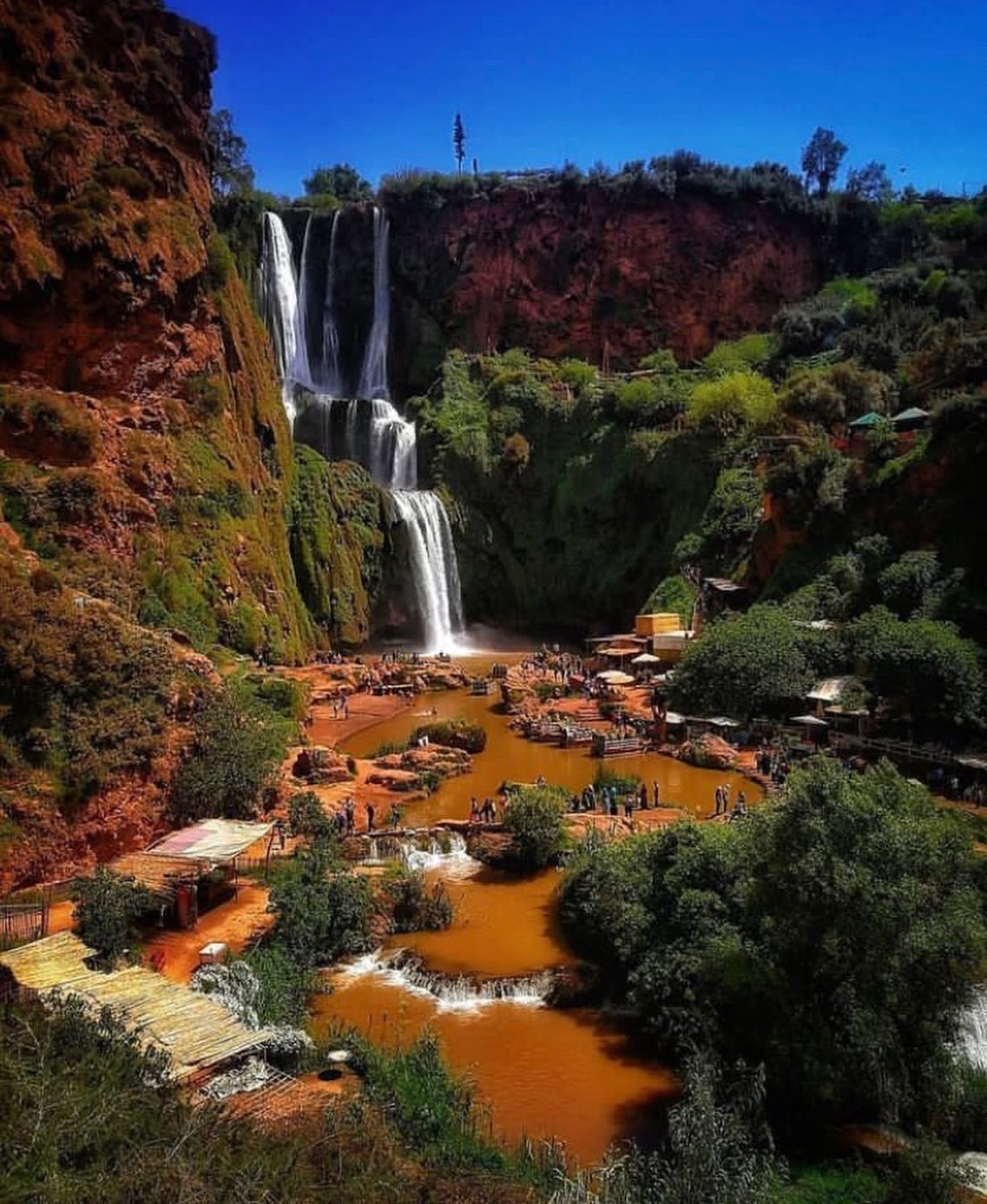
Most visitors to Ouzoud are drawn primarily by the spectacular waterfalls and the lush natural surroundings — the sunset here is a bonus rather than the main event. Unlike the Sahara or Essaouira, few travelers specifically time their visit for golden hour. That said, the play of evening light through the mist is genuinely beautiful if you happen to be there.
If you’d like to fully experience these magnificent falls, consider booking a guided day trip to Cascades d’Ouzoud — a well-organised excursion from Marrakech that lets you enjoy the falls, the wildlife, and the scenery at a relaxed pace.
Use a tripod with a slow shutter speed (1–4 seconds) to render the water as silky, flowing forms. ND filters help manage bright conditions. Spring visits offer peak water flow and wildflower surroundings.
Best time of year: Spring (March–May) for peak water; autumn (September–November) for comfortable temperatures.
Atlas Mountains: Alpine Sunsets and Peak Light Shows
Morocco’s Atlas Mountains offer sunset experiences at elevation — valleys below deepening into shadow while peaks catch the final light in shades of rose and amber. The Imlil Valley is the best base, with accessible day hikes leading to panoramic ridge views. Many experiences incorporate Berber family guesthouses where you share mint tea on a mountain terrace as the sun descends over the valley.
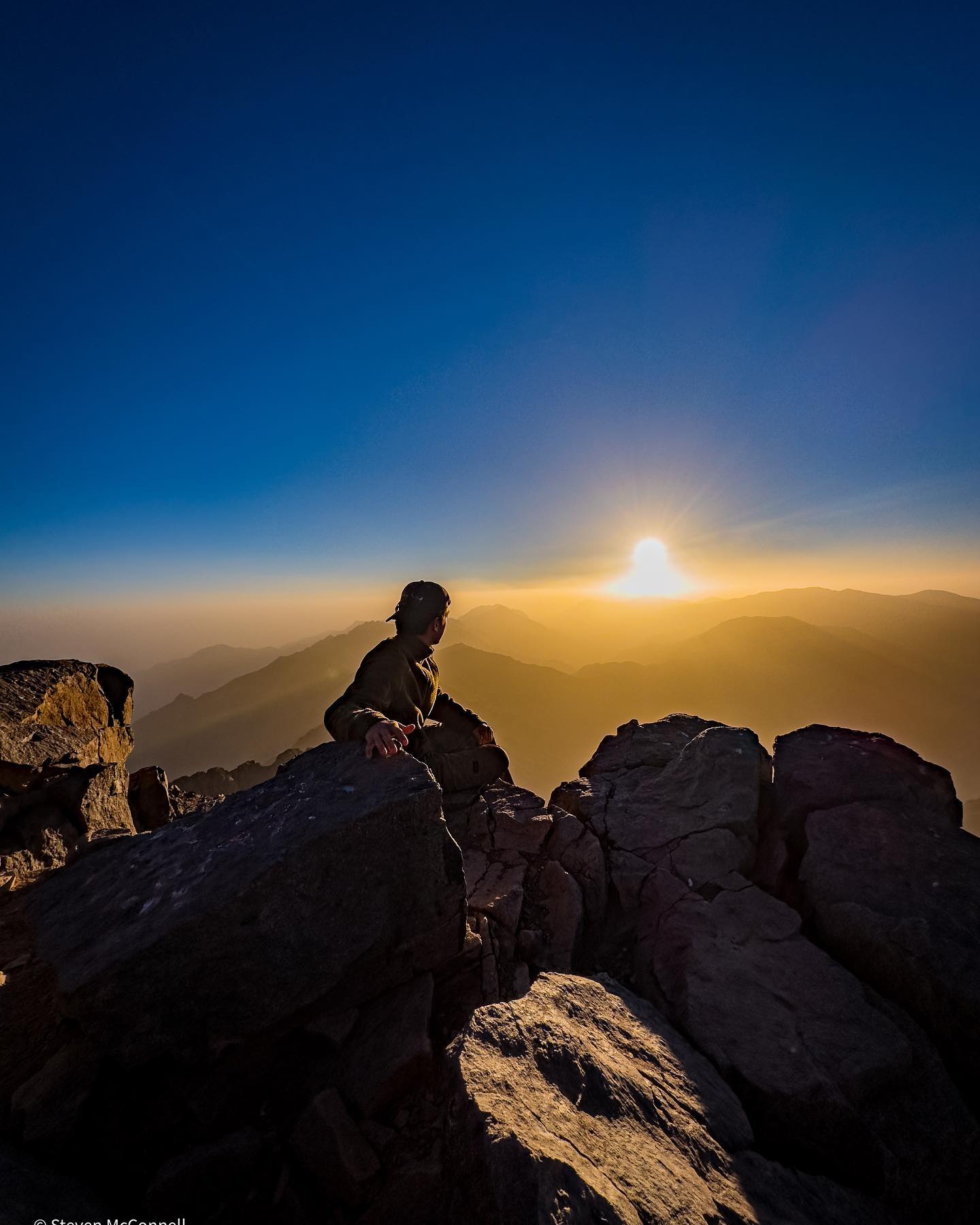
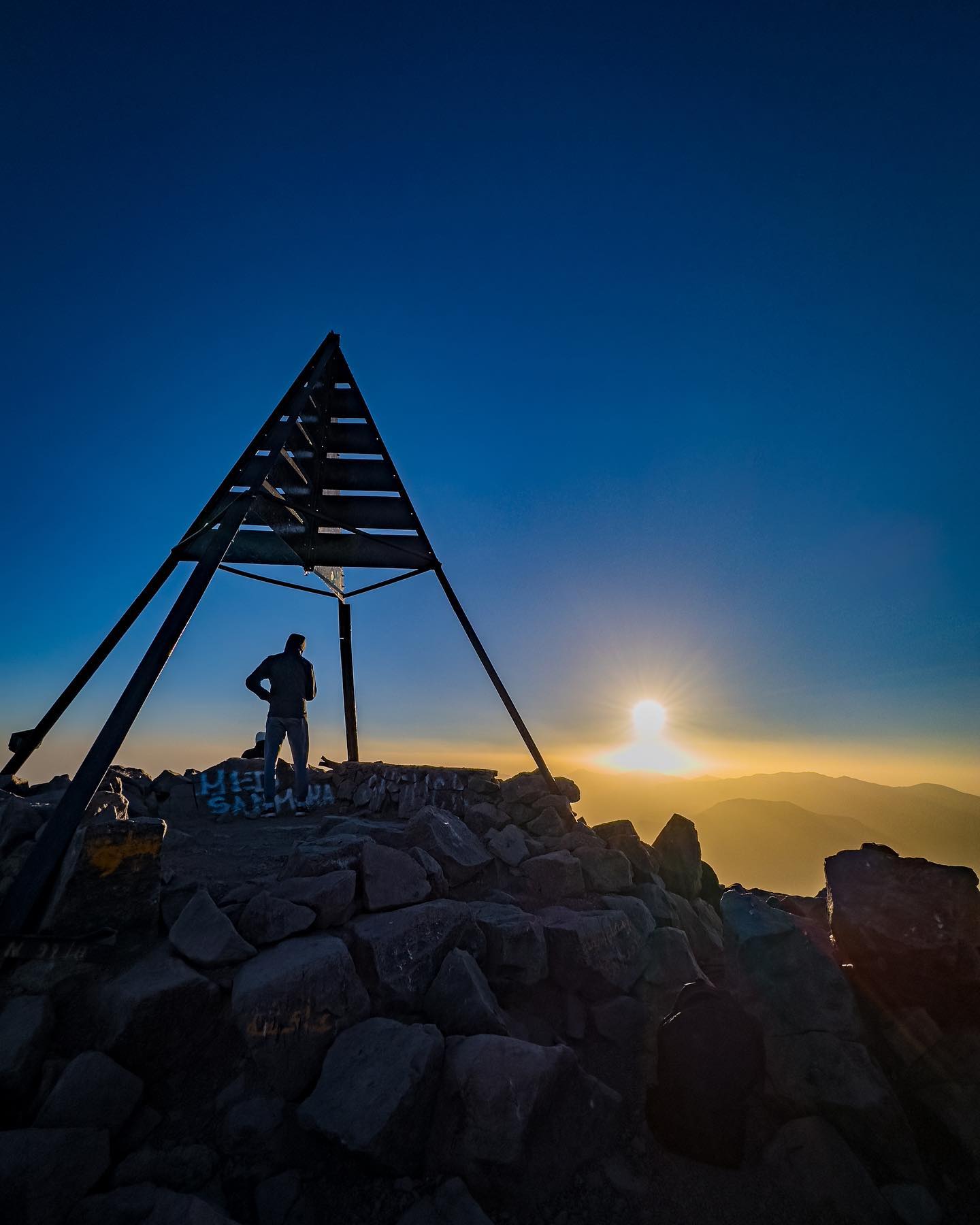
Best time of year: April–June and September–October. Summer brings crowds and afternoon thunderstorms.
Quick Comparison: Best Sunset Spots in Morocco top
Use this table to compare all best sunset places in Morocco by type, distance from Marrakech, best season, and ideal visitor profile.
| # | Destination | Sunset Type | From Marrakech | Best Season | Ideal For |
|---|---|---|---|---|---|
| 01 | Sahara / Merzouga | Desert dunes | ~9–10 hrs | Oct – Apr | Iconic experience |
| 02 | Essaouira | Ocean / Atlantic | ~3–4 hrs | Apr – Nov | Romance & photos |
| 03 | Chefchaouen | Mountain city | ~8–9 hrs | Mar–May · Sep–Nov | Photography |
| 04 | Agafay Desert | Rocky desert | ~40 km | Oct – Nov | Quick getaway |
| 05 | Aït Ben Haddou | Kasbah / valley | ~3 hrs | Sep – Nov | UNESCO history |
| 06 | Legzira Beach | Ocean / arches | ~5 hrs SW | Nov – Mar | Landscape photos |
| 07 | Ouzoud Waterfalls | Waterfall / mist | ~2.5–3 hrs | Mar – May | Nature lovers |
| 08 | Atlas Mountains | Alpine / peaks | ~1–2 hrs | Apr–Jun · Sep–Oct | Hikers & trekkers |
Best Time of Year for Morocco’s Sunsets top
October: The Gold Standard Month
October consistently ranks as Morocco’s optimal month. Temperatures have cooled to comfortable daytime ranges (averaging 24–27°C), while nights remain pleasantly crisp. Atmospheric clarity is exceptional, and cloud patterns typically provide interesting compositions without blocking views. Sunset timing around 6:45–7:15 PM allows a full afternoon of exploration before golden hour.
September and November: Sweet Spot Alternatives
September maintains summer warmth while conditions begin cooling — desert access without extreme heat, clear skies, and extended golden hours. November brings autumnal light many photographers consider ideal: softer than summer, richer in colour saturation, and less prone to atmospheric haze.
Spring (March–May): Bloom and Renewal
Spring sunsets occur against landscapes transformed by wildflower blooms — almond blossoms in mountain valleys, vivid carpets across desert margins. The light quality rivals autumn’s, with clear skies and moderate crowds. April is often called Morocco’s best overall travel month.
Winter (December–February): Dramatic and Quiet
Winter offers dramatic atmospheric conditions — pronounced cloud formations, alpenglow on snow-capped Atlas peaks, and substantially thinner crowds. Sunsets arrive early (6:15–6:45 PM), but the crisp air produces sharp, high-contrast images ideal for landscape photography.
Summer heat regularly exceeds 35°C in cities and 38°C+ in the Sahara. Tourist crowds peak at all accessible locations, making extended outdoor exploration uncomfortable and potentially hazardous in the desert.
Sunset Photography Tips top
Camera Settings
Aperture: f/8–f/16 for deep depth of field and starburst effects when shooting toward the sun. Shutter speed: 1/500–1/1000s freezes motion; 1–4s (with tripod) blurs water and clouds into silky forms. ISO: 100–400 for clean, enlargeable files. White balance: Shoot RAW — daylight, cloudy, and shade presets each produce distinct colour signatures; adjust in post.
Composition Techniques
Rule of thirds: Place the horizon in the upper third when the landscape is interesting; lower third when the sky dominates. Foreground interest: Rocks, dune ridges, architectural features, or silhouetted figures add spatial depth. Leading lines: Paths, rivers, dune ridgelines, and waves guide the viewer’s eye toward your sunset. Reflections: Wet sand, pools, and rivers double your sunset content. Silhouettes: Position a camel, a person, or a minaret between camera and sun for maximum dramatic effect.
Begin shooting 20–30 minutes before sunset and continue well into blue hour (30–60 minutes after sunset). The most dramatic colours often appear in the final minutes before and after the sun crosses the horizon — continuous shooting during this window maximises your chances of a defining image.
Essential Equipment
- Tripod — essential for consistent composition and long exposures
- ND filter — manages extreme sky-to-foreground brightness difference
- Polarising filter — enhances sky saturation and reduces glare on water
- Wide-angle lens (14–35mm) — captures dune and ocean expanses
- Telephoto (70–200mm) — compresses distant Atlas peaks against the sky
Romantic and Cultural Sunset Experiences top
Desert Camp Dinners
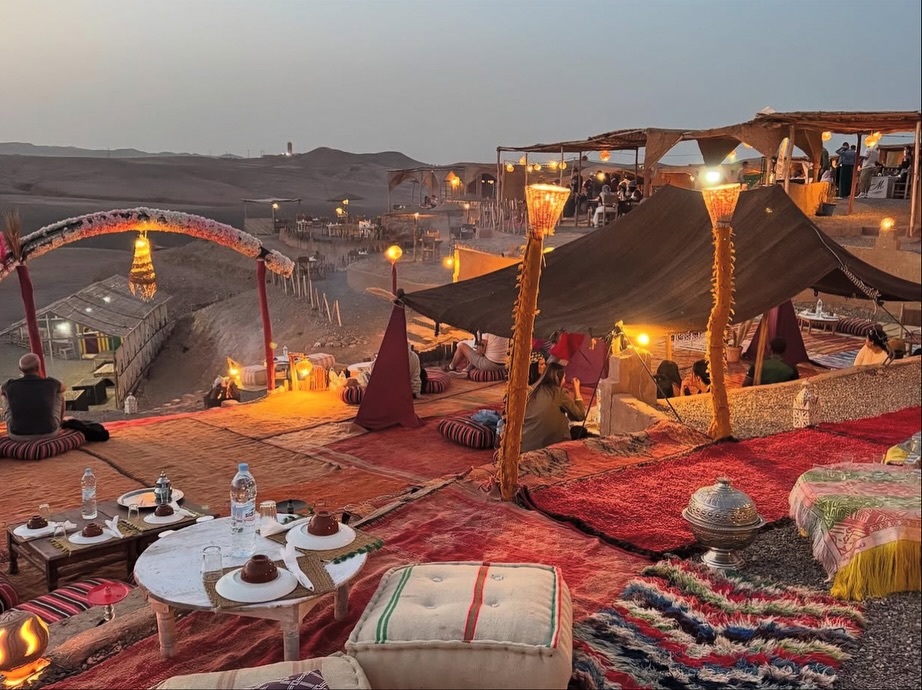
The finest sunset experiences transcend observation — they incorporate cultural immersion and sensory richness. Desert camps in Agafay and the Sahara offer sunset viewing followed by traditional dinners: tagines, couscous, fresh bread, salads, and preserved lemons prepared by Berber cooks. Many camps incorporate live Berber music — traditional drums, stringed instruments, and vocals speaking to centuries of heritage. For couples, private tent accommodations with plunge pools create intimate settings ideal for anniversaries or proposals.
Rooftop Dining in Marrakech and Essaouira
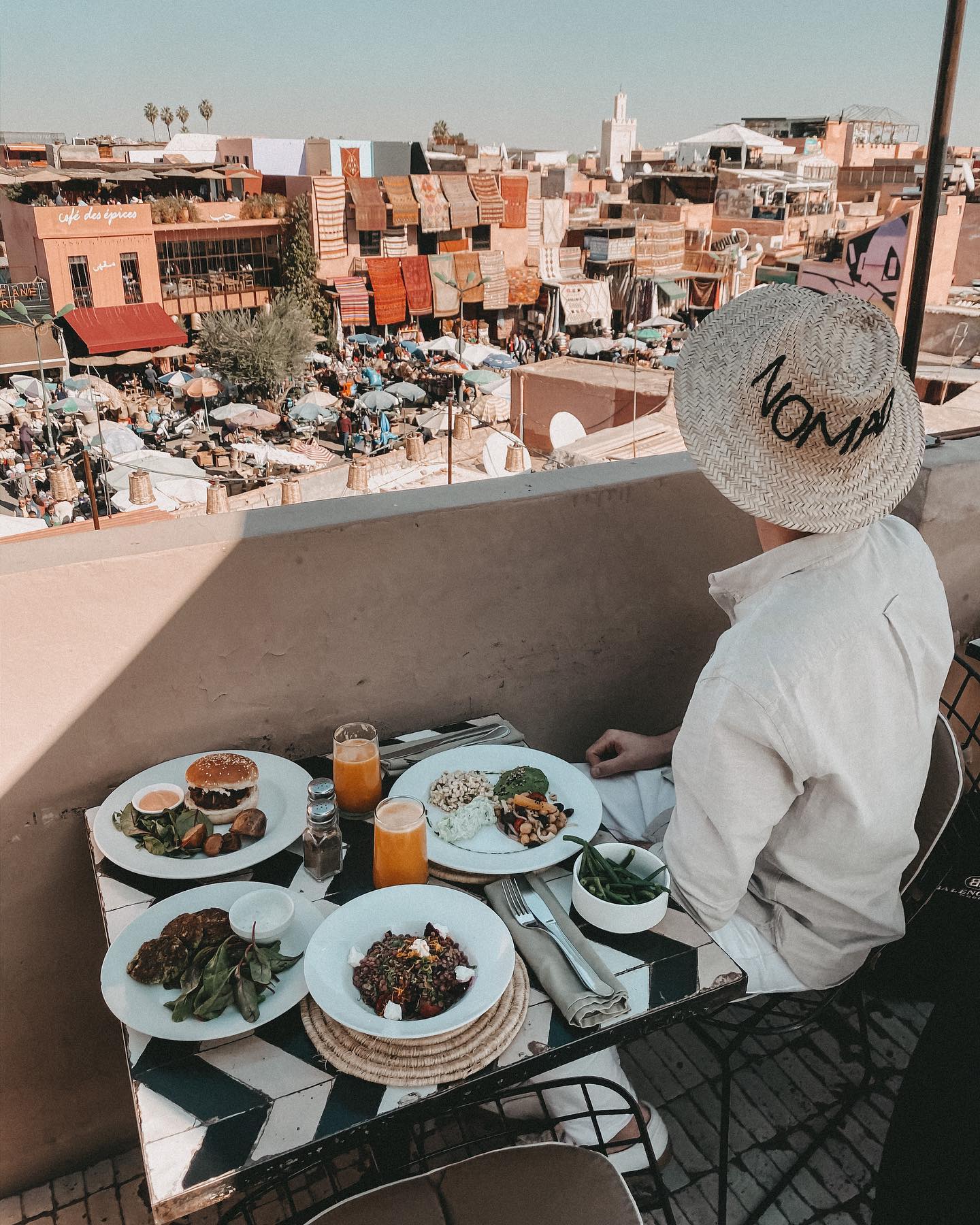
Urban rooftop dining combines sunset in Marrakech viewing with culinary excellence. Restaurants position tables to frame the Koutoubia Mosque and distant Atlas Mountains; in Essaouira, ocean-facing terraces pair exceptional seafood with Atlantic views. Book at least a week ahead and request west-facing terrace seating.
Camel Trekking
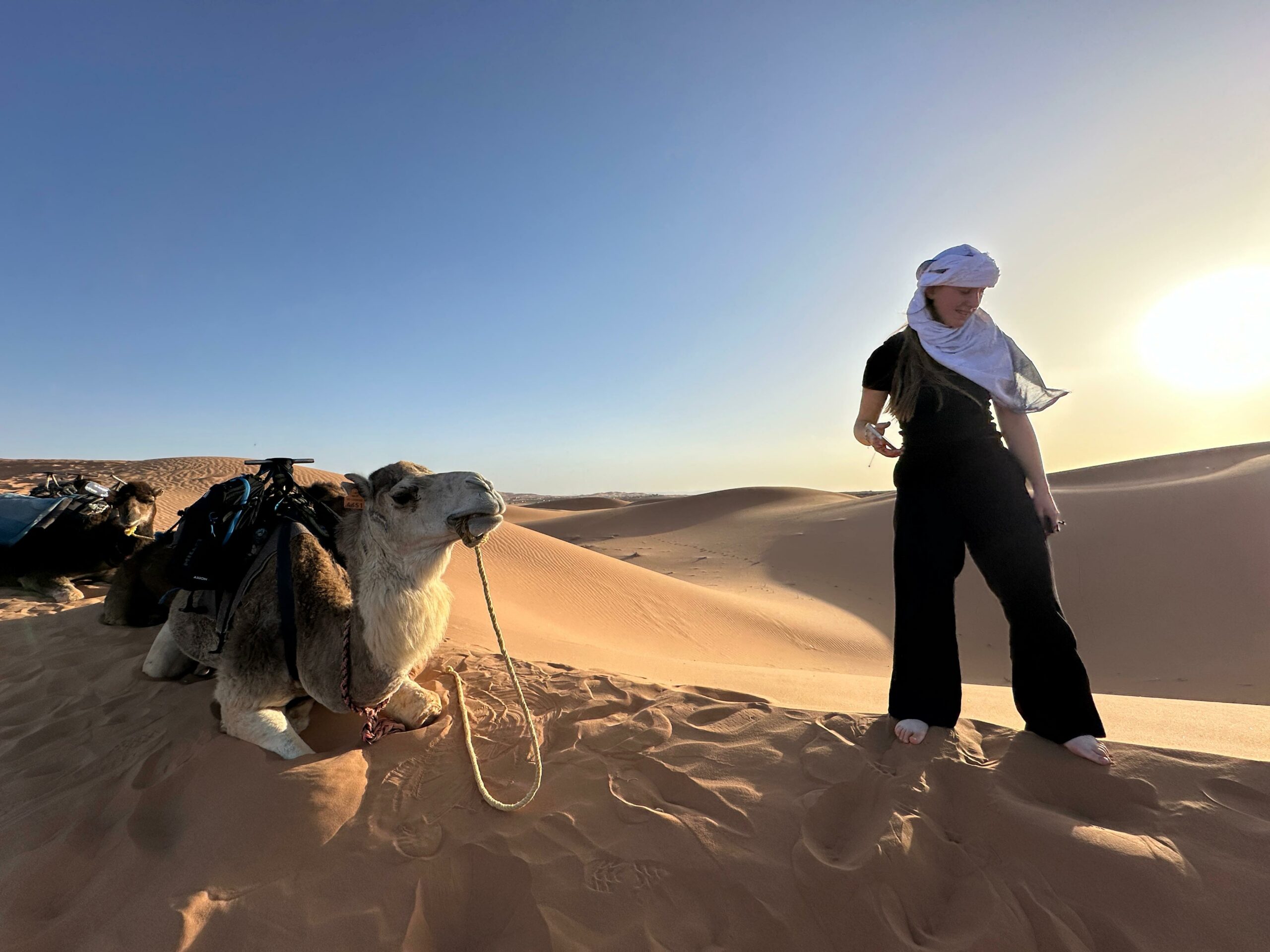
Traversing desert terrain aboard a camel while the landscape shifts through golden hour is a genuine bucket-list experience. You’re elevated above the ground, moving slowly enough to observe every subtle light change — and camel riders make striking silhouettes for photographers in the group.
Berber Village Hospitality
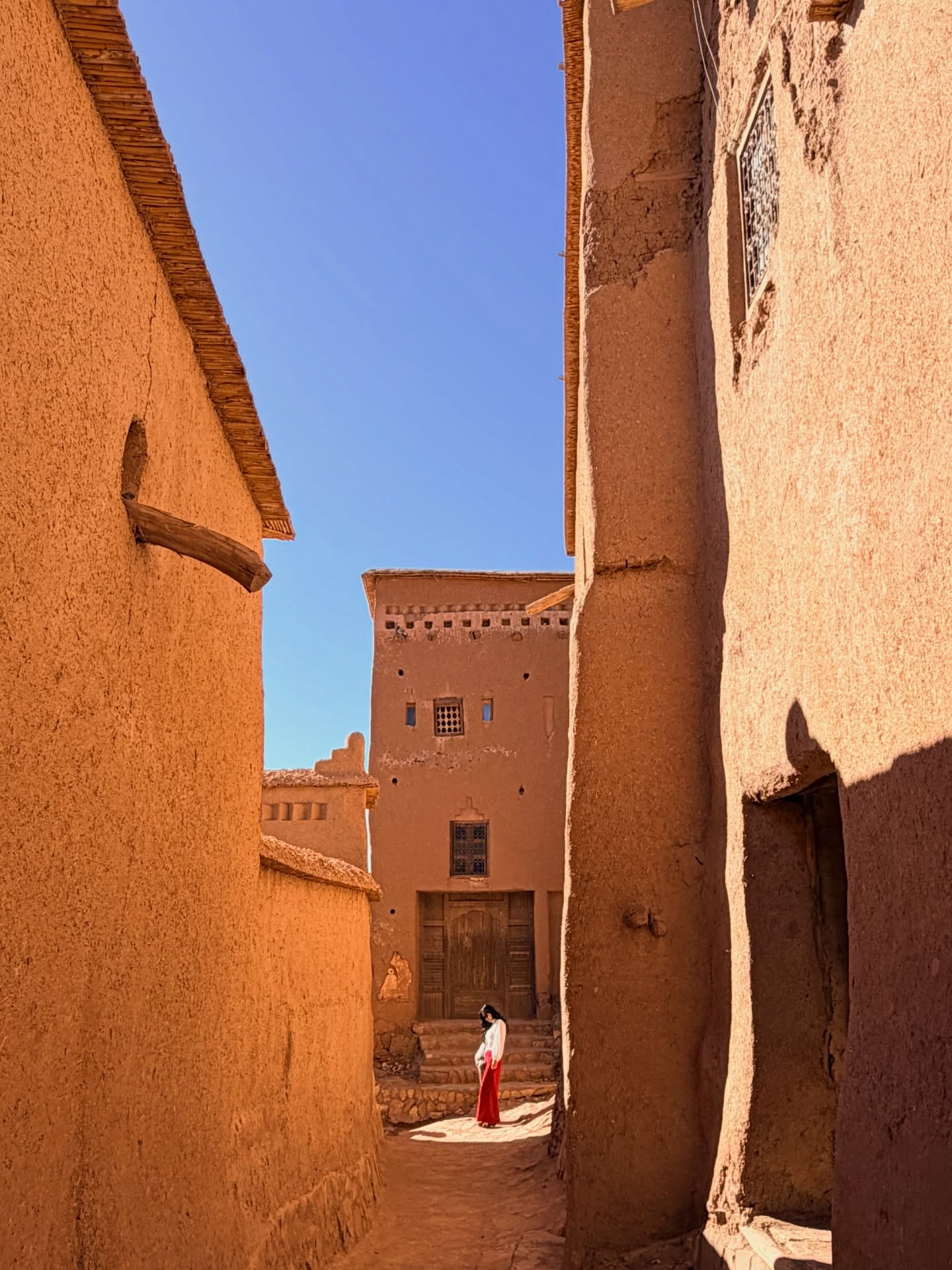
Some Atlas Mountain experiences incorporate visits to Berber villages where families welcome guests to rooftop terraces, offering mint tea and local pastries as the sun descends over the valley. These unscripted, intimate moments provide cultural connection rarely found in commercialised tourism.
Plan Your Sunset Journey with a Licensed Local Guide top
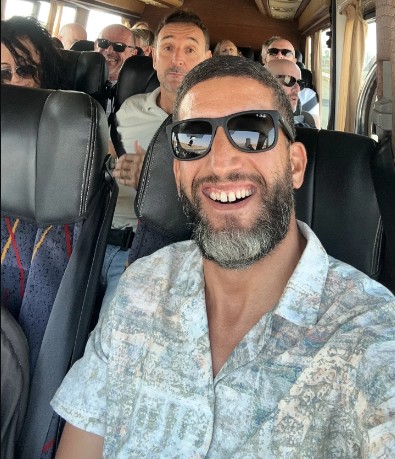
Knowing where to watch sunset in Morocco is one thing — arriving at exactly the right vantage point, at the right moment, with the cultural context that transforms a beautiful view into an unforgettable story is another. A Ministry-certified guide makes all the difference.
Practical Travel Tips top
Safety
Morocco is generally a safe destination for travelers exercising reasonable caution. For a comprehensive overview — from neighbourhood safety to travel insurance advice — read our dedicated guide on is Morocco safe to visit for tourists.
- Nighttime navigation: Avoid walking alone through medina alleyways after midnight. Use official metered taxis after dark.
- Valuables: Use hotel safes for items you don’t carry. Keep camera gear in a dedicated bag.
- Sun protection: Wear broad-brimmed hats, high-SPF sunscreen, and UV-protective sunglasses. Carry at least 3 litres of water daily.
- Female travelers: Dress modestly in conservative areas.
- Tour operators: Book through established, licensed companies.
Timing and Distances
Sunset times vary dramatically: summer (June–August) 8:30–8:41 PM; winter (Dec–Feb) 6:15–6:45 PM; spring and autumn 7:00–7:45 PM. Always verify exact times for your travel dates. Explore Morocco’s cities to plan an itinerary that maximises sunset coverage without rushed transit.
Photography Ethics and Cultural Respect
Always ask permission before photographing people — the phrase “Mumkin sura, min fadlik?” (May I take a photo, please?) demonstrates genuine respect. Accept “no” immediately. Photography within active mosques is generally prohibited except the Hassan II Mosque in Casablanca. In souks, seek vendor consent before capturing merchandise — small purchases build lasting goodwill.
FAQ: Your Sunset Questions Answered top
The Sahara Desert (Merzouga/Erg Chebbi) offers the most iconic sunset in Sahara experience — the scale and colour transformation of sand is unlike anything else. That said, Essaouira’s ocean sunsets, Chefchaouen’s blue-light magic, and Agafay’s accessible desert drama each offer distinct appeal. The “best” sunset matches your priorities.
The top Morocco sunset spots are: Sahara Desert (Merzouga/Erg Chebbi), Essaouira Atlantic ramparts, Chefchaouen Spanish Mosque viewpoint, Agafay Desert near Marrakech, Aït Ben Haddou kasbah, Legzira Beach natural arches, Ouzoud Waterfalls, and the Atlas Mountains (Imlil Valley).
The Agafay Desert (40 km) offers a stunning desert sunset accessible in under an hour. Urban rooftops in the medina overlooking the Koutoubia Mosque are the most convenient option for sunset in Marrakech. The Atlas Mountains (Imlil Valley) are 1–2 hours away for a mountain experience.
Yes. The Sahara sunset is a genuinely transformative experience. The sand’s colour evolution, the desert’s immensity, the post-sunset silence and starlight, and the cultural camp experience combine into something many travelers call the highlight of their entire Morocco trip.
October is the consensus optimal month — comfortable temperatures (24–27°C), exceptional atmospheric clarity, moderate crowds, and ideal golden hour timing (around 6:45–7:15 PM). April and November rank closely behind.
Absolutely. A 7–10 day trip comfortably covers 2–3 sunset spots: Days 1–2 in Marrakech (rooftop or Agafay), Days 3–4 in Essaouira (ramparts), Days 5–7 in the Sahara. Allow adequate transit time between destinations.
Generally yes, with reasonable precautions. Morocco is considered safe for tourists. For remote desert or mountain excursions, book reputable guided tours, use licensed taxis after dark, and carry adequate water.
For accessible locations like Essaouira or urban Marrakech rooftops, no. For the Sahara, mountain treks, or remote locations, a licensed Ministry of Tourism guide such as Mouhssine ELIOUJ (Réf. 2898) adds invaluable knowledge and cultural context. Contact him on WhatsApp.
Ramadan 2026 runs 28 February–29 March. Many restaurants close during daylight hours, but sunset experiences remain beautiful — the iftar gathering at dusk adds a festive communal atmosphere. Book accommodation and tours well in advance if visiting during this period.
Conclusion: The Call of Moroccan Sunsets top
The best sunsets in Morocco transcend natural phenomena — they represent a convergence of geography, light, culture, and human longing for beauty. Whether you find yourself atop Erg Chebbi’s dunes watching sand transform into gold, standing on Essaouira’s ramparts as ocean spray catches the final light, hiking toward Chefchaouen’s Spanish Mosque with the Rif Mountains unfolding below, or sharing mint tea on an Agafay terrace as colours shift overhead, you’re participating in an experience that humans have witnessed and celebrated for millennia.
These Morocco sunset spots offer something increasingly rare: moments of genuine beauty unmediated by screens, experienced in real time with authentic people in authentic places. They remind us why travel matters — why stepping outside the familiar and into landscapes of profound beauty transforms not just our perspectives but our sense of what is possible.
Plan your visit. Position yourself with intention. Then simply open yourself to the experience. The sunset will deliver its gift. And once experienced, Morocco’s skies have a way of calling you back.