Chefchaouen is a small mountain town in the Rif, in the north of Morocco, and the blue walls of its medina are the reason most people come. To visit Chefchaouen well, give it at least one night: day-trippers arrive mid-morning and leave before the light softens, which is exactly when the lanes are at their best.

Short answer. Chefchaouen is a quiet, walkable town of blue lanes, founded in 1471 and still small enough to cross on foot in twenty minutes. Plan two nights, come in spring or autumn, and pair it with Tangier, Tetouan or Fes.
Our verdict. It is worth the detour if you enjoy slow walking, photography and short hikes. If you only have a week in Morocco and want the desert and Marrakech too, a single night is the realistic minimum, not a day trip.
- Region
- Rif mountains, north
- Ideal stay
- Two nights
- Best seasons
- April to June, September to October
- Nearest cities
- Tetouan, Tangier, Fes
- Getting around
- On foot only in the medina
- Best for
- Walkers, photographers, slow travel
A short history of the town ↑ Contents
Chefchaouen began in 1471 as a fortress built by Moulay Ali Ben Rachid, a local leader fighting the Portuguese, who held Tangier, Asilah and other ports on the coast. The town grew around that kasbah as Muslim and Jewish families arriving from al-Andalus settled here, which explains the Andalusian feel of its whitewashed and tiled houses.
For centuries the town stayed closed and isolated in its valley. Spanish troops entered in 1920, and Chefchaouen remained in the Spanish zone of the protectorate until independence in 1956. Spanish is still understood by many older residents, and you will see Spanish next to Arabic and French on some signs.
Why the walls are blue ↑ Contents
Nobody can point to a single decision that turned the town blue. Some say Jewish families brought the custom, others link the colour to keeping houses cool or keeping insects away, and many residents simply say it became the town’s identity and is now kept up every year. We go through each explanation and what holds up in our article on why Chefchaouen is blue.


The medina, Uta el-Hammam and the Kasbah ↑ Contents
The medina climbs the hill from the main square, Plaza Uta el-Hammam, where most cafés and restaurants have tables under the trees. It is compact and mostly stepped, so the best plan is to walk without a fixed route and come back down to the square when you lose your bearings: every lane eventually leads downhill to it.
On the square stands the red-walled Kasbah, the fortress the town grew from. Inside you will find a garden in the Andalusian style, a small ethnographic museum, the old prison cells and a tower with a view over the roofs. Next to it, the Grand Mosque has an unusual octagonal minaret; like all mosques in the town, it is closed to non-Muslims.

Ras el-Ma and the Spanish Mosque viewpoint ↑ Contents
At the upper edge of the medina, the Ras el-Ma spring runs out of the mountain into a small stream where you will often see residents washing rugs and laundry. From there a path climbs about two kilometres to the Spanish Mosque, an abandoned mosque built during the protectorate on a hilltop facing the town.
The climb takes most people twenty to thirty minutes. Go in the late afternoon: the whole medina faces the hill, and the sunset light falls straight onto the blue walls. Bring water and a torch for the walk back down.
Hiking around Chefchaouen ↑ Contents
Chefchaouen is a good base for walking in Talassemtane National Park, an area of limestone peaks and cedar and fir forest above the town. The best-known outing is Akchour, a drive of roughly an hour, where a river trail leads to waterfalls and the natural rock arch locals call God’s Bridge. In summer the river pools draw many Moroccan families, so start early.
Trails are not always marked, and phone signal drops in the valleys. For anything longer than the Akchour river walk, go with a local mountain guide rather than following a downloaded track.
When to visit ↑ Contents
Spring, from April to June, is the best time: green hills, flowing rivers and comfortable walking weather. September and October are a close second. July and August are warm in the afternoon and busy, especially at weekends. From November to March the town is quiet and often rainy, nights are cold and many guesthouses have little heating, so check before you book.
How to get there ↑ Contents
There is no train or airport in Chefchaouen. You arrive by road, either by bus (CTM and other companies) or with a driver. The road through the Rif is winding, so road times are longer than the distances suggest.
| From | Approximate road time | Good to know |
|---|---|---|
| Tetouan | About 1 h 15 | The closest city, frequent buses and shared taxis |
| Tangier | About 2 h 30 | Easy pairing with a stay in Tangier |
| Fes | About 3 h 30 to 4 h | The usual link between the north and the imperial cities |
| Casablanca | About 5 h | Long in one go, better broken in Rabat |
Road times without stops. Last checked: November 2026.
Two nights is the right length for most visitors: one afternoon and evening for the medina and the Spanish Mosque, one full day for Akchour or a slow day in town, and an unhurried morning before you leave.
Chefchaouen on a short northern route. Our 3-day tour from Tangier takes in Tangier, Chefchaouen and Fes with a private driver, so you sleep in Chefchaouen instead of passing through.
See the 3-day tourGood manners in a lived-in town ↑ Contents
- The blue lanes are people’s front doors. Keep your voice down in residential alleys and do not sit on doorsteps for photos.
- Ask before photographing anyone, children especially. A smile and a gesture toward the camera is enough; accept a no.
- Some residents may ask for a small tip when you photograph their decorated doorway. It is fair to pay or to move on.
- Dress modestly, as in any small Moroccan town: shoulders and knees covered is a good rule.
If the north is new to you, our guide to Andalusian heritage in Morocco explains what Chefchaouen shares with Fes and Tetouan.
Questions travellers ask ↑ Contents
Is Chefchaouen worth visiting?
Yes, if you like walking and photography and can stay at least one night. The town is small and calm, and the evening and early morning light are the best moments. If your trip is very short and centred on Marrakech and the desert, it is a long detour.
Can you visit Chefchaouen as a day trip?
From Tetouan it works easily. From Tangier it is possible but long, and from Fes it means seven to eight hours on the road for a few hours in town. Sleeping one night makes much more sense.
How many days do you need in Chefchaouen?
Two nights suit most people: one evening for the medina and the Spanish Mosque viewpoint, and one day for Akchour or Talassemtane. Keen hikers can easily use a third day.
Is Chefchaouen safe for tourists?
It is one of the calmest towns in Morocco and easy to walk at night in the medina. Use the usual care with offers from strangers and agree any guide or taxi price before you start.
What is the best month to visit Chefchaouen?
April and May are the best months, with green hills and full rivers. October is the best choice in autumn. Winter is quiet but cold and wet, and many guesthouses are not well heated.
Do I need a guide in Chefchaouen?
Not for the medina, which is small and easy to find your way around. A guide is useful for longer hikes in Talassemtane and for understanding the town’s history behind the colour.
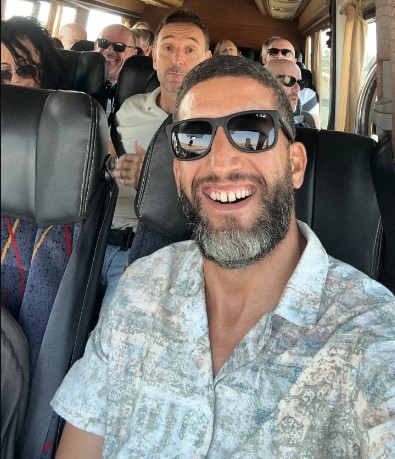
Official licensed guide, Moroccan Ministry of Tourism, licence No. 2898. He can help you fit Chefchaouen into a wider route with the right number of nights.
Ask on WhatsAppThis guide is written by Moroccan Travel Trips, operated by PROMYTHIC TOURS SARL AU, a local agency offering licensed tourist guide services in Morocco. For a route built around your dates, see plan your trip.