Holidays to Morocco
Where Ancient Worlds
Come Alive
Spice-soaked medinas, vast golden dunes, cobalt-painted alleys, and Atlantic coastlines — Morocco is not one destination but many worlds layered into one.
Close your eyes for a moment. Picture the scent of cumin and rose water drifting through a narrow medina alley at dusk. The sound of a muezzin’s call echoing off centuries-old carved plaster. The sight of a million stars spilling over a silent Saharan dune. That is Morocco — a country that doesn’t just offer a holiday but a complete sensory re-calibration. It sits a short flight from Europe, yet it feels like stepping into an entirely different dimension of colour, texture, and time.
Positioned at the crossroads of Africa, the Arab world, and Berber civilisation, Morocco has long seduced travellers with its extraordinary contrasts. In a single week you can wander the UNESCO-listed medina of Fès, ride a camel across Saharan sand seas, surf Atlantic waves near Taghazout, and sip mint tea on a rooftop terrace in Marrakech. Few countries pack so much variety into such an accessible package.
This guide is your definitive planning resource — written by people who have slept under canvas in Merzouga, bargained for argan oil in Essaouira, and hiked to the summit of Toubkal. Whether you are planning your first Moroccan adventure or returning for more, everything you need to know lives right here.
Quick fact: Morocco is just 3 hours from London, 2.5 hours from Paris, and ~9 hours from New York. No jet lag, no long-haul exhaustion — yet a world away from ordinary. Find out exactly where Morocco is located →
Best Time for Holidays in Morocco
Morocco is a year-round destination, but smart travellers know that timing is everything. The country spans climatic zones — coastal Atlantic breezes, high-altitude alpine cold, and bone-dry Saharan heat — which means there is always a perfect season somewhere, and the best time for your holiday depends entirely on where you plan to go.
SPRING
March – MayThe single best season for most of Morocco. Wildflowers carpet the Atlas foothills, temperatures are ideal everywhere, and the desert is warm but not brutal.
★ Best overall: EverywhereSUMMER
June – AugustAvoid the interior and the desert (40°C+). Head to the Atlantic coast — Agadir, Essaouira, Taghazout — for breezy, sun-drenched beach days.
★ Best for: Coast & SurfAUTUMN
Sept – NovA rival to spring. The summer crowds dissipate, the light turns golden, prices drop, and Marrakech and Fès come alive again with comfortable temperatures.
★ Best for: Cities & DesertWINTER
Dec – FebSouthern Morocco and the Sahara are glorious — warm sunny days, cold starlit nights. Snow covers Toubkal for skiing. The coast stays mild at 18–20°C.
★ Best for: South & SaharaRamadan note: Travelling during Ramadan is a unique and deeply immersive cultural experience — evenings explode with life after Iftar. However, restaurant hours change and some tourist sites close early. If your trip overlaps, lean into it rather than around it.
Top Destinations: Where to Go in Morocco
Morocco’s diversity is staggering. From Roman ruins to Saharan dunes, from surf breaks to UNESCO medinas — every corner of the country rewards the curious traveller. Here are the destinations that belong on every Moroccan holiday itinerary.
🏛 The Imperial Cities
Four cities once served as Morocco’s royal capitals — each completely different in character, each utterly unmissable. Together they form the backbone of the classic Moroccan itinerary. Discover more in our full list of cities in Morocco →
Marrakech
The Red City pulses at a frequency all its own. Djemaa el-Fna square transforms from a food market to an open-air theatre after dark. The Bahia Palace, the souks, and the Majorelle Garden each demand full hours of wandering.
Fès
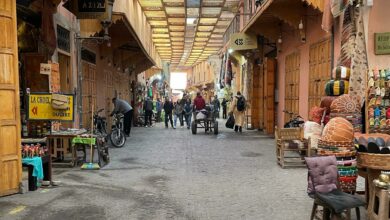
The world’s largest living medieval city and Morocco’s cultural soul. Fès el-Bali — its ancient medina — is a labyrinth of 9,000 alleyways, ancient madrasas, and the famous open-air tanneries that have been dyeing leather the same way since the 11th century.
Rabat & Meknès
Rabat, the modern capital, blends Andalusian gardens with the ancient Hassan Tower and vast Almohad walls. Meknès, its quieter imperial sibling, rewards those who venture beyond the tourist trail with breathtaking gates and uncrowded medina streets.
Chefchaouen
Painted in every shade of blue imaginable, Chefchaouen is arguably Morocco’s most photographed city — and it still manages to feel unhurried and genuine. Perched in the Rif Mountains, it’s a photographer’s dream and a hiker’s gateway.
Merzouga & the Sahara
The Erg Chebbi dunes near Merzouga rise up to 150 metres and glow amber-red at sunrise. Sleep in a luxury desert camp, ride camels at dusk, and listen to Gnawa music beneath an absurdly star-filled sky. This is bucket-list Morocco at its finest.
Essaouira & Agadir
Essaouira’s windswept ramparts, vibrant arts scene, and fresh seafood make it the most soulful beach town in Morocco. Agadir offers a more polished resort experience with a beautiful bay, long sandy beach, and strong windsurfing conditions.
Atlas Mountains & Imlil
The High Atlas is home to Jbel Toubkal — North Africa’s highest peak at 4,167 m — as well as Berber villages, walnut groves, and the dramatic Aït Benhaddou kasbah (a UNESCO site and Game of Thrones filming location).
Taghazout
Once a quiet fishing hamlet, Taghazout is now Africa’s premier surf destination. Consistent right-hand point breaks, a mellow vibe, yoga retreats, and fresh fish tagines — it’s the perfect blend of activity and absolute relaxation.
Types of Holidays in Morocco
One of Morocco’s greatest strengths is its versatility. It can be as rough-and-ready or as extravagantly luxurious as you choose. Here is how to shape the trip around your travel style.
LUXURY HOLIDAYS
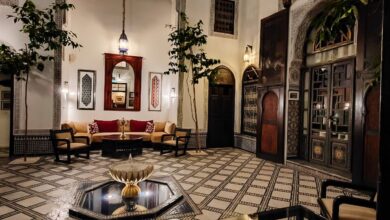
Morocco’s luxury scene is world-class and genuinely affordable compared to European equivalents. Sleep in 14th-century riads with private courtyards and rooftop plunge pools in Marrakech. Book a five-star desert camp in Merzouga with private canopied beds and gourmet Moroccan dinners under the stars.
Riads · Desert Camps · Spa RetreatsFAMILY HOLIDAYS
Children are genuinely adored in Morocco and welcomed everywhere. Kids love camel rides, quad biking the dunes, spotting monkeys in Azrou cedar forests, and the theatrics of Djemaa el-Fna’s snake charmers. Agadir’s all-inclusive resorts offer a gentle introduction to the country.
Agadir · Desert · MarrakechADVENTURE & BACKPACKING
Summit Toubkal in two days from Imlil. Trek multi-day routes through Berber villages in the M’Goun massif. Sandboard Erg Chebbi’s dunes at dawn. Morocco rewards the independent traveller with exceptional value — budget accommodation, cheap local transport, and food that costs almost nothing from market stalls.
Toubkal · M’Goun · Sahara SafariCOUPLES & HONEYMOONS
There is perhaps no more romantic destination in the world than Morocco for couples. A private riad in Fès with a fireplace in winter, a sunset camel ride into golden dunes, a candlelit dinner on an Essaouira rampart — the country conspires to make every moment feel cinematic and intimate.
Fès · Merzouga · EssaouiraWELLNESS & RETREATS
The hammam culture is ancient and restorative — a traditional steam bath, exfoliation, and argan oil massage will leave you feeling reborn. Taghazout hosts world-class yoga and surf retreats throughout the year. The Atlas Mountains offer silent, clean-air escapes that are deeply grounding.
Hammam · Yoga · Atlas RetreatsPHOTOGRAPHY HOLIDAYS
Chefchaouen’s blue labyrinth. The tanneries of Fès. The Ksar of Aït Benhaddou at golden hour. Erg Chebbi at first light. Morocco is a photographer’s obsession — every corner is a frame. Dedicated photography tours are available through most major cities.
Chefchaouen · Fès · DesertSuggested Morocco Itineraries
How long you have determines what you can see. These itineraries have been road-tested by experienced guides and represent the most rewarding ways to spend your time in Morocco.
DAYS 1–2
Marrakech — The Red City
Arrive, settle into your riad, and give yourself two full days to absorb the Djemaa el-Fna, the Bahia Palace, the Majorelle Garden, and the intricate souks. Eat a lamb tagine. Visit a hammam. Don’t rush.
DAY 3
Aït Benhaddou & Ouarzazate
A scenic drive through the Atlas via the dramatic Tizi n’Tichka pass. Stop at the UNESCO kasbah of Aït Benhaddou — the backdrop for Gladiator and Game of Thrones — before overnighting in Ouarzazate.
DAYS 4–5
Merzouga & the Sahara
Drive through the Draa Valley, past ancient palmeries and kasbahs, to the Erg Chebbi dunes. Mount your camel at sunset, arrive at your desert camp, eat a traditional dinner, and sleep beneath more stars than you’ve ever seen.
DAY 6
Fès — Ancient Medina
Drive or fly north to Fès. Spend the afternoon arriving and orienting yourself. Find the rooftop tannery viewing platform before dusk — the colours of the dye vats are extraordinary in afternoon light.
DAY 7
Fès — Deep Medina Day
A full day inside Fès el-Bali. Visit the Bou Inania Madrasa, the ancient Kairaouine Mosque (the world’s oldest university), the mellah, and the brass-workers’ souk. Depart from Fès or Marrakech.
DAYS 1–2
Casablanca & Rabat
Fly into Casablanca. Visit the breathtaking Hassan II Mosque — the world’s third-largest — before heading up the coast to Rabat, Morocco’s dignified and underrated capital.
DAYS 3–4
Chefchaouen & the Rif
Two nights in the Blue Pearl. Wander the painted streets, hike to the Spanish Mosque for panoramic views, and day-trip to the ancient ruins of Lixus.
DAYS 5–6
Fès — Two Full Days
Give Fès the time it deserves — two days to properly explore the medina, the tanneries, the madrasas, and the souks without rushing a single alley.
DAYS 7–8
Sahara Desert
Drive south via Ifrane and the Middle Atlas to Merzouga. Two nights in the desert — one in the dunes, one at a guesthouse on the dune edge for more flexibility.
DAYS 9–10
Marrakech — Grand Finale
Drive or fly back to Marrakech via the Draa Valley. Spend your final days living the good life in the Red City — hammam, rooftop dinners, last-minute souvenir shopping, and a sunset cocktail on a terrace overlooking the Koutoubia Minaret.
DAYS 1–3
Marrakech — Full Immersion
Three days to truly sink into Marrakech: the Saadian Tombs, the El Badi Palace, a full hammam session, an evening cooking class, and a day trip to the Ourika Valley with its waterfalls and Berber villages.
DAYS 4–5
Atlas Mountains & Imlil
Two nights based in Imlil. Day-hike to the Toubkal base camp for sweeping views, or attempt the full summit with a guide. The Berber hospitality here — simple guesthouses, home-cooked meals, apple orchards — is genuinely moving.
DAYS 6–8
Draa Valley & Sahara
Drive south along the Route des Kasbahs — one of the world’s great road trips — stopping at Skoura, the roses of Kelaat M’Gouna (in season), and on to three nights in the Sahara environs.
DAYS 9–10
Fès — Cultural Capital
Fly or drive north to Fès. Two immersive days exploring the world’s most intact medieval city. Take a workshop to learn traditional craft: zellij tile-work, zellige pottery, or leather-working.
DAYS 11–12
Chefchaouen
Two nights in the blue city. Day-hike to the Talassemtane National Park waterfalls, eat cheap and excellent mountain food, shop for hand-woven wool blankets, and do absolutely nothing for an afternoon. Morocco allows this.
DAYS 13–14
Essaouira — Coastal Wind-Down
Drive or bus to the Atlantic coast for a two-night wind-down. Fresh grilled fish on the harbour, rampart walks at sunset, a final hammam, and a slow Sunday morning in a seafront café before your flight home.
Essential Travel Tips for Morocco
Morocco is straightforward to travel once you know the basics. These are the questions every first-timer should have answered before they land.
🛂 VISA REQUIREMENTS
Citizens of the USA, UK, EU, Canada, Australia, and most Western nations do not require a visa for stays up to 90 days. You simply need a valid passport (at least 6 months’ validity) and a return ticket.
Citizens of some countries do need a visa — always check current requirements with the Moroccan embassy in your home country well in advance of travel.
💵 CURRENCY & BUDGET
Morocco uses the Moroccan Dirham (MAD). The dirham is a closed currency — you can only exchange money inside Morocco, not before you arrive.
- ATMs are widely available in cities
- Cards accepted at hotels and large restaurants
- Cash is essential in medinas, markets, and rural areas
- Budget: £40–60/day | Mid-range: £80–130/day | Luxury: £200+/day
🛡 SAFETY
Morocco is one of Africa’s safest countries for tourists. It has a professional tourist police force (Brigade Touristique) present in all major medinas.
- Petty scams (fake guides, aggressive touts) exist in Marrakech and Fès — stay confident, be polite but firm
- Solo female travellers report generally positive experiences with basic precautions
- Avoid political commentary in public
👗 CULTURE & DRESS
Morocco is a Muslim country and modest dress is genuinely appreciated, particularly in medinas, mosques, and rural areas.
- Cover shoulders and knees in cities and religious sites
- Bikinis are fine on hotel pool decks and Atlantic beaches
- Remove shoes when entering homes and some shops
- Ask before photographing people — a simple smile and gesture goes a long way
🍽 MOROCCAN FOOD
The cuisine is extraordinary and utterly integral to the Moroccan experience. Do not leave without eating:
- Tagine — slow-cooked lamb, chicken, or fish with preserved lemon and olives
- Couscous — the Friday dish, shared communally
- Pastilla — flaky pigeon or chicken pie dusted with icing sugar
- Harira — the warming tomato and lentil soup
- Atay — the sweet, powerfully minty Moroccan tea poured from a height
🚌 GETTING AROUND
Morocco has excellent internal connections:
- Train (ONCF) — fast, comfortable, and cheap between major cities
- CTM / Supratours Buses — reliable long-distance buses reaching the south
- Grands Taxis — shared taxis for inter-city hops, very local
- Domestic flights — Royal Air Maroc connects main cities
- Private driver — best value for families and desert routes
Connectivity tip: Buy a local SIM card at the airport (Maroc Telecom or Orange) for around £5 — you’ll get generous data allowances and coverage in most areas including surprisingly good signal in parts of the Sahara.
Morocco Holiday Budget Guide
Morocco is genuinely excellent value for money — you get extraordinary quality at a fraction of what it would cost in comparable European destinations. Here’s what to budget per person per day (approximate figures in GBP):
| Category | Budget Traveller | Mid-Range | Luxury |
|---|---|---|---|
| Accommodation (per night) | £15–30 (hostel/guesthouse) | £50–100 (riad) | £150–400 (luxury riad/resort) |
| Food (per day) | £8–15 (street food/local) | £20–40 (restaurant) | £60–120 (fine dining) |
| Transport (per day) | £5–10 (bus/taxi) | £15–35 (private driver) | £50–100+ (chauffeured) |
| Activities (per day) | £5–15 (sites & medina) | £20–50 (guided tours) | £80–200 (excl. experiences) |
| Desert Camp (1 night) | £40–60 (basic tent) | £80–150 (comfortable) | £200–500 (5-star) |
| Estimated Daily Total | £35–60/day | £80–140/day | £200–450/day |
Frequently Asked Questions
The questions that come up in every conversation about planning a Moroccan holiday — answered honestly and directly.
Is Morocco cheap for a holiday?
Compared to Western Europe, Morocco is significantly more affordable. Budget travellers can live comfortably on £35–50 per day including accommodation, food, and transport. A mid-range trip — nice riads, guided excursions, good restaurants — typically costs £80–140 per day. What makes Morocco exceptional value is the quality-to-price ratio: a luxury riad in Fès that would cost £500/night in Paris can be found for £80–120 here.
How many days are enough for Morocco?
Absolute minimum: 7 days to see the highlights (Marrakech, Sahara, one imperial city). The ideal is 10–14 days, which allows you to add the coast, Chefchaouen, and the Atlas Mountains without feeling rushed. Morocco rewards slow travel — the moments between the sights are often the most memorable, so don’t try to pack too much into a short window.
Can you drink alcohol in Morocco?
Yes. Alcohol is legally available in Morocco and is sold in licensed restaurants, hotels, supermarkets (Marjane, Carrefour), and some specialist wine shops. Morocco produces its own wines — Volubilia and Ait Souala are worth trying. That said, drinking in public or near religious buildings is culturally disrespectful and should be avoided. Stick to licensed venues and you’ll have no issues whatsoever.
Is it safe to drink tap water in Morocco?
The short answer is no — stick to bottled water. Morocco’s tap water is technically treated and safe by local standards, but travellers’ stomachs often react poorly to the different mineral composition. Bottled water is cheap and widely available everywhere. Use it for drinking and brushing teeth, especially in rural areas and small guesthouses.
Is Morocco safe for solo female travellers?
Hundreds of thousands of women travel solo through Morocco every year without incident. The main challenge is occasional verbal harassment in medinas, particularly in tourist-heavy areas of Marrakech. Practical tips that work well: dress modestly, walk with confidence, engage only with people you choose to engage with, and stay in well-reviewed riads and guesthouses. Once you find your rhythm — usually within 24 hours — Morocco feels remarkably welcoming and safe.
Do I need a visa to visit Morocco?
Citizens of the USA, UK, all EU member states, Canada, Australia, New Zealand, and most other Western nations do not need a visa for stays of up to 90 days. You’ll need a valid passport with at least 6 months’ validity from your date of entry, and proof of onward travel is sometimes requested at the border. If your nationality requires a visa, apply well in advance through the Moroccan embassy or consulate in your country.
What language do people speak in Morocco?
Morocco has several languages in daily use. Darija (Moroccan Arabic) is the mother tongue of most Moroccans. French is widely spoken in business, education, and tourism — it’s your most useful second language. Spanish is common in the north (Tangier, Chefchaouen, Tetouan). Tamazight (Berber) is spoken in the Atlas and desert regions. In tourist areas, you’ll frequently encounter English-speaking guides, hotel staff, and shop owners.
Ready to Experience
Morocco First-Hand?
Skip the guesswork. Book your personalised Moroccan adventure directly with a fully licensed, English-speaking local guide who has been showing visitors the real Morocco for years.
Specialising in Personalised Itineraries