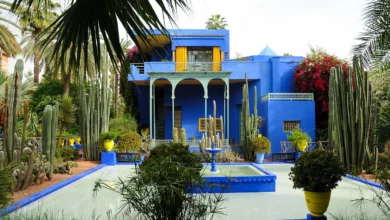
If you’ve ever planned a trip to Morocco and wondered what is a riad in Morocco exactly, you’re not alone. The word appears on almost every travel site, hotel listing, and guidebook — yet its true meaning goes far beyond a stylish guesthouse. A riad is one of the most distinctive architectural forms in the Islamic world: a private residence built around an interior courtyard, often featuring a garden or fountain at its heart. Understanding what a riad is helps you appreciate not just where you’ll be sleeping, but the centuries of craftsmanship, urban philosophy, and cultural tradition that shaped it. This article walks you through everything worth knowing — from the word’s Arabic origins to the design details that make each riad unique, and what to look for when choosing one for your stay.
The Meaning and Origins of the Word “Riad”
The word riad (also spelled riyad) comes from the Arabic روض (rawdha), meaning garden or paradise. In classical Arabic literature, the term evoked lush, enclosed spaces — a green refuge sheltered from the harsh outside world. This idea of the interior as sanctuary is central to understanding the entire concept.
Architecturally, a riad refers to a traditional Moroccan house organized around a central open-air courtyard (wast al-dar). The layout dates back to Roman and Andalusian influences, carried into North Africa by Arab settlers and Moorish refugees from Al-Andalus during the 15th and 16th centuries. Cities like Fes, Marrakech, Meknes, and Chefchaouen preserve thousands of these structures within their ancient medinas.
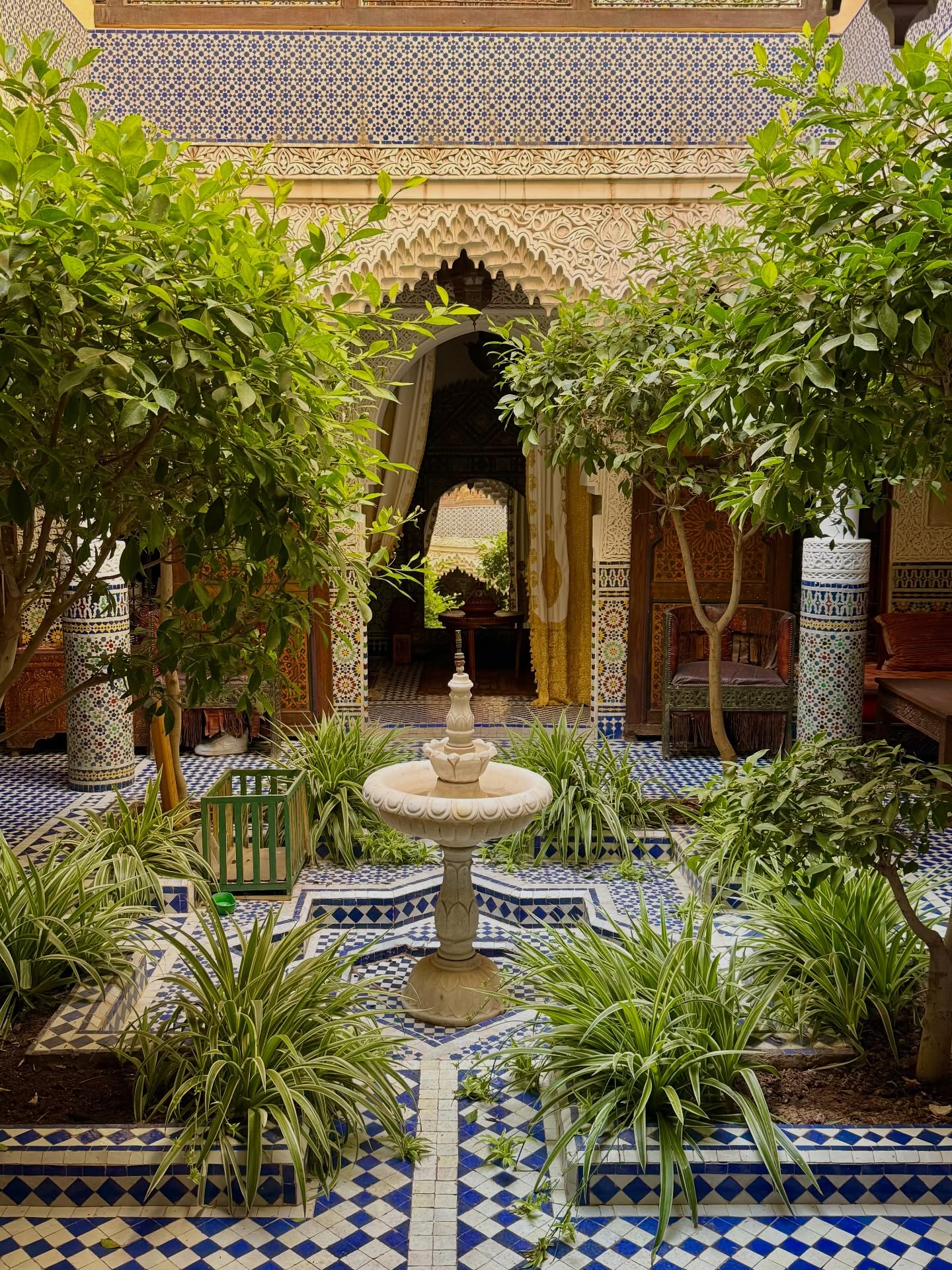
The central courtyard — the soul of every Moroccan riad
The Architecture of a Traditional Moroccan Riad
The defining characteristic of a Moroccan riad is its inward-facing design. Where European townhouses typically open outward through large windows and decorative façades, a riad presents a plain, almost bare exterior wall to the street. Everything of value is hidden inside — a deliberate expression of the Islamic notion of privacy (hurma) and the idea that beauty is reserved for those who are welcomed in.
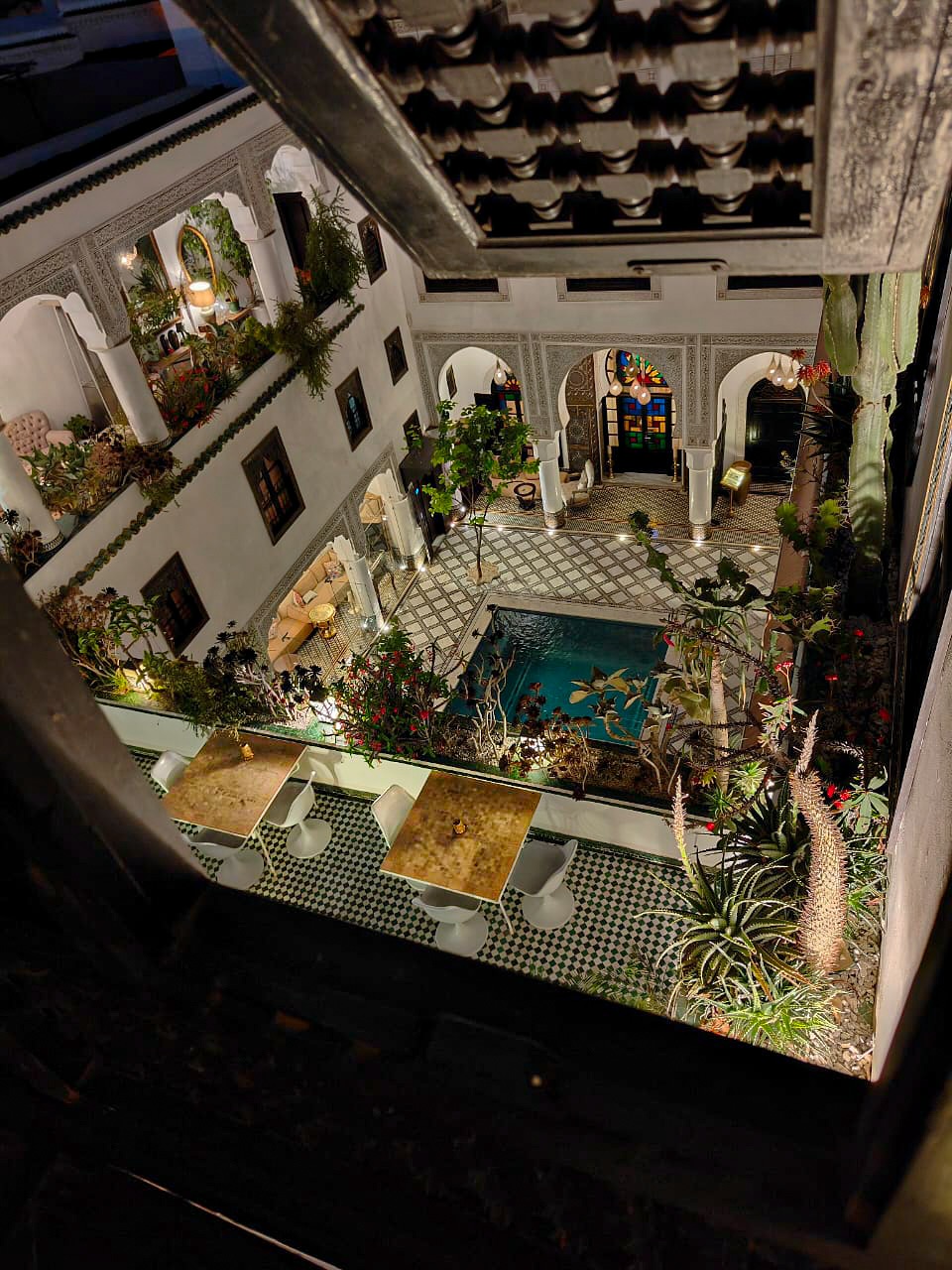
Step through the narrow entrance door and the experience reverses entirely. The courtyard is the spatial and symbolic heart of the home, designed to draw in light, air, and life. Rooms are arranged on two or three floors around this central space, each opening onto an arched gallery that frames the courtyard below.
Key Architectural Elements
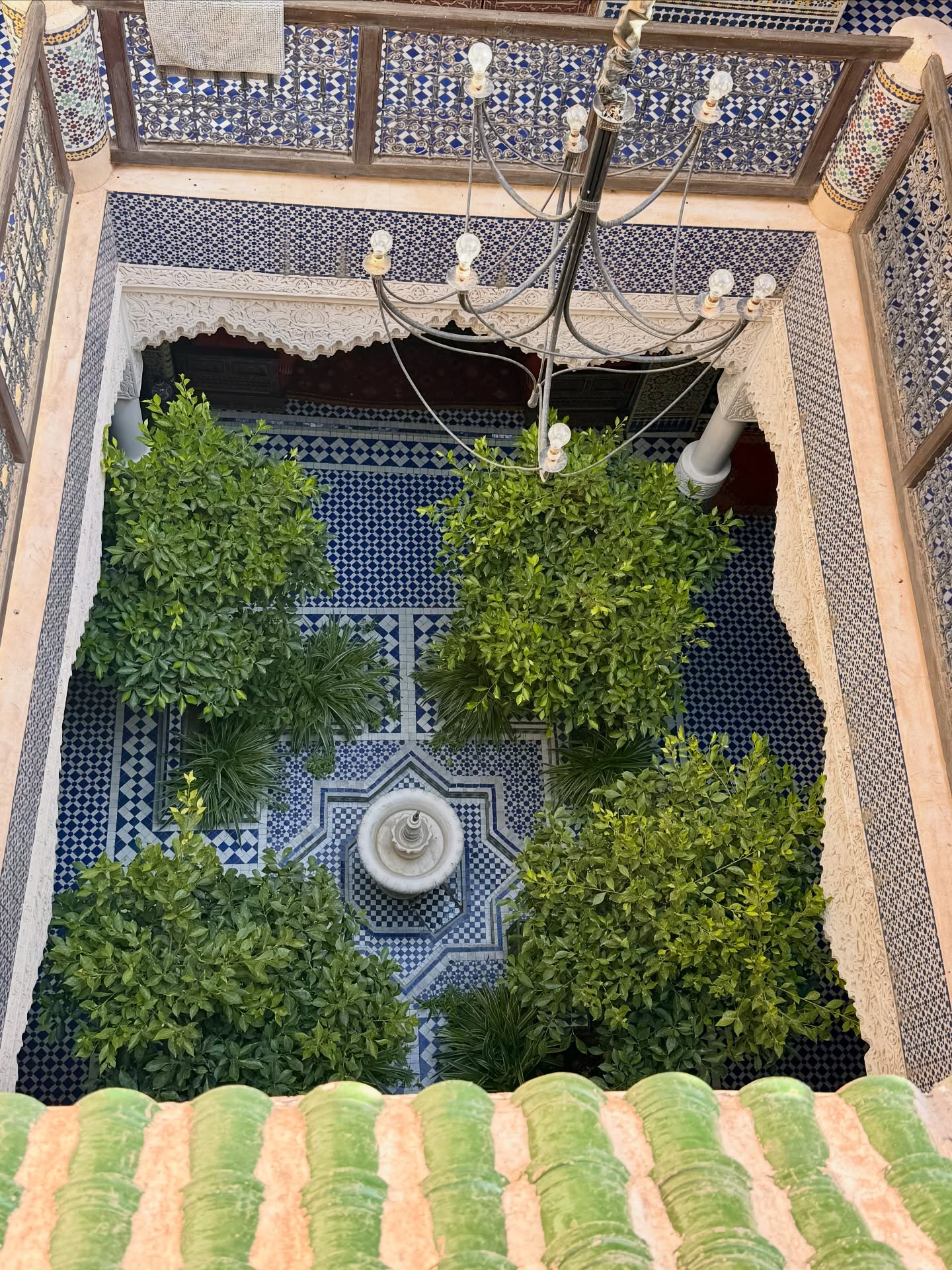
The open-air wast al-dar regulates temperature, brings natural light into deep rooms, and anchors the entire spatial composition. A fountain or small garden is traditionally placed at its center.
Hand-cut geometric ceramic tiles covering floors, fountains, and lower walls. Each piece is individually chiseled and assembled into intricate interlocking patterns — a craft requiring years of apprenticeship.
Lime plaster polished to a smooth, almost lacquered finish. Tadelakt is naturally waterproof and was traditionally used in hammams and bathrooms. Its warm ochre tones are iconic in Moroccan interiors.
Intricately carved cedarwood — sourced from the Middle Atlas mountains — forms elaborately painted ceilings and door frames, adding warmth and acoustic intimacy to grand reception rooms.
Upper wall surfaces are frequently decorated with deeply carved floral and geometric plaster panels. The level of relief and detail was historically a direct reflection of the owner’s wealth and status.
Most riads feature a flat rooftop (terrasse) where residents could take the evening air privately. Today, these terraces are often shaded with pergolas or lounging areas offering medina views.
Riad vs. Dar: Understanding the Difference
The terms riad and dar are sometimes used interchangeably in the tourism industry, but they are technically distinct. A dar (Arabic for “house”) also has an interior courtyard, but that courtyard is typically covered or fully enclosed — it functions more as an atrium. A true riad has an open-sky courtyard with a garden, trees, or a functional fountain fed by running water.
In practice, the distinction has blurred considerably as renovated guesthouses adopt the riad label for marketing purposes. When evaluating accommodation, it’s worth looking at the actual courtyard photos rather than relying solely on the name.
| Feature | Riad | Dar |
|---|---|---|
| Courtyard type | Open-air, sky-facing | Covered or enclosed atrium |
| Garden / fountain | Central feature (required) | Optional or absent |
| Literal meaning | Garden / paradise (Arabic) | House / home (Arabic) |
| Natural light | Direct sunlight into courtyard | Filtered or artificial light |
| Typical size | Medium to large | Small to medium |
| Historical use | Wealthy merchant families | Artisan or middle-class families |
The History of Riads in Moroccan Cities
Riads were not designed as hotels or guesthouses. For centuries, they functioned as private family compounds — multi-generational residences where extended families lived, worked, and maintained their social world behind a single, unassuming street door. The most opulent examples belonged to prosperous merchants, scholars, and local governors whose wealth was invisible to passersby.
The medinas that contain these structures were largely frozen in time during the French Protectorate period (1912–1956), when colonial urban planners built new Europeanized quarters (villes nouvelles) outside the old city walls rather than demolishing what existed. This inadvertently preserved the medina fabric — including thousands of traditional riads — that might otherwise have been swept away by modernization.
By the 1990s, however, many riads had fallen into serious disrepair. Families had left the medinas for modern apartments, and the old homes were subdivided, stripped of their decorative elements, or simply abandoned. It was largely foreign buyers — particularly French, British, and Italian — who began purchasing and restoring these properties from the early 2000s onward, transforming them into boutique guesthouses and driving what became known as the “riad boom.”
Riads as Boutique Accommodation Today
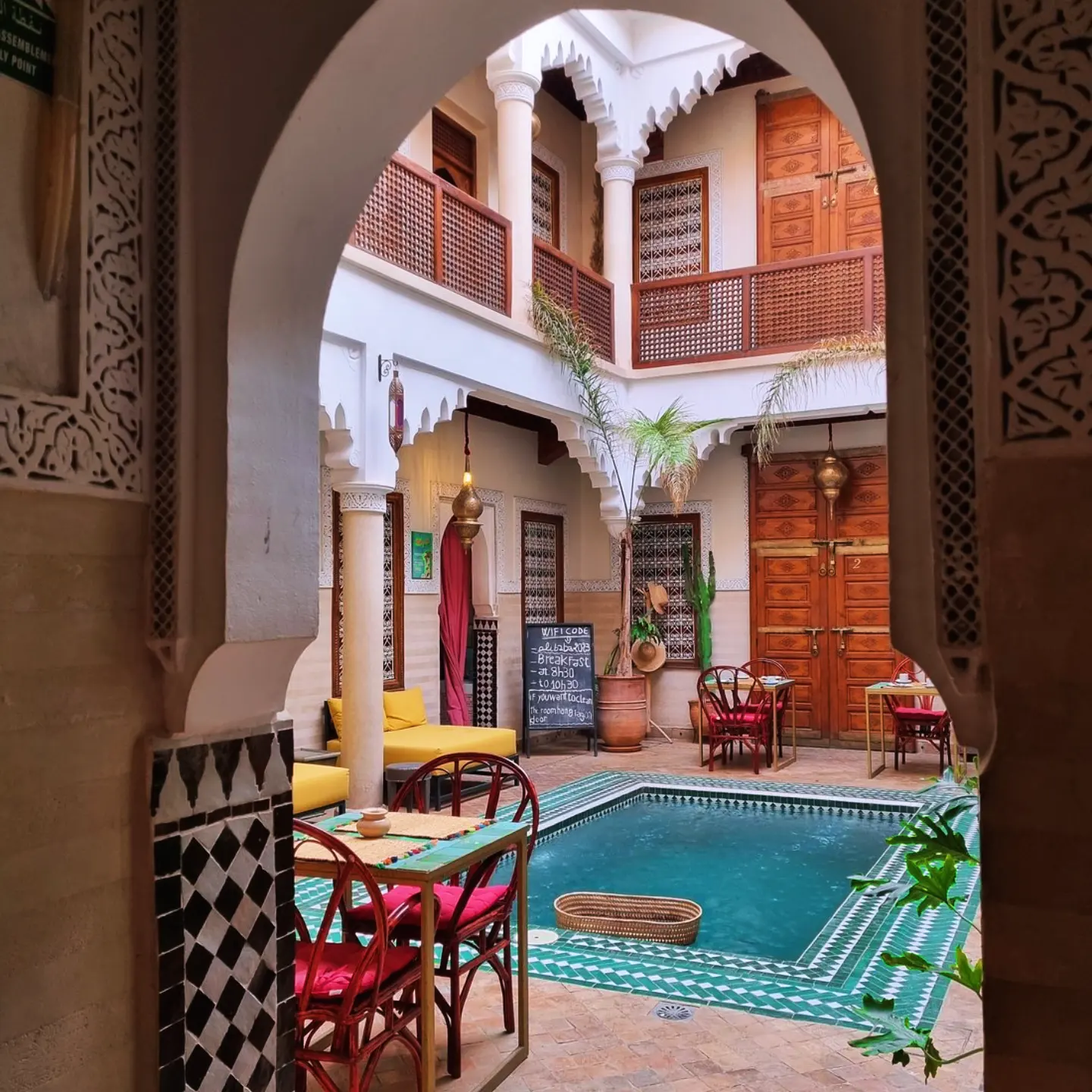
Staying in a riad is now one of the most sought-after experiences in Moroccan travel. The format suits those who prefer small, personal guesthouses over large hotels: most riads have between 4 and 14 rooms, staff is limited and attentive, and the architecture itself becomes part of the experience in a way that no modern hotel can replicate.
Marrakech has the largest and most internationally visible riad scene, with hundreds of options ranging from entry-level guesthouses to ultra-luxury properties. Fes, home to the world’s oldest intact medieval medina, offers riads with a quieter, more scholarly atmosphere. Chefchaouen, Meknes, and Essaouira have their own character as well.
🗺 Explore Riads in Marrakech
The Red City is home to some of Morocco’s most celebrated riads — from historic palaces to intimate contemporary retreats tucked within the ancient medina walls. For a curated overview of what to look for and where to stay, explore our full guide to Riads in Marrakech.
Discover Riads in Marrakech →
What to Expect When Staying in a Riad
The experience is fundamentally different from a conventional hotel. Arrival typically involves navigating narrow, labyrinthine medina lanes — often too narrow for vehicles — until you reach an unmarked wooden door. From there, the transition from chaotic street to serene interior is immediate and, for many visitors, genuinely memorable.
Mornings in a riad tend to center on a generous Moroccan breakfast served in the courtyard or on the terrace: mint tea, msemen flatbreads, amlou (argan oil and almond paste), honey, olives, and fresh fruit. Evening meals can often be arranged in-house, featuring traditional dishes like pastilla, tagine, and harira.
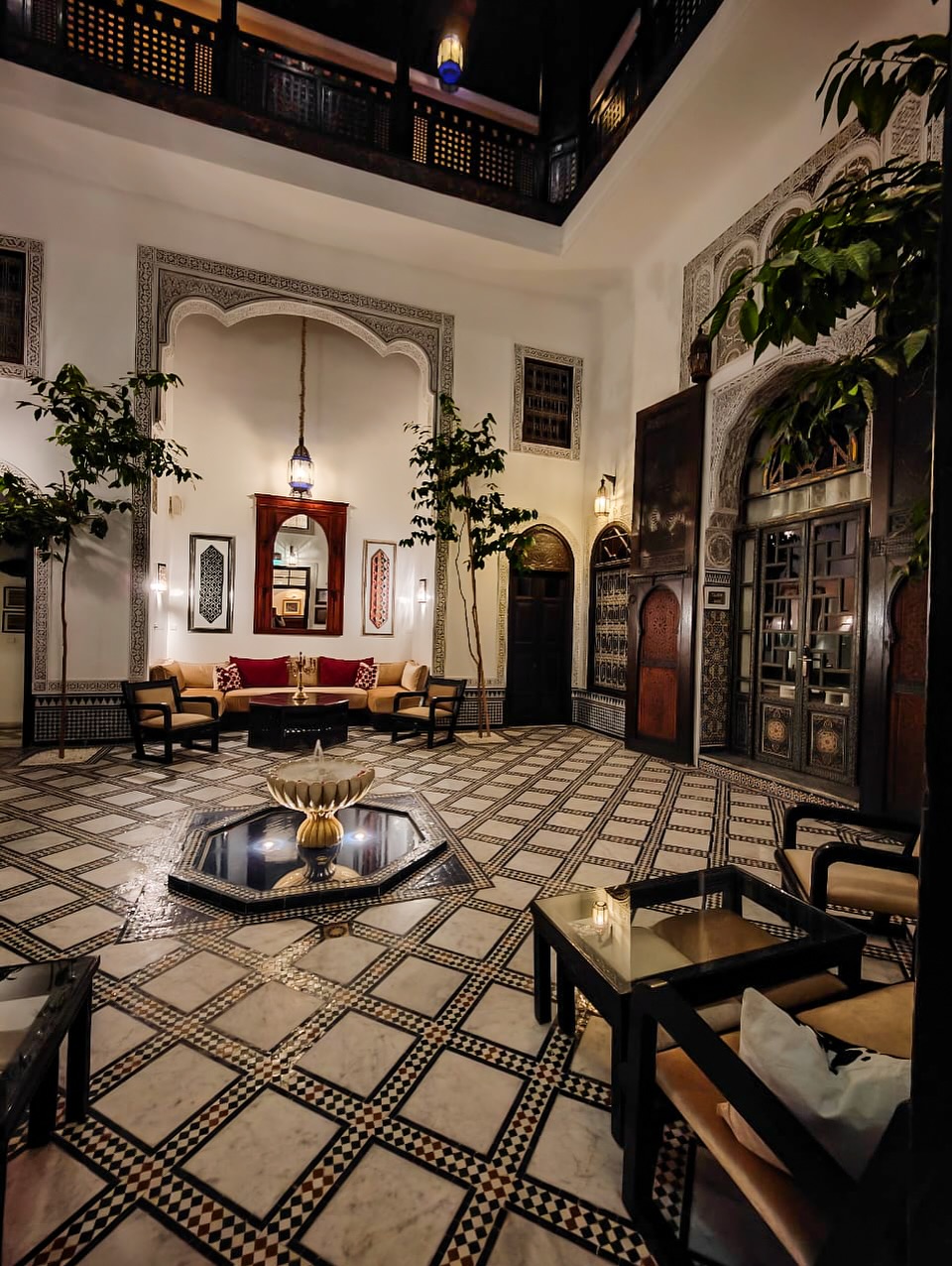
Morning light in a riad courtyard — the quiet heart of medina life
The Craftsmanship Behind Every Riad
One of the things that makes Moroccan riads genuinely distinct from restored heritage properties in other countries is the continued vitality of the craft traditions that created them. Morocco retains active guilds of maâlems — master craftsmen — specializing in zellige tilework, carved plaster, painted cedarwood, and wrought iron. When a riad is restored today, this work is typically carried out by artisans whose techniques are directly descended from those used to build the original structure centuries ago.
Zellige, for example, requires a craftsman to hand-chisel each individual ceramic tile from a larger glazed piece before assembling hundreds or thousands of them into geometric patterns without adhesive — relying purely on fit and mortar. A single courtyard fountain surround can take weeks to complete. This is not a decorative aesthetic applied to a building; it is the building itself.
Choosing the Right Riad for Your Visit
Given the sheer number of options, a few practical distinctions are worth keeping in mind:
| Factor | What to Look For |
|---|---|
| Location in medina | Proximity to main sites matters less than how the neighborhood feels — ask about nighttime noise levels near busy squares like Jemaa el-Fna |
| Courtyard size | Larger courtyards mean more natural light and space; smaller ones can feel more intimate but may be darker |
| Number of rooms | 4–8 rooms means more personal service; 10–14 rooms can feel more like a boutique hotel |
| Ownership & management | Some riads are still family-owned; others are managed by international hospitality groups — service philosophy differs significantly |
| Pool on terrace | Rooftop plunge pools are increasingly common in higher-end riads — useful in summer months when courtyard temperatures can be high |
| Dining options | Check whether meals are offered on-site; many smaller riads do breakfast only, requiring you to dine out for other meals |
Frequently Asked Questions
Understanding what a riad in Morocco truly is transforms how you experience the country. These are not theme-park recreations of a historic aesthetic — they are living structures, many of them several centuries old, maintained through craft traditions that have barely changed. The blank wall facing the street, the unexpected burst of light and color in the courtyard, the silence that settles over a medina riad at night while the city hums outside — these are experiences that have been available to travelers since the riad’s form first emerged. What has changed is simply the door you knock on to enter.