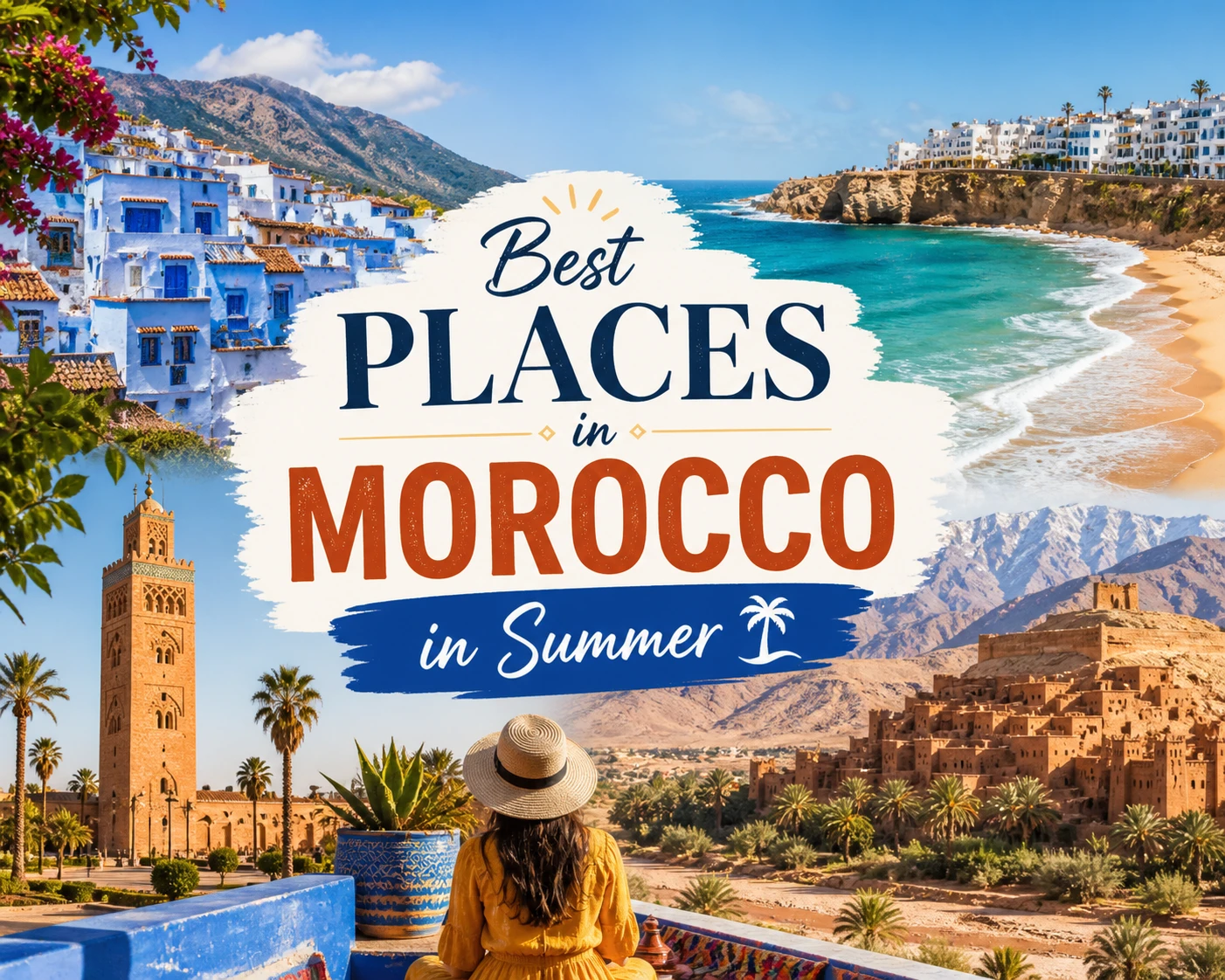
Morocco in summer is a story of contrasts — scorching medinas, cool Atlantic breezes, snow-capped peaks even in July, and coastlines that rival the best in the Mediterranean. If you’re wondering which are the best places to visit in Morocco during summer, this guide cuts through the noise and takes you straight to the destinations that genuinely deliver, whether you’re seeking adventure, relaxation, or pure cultural immersion.
Why Visit Morocco in Summer? ↑ Contents
Summer in Morocco — roughly June through September — is a season that rewards smart travelers. Contrary to popular belief, it isn’t just about fighting the heat. Morocco’s geography is gloriously diverse: the same country that bakes under 40°C in the Sahara offers cool Atlantic shores, cedar forests, and Berber villages where evenings turn genuinely chilly. Knowing which destination suits your comfort level makes all the difference.
If you’re still debating when to go, our guide on the Best Time to Visit Morocco breaks down every season in detail. But for those locked into a summer window, the destinations below are your best bet.
1. Essaouira – Morocco’s Coolest Summer Escape ↑ Contents
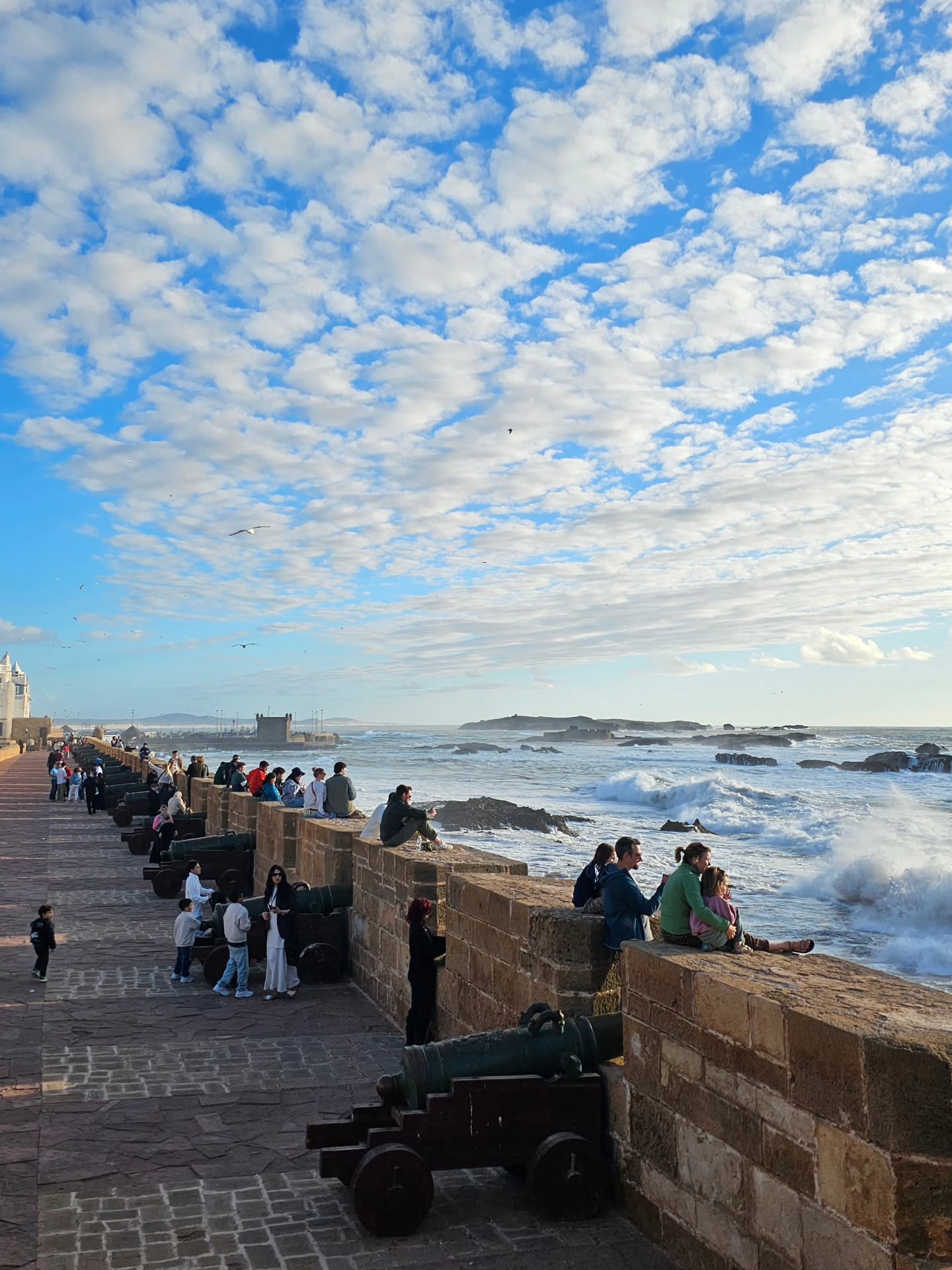
Essaouira is, without exaggeration, one of the finest summer destinations in Morocco. A relentless Atlantic trade wind — the Alizé — keeps temperatures hovering between 20 and 26°C throughout summer, making it a genuinely comfortable escape when the rest of the country swelters. The whitewashed medina, a UNESCO World Heritage Site, is a labyrinth of blue wooden doors, art galleries, and fish stalls piled high with the morning’s catch.
The long sandy beach stretches for miles and is a world-class destination for kitesurfing and windsurfing. Even if you’re not into water sports, simply sitting at a ramparts café with a pot of mint tea while the ocean churns below is an experience that stays with you. Don’t miss the seaside best sunsets in Morocco — Essaouira’s sunsets over the Atlantic are among the most photographed in the country; read more about them in our dedicated guide to best sunsets in Morocco.
2. Agadir – The Resort Capital of Morocco ↑ Contents
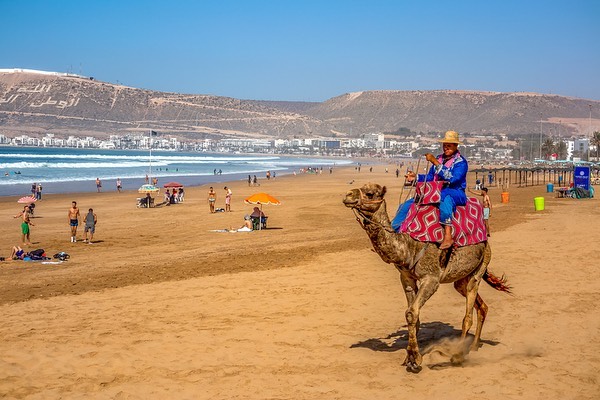
If Essaouira is for bohemian wanderers, Agadir is for families and sun-seekers who want a polished resort experience with a distinctly Moroccan soul. The city sits in a natural bay that shelters it from the harsher Atlantic winds, delivering consistently warm, sunny days — around 27°C in July — with calm waters ideal for swimming.
The 10-kilometre beach promenade is flanked by hotels, restaurants, and surf schools. Beyond the beach, a revitalized souk, restored kasbah, and the Amazigh Heritage Museum add genuine cultural depth. Agadir is also one of the most family-friendly cities in Morocco, with excellent infrastructure and a wide range of accommodation options from budget to ultra-luxury.
3. Chefchaouen – The Blue Pearl of the Rif Mountains ↑ Contents
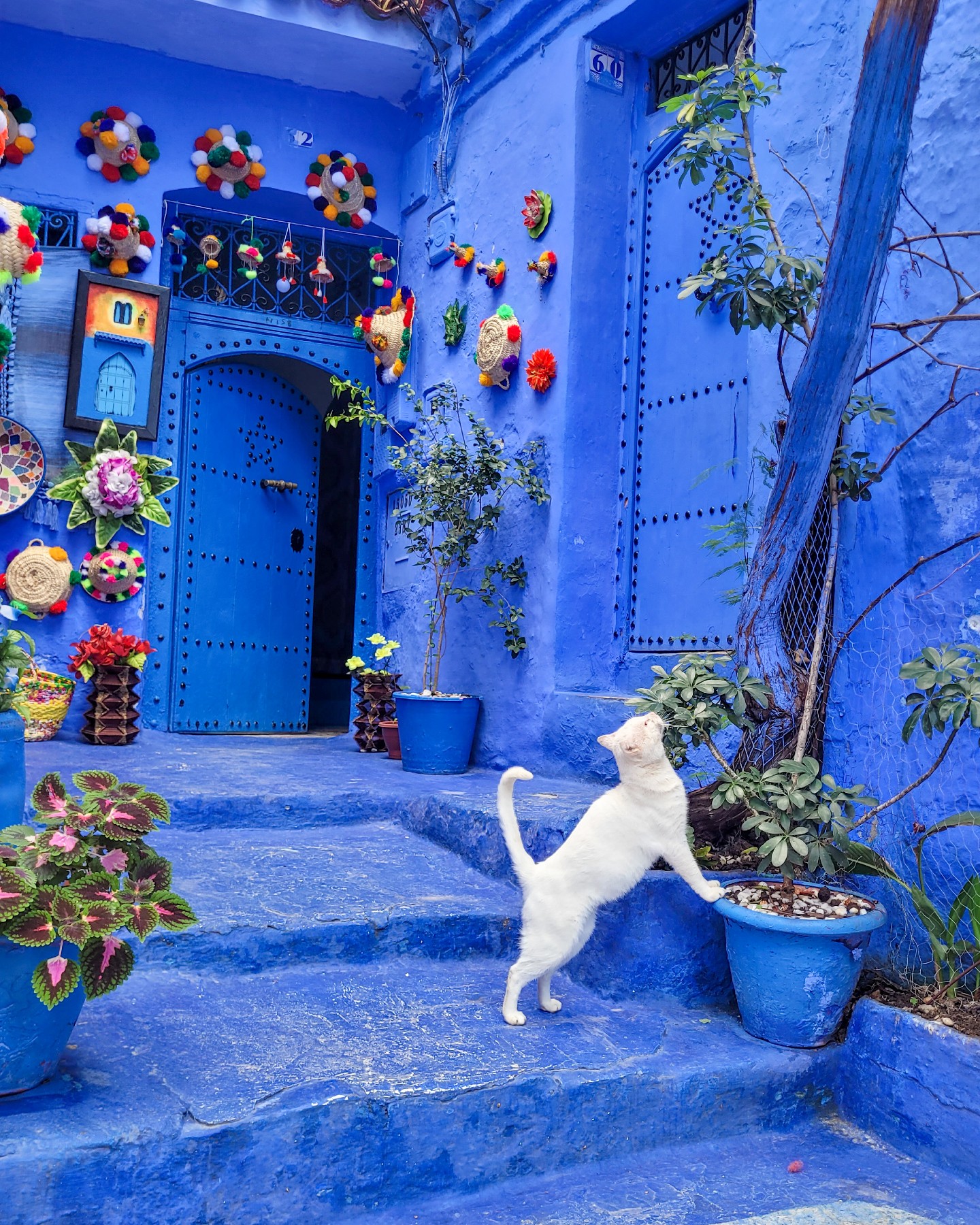
Perched in the Rif Mountains at around 600 metres above sea level, Chefchaouen is one of Morocco’s most visually arresting towns — and one of the most genuinely cool ones during summer. Temperatures here rarely exceed 30°C even in August, and mornings and evenings are refreshingly crisp.
The famous blue-washed medina is a photographer’s dream, but Chefchaouen also offers excellent hiking trails into the surrounding Talassemtane National Park, waterfalls like Cascades d’Akchour, and a laid-back cultural atmosphere that feels worlds away from the tourist rush of Marrakech. It’s one of the most authentic Morocco summer destinations you can choose.
4. Ifrane & the Middle Atlas – Morocco’s Little Switzerland ↑ Contents
Few travelers outside Morocco realize that the Middle Atlas offers some of the most pleasant summer conditions in the country. Ifrane, sitting at 1,665 metres, is nicknamed “Little Switzerland” for its alpine architecture, flower-lined streets, and almost absurd cleanliness. In July and August, daytime temperatures hover around 20–24°C — a world apart from Marrakech’s furnace.
The surrounding Michlifen plateau, cedar forests full of Barbary macaques, and the serene Bin El Ouidane reservoir make this region a superb Morocco summer travel option for those who want nature over nightlife. Nearby Azrou, Immouzer du Kandar, and the source of the Oum Er-Rbia river are equally rewarding day trips.
5. Ouarzazate & Draa Valley – Desert Without the Extreme Heat ↑ Contents
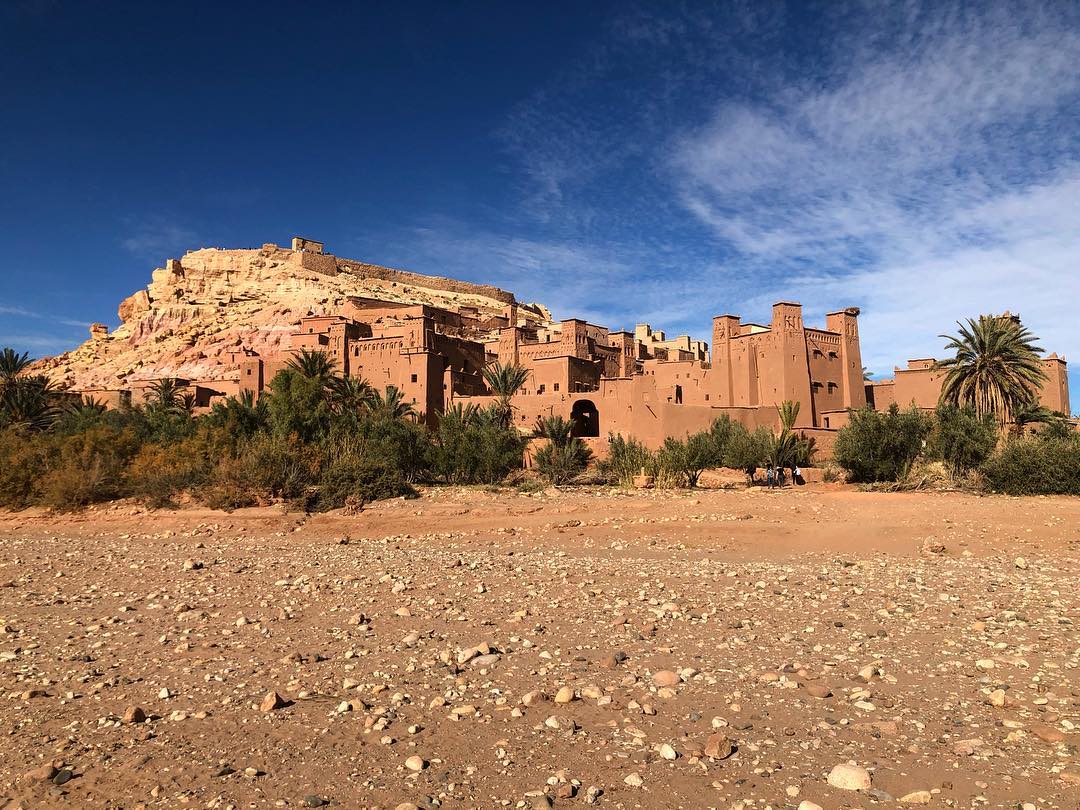
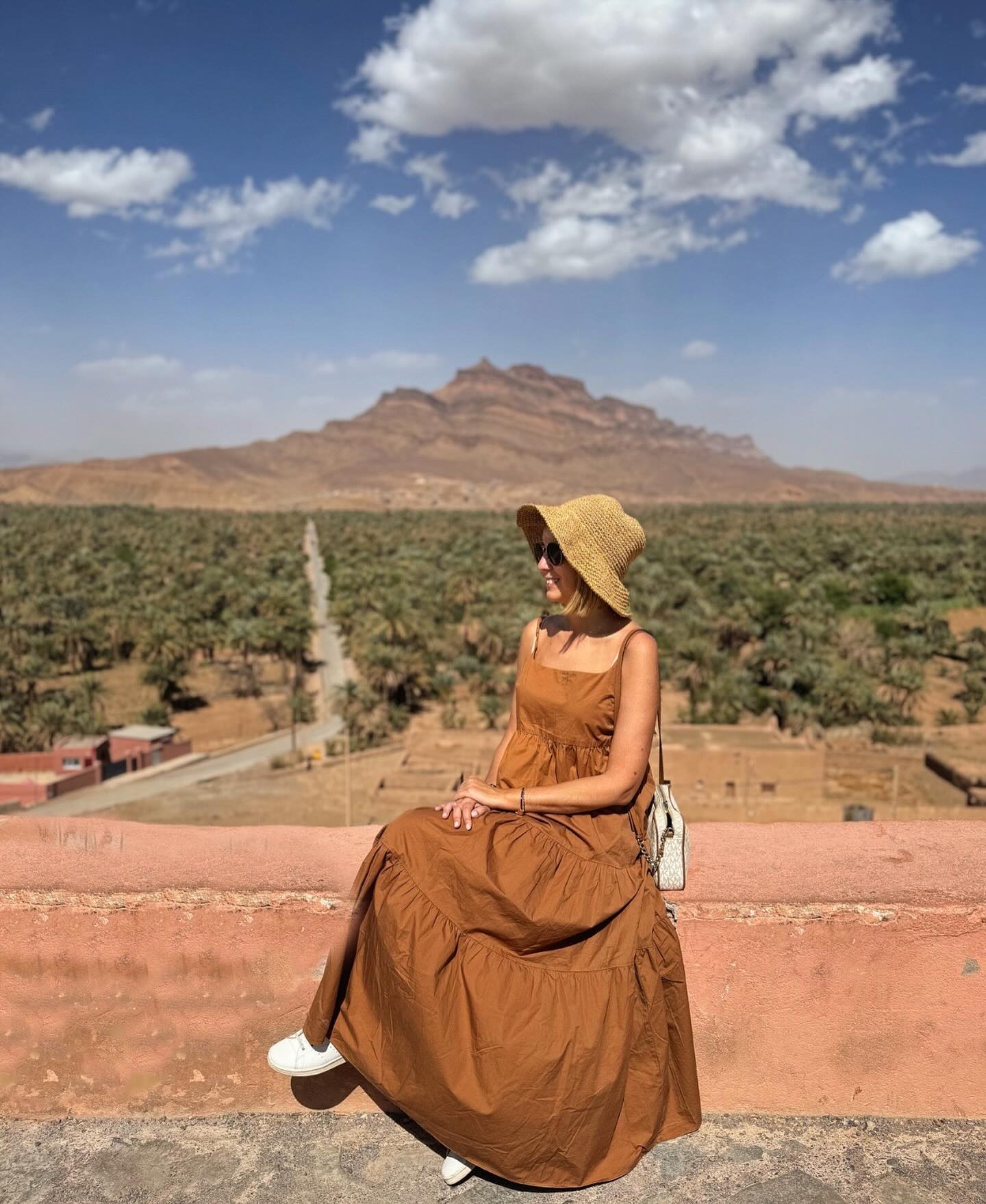
Yes, Ouarzazate is warm in summer — reaching 35°C in the afternoon. But the dry heat here is far more tolerable than the humid heat of coastal cities in the Gulf. More importantly, this is the gateway to some of Morocco’s most spectacular scenery: the UNESCO-listed Aït Benhaddou kasbah, the palm-fringed Draa Valley, and the edge of the Sahara.
The trick is to plan your sightseeing for early mornings and late afternoons, rest during midday, and take advantage of golden-hour light that turns the kasbahs into something from a dream. The famous Draa Valley, with its 150-km palm grove, ancient ksour, and Berber villages, is one of the most cinematic places to visit in Morocco in summer for those who don’t mind the warmth.
6. Saidia – The Mediterranean Gem of Morocco’s North ↑ Contents
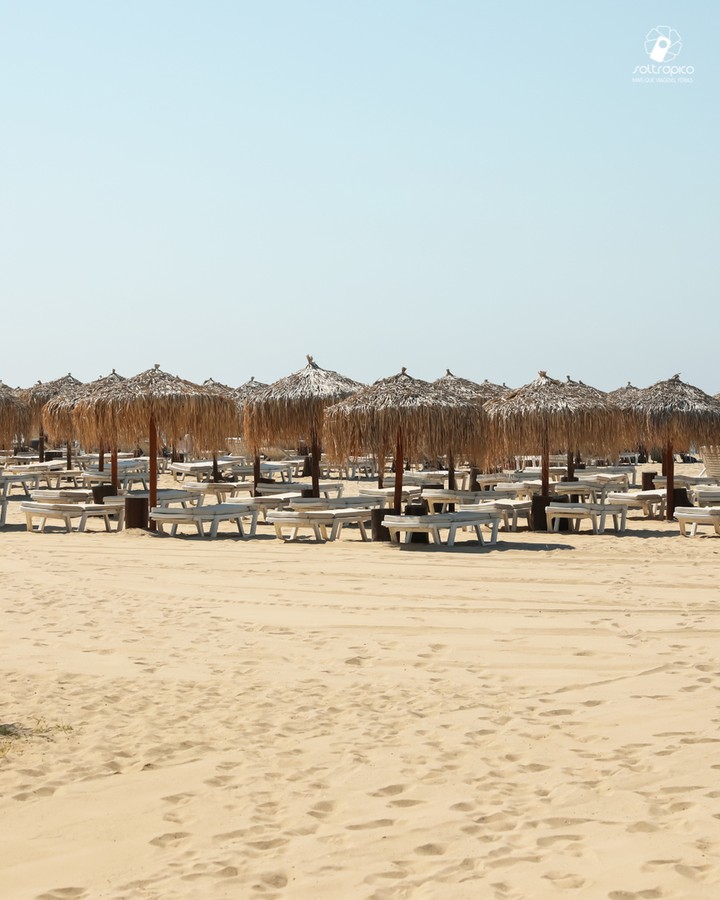
Largely unknown to international tourists but beloved by Moroccans, Saidia occupies a privileged position on the Mediterranean coast near the Algerian border. Its 14-kilometre white sand beach — often called the “Blue Pearl” — is fringed by eucalyptus trees and backed by the lush Moulouya estuary, a haven for birdwatchers.
Summer is peak season here, and rightly so: the Mediterranean is warm and calm, water sports are widely available, and the marina area offers excellent dining options. A modern resort complex brings international-standard facilities, while the old fishing village nearby keeps things authentic. If you want a beach holiday in Morocco in summer with a genuine local atmosphere, Saidia delivers.
7. Tangier – Where Two Seas Meet ↑ Contents
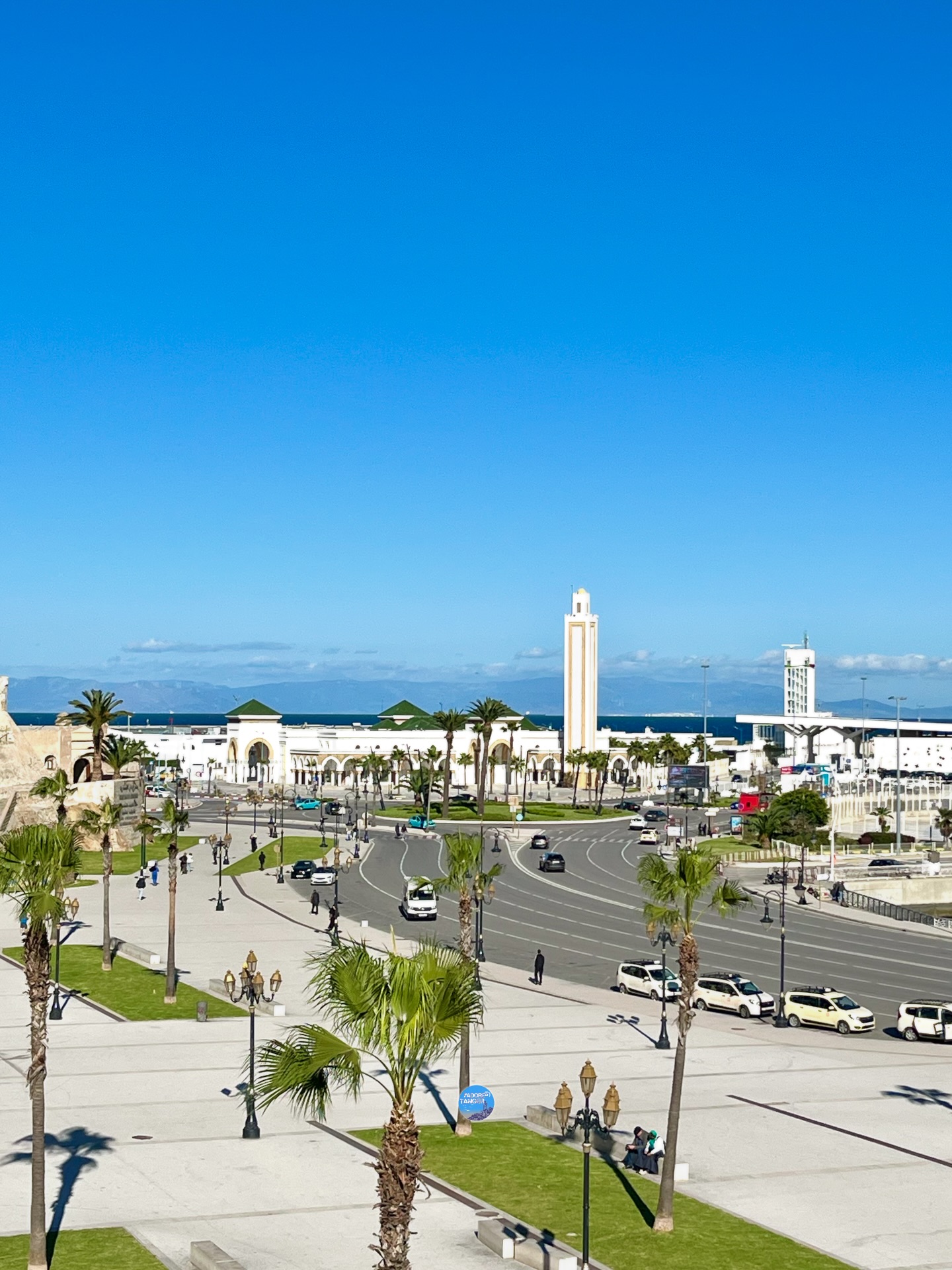
Tangier has undergone a remarkable transformation in recent years, and summer is the season when it truly shines. Cooled by breezes from both the Atlantic and Mediterranean, temperatures rarely exceed 28°C. The medina’s literary history — Bowles, Burroughs, Ginsberg all wrote here — sits alongside a gleaming new waterfront promenade, world-class museums, and some of Morocco’s finest contemporary restaurants.
Cap Spartel, where the Atlantic meets the Mediterranean, and the extraordinary Hercules Caves are unmissable excursions. For a full afternoon, head to the Palais des Institutions Italiennes or simply watch the ferries traverse the Strait of Gibraltar from the old kasbah walls. Tangier in summer has an electric, cosmopolitan energy that’s entirely its own.
8. Taghazout – Morocco’s Surf Capital ↑ Contents
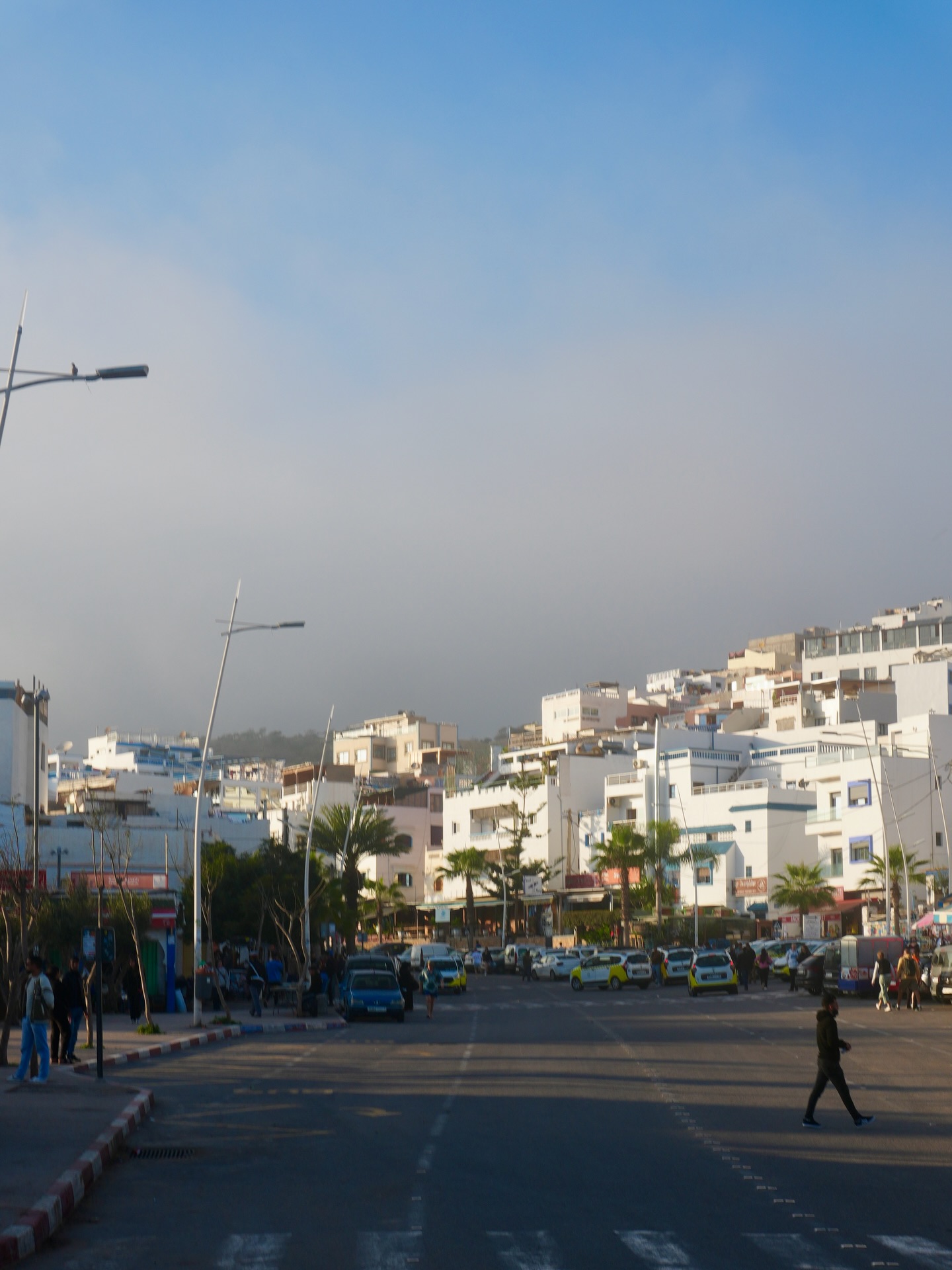
Just 20 minutes north of Agadir, Taghazout has evolved from a quiet fishing hamlet into one of the most sought-after surf destinations in Africa. The Atlantic swells are consistent year-round, but summer brings warmer water temperatures and lighter crowds at some of the lesser-known breaks around Anchor Point, Hash Point, and Killer Point.
Beyond surfing, Taghazout has built a thriving wellness scene with yoga retreats, healthy cafés, and sunset rooftop spots that make the most of the Atlantic light. It’s the kind of place where a three-day stay turns into three weeks. The breezy coastal air keeps temperatures manageable, making it one of the best summer spots in Morocco for active travelers.
9. Marrakech – Hot, But Never Boring ↑ Contents
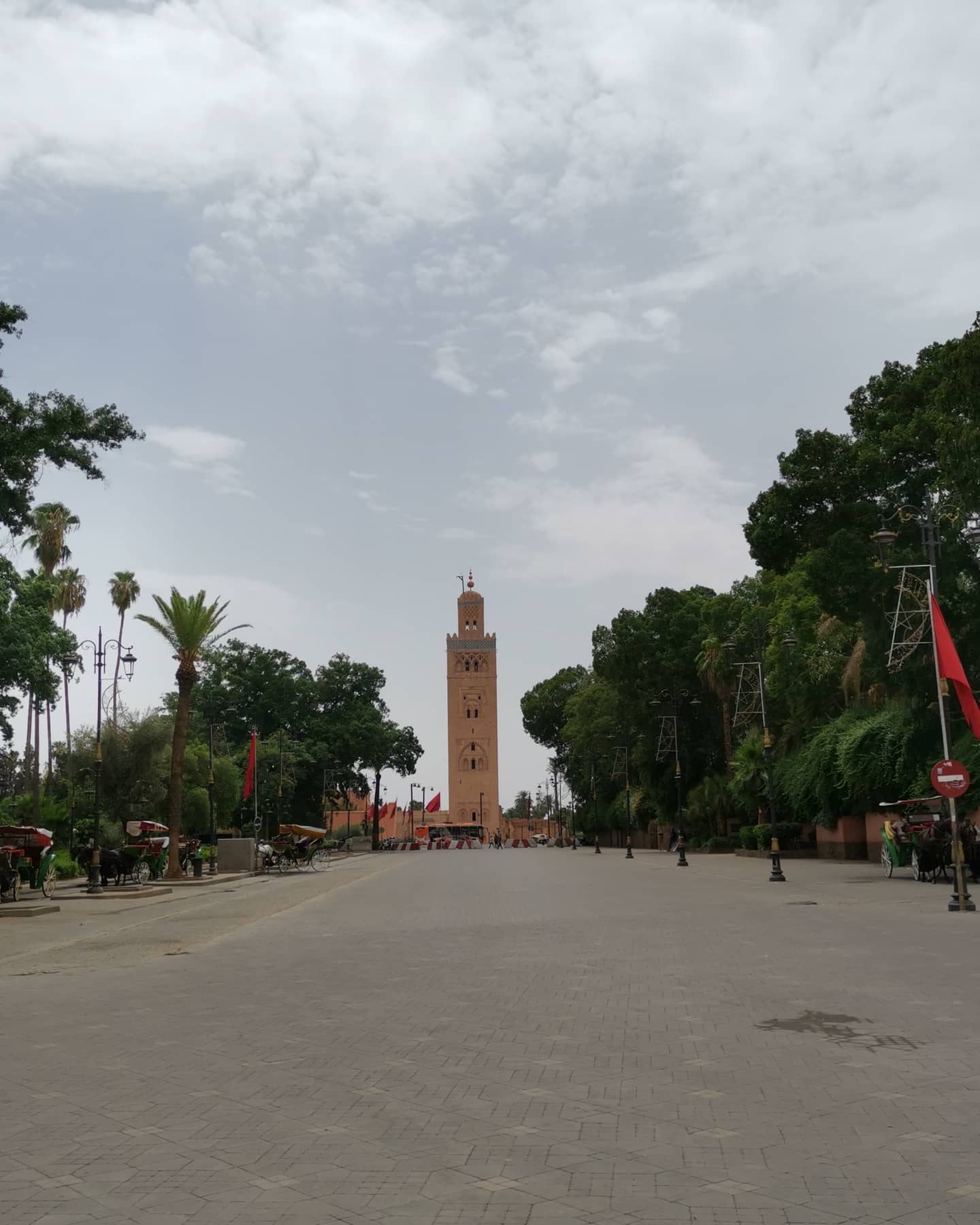
Let’s be honest: Marrakech in July and August is hot — consistently 38–42°C in the afternoon. But dismissing it entirely would be a mistake. The city’s riads are masterpieces of passive cooling, with thick walls, central courtyards, and plunge pools that make midday entirely liveable. The cultural weight of the city — the Bahia Palace, Saadian Tombs, Majorelle Garden, and the eternal chaos of Djemaa el-Fna — doesn’t diminish with the thermometer.
The smart approach: book a riad with a pool, explore between 7am and 11am, then again from 5pm until late into the evening when the city truly wakes up. Djemaa el-Fna at midnight in summer is one of the most extraordinary social spectacles you’ll witness anywhere in the world. If you’re wondering whether it’s safe to visit, check our comprehensive guide on Is Morocco Safe to Visit for Tourists — the short answer is yes.
Essential Summer Travel Tips for Morocco ↑ Contents
Wherever you choose to go, a few practical principles will make your Morocco summer trip significantly more enjoyable:
Planning a summer trip to Morocco and want a tailored experience, not a generic tour? Mouhssine is a government-licensed guide with deep knowledge of Morocco’s best summer destinations — from the cooler Atlantic coast to the ancient kasbahs of the south. He speaks English, French, and Arabic, and specializes in authentic, off-the-tourist-trail experiences.
Chat on WhatsAppFrequently Asked Questions ↑ Contents
Morocco in summer is not one-size-fits-all, and that’s precisely what makes it so compelling. Whether you find yourself sipping coffee on Essaouira’s ramparts with the Atlantic wind in your hair, hiking cedar forests above Ifrane, or staying up until midnight watching Djemaa el-Fna erupt into colour and sound — there’s a version of Morocco that suits every kind of traveler, even in the height of July.
The best places in Morocco in summer are ultimately the ones that align with what you’re looking for: cool air, cultural depth, surf, history, or simply the kind of beauty that makes you put your phone away. Start with this guide, refine your itinerary, and don’t hesitate to reach out to a licensed local guide who knows these places not as destinations, but as home.
For more practical planning, explore our guides on the Best Time to Visit Morocco and the most breathtaking sunsets Morocco has to offer. Your summer adventure is waiting.