What is “Berber Pizza”?
المدفونة — Madfouna
A feast buried in the earth and cooked by fire and sand. Morocco’s most ancient bread dish is as spectacular to watch as it is to eat.
What is Madfouna (Berber Pizza)?
Madfouna, widely nicknamed Berber Pizza by travelers, is one of the most extraordinary dishes in Moroccan cuisine. The name comes from the Arabic word meaning “buried,” which describes exactly how it is traditionally cooked: a generously stuffed bread is sealed shut, placed on a bed of hot embers, and then buried completely under burning sand and charcoal until the heat of the earth does the rest. The result is a crispy, golden-brown outer crust that shatters when tapped, revealing a steaming, richly spiced filling of meat, onions, almonds, eggs, and herbs inside.
The comparison to pizza is understandable but imperfect. While both are bread-based dishes with a savory filling, Madfouna is thicker, more aromatic, and deeply rooted in the nomadic Amazigh (Berber) tradition of the Moroccan Sahara. It was historically a practical dish for long desert journeys: easy to assemble, requiring no pots or pans, cooked using the abundant resource of hot desert sand. Today it is a celebrated culinary experience that travelers seek out specifically in the desert regions around Merzouga, Zagora, and the Draa Valley.
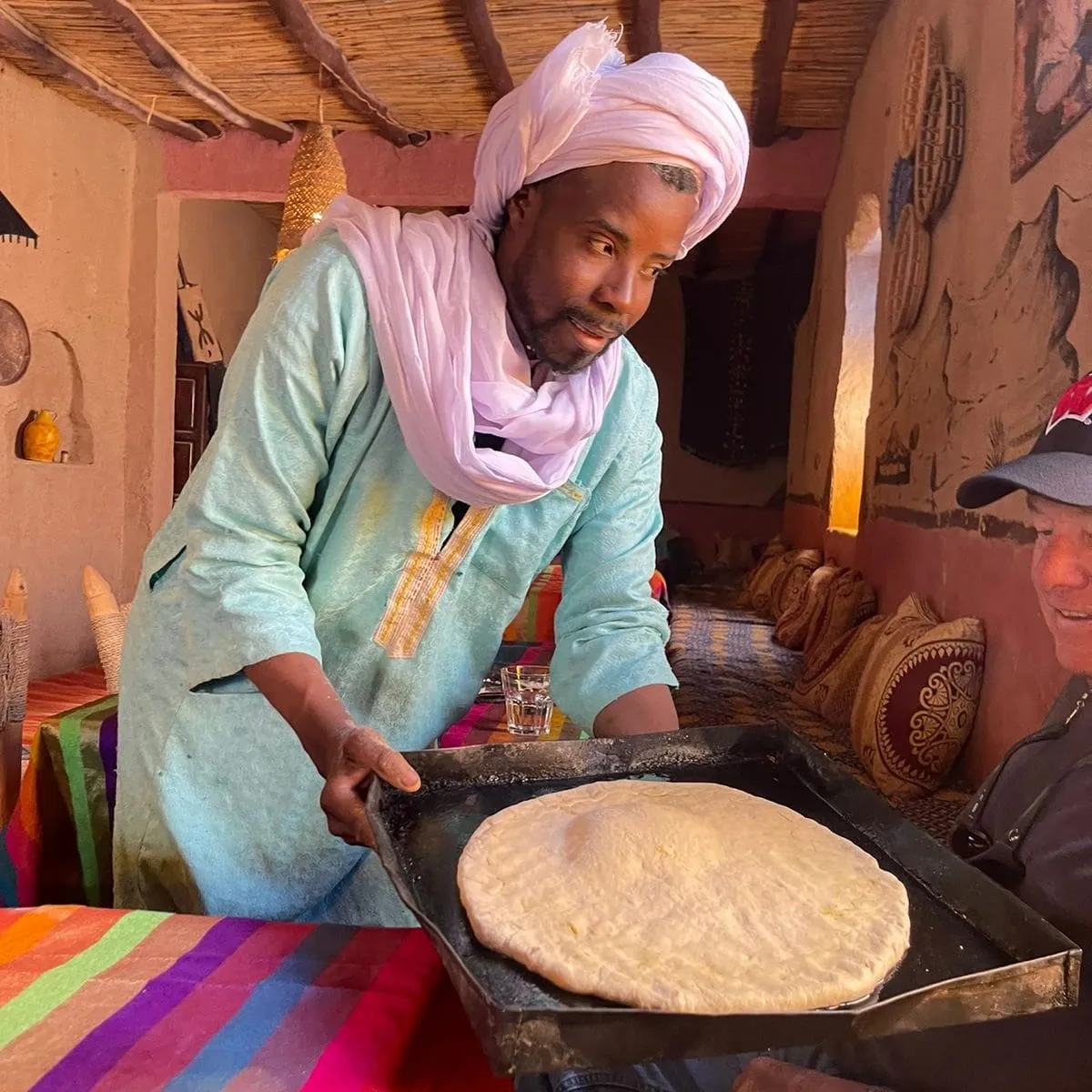
A Madfouna presented to guests before going into the sand oven.
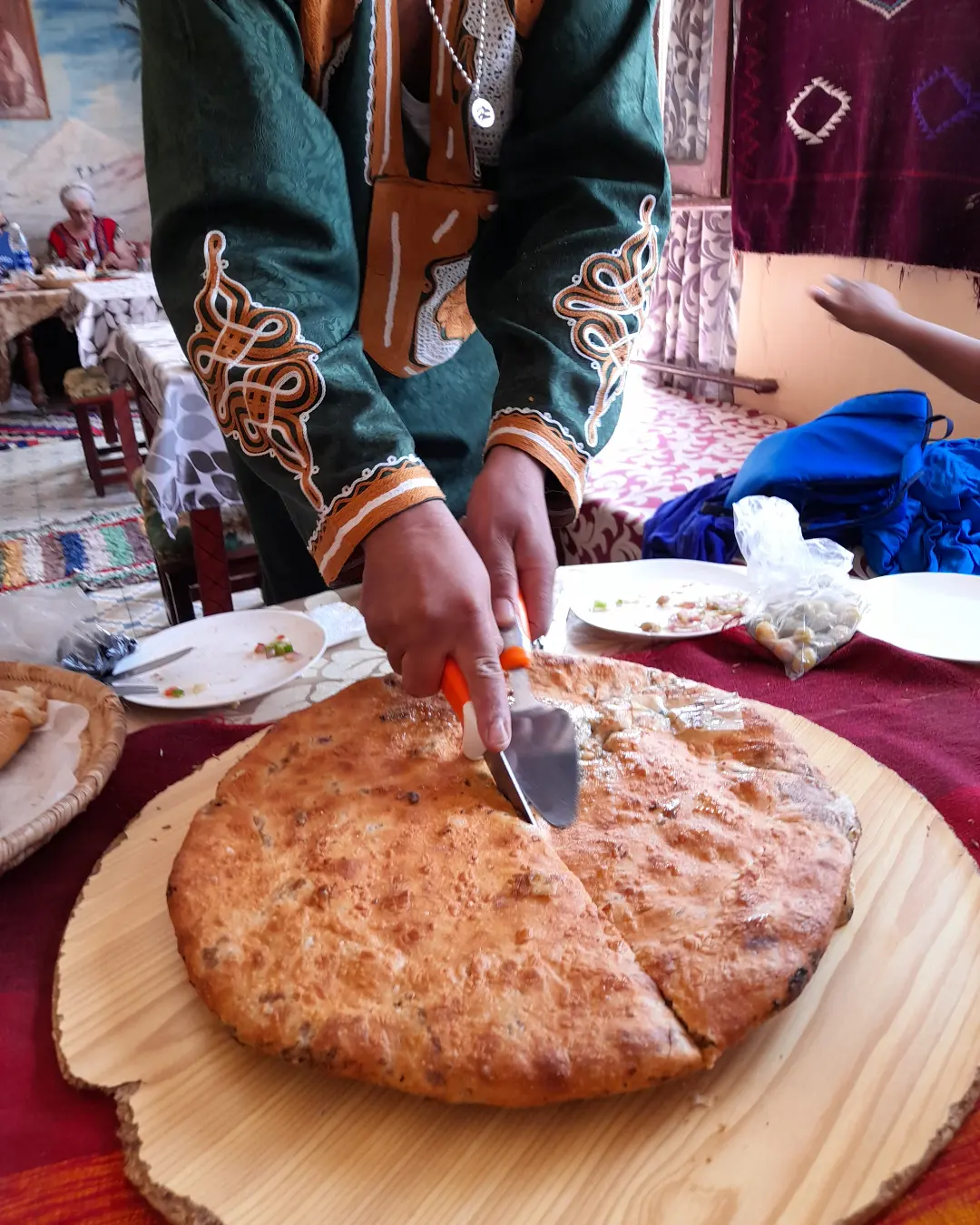
The finished Madfouna, golden and ready to break open at the table.
If you are curious about where Morocco sits on the map, it is worth noting that the southern regions where Madfouna is most authentic border the Sahara Desert proper, and the dish reflects that geography in every way: the use of fire and sand as cooking tools, the preserved meats suited to arid climates, and the communal tradition of sharing a single large loaf among a group.
Ingredients and Filling
What makes Madfouna so satisfying is the contrast between its humble exterior and its lavish filling. The dough itself is a simple unleavened semolina bread, similar to Moroccan khobz, rolled into two flat rounds that sandwich the stuffing. The filling, however, is where each cook and region expresses their identity.
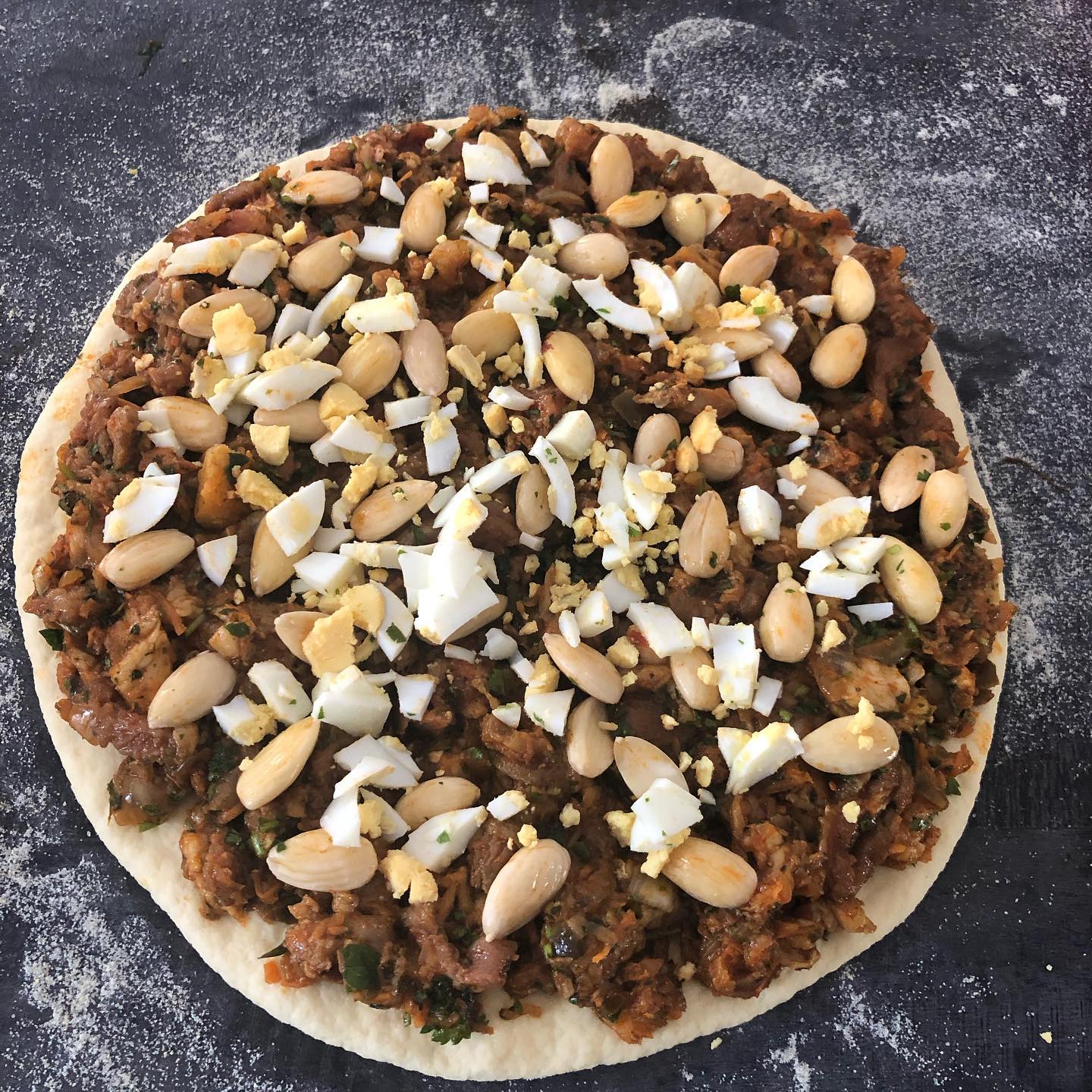
The essential ingredients of a traditional Madfouna: spiced meat, eggs, onions, almonds, and aromatic herbs.
- Semolina flour
- All-purpose flour
- Warm water
- Salt
- Olive oil
- Yeast (optional)
- Ground lamb or beef
- Onions, finely chopped
- Fresh herbs (parsley, coriander)
- Whole or raw eggs
- Blanched almonds
- Argan or olive oil
- Cumin
- Ras el hanout
- Black pepper
- Ginger powder
- Turmeric
- Cinnamon (touch)
Regional variations are significant. In some desert villages, dried figs or raisins are added for sweetness. In others, merguez sausage replaces ground meat, or preserved lemon rind is mixed into the filling for a sharper flavor. The eggs, often cracked directly into the raw filling before sealing, cook slowly inside the bread and create a rich, almost custard-like texture that binds the whole mixture together.
Two Ways to Prepare Madfouna
One of the most practical things to know before seeking out Madfouna is that there are two very different ways to experience making it. Each is authentic, and each offers something distinct.
The Traditional Furn (Wood-Fired Oven)
Every traditional Moroccan neighborhood has a communal bakery called a furn. This is the most accessible way to have Madfouna made for you. You can visit a local market, buy your meat, vegetables, eggs, almonds, and spices yourself, then bring them to the furn. The baker will mix and season the filling, assemble the bread, and slide it into his stone oven on a long wooden peel. You return in an hour or two to collect a perfectly cooked Madfouna. Many travelers in desert towns like Merzouga, Rissani, or Zagora choose this approach: it is inexpensive, deeply local, and you participate in the process by selecting your own ingredients.
The baker handles mixing, stuffing, sealing, and baking. You simply bring the ingredients and pick a time to return.
The Desert Method: Buried in Sand
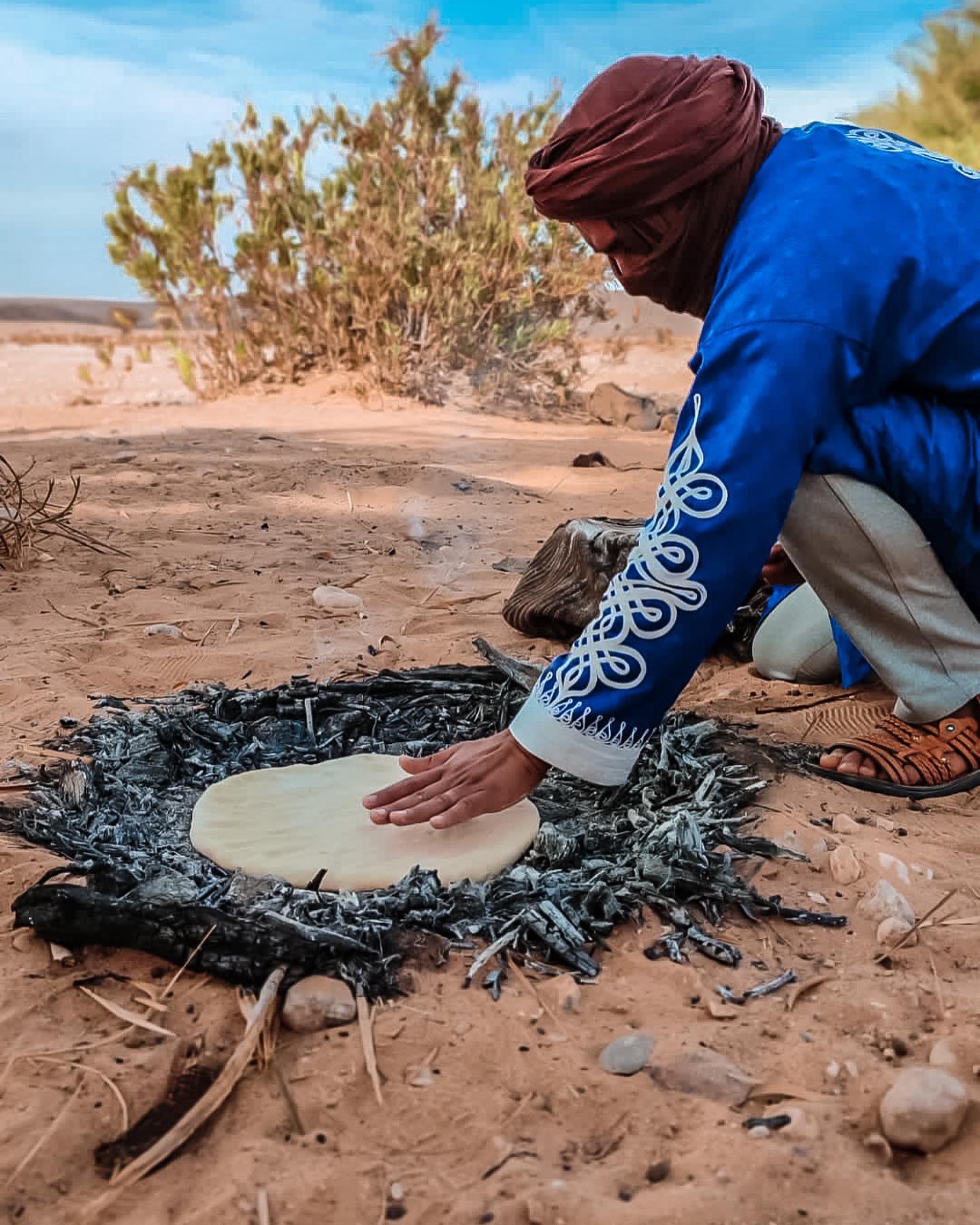
This is the ancient, nomadic technique that gave the dish its name. A fire is built in a shallow pit in the desert sand and allowed to burn down to deep, glowing embers. The assembled Madfouna is placed directly onto the embers, covered with more hot sand and coals, and left to cook slowly for up to two hours. The sand reaches extraordinary temperatures, cooking the bread from all sides simultaneously. The crust emerges charred on the outside but perfectly sealed, locking all the steam and fat inside. Cracking it open in the desert, with the smell of woodsmoke and toasted semolina in the air, is an experience that stays with you for years. Some desert camps and guided Sahara experiences still offer this method for guests willing to commit to the full ceremony of it.
Best experienced as part of a desert camp stay or a guided overnight excursion into the dunes.
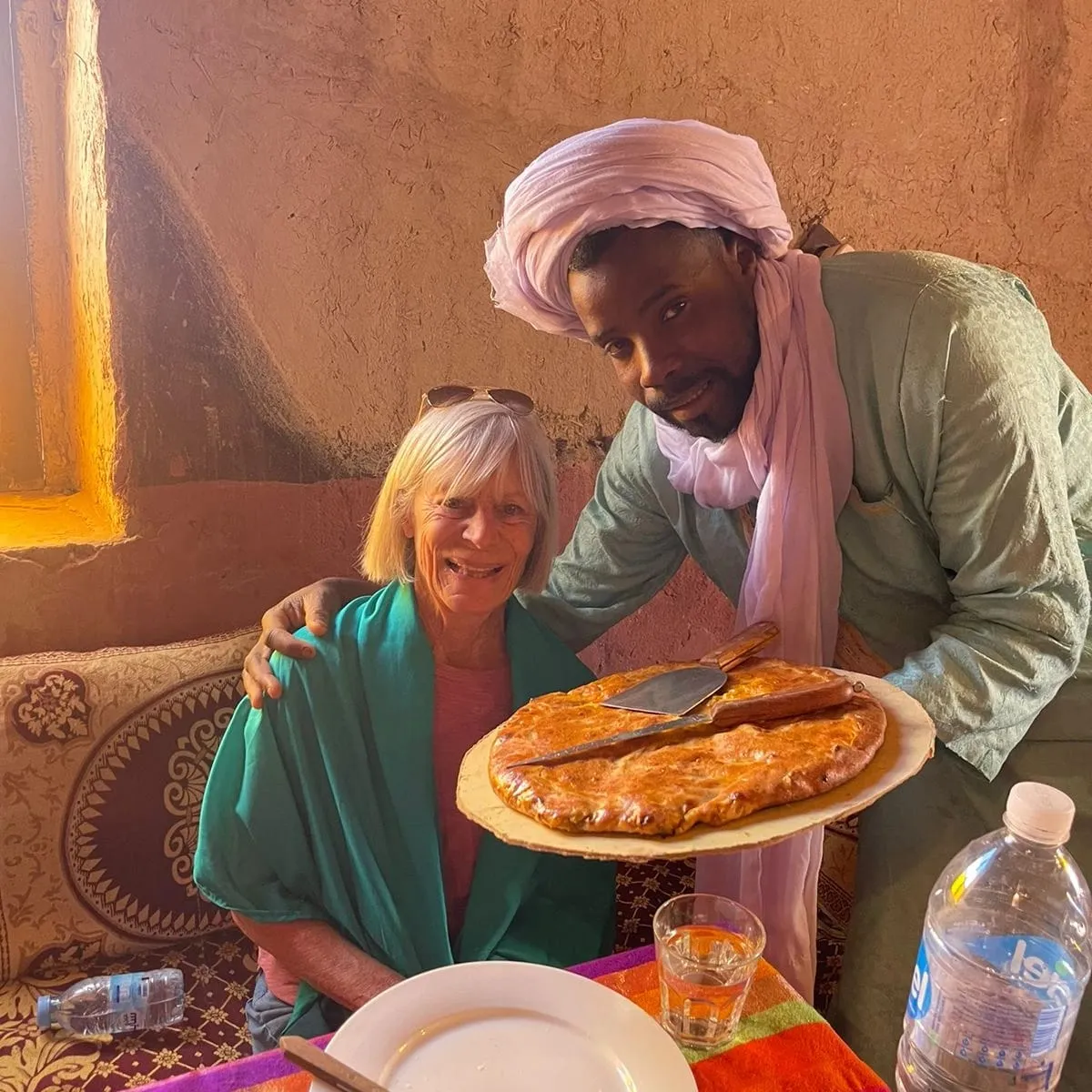
Serving Madfouna to guests at a desert camp — one of the most memorable moments of any Sahara journey.
Step-by-Step: How Madfouna is Made
Whether you are watching a baker prepare it at the furn or a guide assembling it in the open desert, the process follows the same fundamental rhythm. Here is how it unfolds from dough to table.
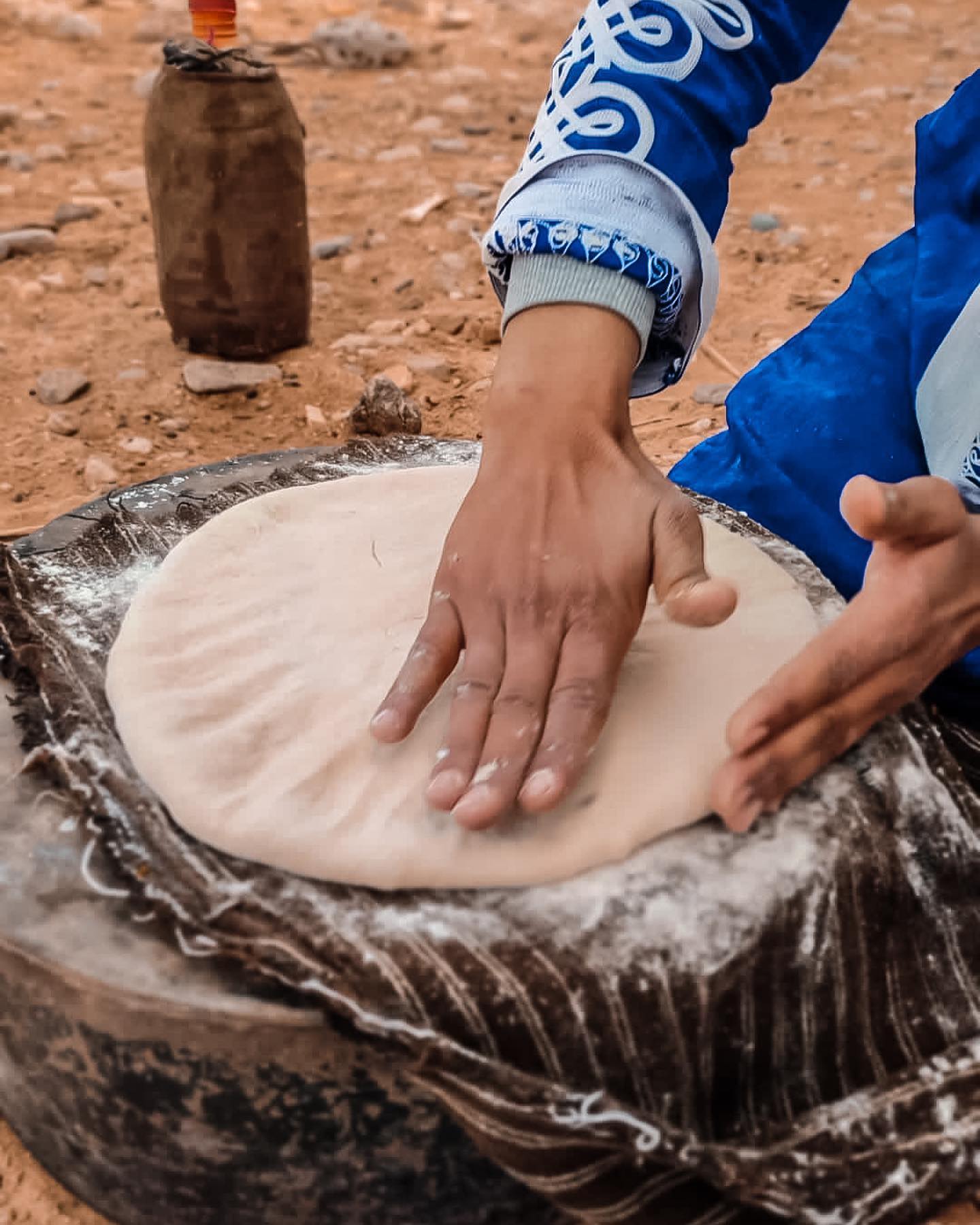
The semolina dough is prepared and kneaded until smooth and pliable, then divided into two equal rounds.
Ground meat is mixed with onions, herbs, spices, almonds, and argan oil to form a richly seasoned filling.
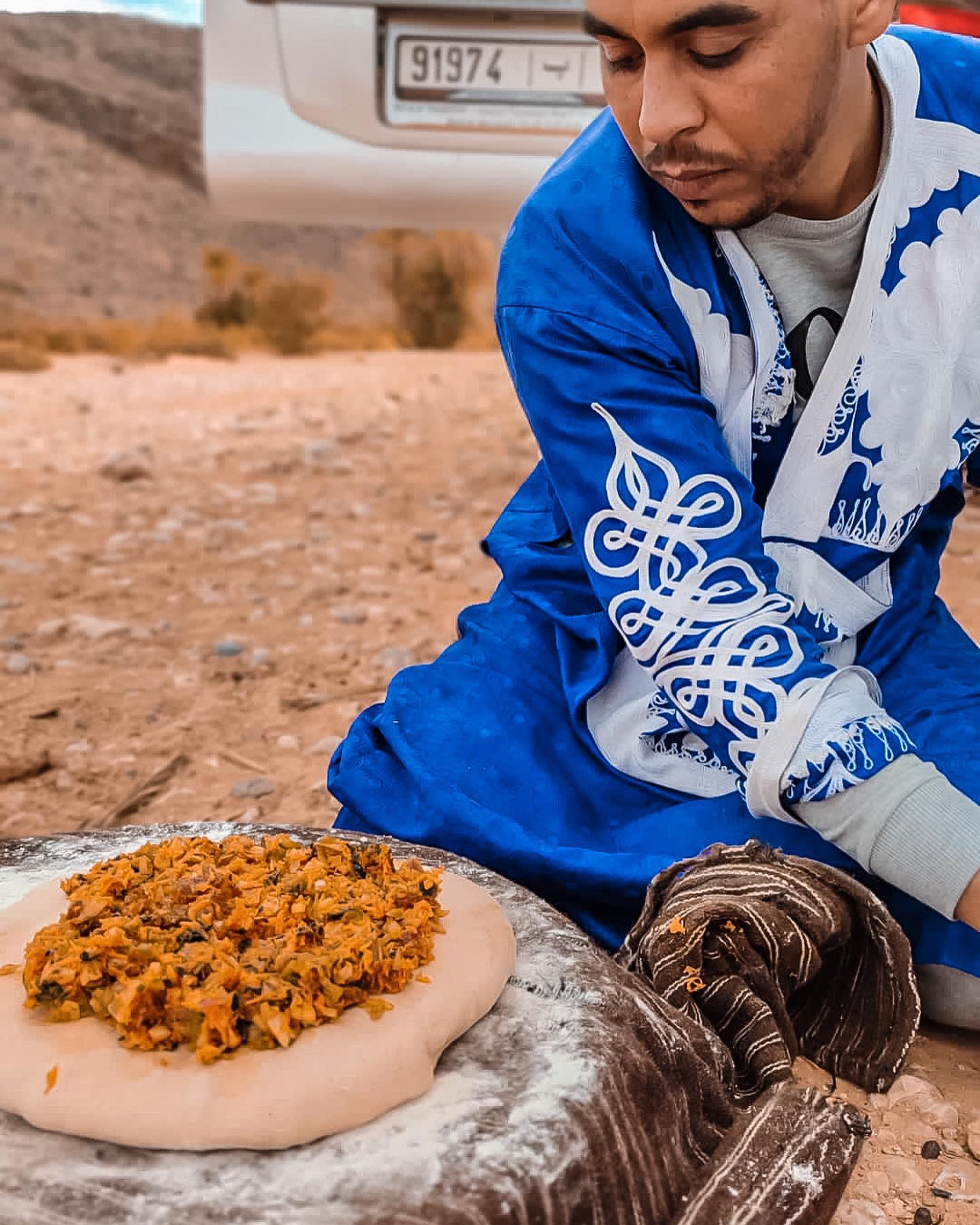
The filling is spread generously across the first round of dough, leaving a border for sealing. Raw eggs are often cracked directly on top.
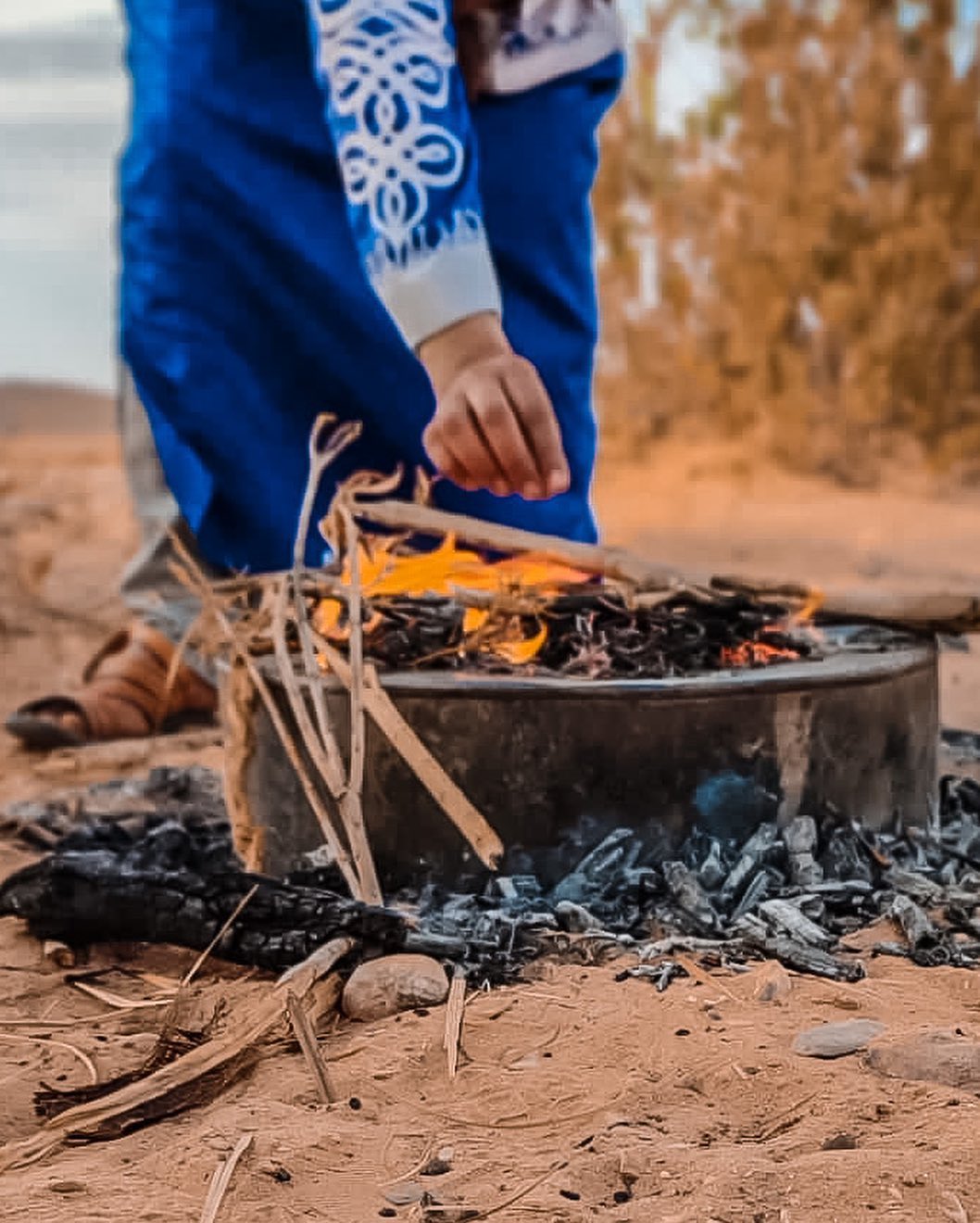
The second round of dough is placed on top and the edges are pinched and folded firmly to create a complete seal.
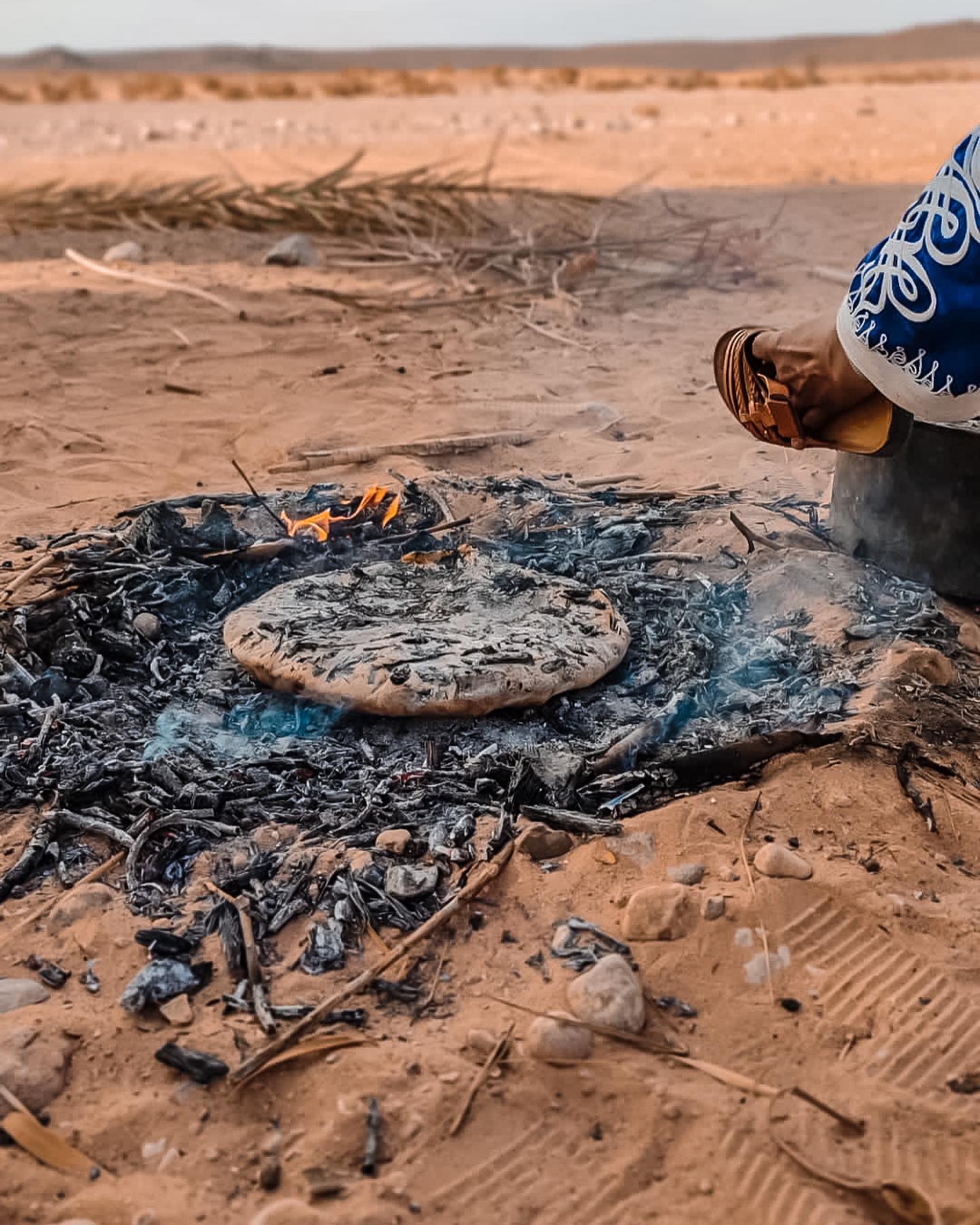
The sealed loaf is placed on hot embers and buried under sand (desert method) or slid into the furn oven for up to two hours.
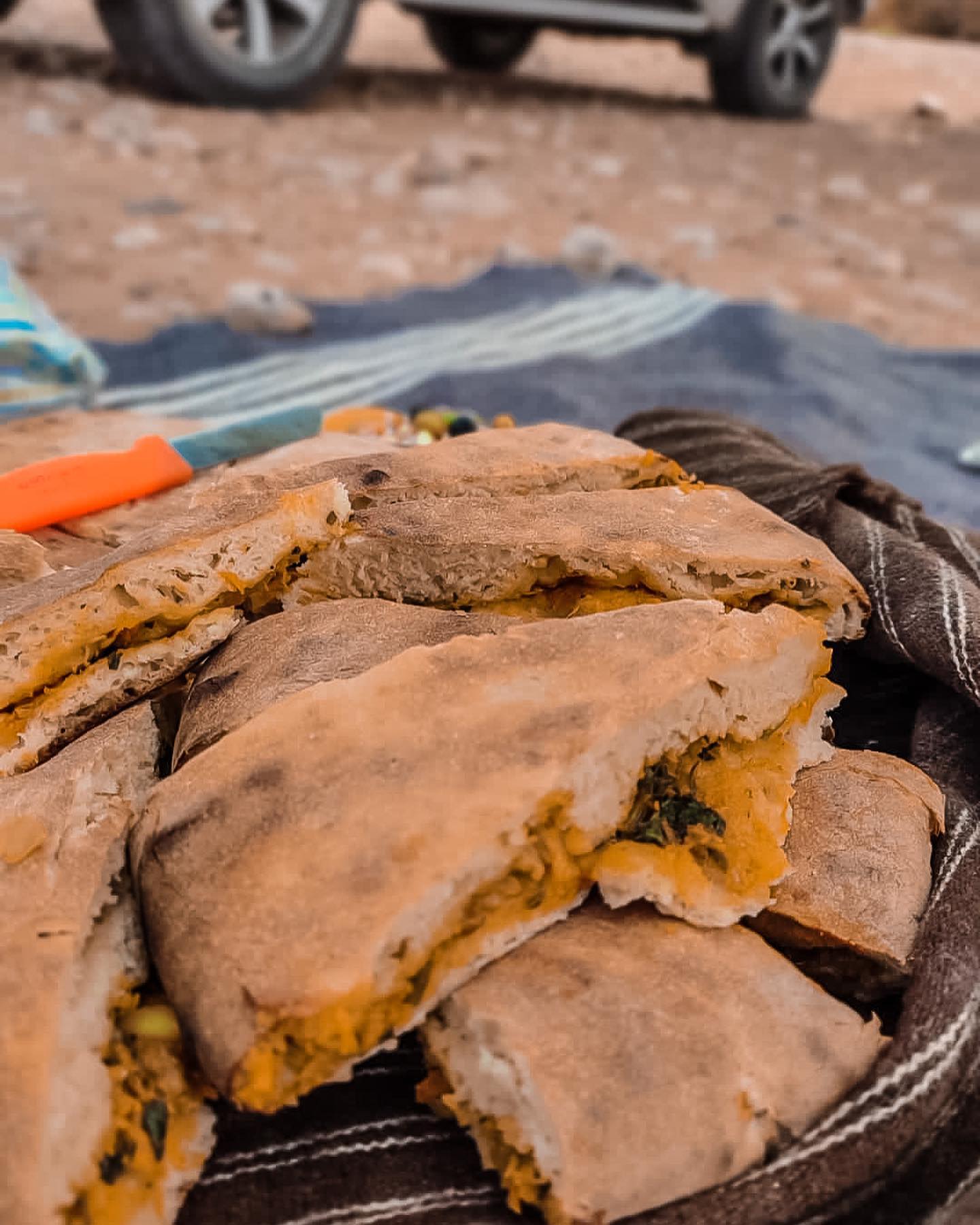
The finished Madfouna is brushed clean, set on a board, and cracked open at the center to reveal the steaming, fragrant filling within.
Where to Try Berber Pizza in Morocco
Madfouna is not a dish you will find on the menu of every restaurant in Morocco. It belongs firmly to the southern and pre-Saharan regions, where it has been made for centuries as an everyday staple and a festive dish for welcoming guests. Morocco is entirely safe for travelers, and reaching these southern regions is straightforward with the right planning.
Merzouga and Erg Chebbi
The dune town of Merzouga is arguably the best single place to try authentic Madfouna. Multiple desert camps prepare it in the traditional buried-sand style, and the local furn in Rissani nearby has been making it for generations. Several riads and guesthouses offer Madfouna cooking experiences as part of their stay.
Zagora and the Draa Valley
The Draa Valley route south of Ouarzazate passes through towns where Madfouna is a daily bread. Zagora is a natural stopping point and a good place to visit a local furn with a guide to have one made from scratch using market-fresh ingredients.
Erg Chigaga (near M’hamid)
The remote Erg Chigaga, accessible from M’hamid, is one of the few places in Morocco where the full desert-method preparation is still practiced by local nomadic families. Visiting with a licensed guide is strongly recommended for this experience.
Ouarzazate
As the main gateway to the south, Ouarzazate has several restaurants and guesthouses that serve Madfouna. Quality varies, but a few establishments near the kasbah prepare it properly in a wood-fired oven and serve it fresh at lunch.
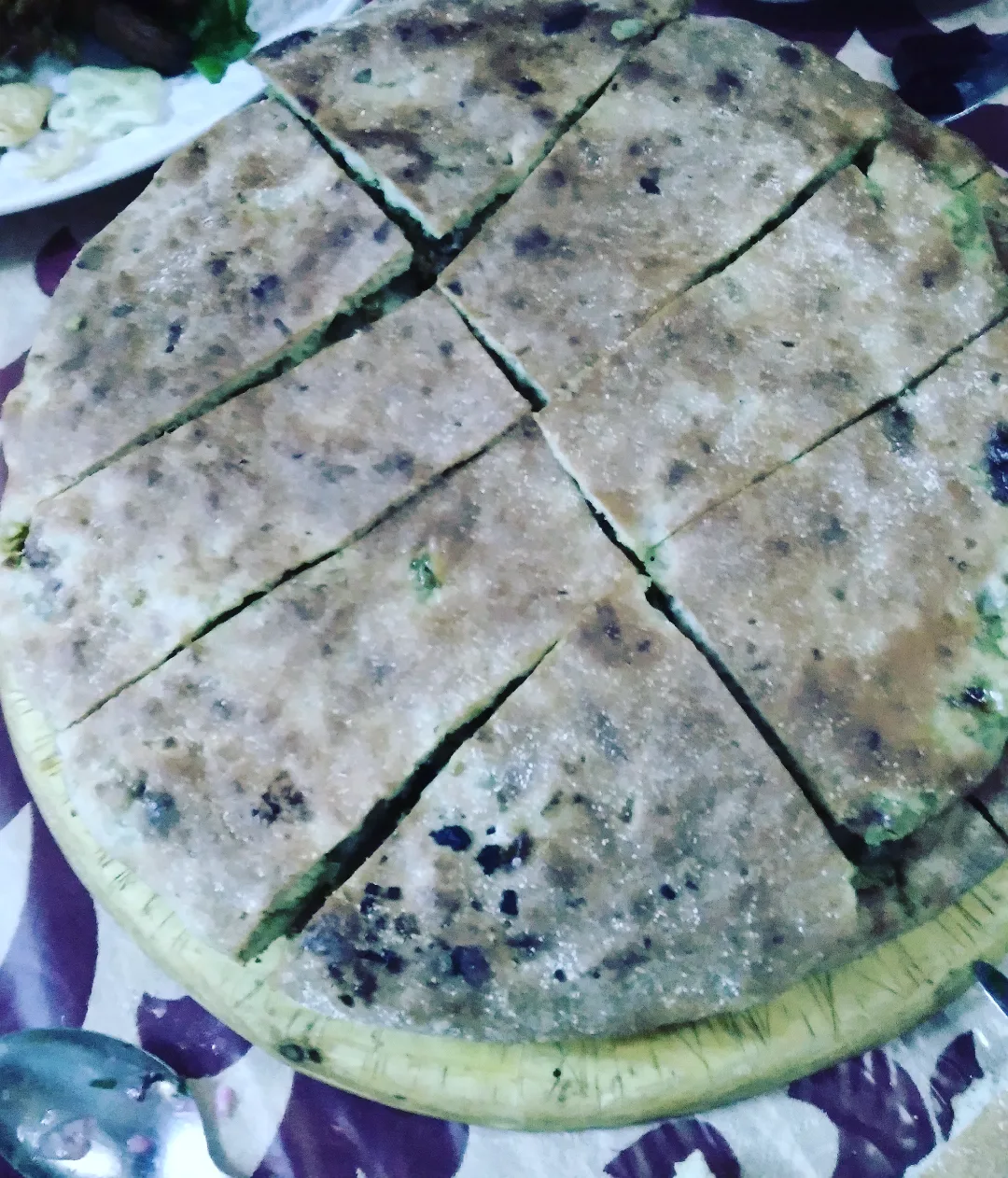
A Madfouna ready to be shared, straight from the earth oven at a desert camp in southern Morocco.
If you are building a broader itinerary around Morocco’s cities, consider routing through the south specifically to eat Madfouna in the landscape that gave birth to it. The experience is incomparably different from eating it in a city restaurant.
Tips for Travelers
Order in advance
Madfouna takes a minimum of one to two hours to cook. If you want to eat it for lunch, let your host or guide know in the morning, or ideally the evening before. Attempting to order it spontaneously at a restaurant may result in disappointment.
Visit a market first
If you are taking the furn route, the best experience starts at a local souk. Buy your meat from a butcher, your spices from a spice merchant, and your almonds from a stall vendor. The furn baker will take care of everything else. This approach connects you to the full food culture, not just the finished dish.
Come hungry
Madfouna is a substantial meal. A medium-sized loaf comfortably feeds two to four people. It is typically eaten directly on the board it is cut on, pulled apart by hand in the traditional way, with mint tea served alongside.
Watch the cracking ceremony
In many desert settings, the guide or cook will tap the finished crust sharply with a fist or a stone, and the bread splits open with a theatrical release of steam and aroma. This is considered part of the experience. Do not cut it with a knife before this ritual.
Explore More About Morocco
Plan Your Sahara Trip with a Licensed Guide
Finding authentic Madfouna in the right setting takes local knowledge. A licensed guide can take you to the furn that locals actually use, connect you with nomadic families who still cook by the ancient sand method, and ensure your entire southern Morocco experience is genuine, not staged for tourists. The difference is significant, and it begins the moment you step off the main road.

Mouhssine ELIOUJ
Mouhssine is a certified guide licensed by the Moroccan Ministry of Tourism, with deep roots in the southern regions where Madfouna is most authentic. He can organize a desert camp experience including a full traditional Madfouna preparation, or take you to the right furn in a local village market. Contact him directly on WhatsApp to discuss your itinerary.
License No. Réf. 2898 · Ministry of Tourism, Morocco
Chat on WhatsApp