Marrakech Travel Safety, Updated for 2026
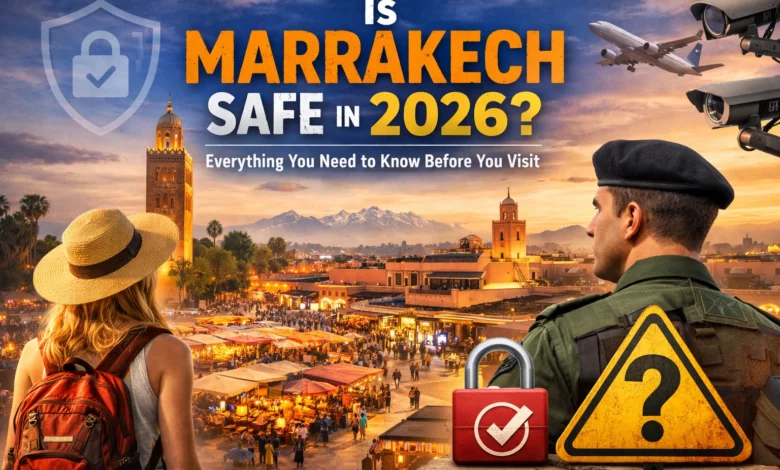
Is Marrakech Safe in 2026?
A grounded look at what actually happens to travelers on the ground, what has changed around the city this year, and the small habits that keep a trip simple from touchdown to departure.
Is Marrakech safe? Ask any of the millions of people who visit every year and the answer comes back fairly relaxed: yes. Violent crime against tourists is genuinely uncommon, and the situations that actually catch visitors off guard are smaller and more mundane, a taxi fare that creeps up, a henna artist who never quoted a price, an unofficial guide who will not take no for an answer. This guide lays out what Marrakech safety looks like heading into 2026, what has changed around the city recently, and the habits that keep the details boring, in the best possible way.
Is Marrakech Safe? The Honest Read for 2026 ↑
Marrakech is a working tourist city built around the idea that visitors feel comfortable enough to come back. It pulled in close to four million visitors in 2024 alone, generating well over six million overnight stays, numbers that only hold up if the experience on the ground stays safe and welcoming. If you are still getting your bearings on the country as a whole, it helps to start with where Morocco is located before narrowing in, and with the broader question of whether Morocco is safe to visit for tourists, since Marrakech tracks that national picture closely.
On the ground, the real risk in Marrakech is financial and situational rather than violent. You are far more likely to overpay for a taxi or get talked into a rug shop you never meant to enter than to face anything genuinely dangerous. Serious crime against visitors is uncommon, and when something does happen, the tourist police tend to move on it quickly, a point covered in more detail further down this guide.
Quick Verdict
Marrakech is safe for travelers who bring ordinary city instincts with them: agree on a price before committing to anything, keep valuables close in crowds, and be selective about who offers to help. The main routes through the Medina, Gueliz, and Hivernage feel comfortable by day and by evening. The one place worth genuine caution is the quiet, unlit side alleys deep inside the old city late at night.
Once the safety question feels settled, the more interesting one is what to actually do with your time. Our guide to things to do in Marrakech is a natural next stop. And if you are traveling on your own as a woman, the picture above still holds, but there are a few extra layers worth knowing, which we cover on their own in Is Marrakech Safe for Solo Female Travelers?
What’s New in Marrakech for 2026 ↑
The city has put real money into its public spaces over the past year, and a few of these changes have a direct effect on how organized and safe Marrakech feels on the ground.
More Tourist Police: a larger, more visible presence along the main tourist corridors, with quicker response times.
Restored Historic Buildings: ongoing restoration across the Medina, including better lighting around several well-known landmarks.
Better Signage: clearer directional signs through the souks, so finding your way no longer depends on trusting a stranger.
Safer Medina Routes: resurfacing and improved lighting along the pedestrian paths tourists use most.
New Tourism Investment: a wider push to modernize public spaces as the country prepares for major sporting events later this decade.
Citywide Repairs: street and neighborhood-level repairs are underway well beyond the tourist center.
Two changes stand out. Jemaa el-Fna, the main square, is coming out of one of the largest renovations in its recent history: a project of well over 100 million dirhams that replaced the worn ground with cut natural stone, upgraded the underground utility networks, and added a permanent tourist information kiosk, with the work due to wrap up in the early months of 2026. Marrakech’s intercity bus terminal is also being relocated, moving from its long-time home at Bab Doukkala to the newer Azouzia district, a shift meant to ease the traffic congestion that has built up around the old station and give that part of the city a calmer, more organized feel.


The Most Common Scams in Marrakech ↑
Scams, far more than crime, are what most visitors actually run into here. None of them put you in danger, but recognizing the pattern early saves you money and an argument you did not want to have.
Fake Guides
Someone falls into step beside you uninvited and offers to show you around, often leading you in circles or straight to a shop that pays them commission.
Henna Scam
The henna goes on your hand before any price is discussed, and the bill that follows has little to do with a fair rate.
Monkey Photos
A handler places a chained monkey on you for a photo, then asks for cash the moment the picture is taken.
Snake Charmers
The same setup near Jemaa el-Fna. Pause to look or take a photo and a payment demand follows almost immediately.
Taxi Scam
A meter that is suddenly broken, or a flat rate pitched well above the real fare, especially on the airport run.
Carpet Scam
A free glass of mint tea and a long demonstration lead into high-pressure sales tactics inside the rug shops.
Donation Scam
Someone posing as deaf, blind, or collecting for a school or mosque that does not actually exist.
We break each of these down step by step, along with exactly what to say in the moment, in our full guide to the most common tourist scams in Morocco.
What Not to Do in Marrakech ↑
A short list of habits keeps you off the radar of anyone looking for an easy target.
Walking with a phone or camera held loosely in a crowded souk.
Accepting help from a self-appointed guide who approaches you first, however friendly they seem.
Getting into an unmarked taxi instead of an official petit taxi or a car you booked yourself.
Posing for a monkey photo, which almost always ends with an aggressive demand for cash.
Flashing a thick stack of cash in public, especially near an ATM or in a crowded market.
Wearing jewellery expensive enough to draw a second look in tight, crowded spaces.
The Safest Areas in Marrakech, With Map ↑
Gueliz and Hivernage, the newer districts west of the old city, are well lit and walkable, and this is where most hotels and restaurants keep going late into the evening without any issue. Inside the Medina, the main routes around Jemaa el-Fna, the souks, and the well-known riad neighborhoods stay busy and safe from morning through evening. The one part of Marrakech worth genuine caution is the quiet, unlit alleys deep inside the old city after dark, which are better covered by taxi than on foot alone.

Emergency Information for Tourists ↑
Save these numbers before you land, and keep a local SIM active so you can call for help, pull up a map, or translate on the spot. Our guide to the best SIM card in Morocco for tourists covers the fastest way to get connected right at the airport.
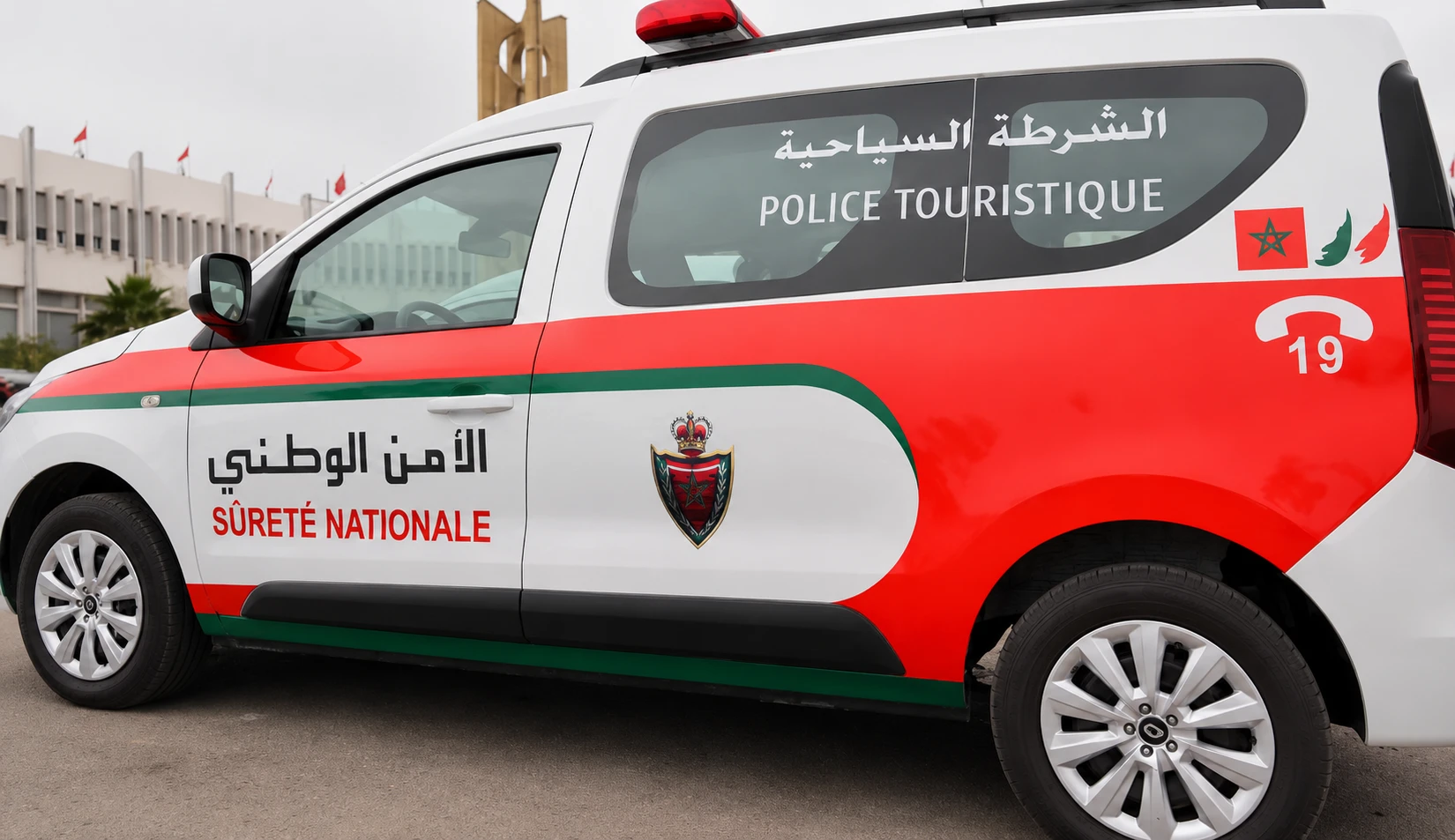
Tourist Police, Marrakech
This toll-free line runs 24 hours a day and exists specifically for travelers. Officers tend to answer quickly, speak more than one language, and follow through on almost anything you bring them, from a theft or a lost passport to a scam that got out of hand, usually with more urgency than you would get calling a general police line.
Police
19 from a landline, 190 from a mobile. Covers any crime or safety issue anywhere in the city.
Tourist Police
05 24 38 46 01 or 05 24 88 86 80. Toll-free, 24/7, and staffed specifically to help travelers.
Ambulance
150, shared with the fire brigade. Covers any medical emergency in the city.
Fire Department
150. Known locally as Protection Civile, covering fire and rescue calls.
Nearest Hospitals
Private clinics such as Clinique Internationale de Marrakech run 24/7 emergency care with English and French-speaking staff. CHU Mohammed VI (Ibn Tofail) is the main public hospital for serious cases. Ask your riad or hotel which is closest.
Nearest Pharmacies
Look for the green cross. One pharmacy in every district stays open overnight on a rotating basis, and your hotel reception will know which one is on duty.
Emergency Embassy Information
Most embassies sit in Rabat, with consulates in Casablanca. Save your embassy’s number before you travel and register with your government’s travel program if one exists.
The European standard number, 112, also works from any mobile phone in Morocco and routes your call to the nearest emergency service.
Local Advice From a Licensed Marrakech Guide ↑
Two habits, straight from years of walking these streets with first-time visitors.
Change money at a bank, not on the street. There are several banks within a short walk of Jemaa el-Fna, and the process takes minutes. It is a fairer, safer rate than anything an informal money changer will offer you nearby.
Go out with a guide on your first day. If this is your first visit, hiring a local licensed guide in Marrakech saves you hours of wandering and gets you to the city’s real highlights instead of the version aimed at whoever is walking past alone.
Marrakech Safety: Frequently Asked Questions ↑
Is Marrakech safe to visit in 2026?
Yes, for the large majority of visitors. Violent crime against tourists is rare across a city that welcomes millions of people every year. The realistic risks are scams and petty theft in crowded spots, both of which are straightforward to avoid once you know what they look like.
Is the Marrakech Medina safe to walk at night?
The main routes are fine. They are well lit, busy, and patrolled well into the evening. The exception is the quiet, unlit side alleys deep inside the old city, which are better handled by taxi than on foot alone after dark.
Is Marrakech safe for solo female travelers?
Broadly yes, though the experience has a few extra layers worth knowing, from handling attention in the souks to picking the right neighborhood to stay in. We cover this in a dedicated guide on solo female travel in Marrakech.
What is the biggest safety risk for tourists in Marrakech?
Scams, not crime. Fake guides, henna pricing tricks, and inflated taxi fares are what most visitors actually run into, and all three are avoidable once you recognize the pattern.
What is the tourist police number in Marrakech?
05 24 38 46 01 or 05 24 88 86 80. The line is toll-free, runs 24 hours a day, and is staffed specifically to help travelers.
First Visit to Marrakech?
Book a Licensed Local Guide
Mouhssine Elalouj has spent years walking these streets with first-time visitors. He can meet you at your riad, shape the day around what you actually want to see, and take the guesswork, and the scam risk, out of your first day in the city.
Licensed Tour Guide · Réf. 2898