
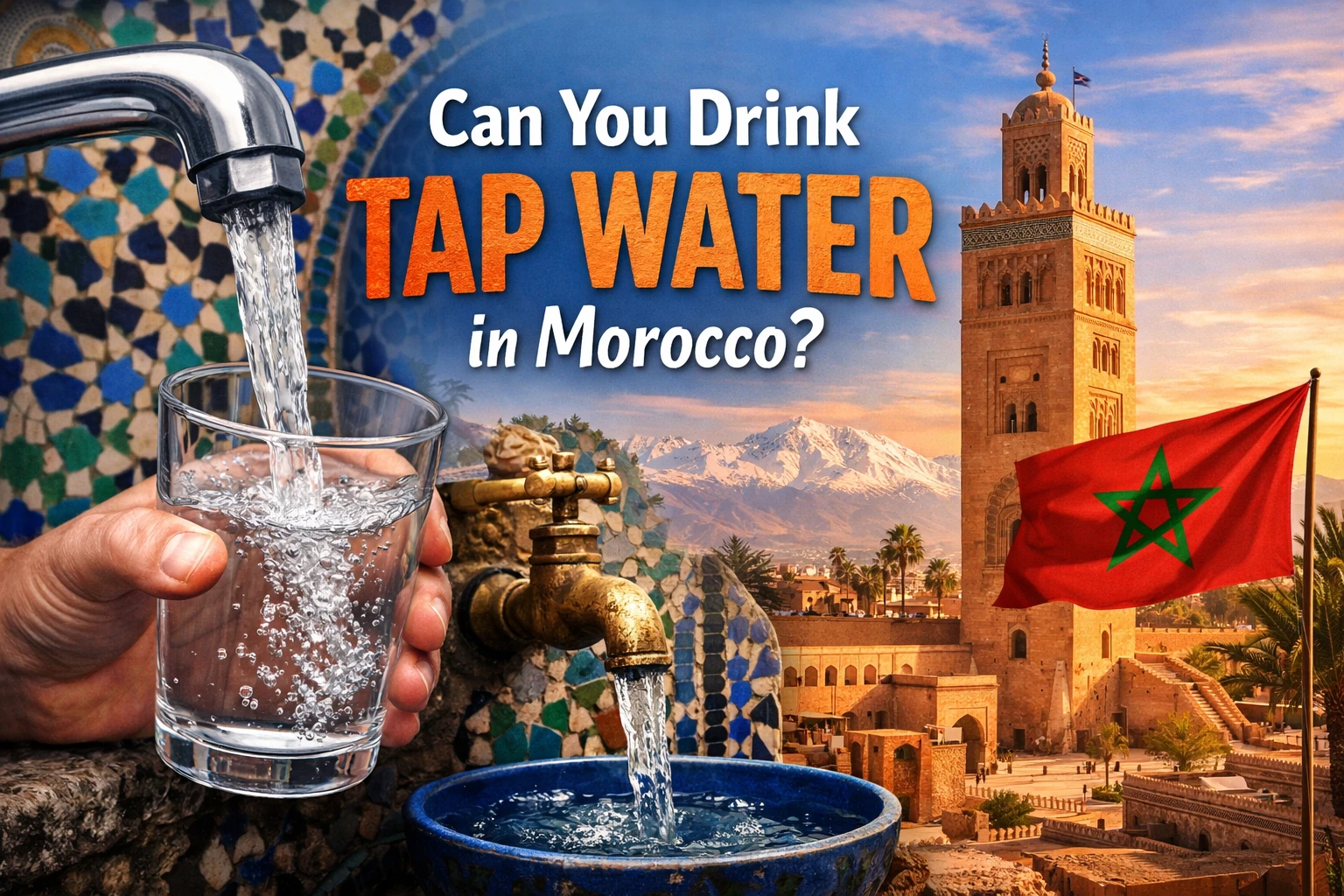
Morocco Travel Tips · Water Safety Guide 2026
Can You Drink Tap Water
in Morocco?
You step off the plane in Marrakech. The heat wraps around you immediately. You reach the riad, you’re thirsty, and the tap is right there. Should you drink it?
Most travel articles give you a flat “no” and move on. This guide goes further — because the real answer depends on where you are, how long you’re staying, and what you’re doing. Morocco’s water story is more nuanced than a single warning, and understanding it will genuinely make your trip more comfortable.
Is Tap Water Safe to Drink in Morocco?
This is one of the most searched questions by travellers planning a trip to Morocco — and the answer requires some nuance. Morocco’s tap water is technically treated and meets the national drinking-water standards set by the Office National de l’Électricité et de l’Eau Potable (ONEE), the government body responsible for water treatment and distribution. The treatment process includes chlorination and, in most urban areas, filtration.
Official Guidance for Foreign Visitors
While tap water in Morocco is treated, most foreign health authorities — including the CDC, NHS, and the French Ministry of Foreign Affairs — advise travellers to drink bottled or purified water during their stay. This is not because the water is inherently dangerous, but because international visitors often lack immunity to local microbial strains that locals have built up over a lifetime. Individual susceptibility, travel duration, and local pipe conditions all factor in.
The Moroccan government has invested heavily in water infrastructure over the past two decades. According to the World Health Organization (WHO) and ONEE data, more than 97% of the urban Moroccan population has access to treated drinking water. However, “treated” does not automatically mean “safe for all foreign stomachs” — aging distribution pipes, localised contamination events, and regional differences mean that even treated water can vary in quality by area and by building.
Key distinction: Locals often drink tap water without any issues because they have developed tolerance over years. International tourists, especially those visiting for short periods, are at higher risk of gastrointestinal discomfort — commonly called “traveller’s diarrhoea” — even from low-level microbial or chemical variations.
As someone who has grown up in Morocco and lived here all my life, I drink tap water at home without any issues. After years of daily exposure, the body adapts to the local water profile — its mineral content, its chlorine levels, the specific bacterial environment of the region. This is not unique to Morocco; it’s true of most countries.
That said, I don’t drink tap water indiscriminately. I know, from experience, which situations call for caution: older buildings with ageing internal pipes, areas in the medina where the distribution network is decades old, or any tap after a period of heavy rainfall (which can temporarily affect quality even in treated networks). In those contexts, I opt for bottled water myself.
My honest advice to foreign visitors: the precaution recommended by health authorities isn’t excessive. Your gut has not had a lifetime to adapt to Morocco’s water. The first week of any trip abroad is when your digestive system is most vulnerable. Bottled water is inexpensive and available everywhere — it’s simply not worth the risk of spending two days of your holiday feeling unwell. Once you’ve visited Morocco several times and spent extended periods here, you can reassess for yourself.
The bottom line for most tourists visiting Morocco: stick to bottled water for drinking, especially during the first week of your stay, and take sensible precautions in restaurants and street food settings.
Tap Water by City: A Practical Breakdown
Morocco’s water quality is not uniform across the country. Urban infrastructure, proximity to water treatment plants, and the age of local piping all influence what comes out of the tap in your riad or hotel room. The guide covers the main tourist cities below — for a complete overview of Moroccan destinations, see our list of cities in Morocco.
Marrakech
⚠ Caution advisedTap water is chlorinated and treated, but tourist boards and travel health clinics consistently advise against drinking it directly. Bottled water is cheap and universally available. Water pressure and pipe age can vary significantly between neighbourhoods.
Casablanca
⚠ Caution advisedAs Morocco’s largest city, Casablanca has the most modern water infrastructure. ONEE standards are generally met, but health advisories for tourists still recommend bottled water. Hotels typically filter water for guests regardless.
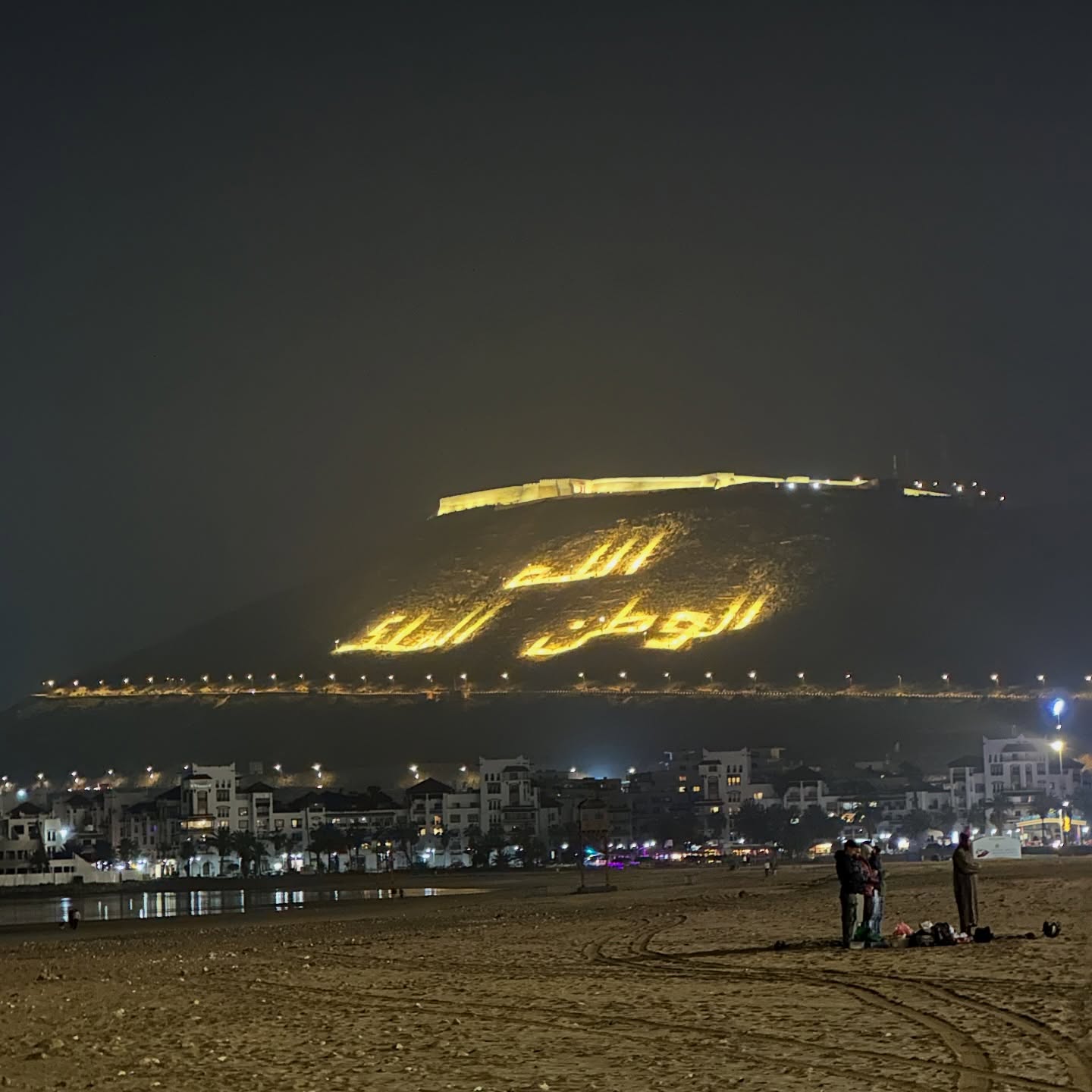
Agadir
⚠ Caution advisedA major resort destination, Agadir has relatively modern infrastructure for a coastal city. Many resort hotels use their own filtration systems. Even so, travel health authorities maintain their advisory to use bottled or filtered water for drinking.
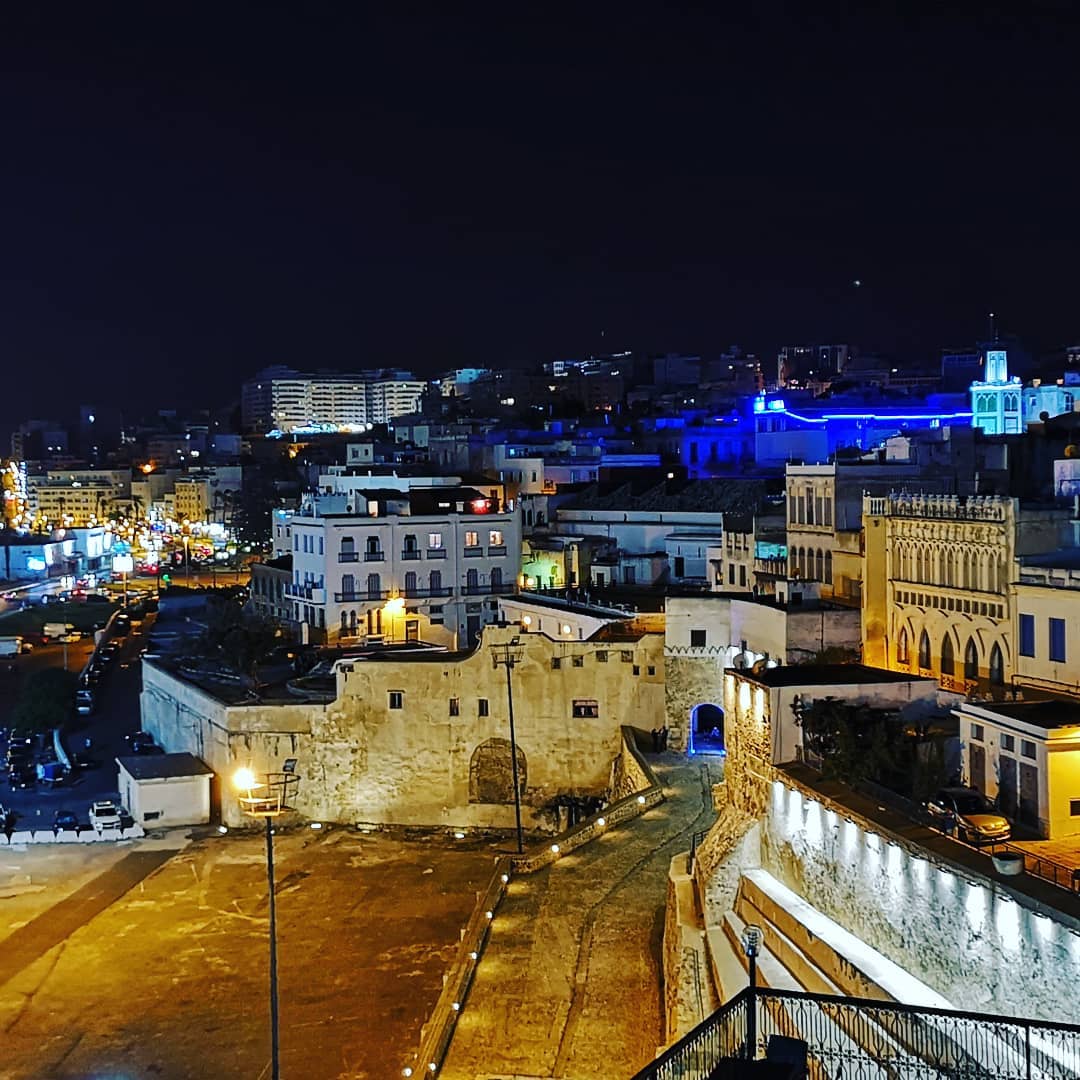
Tangier
⚠ Caution advisedTangier has seen significant infrastructure investment due to its role as a major entry point. Still, the standard traveller advisory applies. In the medina, older pipes can affect taste and safety — stick to sealed bottled water.
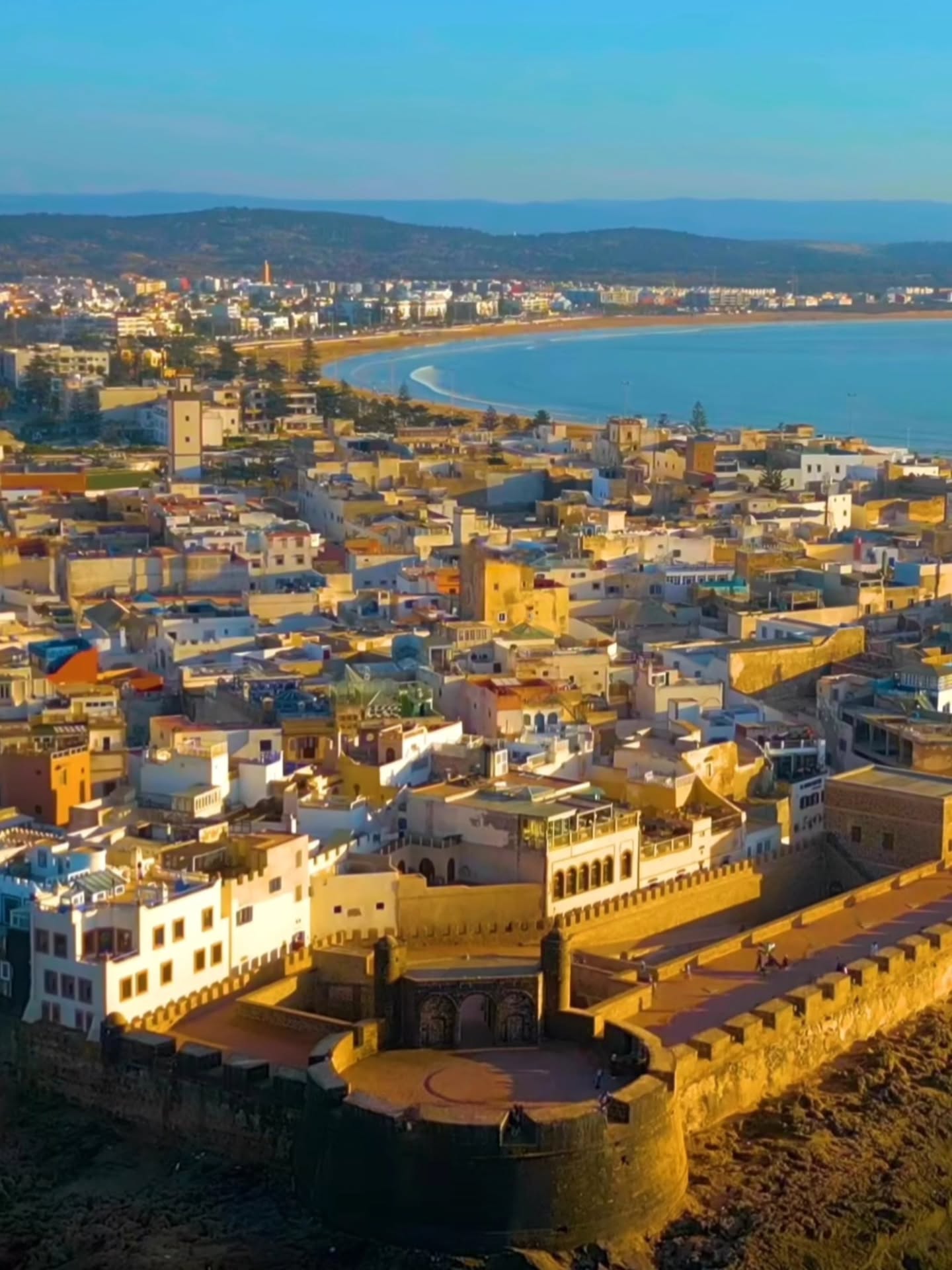
Essaouira
⚠ Caution advisedA smaller coastal town with a well-preserved medina. Tap water is treated but Essaouira’s older medina quarter has an ageing piping network. Bottled water is recommended without exception. The coastal winds make staying hydrated essential — plan accordingly.
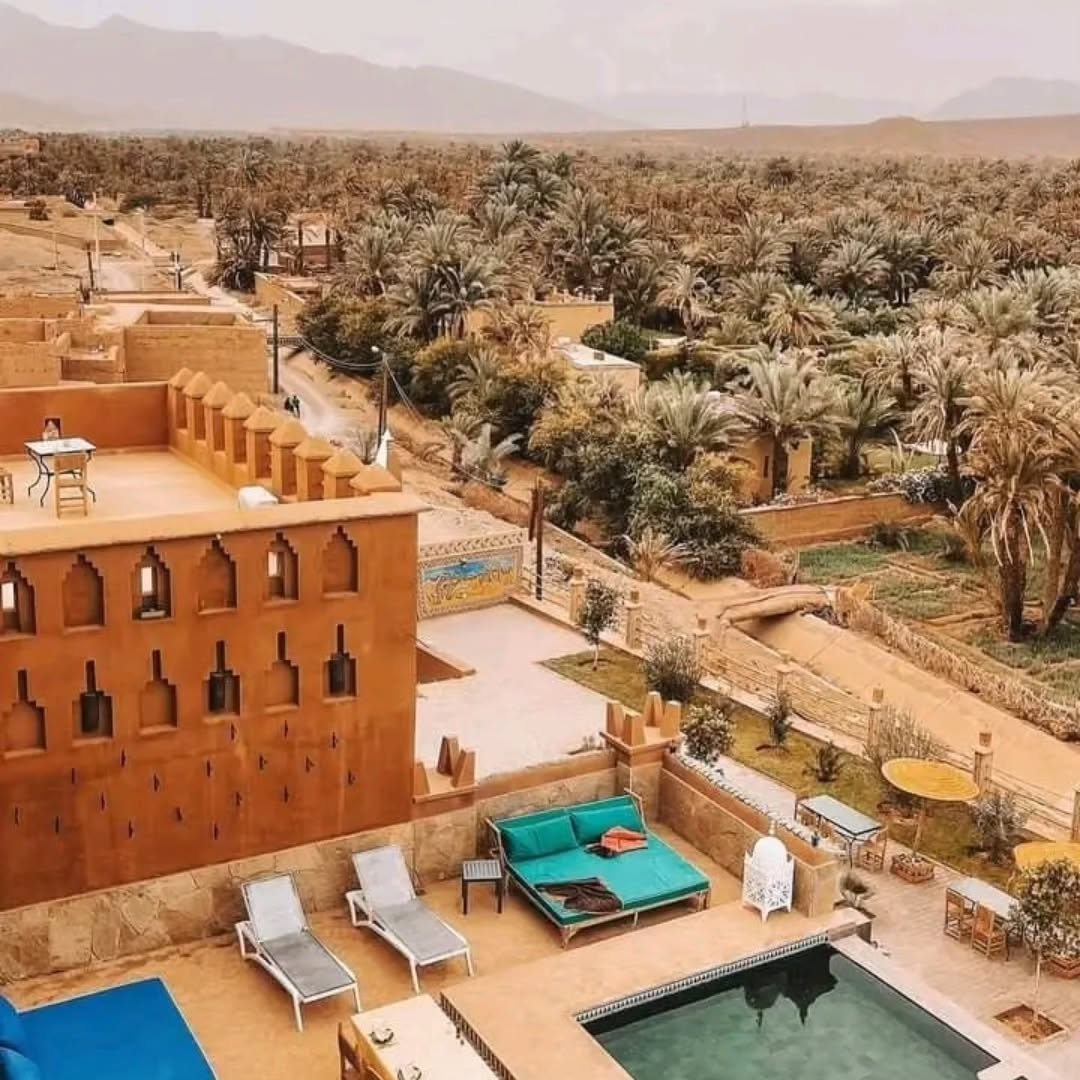
Zagora Draa Valley
⚠ Avoid for drinkingZagora sits at the edge of the Sahara and draws predominantly on deep groundwater rather than a treated municipal network. The water from the Draa valley aquifer can carry elevated fluoride levels, dissolved minerals, and occasional bacterial contamination. Stick to sealed bottles here more strictly than anywhere else in Morocco.
“The water is treated — but the recommendation remains consistent: international tourists should drink bottled or filtered water throughout Morocco, regardless of the city.”
Across all major Moroccan cities, the consensus from travel medicine specialists and foreign government advisories is the same: the risk level is broadly similar everywhere. There is no city in Morocco that travel health authorities currently classify as “completely safe for tourists to drink tap water.” This does not mean the water is dangerously contaminated — it simply means the precaution is the same everywhere.
Can I Brush My Teeth with Tap Water in Morocco?
This is a question that many visitors overlook, and the answer depends on your level of caution and stomach sensitivity.
The cautious approach (recommended for most visitors)
Travel health clinics, including the CDC Traveler’s Health portal and the UK’s TRAVAX service, advise that in countries where tap water is not recommended for drinking, you should also use bottled water for brushing teeth — particularly if you are prone to gastrointestinal issues, are immunocompromised, or are visiting for a short trip. Accidentally ingesting small amounts of tap water while brushing is enough to cause an upset stomach in sensitive individuals.
Practical tip: Keep a small bottle of still mineral water on your bathroom shelf and use it exclusively for brushing. A 500 ml bottle lasts 2–3 days for this purpose. It’s a minimal cost for significant peace of mind.
The moderate approach (used by many regular Morocco travellers)
Many experienced travellers to Morocco — including those who visit frequently — use tap water to brush their teeth without issues. If you are in good health, travelling for longer than two weeks (giving your gut time to adapt), and staying in a hotel with relatively new plumbing, the actual risk of brushing with tap water is considered low by most travel medicine practitioners. However, this is a personal risk assessment, not an official recommendation.
Official position: When in doubt, use bottled water for brushing teeth. The NHS and CDC do not distinguish between “drinking” and “brushing” in their tap water advisories for Morocco — both are covered under the same precautionary guidance.
Urban Areas vs. Rural Morocco: A Different Reality
The water safety picture changes significantly once you leave Morocco’s main cities. Rural areas, mountain villages, and desert regions operate on entirely different infrastructure — and in many cases, on no formal infrastructure at all. If your itinerary includes trekking in the High Atlas, visiting the Saharan dunes near Merzouga, or staying in remote guesthouses, your water strategy must be more rigorous.
Urban Morocco
Cities, large towns, resort areas
- Treated by ONEE, chlorinated network
- 97%+ urban coverage (WHO/ONEE data)
- Bottled water universally available
- Most hotels have filtration systems
- Older medina piping can affect quality
- Not recommended for direct drinking by tourists
- Risk: Low–moderate with standard precautions
Rural & Remote Morocco
Mountains, desert, villages, trails
- Often no formal treatment infrastructure
- Springs and wells may be contaminated
- No reliable access to bottled water in remote spots
- Seasonal flooding can contaminate water sources
- Even “natural” mountain springs carry bacterial risk
- Bring a portable filter (LifeStraw, Sawyer Squeeze)
- Risk: High without proper preparation
For Atlas trekkers and desert travellers: Plan to carry all your drinking water from the nearest town, or bring a certified water purification device. Iodine tablets work but leave a taste — a hollow-fibre filter (Sawyer Squeeze or similar) is the preferred choice among experienced Morocco trekkers.
Tap Water vs. Bottled Mineral Water in Morocco
To make an informed decision, it helps to understand exactly what separates Moroccan tap water from the bottled mineral options available in shops and supermarkets. Here is an objective, side-by-side comparison for tourists.
Tap Water
Municipal supply (ONEE)
Bottled Mineral Water
Regulated by Moroccan standards (NM 03.7.002)
Eco-conscious travel: Morocco produces a significant amount of single-use plastic waste from tourist water consumption. If you plan a long stay, consider a quality portable filter (Sawyer, LifeStraw, or GRAYL) filled with tap water — it reduces plastic use while keeping you safe.
Which Moroccan Mineral Water Brand Should You Choose?
Morocco produces several well-established mineral water brands, all regulated under the Moroccan standard NM 03.7.002 and subject to regular laboratory testing. Each has a distinct mineral profile, source, and best use case. Use the interactive guide below to compare them:
Interactive Guide · 2026
Moroccan Mineral Water Quality Guide
Select a brand to see its full profile, mineral analysis and tourist rating
Still · Very low mineralisation · Best-seller nationwide
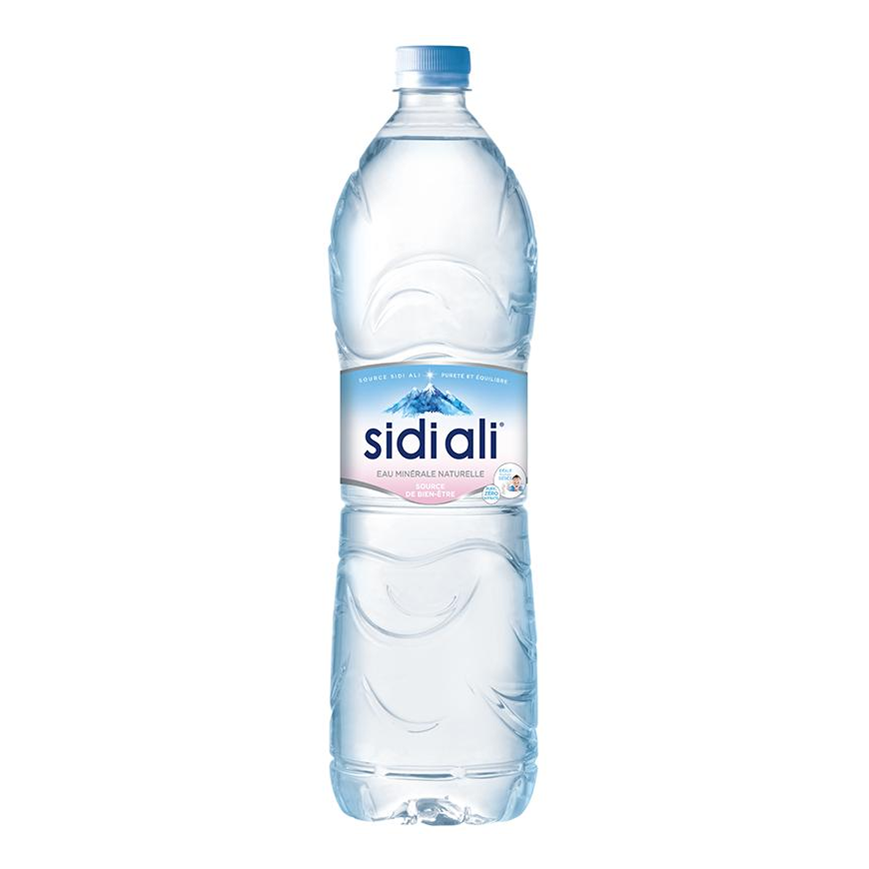
Morocco’s best-selling mineral water, sourced from the Ain Sidi Ali spring in the Middle Atlas mountains (Beni Mellal region). With a very low TDS (~190 mg/L) and a neutral pH of 7.2, it is the most universally recommended option for tourists, sensitive stomachs, children, and elderly visitors. Widely available everywhere from village corner shops to international airports.
Still · Balanced mineralisation · Fès-Meknès region
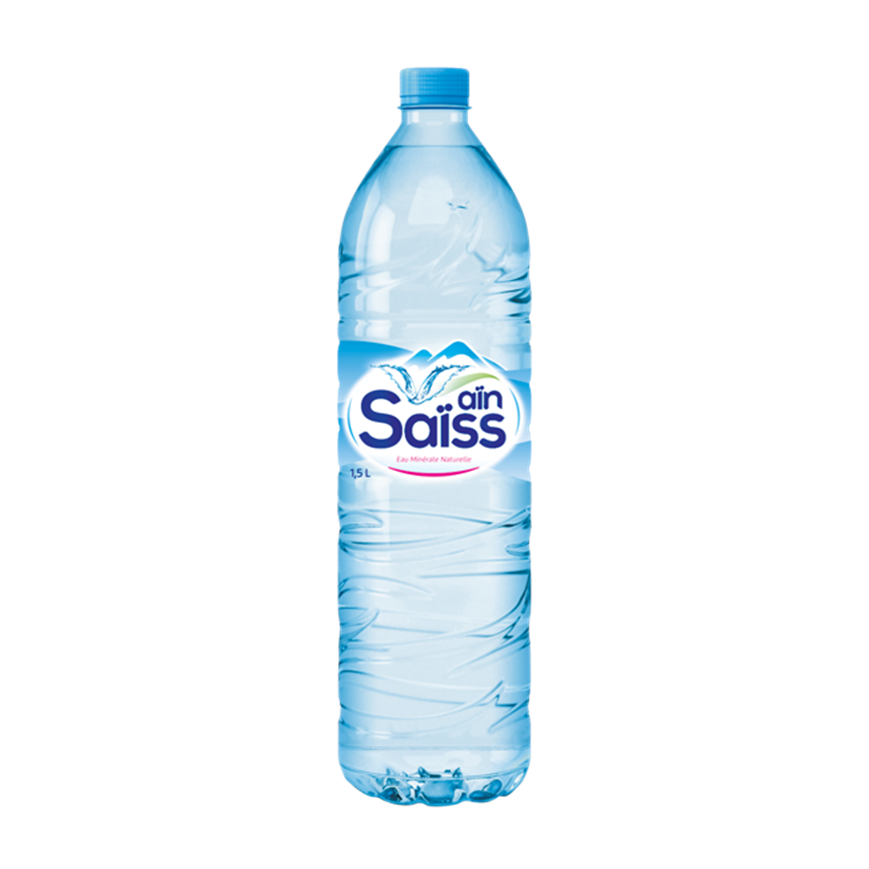
Sourced from the fertile Saïss plain near Fès, one of Morocco’s most important agricultural and geological basins. Ain Saiss has a well-balanced mineral profile (TDS ~280 mg/L) with a slightly alkaline pH of 7.3, making it smooth and pleasant to drink. It is a popular everyday choice among Moroccan families in northern and central regions, and an excellent option for tourists who cannot find Sidi Ali. Widely available in supermarkets from Tangier to Fès to Meknès.
Still · Higher mineralisation · Thermal geothermal origin
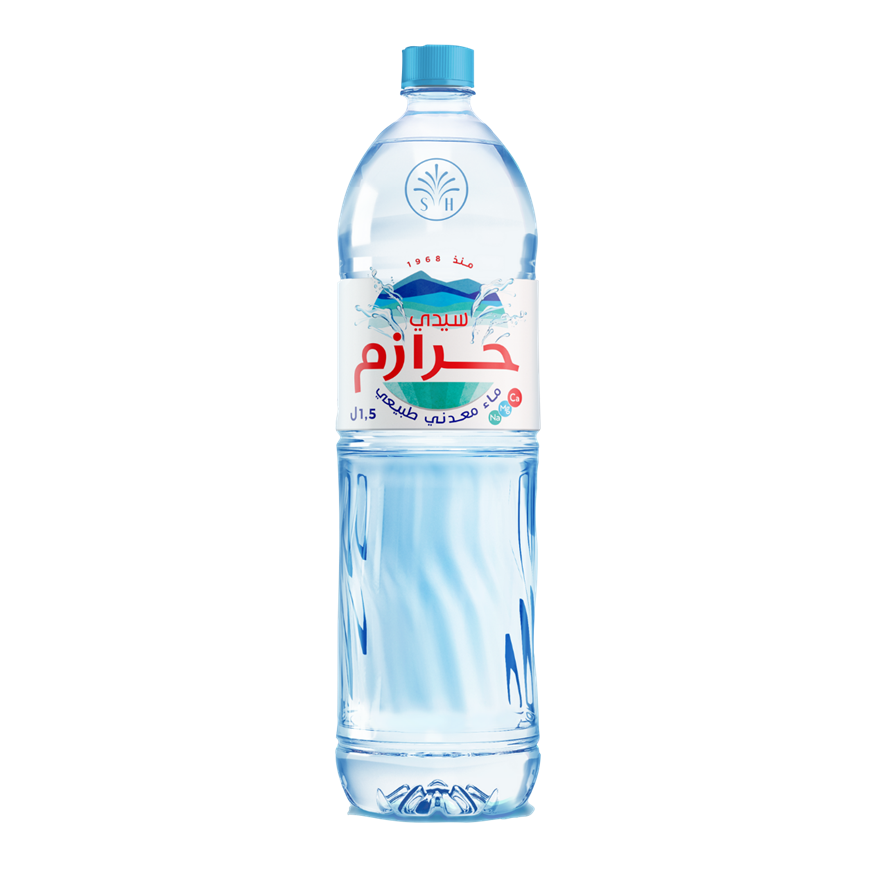
Sourced from a thermal spring near the ancient city of Fes, Sidi Hrazem has a distinctly higher mineral content — particularly sodium and sulphates — reflecting its deep geothermal origin. It has a slightly more pronounced taste. Suitable for healthy adults but not ideal for those on low-sodium diets, hypertensive individuals, or infants. Its therapeutic reputation has existed for centuries in Moroccan culture.
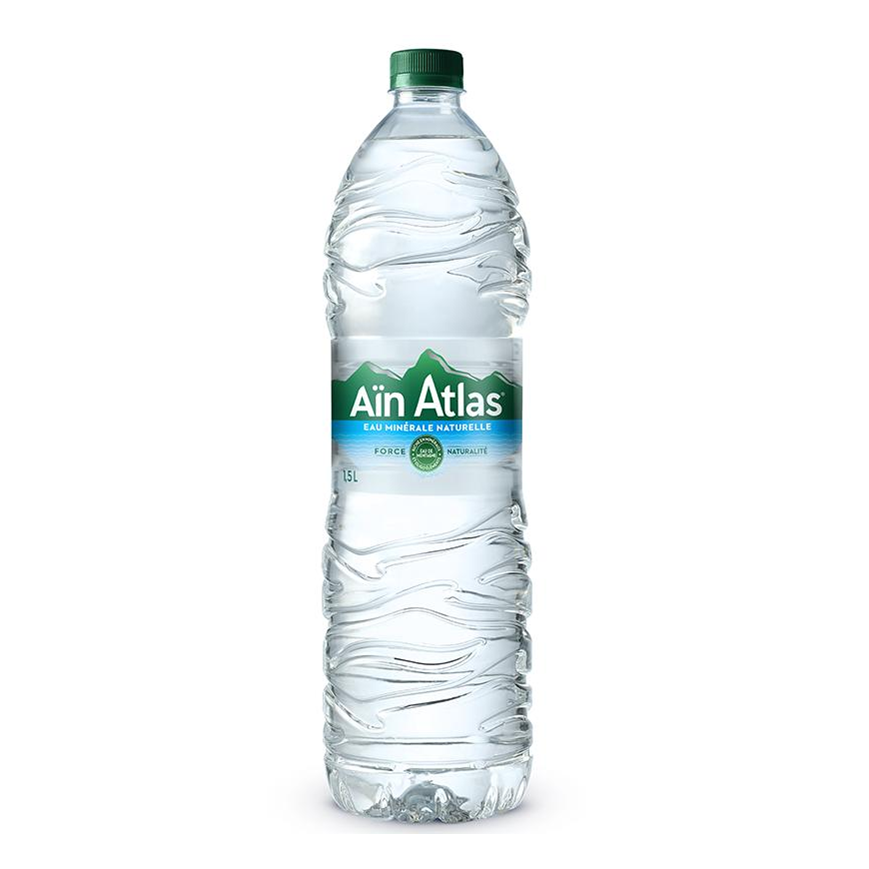
Still · Light mineralisation · Atlas mountain spring
Drawn from the Atlas mountain range, Ain Atlas offers a clean, well-balanced profile with a light mineral content (TDS ~250 mg/L). Its slightly alkaline pH (7.4) makes it pleasant to drink in hot weather and gentle on the digestive system. A solid all-around choice for tourists, increasingly available in larger supermarkets and hotel chains nationwide.
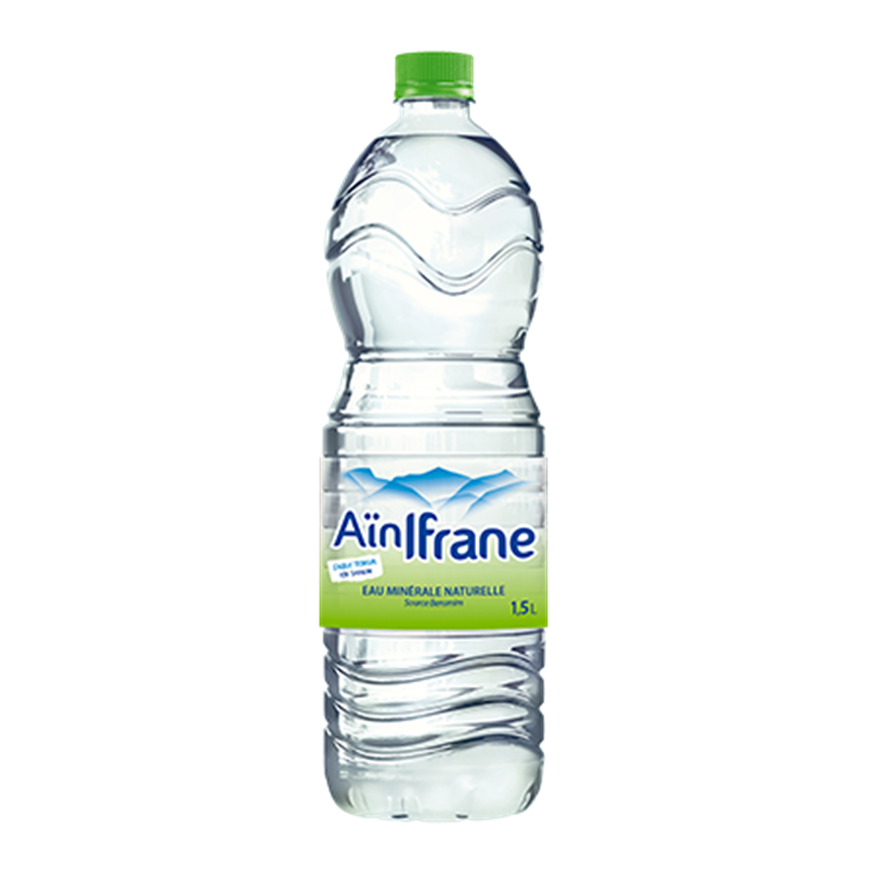
Still · Very light mineralisation · Cedar highlands spring
From the cedar forests and highland springs of Ifrane — Morocco’s “Little Switzerland” — Ain Ifrane is among the lightest and purest mineral waters available in Morocco. Its very low TDS (~150 mg/L) and clean taste make it especially suitable for travellers with sensitive digestion, children, and anyone recovering from stomach issues. An excellent choice if you can find it.
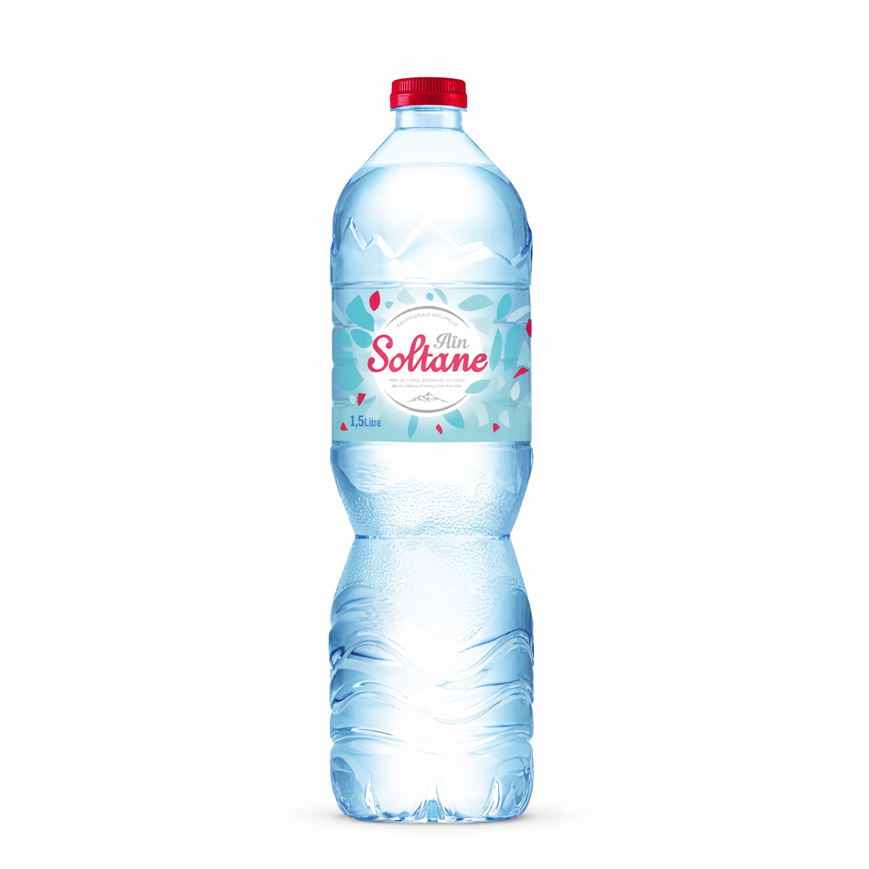
Ain Sultan
Still · Balanced mineralisation · Good value
A reliable everyday option with a balanced mineral profile. Ain Sultan is particularly well-distributed in central and southern Morocco, making it a common find in Marrakech, Ouarzazate, and Agadir. Its TDS (~220 mg/L) and neutral profile make it a safe, no-surprises choice for tourists of all ages. Competitively priced and a solid pick when Sidi Ali or Ain Ifrane are unavailable.
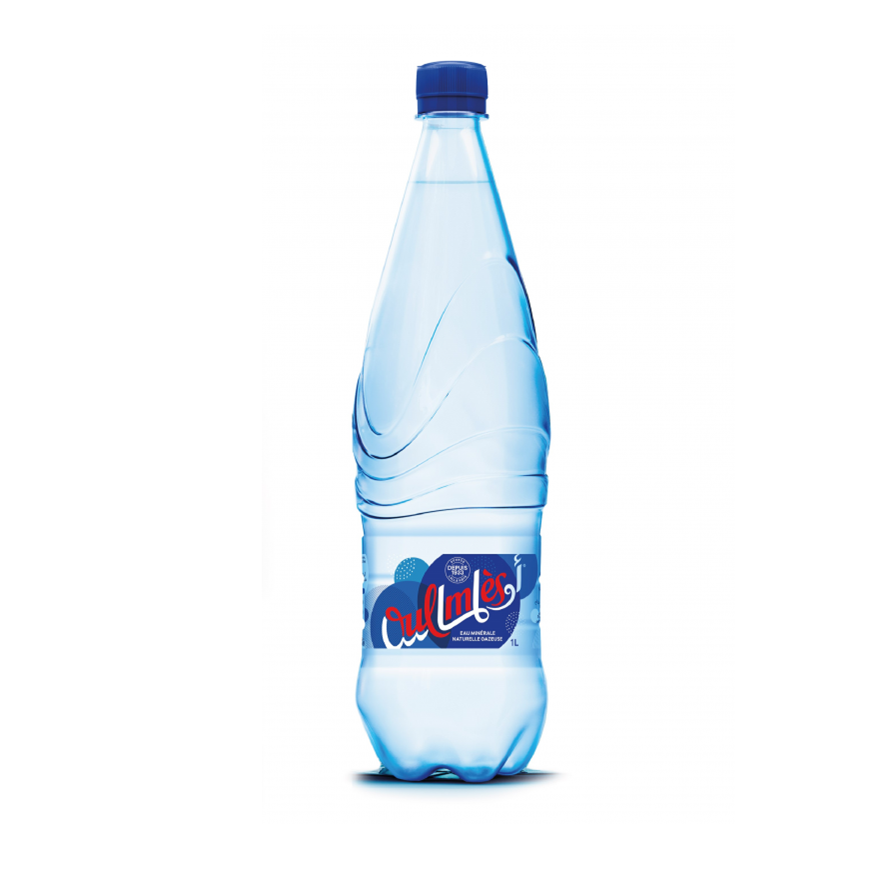
Naturally Sparkling · Higher mineralisation · Historic brand since 1933
Morocco’s iconic sparkling mineral water, naturally carbonated from the Oulmès volcanic spring in the Middle Atlas — one of the oldest commercially bottled waters in North Africa (since 1933). Its higher mineral content and natural CO₂ give it a distinctive, lively taste. Excellent for digestion and particularly popular at restaurants. Not recommended as the sole hydration source for infants or those with acid reflux.
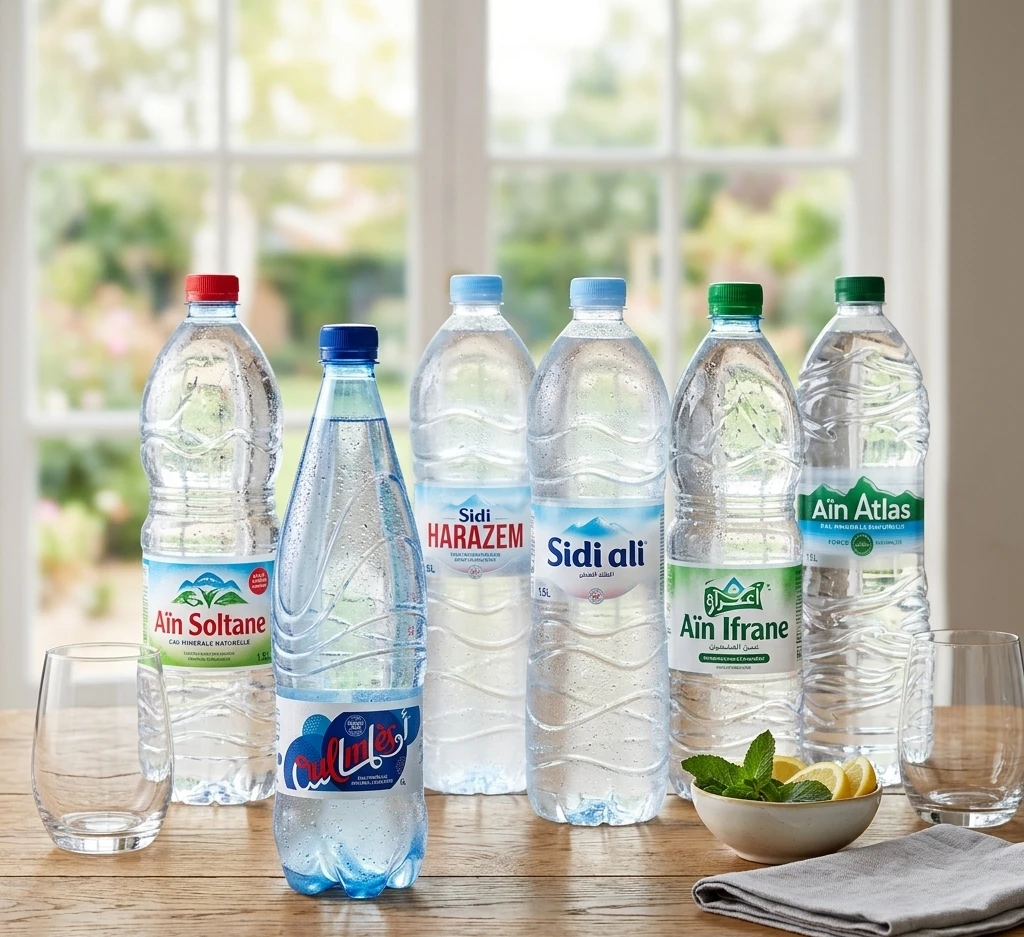
Where to buy: Always purchase sealed, labelled bottles from reputable supermarkets — Marjane, Label’Vie, Carrefour, or BIM. A 1.5-litre bottle costs 3–5 MAD; unsure about local prices? Our guide on what currency Morocco uses covers dirhams and budgeting. Avoid buying from informal vendors — counterfeit bottles (refilled with tap water) have been documented. Always check the factory cap is intact before opening.
Street Food & Water Safety in Morocco
Morocco’s street food scene — from the famous Djemaa el-Fna food stalls in Marrakech to the fish grills of Essaouira — is one of the highlights of any trip. But water hygiene is directly linked to food safety, and understanding the risks allows you to enjoy it without unnecessary caution.
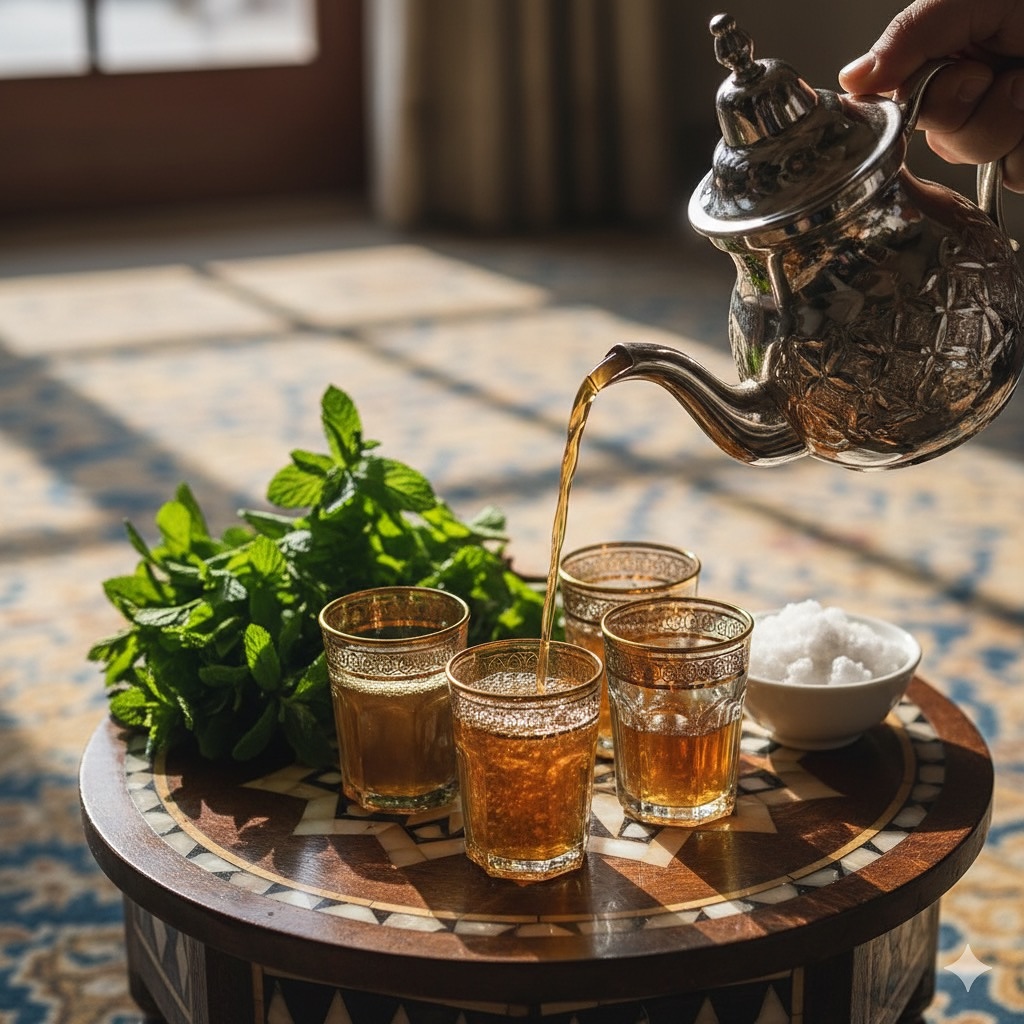
Is Moroccan tea (atay) safe to drink?
Moroccan mint tea — atay — is prepared by boiling water, then steeping fresh mint with generous amounts of sugar. The boiling step is the key factor: water brought to a rolling boil is generally safe to drink, as heat eliminates the vast majority of bacteria and parasites of concern to travellers.
In practice, however, the safety of the tea depends entirely on the venue. Here is a realistic, venue-by-venue assessment:
4/5-star hotels & riads
Tea is prepared with filtered or bottled water as standard. Generally safe without reservation. Ask staff if you’re unsure — they will confirm the water source.
Mid-range restaurants
Tea is typically prepared with tap water that is properly boiled. The boiling step substantially reduces risk. Most experienced Morocco travellers drink restaurant tea without issue.
Local cafés & small darbas
Water is usually tap water; boiling reduces risk significantly, but cannot be guaranteed in all cases. Sensitive travellers may prefer to request tea made with mineral water — “atay b’l-ma ma’dani” — which many establishments will accommodate without issue.
Street vendors & souks
Water source and boiling thoroughness are harder to verify. If you have a sensitive stomach or are in your first days in Morocco, exercise caution. Ask specifically whether the water is boiled, or opt for a sealed bottled drink instead.
Practical tip: You can ask for your tea to be made with mineral water in almost any Moroccan café — just say “atay b’l-ma ma’dani, afak” (tea with mineral water, please). Most establishments keep bottled water on hand and will prepare it without hesitation. The cost difference is minimal.
Can you eat salads in Morocco?
The honest answer: it depends on where you eat them. The CDC and WHO both flag raw vegetables washed in unfiltered tap water as a significant source of traveller’s diarrhoea in countries where tap water is not recommended for drinking — and Morocco falls under this category.
However, this does not mean all salads are off the table. The practical risk assessment by setting is as follows:
- Reputable restaurants and hotel dining rooms: Salads are typically prepared with properly washed produce and, in higher-end establishments, rinsed with filtered or bottled water. The risk here is considered low. Moroccan cuisine’s famous zaalouk (cooked aubergine), taktouka (cooked tomato and pepper), and other cooked vegetable starters are entirely safe regardless of venue.
- Local budget restaurants and street stalls: Raw salads and raw cut fruit here carry a higher risk of having been washed in unfiltered tap water. If you are in your first few days in Morocco or have a history of sensitive digestion, it is advisable to opt for cooked dishes rather than raw salads in these settings.
- General rule: Cooked food is safer than raw. Peeled fruit you peel yourself (oranges, bananas, mandarins) is safe. Pre-cut fruit at street stalls, unpeeled raw salads, and fresh salsa-style condiments at informal venues carry the highest relative risk.
Local note: Cooked Moroccan salads — roasted peppers, preserved lemons, cooked carrot salad — are a safe and delicious way to enjoy the full flavour of Moroccan cuisine without the raw-vegetable risk. Do not avoid Moroccan food; just choose your venue and dish type wisely.
Quick Tips at a Glance Essential water safety reminders for every Morocco tourist
Always drink bottled water
Never drink directly from the tap regardless of city. Bottled water costs 3–6 MAD (0.30–0.60 USD) for 1.5 litres in supermarkets.
Use bottled water for brushing
Keep a 500 ml bottle on your bathroom shelf. Accidental ingestion while brushing is enough to cause stomach upset for sensitive travellers.
Ask about ice in drinks
In upscale restaurants ice is usually safe. At street stalls and local cafés, request drinks without ice — بدون ثلج / sans glaçons.
Check the bottle seal
Always verify the factory cap is intact and unbroken. Refilled tap-water bottles sold as mineral water have been reported in tourist areas.
Bring a filter for rural travel
If you’re trekking the Atlas or visiting the Sahara, carry a portable filter (Sawyer, LifeStraw, or GRAYL) — bottled water may be unavailable.
Pack ORS & probiotics
Oral Rehydration Salts (ORS) are available at all Moroccan pharmacies. Probiotics taken before and during your trip can help your gut adapt faster.
Practical Tips for Staying Safely Hydrated in Morocco
Morocco can be intensely hot, especially in summer in inland cities like Marrakech and Fes. Staying well-hydrated is critical. The quick tips cards above give you a fast summary — the detail below provides fuller context. And if you have broader safety questions about travelling to Morocco, our full guide on whether Morocco is safe to visit covers crime, health, and travel advisories in detail.
- Buy bottled water in supermarkets, not tourist shops. Major supermarkets (Marjane, Carrefour, Label’Vie, BIM) sell 1.5-litre bottles of mineral water for 3–5 Moroccan dirhams — a fraction of what tourist-area vendors charge. Stock up daily.
- Stick to reputable local brands. Sidi Ali, Ain Saiss, and Oulmès are all government-regulated and widely tested. Avoid very cheap generic water from informal vendors — counterfeiting of water bottles (refilled with tap water) has been reported in tourist areas.
- Be cautious with ice in drinks. In upmarket restaurants and major hotel chains, ice is almost certainly made from filtered or bottled water. In street food settings and local cafés, the origin of ice is less certain. Ask if unsure, or request drinks without ice (بدون ثلج / sans glace).
- Avoid raw salads washed in tap water. Fresh salads, cut fruit, and raw vegetables in street stalls may have been washed in unfiltered tap water. This is a common source of traveller’s diarrhoea in Morocco. In reputable restaurants, this risk is lower — opt for cooked dishes in informal settings.
- Showering and bathing are safe. You do not need to avoid tap water for bathing or showering. The risk applies to ingestion only — avoid swallowing water in the shower.
- Consider a water purification solution. If you are travelling for an extended period or visiting rural areas, water purification tablets (iodine or chlorine-based) or a portable filter (e.g., LifeStraw or Sawyer) can provide an additional safety layer and reduce plastic waste.
- Consult a travel health clinic before departure. If you have a compromised immune system, IBD, or specific gastrointestinal conditions, get personalised advice from a travel medicine specialist before your trip.
Quick-Reference: Tap Water Safety Across Morocco
| City / Location | Drink tap water? | Brush teeth? | Ice in drinks? |
|---|---|---|---|
| Marrakech | ✗ Not advised | Use caution | Formal venues only |
| Casablanca | ✗ Not advised | Use caution | Formal venues only |
| Agadir | ✗ Not advised | Use caution | Formal venues only |
| Tangier | ✗ Not advised | Use caution | Formal venues only |
| Essaouira | ✗ Not advised | Use caution | Formal venues only |
| Fes (Fez) | ✗ Not advised | Use caution | Formal venues only |
| Zagora (Draa Valley) | ✗ Strictly avoid | ✗ Avoid | ✗ Avoid |
| Rural / desert areas | ✗ Avoid entirely | ✗ Avoid | ✗ Avoid |
| 4/5-star hotels | Check with hotel | ✓ Usually filtered | ✓ Generally safe |
Frequently Asked Questions
These are the questions travellers most commonly ask about water safety in Morocco, answered based on official travel health guidance.