Using ATMs in Morocco: A Tourist’s Complete Guide to Fees, Banks & Cash
Everything you need to know about withdrawing Moroccan Dirhams, avoiding unnecessary fees, and staying safe at the ATM in Morocco, whether you’re arriving in Marrakech, Fes, or anywhere else across the country.
Do You Actually Need Cash in Morocco? ↑ Contents
Short answer: yes, quite a bit. Morocco is still a predominantly cash-based economy, especially once you step away from hotel lobbies and tourist-facing restaurants. Souks, small cafes, local transport (including petit taxis), street food stalls, hammams, and tips for guides all require Moroccan Dirhams in hand.
That said, major cities in Morocco like Casablanca, Marrakech, and Rabat have seen a notable rise in card acceptance over the past few years. Higher-end restaurants, chain hotels, and some medina shops do accept cards, but it’s rarely guaranteed. The safest approach is to carry a reasonable amount of Dirhams at all times and use an ATM in Morocco to replenish as needed.
How ATMs Work in Morocco ↑ Contents
ATMs in Morocco function much like those anywhere else in the world. You insert your card, enter your PIN, select an amount in Moroccan Dirhams, and the machine dispenses cash. Most machines support English alongside French and Arabic, making navigation straightforward for international travelers.
The ATM network in Morocco is well-developed. You’ll find machines in airports, city centers, medina entrances, shopping malls, and near most tourist areas. Coverage becomes thinner in smaller villages and deep rural zones, so it’s worth withdrawing enough cash before venturing off the beaten track.
Most Moroccan ATMs are connected to the international Interbank network (CMI), which means they accept cards from major global networks without issue.
Morocco ATM Fees: What to Expect ↑ Contents
This is where things get a bit layered. When you use an ATM in Morocco with a foreign bank card, you’re potentially looking at two separate charges.
1. The Moroccan bank’s ATM fee
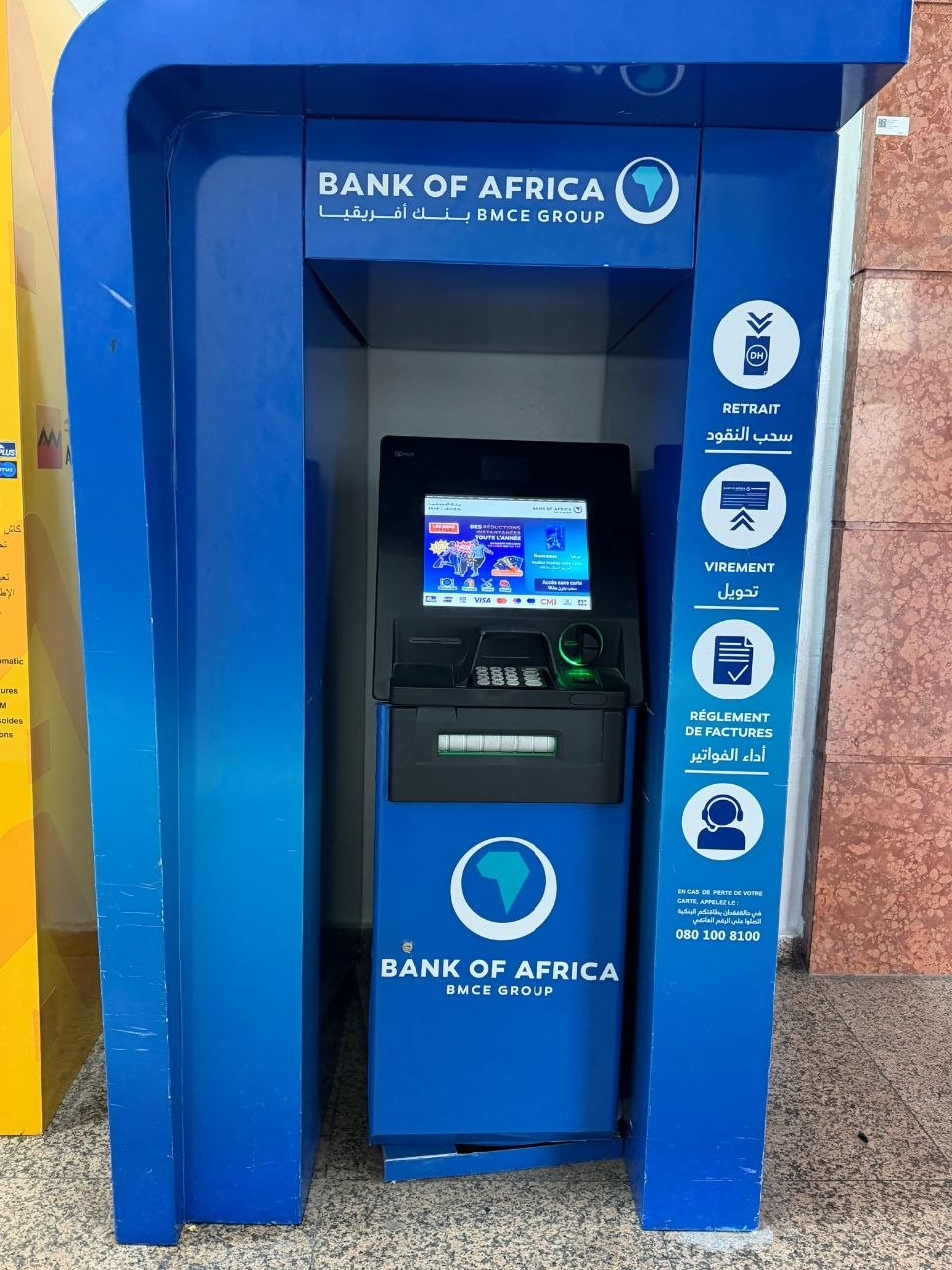
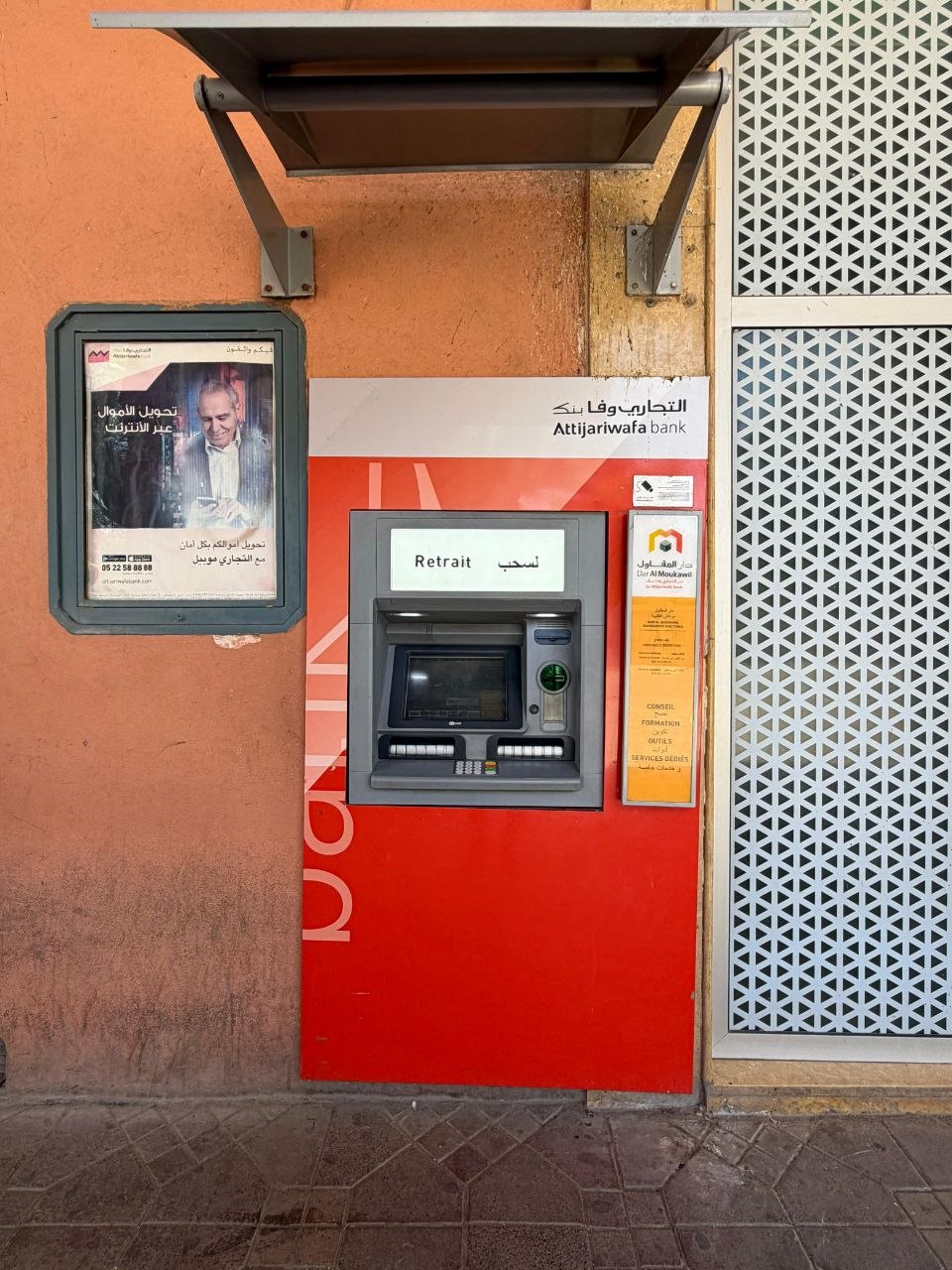
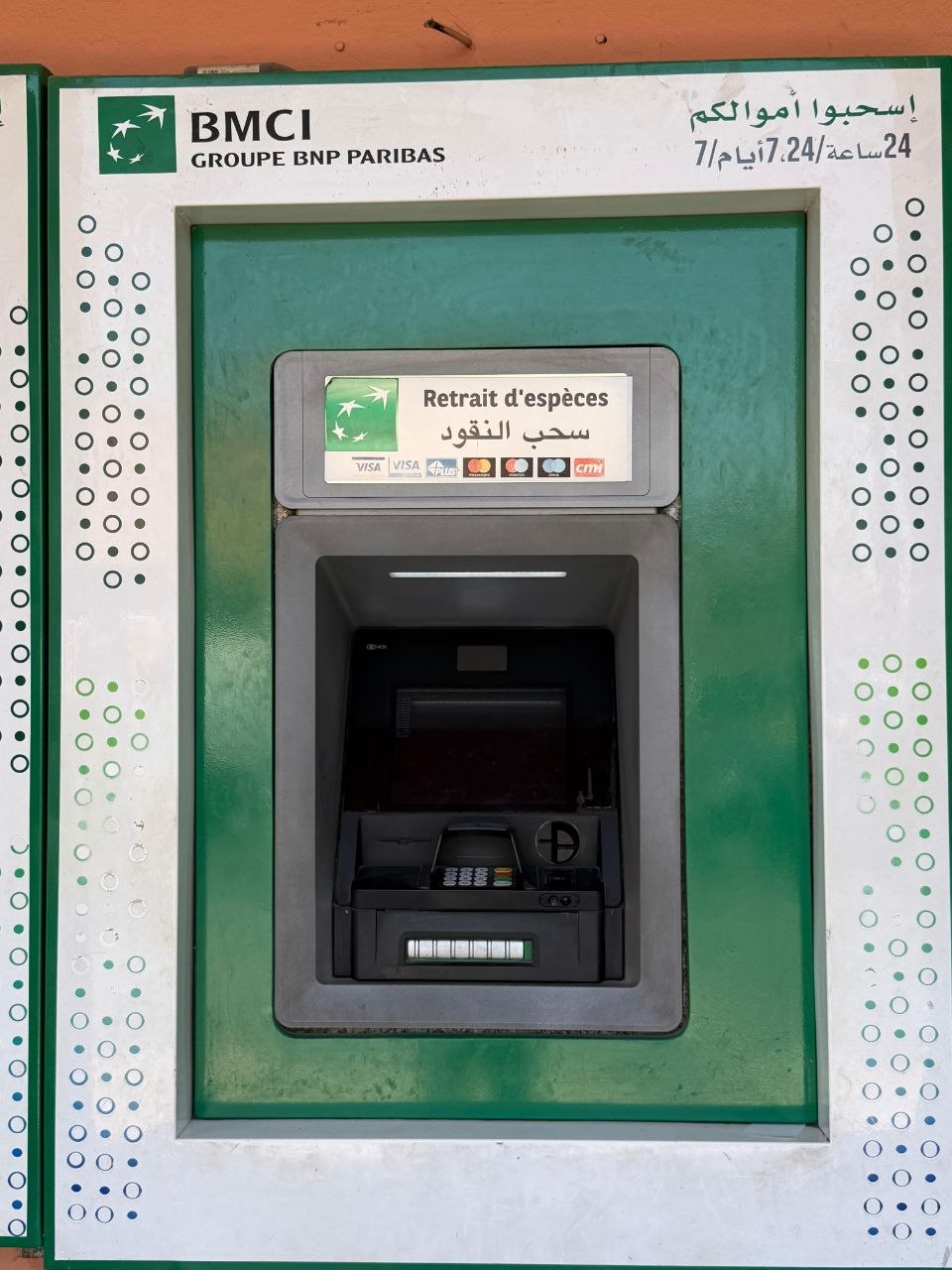
Most major Moroccan banks, including Attijariwafa Bank, BMCE Bank of Africa, CIH Bank, and Banque Populaire, do not charge a foreign card user a local ATM fee for a standard cash withdrawal. This is generally good news. However, some independent ATM operators (more on those below) do charge a flat fee, typically between 25 and 60 MAD per transaction.
2. Your home bank’s foreign transaction and ATM fees
This is usually the more significant charge. Most traditional banks apply a combination of a flat ATM fee (often 3 to 5 USD equivalent) and a foreign transaction fee of 1 to 3% on the converted amount. If you’re traveling on a budget, these costs accumulate quickly.
The best approach is to use a travel-friendly card such as Wise, Revolut, Charles Schwab (US), or Monzo (UK), all of which offer significantly reduced or zero Morocco ATM fees on withdrawals.
Dynamic Currency Conversion (DCC): Avoid This Trap ↑ Contents
Dynamic Currency Conversion (DCC) in Morocco is one of the most common money mistakes tourists make, and it happens right at the ATM screen. When a machine detects a foreign card, it may ask whether you’d like to be charged in your home currency (euros, dollars, pounds) instead of Moroccan Dirhams.
This might sound convenient, but it virtually always comes with a heavily unfavorable exchange rate, often 3 to 7% worse than the interbank rate. The ATM operator profits from this difference at your expense.
This applies not only to ATM withdrawals but also to card payments in shops and restaurants. If a terminal offers to convert to your currency, always decline and opt for MAD instead.
Best Banks and ATMs for Tourists in Morocco ↑ Contents
Not all ATMs in Morocco are equal. Below is a practical comparison of the most common machines you’ll encounter as a tourist.
| Bank / Operator | Local Fee (Foreign Cards) | English Interface | Availability | Verdict |
|---|---|---|---|---|
| Attijariwafa Bank | None (typically) | Yes | Nationwide, very common | Recommended |
| BMCE Bank of Africa | None (typically) | Yes | Nationwide, city centers | Recommended |
| Banque Populaire | None (typically) | Yes | Very wide coverage | Recommended |
| CIH Bank | None (typically) | Yes | Urban areas | Good option |
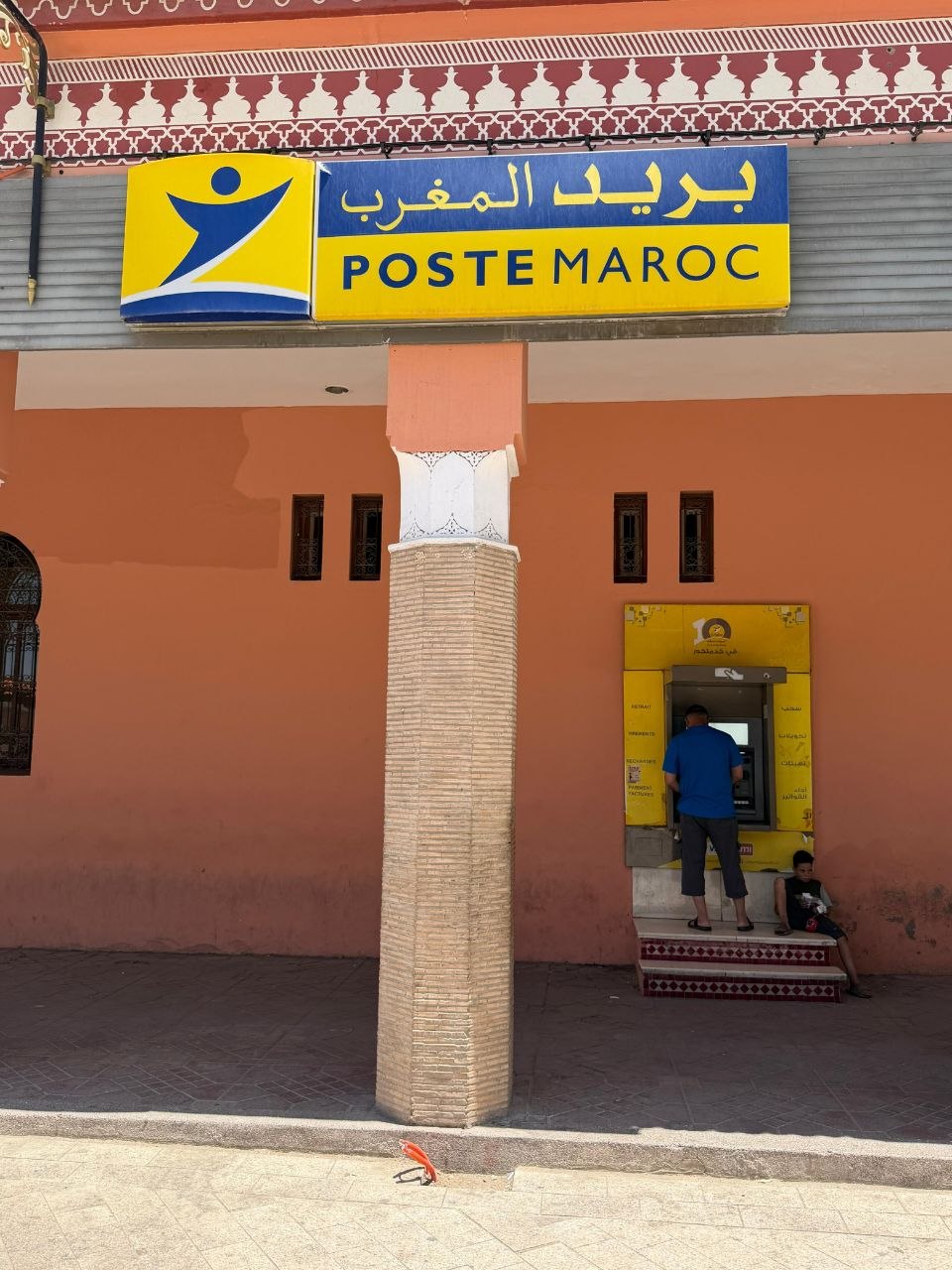
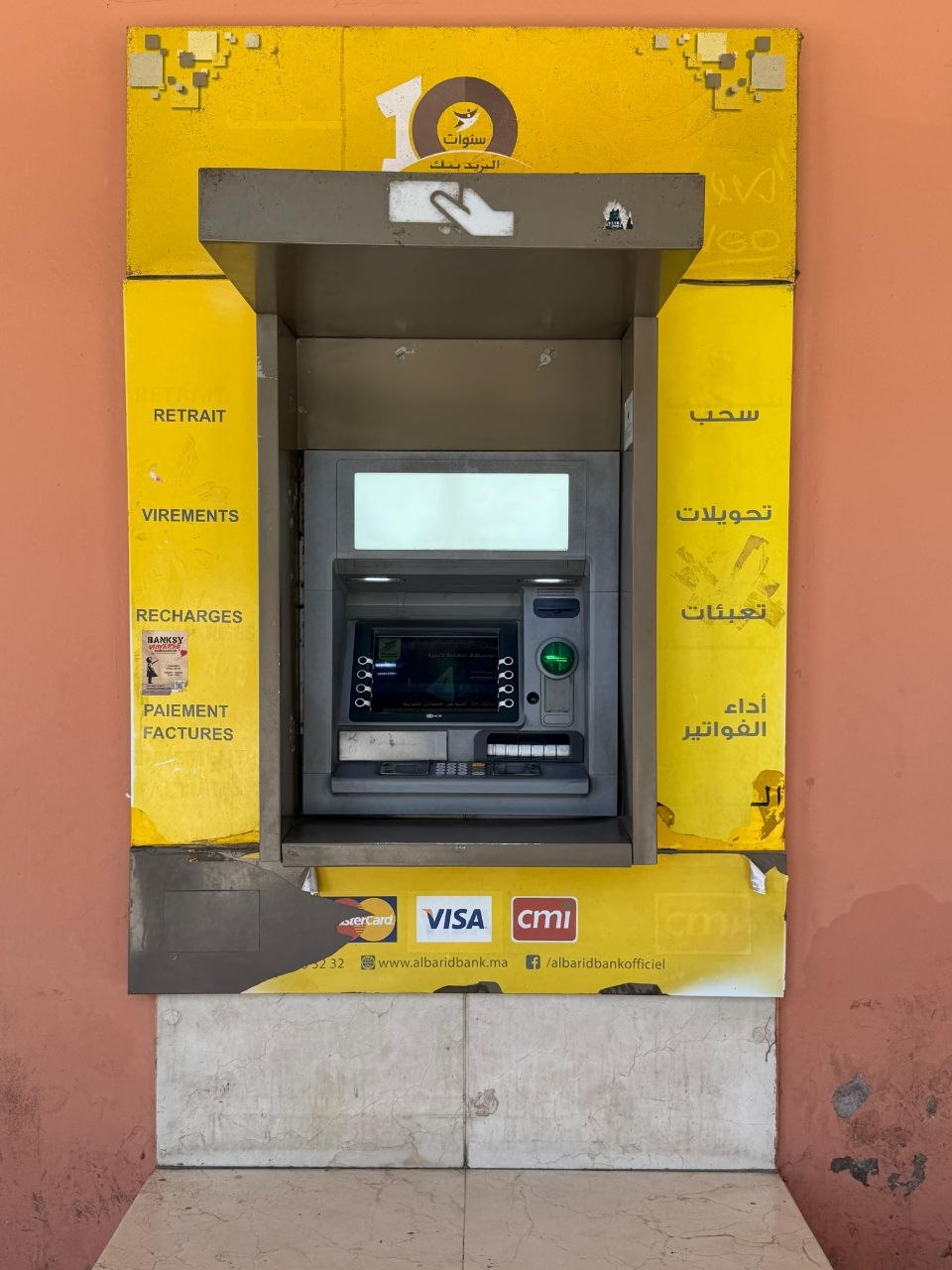
| Poste Maroc (Al Barid) | Variable | Partial | Widespread, incl. smaller towns | Decent fallback |
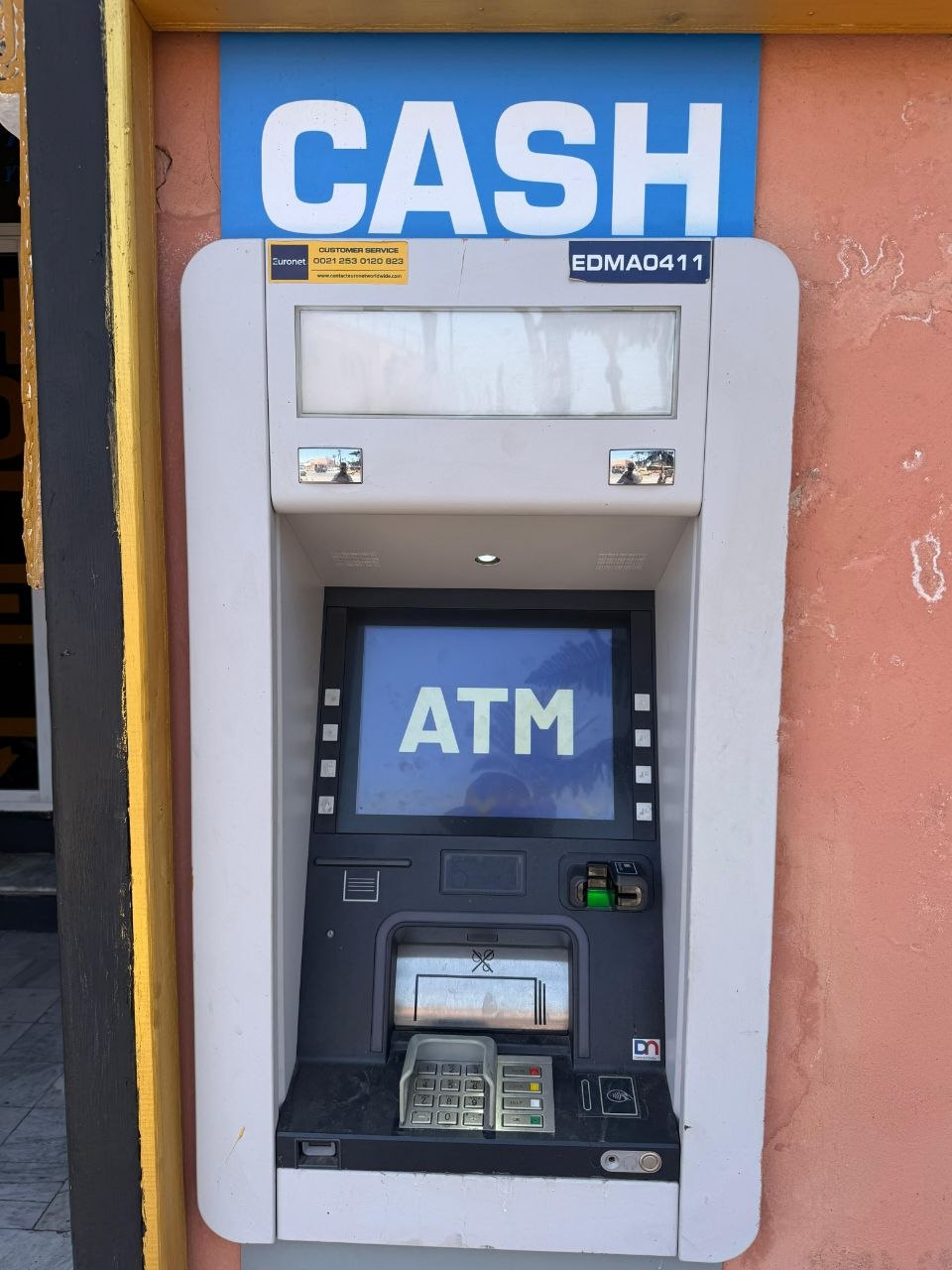
| Euronet & Independents | Yes, 25–60 MAD | Yes | Airports, tourist zones | Use as last resort |
Stick to ATMs attached to established Moroccan bank branches wherever possible. Independent machines in souvenir shop entrances or small kiosks near tourist landmarks tend to apply the DCC trap more aggressively and charge additional transaction fees.
ATM Withdrawal Limits in Morocco ↑ Contents
The Morocco ATM withdrawal limit varies by bank and by machine, but as a general rule, most ATMs cap a single transaction at between 2,000 and 4,000 MAD (roughly 180 to 360 EUR). Some machines at airport locations or larger branches may allow up to 5,000 MAD in a single withdrawal.
Your home bank may also impose its own daily limit for international ATM use. Check this before you travel to avoid being caught short. If you need a larger amount of cash, you can perform multiple transactions, though this increases total fees.
Using Visa and Mastercard at Moroccan ATMs ↑ Contents
Using Visa and Mastercard in Morocco ATMs is generally seamless. Both networks are widely accepted at ATMs affiliated with major Moroccan banks. You’ll see the Visa and Mastercard logos displayed on virtually every ATM you encounter in tourist areas.
American Express is accepted at fewer machines and less commonly in shops, so it’s advisable to carry a Visa or Mastercard as your primary withdrawal card. UnionPay is also accepted at some ATMs following increased Chinese tourism to Morocco.
Contactless Visa and Mastercard payments in shops and restaurants are growing but not yet universal. Chip-and-PIN remains the standard in Morocco, so ensure your card supports this.
Is It Safe to Use ATMs in Morocco? ↑ Contents
Yes, using an ATM in Morocco is generally safe. Morocco has a well-functioning banking infrastructure and card skimming incidents, while not unheard of, are relatively rare compared to some other destinations. That said, basic precautions go a long way.
Morocco is considered safe for tourists by most international travel standards, and ATM theft or scams targeting tourists at machines are not a widespread issue. Common sense hygiene still applies, as it would anywhere in the world.
- Use ATMs during daylight hours or inside a bank’s enclosed lobby
- Shield the keypad when entering your PIN
- Be wary of strangers who offer to “help” you with the machine
- Check the card slot for anything that looks out of place before inserting your card
- Pocket your cash before stepping away from the machine
- Prefer ATMs inside bank branches rather than standalone kiosks on quiet streets
Practical Tips Before You Withdraw ↑ Contents
A few things worth knowing before your first ATM visit in Morocco, whether you’re landing in Marrakech Menara Airport or crossing in from a land border.
- Notify your bank before travel. Many banks will block international transactions as a fraud precaution. A quick call before you leave prevents an unpleasant surprise at the machine.
- The airport ATMs work fine. Attijariwafa Bank and BMCE Bank both have machines at Marrakech and Casablanca airports. They’re not a rip-off; use them if you need Dirhams on arrival.
- Keep small bills handy. ATMs often dispense 200 MAD notes. Taxis and market vendors frequently struggle to break large notes, so ask for 50 and 100 MAD denominations at the counter when exchanging, or withdraw smaller amounts if the machine allows denomination selection.
- Currency exchange offices (bureaux de change) are another option in major cities and often offer competitive rates with no card fees, though you’ll need to bring foreign currency in cash.
- Have a backup card. Carry two different cards in separate locations. If one is swallowed by a machine or blocked by your bank, you’ll have a fallback.
- Understand where Morocco is geographically. It borders Algeria and the Atlantic Ocean, and remote areas near those borders may have limited ATM access.
Plan Your Morocco Trip with a Licensed Local Guide ↑ Contents
Navigating money matters is just one part of a smooth Moroccan trip. Knowing where to withdraw, which medina alleys to avoid after dark, and how to bargain fairly in the souks comes much more naturally with a local at your side.
Mouhssine ELIOUJ
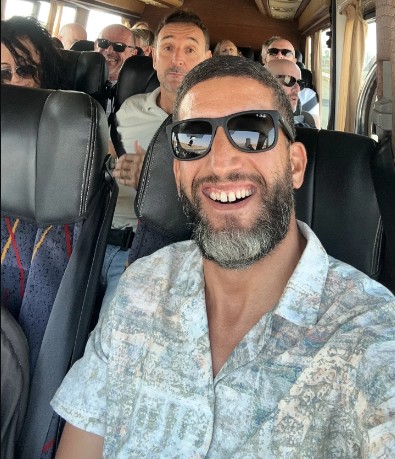
Mouhssine is a certified guide licensed by the Moroccan Ministry of Tourism (License No. 2898), based in Marrakech with deep knowledge of the medina, day trips, and practical travel logistics across southern Morocco. He’s available for private tours, airport pickups, and custom itineraries, and can advise you in real time on cash, transport, and everything in between.
Chat on WhatsAppFrequently Asked Questions ↑ Contents
Using an ATM in Morocco is straightforward once you know the rules. Stick to established Moroccan bank machines, always withdraw in Dirhams to sidestep Dynamic Currency Conversion, and pair your trip with a fee-friendly travel card to keep costs down. Cash remains king in Morocco’s souks, medinas, and rural areas, so make sure your wallet is stocked before heading into those spaces. With a bit of planning, money management in Morocco becomes one less thing to worry about, leaving you free to focus on the country itself.