Kasbah Oulad Othmane: History, Architecture and Visitor Guide
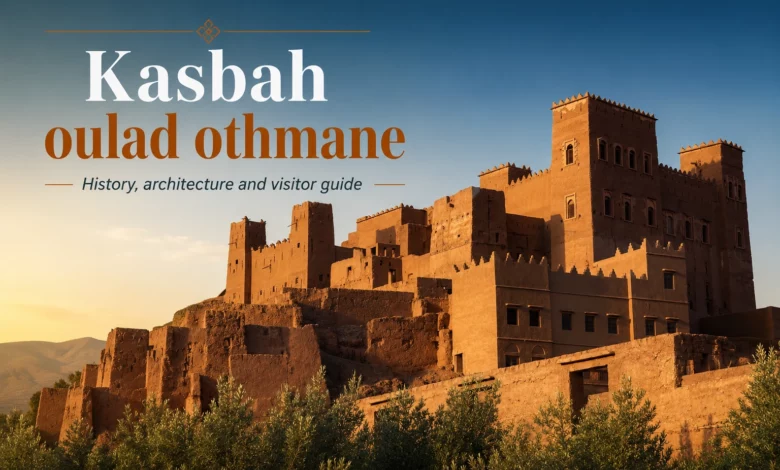
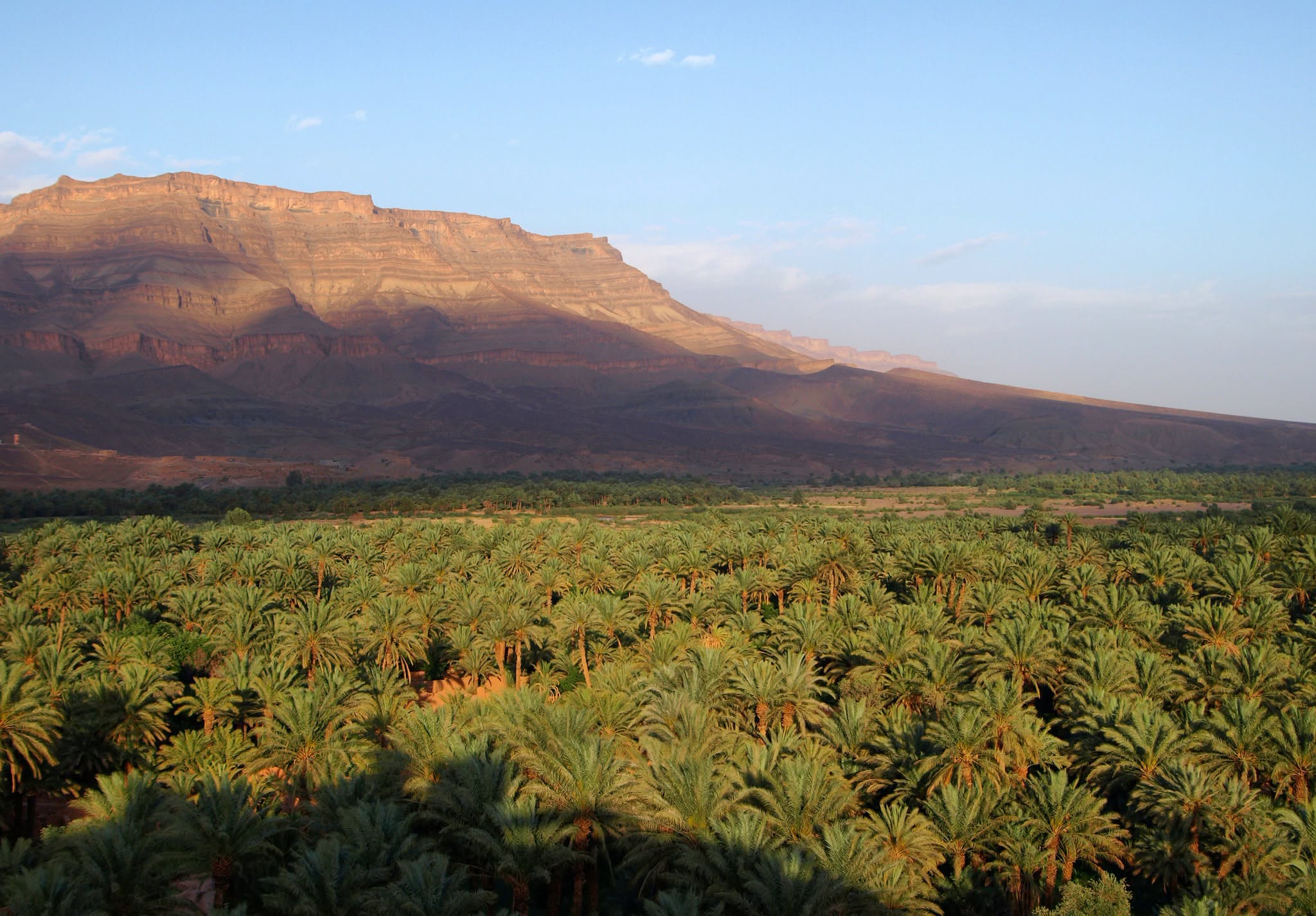
On the road between Agdz and Zagora, where the tarmac runs beside a river of palm trees, a tall earthen fortress rises straight out of the oasis floor. Kasbah Oulad Othmane has watched that road for roughly three hundred years, and it remains one of the few great caid residences of the Draa Valley that you can still walk into, sleep in, and photograph from the inside.
What Is Kasbah Oulad Othmane? ↑
Kasbah Oulad Othmane is an eighteenth century fortified residence built by the Oulad Othmane, one of the established families of the middle Draa. In Morocco the word kasbah covers everything from a royal citadel to a single farm tower, so it helps to be precise: this is a caid kasbah, the private stronghold of a local ruling family, not a village granary and not a public monument built by a sultan.
What separates it from the dozens of ruined towers you pass along the same road is simple. Most of them are melting quietly back into the earth they were made from. This one was repaired, roofed, re-plastered and brought back into daily use, and it is often described as the only historic caid kasbah of the Draa Valley to have been fully restored and opened to travelers. The family that carried out the work still lives on site and still runs it.
An eighteenth century earthen fortress in the Draa Valley, roughly halfway between Agdz and Zagora, restored by its own family and now open to visitors and overnight guests. Free to look at from the road, and open inside if you come for a tea, a meal, or a night.
Where Is Kasbah Oulad Othmane Located? ↑
The kasbah stands in the hamlet of Douar Oulad Othmane, on the N9 road that follows the Draa river south towards the Sahara. Counting from the north you leave Ouarzazate, cross the Tizi n Tinififft pass, drop into Agdz, and then drive roughly another forty kilometres with the palm grove on your left. Zagora lies about fifty kilometres further on. The building sits above the oasis on slightly raised ground, which is why its terraces give such a wide view over the valley.
A note on spelling, because it affects how you search for it. The name appears online as Kasbah Ouled Othmane, Oulad Othmane Kasbah, and Kasbah of Oulad Othmane, and map applications sometimes list the village as Aguebt or Agoubt. All of these point to the same place. If a Kasbah Oulad Othmane map search returns nothing useful, try searching for the douar name together with the word Zagora.
History of Kasbah Oulad Othmane ↑
The history of Kasbah Oulad Othmane is bound to the trade route it sits on. For centuries the Draa was the last stretch of green before the desert, and the caravans that carried gold, salt and dates between Timbuktu and Marrakech had to pass through it. Whoever held the valley held a share of that traffic, and the kasbahs strung along the river are the physical record of that arrangement.
The kasbah is raised by the Oulad Othmane family as a fortified home and administrative seat. Height, thick walls and a single controlled entrance were not decoration. They answered a real threat from raiding parties and rival tribes.
The building functions as a stopping point on the route between the Sahara and the north. Grain, dates and animals are stored inside, and the caid of the family settles local disputes in the reception rooms.
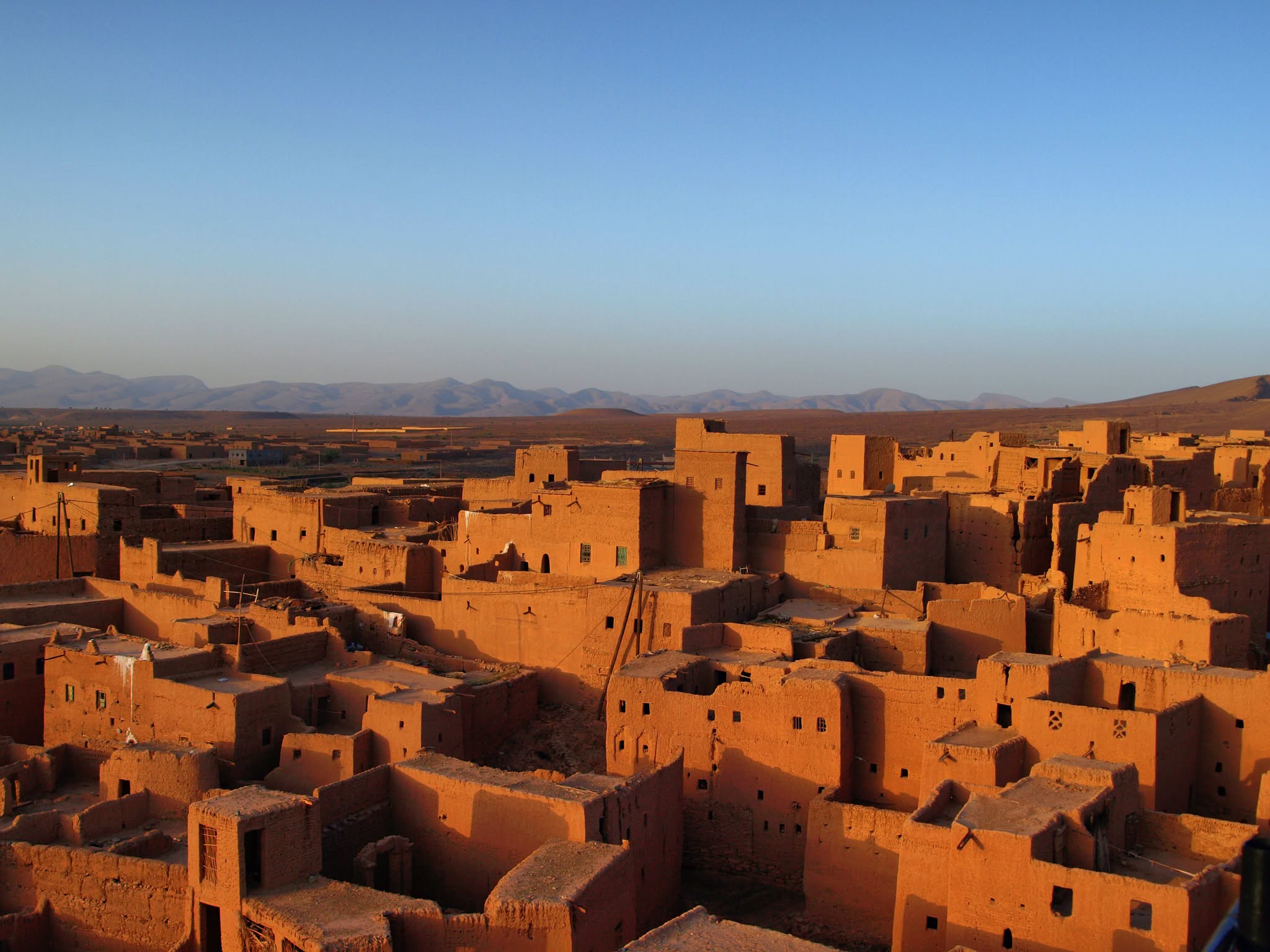
Roads, trucks and concrete change the valley. Families move out of the old earthen quarters into modern houses along the main road, and many kasbahs in the Draa are abandoned to the rain. Unroofed earth walls collapse fast.
Rather than let the family house go the same way, the descendants of the original builders restore it with traditional materials and reopen it to travelers. Guests today are shown around by people whose ancestors built the walls.
Local accounts put the age of the house at around three centuries, and much of what you see is original fabric rather than reconstruction. That is worth keeping in mind as you walk through it. Rammed earth is a living material, patched season after season, so a kasbah of this age is less a frozen monument than a building that has been continuously repaired by the same family line.
Kasbah Oulad Othmane Architecture ↑
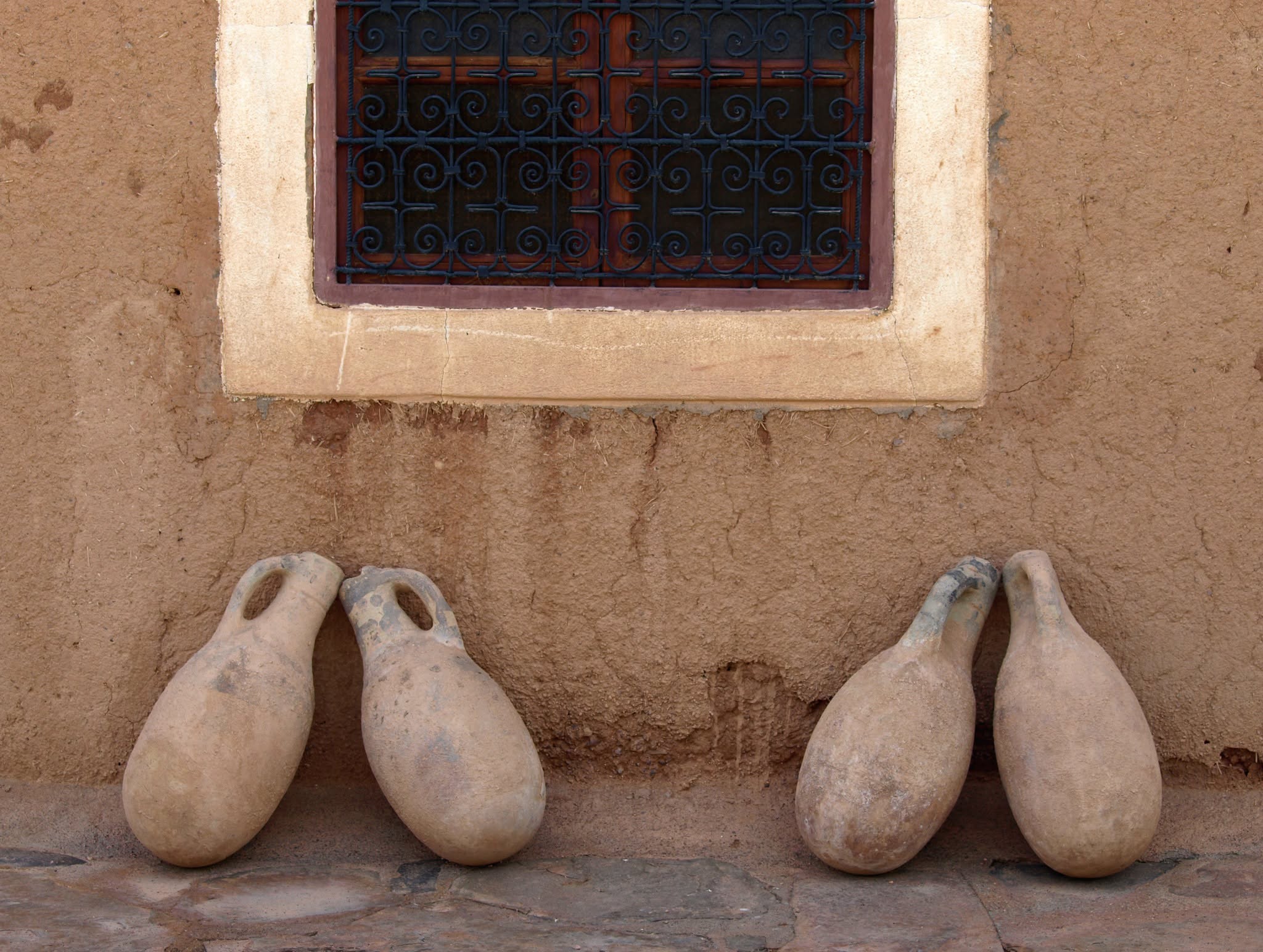
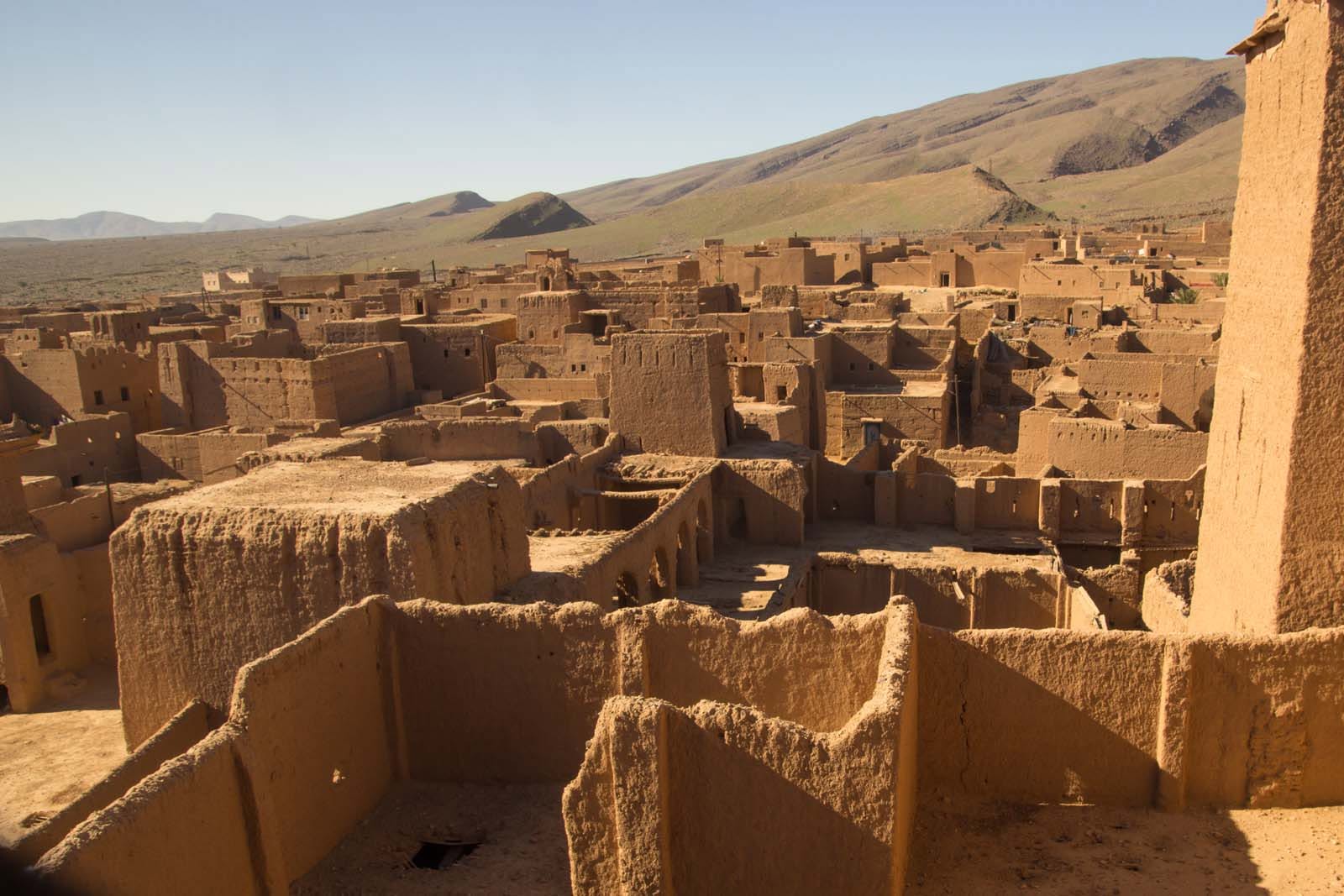
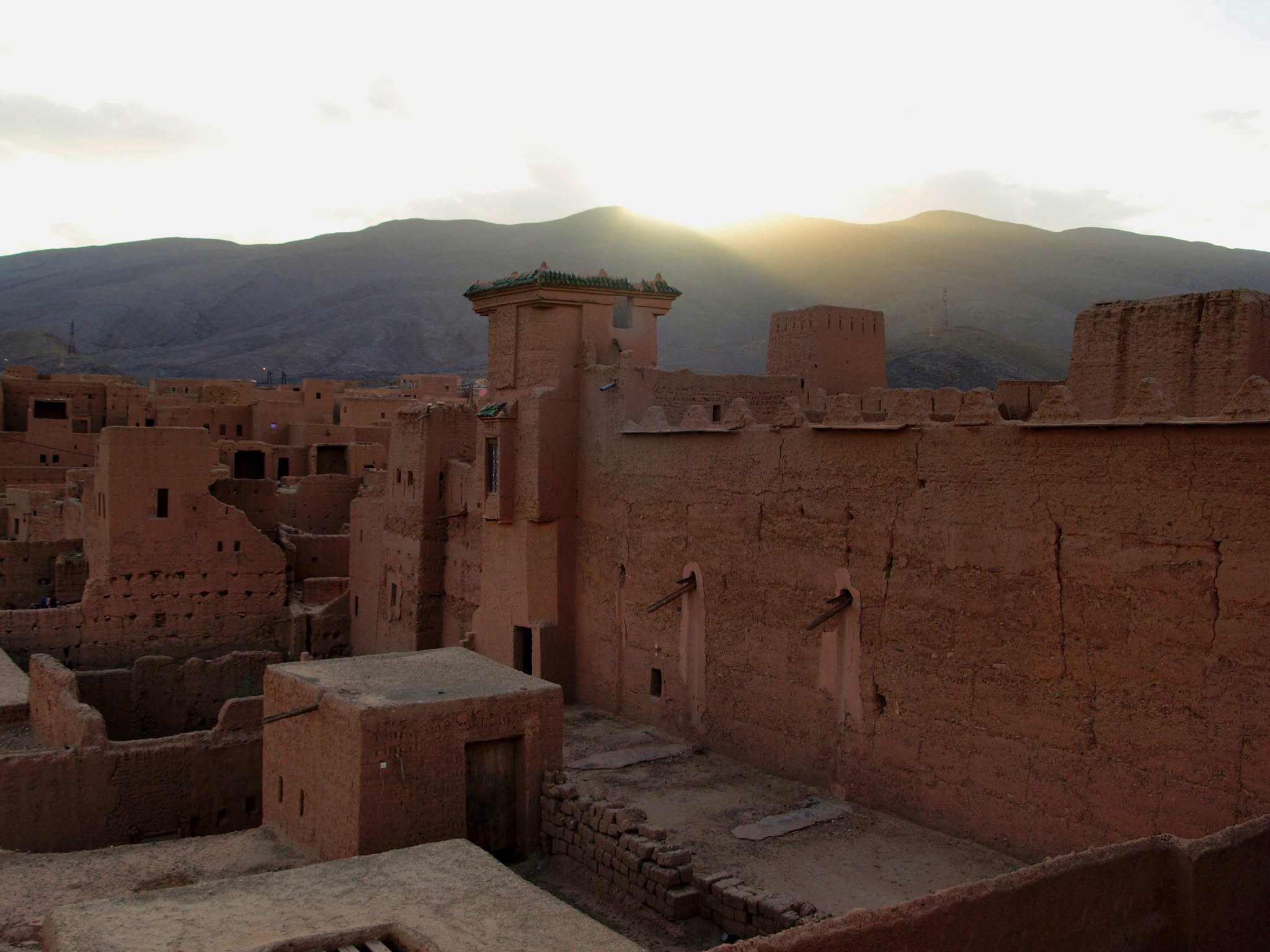
Traditional Moroccan kasbah architecture in the south follows a logic you can read on the facade once you know what to look for. The walls are built of pise, a mix of the local earth, straw and lime rammed layer by layer between wooden shutters. Each lift of the formwork leaves a faint horizontal seam, and the small square holes across the surface are the sockets where the scaffolding beams once sat.
Tapered corner towers
Square towers wider at the base than at the top, one at each corner. The batter gives stability, and the narrow slits high up were for watching and for defence.
Small, high windows
Openings are few and deliberately small. They keep out the summer sun and the winter wind, and they gave attackers nothing to aim at.
Geometric relief
The upper walls carry lozenges and interlaced patterns set in brick. Decoration is concentrated at the top, where it is visible from a distance.
Palm timber ceilings
Split palm trunks, tamarisk and oleander branches carry the floors above. Nothing in the original structure travelled far to get here.
An inward plan
Rooms turn their backs on the outside world and open onto courtyards. Privacy, shade and cooler air all follow from the same layout.
Natural climate control
Walls close to a metre thick hold the night cool through the afternoon. Earthen buildings in the Draa stay noticeably cooler than concrete ones.
A Hidden Swimming Pool Inside Kasbah Oulad Othmane ↑
One of the most distinctive features of Kasbah Oulad Othmane is its famous swimming pool, set among the traditional earthen buildings of the kasbah. The striking contrast between the turquoise water and the surrounding adobe architecture makes it one of the most memorable views inside the historic site.
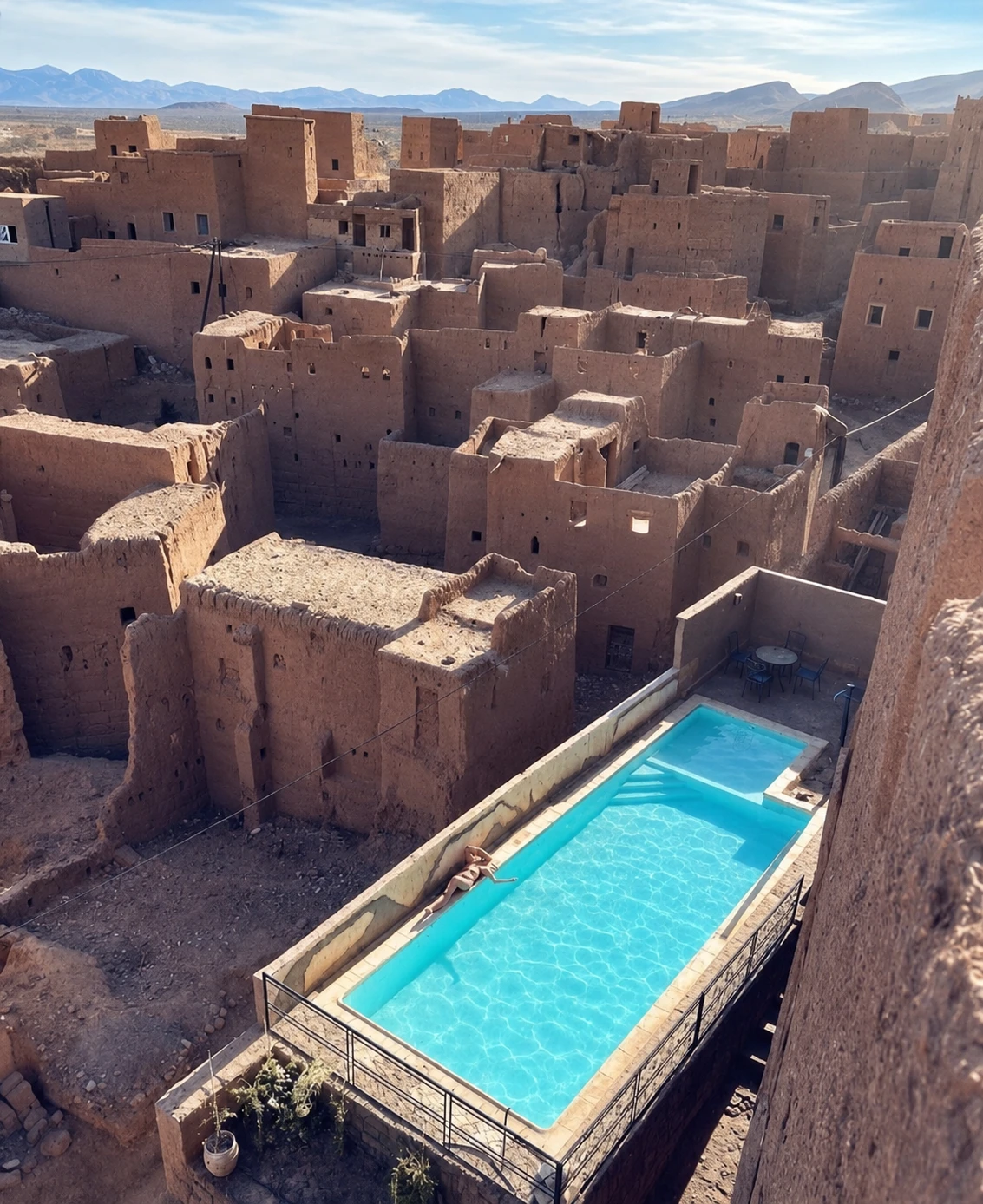
The pool sits inside the walls, so it is not visible from the road and comes as a surprise on the way in. Access is for overnight guests and for visitors taking lunch on site. After a long drive through the valley in high summer, it is the single best argument for stopping here rather than pushing on to Zagora.
Things to See at Kasbah Oulad Othmane ↑
An unhurried visit takes about an hour, longer if someone from the family walks you through it and tells the stories that go with each room. These are the parts worth slowing down for.
The narrow inner alleys
Between the blocks of the kasbah run passages barely wide enough for two people, some of them roofed over. They were built for shade and for defence, and they are the best place in the building to understand how thick the walls really are.
The rooftop terraces
Climb to the top and the whole geography of the Draa explains itself in one turn: the palm grove below, the river line marked by a darker green, the bare ridges on both sides, and the sand beyond. This is where most travelers end up spending the longest.
The garden and palm grove
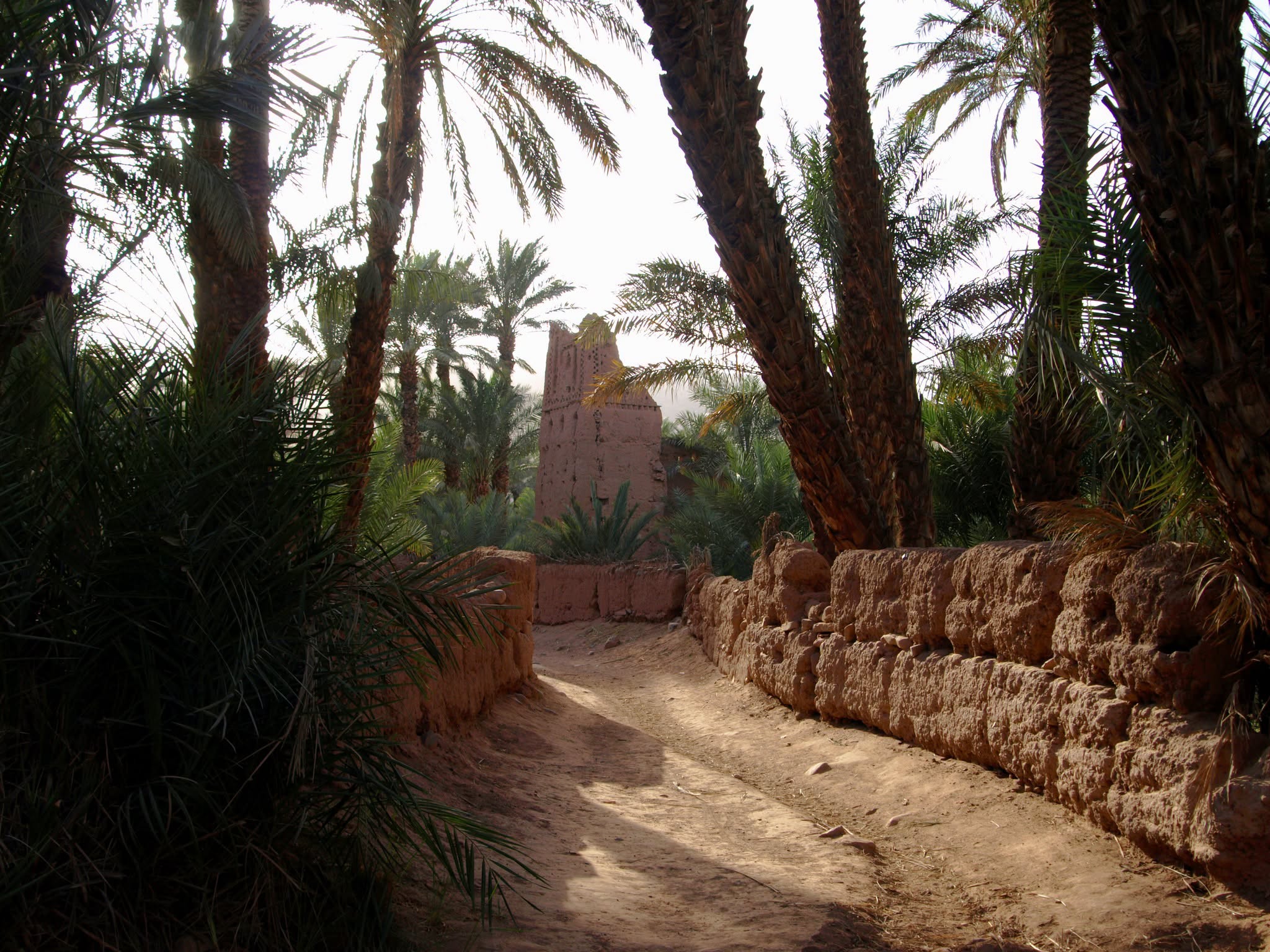
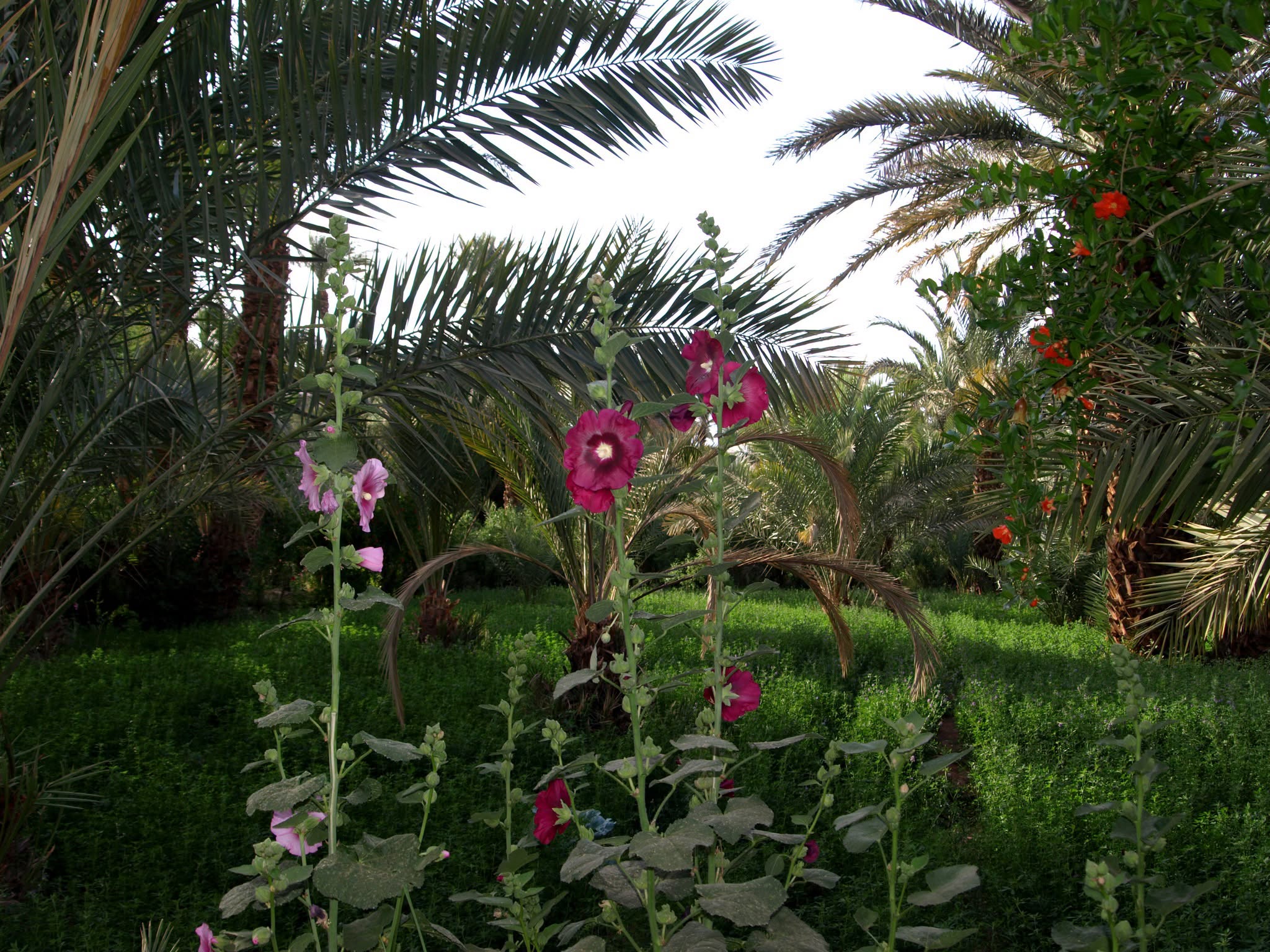
At the foot of the walls, roses, bougainvillea and fruit trees grow in the shade of the palms, fed by the old irrigation channels of the oasis. The contrast between the flowering garden and the ochre mass of the building is what makes most Kasbah Oulad Othmane photos work.
The reception rooms
Inside, low seating, painted ceilings, Berber carpets and old household objects fill rooms that are still used rather than roped off. Ask before photographing the private quarters, as the family lives here.
How to Visit Kasbah Oulad Othmane ↑
Practical expectations first, because this is a private house rather than a state museum. There is no ticket window, no turnstile, and no printed timetable on the door.
| Question | What to expect on the ground |
|---|---|
| Opening hours | Daylight hours in practice. Arriving between 9am and 6pm is safest, and a phone call or message ahead of time avoids finding everyone out in the fields. |
| Entrance fee | No fixed public ticket. Visitors are usually welcomed for a small contribution, or simply by ordering a mint tea or a lunch on the terrace. |
| Guided tour | Often given by a member of the family, in French or Arabic and sometimes in English or Spanish. Worth accepting, since the history is oral. |
| Staying overnight | Rooms are available inside the restored kasbah, with dinner and breakfast served on site. Booking ahead is advised in spring and autumn. |
| Getting there | Own car, private transfer, or the Zagora bus with a short walk. Public transport in the valley is infrequent, so a car gives far more freedom. |
| Accessibility | Uneven earthen floors, steps and narrow stairs to the terraces. The ground level and garden are manageable, the upper floors less so. |
This is a family home before it is an attraction. Greet people before taking out a camera, ask before photographing anyone, and keep shoulders and knees covered in the village. A short conversation usually opens more doors here than anything else.
Best Time to Visit ↑
| Season | Conditions | Verdict |
|---|---|---|
| Oct to Nov | Warm days, mild evenings, date harvest in the palm grove | Excellent |
| Dec to Feb | Clear bright days, genuinely cold nights, very few visitors | Very good |
| Mar to Apr | Green oasis, roses in bloom, comfortable temperatures | Best overall |
| May to Sep | Fierce heat, often above 40C in the afternoon | Early morning only |
For photography, the last hour before sunset is the one to plan around. The low light turns the rammed earth from dull beige to deep orange, and the palms throw long shadows across the walls.
Is Kasbah Oulad Othmane Worth Visiting? ↑
Yes, if you value authenticity over spectacle. Ait Ben Haddou is larger, more famous and far busier. Oulad Othmane offers something the film sets cannot: a working earthen house of the eighteenth century, lived in by the family that built it, with almost nobody else in the courtyard when you arrive.
It also fits the drive perfectly. Anyone travelling from Ouarzazate or Marrakech to Merzouga or M Hamid passes within a few metres of the gate, and stopping here turns a long transfer day into part of the trip rather than a gap in it.
Skip it if you have only one afternoon in the south and want the postcard image everyone recognises. In that case Ait Ben Haddou is the better use of your time.
Other Historic Kasbahs Nearby ↑
Among the best kasbahs to visit in Morocco, the Draa cluster is the one most travelers drive straight past. Combine two or three of these and the valley stops being a corridor between Ouarzazate and the dunes.
- Kasbah Tamnougalt, just south of Agdz, one of the oldest and most complete ksour of the valley, with a small museum inside.
- Tamegroute, near Zagora, known for its green pottery and its ancient Koranic library.
- The Skoura palm grove, on the Ouarzazate side of the pass. Searches for Kasbah Oulad Othmane Skoura often land here by mistake, since Skoura holds its own famous kasbahs including Amridil, but the two oases are separated by several hours of road.
- Ait Ben Haddou, the UNESCO listed ksar west of Ouarzazate, best seen very early before the tour buses arrive.
Frequently Asked Questions ↑
What is Kasbah Oulad Othmane?
It is an eighteenth century fortified family residence in the Draa Valley of southern Morocco, built of rammed earth by the Oulad Othmane and restored by their descendants. It is widely described as the only historic caid kasbah in the valley to have been fully restored and opened to travelers.
Where exactly is Kasbah Oulad Othmane located?
In Douar Oulad Othmane on the N9 road between Agdz and Zagora, roughly 42 kilometres past Agdz and about 51 kilometres before Zagora, in Zagora province.
Is there an entrance fee?
There is no official ticket price. Visitors are generally welcomed in exchange for a small contribution, or for the price of a tea or a meal on the terrace. Overnight guests have full access to the building and the pool.
What are the opening hours?
The kasbah runs on daylight hours rather than a fixed timetable. Aim for the window between 9am and 6pm, and message ahead if you plan to arrive outside it.
Can you swim in the pool?
Yes, for guests staying the night and usually for visitors having lunch on site. It is a genuine highlight in the hot months.
How long should a visit take?
Around one hour for the building, the terraces and the garden. Half a day if you add lunch, and a full experience if you stay the night and see the walls at both sunset and sunrise.
Is it suitable for families with children?
Yes, though the stairs to the upper terraces are steep and unfenced in places, so young children need supervision.
Why is the name spelled in different ways?
Because it is transliterated from Arabic. Kasbah Oulad Othmane, Kasbah Ouled Othmane and Kasbah of Oulad Othmane all refer to the same building, and some booking sites file it under the nearby village name instead.
If you are putting together a route through the south, treat this stretch of the Draa as a destination rather than a transit leg. Between the palm grove, the old ksour and a night inside three hundred year old walls, Kasbah Oulad Othmane is one of those hidden historical sites in Morocco that quietly ends up being the part of the trip people describe first when they get home.