Essaouira: The Complete Guide for 2026
2.5 hours from Marrakech · UNESCO World Heritage City · Atlantic coast
Why this day trip surprises even seasoned travelers
↑ back to topMost visitors to Morocco know about the Sahara and the souks of Marrakech. Fewer realize that one of the country’s most quietly magnificent cities sits just 2.5 hours away on the Atlantic coast, breezy, blue-washed, and unhurried in a way that makes Marrakech feel like another world entirely.
Essaouira, known historically as Mogador, is a fortified port city with roots stretching back to Phoenician traders, later shaped by Portuguese architects, French colonizers, and Gnawa musicians from West Africa. That layered heritage is written into every courtyard, cannon, and alleyway. In 2001, UNESCO inscribed its medina as a World Heritage Site, recognizing it as one of the best-preserved examples of late 18th-century fortified town planning in Africa.
For travelers staying in Marrakech, a day trip to Essaouira delivers something genuinely different: ocean air instead of dust, open rampart views instead of narrow medina corridors, and a creative, bohemian energy that has attracted artists, musicians, and writers for generations. Orson Welles filmed Othello here. Jimi Hendrix reportedly spent time in the city in 1969. The wind that makes kite surfers travel from across Europe makes everything feel alive.
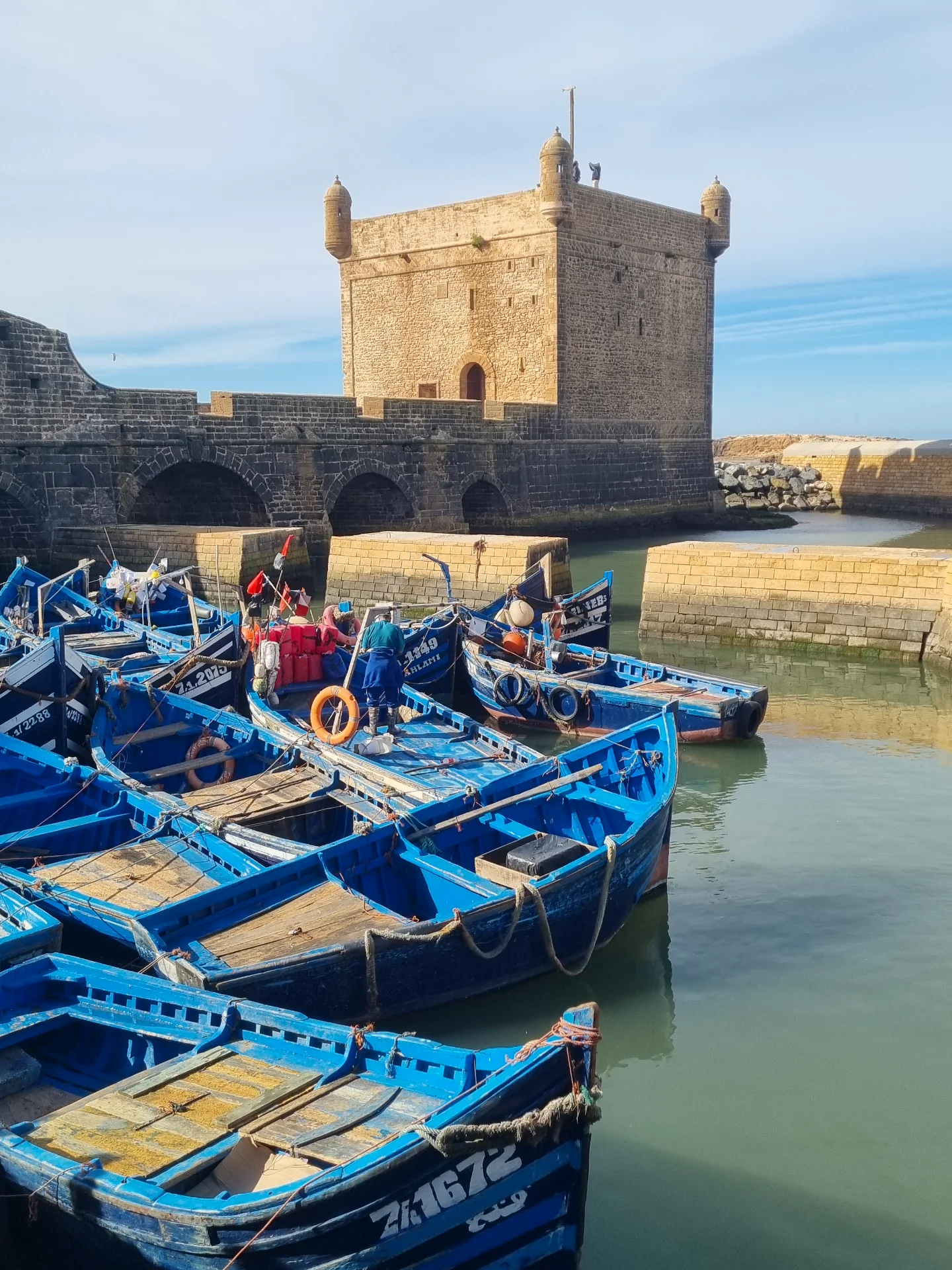
The iconic blue fishing boats at Essaouira’s working port
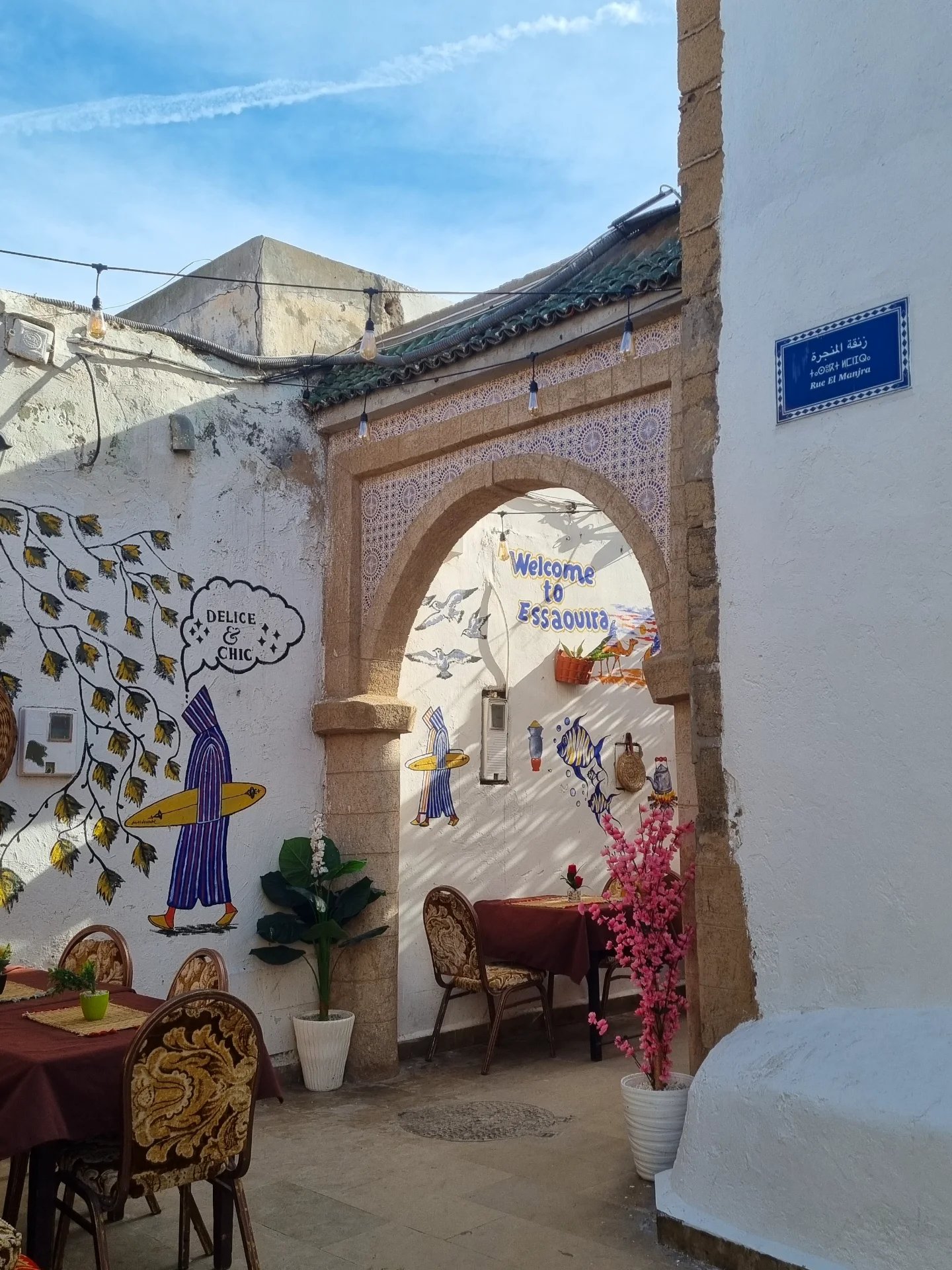
Essaouira’s signature blue-and-white medina streets
What to look for along the route from Marrakech
↑ back to topThe drive from Marrakech to Essaouira passes through some of Morocco’s most distinctive countryside, and with a knowledgeable guide, the journey becomes part of the experience rather than just transit time.
The argan oil women’s cooperative
Roughly midway through the drive, you’ll pass through one of the world’s only argan forests, the native trees that produce the oil Morocco is famous for exporting. Many private day trips stop at a women-run cooperative where Berber women demonstrate the hand-pressing process: cracking the outer shell, extracting the kernel, cold-pressing the oil. You can taste culinary argan oil, learn about its cosmetic properties, and buy directly from the producers at fair cooperative prices. It’s a genuine stop that supports local livelihoods and adds about 25 minutes to the journey.
Goats in the argan trees
This is one of Morocco’s most photographed scenes: goats balanced in the branches of argan trees, eating the fruit. It’s real. Goats genuinely climb these trees during the grazing season, and their digestive process actually softens the argan kernels before they’re collected. A good guide will point you to genuine sightings rather than staged tourist displays, which have become increasingly common along the main road.
How to get from Marrakech to Essaouira
↑ back to topThere are three ways to make this journey, each with genuinely different trade-offs.
Supratours Bus
Departs from near Marrakech train station, 6 times daily. Journey is roughly 3 hours. Costs 80–100 MAD per person each way. Reliable but inflexible — you follow the bus schedule, not your own.
Shared Grand Taxi
Departs from Bab Doukkala when full. Around 70–100 MAD per seat. Faster if the taxi fills quickly, but cramped and unpredictable. No stops along the way.
Private Guided Day Trip
Departs from your hotel at 8:00 AM. Air-conditioned vehicle, certified guide, cooperative stop, and total flexibility. Everything handled for you from start to finish.
If you’re visiting Essaouira as part of a broader Morocco itinerary, the private day trip also gives you the freedom to return at your own pace, useful if you want to spend the late afternoon on the beach or catch the golden hour light over the ramparts before heading back.
What to see and do in Essaouira
↑ back to topAllow yourself at least 4 to 5 hours in the city. Here is how to spend them well.
- 1 The Medina and its artisan workshops Essaouira’s medina is one of the most walkable in Morocco. The main street runs roughly north to south, flanked by artisan workshops and small galleries. The city has a long tradition of thuya woodworking, a fragrant resinous wood found almost exclusively in this region, carved into intricate boxes, chessboards, and decorative objects. Buying from a craftsman in his workshop here carries a meaning that a souvenir market simply cannot replicate.
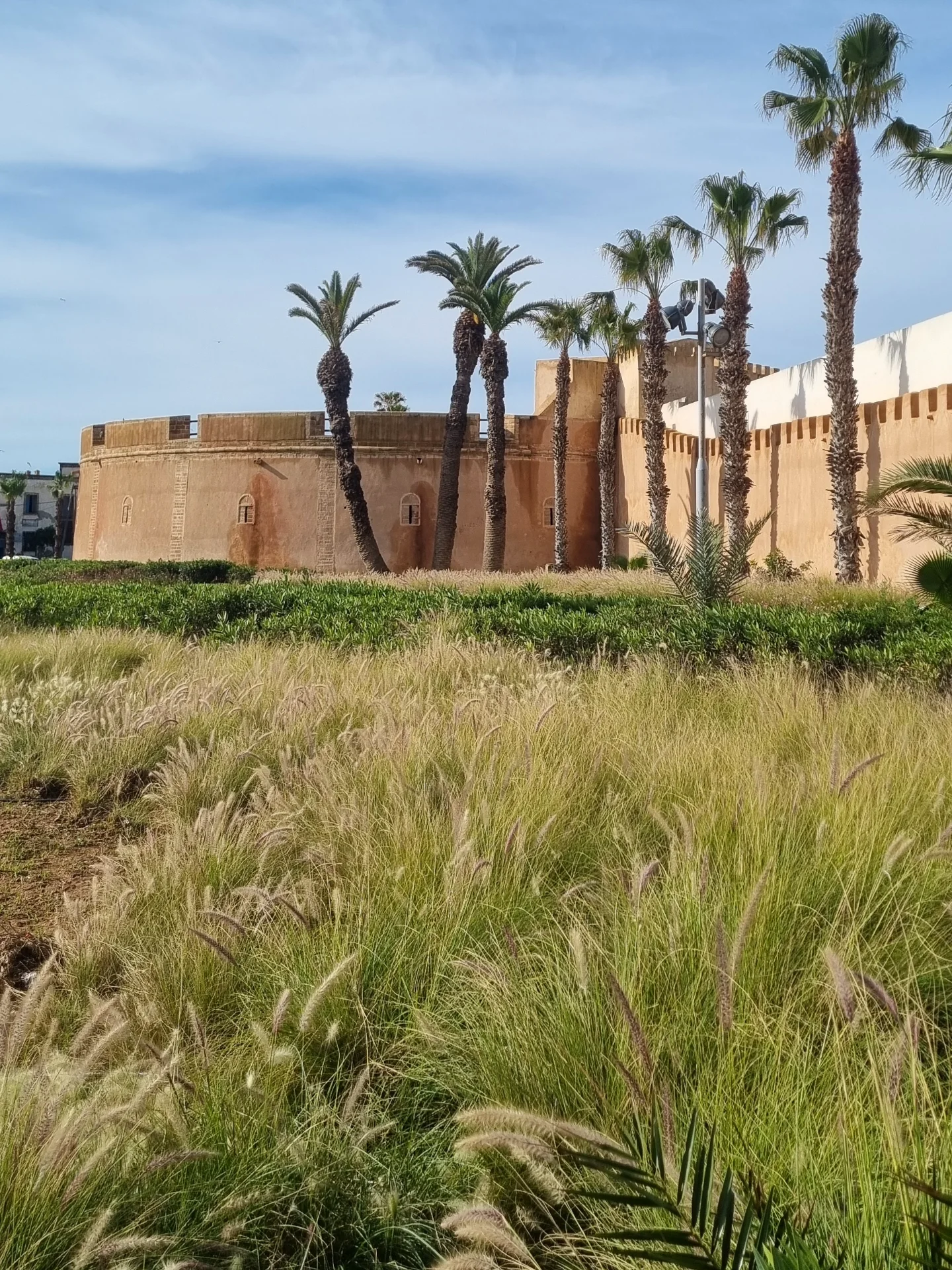
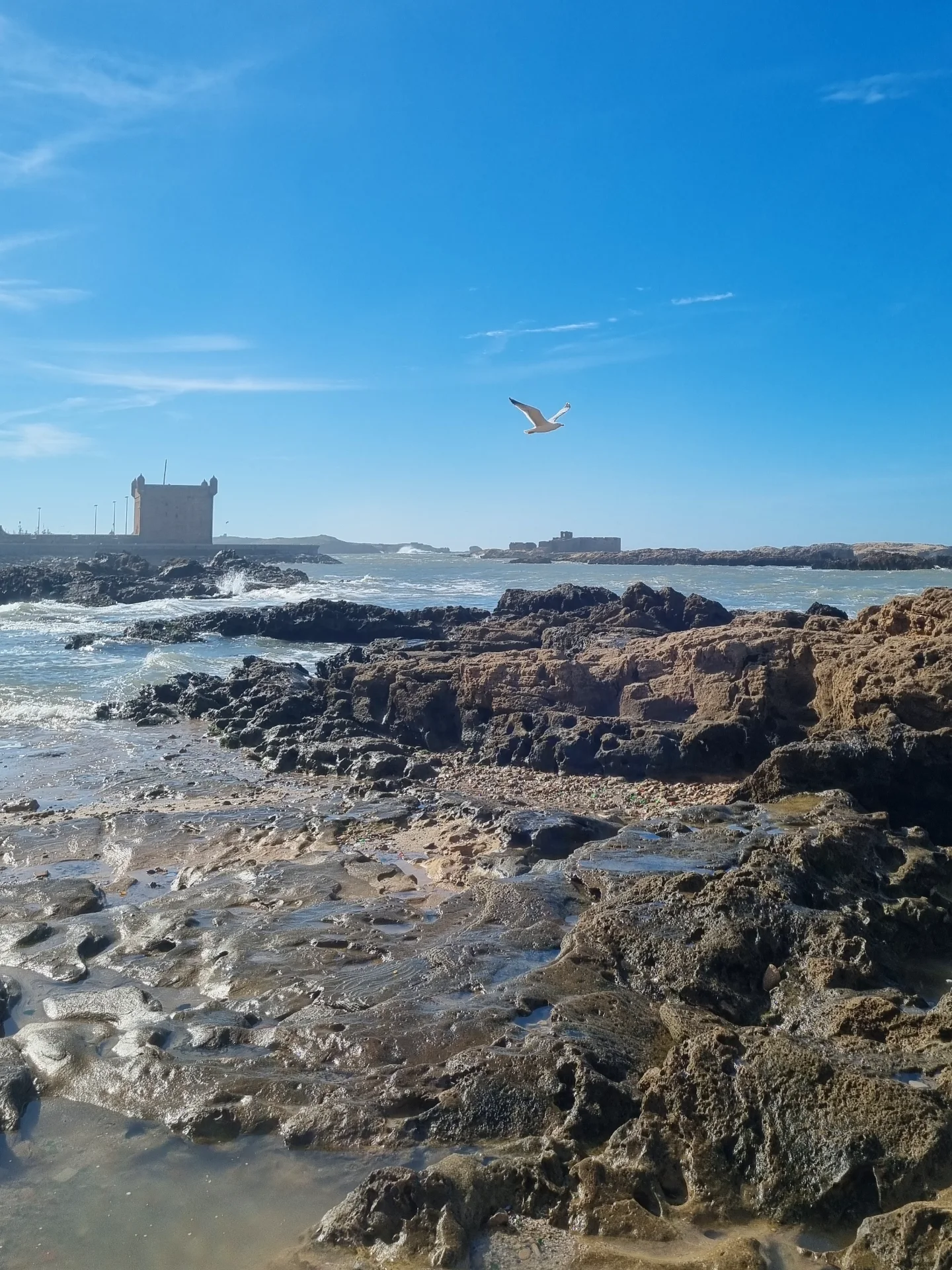
- 2 Skala de la Ville — the sea ramparts The Portuguese-built sea ramparts along the northern edge of the medina offer sweeping views over the Atlantic and a row of well-preserved bronze cannons. It’s one of the most photographed places in Essaouira, and rightly so. The combination of fortified stonework, crashing waves, and open sky is genuinely dramatic.
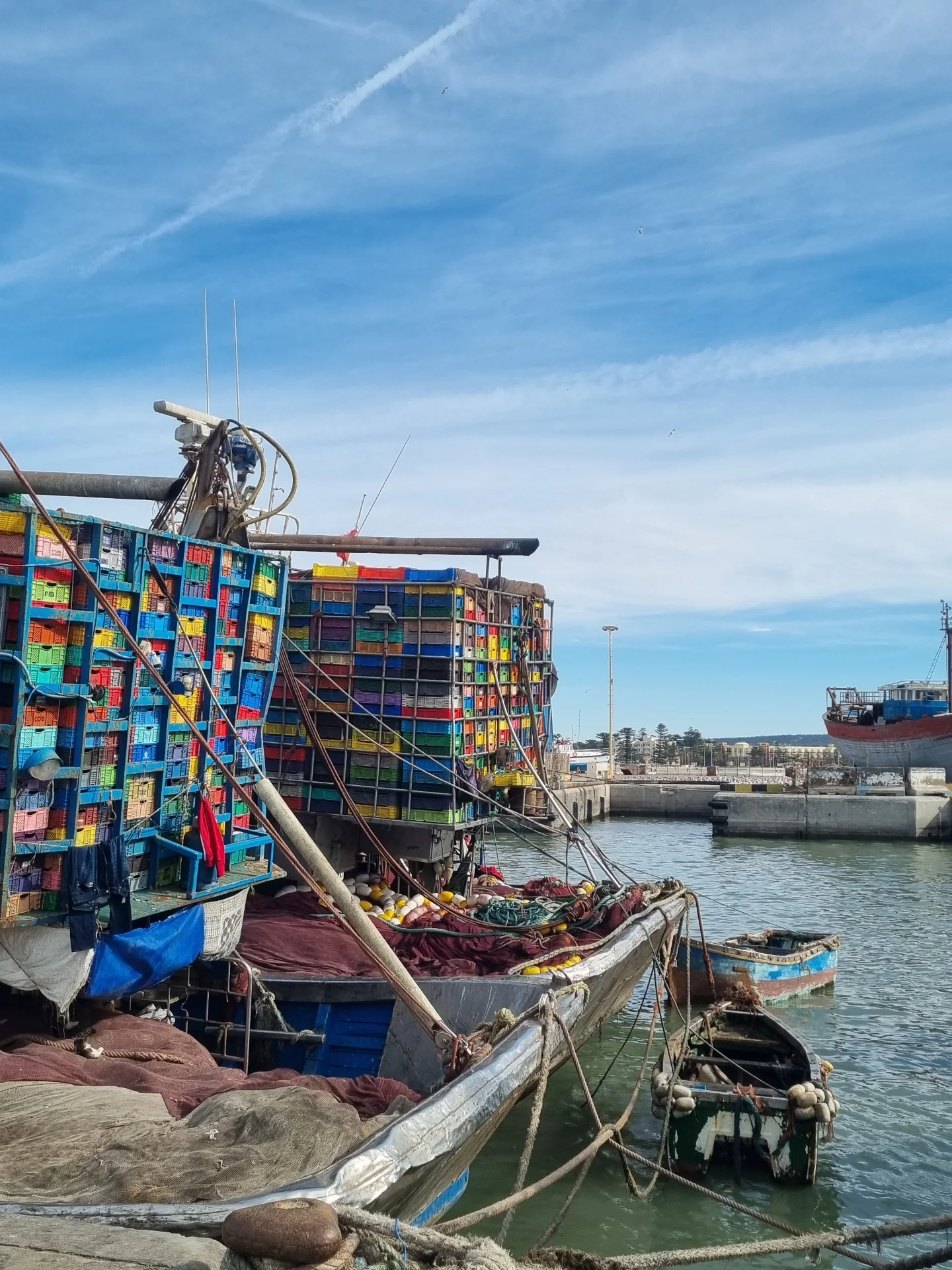
- 3 The working fishing port A short walk south of the medina, the port is loud, salt-aired, and completely authentic. Blue wooden boats unload their catch in the morning, seagulls wheel overhead, and the fish market at the port’s entrance is where locals buy their dinner. It’s the most unfiltered slice of daily life you’ll find in Essaouira.
- 4 The Atlantic beach Essaouira’s beach stretches for six kilometers south of the ramparts. The wind is strong almost year-round, which explains the concentration of kite surfers in the distance. Even if you don’t plan to swim or surf, a short walk along the sand gives you a sense of just how wide and wild this coastline is.
- 5 Gnawa music in the squares Essaouira is the spiritual home of Gnawa, a trance-based musical tradition rooted in West African heritage. You’ll often encounter musicians performing in the medina’s main squares, especially in the late afternoon. The city hosts the world-famous Gnawa World Music Festival each June.
Skala de la Ville
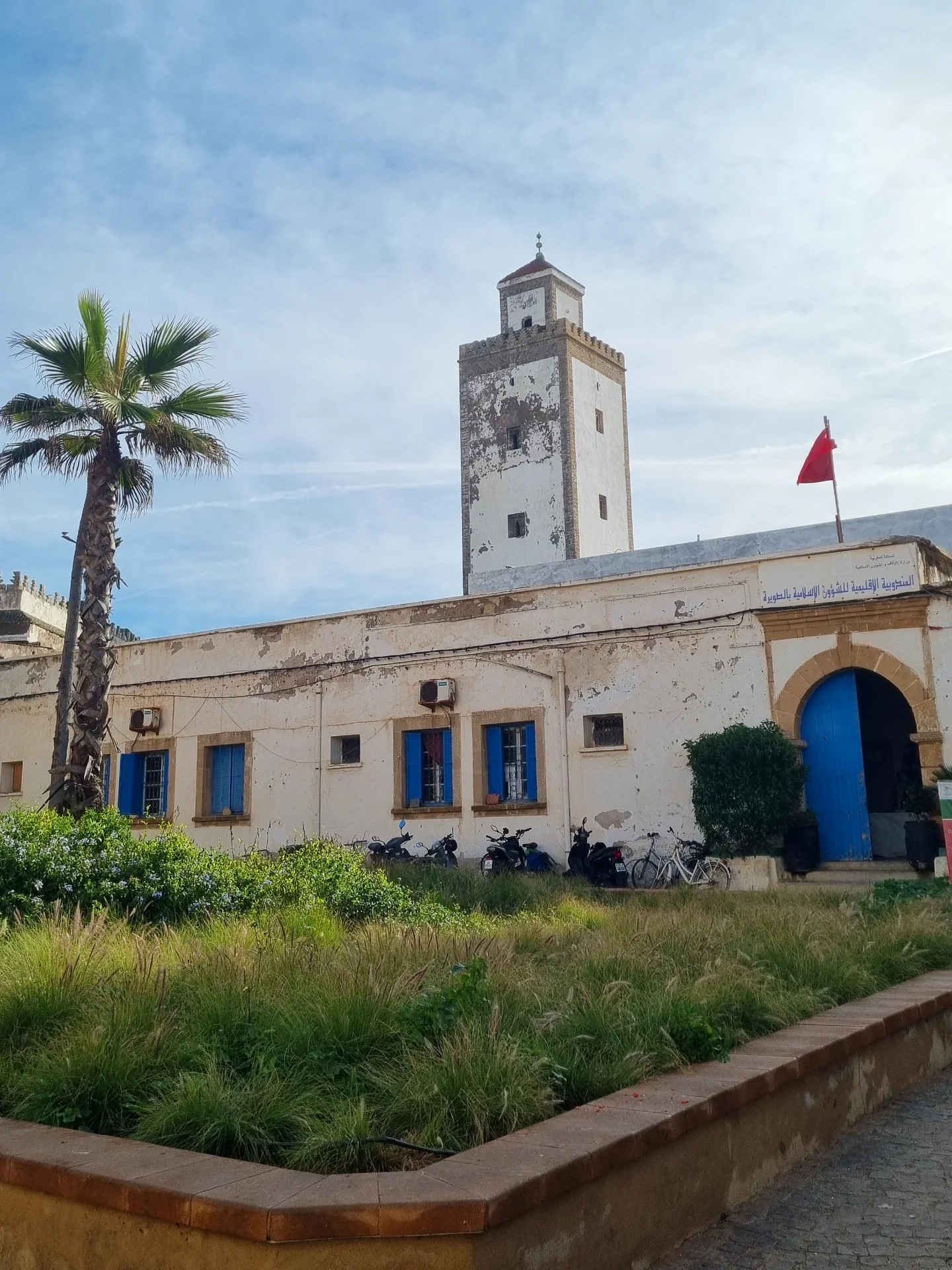
Medina alleyways
The six-kilometer beach
Where to eat in Essaouira
↑ back to topThe answer, for most visitors, is simple: go to the port and eat grilled fish. The open-air grill stalls at the entrance to Essaouira’s fishing port are one of Morocco’s most memorable food experiences. You choose your fish from the ice display, sea bass, sole, red mullet, fresh sardines, calamari, whatever arrived that morning, and watch it grilled over charcoal in front of you. It comes with bread, a simple salad, and a glass of fresh-squeezed orange juice. Budget around 60 to 120 MAD depending on what you choose.
For a longer lunch with views, the terrace restaurants along the ramparts serve seafood tagines, grilled calamari, and fish pastilla in a setting that is hard to beat. Prices are modest by any measure, and the food is reliably good. A sit-down meal for two with drinks costs roughly 200 to 300 MAD.
Practical tips before you go
↑ back to topWhat to wear
Essaouira is significantly cooler than Marrakech year-round. Bring a light jacket or extra layer, even in summer. The wind can be strong and persistent, especially on the beach and ramparts.
Currency
Most medina shops and port stalls are cash only. Bring enough Moroccan dirhams from Marrakech. ATMs are available near the main medina entrance but can be busy.
Best time to visit
Spring (March to May) and autumn (September to November) offer the most comfortable temperatures. Summer is fine but very windy. June is exceptional for the Gnawa World Music Festival.
Photography
The medina, port, and ramparts are photogenic at almost any hour. Early morning and late afternoon give the warmest light. Always ask before photographing people.
Shopping
Thuya wood objects, argan oil products, silver jewelry, and hand-woven textiles are Essaouira’s specialties. Prices are generally more relaxed than Marrakech.
How much time
4 to 5 hours in the city is enough to cover the highlights. If you want to linger at the beach or explore beyond the medina, 6 to 7 hours on-site feels genuinely unhurried.
Speak directly with a licensed local guide
↑ back to topIf you have questions about this day trip from Marrakech to Essaouira, whether about the itinerary, logistics, pricing, or how to adapt the day for your group, you can reach Mouhssine directly on WhatsApp. He is a certified guide licensed by Morocco’s Ministry of Tourism with 15 years of experience leading private tours across the country.

Mouhssine Eliouj
Guide license No. 2898 · Marrakech, Morocco
Chat on WhatsAppFrequently asked questions
↑ back to topIs the Essaouira day trip worth it from Marrakech?
Without hesitation, yes. Essaouira offers a completely different atmosphere from Marrakech: coastal, breezy, unhurried, and architecturally distinctive. The contrast alone makes the trip memorable, and the city’s medina, port, and ramparts are among the most genuinely beautiful places in Morocco.
How long does the drive from Marrakech to Essaouira take?
The drive takes approximately 2.5 to 3 hours depending on traffic and whether you make stops along the way. Private tours with an argan cooperative visit add around 25 to 30 minutes to the outbound journey.
What is Essaouira known for?
Essaouira is known for its UNESCO World Heritage medina, its working Atlantic fishing port, the Skala de la Ville sea ramparts, thuya wood artisanship, Gnawa music, argan oil production, and world-class conditions for kitesurfing and windsurfing. Orson Welles filmed Othello here.
Is one day enough time in Essaouira?
One full day is enough to visit the medina, ramparts, and port, and enjoy lunch. If you want to spend real time on the beach or explore the city’s galleries in depth, an overnight stay gives you a richer experience.
What is the best time of year to visit Essaouira?
Spring and autumn are ideal. March through May and September through November bring pleasant temperatures and manageable crowds. Summer is warm but extremely windy. June is notable for the Gnawa World Music Festival.
Do I need a guide for the Essaouira day trip from Marrakech?
Essaouira’s medina is compact enough to explore independently. That said, a certified local guide adds genuine value: historical context, access to craft workshops not visible from the street, reliable food recommendations, and the argan cooperative stop en route. For first-time visitors to Morocco, a guide also removes all logistical uncertainty from the day.