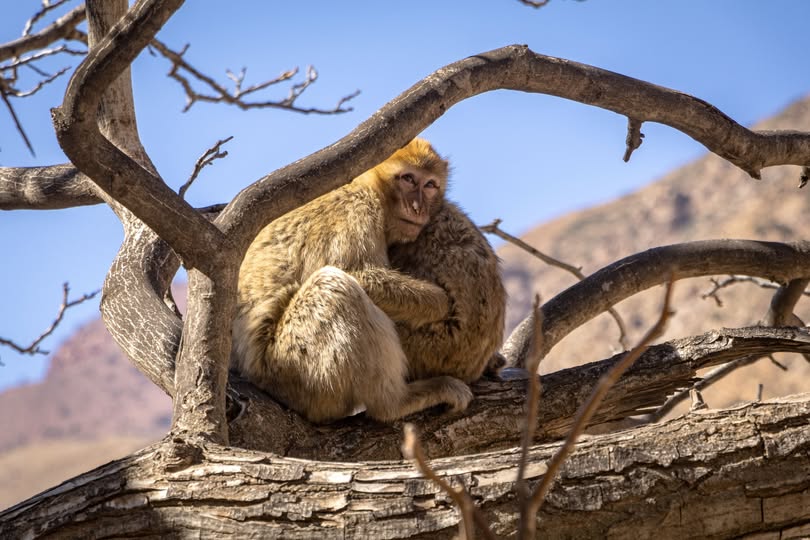
Photo: Choudhry Saab
Forty kilometres southeast of Marrakech, the Ourika Valley rises into the High Atlas in a cascade of terraced fields, rushing streams, and dense cedar forest. It is one of the few places in Morocco where you can encounter the Barbary Macaque — North Africa’s only wild primate — in its natural habitat, moving through the trees on its own terms, entirely undisturbed. This half-day tour pairs that rare wildlife experience with the valley’s photographic riches: golden saffron crops, ancient Berber villages, and the waterfalls of Setti Fatma.
Wildlife sightings, saffron farm access, and trail conditions in Ourika Valley all vary with the season, weather, and local circumstances. What you encounter on any given day depends on factors we cannot always control in advance. We strongly recommend contacting us before booking so we can advise you on the best timing for your visit and confirm current conditions on the ground.
Suggested Itinerary
The schedule below is a guide, not a fixed programme. Times can be adjusted to suit your preferences, your pace on the day, and the conditions in the valley. Please let us know if you have specific priorities — we are happy to tailor the experience around what matters most to you.
The Valley Road — Saffron Fields and Berber Villages
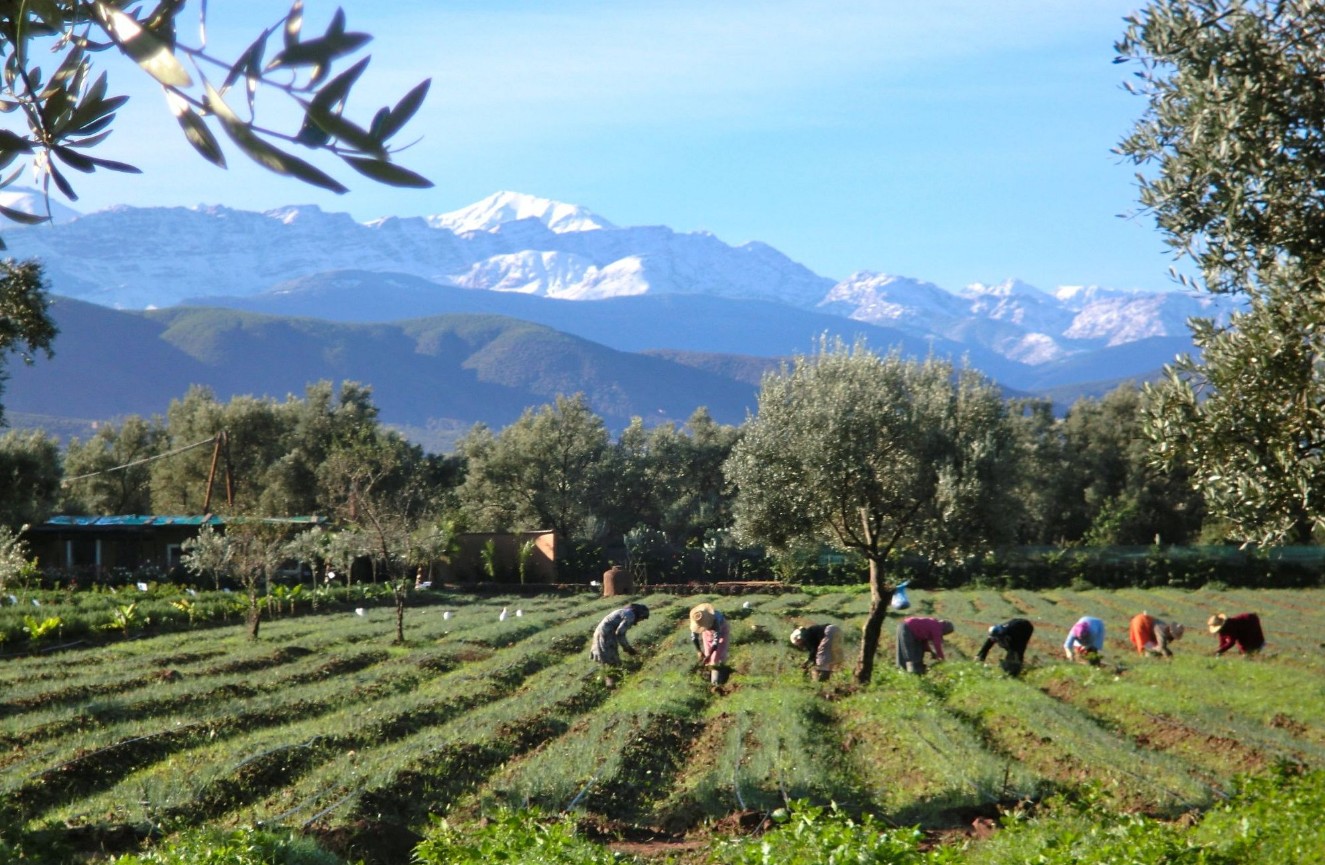
The saffron fields of Ourika Valley — visited subject to season and farm availability
Your guide picks you up at your accommodation at around 7:30 AM. The early start is deliberate: the light in the Atlas foothills at that hour is exceptional for photography, the air is cool, and the valley road is at its quietest. The drive south from Marrakech takes roughly one hour, passing through small Berber market towns where the day begins at a very different pace to the city.
The first stop on most days is the saffron farm known as La Safranière de l’Ourika, in the village of Tnine. Here, a local producer explains the cultivation of the purple crocus and the delicate hand-harvesting process that gives Moroccan saffron its exceptional quality. For photographers, the combination of violet flower rows and mountain backdrop makes for striking images — particularly during the October to November harvest period.
Access to La Safranière depends on the agricultural season, the farming calendar, and weather conditions at the time of your visit. Outside the harvest window, the farm is still worth visiting for its herb terraces and setting, but the crocus flowers will not be in bloom. We will confirm what to expect when you contact us ahead of your trip.
From the farm, the road climbs steadily into the valley. The guide stops at several viewpoints along the way: terraced hillside villages, mud-brick kasbahs, walnut and poplar trees lining the riverbanks, and — in winter and early spring — snow-capped Atlas peaks rising above the green valley floor. Each stop offers its own photographic character, and the guide is attentive to the light and the landscape as conditions change throughout the morning.
Wild Barbary Macaque Encounter in the Atlas Forest
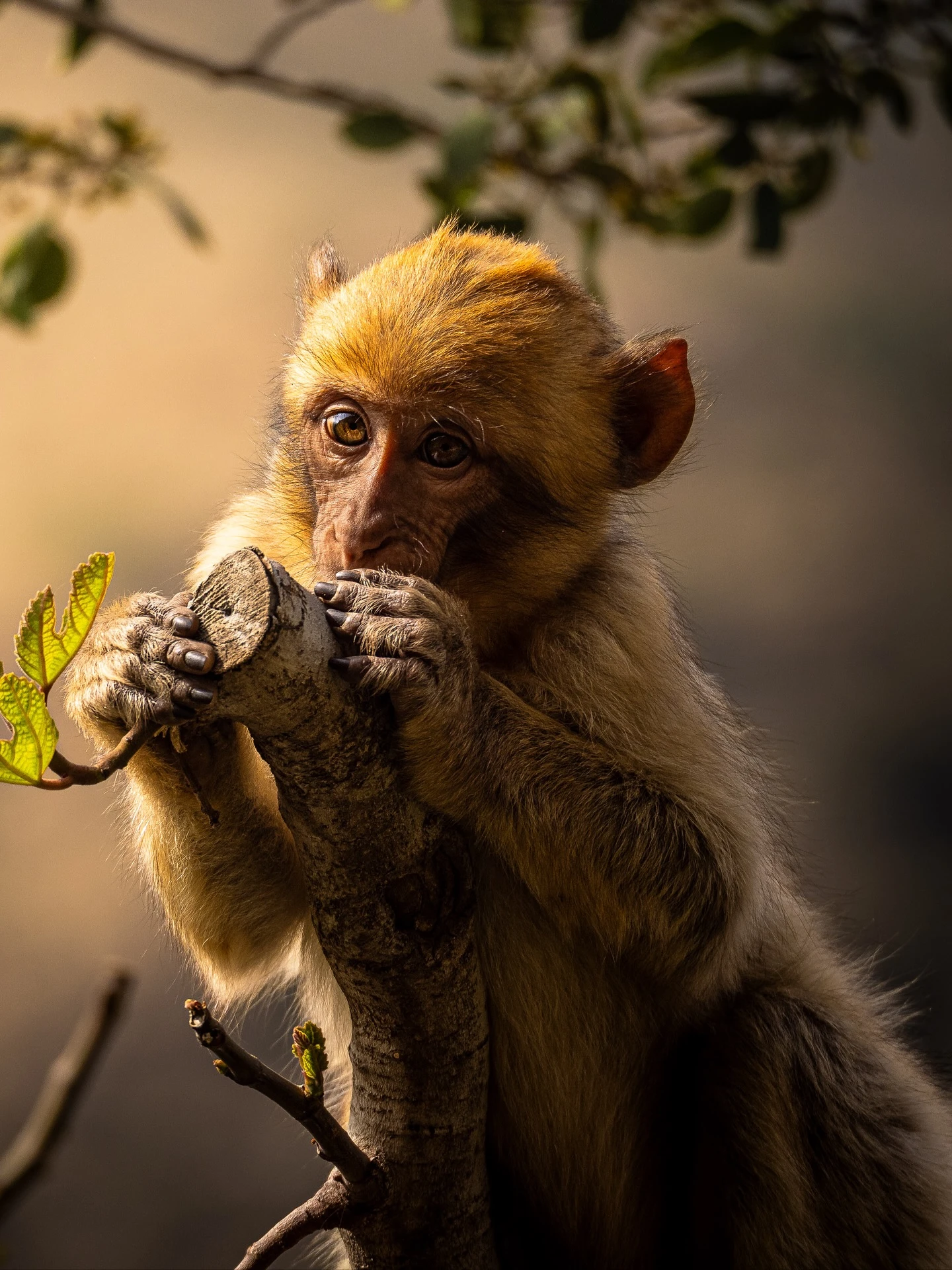
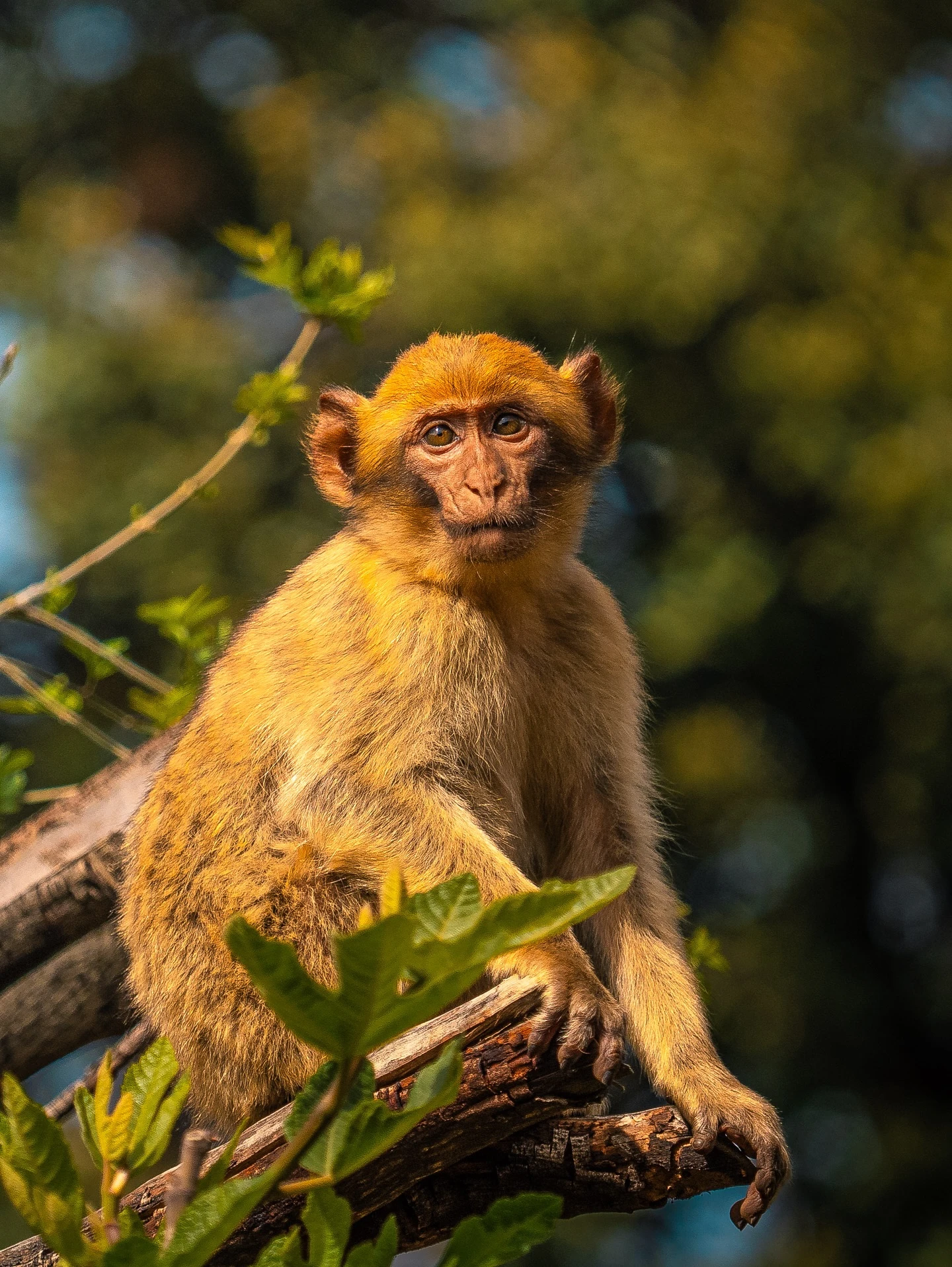
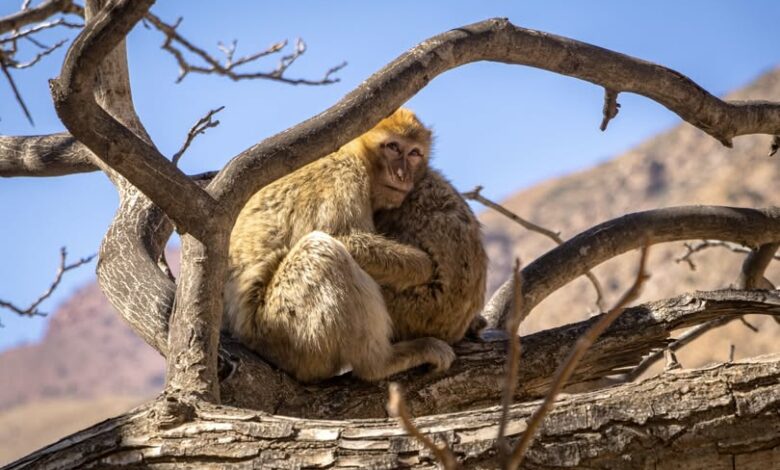
Photos: @noahp.jpg
The heart of the tour is the search for wild Barbary Macaques (Macaca sylvanus) in the cedar and oak forests of the upper valley. This is Morocco’s only wild primate species and one of the most endangered primates in the world, with a remaining population of fewer than 8,000 individuals, concentrated largely in the High Atlas. Encountering them in the forest — moving freely, foraging, resting, interacting — is a genuinely rare experience.
Your guide knows the forest trails and the general territories of the resident groups. The approach is slow, quiet, and entirely on the animals’ terms. You watch from a respectful distance as they go about their lives — behaviour that no roadside or staged encounter can replicate. The guide explains the macaques’ ecology, their social structure, and the conservation pressures they face in the Atlas.
For photographers, the dappled light of the cedar canopy creates layered, atmospheric scenes that reward patience. There is always an element of uncertainty — these are wild animals with their own schedules — and that unpredictability is precisely what makes the encounter so honest and memorable.
The Barbary Macaque is listed as Endangered on the IUCN Red List. The guide maintains strict ethical standards throughout: minimum safe distances are observed at all times, no food is offered, and movement through the forest is kept quiet and low-impact. This is conservation-conscious tourism, not performance.
The valley is also home to other wildlife worth watching for. Species you may encounter include:
- Atlas Mountain raptors — including short-toed snake eagles and kestrels riding the thermals above the valley walls
- Rock-dwelling birds — wheatears, choughs, and blue rock thrushes are frequently seen along the gorge
- Barbary ground squirrel — often spotted near rocky outcrops in the lower valley
- Endemic plants and insects — the cedar and oak understory supports a rich variety of flora worth photographing at close range
Wildlife sightings in Ourika Valley vary with the season, time of day, weather, and a degree of chance. Spring and early autumn tend to offer the most active conditions. Your guide will always do their best to maximise what you see, but cannot guarantee specific encounters — and part of what makes this experience meaningful is precisely that.
Setti Fatma — Waterfalls and Riverside Lunch
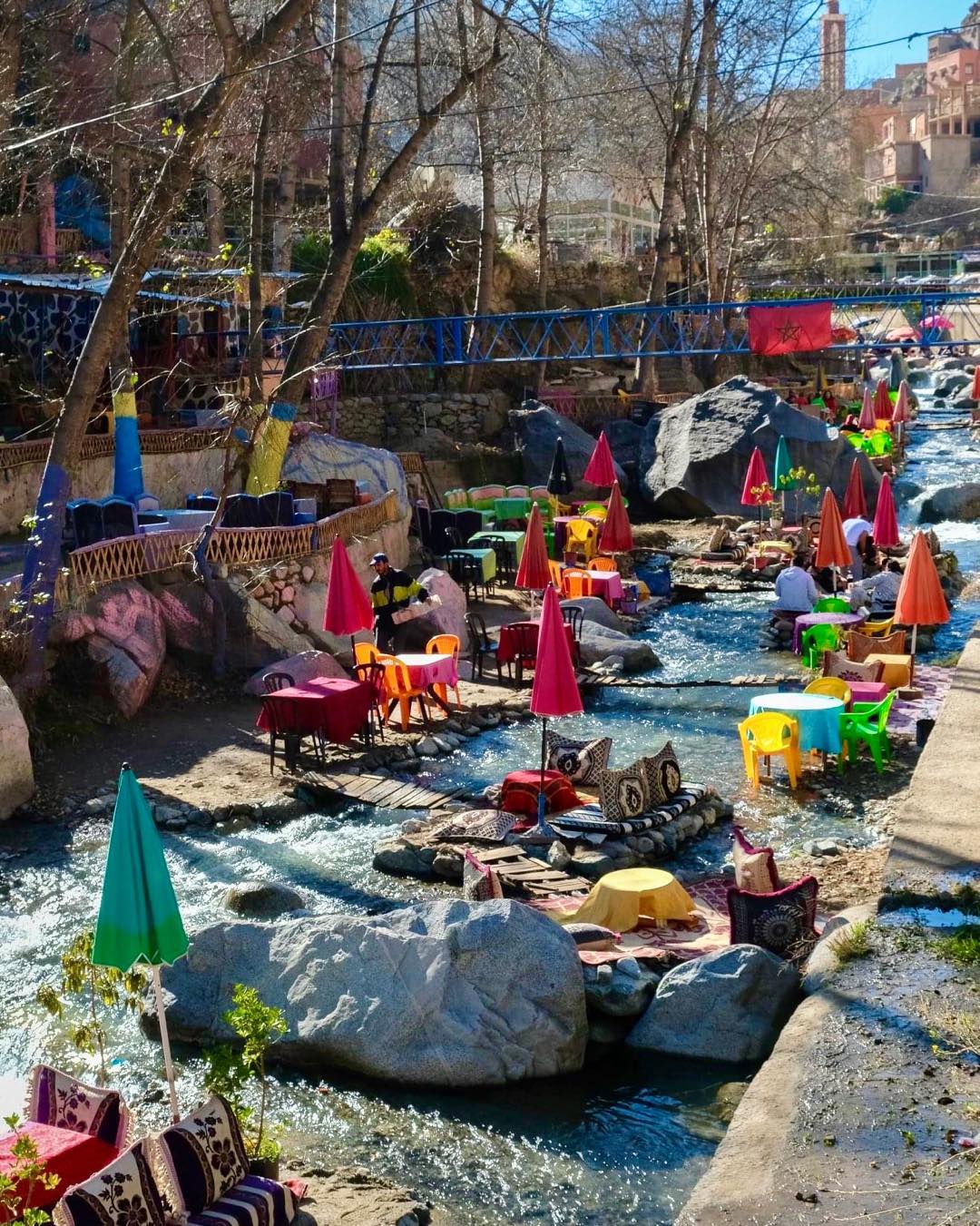
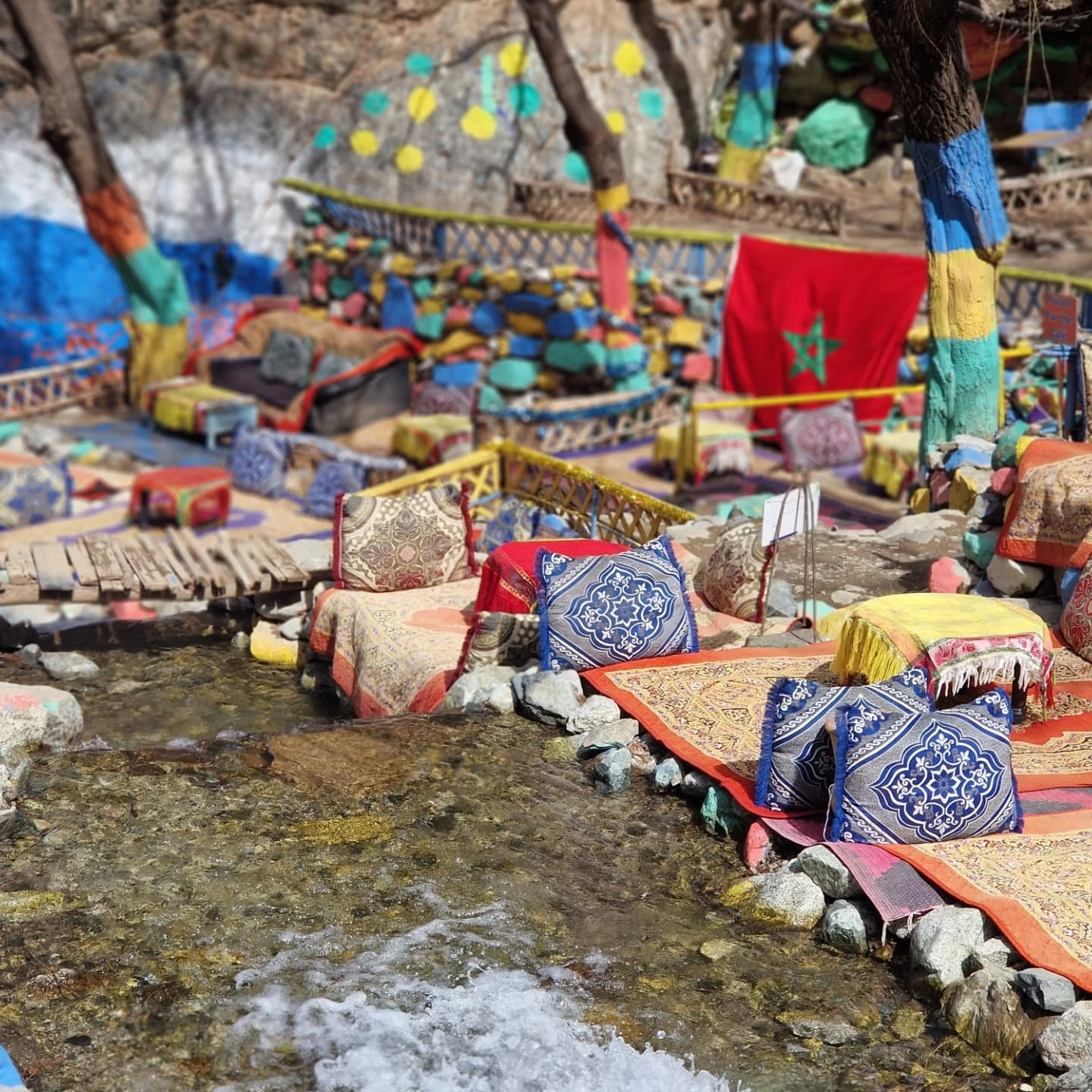
Setti Fatma — the village at the valley’s upper end, and the trailhead for the cascade walk
The tour concludes at Setti Fatma, the village where the valley road ends and the Ourika river descends from the High Atlas in a series of cascades. A short walk from the village — around 30 to 40 minutes over uneven terrain — reaches the first and second falls, where the water pours over dark rock into clear pools and mist catches the light. The sound alone is worth the walk.
Before or after the hike, the guide leads you to a riverside restaurant: a terrace of tables set above the water, shaded by fig trees, where a traditional tagine, fresh bread, seasonal salad, and Moroccan mint tea arrive with the sound of the river running beneath. It is a simple lunch made remarkable by its setting.
The path to the falls is uneven and can be slippery when wet. Closed-toe shoes with good grip are strongly recommended. The hike is moderate and manageable for most fitness levels, but please let us know in advance if you have any mobility considerations.
From Setti Fatma, your driver returns you along the valley road to Marrakech, arriving back at your accommodation in the early afternoon. The timing can be adjusted — if you prefer a longer stop at the waterfalls, a shorter lunch, or an earlier return, simply let your guide know on the day.
What’s Included and Excluded
- Local Naturalist Guide — English-speaking, with deep knowledge of the valley and its wildlife. Available subject to guide scheduling; please confirm at the time of booking.
- Round-Trip Transport — Air-conditioned vehicle from your accommodation in Marrakech
- Saffron Farm Visit — Subject to seasonal and farm availability
- Riverside Lunch — Traditional tagine, fresh bread, water, and mint tea at Setti Fatma
- Waterfall Walk — Guided trail to the lower cascades
- Camera and Lenses — Please bring your own photography equipment
- Personal Purchases — Souvenirs, saffron, extra drinks, or snacks
- Gratuities — Tips for the guide and driver are entirely at your discretion
- Travel Insurance — Recommended for all outdoor activities
For wildlife photography, a telephoto lens in the 200–400mm range gives the best results with the macaques while maintaining a respectful distance. A wide-angle or standard zoom handles the valley landscape, villages, and waterfall scenes well. A polarising filter is useful near the falls. Bring a rain cover — the upper valley can be damp even on clear days.
Plan Your Visit to Ourika Valley
Contact us before booking so we can advise on the best time for your visit, confirm current wildlife and trail conditions, and tailor the itinerary around what you most want to experience. Moroccan Travel Trips designs every tour around the people taking it.