Morocco Travel Guide
Why Is Chefchaouen Blue? The Real Story Behind Morocco’s Blue City
Wandering through the medina of Chefchaouen, you may wonder why every wall, step, and doorway seems to wear a different shade of blue. The answer is more layered — and more fascinating — than most travel blogs will tell you.
What Is Chefchaouen? ↑
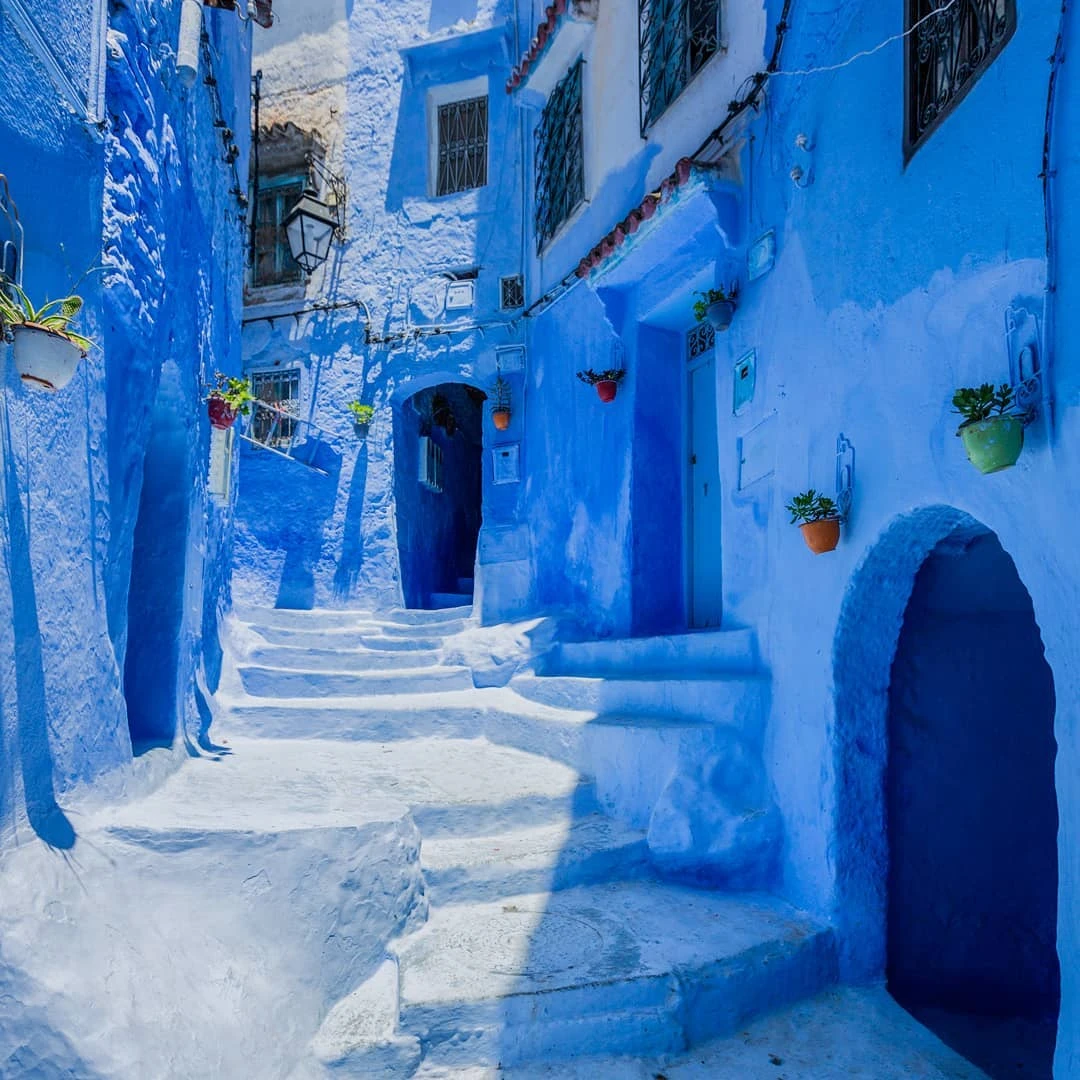
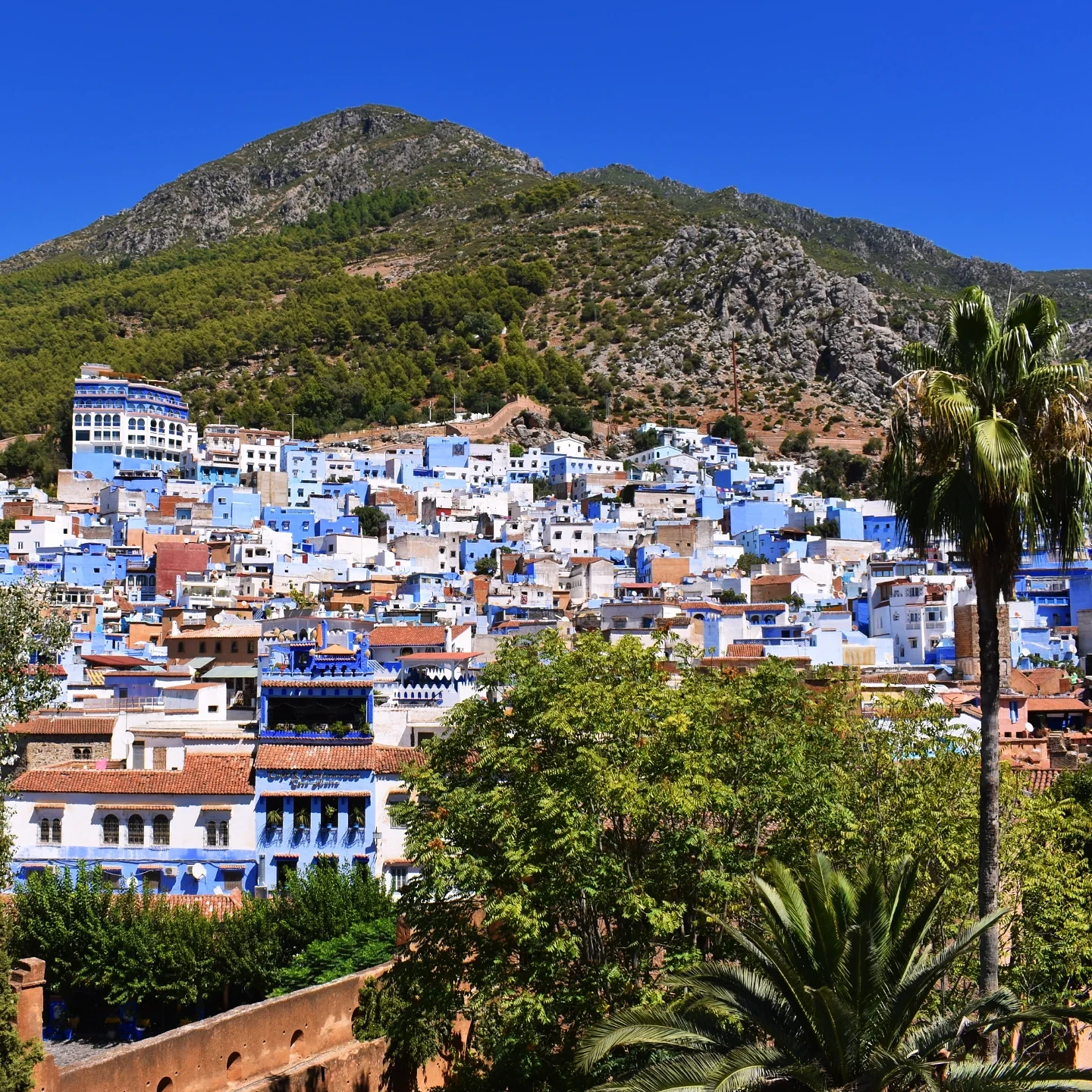
Tucked into the folds of the Rif Mountains in northern Morocco, Chefchaouen is one of those places that genuinely stops you in your tracks. The city — also spelled Chaouen or Xauen — sits at an elevation of roughly 600 meters above sea level, and its medina is a dense web of alleyways that cascade down the hillside in a seemingly endless palette of blue.
Founded in 1471 by Moulay Ali ibn Rashid as a small fortress, Chefchaouen has grown into a city of around 45,000 inhabitants. It remains one of the most visited destinations in Morocco, drawing hundreds of thousands of travelers each year who arrive specifically to photograph — and to understand — the blue.
Founded
1471
Region
Tanger-Tétouan-Al Hoceïma
Altitude
~600 m
Known as
The Blue Pearl of Morocco
A Brief History of the City ↑
Chefchaouen’s story begins in the late fifteenth century, when the Moorish leader Moulay Ali ibn Rashid chose this mountain location as a strategic base from which to resist Portuguese expansion along the Moroccan Atlantic coast. The city’s original purpose was military, but it quickly became a refuge.
After the fall of Granada in 1492, thousands of Andalusian Muslims and Sephardic Jews who had been expelled from Spain made their way south across the Strait of Gibraltar. Many of them settled in Chefchaouen, bringing with them their crafts, architecture, music, and — crucially — their traditions.
For several centuries, the city was closed to non-Muslims, and most Europeans who tried to enter were turned away or reportedly killed. It was not until 1920, when Spain occupied the region during the colonial period, that Chefchaouen opened more fully to the outside world. The Spanish were surprised to find residents who still spoke a form of fifteenth-century Castilian Spanish.
Why Is Chefchaouen Blue? The Big Question ↑
Ask ten people in Chefchaouen why the city is blue, and you will likely get ten different answers — some half-remembered, some rehearsed for tourists, and some genuinely believed. The honest truth is that no single definitive explanation has ever been proven. What historians, locals, and travel scholars agree on, however, is that the blue-painting tradition became widespread during the twentieth century and has multiple, overlapping origins.
“The blue of Chefchaouen is not one shade but a living conversation between cobalt, turquoise, sky, and shadow — a city that changes color with the light.”
What makes this question so rich is that each explanation carries its own cultural weight. Whether the blue was brought by Jewish refugees, adopted as a spiritual symbol, used as a practical mosquito deterrent, or promoted as a tourism strategy, the result is the same: a medina unlike any other on earth, where even the most unassuming staircase feels like a painting.
The Four Main Theories ↑
Historians and anthropologists have identified four primary explanations for Chefchaouen’s distinctive blue color. Each is rooted in a different period of the city’s history, and they are not mutually exclusive.
Theory 01
The Jewish Refugee Tradition
The most widely cited explanation links the blue to the Jewish community that settled in Chefchaouen after the 1492 Alhambra Decree expelled Jews from Spain. In Jewish tradition, the color blue — known as tekhelet — holds sacred significance, representing the divine and the heavens. Many scholars believe the Jewish residents began painting their homes blue as both a spiritual practice and a cultural marker.
Theory 02
Spiritual Symbolism & Sky Connection
Another interpretation, shared by many long-time residents, is that blue was painted on walls to remind inhabitants to keep their thoughts elevated — closer to heaven and to God. This metaphysical reading aligns with both Jewish and Sufi Islamic traditions, where color is not merely aesthetic but deeply symbolic. Some older residents still describe the blue as a reminder of the sky above and the spiritual life below.
Theory 03
Natural Mosquito Repellent
A more practical theory, popular among locals today, claims that the blue paint contains a natural insect repellent. Blue dyes — particularly those derived from indigo — were historically believed to deter mosquitoes. Given that the Rif Mountain region is prone to moisture and insects during summer, this would have been a meaningful practical benefit. Whether or not the science holds up to modern scrutiny, many residents still paint with blue for this stated reason.
Theory 04
Tourism & Collective Identity
A fourth, more recent interpretation acknowledges that as Chefchaouen grew into a major tourist destination through the latter half of the twentieth century, the blue became a deliberate branding decision. Residents began repainting more surfaces, expanding the palette, and maintaining the aesthetic as a shared civic identity. In this view, the blue is not merely a historical artifact but a living cultural choice — one that residents actively renew and protect.
💡 Important Nuance
Chefchaouen was not always uniformly blue. Historical photographs from the early twentieth century show a medina with white and earthy-toned walls, much like many other Moroccan medinas. The transition to predominantly blue painting appears to have accelerated through the mid-1900s — meaning the blue city as we know it today is, in part, a relatively modern creation, even if its origins are genuinely ancient.
It’s Not Just One Blue — The Shades of Chefchaouen ↑
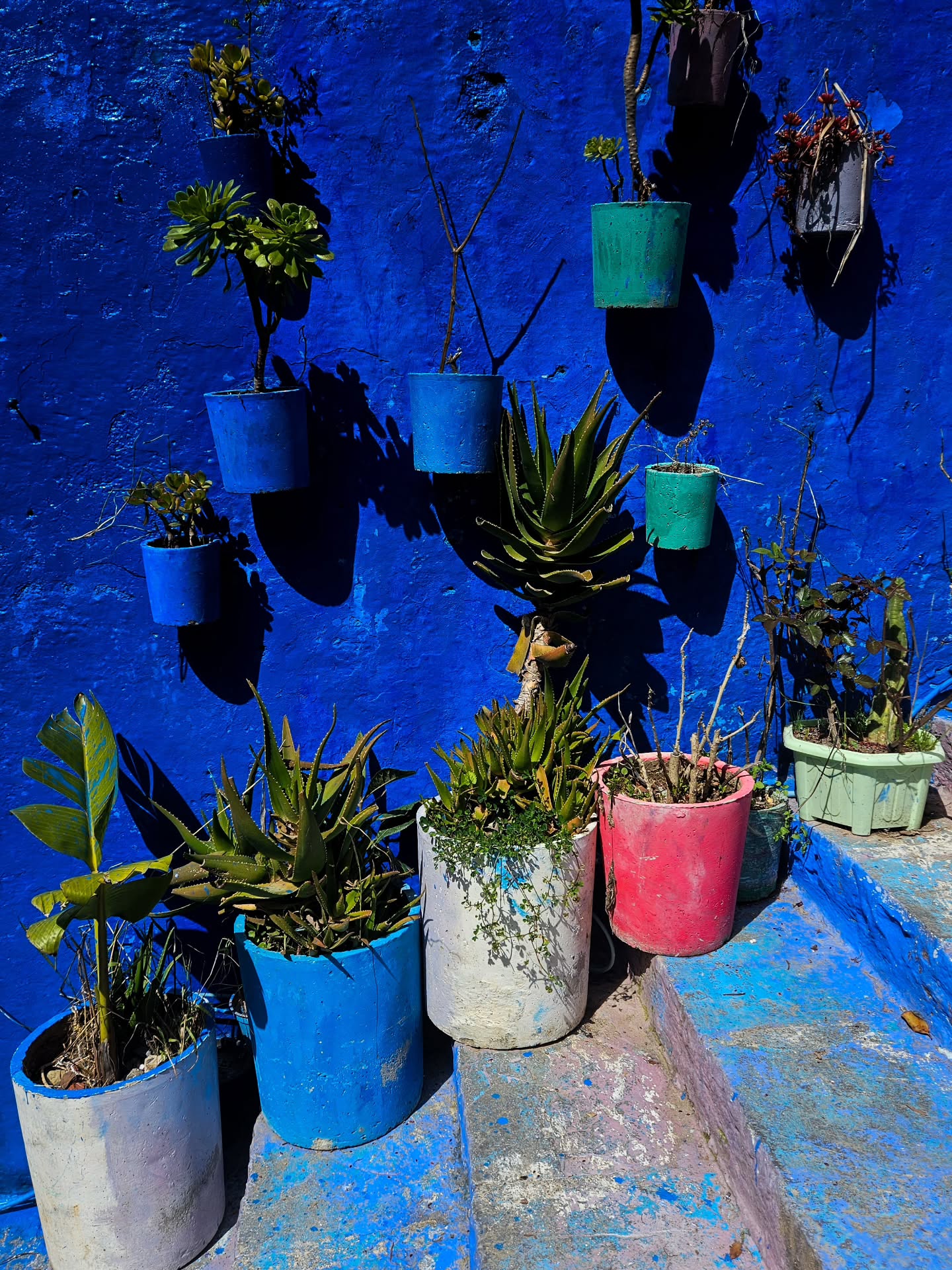
One thing that surprises most first-time visitors is the sheer variety of blues on display. Chefchaouen is not a single, consistent cobalt — it is a symphony of related tones that shift and change depending on the hour, the light, and the particular alley you happen to be standing in.
You will encounter deep navy at the base of old walls, fresh cornflower blue on recently repainted surfaces, washed-out powder blue where years of Rif Mountain sun have bleached the pigment, and delicate turquoise in the tiled steps near the central plaza. Some walls are painted in such a way that you can see three or four generations of blue layered on top of each other, each coat telling a fragment of the city’s story.
Each household chooses its own shade. There is no official color code, no municipal directive specifying which blue is permitted. The result is an organic, evolving mosaic — which is precisely why the blue city of Morocco never feels artificial, even at its most photogenic.
Best Time to Visit Chefchaouen ↑
Chefchaouen is a year-round destination, but each season offers a different experience. Choosing the right time to visit will significantly affect how you experience the blue city’s atmosphere.
- 🌸 Spring (March–May) — Widely considered the best time to visit. The Rif Mountains are lush green, temperatures hover between 15–22°C, and the medina is busy but not overwhelmed. The contrast of blue walls against green hillsides is especially striking.
- ☀️ Summer (June–August) — The mountains offer a refreshing escape from Morocco’s coastal heat. Expect more tourists, particularly in July and August. Early morning walks through the medina remain peaceful and rewarding.
- 🍂 Autumn (September–November) — Another excellent period. Temperatures are mild, the summer crowds have thinned, and the quality of light for photography is exceptional.
- ❄️ Winter (December–February) — Chefchaouen receives some rainfall and occasional snow at higher elevations. The medina is quieter, prices drop, and the atmosphere is wonderfully unhurried — ideal for travelers who prefer an authentic, local experience.
How to Get to Chefchaouen ↑
Chefchaouen has no airport of its own, but it is well connected by road from Morocco’s major northern cities. From Tangier, the drive takes roughly 2.5 to 3 hours along scenic mountain roads. From Fes, the journey is around 3.5 hours, and from Casablanca, expect approximately 5 to 6 hours by car or bus.
The most common approach for independent travelers is to take a CTM or Supratours intercity bus from Tangier or Fes directly to Chefchaouen. Grand taxis are also available from Tetouan. Once in the city, the medina is best explored entirely on foot — the alleyways are too narrow for vehicles, and getting deliberately lost is half the experience.
🚌 Practical Getting There
- 1From Tangier: ~2.5–3 hrs by bus or taxi. Closest major gateway city with international airport.
- 2From Fes: ~3.5 hrs by bus. A popular combined itinerary covers both imperial city and blue city.
- 3From Tetouan: ~1.5 hrs by grand taxi. The quickest connection from the northern coast.
- 4By car: Driving gives you full flexibility to stop along the mountain route — recommended for photography enthusiasts.
What to Do in Chefchaouen ↑
Beyond the iconic photography, Chefchaouen offers a rich and unhurried travel experience. The blue city rewards those who slow down enough to notice the details.
Explore the Medina
The medina of Chefchaouen is the heart of the experience. Wander without a fixed destination — duck into any alley, climb any staircase, pause at any doorway. Each turn reveals a new combination of blue, tile, and shadow. The Uta el-Hammam square at the center of the medina is a good anchor point, surrounded by cafes and the grand mosque.
Visit the Kasbah & Museum
The fifteenth-century Kasbah sits at the heart of the medina and houses a small ethnographic museum with exhibits covering the city’s Andalusian, Berber, and Jewish heritage. Climb to the top of the towers for a panoramic view of the medina’s rooftops — a blue sea stretching toward the mountains.
Hike to the Spanish Mosque
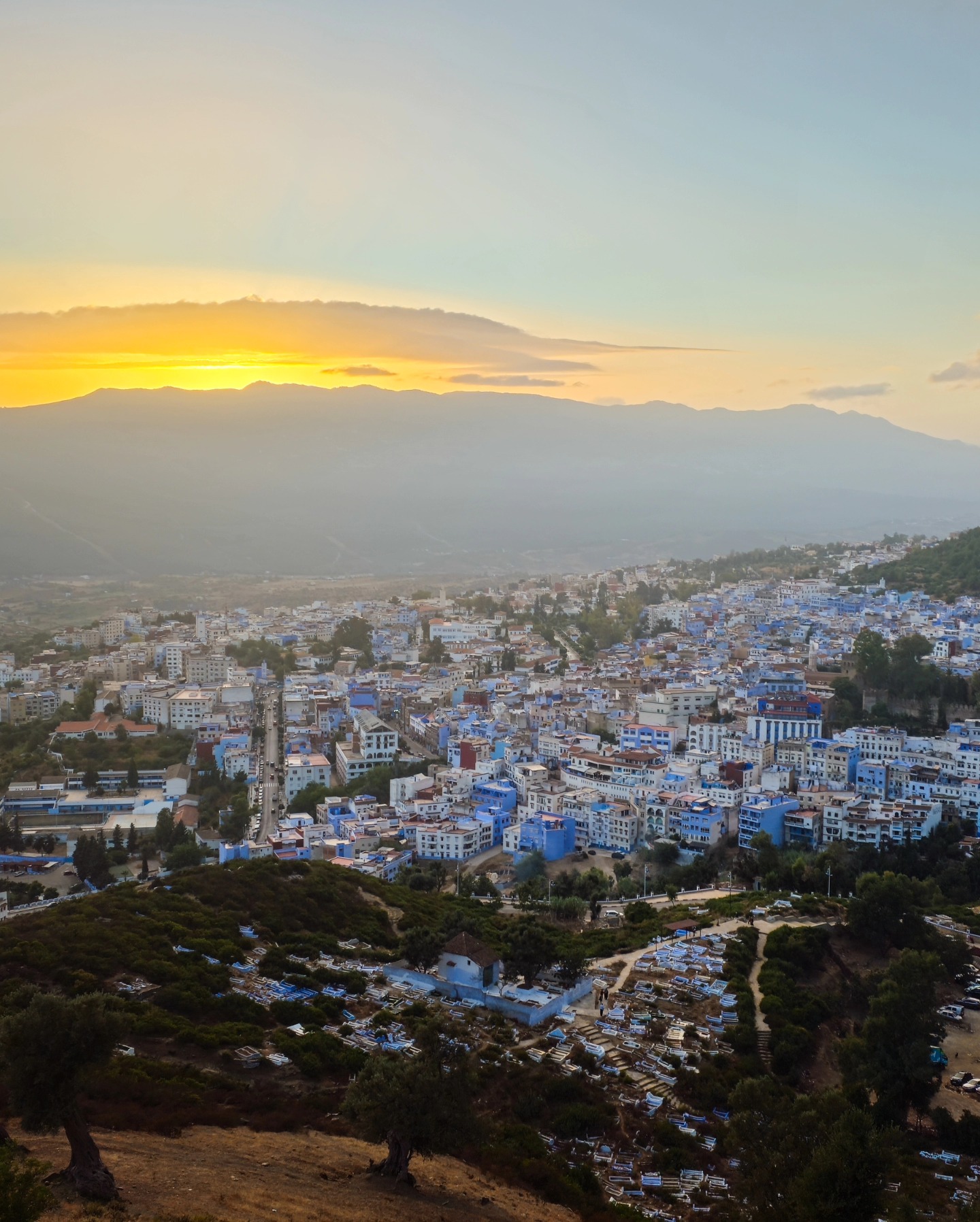
One of the most rewarding walks in Chefchaouen is the 30-minute hike up to the Spanish mosque on the hillside above the medina. Built during the colonial period and never used for prayer, the mosque now serves as an unofficial viewpoint where travelers gather at sunrise and sunset to photograph the blue city from above.
Shop for Local Crafts
Chefchaouen is renowned for its wool goods — rugs, blankets, djellabas, and woven bags — which reflect both Berber craft traditions and the Andalusian influence in their color and pattern. Look for shops along the main market lanes, and take your time bargaining. The city also produces a distinctive goat cheese that is well worth seeking out in the morning market.
Day Trips into the Rif Mountains
The mountains surrounding Chefchaouen are genuinely spectacular and often overlooked by visitors focused on the medina. The Talassemtane National Park, just a short drive from the city, offers hiking trails, cedar forests, and the natural rock arch of Pont de Dieu — a surreal geological formation over a rushing river. A knowledgeable local guide will help you navigate both the trails and the cultural nuances of the region.
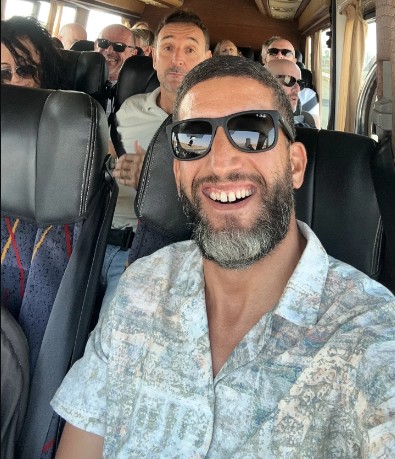
✅ Ministry of Tourism — Licensed Guide
Mouhssine ELIOUJ
Official License: No Réf. 2898 · Specializing in Northern Morocco, Chefchaouen & the Rif Region
Chat on WhatsAppFrequently Asked Questions ↑
Final Thoughts
A City Painted by History, Renewed by Its People
The question of why Chefchaouen is blue does not have a single clean answer — and that is precisely what makes it interesting. The blue is a product of refugee heritage, spiritual belief, practical necessity, and collective pride, all layered on top of each other like the paint on its ancient walls.
What is certain is that the city’s color has become something far greater than any one of its origins. It is now a living tradition, maintained by thousands of residents who choose, year after year, to pick up a brush and keep the blue alive. For the traveler, that makes Chefchaouen not just a beautiful destination, but a genuinely meaningful one — a place where Morocco‘s complex, layered history is written not in books, but directly onto the walls.