Is Marrakech Cashless?
Everything you need to know about paying with cash or card in the Red City ATMs, banks, souks, taxis, and how to avoid getting caught short.
- The Short Answer: Is Marrakech Really Cashless?
- Cash vs Card by Neighbourhood
- Where Can You Pay by Card in Marrakech?
- Where Cash Is Still King
- ATMs in Marrakech: What to Expect
- Bank Fees, DCC & How Not to Lose Money
- Currency Tips & Moroccan Dirham Basics
- Digital Wallets & Mobile Payments in Morocco
- Smart Money Tips for Marrakech
- Frequently Asked Questions
- Talk to a Licensed Local Guide
The Short Answer: Is Marrakech Really Cashless? ↑
If you’re planning a trip and wondering whether Marrakech has gone fully cashless like parts of northern Europe the honest answer is no, not yet. Morocco’s financial infrastructure is modernising steadily, but Marrakech remains very much a city where physical cash is still the dominant way to pay for the majority of day-to-day transactions.
That said, the picture is more nuanced than a simple yes or no. Upscale hotels, international restaurant chains, and larger shopping centres now accept Visa and Mastercard with little friction. Step outside those polished spaces into the winding alleys of the medina, and you’ll quickly discover that the spice merchant, the hammam attendant, and the henna artist all expect and often prefer cash.
Marrakech is not cashless. Carry a combination of Moroccan dirhams for the medina, souks, and street life, and keep your card for upscale venues and larger purchases. Arriving with at least 500–800 MAD in your pocket on day one is always a safe move.
If you’re also asking yourself is Marrakech expensive for tourists, the good news is that it’s quite affordable but only if you know how to handle cash properly in local markets.
Cash vs Card by Neighbourhood ↑
Marrakech is not a monolithic city it’s several different worlds layered on top of one another. Which neighbourhood you’re in largely determines what payment method you’ll need. Here’s a practical breakdown by zone:
The heart of the old city. Street food, market stalls, storytellers, musicians virtually every transaction here is cash. Even the famous orange juice vendors on the square charge by the glass in dirhams.
Morocco’s most famous open-air markets. Hundreds of individual stalls selling leather, ceramics, spices, textiles, and lanterns. No vendor here uses a card terminal dirhams are the only language spoken.
The modern French-designed quarter of Marrakech. Upscale cafés, European-style restaurants, fashion boutiques, and supermarkets here commonly accept card. ATMs are abundant on Mohammed V Avenue.
Marrakech’s luxury hotel and nightclub district. International 5-star properties, casinos, and upscale restaurants around here accept card payments as standard. Contactless is common at hotel venues.
A mix of antique dealers, spice shops, and local eateries. Some fixed-price antique galleries accept card, but the majority of smaller vendors do not. Budget for cash here.
The Yves Saint Laurent Museum and the Majorelle Garden itself accept card at their ticketing desks. Nearby upscale restaurants and concept stores follow the same trend.
Where Can You Pay by Card in Marrakech? ↑
Card payments in Marrakech have expanded meaningfully over the past few years, particularly in zones frequented by international visitors. Here’s where you can typically use your Visa, Mastercard, or contactless payment without any issues:
Most licensed riads and all international hotel chains accept cards. Confirm before check-in with smaller guesthouses some take card for the room but request cash for extras.
Fine dining spots on Rue de la Liberté and Guéliz neighbourhood usually have card terminals. Budget eateries, local dadas, and rooftop restaurants in the medina often do not.
Carrefour, Marjane, and the Menara Mall all accept cards reliably. Fixed-price artisan cooperatives (cooperative artisanale) sometimes do too look for the card terminal at the counter.
Marrakech Menara Airport accepts cards widely. Licensed taxi apps like Careem process card payments. Most tour operators and activity booking offices also accept card or bank transfer.
The Yves Saint Laurent Museum, Majorelle Garden, and Palais Badii now offer card payment at their ticket offices. Smaller sites and heritage houses may still require cash.
Larger pharmacies in Guéliz typically have card terminals. Private clinics such as Polyclinique du Sud accept card for consultations. Always confirm before a procedure.
What About Contactless and Apple / Google Pay?
Contactless terminals are becoming more common at upscale venues, but they are far from universal. Apple Pay and Google Pay work only where NFC-enabled terminals are present which limits you largely to international chain stores and 4- to 5-star properties. Don’t count on tapping your phone to pay across Marrakech just yet. Outside of the premium hotel corridor in Hivernage, contactless remains the exception rather than the rule.
- All souk stalls and market vendors
- Petits taxis (orange cabs)
- Street food and juice bars
- Neighbourhood hammams (15–60 MAD)
- City buses and grands taxis
- Tips for guides, porters, drivers
- Most small museums and heritage sites
- Local bakeries and hanut corner shops
- 4 & 5-star hotels and riads
- Guéliz restaurants and cafés
- Carrefour, Marjane, Menara Mall
- Majorelle Garden and YSL Museum
- Careem app rides
- Tour operators and activity desks
- Pharmacies in Guéliz
- Airport shops and car hire desks
Where Cash Is Still King in Marrakech ↑
Even the most cashless-friendly traveller will hit a wall in Marrakech the moment they venture off the tourist-polished trail. Cash is non-negotiable in many of the city’s most rewarding corners:
- The souks of the medina: Leather workers, spice stalls, lamp makers virtually every vendor in Jemaa el-Fna’s sprawling market expects dirham notes. Attempting to pay by card here will earn you a puzzled look at best. Even larger shops that display “card accepted” signs sometimes experience connectivity issues with their terminals.
- Petits taxis: Marrakech’s small orange cabs are cash-only. Always agree on using the meter (compteur) or confirm a fare before boarding — and have small notes ready. Typical medina-to-Guéliz fares run 20–35 MAD. Some things to do in Marrakech involve getting across town — budget a handful of coins for this.
- Street food & cafés: A bowl of harira, msemen flatbread, a mechoui sandwich, or a glass of fresh-squeezed orange juice on the square — all paid in cash. Some of the most memorable eating in Marrakech costs less than 15 MAD and is found at spots with no formal checkout process.
- Traditional hammams: Neighbourhood hammams charge entry fees between 15–60 MAD and are cash-only. A kessa (scrub) and savon beldi package in a local hammam costs 60–100 MAD all in. Tourist-oriented spa hammams are different — many do accept cards and charge significantly more (300–700 MAD for a full session).
- Bus & shared transport: City buses (ALSA network), Supratours coaches for day trips to Essaouira or Ouarzazate, and shared grands taxis between towns all require cash payment at the ticket window or aboard. A city bus ride costs 4 MAD — exact change is appreciated.
- Smaller museums and heritage houses: Entry to sites like Maison de la Photographie, Musée de Marrakech, and Dar Si Said is typically paid at a cash desk. Even Bahia Palace charges admission in cash at the gate.
- Tipping culture: Tipping is deeply woven into Marrakech’s service culture. Riad staff, restaurant servers, hammam attendants, souk guides, and parking attendants all expect gratuities in cash — specifically in dirhams. Attempting to tip in euros or dollars creates an exchange inconvenience for the recipient.
Pro tip: Keep small bills (5, 10, and 20 MAD notes) separate from your larger notes. Vendors often claim to have no change — a common tactic during negotiations. Having exact money prevents awkward moments and potential overcharging. Ask your hotel to break larger bills (200 MAD notes) into smaller denominations before you head out each day.
ATMs in Marrakech: What to Expect ↑
The good news: ATMs in Morocco (called guichets automatiques locally) are widely available in Marrakech, especially near Jemaa el-Fna, along Mohammed V Avenue in Guéliz, and around Majorelle Garden. Major Moroccan banks — CIH, Banque Populaire, Attijariwafa Bank, and BMCE — all operate machines that accept international Visa and Mastercard.
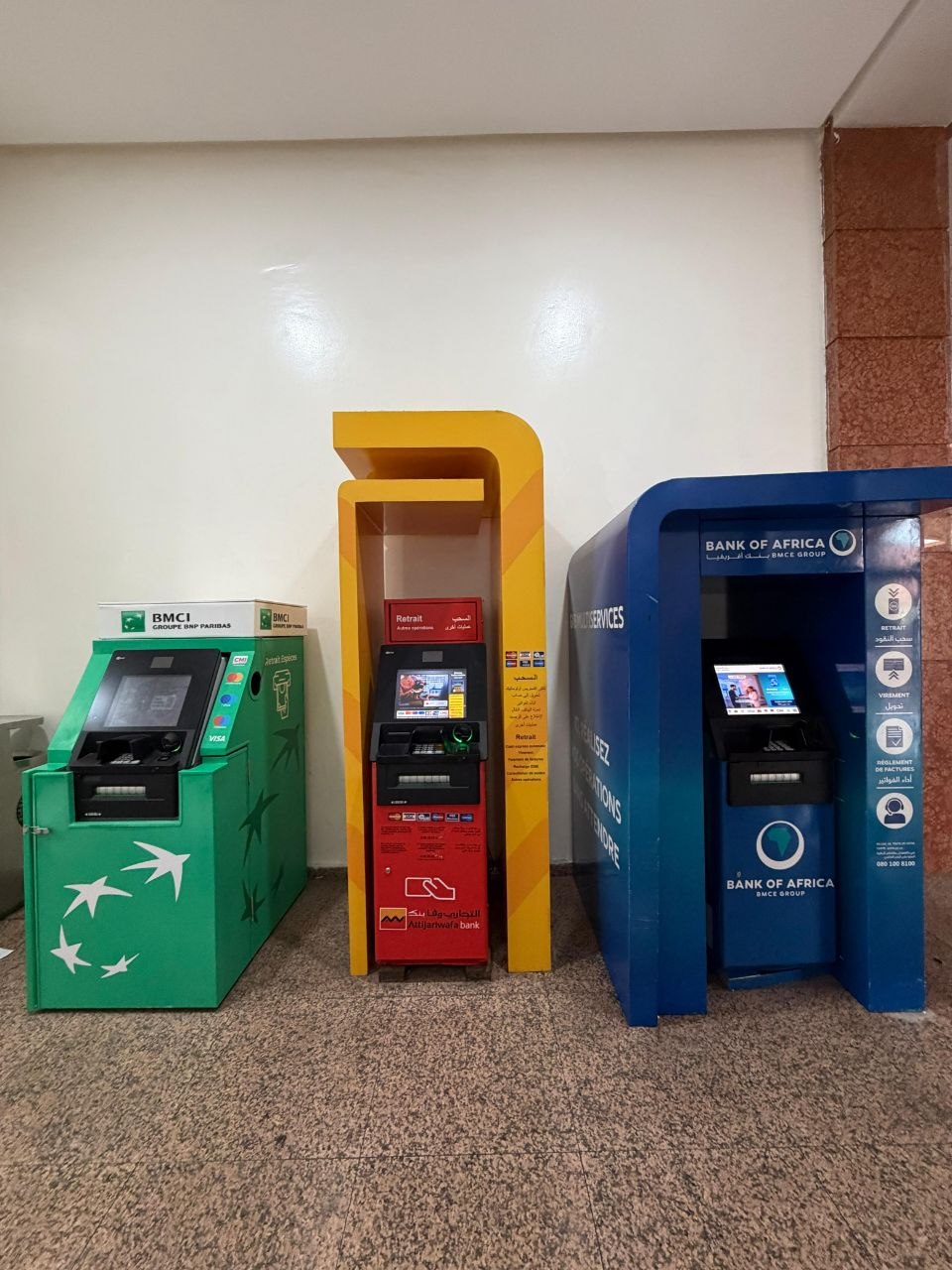
| Bank / ATM Network | International Cards | English Menu | Availability | Max per Transaction |
|---|---|---|---|---|
| Attijariwafa Bank | Yes | Yes | Widespread | 4,000 MAD |
| Banque Populaire | Yes | Yes | Very common | 4,000 MAD |
| BMCE (Bank of Africa) | Yes | Partial | Common | 3,000 MAD |
| CIH Bank | Yes | Yes | Moderate | 3,000 MAD |
| Crédit Agricole du Maroc | Partial | Partial | Less common | 2,000 MAD |
| Société Générale Maroc | Yes | Yes | Moderate | 3,000 MAD |
Best ATM Locations in Marrakech
For reliable, well-maintained machines, these are the best clusters of ATMs in Marrakech:
- Jemaa el-Fna square perimeter: Multiple bank branches with ATMs line the streets immediately surrounding the main square — Banque Populaire and Attijariwafa Bank both have branches within a 3-minute walk of the central fountain.
- Avenue Mohammed V, Guéliz: The widest concentration of ATMs in the city. Multiple bank branches are clustered along this main boulevard, making it the most reliable place to withdraw cash in Marrakech.
- Marrakech Menara Airport: Multiple ATMs are available in the arrivals hall before customs and after baggage claim. Rates are fair (better than currency exchange counters at the airport). Useful for arriving with local cash immediately.
- Menara Mall: Several ATMs inside the mall near the main entrance. Particularly useful if you’re already in the Hivernage or airport area.
ATM Tips Worth Knowing
ATMs in Morocco typically dispense a maximum of 2,000–4,000 MAD per transaction, depending on the bank and your card’s daily limit. Fees vary: your home bank may charge foreign transaction fees (typically 1–3%), and some Moroccan ATMs add a small local fee on top. To minimise charges, withdraw larger amounts less frequently rather than small amounts daily.
Watch out for standalone ATMs in tourist-heavy zones (souvenir shops, riad alleyways, some hotel lobbies). These non-bank machines often charge flat fees of 50–80 MAD per withdrawal and offer poor exchange rates. Always use machines attached to a proper bank branch when possible.
Always choose to be charged in Moroccan dirhams (MAD) rather than your home currency if the ATM offers dynamic currency conversion (DCC) — the exchange rate offered by your own bank is almost always better than the machine’s conversion rate. More on this in the next section.
Bank Fees, DCC & How Not to Lose Money at the ATM ↑
This is one of the least-discussed but most financially impactful topics for travellers in Marrakech. Understanding how fees work — and how to avoid the most common traps — can save you a meaningful amount over a week-long trip.
Dynamic Currency Conversion (DCC) — The Most Common Trap
When you use a foreign card at a Moroccan ATM or card terminal, you will often be asked: “Would you like to pay in EUR / GBP / USD or in Moroccan Dirhams (MAD)?” This is called Dynamic Currency Conversion. It looks helpful — you see a familiar currency — but it is almost always a worse deal. The exchange rate applied by the ATM operator is typically 3–7% worse than the interbank rate your own card would apply. Always choose to pay in MAD.
Rule of thumb: When any screen in Morocco asks you to confirm which currency to use, always select MAD (Moroccan Dirhams). Decline the conversion. Your bank’s rate will be better — every time.
What Your Bank Will Typically Charge
Standard foreign transaction and ATM withdrawal fees from common card types, for reference:
| Card Type | ATM Withdrawal Fee | Foreign Transaction Fee | DCC Markup (if accepted) |
|---|---|---|---|
| Standard UK debit / HSBC | £1.50–£2 + 2.99% | 2.75–2.99% | +3–7% |
| Standard US debit / Chase | $5 flat fee | 3% | +3–7% |
| Revolut (Standard) | Free up to £200/mo, then 2% | None (weekdays) | +3–7% if accepted |
| Wise (Travel Card) | Free up to £200/mo, then 1.75% | Low (~0.35–1.5%) | +3–7% if accepted |
| Charles Schwab (US) | Unlimited fee rebates | None | +3–7% if accepted |
For travellers making multiple trips to Morocco or spending more than two weeks in the country, a Revolut or Wise card is consistently the most cost-efficient option available. Both support MAD in their currency exchange, and both offer much better rates than traditional high-street banks. Enable the card for international use before you travel and top it up from your home bank account before departure.
Currency Tips & Moroccan Dirham Basics ↑
The official currency of Morocco is the Moroccan Dirham (MAD), sometimes written as DH or simply referred to as “dirham.” It is a closed currency, meaning it cannot officially be purchased outside Morocco, and there are limits on how many dirhams you can export when you leave. In practice, this means your best strategy is to exchange money upon arrival.
Denominations You Should Know
The Moroccan Dirham is subdivided into 100 centimes. You’ll encounter both coins and notes in daily use:
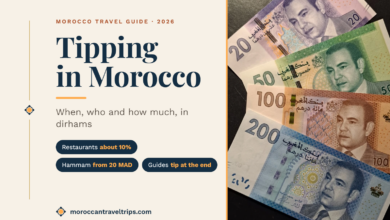
50 centimes, 1 MAD, 2 MAD, 5 MAD, 10 MAD. The 1 and 5 MAD coins are most commonly used for taxis, buses, and small purchases. Always keep a few in your pocket.
20 MAD, 50 MAD, 100 MAD, 200 MAD. The 20 and 50 MAD notes are the most useful for daily use. Vendors in the medina frequently claim to have no change for 100 or 200 MAD notes.
1 EUR ≈ 10.7 MAD. 1 USD ≈ 9.9 MAD. 1 GBP ≈ 12.6 MAD. Rates fluctuate — check live rates before travel and again on arrival.
You can exchange currency at:
- Bank branches — best official rate, may involve a small fixed commission (typically 5–20 MAD). Banque Populaire and Attijariwafa Bank branches are the most widely available. Bring your passport as ID.
- Marrakech Menara Airport — convenient but rates are 2–4% less favourable than bank branches. Fine for changing enough to cover your first day without panic.
- Your hotel or riad — rates vary widely. Fine for small emergency amounts, but not the best for larger exchanges. Some riads refuse to exchange at all.
- Licensed exchange bureaux (bureaux de change) in the medina and Guéliz — look for official signage in Arabic and French with published rates displayed. Rates are often competitive. Avoid unofficial street changers entirely they are illegal and their rates invariably favour them, not you.
Street money changers are illegal in Morocco and operate exclusively to exploit tourists. If someone approaches you in the medina offering to change money, decline politely and walk on. The official bureaux de change in Guéliz and near the main square offer fair, transparent rates with receipts.
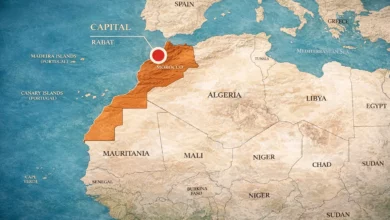
Curious about where Morocco fits in the wider world before you plan your itinerary? Where is Morocco gives a solid geographic and cultural overview that puts your Marrakech trip in context.
Digital Wallets & Mobile Payments in Morocco ↑
Morocco’s central bank, Bank Al-Maghrib, has been steadily developing a framework for mobile payment services, and several local digital wallet options exist alongside the international ones you may already carry. Here’s the honest picture for international visitors in 2026:
International Digital Wallets
Apple Pay, Google Pay, and Samsung Pay can be used at any NFC-enabled payment terminal in Marrakech — the same terminals that accept contactless card payments. In practice this limits you to upscale hotels, international chains, and a handful of Guéliz restaurants. These wallets do not work at ATMs, and they have no function in the medina or souks.
Moroccan Mobile Payment Services
Morocco has developed several domestic mobile payment platforms, though as an international visitor you will rarely interact with them directly:
Morocco’s first mobile wallet, operated by CIH Bank. Used by Moroccan residents for peer-to-peer transfers and some merchant payments. Not accessible to foreign tourists without a Moroccan bank account.
Morocco’s postal bank network and associated mobile transfer services. Used widely for domestic transfers and cash-out at agency locations. Not practical for tourists but useful context when you see the branches.
Careem operates a proprietary in-app payment system. If you use Careem for rides in Marrakech, card payment through the app is seamless and avoids the cash-only limitation of regular taxis.
Bottom line on digital payments: International visitors should not rely on digital wallet payments as a primary strategy in Marrakech. Use them when available (upscale hotels and restaurants), carry a travel card like Revolut or Wise for ATM withdrawals, and keep dirham notes for the vast majority of daily spending.
Smart Money Tips for Travelling in Marrakech ↑
Getting your cash strategy right can genuinely transform your Marrakech experience. Here’s what seasoned Morocco travellers consistently recommend:
- Inform your bank before you travel. Many cards are blocked for overseas use by default, or trigger fraud alerts the moment they’re used in Morocco. A quick call or app toggle before you fly prevents the frustration of a declined card at an ATM on day one. This is one of the most commonly cited sources of travel stress in Morocco and entirely avoidable.
- Carry two payment methods. One card plus cash. If an ATM swallows your card or a machine is out of service, you won’t be stranded. Keep a backup card in your accommodation safe, not in your wallet.
- Use a money belt or hidden pouch for your larger bills and cards when moving through crowded areas like Jemaa el-Fna at night. Marrakech is generally safe, but basic precautions always apply you can read more about is Marrakech safe for full context. A cross-body bag with a clip closure is more practical for daytime medina exploration than a traditional wallet.
- Withdraw cash at bank ATMs rather than standalone machines in tourist areas or shopping malls. Bank-branded ATMs — Banque Populaire and Attijariwafa are the most reliable — are better maintained and less likely to have inflated fees or skimming risk. For a comprehensive guide on using cash machines across the country, our dedicated page on ATM in Morocco covers everything in detail.
- Budget for tipping in cash. Tipping guides, porters, riad staff, and tour drivers is deeply appreciated and should always be in dirhams. A rough guide: 10–20 MAD for a parking attendant or porter, 50–100 MAD per day for a private tour guide, 10% of the bill at restaurants that don’t include service. EUR or USD tips create inconvenience for local staff who must then exchange them.
- Download your bank’s app. Being able to monitor your balance, unlock your card, and set transaction limits from your phone is genuinely useful when travelling across any of the cities in Morocco. Enable real-time notifications for transactions so you spot any unauthorised charges immediately.
- Reconvert unused dirhams before leaving. The Moroccan dirham is a closed currency and cannot officially be converted outside Morocco (except in small amounts at some border airports). Keep your currency exchange receipts some banks require them to reconvert dirhams back to euros or dollars at the airport. You are legally permitted to reconvert up to 50% of the amount you originally exchanged.
Frequently Asked Questions ↑
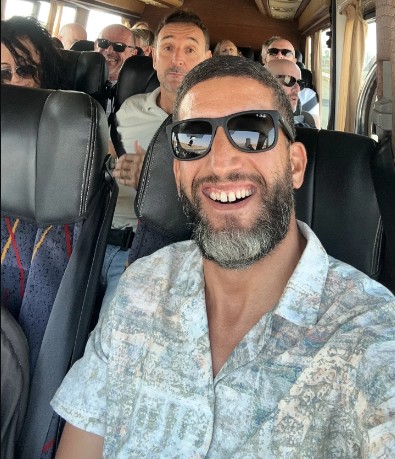
Still unsure about handling money, tipping, navigating ATMs, or exploring Marrakech’s medina for the first time? Chat directly with Mouhssine a certified guide licensed by the Moroccan Ministry of Tourism who can answer your questions and help you plan a seamless, stress-free visit to the Red City.
Chat on WhatsAppFinal Thoughts: Cash-First, Card-Ready ↑
Marrakech in 2026 sits at an interesting crossroads: modern enough for card payments at polished hotels and upscale restaurants, yet gloriously traditional in its souks, hammams, and street life where dirham notes remain the universal language of commerce. The travellers who navigate the city most smoothly are those who arrive with both options ready a loaded travel card (Revolut or Wise recommended) for ATM withdrawals and larger purchases, and a wallet of well-organised dirhams for everything else.
The key things to remember: always choose to be charged in MAD, not your home currency; withdraw from bank-branded ATMs rather than standalone machines; keep small notes (20 and 50 MAD) separate from your larger bills; and never exchange money with unofficial street changers. Reconvert unused dirhams at the airport before you fly home.
Don’t let the cash question stress you out. ATMs in Morocco are accessible, exchange rates are fair, and Marrakech is genuinely welcoming to visitors of all budgets. Focus on the experience the spices, the riads, the call to prayer echoing at dusk across the rooftops and let the logistics fall into place.
And if you want expert, on-the-ground guidance from someone who knows Marrakech intimately, reach out to Mouhssine above. He’s licensed, experienced, and happy to help you navigate everything from souk negotiations to getting the best fare from a petit taxi driver.