Why Do Moroccans Put Their Hand Over Their Heart After Shaking Hands?
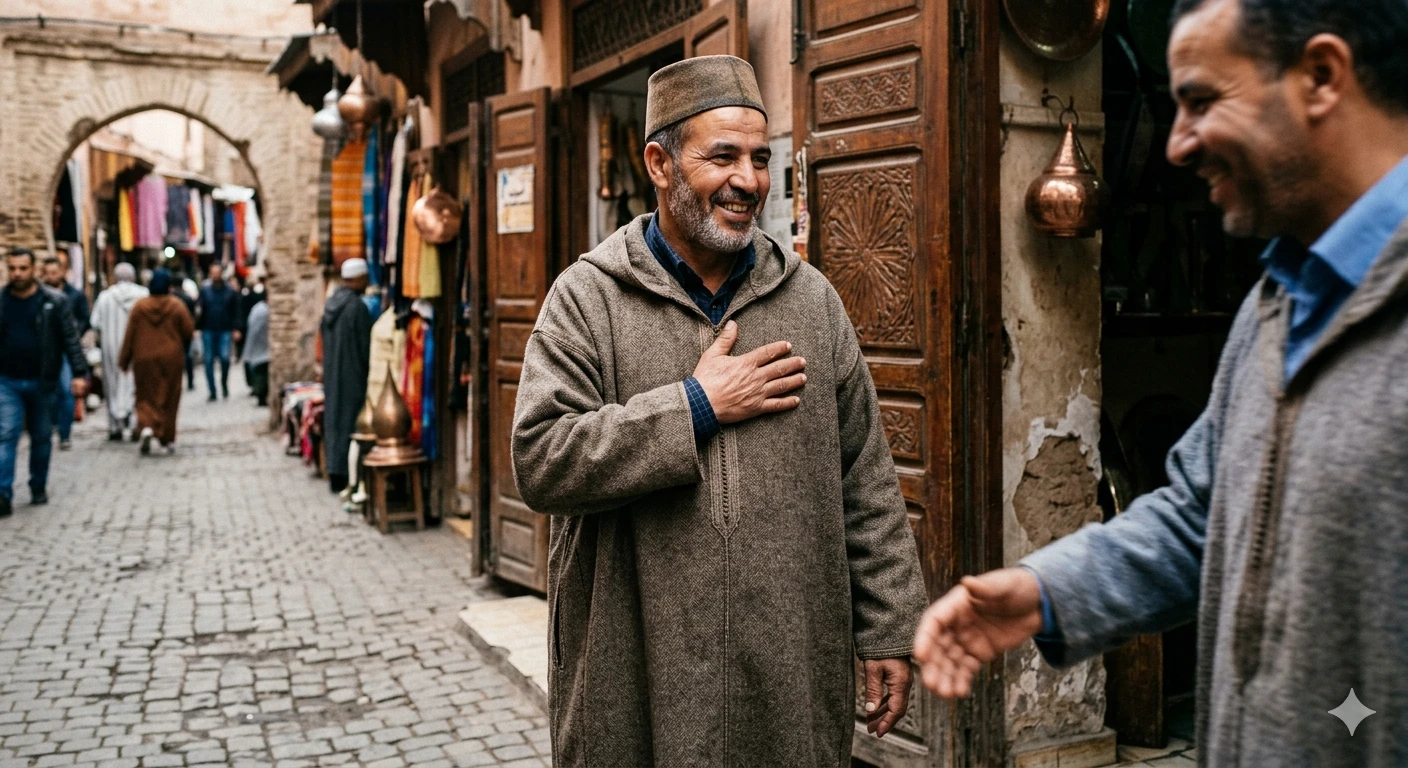
If you’ve ever traveled to Morocco or simply shaken hands with a Moroccan, you may have noticed something that doesn’t quite match Western greeting norms: right after the handshake, the person gently places their right hand over their heart. No words. No explanation. Just a quiet, almost instinctive gesture. It’s brief, sincere, and deeply meaningful. For first-time visitors, it can feel both unexpected and touching. This guide breaks down exactly what that gesture means, where it comes from, and how to respond to it gracefully.
The Gesture at a Glance ↑ Contents
Morocco sits at a fascinating crossroads between Arab, Berber, and West African traditions, a layered identity that shapes everything from Morocco’s physical landscape to its most personal daily gestures. The hand-over-heart movement after a handshake belongs to that deeply rooted cultural fabric.
The sequence typically goes like this: two people meet, extend their right hands, shake briefly, and then one or both immediately brings their right hand back to rest over the chest, fingers lightly touching the heart area, often accompanied by a slight nod or smile. The whole thing lasts barely two seconds. Yet it carries a weight of meaning that a firm, business-style handshake rarely manages to convey.
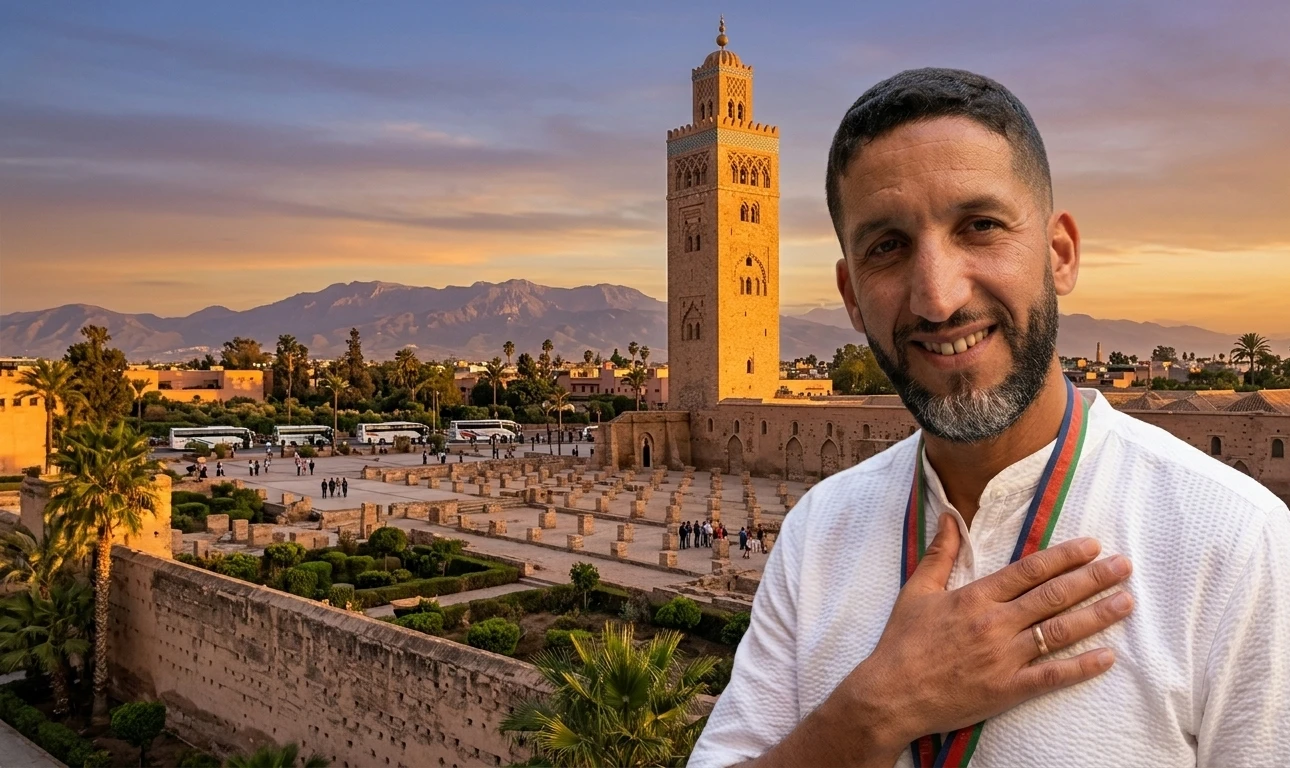
The hand-over-heart gesture is one of the most recognizable and sincere greetings in Moroccan culture.
When Moroccans place their hand over their heart after shaking hands, they are expressing: “This greeting comes from my heart. I am genuinely glad to see you.” It is a gesture of sincerity, warmth, and respect all folded into a single motion.
The Islamic & Cultural Roots ↑ Contents
To understand why Moroccans put their hand over their heart after shaking hands, you need to look at the intersection of Islamic tradition and North African social values, two forces that have shaped Moroccan etiquette for over a thousand years.
In Islamic culture, greetings are treated as acts of worship in their own right. The Prophet Muhammad (peace be upon him) emphasized warmth and sincerity in meeting others, and shaking hands, known as the musafaha, is considered a Sunnah (prophetic tradition). There are narrations in Islamic scholarship suggesting that when two Muslims shake hands and genuinely wish each other well, their minor sins are forgiven by the time their hands part. This elevates a handshake from a social formality to something spiritually meaningful.
The hand placed over the heart is a natural extension of that spiritual weight. It signals: the greeting didn’t stop at the palm; it traveled to the heart. In Arabic and Berber Moroccan culture alike, the heart (qalb in Darija) is the seat of sincerity, love, and intention. Touching it after a greeting is a way of sealing the interaction with genuine feeling rather than mere social protocol.
What the Gesture Actually Communicates ↑ Contents
Language can be ambiguous. Tone can be misread. But a hand placed over the heart after shaking hands is essentially unmistakable, even across cultural and language barriers. It works on several levels simultaneously, and each layer adds meaning.
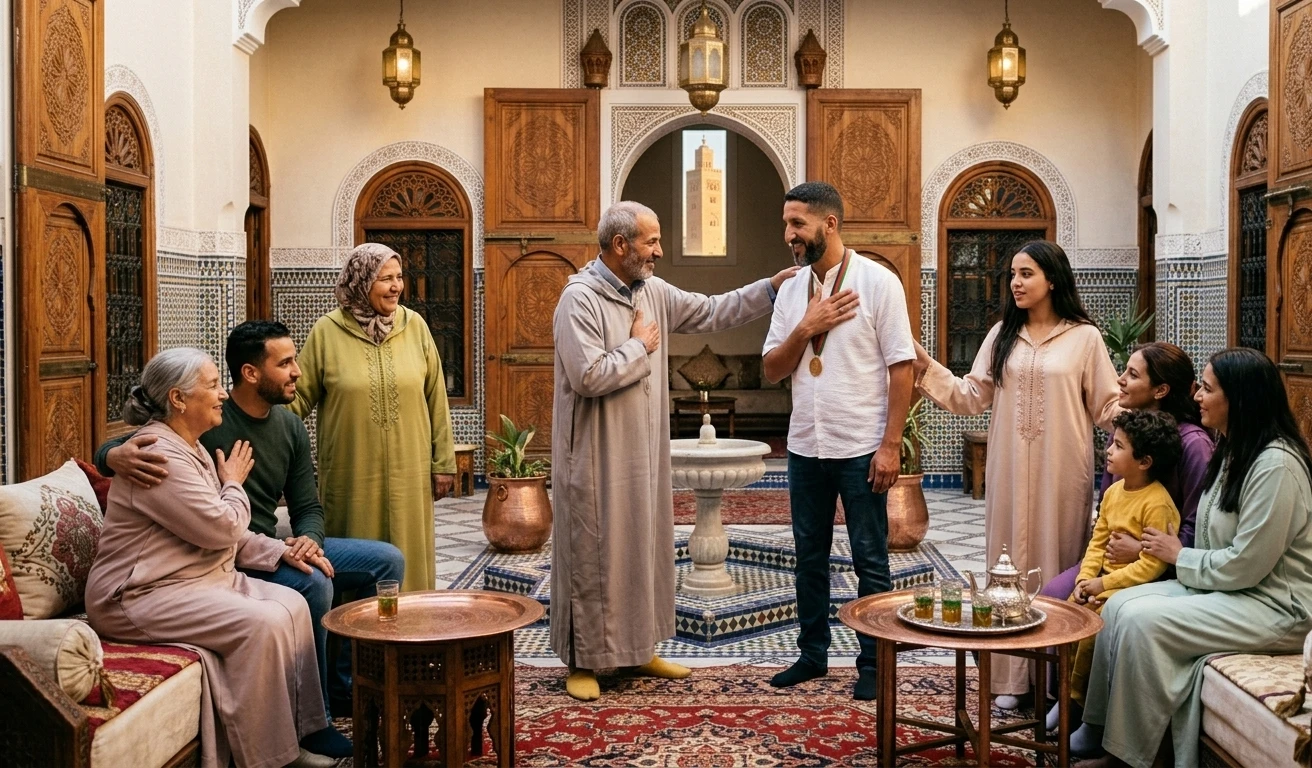
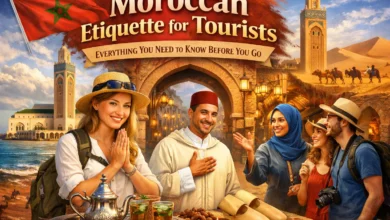
Moroccan greetings carry layers of social meaning that go far beyond the physical act of shaking hands.
Who Does It and When? ↑ Contents
The hand-over-heart gesture in Morocco is not reserved for elders, religious figures, or formal occasions. It cuts across age groups, social classes, and daily situations. A market vendor will do it when you buy a kilo of oranges. A hotel receptionist will do it when you check in. A stranger in a riad’s courtyard might do it when passing you in the corridor. It is ubiquitous, and that ubiquity is precisely what makes it so powerful.
That said, context does shape how the gesture is used:
Visitors exploring the many cities of Morocco will find that the gesture is used slightly more formally in traditional settings like Fes or Marrakech compared to more cosmopolitan areas like Casablanca, but it is present and recognized everywhere.
How Tourists Should Respond ↑ Contents
If you’re planning your first trip to Morocco and someone offers you this gesture, here’s the simple truth: you don’t need to do anything special. A warm smile is already a perfectly appreciated response. But if you’d like to mirror the gesture, which is always welcomed and genuinely appreciated, here’s how:
Moroccans are extraordinarily generous in how they read foreign visitors’ attempts at cultural connection. Making the effort, even imperfectly, earns more warmth than doing nothing at all. It signals that you’ve come to experience Morocco, not just photograph it. For those asking Is Morocco safe for tourists? this very culture of warmth and hospitality is a large part of the answer.
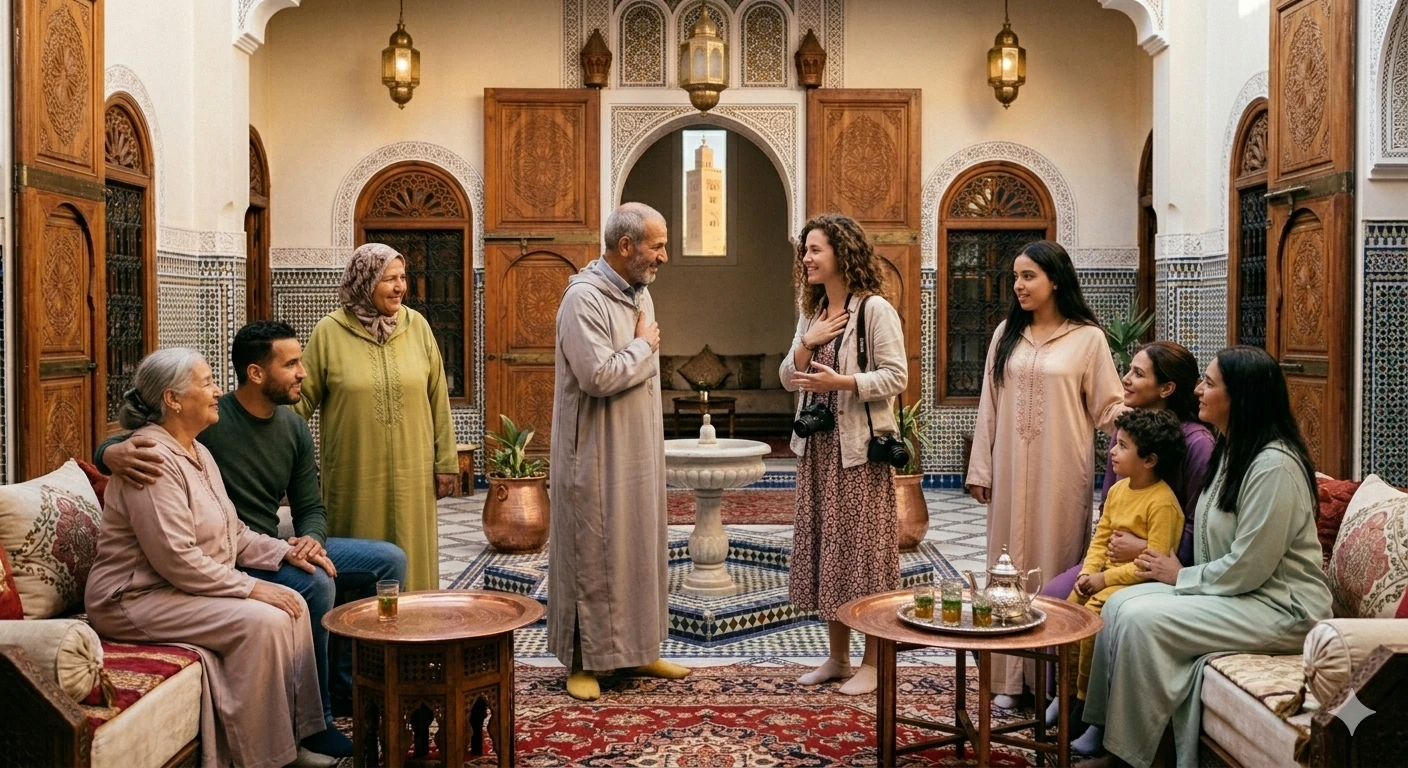
A little cultural awareness goes a long way in Morocco. The hand-over-heart gesture is one of the easiest and most appreciated things a visitor can learn.
Other Moroccan Greeting Customs to Know ↑ Contents
The hand-over-heart gesture doesn’t exist in isolation. It’s part of a broader Moroccan greeting culture that rewards visitors who take the time to understand it. Here are a few other customs you’ll encounter:
If you’ve recently found yourself wondering exactly where Morocco is on the map and what kind of place you’re about to visit, this greeting culture is one of your most useful previews. Morocco is a country where the quality of human connection is taken seriously, and daily interactions reflect that value in small but memorable ways.
Before you arrive, it also helps to know practical basics: how currency works (you can read more about what currency Morocco uses and whether to exchange before you fly), and how to move between cities without stress. A well-prepared visitor is a more relaxed one, and a more relaxed visitor gives and receives better cultural interactions.
Frequently Asked Questions ↑ Contents
What does it mean when a Moroccan puts their hand on their heart? ▾
When a Moroccan places their hand over their heart, whether after a handshake or as a standalone gesture, it expresses sincerity, warmth, and respect. It signals that the greeting is coming from a genuine place rather than being merely formal. Rooted in both Islamic tradition and Moroccan social culture, the gesture essentially says: “My welcome to you is heartfelt.”
Is the hand-over-heart gesture specific to Morocco? ▾
No. Variations of the hand-over-heart greeting appear across many Muslim-majority countries including Egypt, Jordan, Iran, Turkey, and Pakistan. However, the exact form, frequency, and social weight of the gesture can vary. In Morocco, it is especially natural and widespread, blending Islamic practice with deeply ingrained Amazigh hospitality values.
Should I shake hands with everyone in Morocco? ▾
Generally, yes. Handshakes are common between men and between women who know each other. For cross-gender greetings, it depends on the context and the individuals. Some Moroccan women may extend their hand freely; others prefer not to for modesty reasons. The safest approach is to wait and follow the other person’s lead. If they don’t extend a hand, mirror the heart gesture instead; it’s equally warm and completely appropriate.
What is the Arabic phrase for “hello” used in Morocco? ▾
The most common greeting in Morocco is As-salamu alaykum (“Peace be upon you”), to which the response is Wa alaykum as-salam. In casual Moroccan Darija (the local Arabic dialect), you’ll also hear Labas? meaning “How are you?” or simply Ah labas as a response meaning “I’m fine.” Learning even these few words will earn you genuine smiles across the country.
Is it offensive if I don’t mirror the hand-over-heart gesture? ▾
Not at all. Moroccans are experienced with international visitors and understand that cultural norms vary. If you simply smile and respond warmly, no offense is taken. That said, making the gesture yourself, even imperfectly, is universally well-received and often leads to a warmer, more connected interaction. It’s one of those small efforts that disproportionately deepens the travel experience.
Can the hand-over-heart gesture be used as a refusal to shake hands? ▾
Yes. In some contexts, particularly where a man or woman prefers not to shake hands with someone of the opposite gender for religious or personal reasons, bringing the hand to the heart without extending it for a handshake serves as a warm, respectful alternative. It maintains all the warmth of the greeting while respecting personal or religious boundaries. If this happens to you as a visitor, treat it as the genuine gesture of welcome it is.
Small gestures tell big stories. When Moroccans place their hand over their heart after shaking hands, they are doing something that many modern cultures have quietly let go of: insisting that human encounters have meaning, that saying hello is worth doing properly, that the person in front of you deserves more than a perfunctory nod.
For first-time visitors, learning this gesture, understanding it, mirroring it, watching for it, opens a door into Moroccan culture that no guidebook map can quite replicate. It costs nothing, requires no language skills, and communicates everything. Bring it with you when you arrive.
Ready to plan your trip? Start by making sure you have the essentials in place: know what currency to carry, explore the cities you want to visit, and rest assured that Morocco is a safe and welcoming destination for tourists from around the world.