Culture & Heritage
Moroccan Crafts: A Living Heritage Woven Into Every Thread and Tile
There are places in the world where art never makes it onto a museum wall. It breathes in the streets instead, hums quietly in narrow workshops, and passes from calloused hands to grateful ones, generation after generation. Morocco is one of those rare places.
A Quick Note on Pricing
Moroccan dirham (MAD) figures appear throughout this guide as a general orientation only. Souk and workshop pricing shifts with the city, the season, the seller, and how well you negotiate, so treat every number below as a starting point for your own budget rather than a fixed quote.
Where Tradition Meets Timelessness↑
Long before “artisan” became a marketing word, Morocco was already perfecting the idea behind it. Moroccan crafts, from the labyrinthine medinas of Fez to the sun-baked souks of Marrakech, form one of the most intact and vibrant craft traditions anywhere on earth. These objects are not relics kept under glass. They are living practices, taught in workshops known as msids and fondouks, sustained by a cultural pride that decades of mass production have never managed to erode.
If you have ever wondered what Morocco is known for beyond its landscapes and cuisine, the answer almost always circles back to its craft heritage, a mosaic of Amazigh, Arab, Andalusian, and sub-Saharan influences that has left a permanent mark on nearly everything Moroccan hands create. This is the world of Moroccan handicrafts in its truest sense, skills passed from parent to child and refined over centuries rather than seasons.
Zellige Tilework & Moroccan Pottery: Earth Made Beautiful↑
Of all the visual signatures of Moroccan traditional crafts, none is more instantly recognizable than zellige, the centuries-old art of hand-cut ceramic mosaic, alongside the rich, earthy tradition of hand-thrown pottery that colours every market and home across the country.
Zellige: Geometry as Devotion
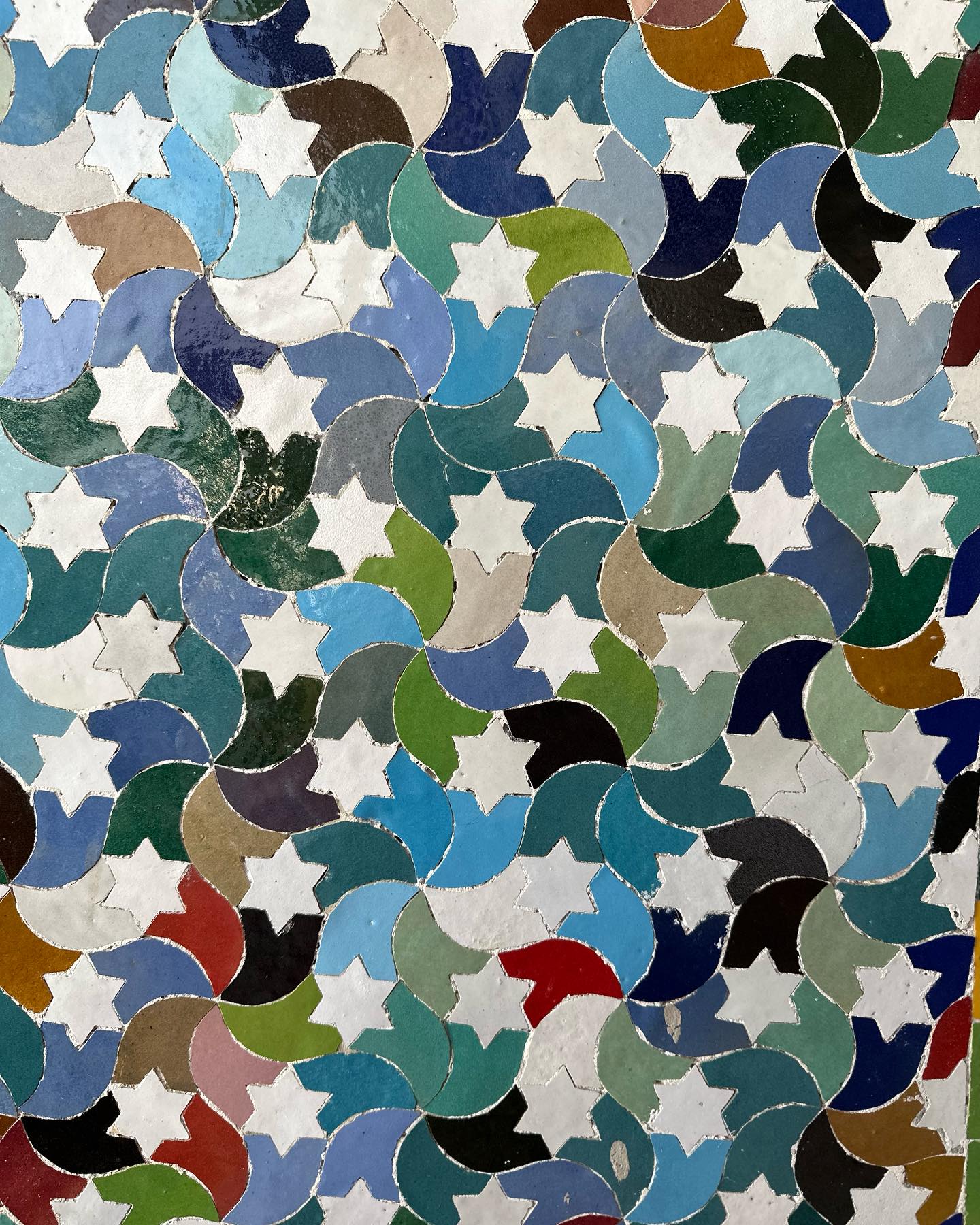
Zellige is, at its heart, an act of patience bordering on meditation. A craftsman known as a maallem chips each tile fragment by hand from a fired ceramic square, using a small hammer and chisel. No two fragments are ever mechanically identical. Assembled into geometric constellations of stars, diamonds, and interlocking polygons, zellige turns ordinary walls, fountains, and floors into something closer to visual poetry. Its undisputed capital is Fez, where workshops inside the medina have practiced the craft continuously since at least the 10th century.
Zellige panels for home decor typically start around 150 to 400 MAD per square metre for simpler patterns, while custom architectural commissions from master craftsmen can run into the thousands. Small decorative panels sold in the souks usually fall between 80 and 500 MAD, depending on size and the complexity of the pattern.
Moroccan Pottery: Clay as Cultural Memory
The pottery of Safi, Fez, and Salé is another pillar of art and craft in Morocco, and one of the easiest ways to bring home something genuinely authentic. Hand-thrown on kick wheels, fired in wood-burning kilns, and painted with natural pigments, Moroccan ceramics carry a vocabulary of motifs, geometric borders, floral arabesques, calligraphic inscriptions, that links the humblest kitchen tagine to centuries of artistic refinement. The cobalt-and-white pottery of Fez is probably the most recognized abroad, though the deep terracotta and ochre wares of the south carry an equally compelling beauty.
A simple hand-painted bowl or small tagine can sell for as little as 30 to 80 MAD in a craft market, while a full decorative dinner set from a reputable workshop typically ranges from 800 to 3,000 MAD or more. Larger decorative platters start around 150 MAD and climb steeply with the level of artistry involved.
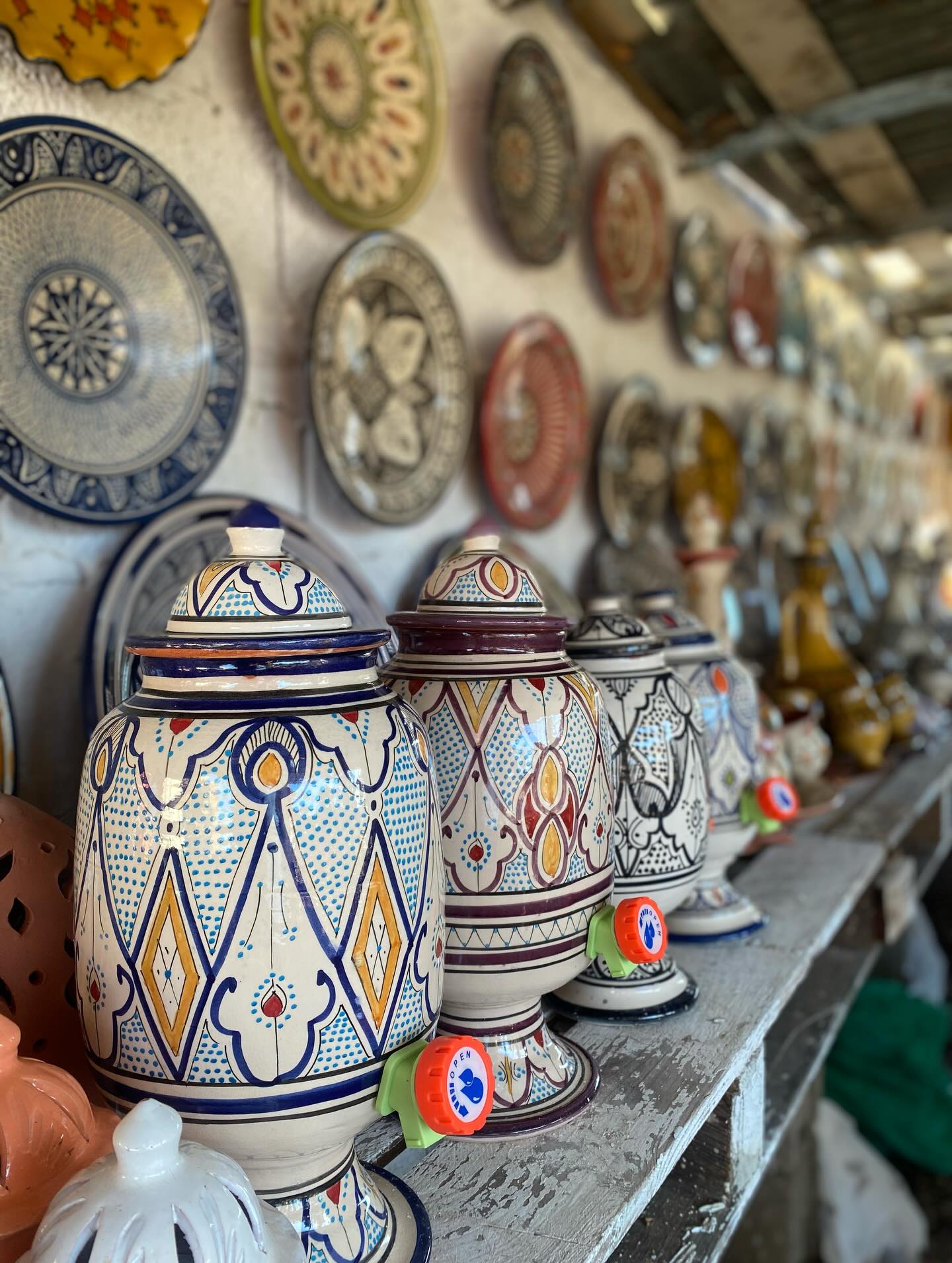
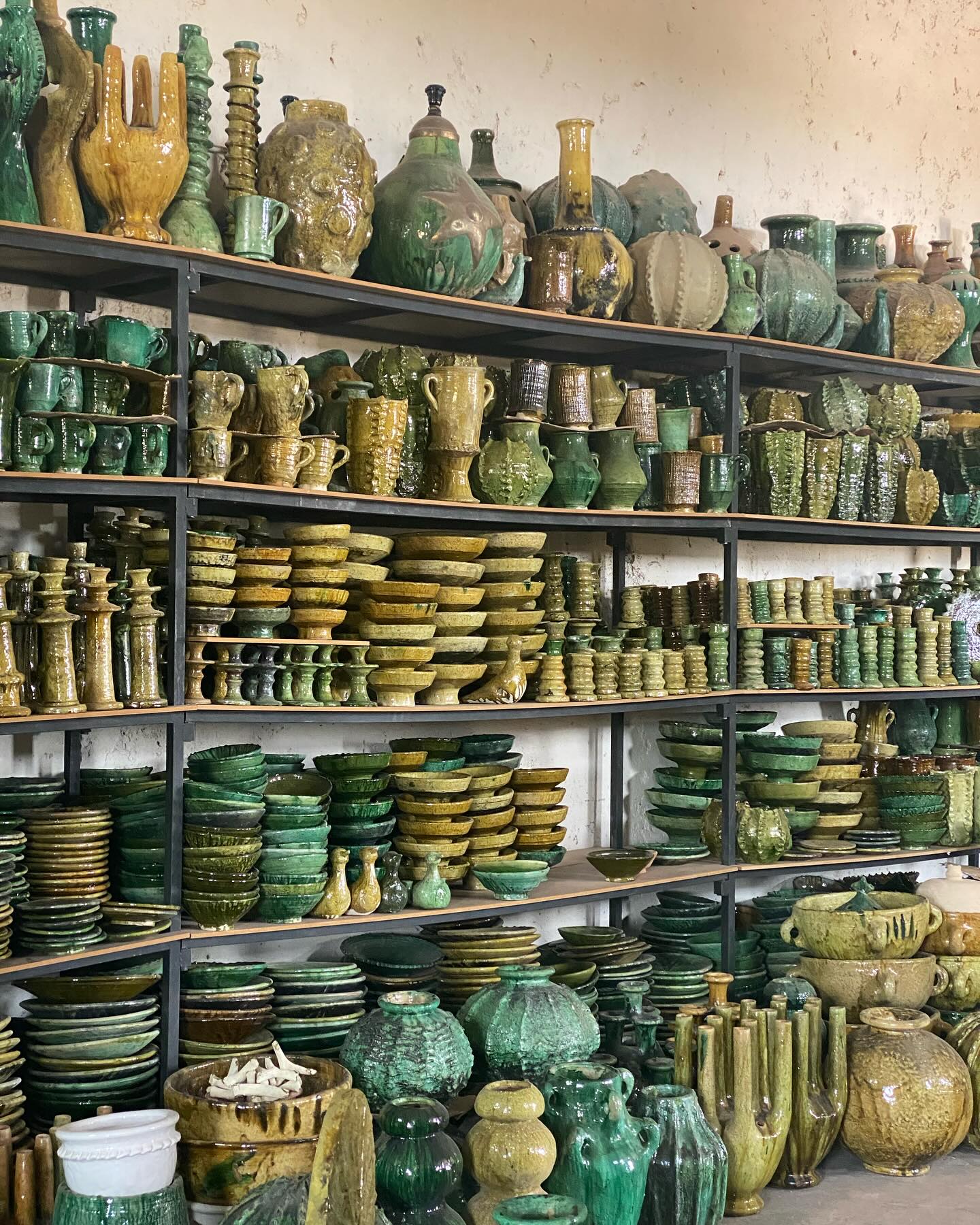
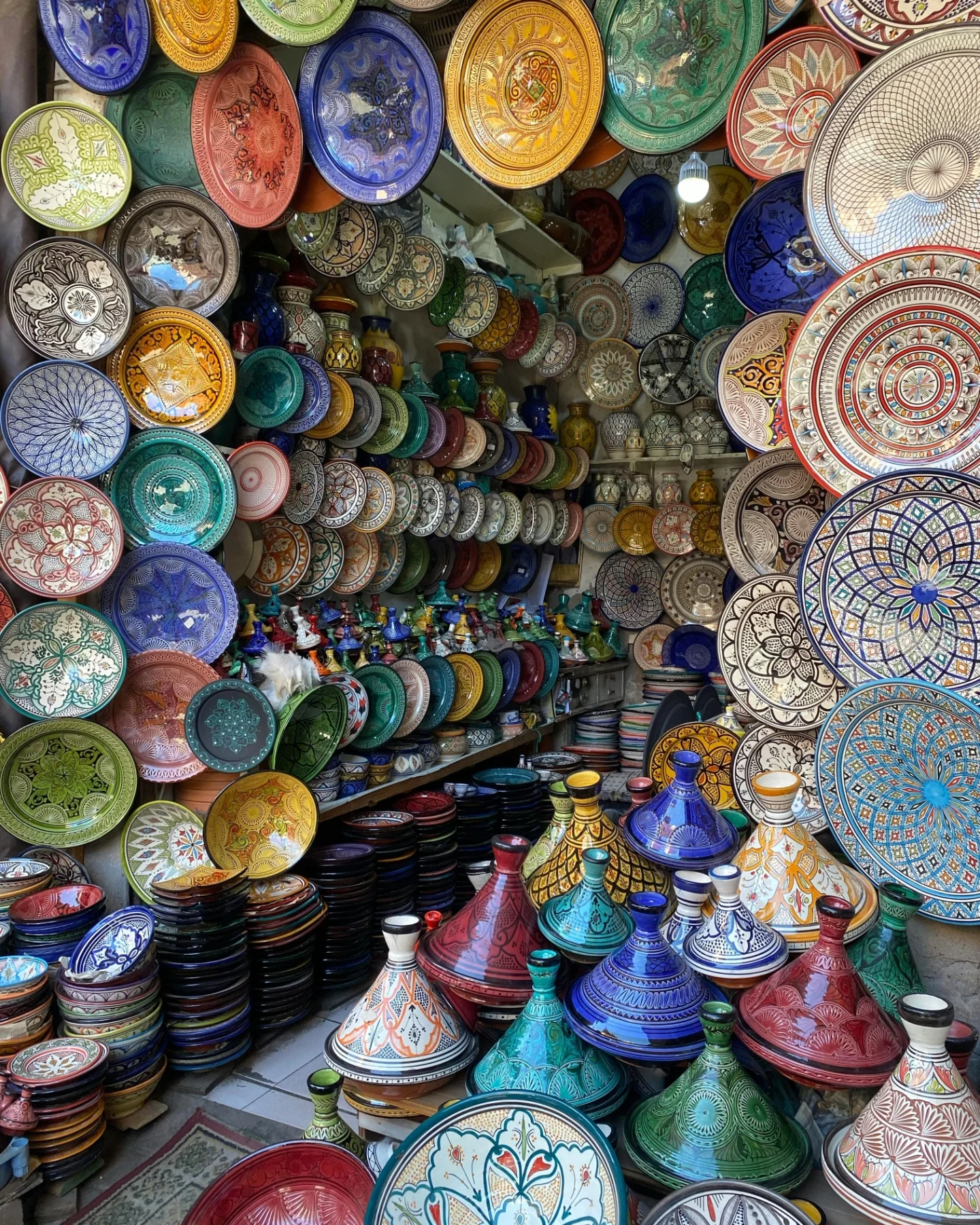
Hand-painted Moroccan pottery, where everyday kitchenware doubles as folk art
Berber Carpet Weaving: Stories Written in Wool↑
If zellige speaks the language of geometry, Berber carpets speak the language of the soul. Woven by Amazigh women across the Middle and High Atlas Mountains, these textiles are not decorative objects in the conventional sense. They are autobiographies. Every symbol in the pile carries meaning: a diamond to ward off evil, a zigzag for flowing water, a cross for the four cardinal directions. No two authentic carpets are ever identical, and many of the finest pieces still come from a handful of weaving towns, which this guide covers in more detail further down the page.
Moroccan handicrafts enthusiasts consistently rank Berber textiles among the finest weavable traditions in the world, and the international design community has taken notice. Contemporary interiors from Scandinavia to Japan increasingly feature these high-pile, naturally dyed rugs as centrepieces, proof that something truly handmade in Morocco rarely goes out of style.
How to Identify an Authentic Berber Carpet
Look for slight irregularities in the weave, the fingerprint of a human hand. Natural wool has a lanolin warmth to the touch and a slight sheen that synthetic fibre cannot replicate. The knot density on the back should be even and tight. Natural dyes, extracted from pomegranate skin, saffron, henna, and mineral earths, produce colours that mellow and deepen over years rather than fading harshly.
Pricing varies enormously by size, knot density, and material. A small Beni Ourain-style accent rug (60×90 cm) starts around 400 to 900 MAD, while a full-room carpet (200×300 cm) of genuine handmade wool can run anywhere from 3,000 to 15,000 MAD or beyond, depending on origin and intricacy. High-altitude village carpets with natural dyes command premium prices, and they tend to deserve them.
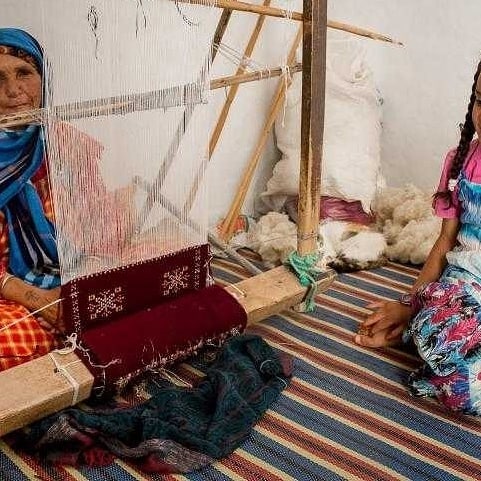
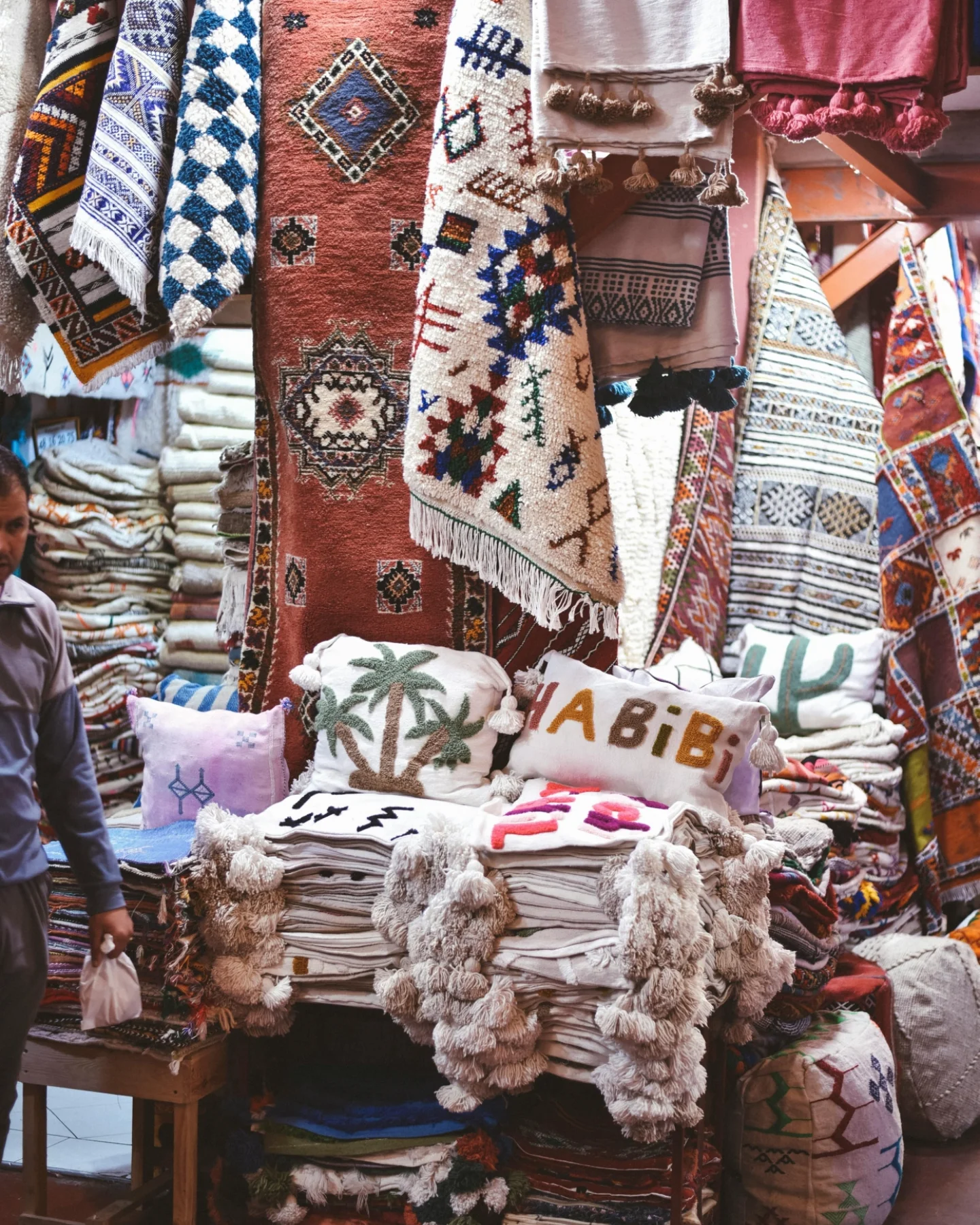
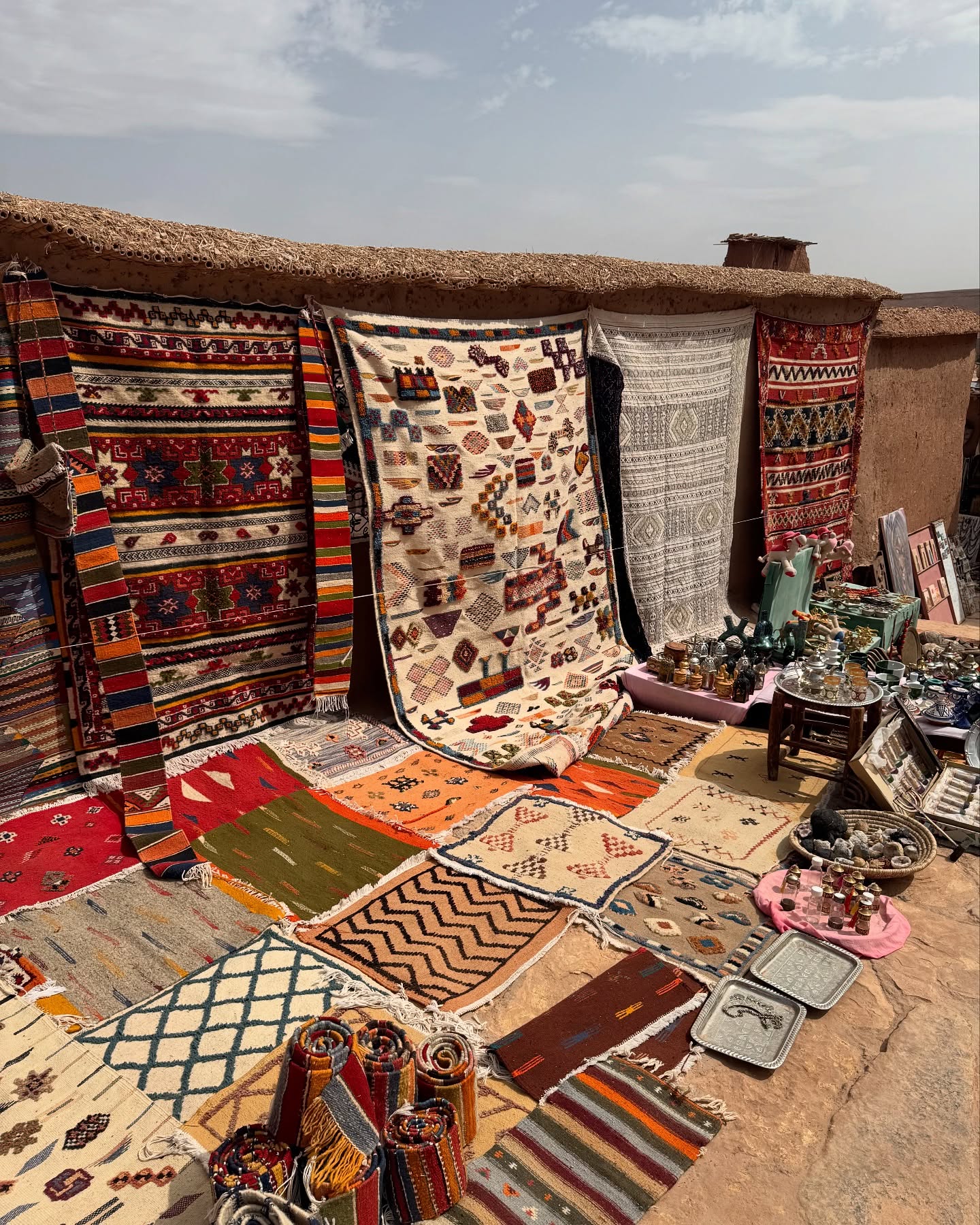
Berber weavers of the Atlas, each carpet an unrepeatable conversation between maker and memory
In Morocco, every object carries a memory. A carved cedarwood door is not simply carpentry; it is the record of one craftsman’s lifetime, and the start of someone else’s.
Moroccan Lanterns & Wrought Iron: Light as an Art Form↑
Step into any Moroccan riad at dusk and you will understand immediately why the Moroccan lamp has become one of the country’s most beloved design exports. Whether suspended from cedar ceilings in cascading clusters or lining the arched corridors of a medina palace, these lanterns do not merely illuminate. They transform. The light they cast is dappled, jewelled, and alive, filtering through latticed metalwork and coloured glass to throw intricate patterns across plaster walls.
The Craft of Wrought Iron and Brass Lanterns
The artisans who produce Moroccan lanterns work primarily in brass, copper, and wrought iron. The process begins with sheets of raw metal, cut and shaped entirely by hand into the geometric frames that define the Moroccan lamp’s distinctive silhouette. The characteristic star-and-polygon piercing patterns, through which light escapes in a thousand tiny beams, are punched or chiselled one by one, each hole placed with intent. Coloured glass panels, often in amber, cobalt, crimson, or emerald, are fitted into the frame to add a second layer of chromatic beauty when light passes through.
Wrought iron lanterns, known in Arabic as fanous (plural fanawees), have a long history tied to Ramadan celebrations, when cities are decorated with illuminated lanterns along every street and in every doorway. Today, the fanous has evolved into a globally sought-after object for Moroccan home decor, featured in boutique hotels, luxury villas, and contemporary homes across Europe, the Gulf, and the Americas.
Styles, Sizes, and What to Look For
Moroccan lanterns come in an extraordinary range of forms. Small tabletop candle holders are the most common tourist purchase; medium pendant lanterns are popular for indoor hanging; and large architectural lanterns, sometimes reaching a metre or more in height, are commissioned for hotels, mosques, and private riads. The most prized pieces combine hand-hammered copper or wrought iron frames with hand-blown coloured glass, assembled entirely without industrial tools. Look for clean solder lines, uniform glass fitting, and fine detail in the piercing patterns as signs of genuine craftsmanship.
Small decorative lanterns start as low as 40 to 100 MAD for simple brass or iron pieces. Medium-sized hanging lanterns with coloured glass range from 150 to 600 MAD in most souks. Large hand-crafted pendant lanterns, the kind that become a room’s focal point, can be priced from 800 MAD to several thousand for pieces from skilled coppersmiths in Marrakech or Fez.
The cities of Morocco each have their own clusters of metalwork artisans. Marrakech’s Souk des Ferronniers is particularly renowned for wrought iron, while the copper quarter of Fez medina specialises in more ornate, engraved brasswork.
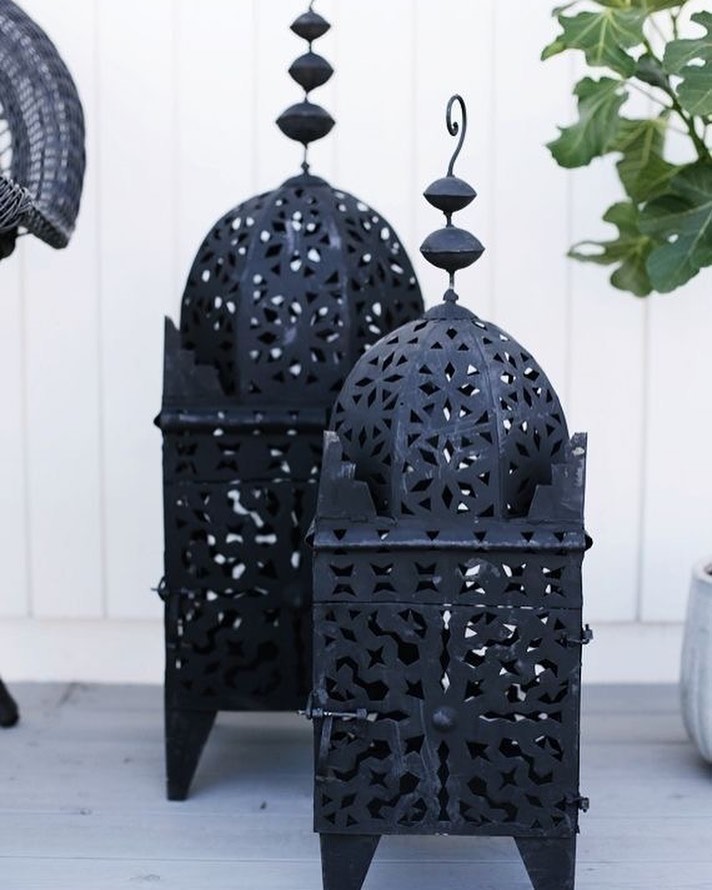
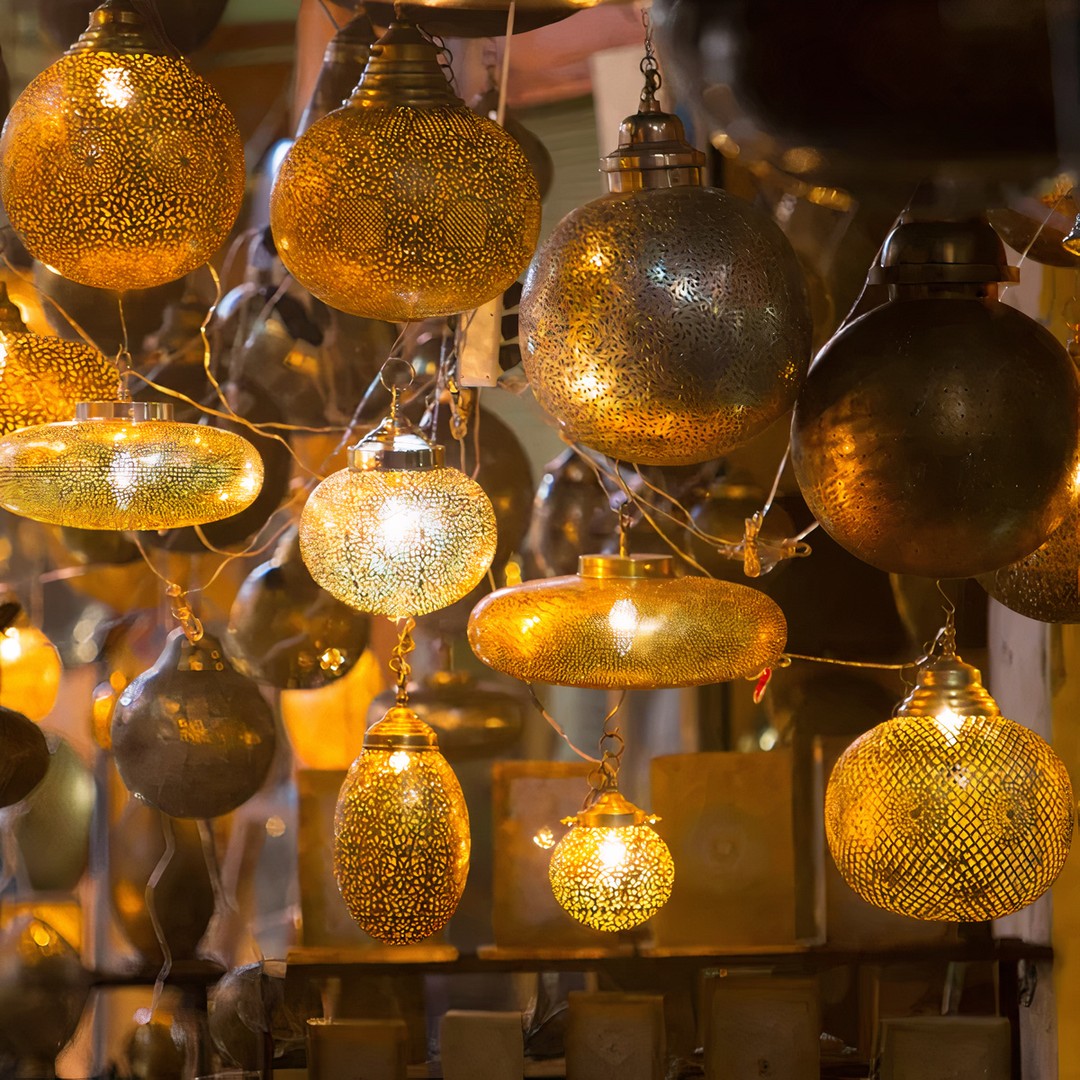
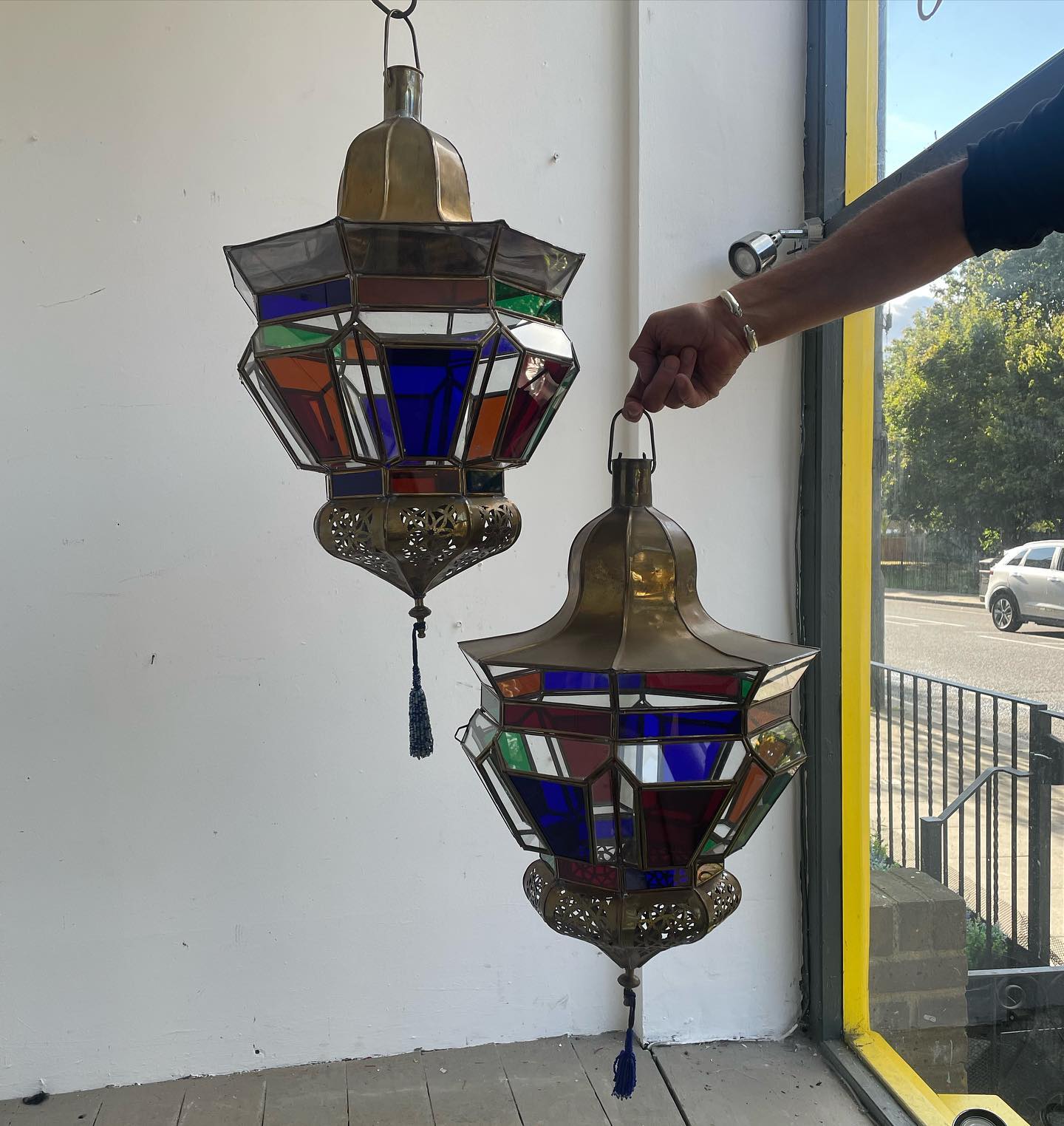
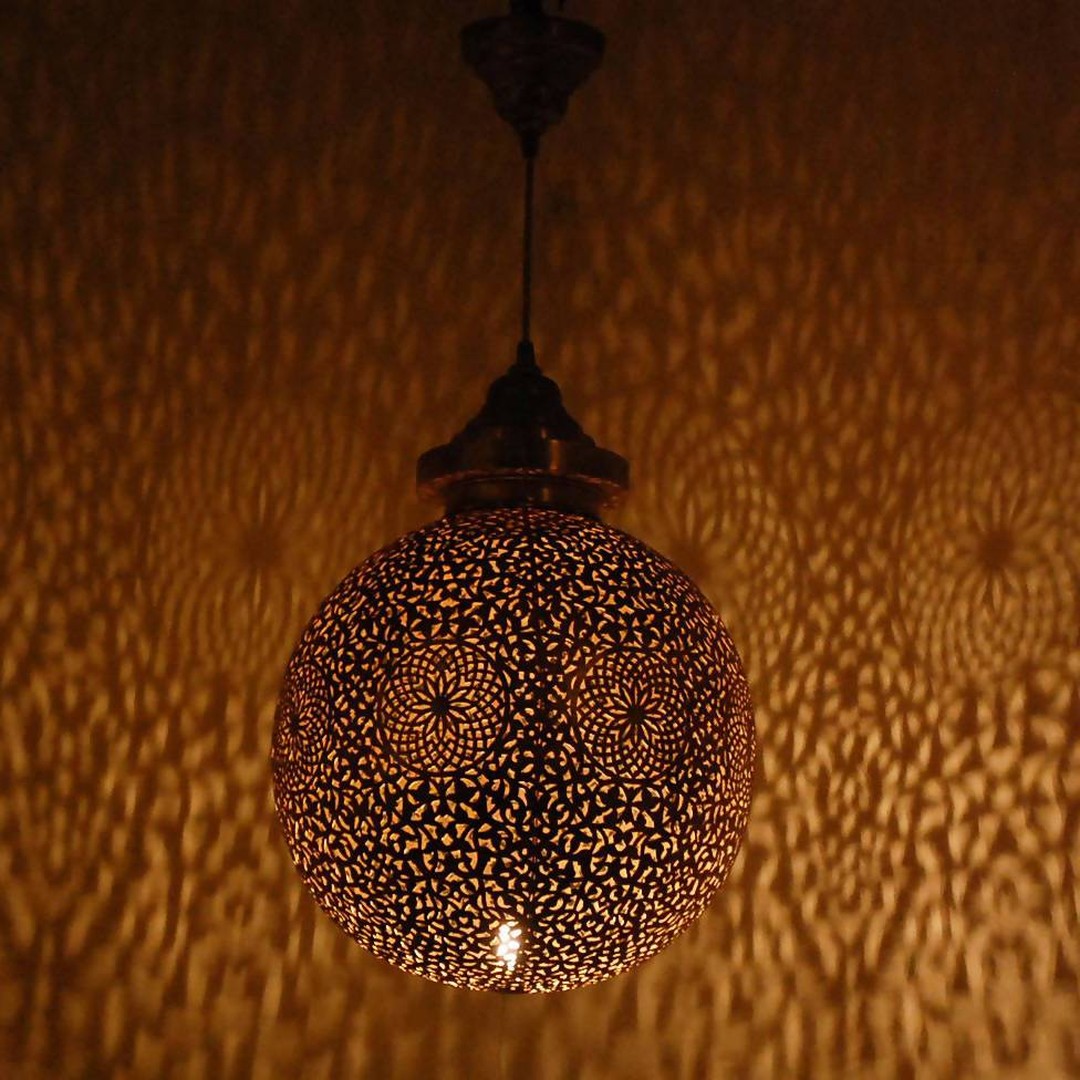
The Moroccan lamp, where metalwork, geometry, and light become inseparable
Amazigh Silver Jewelry: Wearable History↑
Silver holds a place of deep cultural significance in Amazigh tradition that goes far beyond adornment. For generations of Berber women, jewelry was liquid wealth: portable, visible, and personal. A bride’s dowry was often measured in silver, and a woman’s standing in the community was partly encoded in the weight and intricacy of her pieces. This is not vanity. It is a financial system, a family archive, and a spiritual shield all at once.
The vocabulary of Amazigh silversmithing is extraordinarily rich. Fibulas, large circular or triangular brooch-pins used to fasten the traditional haik robe, are perhaps the most iconic form. Khalkhal (ankle bracelets), pendants in the shape of the Hand of Fatima, amber-and-silver necklaces, and intricately worked headpieces are among the other forms that define this craft at its most personal. Much of this jewelry still comes from one town in particular, a self-styled silver capital covered later in this guide.
Today, these pieces have migrated well beyond their original cultural context. International designers regularly draw on Amazigh jewelry forms for high-fashion collections, and the global market for vintage and contemporary Berber silver has grown substantially over the past decade.
Simple silver-tone Khamsa pendants can be found for as little as 30 to 80 MAD in tourist markets. Genuine handcrafted silver bracelets range from 150 to 500 MAD, while elaborate fibulas or multi-strand amber necklaces from specialist jewellers start around 600 MAD and rise significantly for antique or collector pieces. Authentic old Berber jewelry, particularly pre-1970s pieces, is considered a serious collectible and can be priced from 2,000 MAD upward.
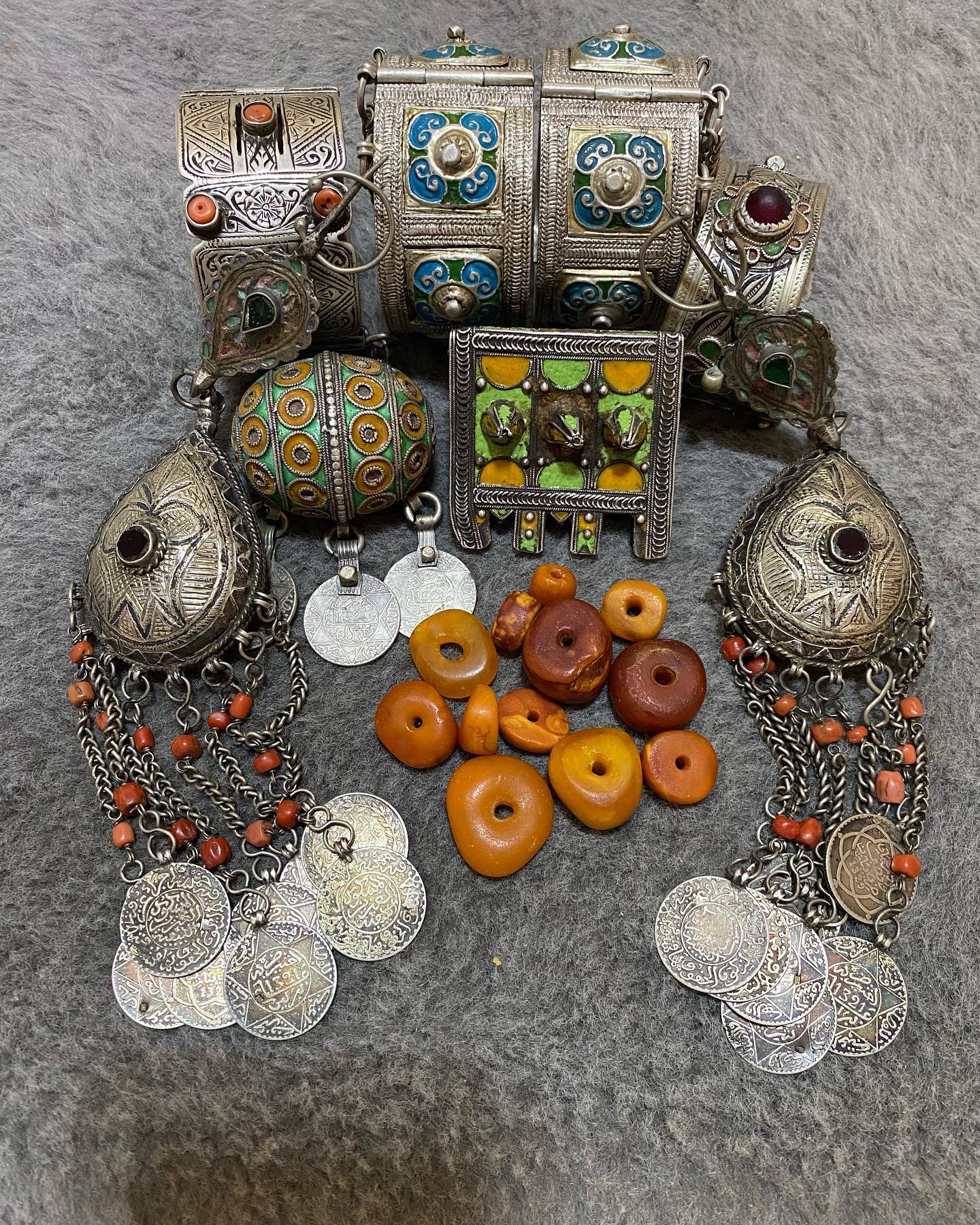
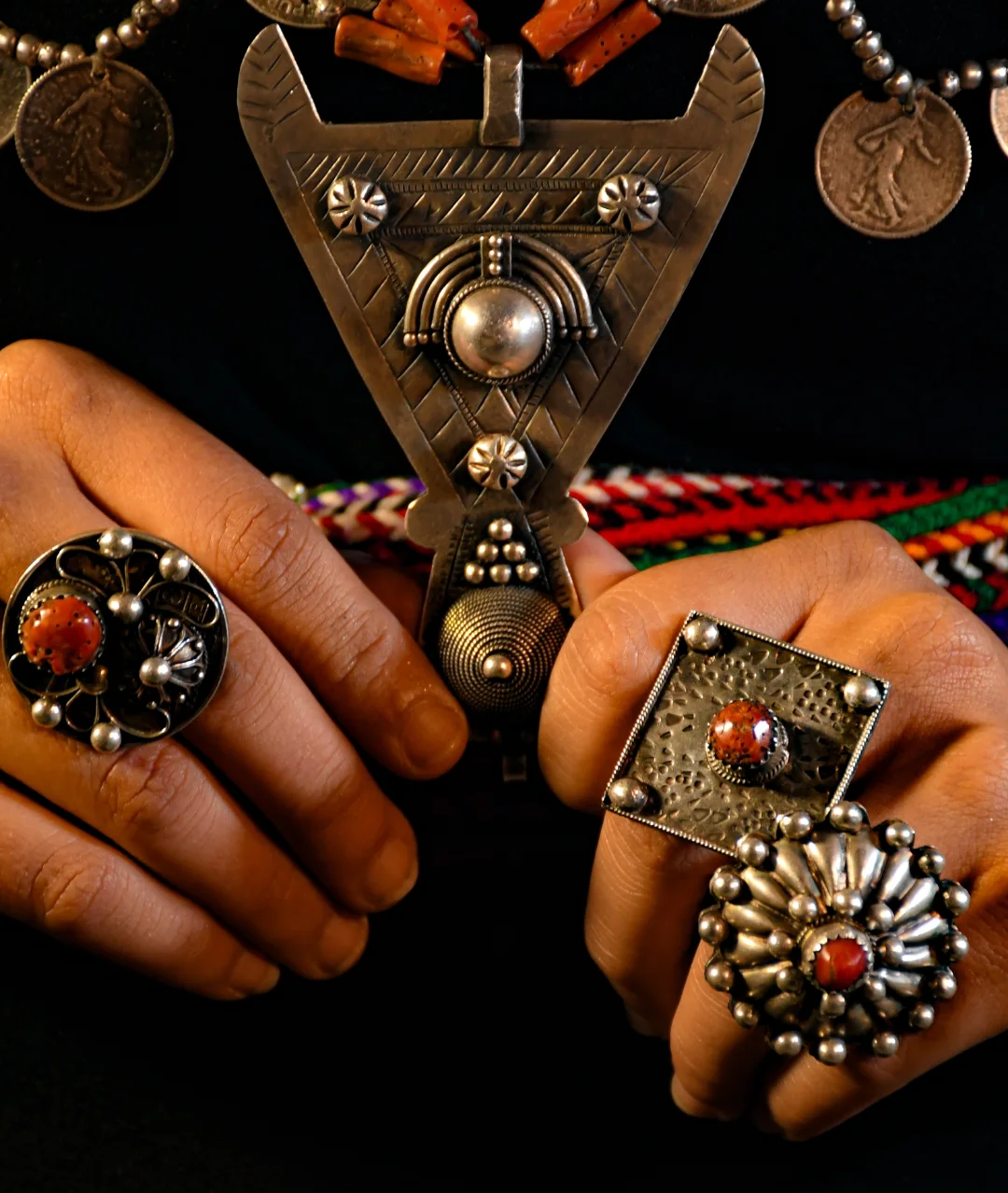
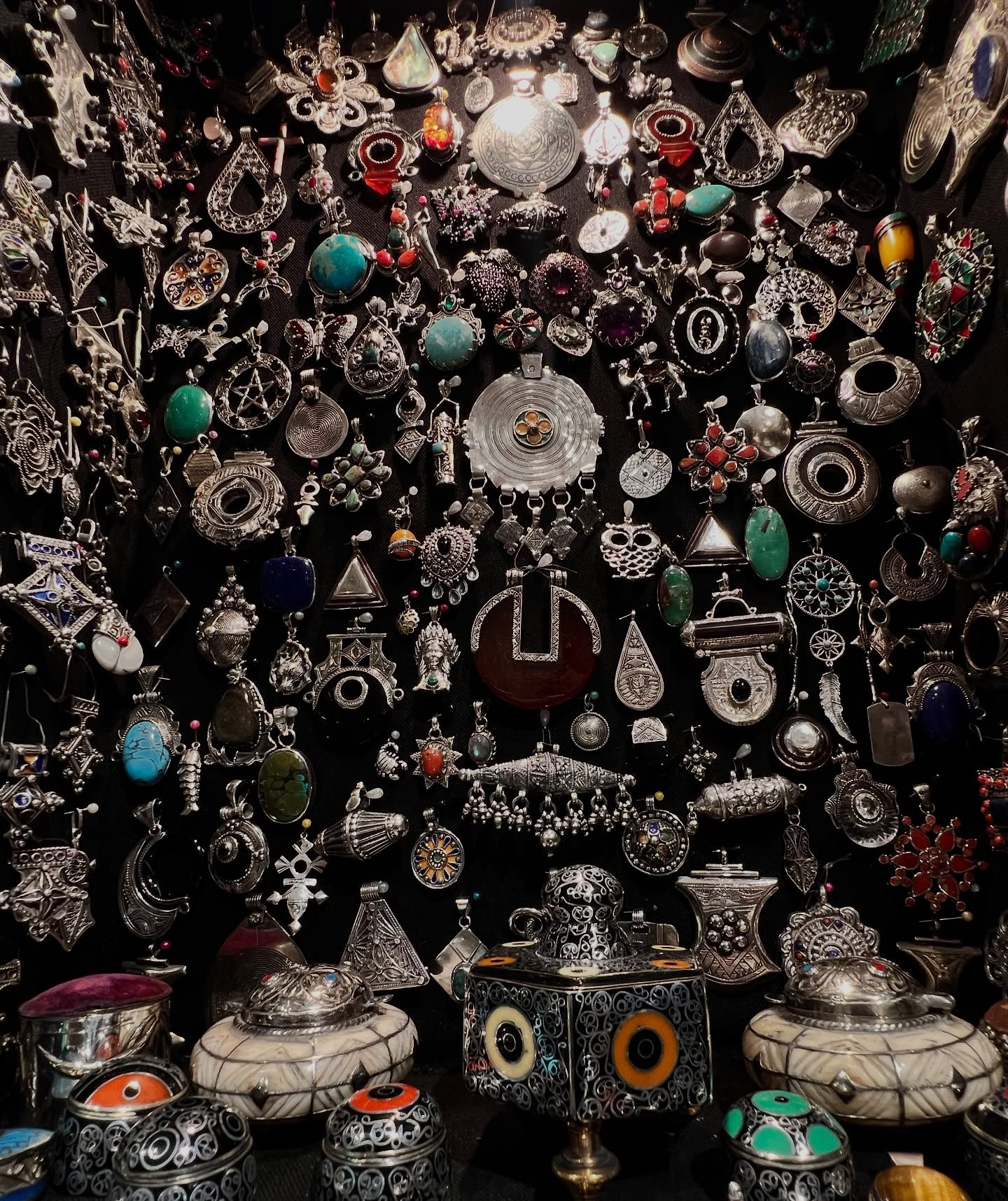
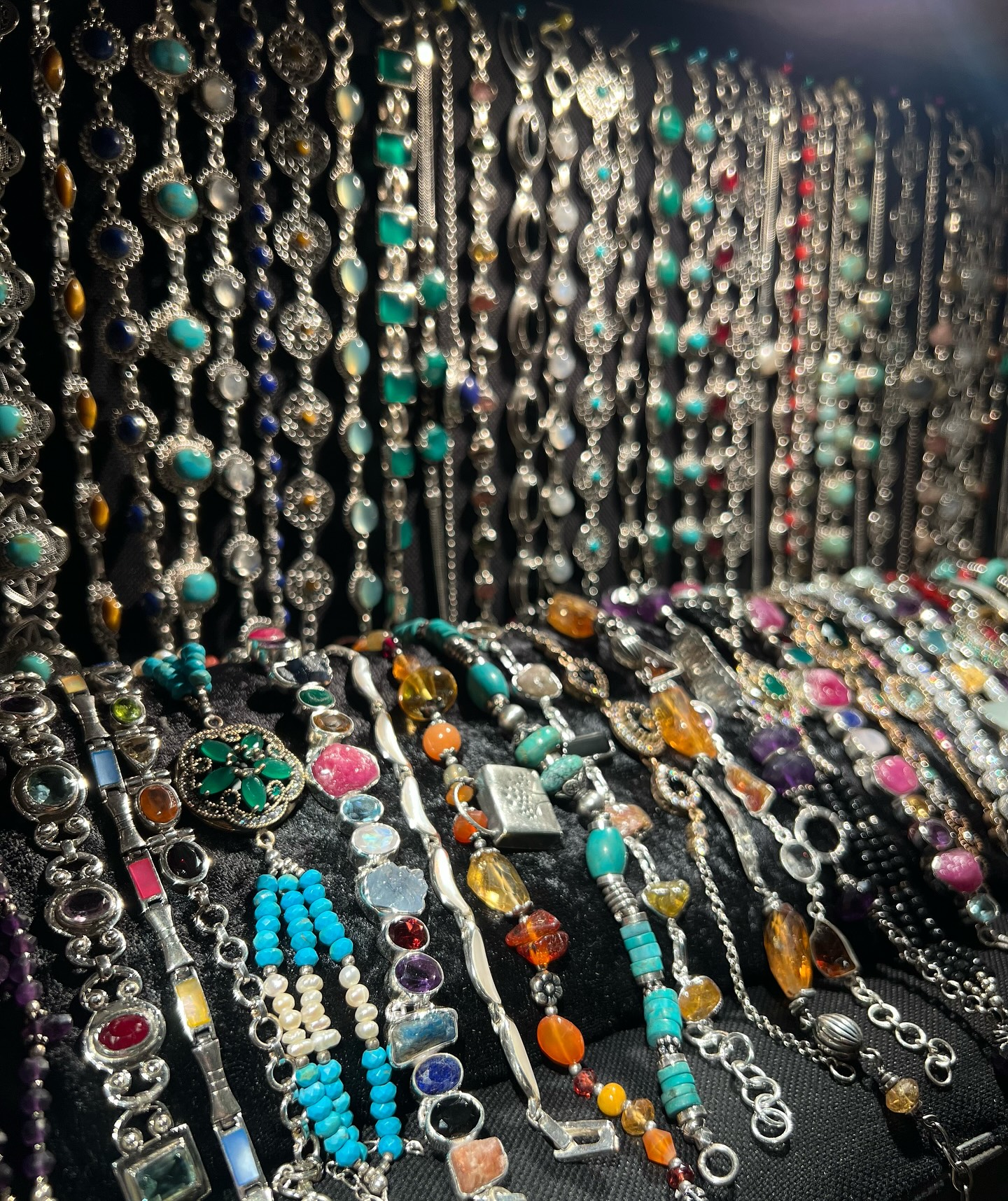
Amazigh silver, every piece a wearable record of identity, wealth, and protection
The Full Spectrum of Moroccan Traditional Crafts↑
Beyond the crafts explored above, Moroccan traditional crafts form a vast universe of disciplines, each tied to a region and a community. Demand for these Moroccan artisan products, at home and abroad, has only grown as interior designers and conscious shoppers look for alternatives to mass production. Many of these smaller objects have found a second career far from the souk, repurposed as Moroccan home decor accents in interiors that have nothing else to do with Morocco at all: a thuya box on a shelf in Paris, a babouche slipper as a doorstop in London, an embroidered cushion on a sofa in Toronto.
Cedar Wood Carving
Fragrant and insect-repelling, Moroccan cedar is carved into elaborate mashrabiya screens, coffered ceilings, and decorative furniture. Small decorative boxes start around 80 to 200 MAD; full architectural panels run into the thousands.
Leather & Babouche
The Chouara Tannery in Fez is one of the oldest in the world. Hides are cured in natural pigments and shaped into the iconic babouche slipper. A basic pair sells from 60 MAD; fine hand-stitched babouche from a reputable workshop start around 200 to 500 MAD.
Embroidery (Tarz)
Tétouan and Fez are the great centres of Moroccan embroidery, where silk thread is worked into elaborate floral and geometric motifs. An embroidered cushion cover starts around 150 to 400 MAD; a full tablecloth or embroidered kaftan costs considerably more.
Thuya Wood (Essaouira)
The burled root of the endemic thuya tree produces a naturally marbled, fragrant wood worked into jewelry boxes, chess sets, and decorative objects. Small pieces start from 50 MAD; ornate sets run from 300 to 2,000+ MAD.
Moroccan Craft Villages: Where the Trade Never Left Home↑
Some of the country’s finest work never passes through a big-city souk at all. A handful of Moroccan craft villages and small towns still produce specific crafts almost exclusively, and visiting one, even briefly, is one of the closest experiences to watching a tradition exactly where it was born.
Tiznit, the Silver Town
Tiznit, a walled town in the Anti-Atlas roughly 90 kilometres south of Agadir, has been known for generations as Morocco’s silver capital. Its jewelers’ souk, the Souk des Bijoutiers, has stood since the late 19th century, and visitors can still watch silversmiths at the bench, hammering, soldering, and setting stones much as their grandfathers did. The signature piece is the tizerzaï, a large triangular fibula once used to pin a woman’s haik in place, and it remains one of the more convincing souvenirs for anyone serious about Amazigh jewelry rather than a tourist trinket.
Taznakht, the Carpet Town
Carpet lovers, meanwhile, tend to end up in Taznakht, a small town near Ouarzazate that has become almost synonymous with the Ait Ouaouzguite rug. Dozens of women’s cooperatives here spin local wool, dye it with henna, pomegranate skin, saffron, and indigo, and weave it on traditional looms over weeks or months. Buying directly from one of these cooperatives, rather than from a reseller several hands removed, is one of the more reliable ways to know a carpet really was handmade in Morocco rather than finished on a factory floor somewhere else.
None of this makes Fez or Marrakech less important. The cities remain the trading floors where these regional crafts meet international buyers, and a good guide or cooperative can usually trace a piece back to the village that made it. But if a Moroccan craft village happens to be on your route, even a short detour is worth it.
Buying Moroccan Crafts: A Traveler’s Honest Guide↑
If you are planning to explore art and craft in Morocco as a visitor, a little context goes a long way. The country is extraordinarily welcoming, and Morocco is very safe to visit for tourists, but the souk experience can feel overwhelming the first time. A few habits separate visitors who come home with traditional Moroccan souvenirs they actually treasure from those who come home with regret.
Go to the source. The closer you buy to the workshop, the more authentic and fairly priced the piece tends to be. Many Moroccan artisan workshops in the Fez medina welcome visitors in, and watching a piece take shape is often more memorable than the object itself.
Learn to read quality. In carpets, look for tightly packed knots and natural dyes. In pottery, tap the piece; a clear ring suggests even firing. In leather, genuine goatskin has a suppleness synthetic materials cannot fake. In silver, ask about purity and look for a hallmark.
Negotiate with respect. Bargaining in Morocco is a social ritual, not combat. Approach it with humour and patience. Knowing what currency Morocco uses before you arrive helps you navigate souks with more confidence; the Moroccan dirham (MAD) is the local currency and is not traded freely outside the country.
Support cooperatives. Government-backed craft cooperatives in cities such as Marrakech, Fez, and Ouarzazate, many recognized by the national body Maison de l’Artisan, offer fair fixed prices and put more of your money directly in artisans’ hands. They are a reliable way to be sure you are taking home authentic Moroccan crafts rather than imported look-alikes, and a good source if you are shopping for Moroccan handmade products to furnish a home rather than fill a suitcase.
Art and Craft in Morocco: A City-by-City Portrait↑
One of the most fascinating dimensions of Moroccan handicrafts is how geographically specific they remain. The cities of Morocco each guard their own specialty like a carefully kept secret, passed from master to apprentice across centuries.
Fez, the Intellectual Capital of Craft
Nowhere is the density of craft knowledge more intense than in Fez. Its medina, recognized by UNESCO as a World Heritage Site since 1981, functions as a working museum of Moroccan crafts rather than a static one. Zellige workshops, tanneries, cedarwood carvers, calligraphers, and brass beaters all share the same labyrinthine streets, often within sight of one another.
Marrakech, Where Craft Becomes Performance
In Marrakech, buying a handmade object is itself theatrical. The souks are organized by trade: one alley for carpet dealers, another for the metalworkers who beat copper into Moroccan lanterns. The Red City is the international face of Moroccan traditional craft, and the easiest place for a first-time visitor to get comfortable with the souk experience.
Essaouira & Tétouan, Hidden Craft Capitals
Essaouira is unmatched for thuya wood objects. Tétouan carries the deepest Andalusian heritage; its embroideries are among the most refined in the Islamic world. If you are new to the country and wondering where Morocco is geographically, it sits in northwestern Africa just 14 kilometres from Spain, making it one of the world’s most accessible craft destinations.
Plan Your Craft Journey With a Licensed Guide↑
Reading about workshops is one thing. Standing inside one, watching a maallem chip a tile or a weaver tie a knot, is another experience entirely, and it is usually easier with someone who already knows which doors to knock on.
Mouhssine ELIOUJ is a tourist guide licensed by Morocco’s Ministry of Tourism, and he regularly helps travelers plan routes through Fez, Marrakech, and the smaller craft villages mentioned above, connecting them directly with artisans and cooperatives rather than commission-driven shops. You can reach him directly on WhatsApp to ask about logistics, pricing, or which workshops are worth the detour.

Mouhssine ELIOUJ
Licensed Tourist Guide, Ministry of Tourism of Morocco, No. Réf. 2898
Available for craft-focused itineraries, private tours, and general travel planning across Morocco.
Message Mouhssine on WhatsAppFrequently Asked Questions↑
What are the most famous Moroccan crafts?
Morocco is best known for zellige tilework, Berber carpet weaving, leather tanning and babouche making, brass and wrought-iron lanterns, cedarwood carving, Amazigh silver jewelry, hand-painted pottery, and thuya wood objects. Each one is tied to a specific region and carried forward by its own community of artisans.
Are Moroccan crafts handmade?
The vast majority of what is sold as Moroccan crafts in workshops, cooperatives, and certified artisan markets is genuinely handmade, using techniques passed down through families. The exception sits at the lower end of the souvenir trade, where imported, machine-made copies are sometimes mixed in with authentic pieces, which is why buying from a known workshop or cooperative matters.
If you had to pick one, what is Morocco’s single most famous craft?
Most people would point to zellige, the hand-cut geometric tilework that covers fountains, riads, and mosques across the country. It is the most photographed, the most exported in decorative form, and the one most closely tied to a single city, Fez.
How much should I budget for Moroccan handicrafts?
Budgets vary enormously by category. Small items such as a ceramic bowl, a simple lantern, or a Khamsa pendant can be found for under 100 MAD. A quality Berber carpet, a set of hand-painted ceramics, or a large brass lantern typically runs from a few hundred to several thousand MAD. Prices in souks are negotiable except in fixed-price cooperatives, so treat any figure you read, including the ones in this guide, as a rough starting point.
Where is the best place to buy authentic Moroccan crafts?
Fez is generally considered the strongest destination for authentic Moroccan crafts overall, especially zellige, leather, woodwork, and embroidery. Marrakech offers the widest variety and the easiest souk experience for first-time visitors. Essaouira is the place for thuya wood and lanterns. In every major city, government-recognized cooperatives offer genuine pieces at fair fixed prices.
Is Moroccan craft production sustainable?
Many elements of traditional Moroccan craft are inherently sustainable: natural dyes, local materials, and human-scale production with very little waste. The real pressure comes from rising demand and cheap machine-made imitations, which squeeze the income of artisans who still work by hand. Buying directly from certified cooperatives and workshops, rather than mass-market resellers, is the most effective way for a visitor to support the people actually making these pieces.
Can I ship Moroccan carpets and other crafts internationally?
Yes. Most established workshops, cooperatives, and carpet shops in cities like Fez, Marrakech, and Taznakht are used to shipping internationally and can arrange it for an additional fee. It is worth checking your destination country’s customs rules on textiles before you buy, and asking the seller for a clear receipt showing the item’s value, since some countries require this for customs clearance.
How can I tell if Moroccan silver is real?
Genuine silver is usually marked with a small hallmark, though older Berber pieces are not always stamped. As a rough check, real silver feels cool and slightly heavier than base metal of the same size, and a jeweler can test purity on the spot if you ask. “Berber silver” is sometimes an alloy containing little or no actual silver, so if purity matters to you, buy from an established jeweler, such as those in Tiznit’s historic silver souk, rather than a street stall.
Is bargaining expected in Moroccan souks?
Yes, in most souks bargaining is expected and treated as a normal, even friendly, part of the transaction rather than something rude. Fixed-price cooperatives and government-run Ensembles Artisanaux are the exception, where the listed price is final. A reasonable approach elsewhere is to start well below the asking price and meet somewhere in the middle, with good humour on both sides.
Are Moroccan rugs worth buying?
For most visitors, yes, particularly when bought from a cooperative or workshop rather than a generic tourist shop. A handmade wool rug with natural dyes is a durable, one-of-a-kind object that tends to hold its character for decades, which is more than can be said for a machine-made equivalent at a similar price. The main thing worth checking is that the rug is genuinely hand-knotted and made from real wool, not a synthetic blend sold at a handmade price.
Where can I buy authentic Moroccan crafts online?
A number of certified cooperatives and ethical retailers now sell directly to international buyers, often with photos and stories of the specific weaver or artisan behind each piece. If buying online rather than in person, look for sellers who name the cooperative or workshop, state the materials clearly, and are transparent about how much of the price reaches the maker, since that transparency is usually a good sign of a genuine, fairly sourced piece.
What should I avoid buying in Morocco?
Be cautious with anything described vaguely as “Berber silver” or “ebony” without further explanation, since both terms are sometimes used loosely for cheaper alloys or stained wood. It is also worth avoiding crafts made from protected materials such as real tortoiseshell, ivory, or wild animal skins, which are restricted or banned in many countries and can be confiscated at customs. When in doubt, a cooperative or a guide familiar with the local market can tell you what you are actually looking at.
A Final Word: Buy Less, Choose Better
The best Moroccan souvenir you can bring home is rarely the most expensive item in the shop. It is the one that made you stop and ask who actually made it. Moroccan crafts are not mass-produced commodities; they are accumulated wisdom, encoded in every knot, every chisel mark, every glaze decision, every beam of light through a fanous lantern. Hold a piece of authentic Moroccan craft in your hands and you are holding a fragment of a conversation with beauty that has been going on, uninterrupted, for over a thousand years.
If a trip to Morocco is somewhere on your horizon, seeing these crafts made in person is one of the most rewarding ways to spend a day there. A local guide who already knows the workshops, the cooperatives, and the families behind them can take you well past the first row of souk stalls, the kind of access that is hard to arrange alone. Mouhssine, the licensed guide introduced above, is a good place to start if you would like help putting that day together.
Morocco is waiting, and so are its artisans.