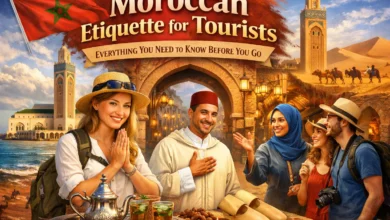
Inside Morocco’s ancient markets, bargaining is not a tourist trick. It is a conversation, a quiet craft, and a form of mutual respect between buyer and seller.
There is a specific kind of anxiety that grips first-time visitors the moment they step inside a Moroccan souk. The narrow alleys, the stacked leather bags and hanging lanterns, the vendor who locks eyes with you and calls out a price before you have even reached for anything. Most people either pay whatever figure they hear first or retreat toward the nearest open square, too unsettled to engage.
Both reactions miss the point entirely.
Bargaining in Morocco‘s markets is not combat. It sits closer to a ritual exchange, a back-and-forth that both sides anticipate and, if done well, genuinely enjoy. This guide covers the real mechanics of souk haggling: not the theatrical tactics you find in bargain-travel threads, but the honest, patient approach that local buyers use every single day.
What Makes a Moroccan Souk Different ↑ Contents
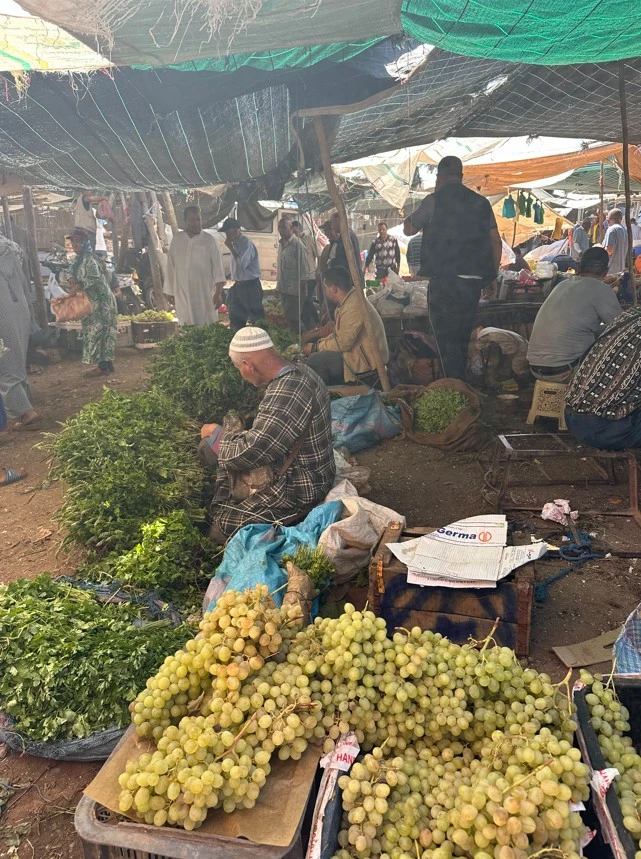
A souk is not just a market. It is a neighborhood that breathes commerce, and it has operated by the same internal logic for centuries. Each quarter of the souk belongs to a specific trade: the dyers, the leatherworkers, the spice merchants, the copper-beaters, the weavers. In cities like Marrakech and Fes, these sections have barely shifted location in hundreds of years.
Fixed pricing inside a traditional souk would feel as out of place as not tipping in a culture that depends on gratuity. The asking price is a starting point, and the seller understands this as well as you do. When a vendor quotes a number, they are not being dishonest. They are beginning a conversation that has a structure, a rhythm, and an expected outcome.
What separates Moroccan souk culture from street markets in other countries is the social layer underneath every transaction. Accepting a small glass of mint tea, taking a moment to exchange a few words about where you are from, or simply slowing down instead of rushing through signals that you are a respectful visitor and not someone treating the medina as an inconvenient obstacle between your hotel and a souvenir. That distinction matters far more than most travelers realize.
Morocco’s cities each carry their own souk character. Marrakech’s markets are famously dense and commercially charged. The souks in smaller Moroccan cities like Taroudant or Azrou tend to move at a gentler pace, with less tourist markup and a more local clientele. Adjusting your approach to the setting is part of the skill.
Before You Step Inside: Practical Preparation ↑ Contents
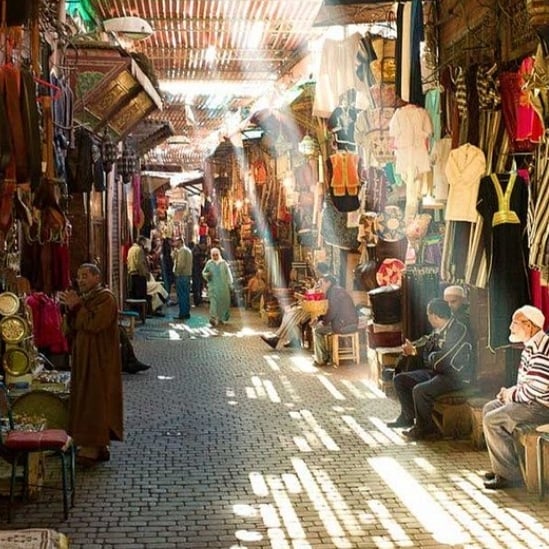
A little preparation removes most of the anxiety before you even arrive. A few things worth sorting out in advance:
Know the Currency You Are Working With
All souk transactions happen in Moroccan dirhams (MAD). Understanding the local currency before you arrive gives you an immediate practical edge: you can do quick mental math during a negotiation without hesitating or reaching for your phone, which is one of the clearest signals that a buyer is unfamiliar with local prices. Read about Morocco’s currency and exchange rates before your trip so the numbers feel second nature.
Bring Small Bills
Souk vendors rarely keep large amounts of change. Arriving with a selection of 10, 20, and 50 dirham notes means you can close a deal at the agreed price without spending another ten minutes waiting while the seller searches the neighbouring stall for change on a 200 note.
Leave Conspicuous Accessories Behind
This has nothing to do with safety — Morocco is a genuinely welcoming and safe destination for tourists. It is about signaling. Walking into the souk with a recognizable designer bag and an expensive camera on full display tells vendors that price is not your primary concern. Dressing simply is not deception; it is just sensible.
Do a Quick Price Reference the Night Before
Spend twenty minutes looking up approximate local prices for the items you plan to buy: a leather bag, a hand-knotted rug, a set of ceramic bowls, an argan oil kit. You do not need exact figures. You need a realistic range so that when a vendor quotes you 800 dirhams for something that typically sells for 180, your expression gives nothing away.
The Unwritten Rules of Haggling in Moroccan Souks ↑ Contents
Every souk has its own micro-culture, but a few principles hold everywhere. These are not strategies from a travel blog; they reflect how transactions actually work for local buyers day to day.
✓ Do This
- Greet the vendor before looking at any prices
- Handle items with genuine interest, not urgency
- Accept mint tea if offered — it costs you nothing and shifts the mood
- Start your counter-offer at around 30 to 40 percent of the asking price
- Stay calm and pleasant throughout, whatever the numbers
- Walk away slowly if the price stalls — and mean it when you do
✗ Avoid This
- Opening with an insultingly low offer (below 20 to 25% of asking)
- Showing visible excitement over a specific item
- Negotiating seriously with no intention to buy if you reach a fair price
- Raising your voice or showing frustration at any point
- Asking for a price and walking away immediately
- Comparing the vendor unfavorably to others in their presence
When you engage in serious negotiation, you are signaling genuine interest. Haggling a seller down to a price and then declining to buy is considered disrespectful throughout Moroccan souk culture, and it will make the rest of your time in that section of the medina noticeably uncomfortable.
Step-by-Step: How to Negotiate Without the Awkwardness ↑ Contents
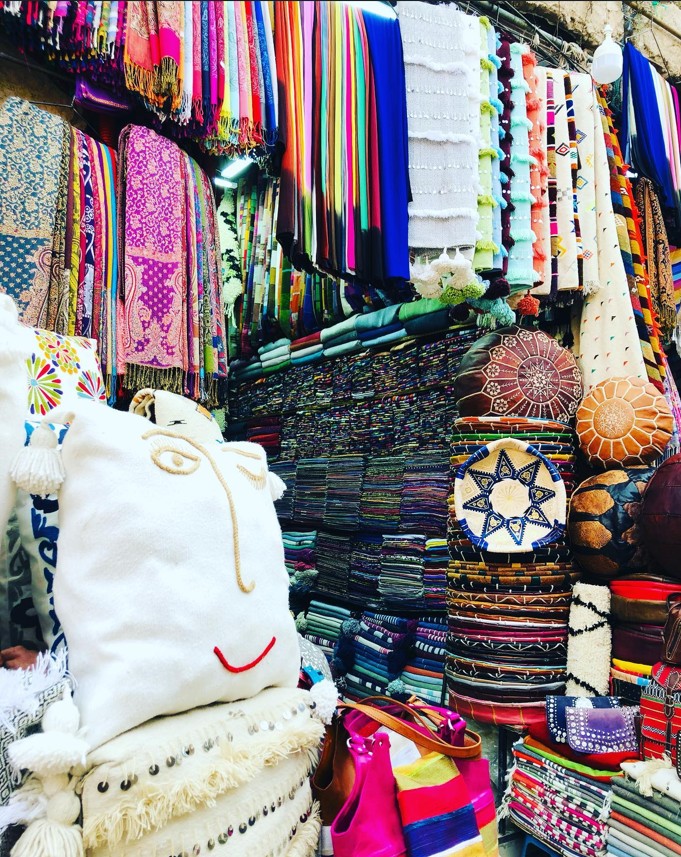
Here is how a typical, respectful haggling exchange unfolds when it goes well:
- Greet first, browse second. A simple “Salam” or “Bonjour” before you reach for anything sets a human tone. You are a person with curiosity, not a wallet on legs.
- Pick up the item and examine it — without fixating. If you love a particular leather bag, also look at the one sitting next to it. Show genuine interest in the category rather than desperation for one specific piece.
- Ask the price, casually. “Bshal?” in Darija, or simply “How much?” in English or French. The vendor names a number. Keep your face neutral.
- Pause before you respond. A beat of silence is not awkwardness — it is quiet pressure, applied without any aggression.
- Make your counter-offer. Start at roughly 35 percent of what they quoted. If they said 600 dirhams, offer 200 or 220. Say it pleasantly, with a slight smile. You are not attacking the vendor; you are playing a game both of you understand.
- Move in smaller increments than the seller. Good haggling involves three to five exchanges before landing on a price. If you opened at 200 and the vendor came down to 500, move to 260. Let them make the larger concessions.
- Use the walk-away when the price stalls. Begin to set the item down and say “Khelli bali” (I’ll think about it). This is the most reliable tool in souk negotiation. A significant portion of the time, the seller calls you back immediately with a better offer.
- Close warmly. Once a price is agreed, accept a handshake if offered, pay with the right bills, and say “Shukran bzaf” (thank you very much). Ending on a friendly note costs nothing and matters if you return to that section of the souk.
Darija Phrases That Actually Open Doors ↑ Contents
You do not need to speak Moroccan Arabic fluently to make a real impression. Using even a handful of words in Darija shifts the atmosphere immediately. Sellers appreciate the effort more than most visitors expect, and it often produces a better price almost by itself, not because of any tactic, but because it signals respect.
| Darija Phrase | Meaning | When to Use It |
|---|---|---|
| Bshal? | How much? | Asking the price of any item |
| Ghali bzaf | Very expensive | Your first reaction to the quoted price |
| Ma 3andish | I don’t have (that much) | Politely expressing that the price is beyond your budget |
| Khelli bali | I’ll keep it in mind | Before a strategic, unhurried walk-away |
| Wakha | Okay / Deal | When you are genuinely ready to agree |
| Shukran bzaf | Thank you very much | After closing a deal |
| La, shukran | No, thank you | A clean and polite refusal |
Pronounce these phrases with genuine effort, not theatrical performance. A vendor who hears a visitor attempt Darija naturally, without making it a show, is far more likely to respond with warmth than one who feels their language is being used as a bargaining gimmick.
What to Buy in the Souks (and What Needs a Closer Look) ↑ Contents
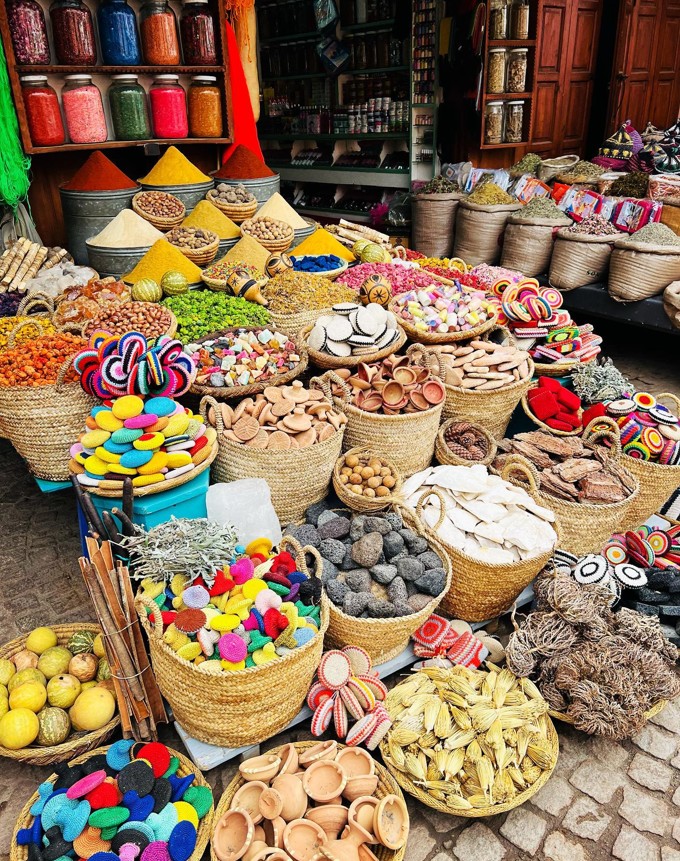
Moroccan souks are genuinely world-class for certain categories of goods. Knowing which ones deserve your time and budget helps you focus your energy where it matters.
Worth Every Negotiated Dirham
Leather goods from the traditional tanneries — bags, belts, and babouches — rank among the finest available anywhere at that price point. Hand-knotted Berber rugs represent real artisanal skill and last for decades. Argan oil products, purchased directly from women’s cooperatives or reputable sellers rather than tourist-facing shops near the main squares, are far better quality and considerably cheaper than anything sold abroad. Handmade ceramic tagines and mosaic work are also excellent buys, particularly when sourced from the craft quarter rather than from the medina entrance stalls.
Categories That Deserve More Scrutiny
Anything marketed as pure silver or gold should be purchased with caution unless the vendor provides verifiable certification. The same applies to items sold as antiques — a large proportion are produced new to look aged, which is not necessarily dishonest, but worth knowing. Spice blends sold in tourist-heavy areas near the main squares can vary in quality; the deeper sections of the souk, where local cooks and restaurant owners shop, are a more reliable source for genuine produce.
Morocco’s extraordinary geographic range, from the High Atlas and the Rif to the Sahara fringe and the Atlantic coast, shapes its craft traditions in direct and fascinating ways. Each region produces distinct styles, materials, and patterns that reflect local history and available resources. Understanding Morocco’s physical geography adds real depth to what you are buying and where it originates.
Marrakech Souk Walking Tour
If you want a structured introduction to the medina before exploring independently, a guided souk walk is the most practical way to learn the layout, the craft districts, and the local pace before setting out on your own.
Explore the Marrakech Souk Walking Tour →Navigate the Souks with a Licensed Local Guide ↑ Contents
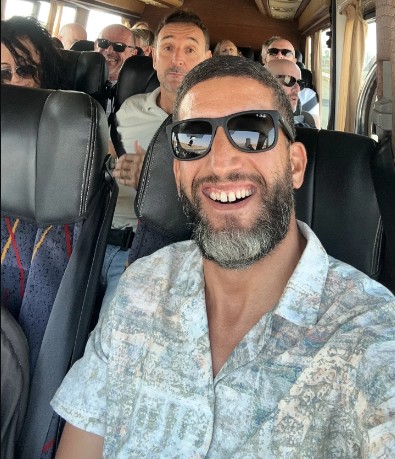
Mouhssine ELIOUJ
Official Guide License No. 2898 — Moroccan Ministry of Tourism
Reading about souk haggling and actually doing it inside Marrakech’s medina are two very different experiences. Mouhssine runs guided walks through the souks that go considerably beyond pointing at landmarks. He knows the sellers personally, has a clear sense of when a price is fair and when it is inflated, and will negotiate directly on your behalf so that you pay a realistic local rate rather than the tourist markup.
More usefully, he explains his thinking as he goes. Over the course of a few hours, you learn the cues, the phrasing, and the timing that would otherwise take months of visits to absorb. He can also guide you toward the best artisans in each craft quarter and help you understand what genuinely distinguishes quality work from the mass-produced equivalent.
Whether you want company through your first souk visit or a real education in how Moroccan market culture actually operates, Mouhssine is available for private and small-group tours. Reach him directly on WhatsApp to discuss your schedule.
Chat on WhatsAppCommon Mistakes That Give You Away Immediately ↑ Contents
Even well-intentioned visitors repeat the same errors in Moroccan souks. Here is what to watch for in yourself.
Agreeing to the First Counter-Offer
When a vendor drops their price in response to your opening counter, the instinct is relief — you feel like progress has been made. But agreeing immediately to the first reduction signals that you would have accepted even more. The seller will close the sale satisfied but knowing that you had room to spare. Take a pause, consider your position, and move incrementally.
Letting the Opening Number Anchor Everything
The first figure a vendor announces sets the psychological reference point for everything that follows. This is basic behavioral economics, and it works just as effectively in a souk alley as it does in a formal negotiation. When you hear 900 dirhams, every subsequent number is measured against 900. The correction is straightforward: do the price research beforehand so that your anchor is what the item is genuinely worth, not what the seller opened with.
Shopping as a Group Around a Single Negotiation
Having three or four people clustered around one transaction creates social pressure on the buyer, not the seller. If you are shopping with others, only one person should engage the vendor at a time. The rest can browse within the same stall without forming an audience around the exchange.
Refusing Tea Out of Obligation Concerns
Many visitors decline mint tea because they believe accepting it commits them to a purchase. This is a misread of the culture. Tea in a Moroccan souk is hospitality, not a contract. You can drink it, enjoy the conversation, and still leave without buying anything — as long as you do so graciously and without having led the seller through a serious price negotiation first.
Getting Impatient When the Price Moves Slowly
Souk sellers are experienced negotiators with far more practice than you have. Impatience is a signal, and experienced sellers read it clearly. If you are running short on time, start the exchange earlier. Rushing a negotiation tends to produce the worst prices of all.
Frequently Asked Questions ↑ Contents
Not rude in a strict sense, but you are likely to overpay considerably. More to the point, paying the first quoted price in a traditional souk creates a small social oddity: vendors in tourist-heavy areas set opening figures with the expectation of a back-and-forth. Accepting without any response can sometimes read as disengagement rather than generosity. A calm, polite counter-offer is almost always appropriate and expected.
A workable starting point for most decorative craft goods in tourist-facing souks is around 30 to 40 percent of the asking price. That said, this varies considerably by category. Spices and food items bought in local-facing sections often have prices already close to fair value. Leather goods, rugs, and decorative metalwork in high-traffic medina areas tend to carry larger built-in margins. Prior price research makes this far easier to calibrate in the moment.
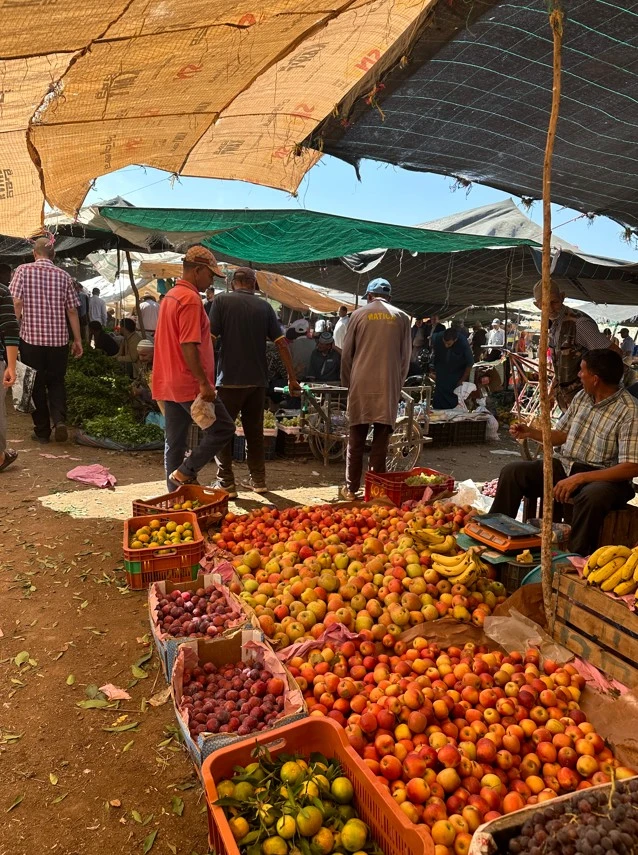
The core culture is consistent, but the intensity varies significantly. Marrakech’s tourist souks are the most commercially concentrated; Fes’s medina moves at a quieter pace; and the weekly rural markets held in smaller towns across the country operate almost entirely as local trade events, with minimal tourist markup and a very different atmosphere. If you have the time, visiting a weekly countryside souk alongside the main city markets gives you a far more complete picture of how Moroccan market culture actually works.
Most traditional souk stalls are cash only, especially in the older and deeper sections of the medina. Larger cooperative shops and some fixed-price stores may accept cards, but it is unwise to count on it. Carrying a sufficient supply of dirhams in smaller denominations is essential for a productive souk visit. Paying in local currency also tends to close deals faster and at better rates than settling in euros or dollars.
Changing your mind before any money changes hands is awkward but manageable if handled politely and promptly. Changing your mind after payment is involved is a different matter and should simply be avoided. The cleaner approach: do not verbally commit to a price unless you are genuinely ready to follow through. If you are still undecided, “Khelli bali” (I’ll keep it in mind) is a perfectly acceptable exit that leaves no hard feelings.
Yes. Morocco is consistently ranked as one of the safer destinations in North Africa for international visitors, and the souks in Marrakech, Fes, and other major cities receive enormous numbers of tourists each year without significant incident. Standard travel awareness applies: keep your phone and wallet in a front pocket, avoid displaying large amounts of cash, and move with the easy confidence of someone who knows where they are going. For a thorough overview, read about tourist safety in Morocco before your trip.
A Final Word Before You Step into the Souk
The best souk experiences do not come from winning every negotiation. They come from slowing down long enough to actually engage with where you are. Morocco’s markets are not performances staged for visiting photographers. They are functional, centuries-old neighborhoods that happen to be extraordinary to walk through, and they reward people who approach them with patience and genuine curiosity.
When you greet a vendor with a few words of Darija, take your time with the items in front of you, and engage in the exchange with a relaxed honesty, the transaction becomes secondary. What you take away tends to be a small, real memory of an actual conversation with an actual person, and that turns out to be worth considerably more than the item in your bag.
If you want guidance on your first souk visit, reaching out to a licensed guide like Mouhssine before you arrive is one of the most practical decisions you can make. A few hours with someone who knows the medina removes most of the uncertainty and gives you the understanding to return on your own with confidence.