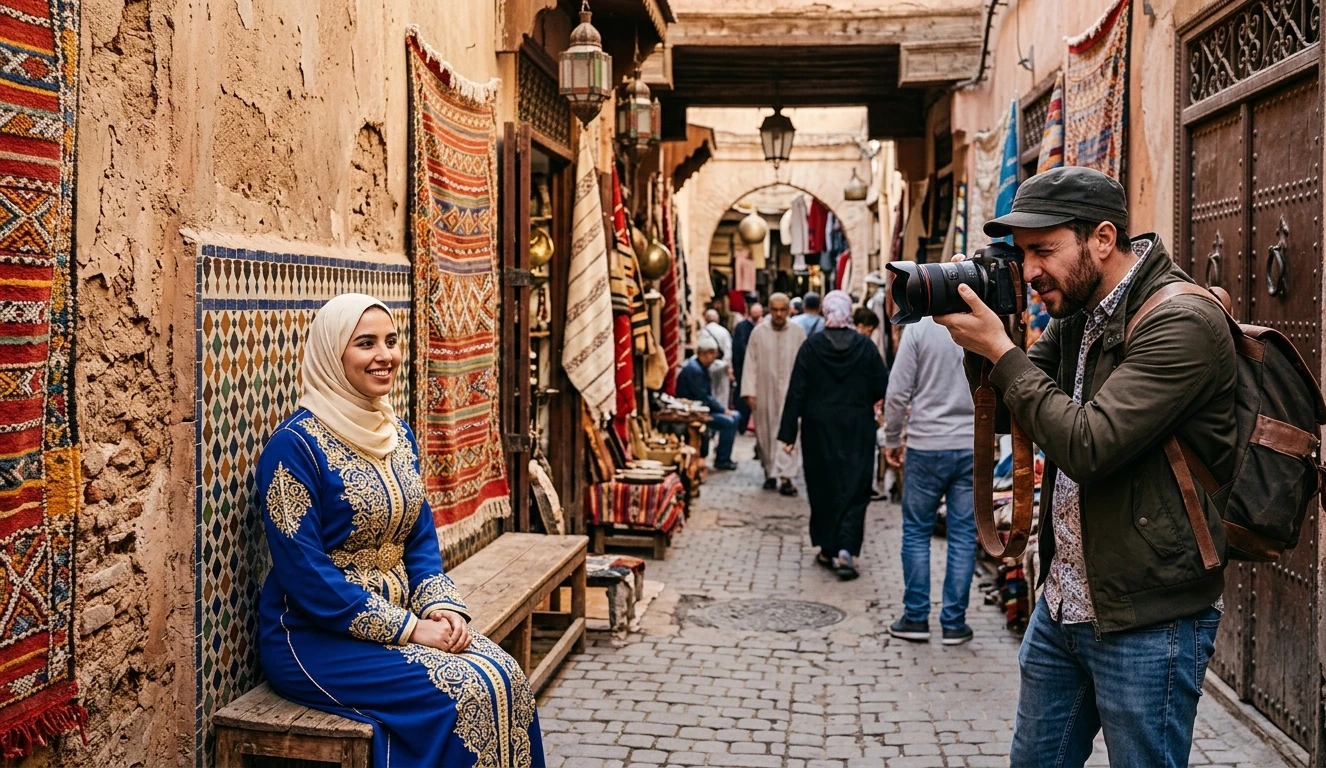
Photography Etiquette in Morocco:
How to Take Stunning Portraits Respectfully
Taking photos in Morocco is one of the most rewarding — and misunderstood — experiences a traveler can have. Behind every beautifully framed shot is a real person, a culture rich in dignity, and an unspoken set of rules that separates the respectful visitor from the oblivious tourist.
Why Photography in Morocco Feels So Complicated
ContentsIf you’ve already started planning your trip, you’ve probably read conflicting advice online — some travelers rave about capturing magical portraits; others describe awkward confrontations and confiscated memory cards. The truth is somewhere in the middle, and it almost always comes down to how you approach the act of taking photos in Morocco, not the act itself.
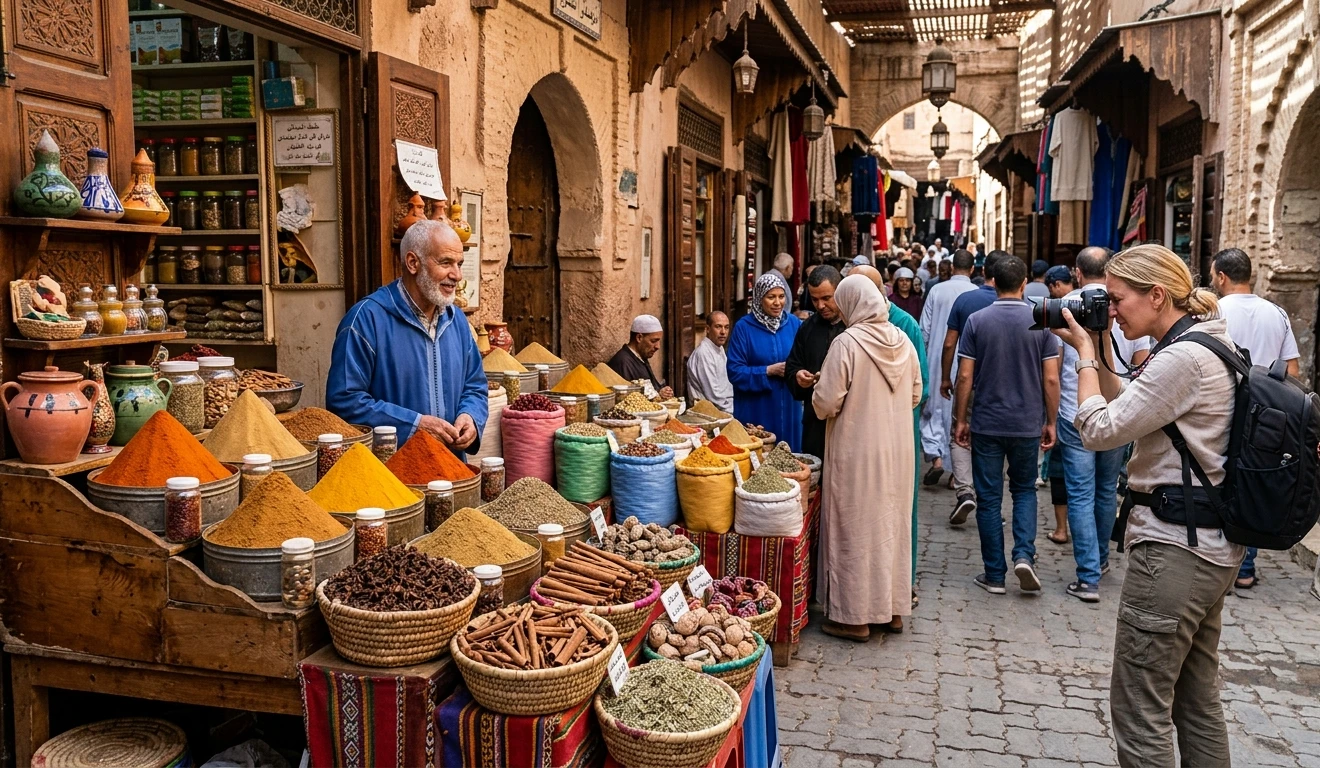
The medinas of Morocco are a visual feast — and a study in cultural sensitivity.
Morocco sits at a cultural crossroads. It is simultaneously one of Africa’s most visited tourist destinations and a deeply traditional Muslim society where privacy — particularly for women — is taken seriously. Where Morocco is located matters here: straddling the Sahara and the Mediterranean, it carries centuries of Berber, Arab, and Andalusian influences, each contributing to a complex relationship with visibility and image.
None of this means you should leave your camera at the hotel. It means you need to arrive informed, approach people as human beings first and photo subjects second, and understand that the incredible images Morocco promises are very much within reach — you just have to earn them.
Is It Legal to Take Photos in Morocco?
ContentsGenerally, yes — photography in public spaces is legal in Morocco for tourists. There is no blanket law prohibiting street photography. However, specific rules do exist around certain locations and individuals, and it’s important to know them before you travel.
⚠️ Where Photography Is Restricted or Prohibited
- Military installations, border posts, and police checkpoints — photographing these is strictly illegal and can result in detention and deletion of your files.
- Government buildings and royal palaces — including the Hassan II Mosque in Casablanca (exterior fine; interior restricted).
- Airports and transit infrastructure — not worth the risk regardless of the outcome.
- Private religious ceremonies — funerals, Quran recitals, or private prayers inside homes or zawiyas (Sufi lodges).
- Hammams — obviously off-limits without expressed consent in an extremely unusual context.
The grey zone that trips most travelers up isn’t legal at all — it’s ethical. Photographing individuals without consent is not technically illegal in most Moroccan cities, but it can be considered deeply disrespectful, and in some communities, locals view it as a form of theft. The moral question and the legal question are entirely separate here.
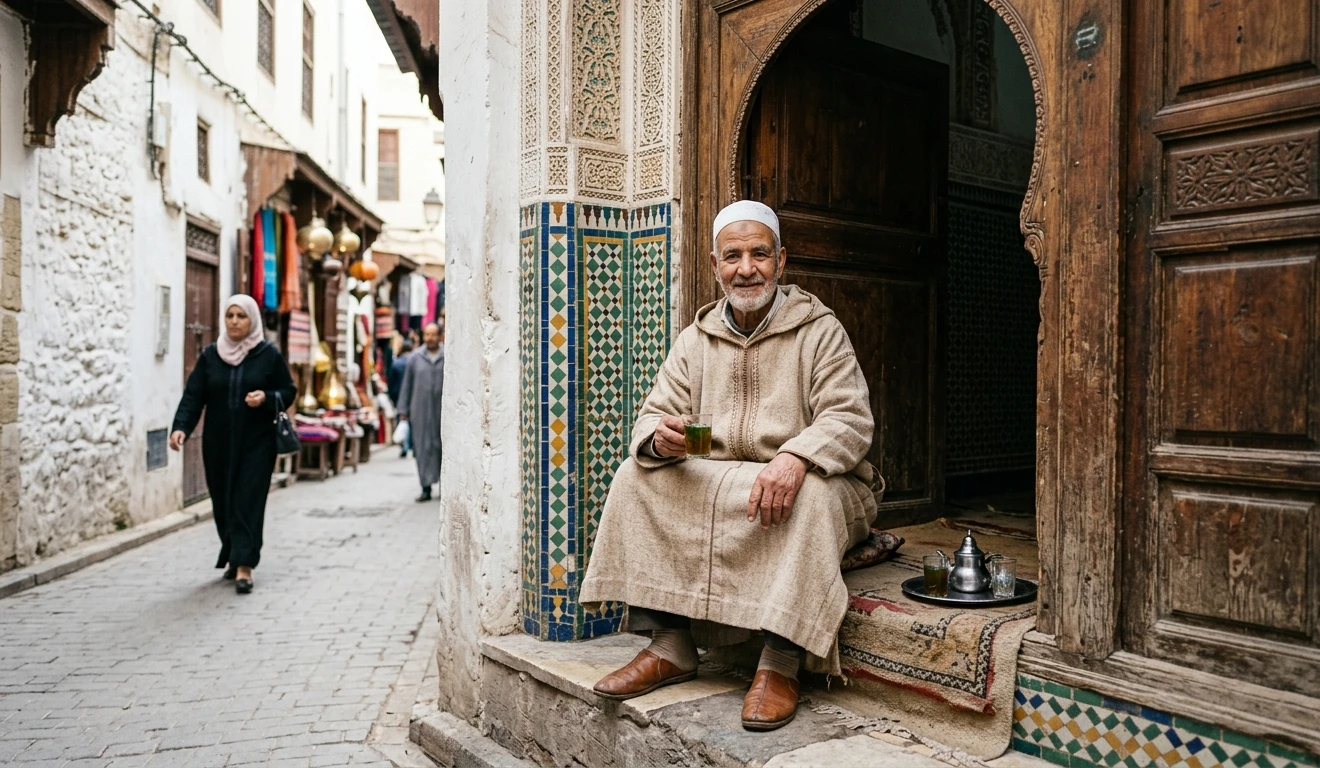
A useful rule of thumb: if you wouldn’t feel comfortable showing the photo to the person you’ve photographed, you probably shouldn’t have taken it. This isn’t just about legal safety — it’s about the kind of traveler you want to be in a country as generous and hospitable as Morocco.
If you’re also wondering about broader safety considerations as a tourist in Morocco, understanding the photography landscape is actually a good first step — the same cultural intelligence that keeps you out of photography trouble will serve you well throughout your trip.
Understanding Moroccan People’s Reaction to Cameras
ContentsMoroccan people’s reaction to cameras is not monolithic — and assuming it will be either uniformly welcoming or uniformly hostile will get you into trouble. The reaction varies enormously by age, gender, geography, and context.
Older Men
Often the most willing to be photographed, especially in trades like leatherworking or metalsmithing. Many enjoy the attention and may even pose proudly.
Women
Approach with more caution. Many women, particularly older or rural women, will decline. Always ask first. Never photograph a woman who is visibly uncomfortable, regardless of what’s in the frame.
Children
Children are often curious and love cameras — but always seek a parent or guardian’s permission first. Avoid photographing children alone without context.
City vs. Rural
Urban Moroccans in Casablanca or Rabat are generally indifferent to cameras. In smaller medinas or rural villages, a camera can feel intrusive if not introduced gently.
Souk Vendors
Many have complex feelings — they see the commercial value of tourism imagery but also feel exploited by travelers who snap and run. A purchase or genuine conversation goes a long way.
Artisans & Performers
Gnawa musicians, snake charmers, and henna artists expect a tip in exchange for photography. This is their livelihood. Photographing them and walking away is genuinely disrespectful.
The most important thing to internalize is this: Moroccan people are not set pieces in your travel story. They’re living their actual lives. The ones who engage warmly with cameras are often doing so out of genuine pride and hospitality — not because they’re there to make your Instagram look good.
Street Photography Etiquette: The Unwritten Rules
ContentsStreet photography etiquette in Morocco follows similar principles to street photography anywhere — respect for your subjects, awareness of your surroundings, and a willingness to engage rather than extract. But there are Morocco-specific nuances that every visitor should understand before raising a lens.
Do
- Make eye contact and smile before you photograph anyone
- Learn the Arabic or Darija phrase for “may I take your photo?” — “Wash imken li ntsawar m’ak?”
- Show the person their photo on your screen after — this builds trust and delight
- Spend time in a location before photographing — let people get used to you
- Photograph the environment, textures, and details when people are uncomfortable
- Accept “no” gracefully and move on without pressure
- Offer to share photos via WhatsApp — many locals genuinely love this
✕ Don’t
- Use zoom lenses to photograph people surreptitiously from a distance
- Photograph people through windows, doors, or from vehicles
- Use burst mode in crowded spaces — it’s loud and aggressive
- Argue or raise your voice if someone asks you to delete a photo
- Photograph people in religious spaces without express permission
- Post unflattering or dehumanizing images to social media
- Promise to send photos and then not follow through
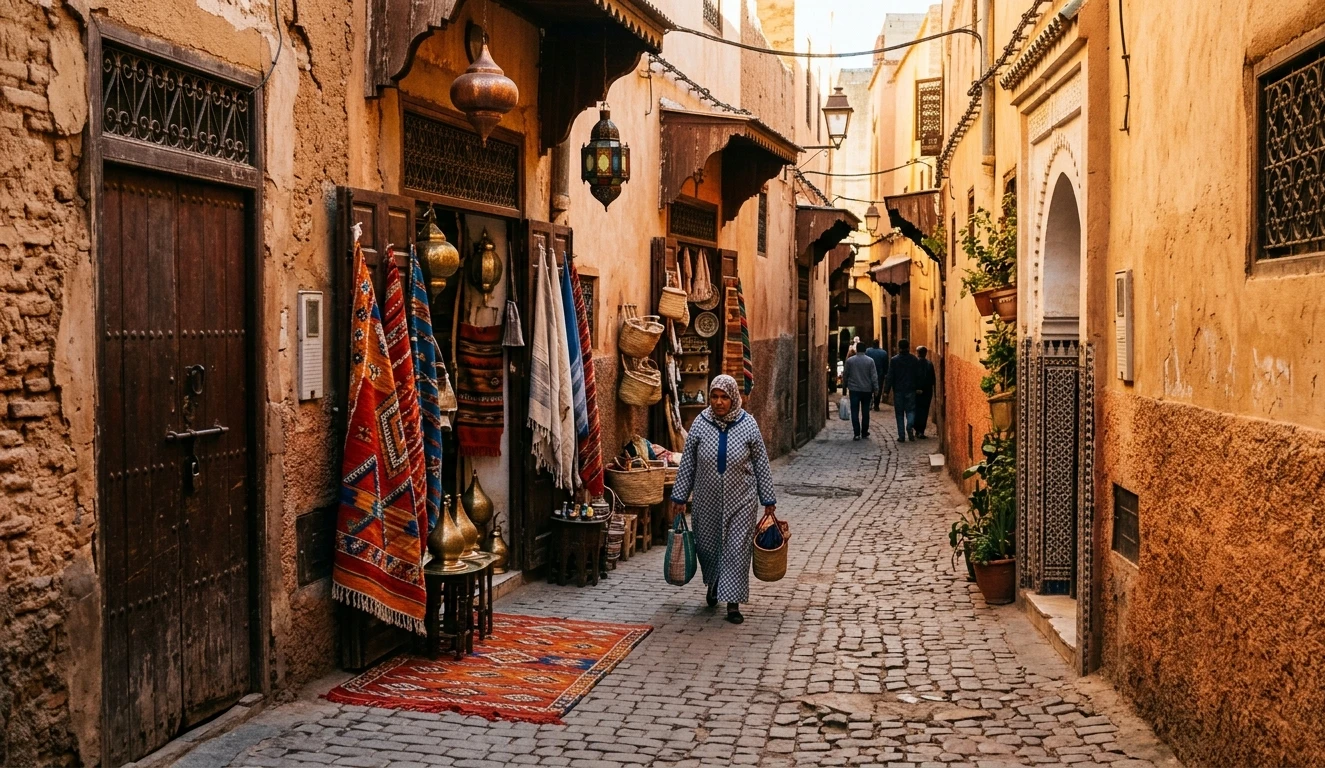
The narrow lanes of Morocco’s medinas reward patience and a slow approach far more than aggressive shooting.
One of the most underrated pieces of street photography etiquette is simply slowing down. Travelers who rush through souks treating everything as content rarely capture anything truly compelling. The photographers who return with the most extraordinary portraits spent hours in the same street, drinking tea with locals, becoming a familiar face before ever lifting a camera.
Photography Tips for Marrakech Souks (and Beyond)
ContentsMarrakech is probably where most travelers’ photography dreams collide with their first cultural misunderstanding. The souks of the medina are visually extraordinary — and intensely busy. Here are the most actionable photography tips for Marrakech souks that actually work in practice.
📍 Djemaa el-Fna Square
This is the epicenter of photographic opportunity — and photographic tension. By day, it’s relatively calm. By dusk, it transforms into a carnival of food stalls, performers, and storytellers. Entertainers here will ask for money if you point a camera at them. Budget for it, budget generously, and you’ll both leave happy.
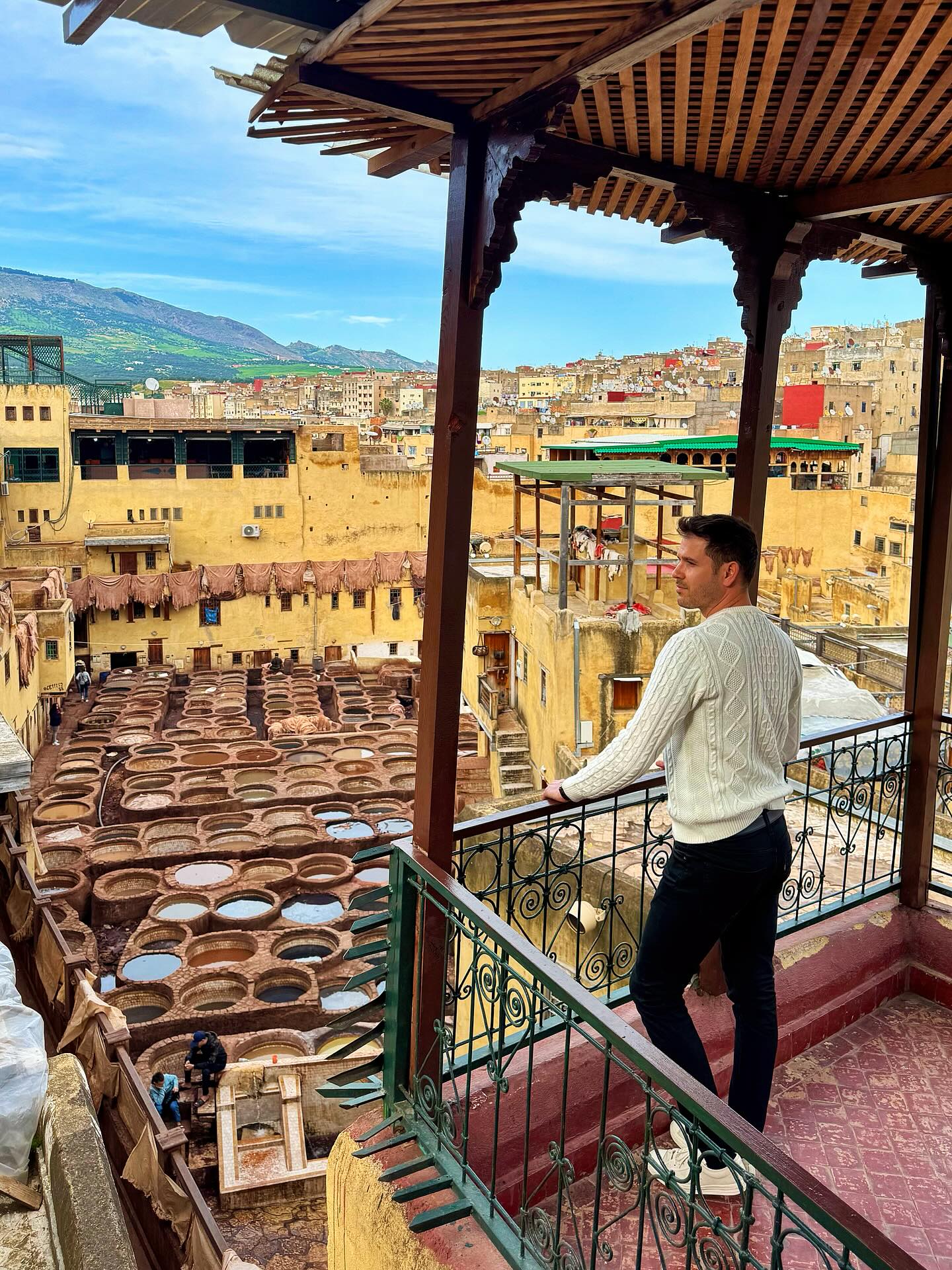
The tanneries of Marrakech (and Fez — arguably even more spectacular) are a classic dilemma. Riad rooftops overlooking the dyeing pits offer incredible panoramic shots, often sold as part of a leather shop tour. The views are genuinely stunning, but understand that the price of access is usually being asked to buy something. This is a fair exchange — don’t pretend otherwise.
Beyond Marrakech, Morocco’s diverse cities each offer their own distinct photography character. Chefchaouen’s blue-washed medina has become almost too famous — but go at 6am and you’ll have the streets nearly to yourself. Essaouira’s windy ramparts, Meknes’ imperial gates, and the Sahara’s ever-shifting dunes around Merzouga all offer scenes that need no human subject to be extraordinary.
Go at Golden Hour
Morocco’s light is cinematic at sunrise and the hour before sunset. The medinas are also quieter, and locals are more relaxed and open to engagement.
Get Lost Deliberately
The best photos happen in unmarked alleys, not on tourist corridors. Wander. The medina’s labyrinth rewards curiosity over itinerary.
Sit Down and Observe
Order mint tea at a café with a good vantage point. Watch the street for 30 minutes before you even pick up your camera. You’ll see compositions you’d never have noticed rushing past.
Focus on Architecture
Moroccan architecture is staggering. Zellige tilework, carved stucco, cedar wood ceilings — these require no human subject and no permission. They’re among the most photographed things in the country for good reason.
How to Ask for Permission — and Actually Get It
ContentsThe gap between “they let me take it” and “they were happy I took it” is wider than most photographers acknowledge. True consent — the kind that results in authentic, warm portraits — comes from genuine human connection, not a transactional nod.
🗣️ Useful Phrases in Darija (Moroccan Arabic)
| English | Darija (Moroccan Arabic) | Pronunciation |
|---|---|---|
| May I take your photo? | Wash imken li ntsawar m’ak? | Wash im-KEN lee nts-ah-WAR mak? |
| Thank you very much | Shukran bezzaf | Shoo-KRAN beh-ZAHF |
| You are very kind | Nta mzyan bezzaf | Nta mzee-YAN beh-ZAHF |
| Beautiful! | Zwina! | Zwee-NAH! |
| No problem / You’re welcome | Ma kayn mushkil | Ma kayn moosh-KEEL |
| I won’t share this / It’s private | Mashi la internet | Mah-SHEE la internet |
The single most effective technique for getting genuine, relaxed portraits isn’t a linguistic trick — it’s patience. Spend time in one place. Visit the same tea stall twice. Let the spice merchant see that you’re genuinely interested in his craft, not just his face. By the time you raise a camera, the relationship exists, and the photo shows it.
The Tipping Question: Should You Pay to Photograph?
ContentsThis is arguably the most debated question among travel photographers visiting Morocco — and the most misunderstood. The short answer is: it depends entirely on the situation.
Understanding what currency Morocco uses matters here — the Moroccan Dirham (MAD) is not freely exchangeable outside the country, so small amounts in tips carry meaningful purchasing power for locals. A 10–20 MAD tip (roughly $1–2 USD) for a photograph is considered reasonable and generous in most contexts.
| Subject / Situation | Tip Expected? | Suggested Amount | Notes |
|---|---|---|---|
| Gnawa musicians / street performers | Yes, always | 20–50 MAD per photo session | This is their livelihood. Be generous. |
| Snake charmers / monkey handlers | Yes, always | 20–30 MAD | Negotiate before, not after. |
| Henna artists (posing) | Yes | 10–20 MAD | Only if photographing them at work, not getting henna yourself. |
| Ordinary locals on the street | No — offering money can be offensive | — | A small gift (sweets, postcards) is more appropriate if you want to reciprocate. |
| Artisans in their workshop | Often a purchase works better than a tip | — | Buying even a small item builds goodwill and results in better photos. |
| Tannery workers | Tip the shop that gave you access | 10–20 MAD min. | The leather shop model exists for this exchange — honour it. |
💡 The “Agree First” Principle
For performers and anyone who makes their living partly through tourism, always agree on a price before you raise your camera. Negotiating after the fact almost never ends well and creates bad feeling on both sides. A quick “Shhal?” (How much?) goes a long way.
Locations: What You Can and Cannot Photograph
ContentsMorocco’s photography landscape varies dramatically by location. Here’s a practical, location-by-location breakdown so you can plan accordingly before your trip.
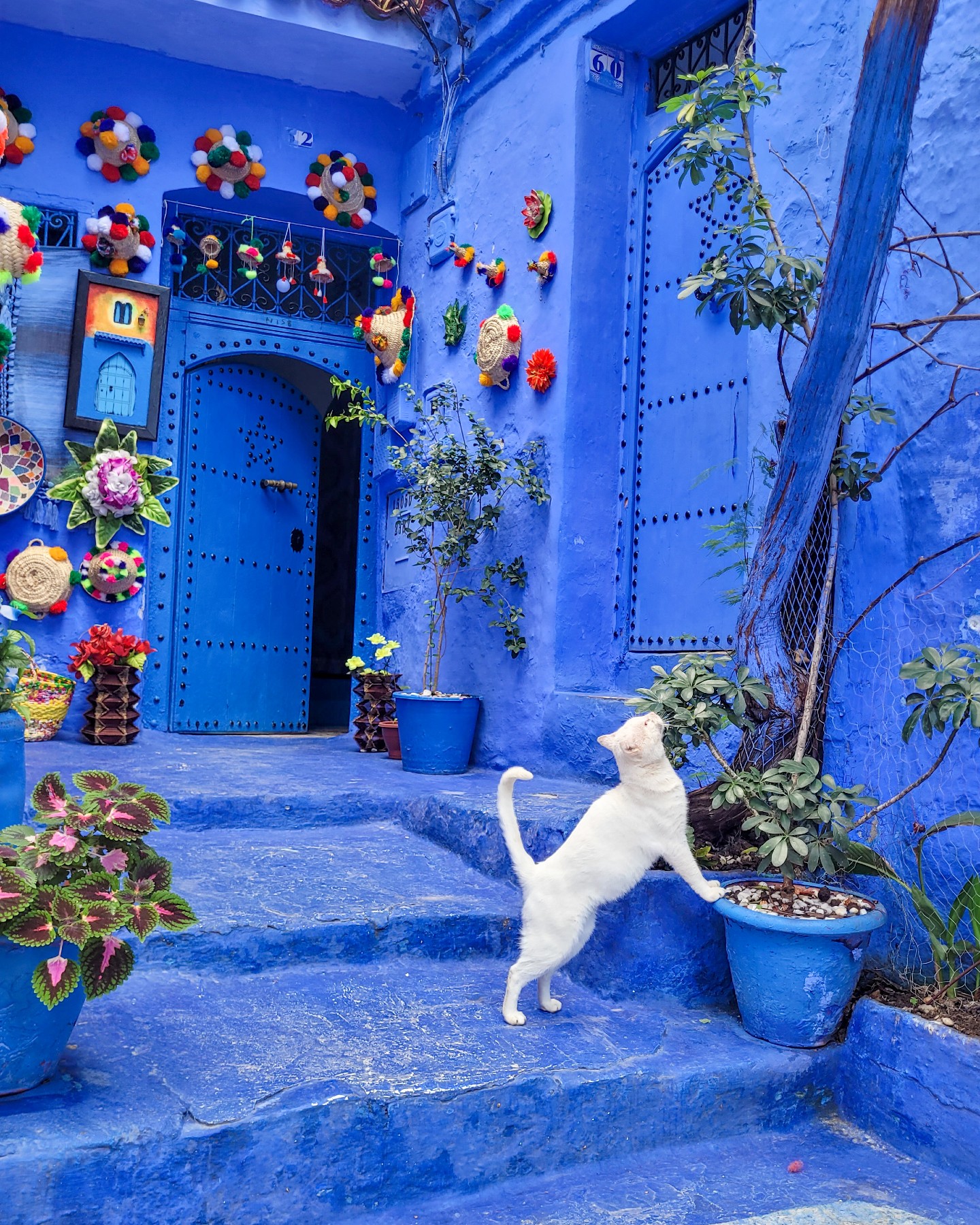
Chefchaouen is endlessly photogenic — but visit at dawn to find it without crowds.
| Location | Photography Status | Key Notes |
|---|---|---|
| Marrakech Medina (general) | ✅ Permitted (public spaces) | Be respectful of vendors and residents. Souks can be tight; ask before shooting. |
| Djemaa el-Fna Square | ✅ Permitted — tip performers | Photographing performers without paying is considered theft of livelihood. |
| Mosques (exterior) | ✅ Generally fine | Do not block entrances. Be mindful during prayer times. |
| Mosques (interior) | ⚠️ Non-Muslims restricted | Most Moroccan mosques are closed to non-Muslim visitors. Hassan II Mosque in Casablanca is a notable exception — check guidelines on tours. |
| Chefchaouen Blue City | ✅ Very photography-friendly | Locals are accustomed to cameras. Early morning is best to avoid crowds. |
| Fez Tanneries | ✅ From leather shop rooftops | You’ll be “invited” to view from shops — this is the system. Respect it. |
| Sahara Desert / Erg Chebbi | ✅ Open — landscape photography paradise | Stunning at sunrise. Camel trekkers expect a tip for portraits. |
| Hammams (public baths) | 🚫 Absolutely off-limits | No exceptions. Don’t even ask. |
| Military / Government sites | 🚫 Illegal | Risk of confiscation, detention. Not worth it under any circumstances. |
| Rural Berber villages | ⚠️ Proceed with care | Tight-knit communities. Spend time before photographing. Women especially require genuine relationship-first approach. |
Gear Advice for Moroccan Environments
ContentsThe right gear doesn’t guarantee great photos in Morocco, but the wrong gear can make the experience unnecessarily complicated. Here’s what works — and what to leave at home.
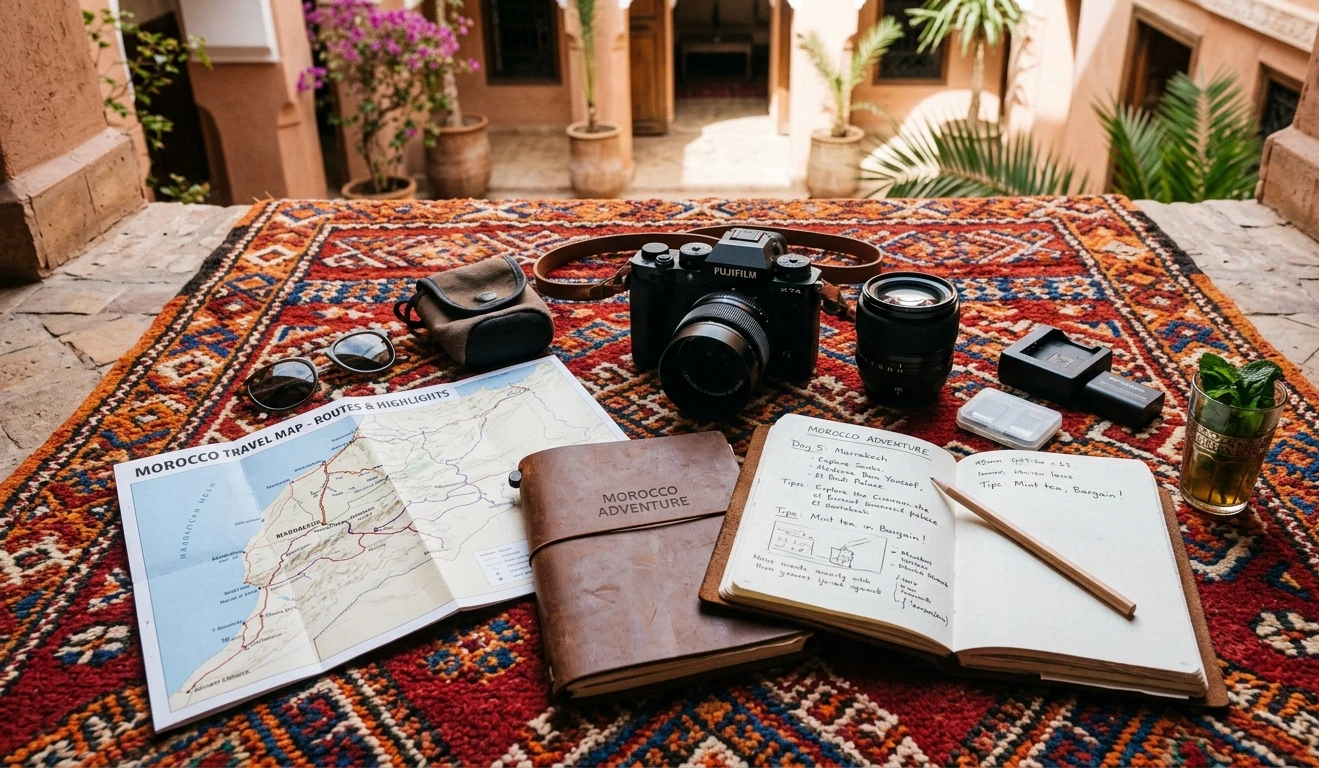
- Mirrorless over DSLR: A smaller, quieter mirrorless camera is less intimidating to locals and less conspicuous in crowded souks. It also attracts less attention from opportunistic thieves.
- A single versatile zoom: A 24–70mm equivalent covers most situations without requiring you to change lenses in dusty, narrow alleys. Clean sensors are worth protecting.
- Prime lens for portraits: A 50mm f/1.8 or 85mm f/1.8 gives beautiful subject separation at a reasonable size. Perfect for low-light medina shooting.
- A compact camera or smartphone: Often the best tool for candid moments because it signals “tourist enjoying the trip” not “professional here to exploit.”
- Extra batteries and cards: Morocco’s heat drains batteries faster. Spare cards are cheap insurance against a catastrophic deletion request going wrong.
- A dust-proof bag: The Sahara is relentless. Even in cities, fine sand finds its way into everything. A zip-locked bag around your kit in dusty environments saves sensors and lens elements.
- Polarizing filter: The Moroccan sun is intense and flat at midday. A circular polarizer deepens blue skies, cuts reflections off tiles, and adds drama to landscape shots.
📱 On Smartphone Photography
Don’t underestimate it. Modern flagship phones produce extraordinary images in Morocco’s soft morning light. More importantly, showing someone a photo of themselves on a phone screen feels natural and friendly in a way that peering through a viewfinder never does. Many of the warmest street interactions happen via phone cameras.
Frequently Asked Questions
ContentsIs taking photos in Morocco safe? Can my camera be confiscated?
Taking photos in Morocco in public spaces is generally safe. Camera confiscation is extremely rare and typically only occurs near military or government buildings — which are clearly marked. If a local asks you to delete a photo, the best response is to comply graciously rather than escalate. Protecting the relationship and your safety matters more than any single image.
What is Moroccan people’s reaction to cameras usually like?
Moroccan people’s reaction to cameras ranges enormously — from genuine delight and pride to firm refusal. Urban Moroccans are largely indifferent to tourists with cameras. In traditional medinas, reactions depend heavily on your approach. A camera raised without interaction reads as aggressive; the same camera introduced with a smile, a greeting, and genuine curiosity about the person almost always receives a warm response.
Can I photograph women in Morocco?
Yes, but always ask first and always accept “no” graciously. Many Moroccan women, especially older or rural women, prefer not to be photographed by strangers. This is a deeply personal boundary rooted in both cultural and religious values. If a woman offers a warm smile and seems comfortable when you ask, that’s genuine consent. A shrug or turned head is a soft no — treat it as a firm one.
Do I need to tip every time I photograph someone in Morocco?
Not always. Tipping is expected and right when photographing performers, entertainers, or people whose tourism-facing work forms part of their income (snake charmers, musicians, henna artists). With ordinary members of the public — a local chatting at a café, a grandmother in her doorway — offering money can actually be offensive. In those cases, a genuine human exchange, a small gift, or simply showing them their portrait on your screen is far more appropriate.
What are the best photography tips for Marrakech Souks specifically?
The best photography tips for Marrakech Souks: go early (before 9am, the light is beautiful and the alleys are quiet), focus on textures and details rather than faces to avoid conflict, use a smaller camera or phone to lower tension, make purchases from vendors before photographing their stalls, and don’t photograph the dyers or tanners from street level without asking — but from the leather shop rooftops it’s perfectly acceptable as part of the established tour system.
Is Chefchaouen the most photographer-friendly city in Morocco?
Chefchaouen is certainly among the most tolerant of cameras — locals there have lived alongside tourism for decades and are generally relaxed about being photographed, particularly in the famous blue streets. That said, “most photographer-friendly” depends on what you’re seeking. Fez offers more authenticity and complexity; Essaouira has stunning light and a relaxed coastal vibe; the Sahara needs no human permission whatsoever to be extraordinary.
📸 Plan Your Morocco Journey
Ready to Experience Morocco Through Your Lens?
From navigating the souks of Marrakech to capturing the silence of the Sahara — Morocco rewards travellers who arrive prepared, curious, and respectful. Explore our complete Morocco travel guides to plan every detail.