Chez Lamine Hadj Mustapha: The Legendary Mechoui of Jemaa El Fna
Since 1965, one address has defined slow-roasted lamb in Marrakech. Here is everything you need to know before you visit.
Some restaurants earn their reputation over years. Chez Lamine Hadj Mustapha has been earning its since 1965. Tucked into what locals call Mechoui Alley, a narrow passage just off the north edge of Jemaa El Fna, it is the kind of place that does not need a sign out front or a reservation system or a social media strategy. The smell alone, that deep, cumin-laced warmth of slow-roasted lamb drifting into the square, has been guiding visitors through the right alley for six decades.
If you have been researching what to eat in Morocco, particularly in Marrakech, Chez Lamine is a name that surfaces in almost every serious conversation. This guide, put together by the editorial team at MoroccanTravelTrips.com, gives you everything you actually need to know: the dishes, the prices, the two locations, practical tips for tourists, and the most useful question of all, whether the experience still lives up to its reputation.
The Story Behind Chez Lamine Hadj Mustapha ↑
The original Chez Lamine Hadj Mustapha was founded by N’guyer Haj Mustapha, a figure who became something of a legend in Marrakchi culinary circles. His philosophy was straightforward: exceptional lamb, traditional methods, fair prices, and no shortcuts. That approach built a following among locals long before any travel publication or food documentary arrived to validate it.
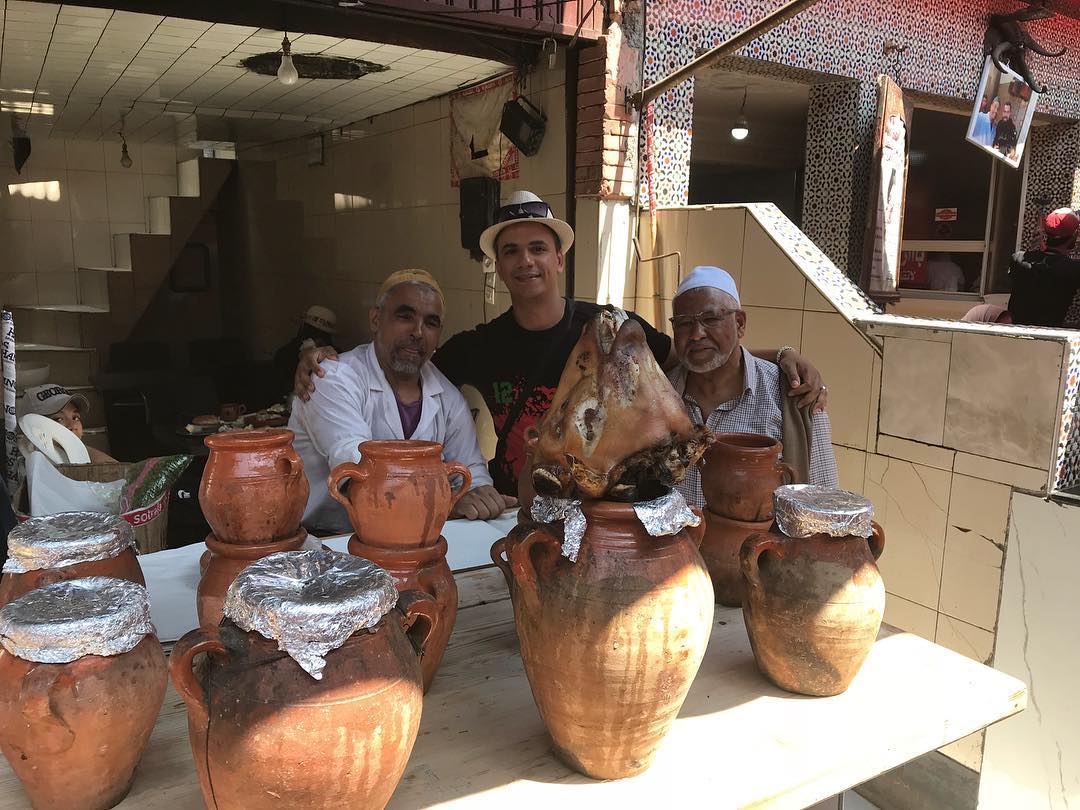
The restaurant sits at the entrance of Mechoui Alley, and it is the original around which all the other lamb stalls in the alley gradually gathered. Over the decades, its walls accumulated newspaper cuttings, photographs of visiting chefs and celebrities, and the kind of patina that only comes from decades of consistent, serious cooking. Today the restaurant spreads across several floors: a ground-floor counter facing the street where whole carcasses hang and clay tangia pots line up in rows, a tiled mezzanine, and a covered rooftop terrace with views over the surrounding souks and Jemaa El Fna beyond.
The menu is not long. It does not need to be. When you do two or three things at the highest level, a lengthy list of options would only dilute the point.
Featured on Food Television: The Restaurant That Put Mechoui Alley on the Map ↑
Many travellers arrive at Chez Lamine Hadj Mustapha because they saw it on a food programme. Gordon Ramsay has been photographed here, and photos of his visit are displayed at the entrance alongside other press clippings. Mechoui Alley and its signature slow-roasted lamb have also featured in multiple food documentaries exploring Moroccan cuisine, including Netflix food travel productions covering Marrakech. The late Anthony Bourdain, who visited Morocco for both A Cook’s Tour and Parts Unknown and described the country’s food culture with characteristic depth, helped bring global attention to the kind of unpolished, authentic cooking that Chez Lamine represents: no tablecloths, no theatre, just extraordinary meat served with bread, cumin, and coarse salt. That simplicity is precisely the point.
The curiosity that food television generates is understandable. Visitors who arrive having watched a celebrated chef eat somewhere tend to do so with expectations already set high. At Chez Lamine, those expectations are generally met, provided visitors understand what the restaurant actually is: a specialist lamb house, not a full-service dining room. It is authentic, direct, and proud of both qualities.
What to Order at Chez Lamine: Mechoui vs. Tangia ↑
This is the question every first-time visitor faces standing at the counter. Both dishes are exceptional. Both are deeply rooted in Marrakchi culinary tradition. But they are not the same experience, and understanding the difference helps you make the right call for your visit. You can also read our dedicated guide on Tangia Marrakech for a deeper look at the history and preparation of this unique dish.
| Criteria | Mechoui du Four Traditionnel Best at Lunch | Tangia Marrakchia All Day |
|---|---|---|
| Cooking method | Whole lamb slow-roasted in an underground wood-fired oven for 3 to 4 hours each morning | Lamb cooked sealed inside a clay amphora, slow-simmered on the ashes of the hammam furnace for 6 to 8 hours |
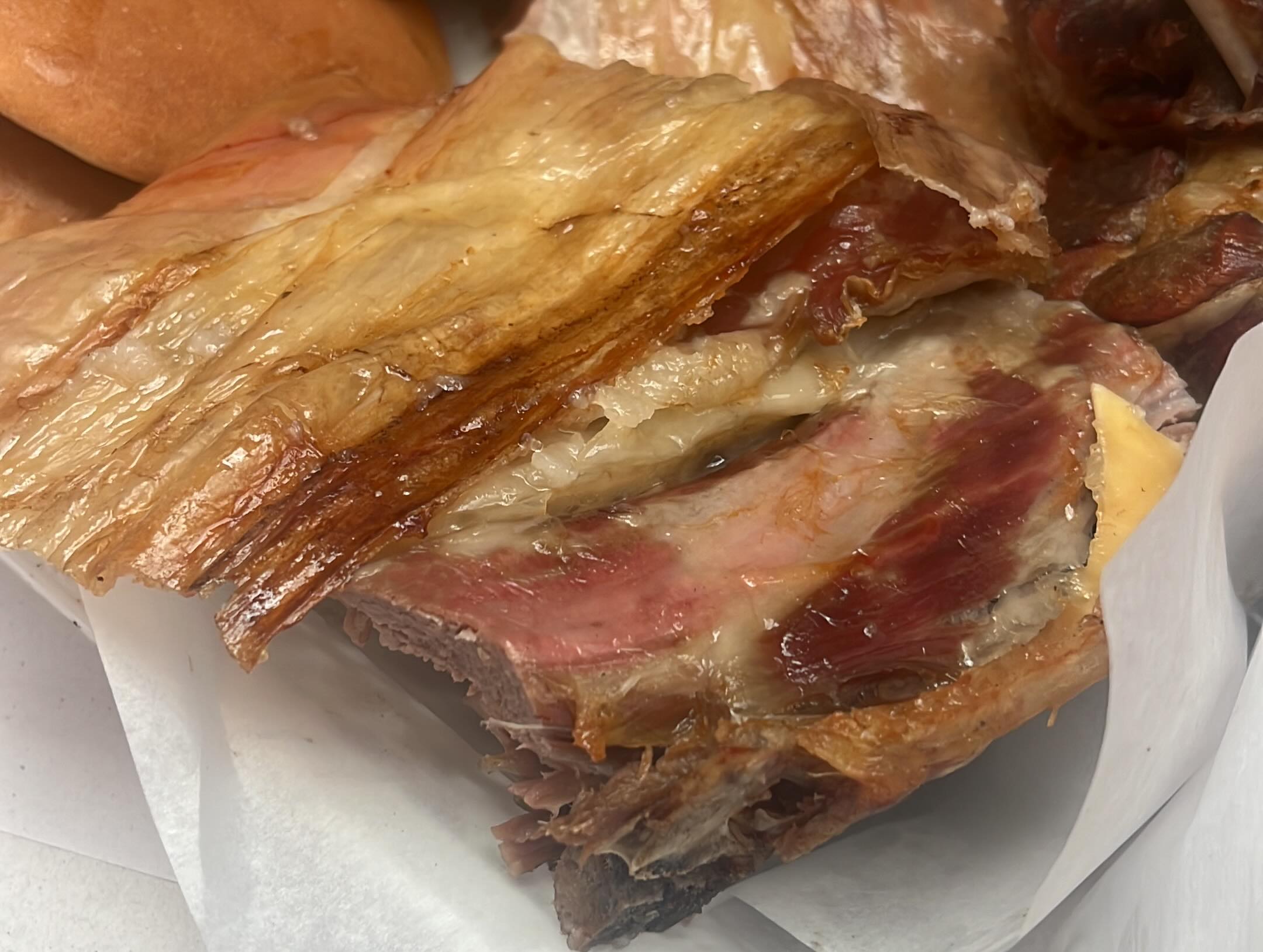
| Texture | Outer crust with a light char; interior meat pulls apart at the touch, rich and yielding | Fork-tender throughout, bathed in its own intensely flavoured braising juices |
| Flavour profile | Clean, smoky, deeply savoury; finished tableside with ground cumin and coarse salt | Complex and fragrant: preserved lemon, smen, saffron, and cumin working together over long, low heat |
| Served with | Khobz bread, cumin, salt; simple accompaniments that let the meat speak | Poured from the clay pot into a dish with the braising liquid; bread on the side to soak up the juices |
| Availability | Noon until sold out, usually by mid-afternoon. Arrive before 13:00 for the best cuts | Available from noon through to closing at 21:00 every day |
| Price range | From 12 to 18 euros equivalent depending on quantity | From 12 to 22 euros equivalent per serving |
| Best for | Those who want the definitive Marrakech lamb experience; ideal for sharing in a group | Those arriving in the afternoon, or anyone curious about one of Marrakech’s most singular slow-cooked preparations |
| Our verdict | The flagship dish. Try it if there is any mechoui left when you arrive. | Arguably more complex in flavour; equally worth the visit in its own right. |
The short answer: if you arrive before 1:00 PM, order the Mechoui. If you arrive later, the Tangia will not disappoint you. Many regulars argue they are two equally valid reasons to visit Chez Lamine on separate occasions. For a broader look at what Moroccan cuisine has to offer, our guide on what to eat in Morocco covers the full picture.
Chez Lamine Marrakech Menu and Price Transparency ↑
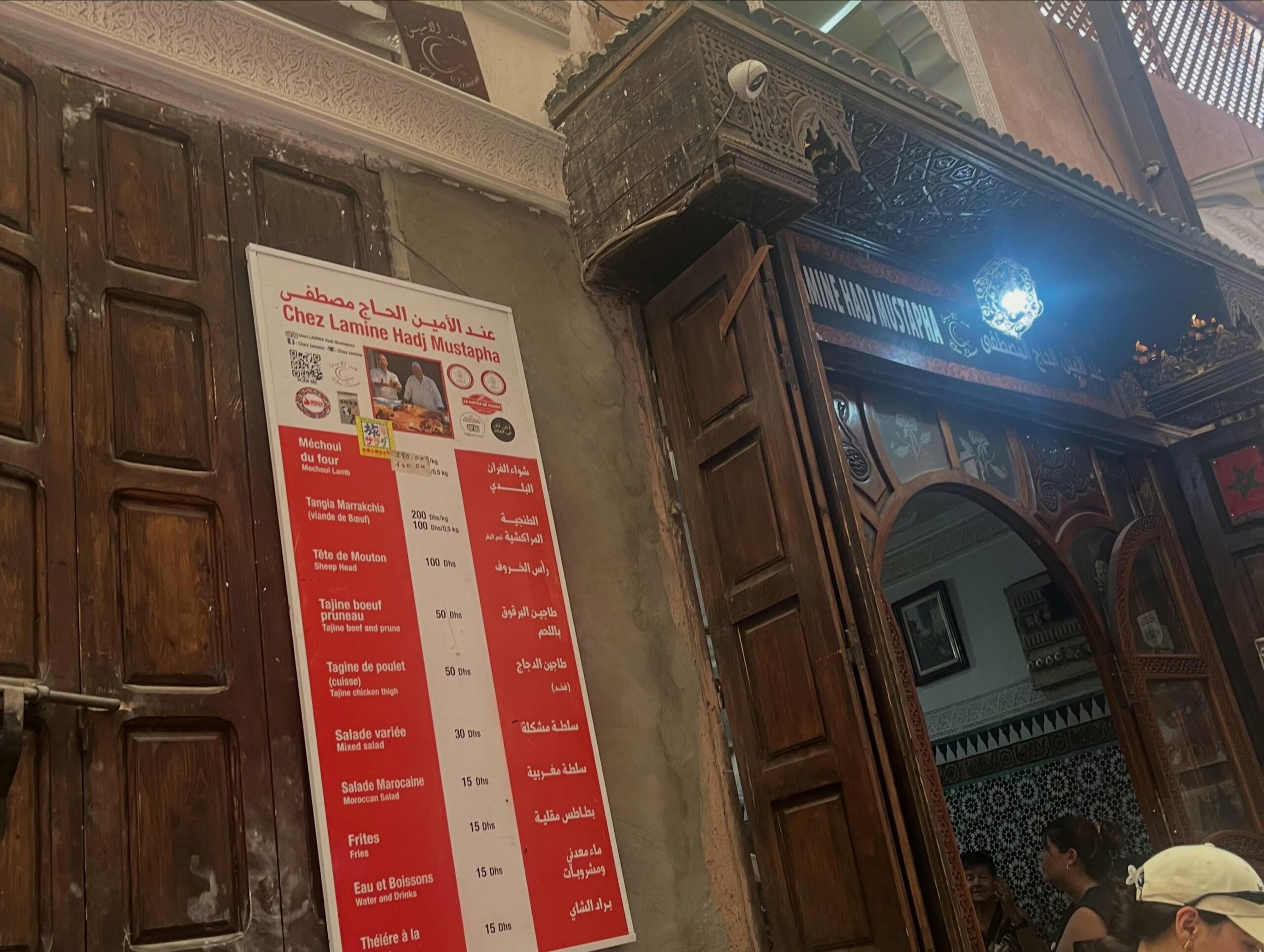
One of the things that sets Chez Lamine Hadj Mustapha apart from many tourist-facing restaurants in the Medina is its approach to pricing. The menu and price list are displayed visibly at the entrance and on boards inside the restaurant. There is no guesswork involved, and no negotiation expected. You see the price, you order by weight or portion, and what arrives at your table is exactly what was described. That kind of transparency is not universal in the Medina, and it is genuinely appreciated by visitors who are new to navigating Marrakech’s food scene.
Prices Posted for All to See
Chez Lamine posts its price list openly at the restaurant entrance and at the ordering counter. Mechoui starts from the equivalent of 12 euros and goes up to around 18 euros depending on quantity. Tangia ranges from 12 to approximately 22 euros. Bread and accompaniments are included. No hidden extras, no tourist pricing surprises.
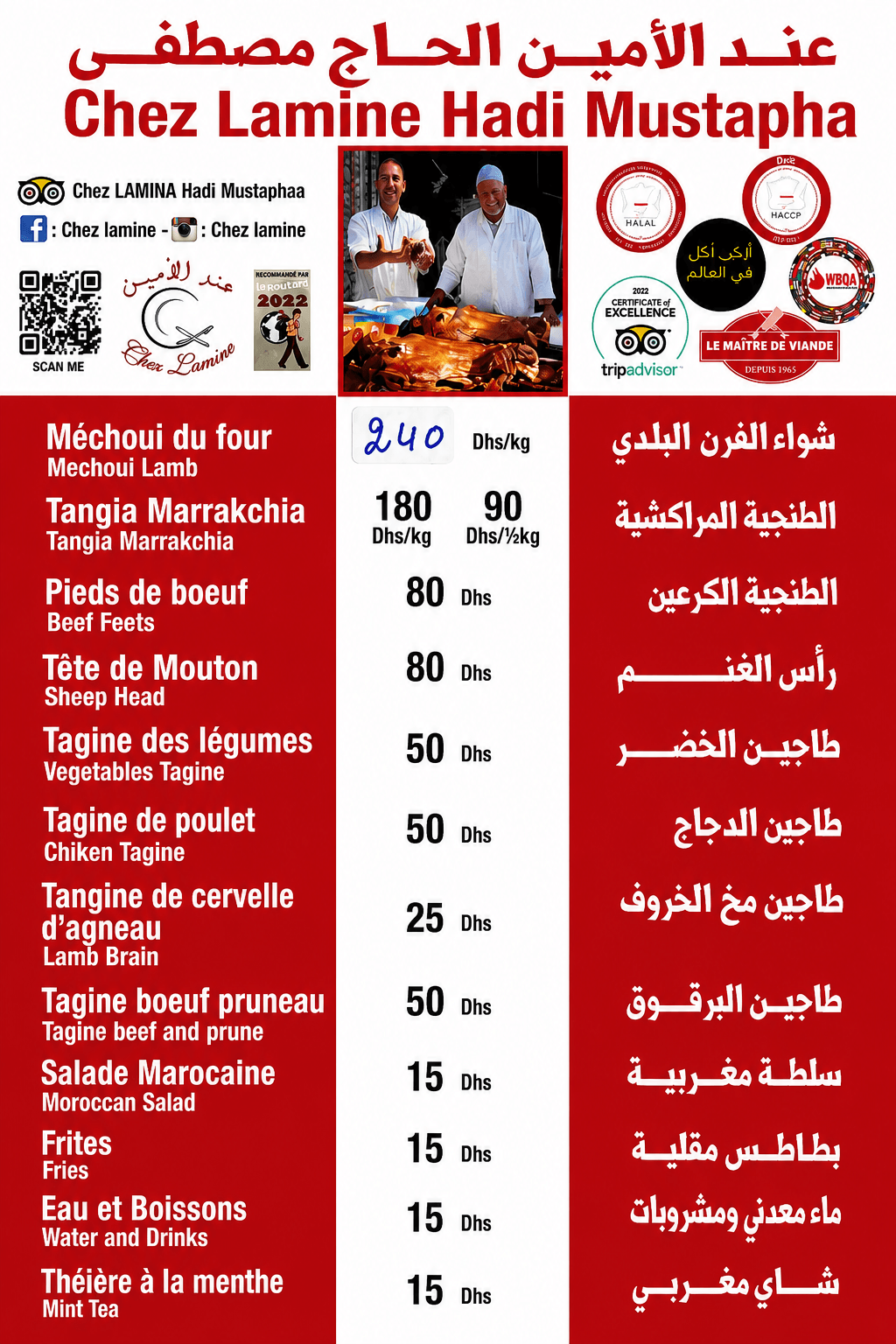
One practical note on drinks: Chez Lamine serves traditional Moroccan mint tea and non-alcoholic beverages. It is worth knowing that tap water in Marrakech is generally not recommended for visitors. Our guide on tap water in Morocco explains what to drink and what to avoid throughout your trip.
The Art of the Mechoui: Preparing the Lamb ↑
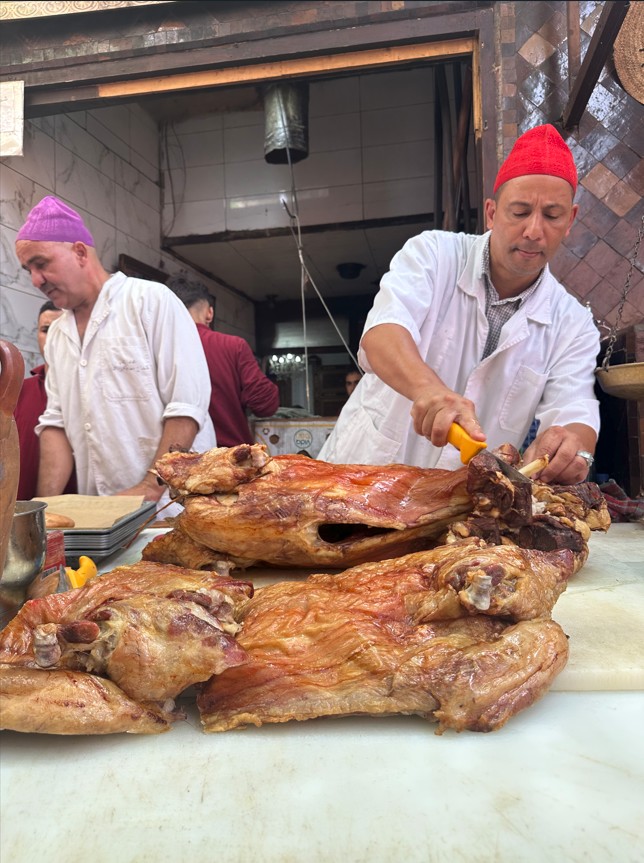
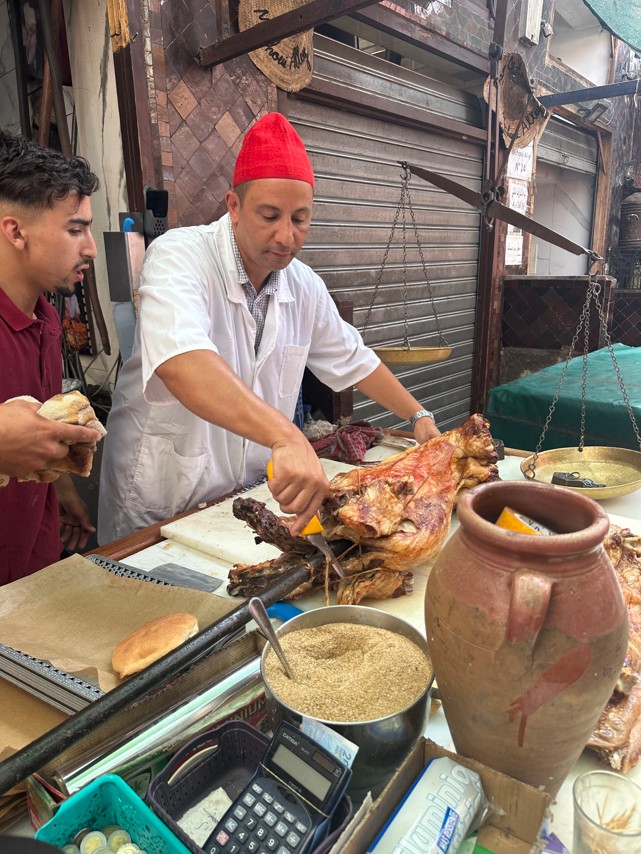
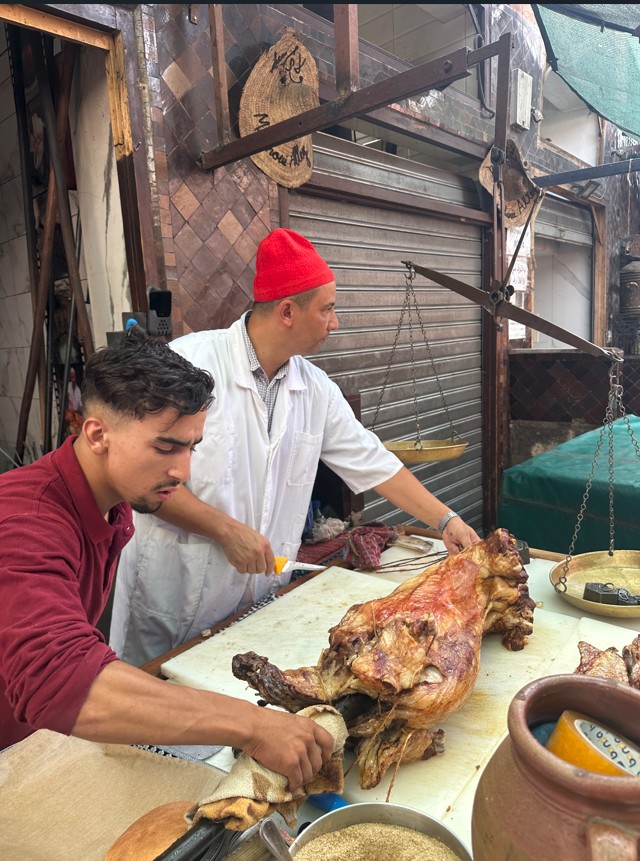
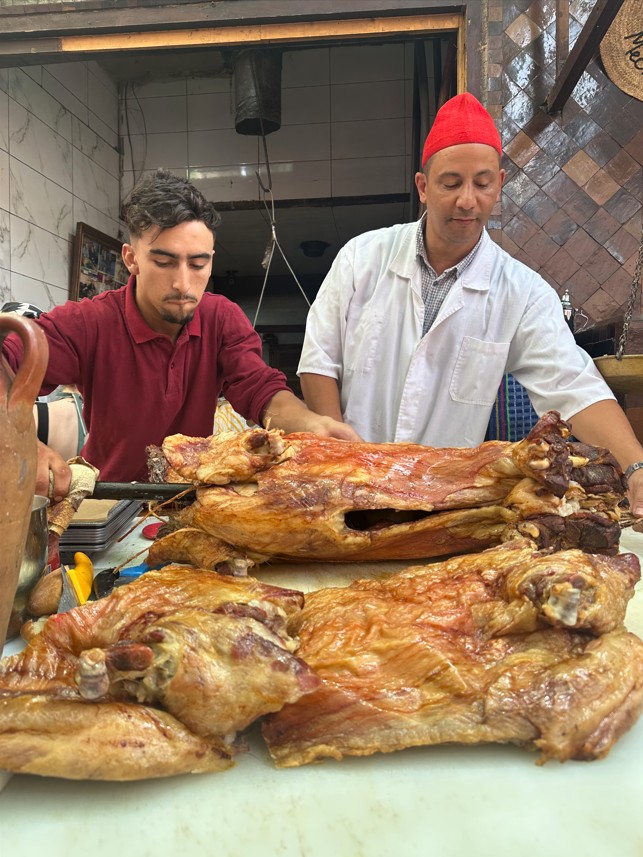
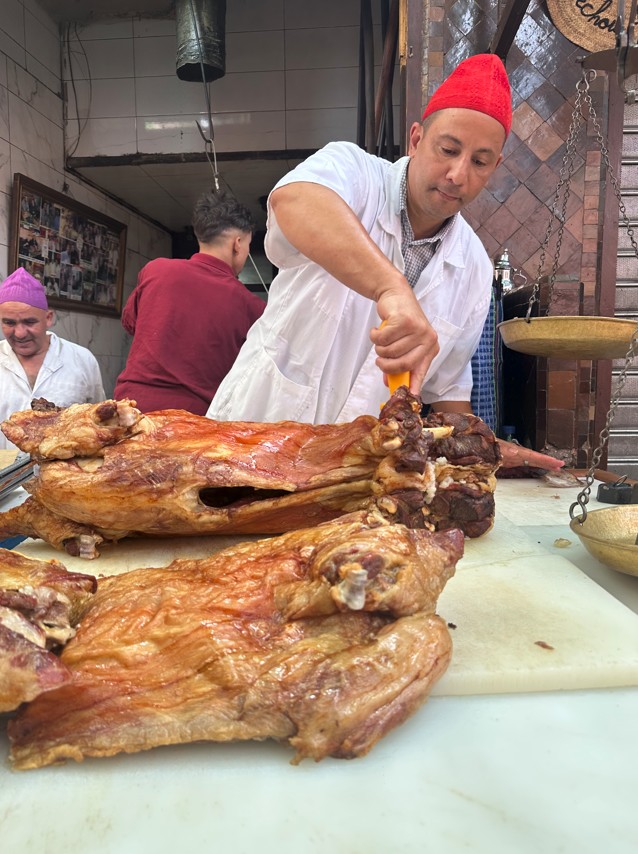
Watching the mechoui being prepared and portioned is part of the Chez Lamine experience. The lamb is brought out whole, and staff carve and portion it by hand in full view of the counter. It is not performance for tourists. It is simply how things have always been done here, and seeing the process gives you an immediate sense of why the dish tastes the way it does.
Chez Lamine Hadj Mustapha Review: Our Rating ↑
The team at MoroccanTravelTrips.com has visited Chez Lamine multiple times across different seasons, at different hours of the day, and with visitors of varying food backgrounds. Our assessment is consistent.
 Editorial Review
 The Chez Lamine Tangia review deserves a special mention. If the mechoui gets all the headlines, the tangia is arguably the more nuanced dish. That long, low, ash-fired cooking process coaxes flavours out of the lamb that no faster method could achieve. The braising liquid that pools in the bowl when it is served is worth mopping up with bread long after the meat is finished. We give the Tangia Marrakchia a full 10 out of 10. It is, quite simply, one of the finest things you can eat in Morocco.
Is Chez Lamine Jemaa El Fna Safe for Tourists? ↑
This is a question that comes up often, and the direct answer is yes. Chez Lamine Hadj Mustapha is a well-established and well-regarded restaurant that has been welcoming international visitors for decades. The staff are experienced with foreign guests. The prices are posted openly. The food is prepared in a traditional manner that the restaurant has been using for sixty years, and which thousands of visitors have experienced without issue.
That said, a few practical notes are worth keeping in mind. Mechoui Alley can be disorienting for first-time visitors to the Medina, particularly because several stalls line the same passage. Chez Lamine is the original and occupies numbers 18 and 26 on Souk Ablouh. The Jemaa El Fna location is the one with the full multi-floor experience, the rooftop view, and the widest selection. Prices are always posted at the counter; if something is not clear, ask before ordering. The restaurant does not serve alcohol. And as anywhere in the Medina, navigating there for the first time is much easier with a guide.
Do You Need a Reservation at Chez Lamine? ↑
No reservation is required, and none is accepted. Chez Lamine operates as a walk-in restaurant every day. The system is simple: you arrive, you go to the counter, you select your dish and quantity, and you take a seat. The mechoui is prepared each morning and served from noon onward, and it can sell out by mid-afternoon on busy days. The tangia is available from noon through to 21:00. If you have your heart set on the mechoui, arriving before 1:00 PM gives you the widest choice of cuts.
Visit with a Licensed Marrakech Guide ↑
Arriving at Chez Lamine with a licensed guide changes the experience in ways that are hard to anticipate until you have done it. The walk through the Medina to reach Mechoui Alley becomes a guided introduction to the neighbourhood: the olive souk, the historic passages, the spatial logic of a city that was built long before streets were designed for strangers. At the restaurant itself, a guide who knows the staff and the menu can navigate the ordering process for you, ensure portions and prices are correctly understood, and share the context that turns a meal into something genuinely memorable.

Mouhssine is a Ministry of Tourism certified guide based in Marrakech with extensive experience leading visitors through the Medina, souks, and food culture of the city. He accompanies guests to Chez Lamine as part of both dedicated food tours and broader Marrakech Medina itineraries, handling logistics, language, and context so visitors can focus entirely on the experience.
Available for private half-day Medina food tours, custom itineraries, and guided visits to Chez Lamine Hadj Mustapha and other key culinary destinations in Marrakech.
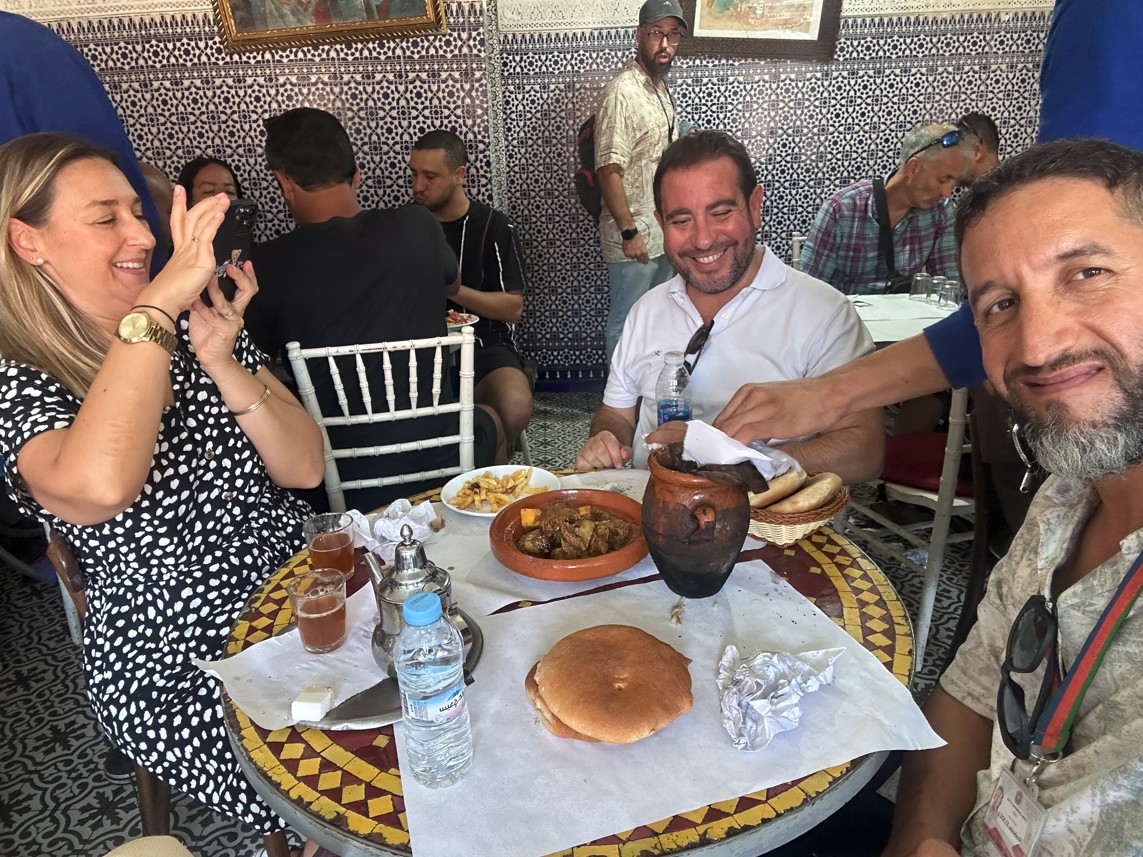
WhatsApp: +212 671 437 971Below are photographs from Mouhssine’s visits to Chez Lamine with guests, including the shared food experience that makes this kind of guided visit particularly rewarding.
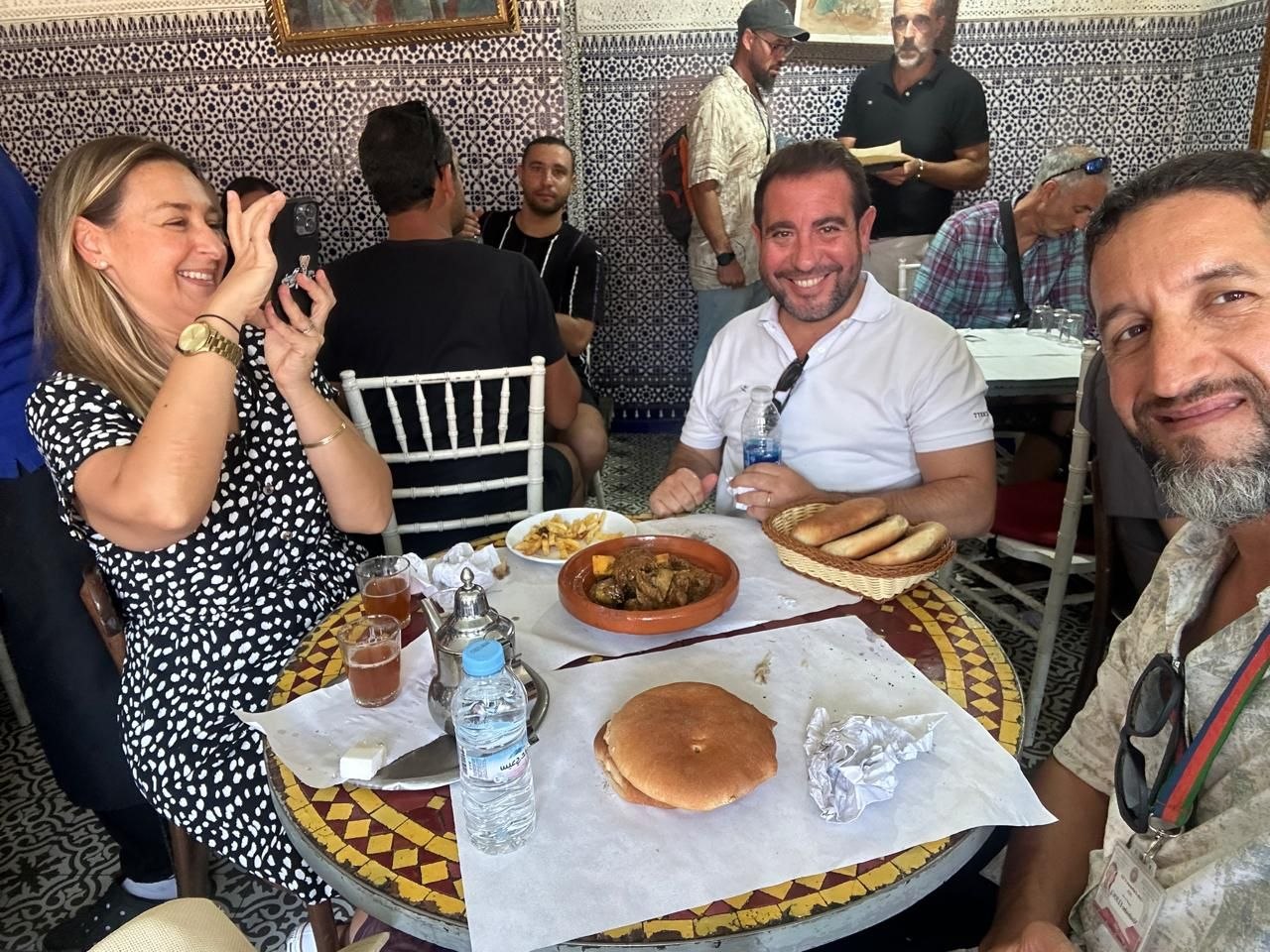
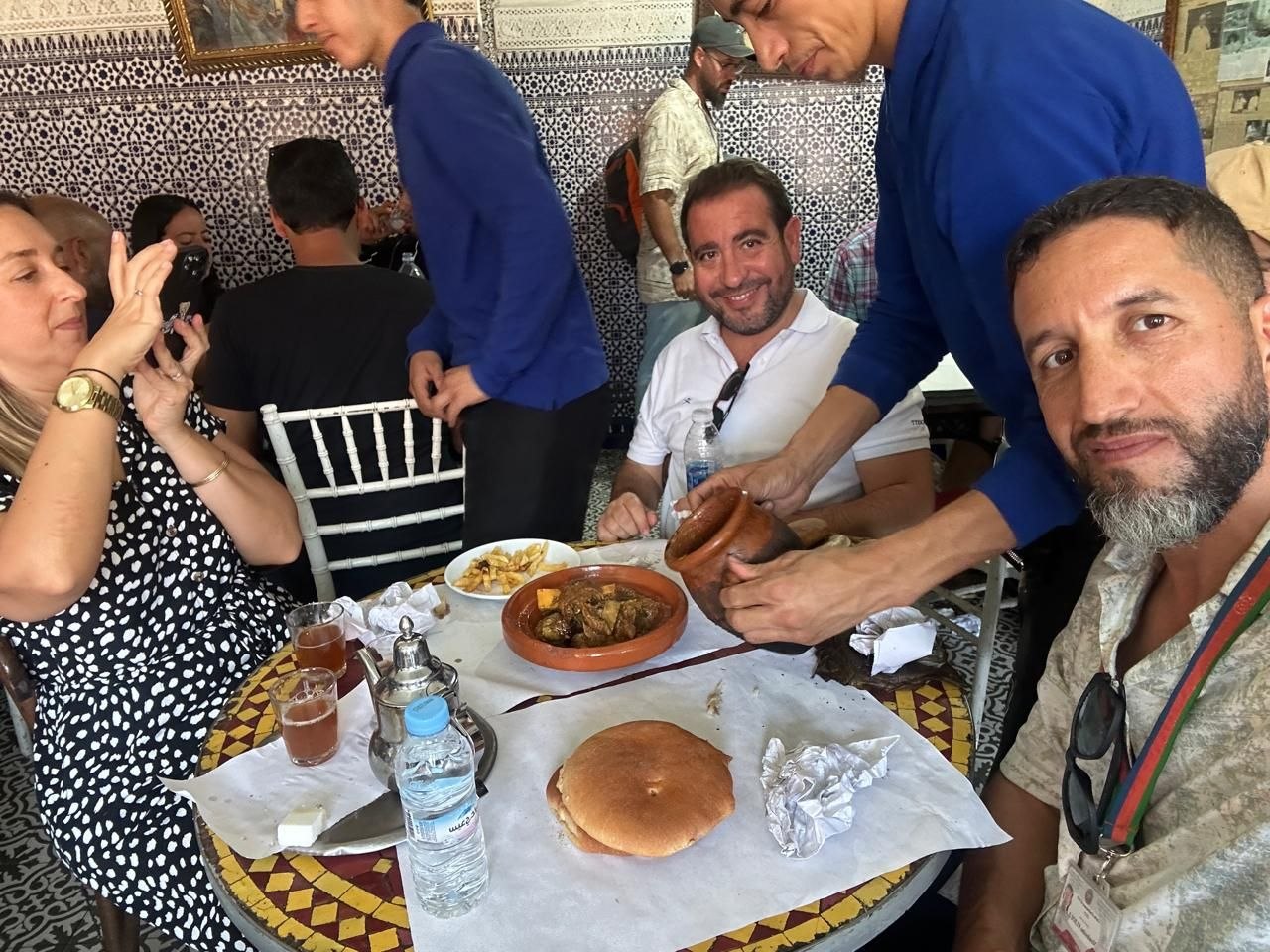
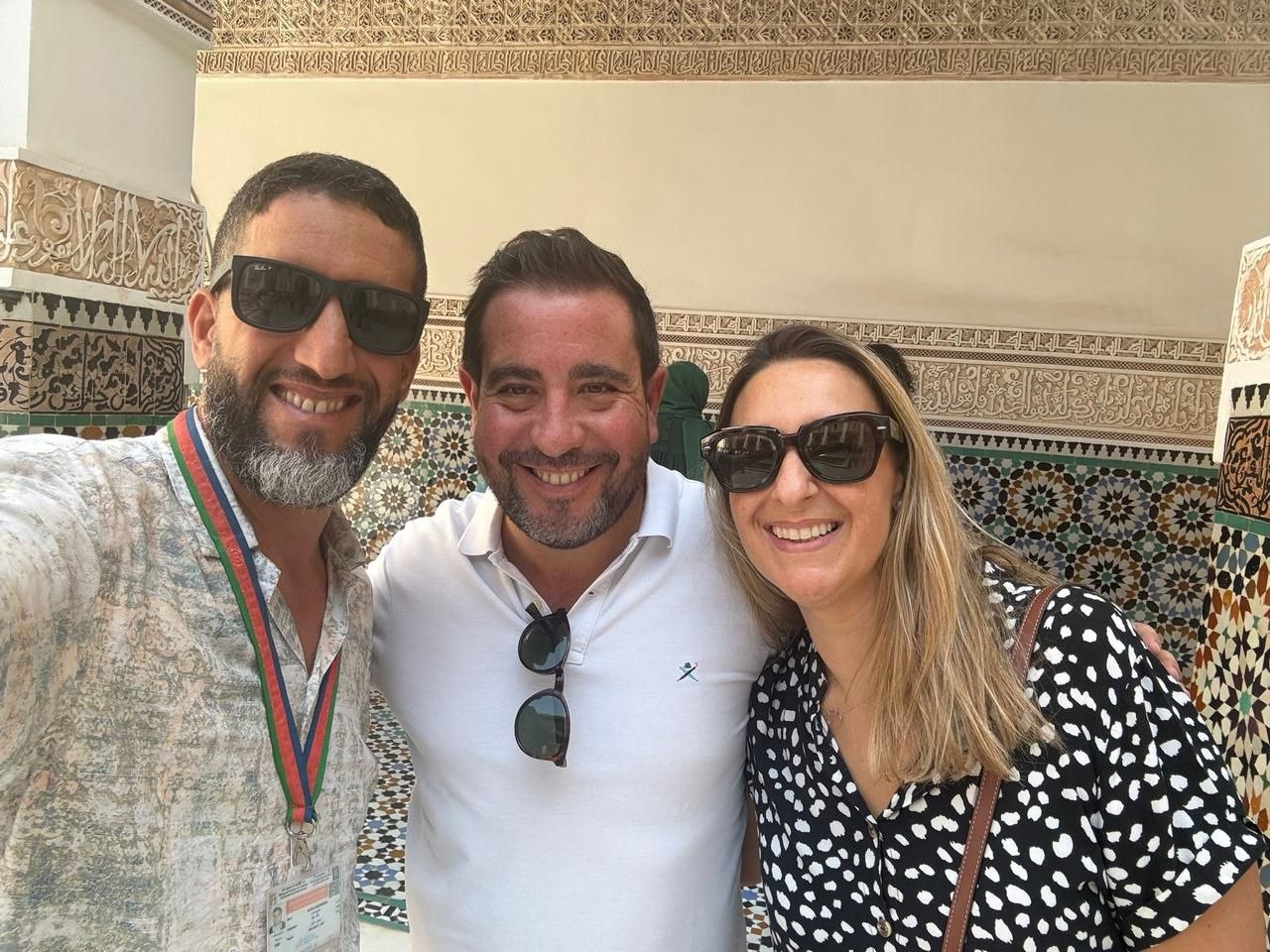
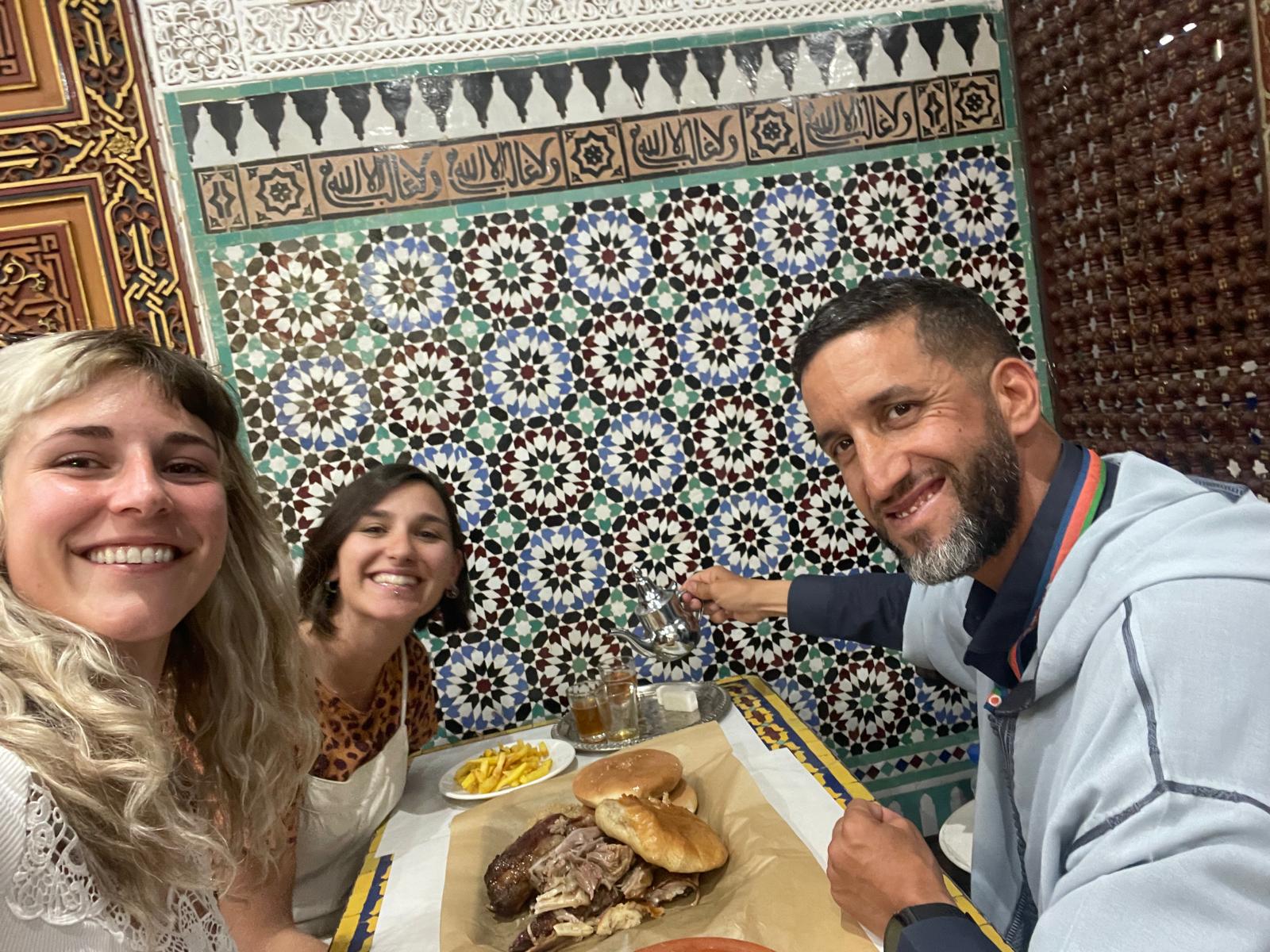
Two Locations: Which One to Visit? ↑
Chez Lamine Hadj Mustapha now operates two addresses in Marrakech.
Both locations serve the same dishes. The Jemaa El Fna address is the original, and in our view it is the one worth visiting. The multi-floor setting, the proximity to Mechoui Alley, the rooftop view over the square, and the sense of place that comes from eating here rather than in a modern Gueliz streetfront are all part of what makes Chez Lamine the experience it is. The Gueliz branch offers the same food in a more accessible neighbourhood for those staying outside the Medina, but the atmosphere is a different proposition entirely.
From the centre of Jemaa El Fna, walk toward the olive market on the north side of the square. Mechoui Alley is the passage you enter through the stalls. Chez Lamine is the first and most prominent address at its entrance.