Morocco is often celebrated for its slow-cooked lamb, merguez sausages and chicken bastilla — but beneath that meaty reputation lies one of the most naturally vegetarian-friendly cuisines in the world. The short answer to the question everyone asks: yes, vegetarians can eat very well in Morocco. The longer answer is what this guide is for.
Is Morocco Vegetarian-Friendly? Back
The honest answer is more than you might expect — but not without its nuances. Moroccan cuisine is rooted in the Mediterranean tradition of cooking with legumes, grains, and vegetables, long before vegetarianism became a lifestyle label. Dishes like bissara, zaalouk, and couscous with seven vegetables have been on Moroccan tables for centuries.
That said, the concept of strict vegetarianism is not deeply embedded in local restaurant culture. When a Moroccan says “no meat,” they may still add a small piece of lamb to a tagine out of habit, or use chicken broth as a base for a soup. Communication is key — and this guide gives you the tools to navigate that clearly.
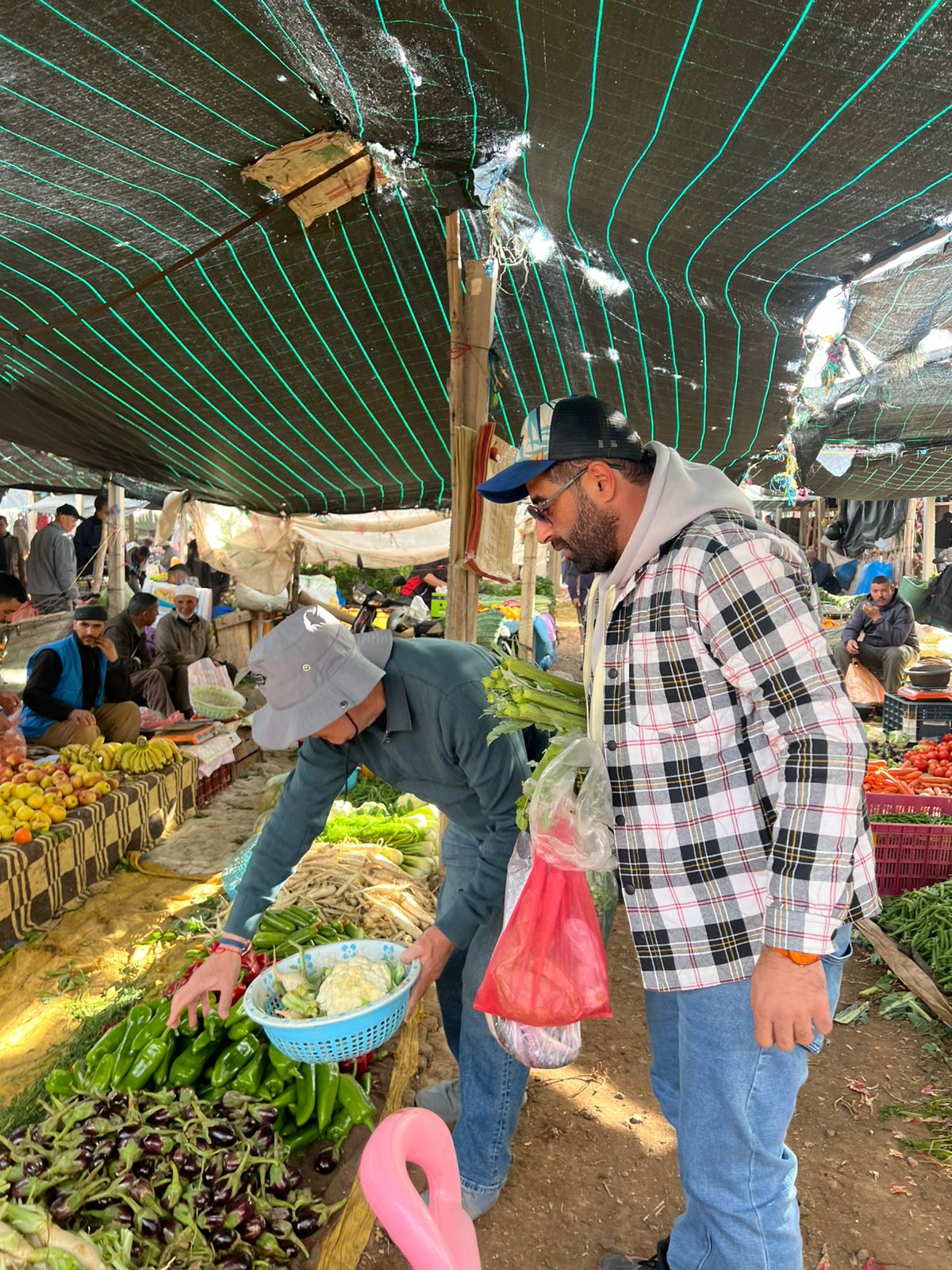
Vibrant spice and vegetable souk in a Moroccan medina — plant-based ingredients are everywhere.
Best Vegetarian Moroccan Dishes to Try Back
Morocco’s vegetarian repertoire is far richer than most travellers anticipate. These are the dishes you should seek out — and confidently ask for by name.
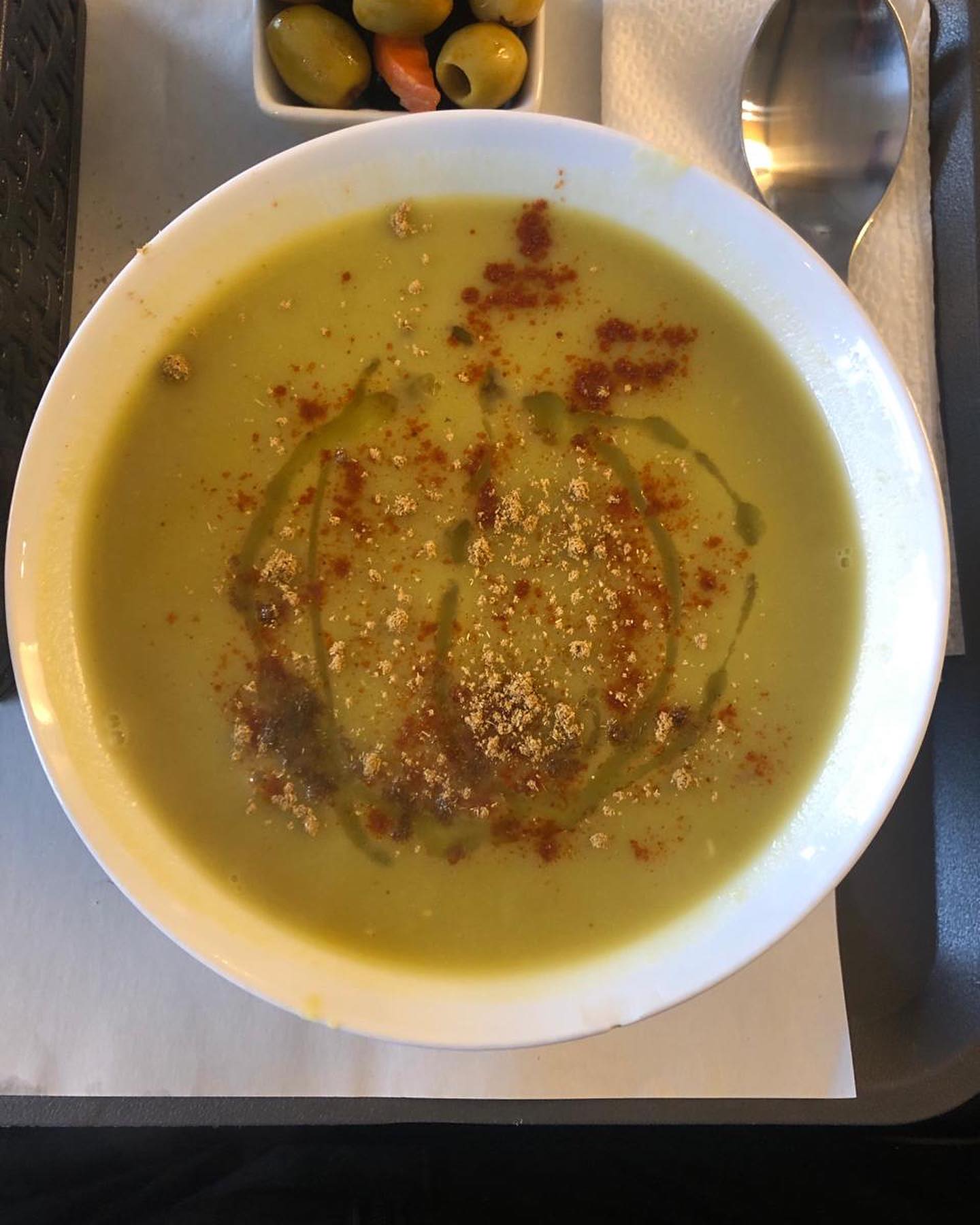
A thick, warming fava bean (or split pea) soup finished with olive oil, cumin, and paprika. A classic Moroccan street food, especially popular in northern cities. Always vegan when prepared traditionally.
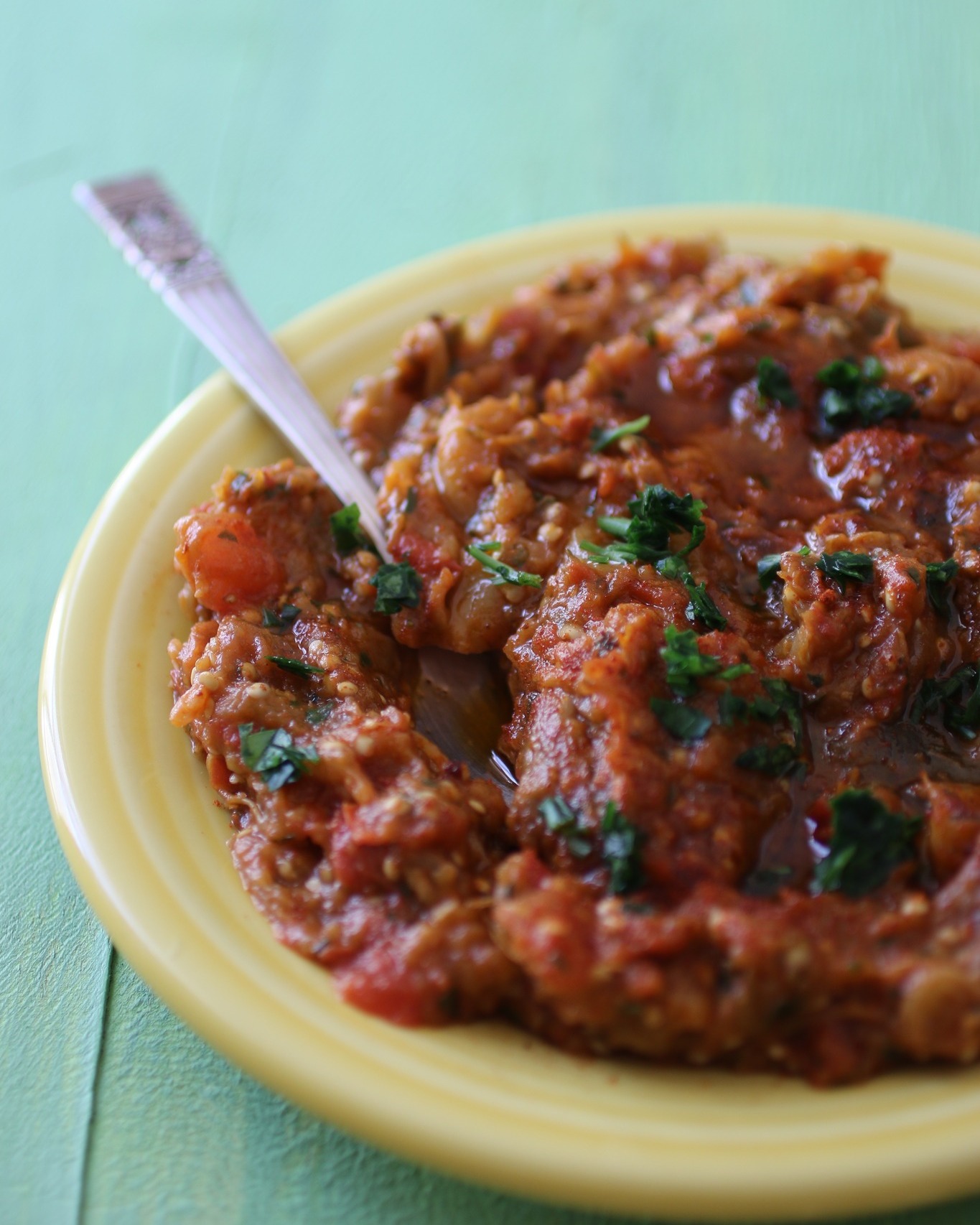
A smoky, oven-roasted aubergine and tomato dip cooked down with garlic, cumin, paprika, and coriander. Served warm or at room temperature, eaten with crusty khobz bread — one of the finest Moroccan starters.
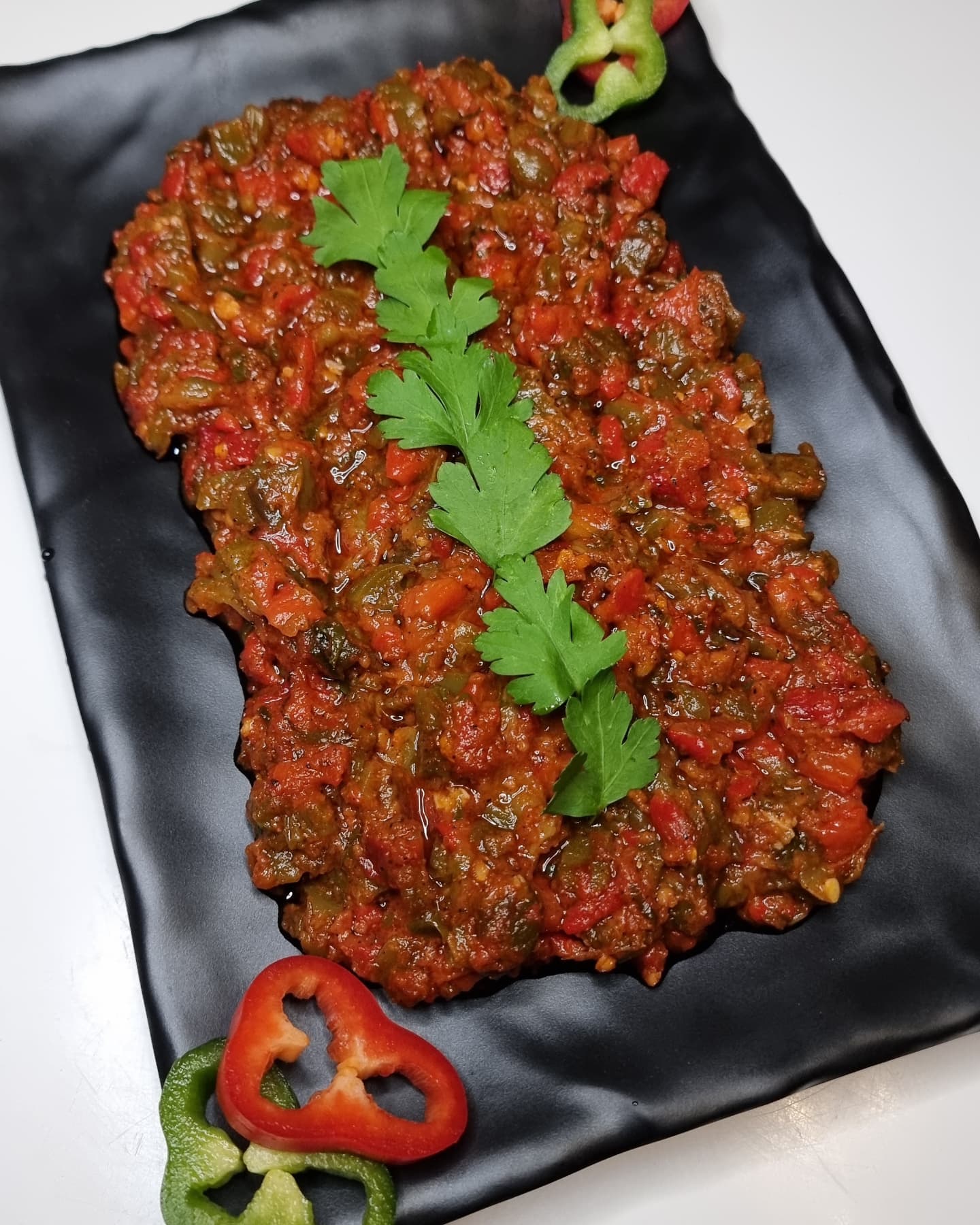
Similar to zaalouk but made with roasted green peppers and tomatoes. It has a sweeter, slightly charred flavour and is typically served alongside other cooked Moroccan salads as a starter spread.
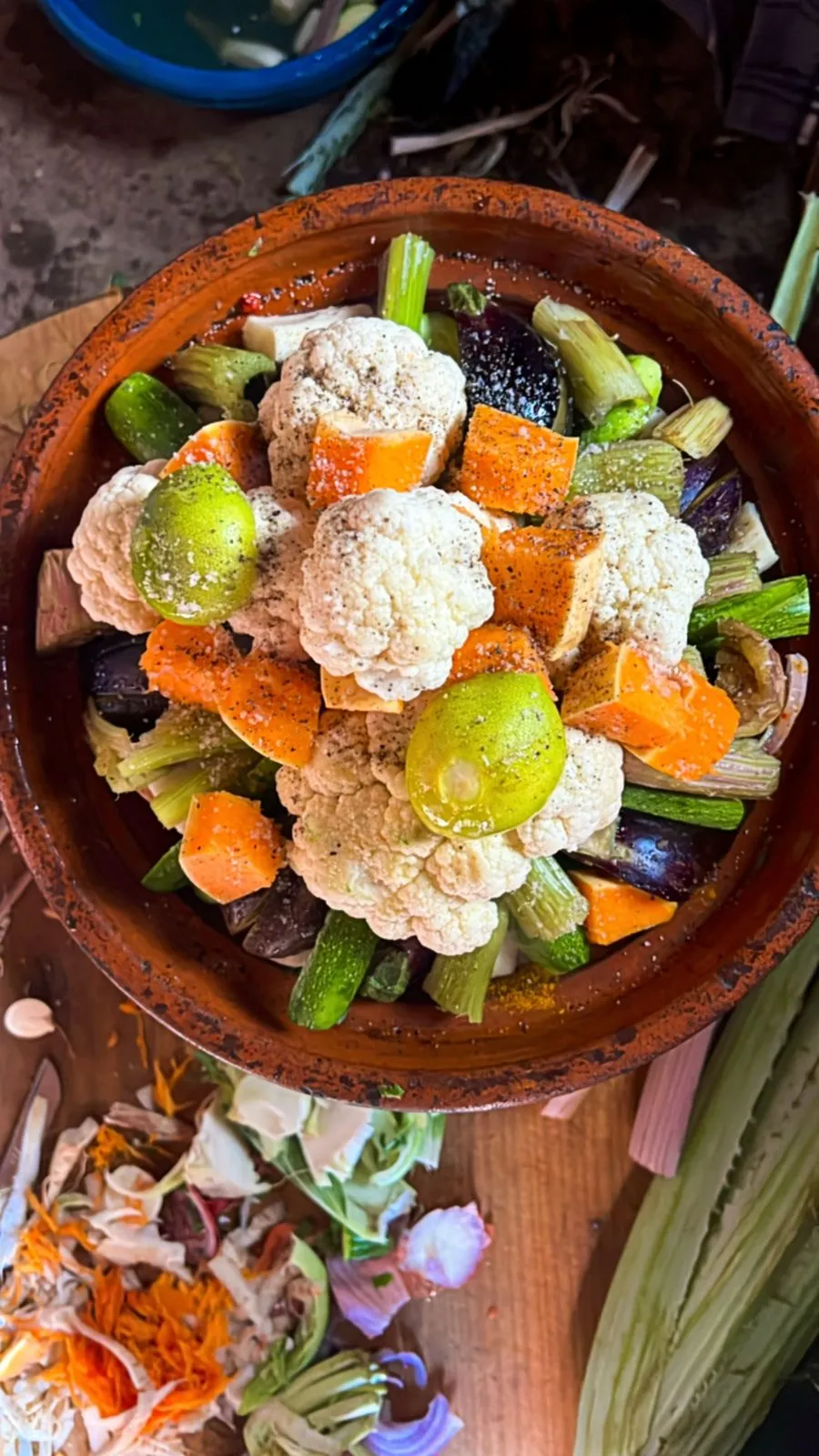
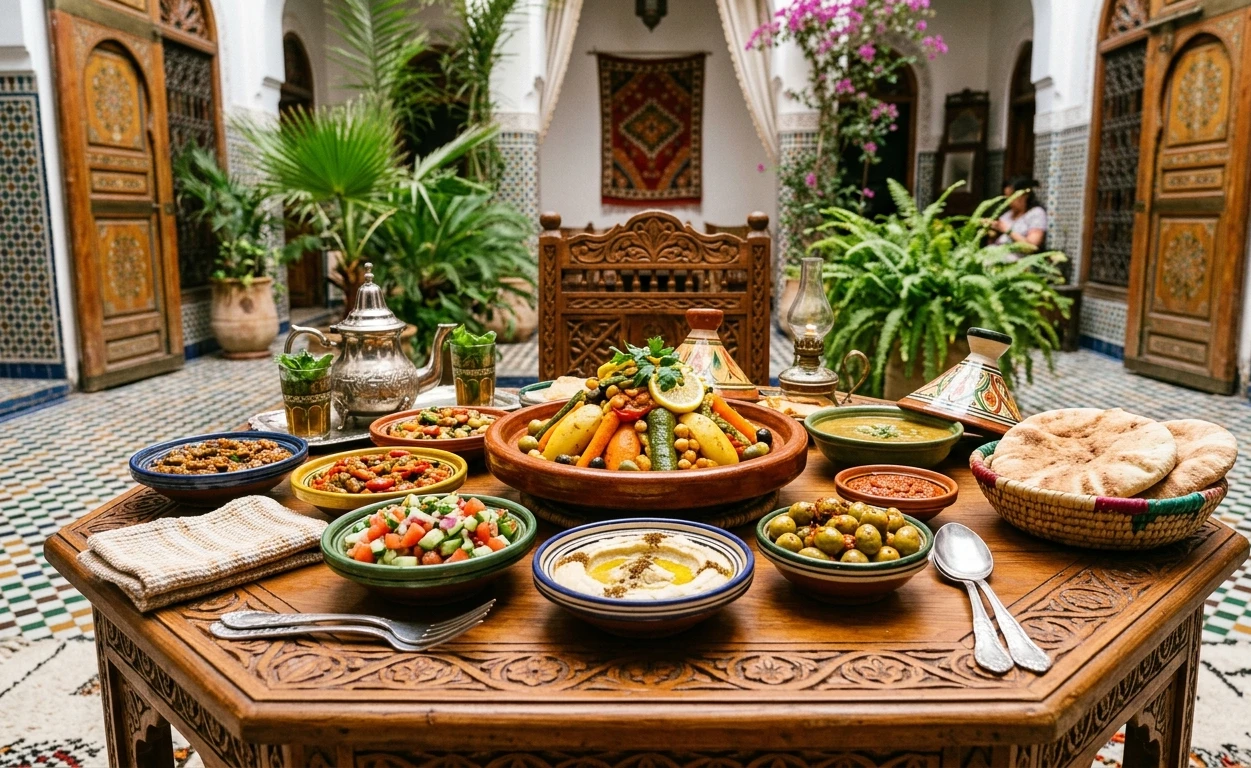
Slow-cooked carrots, courgettes, potatoes, turnips, chickpeas, olives and preserved lemon in a fragrant broth. The vegetable tagine is Morocco’s most requested meat-free dish — richly spiced and deeply satisfying.
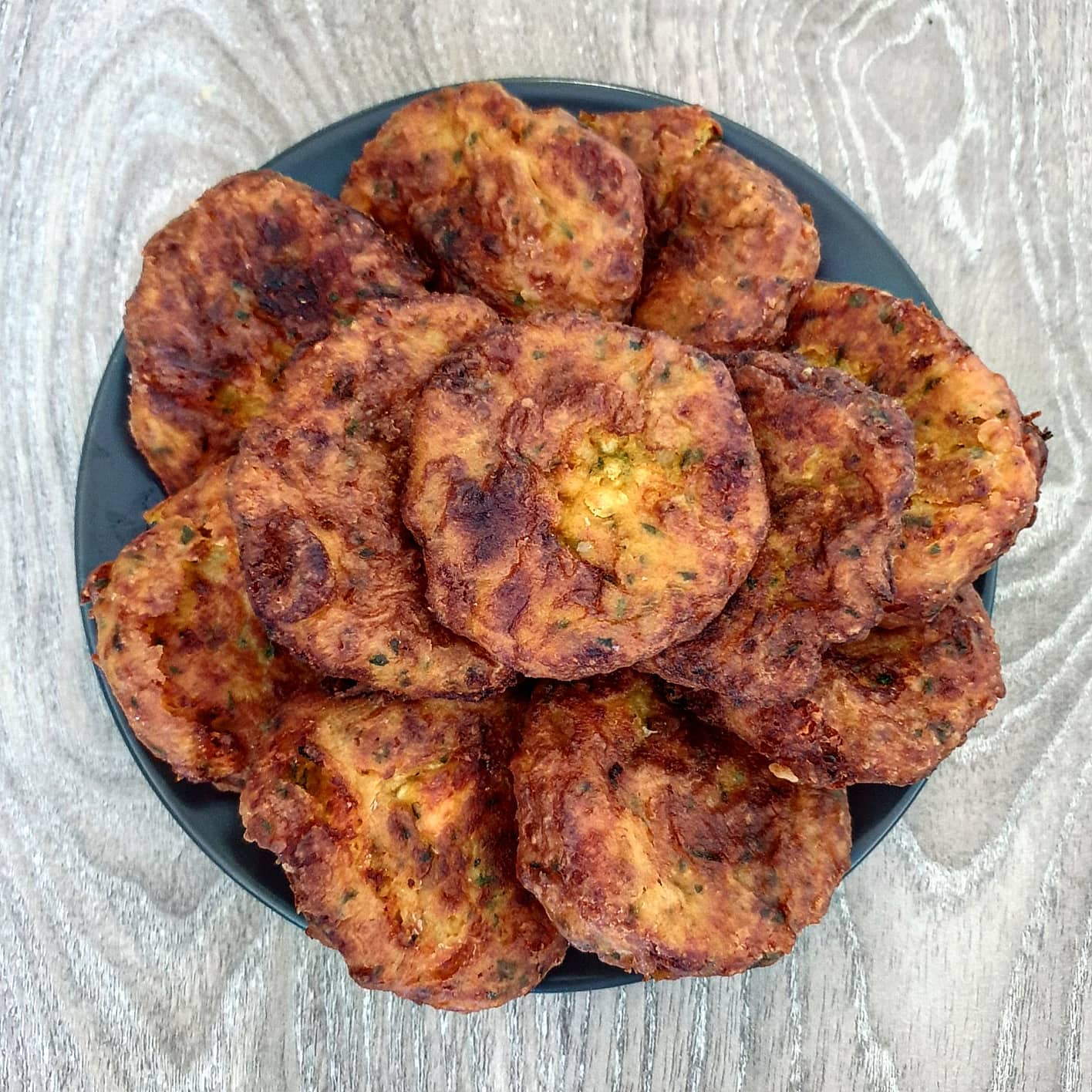
Crispy, spiced potato fritters sold at street stalls across Morocco — often stuffed into a bread roll with harissa sauce. One of the best street food options for vegetarians visiting Moroccan cities.
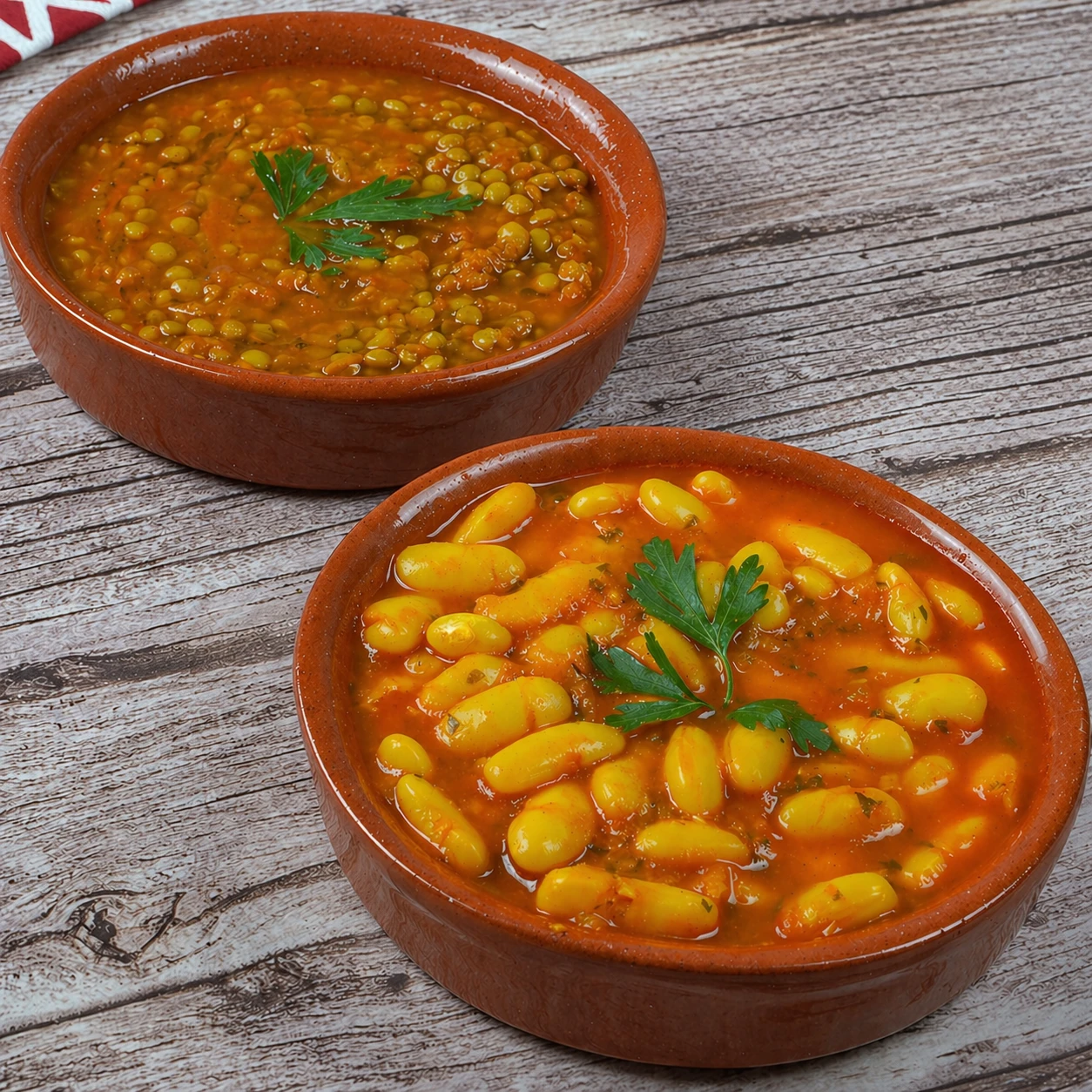
Loubia (white bean stew) and Addas (spiced red lentils) are Moroccan comfort food at its most honest. Simmered with tomatoes, cumin, and paprika, these are filling, affordable, and found in almost every neighbourhood restaurant.
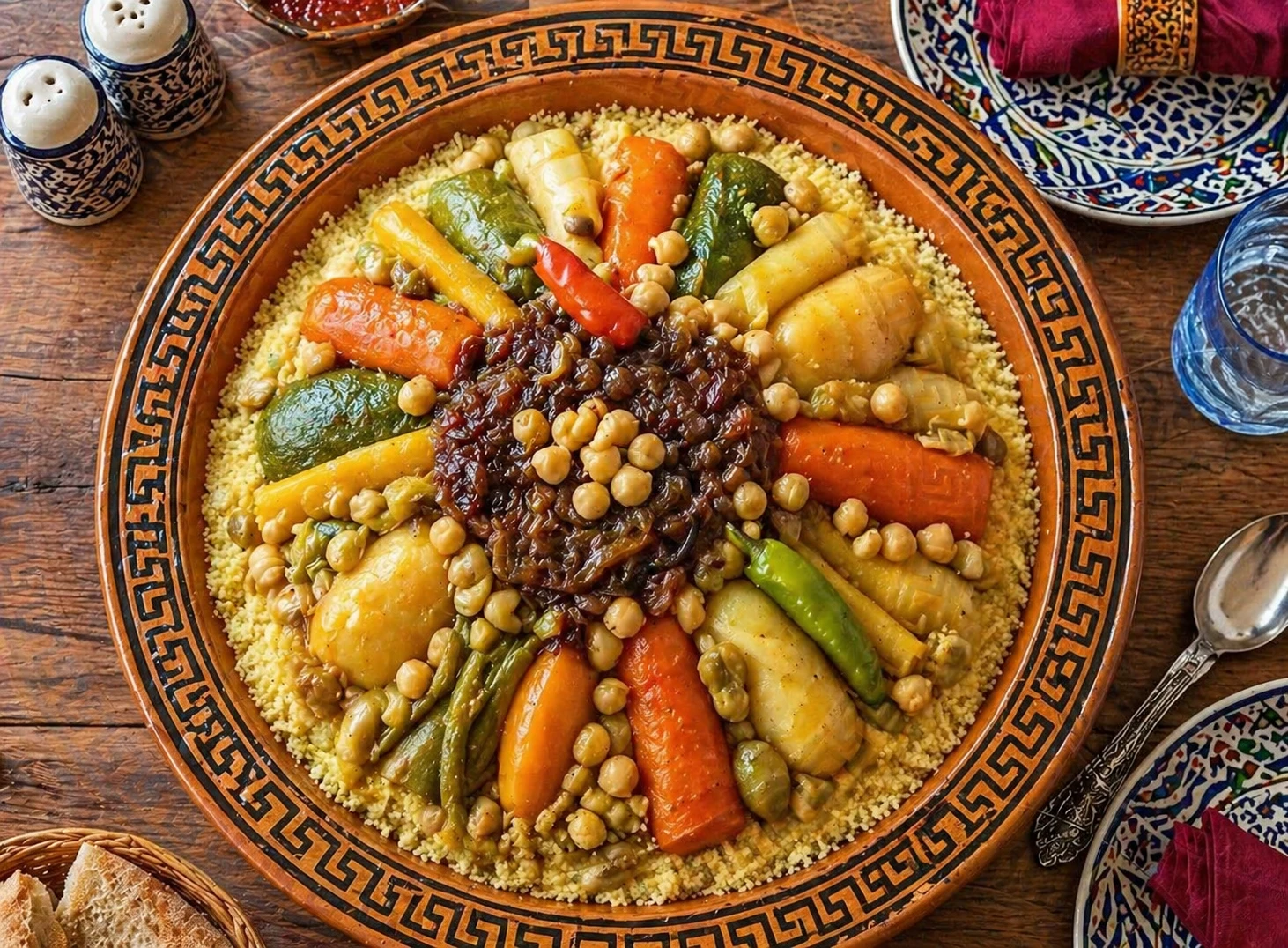
The iconic Friday dish of Morocco. Hand-rolled couscous steamed over a vegetable broth and topped with a colourful medley of seasonal vegetables. Ask specifically for couscous bi khodar (vegetable couscous) to ensure no meat is added.
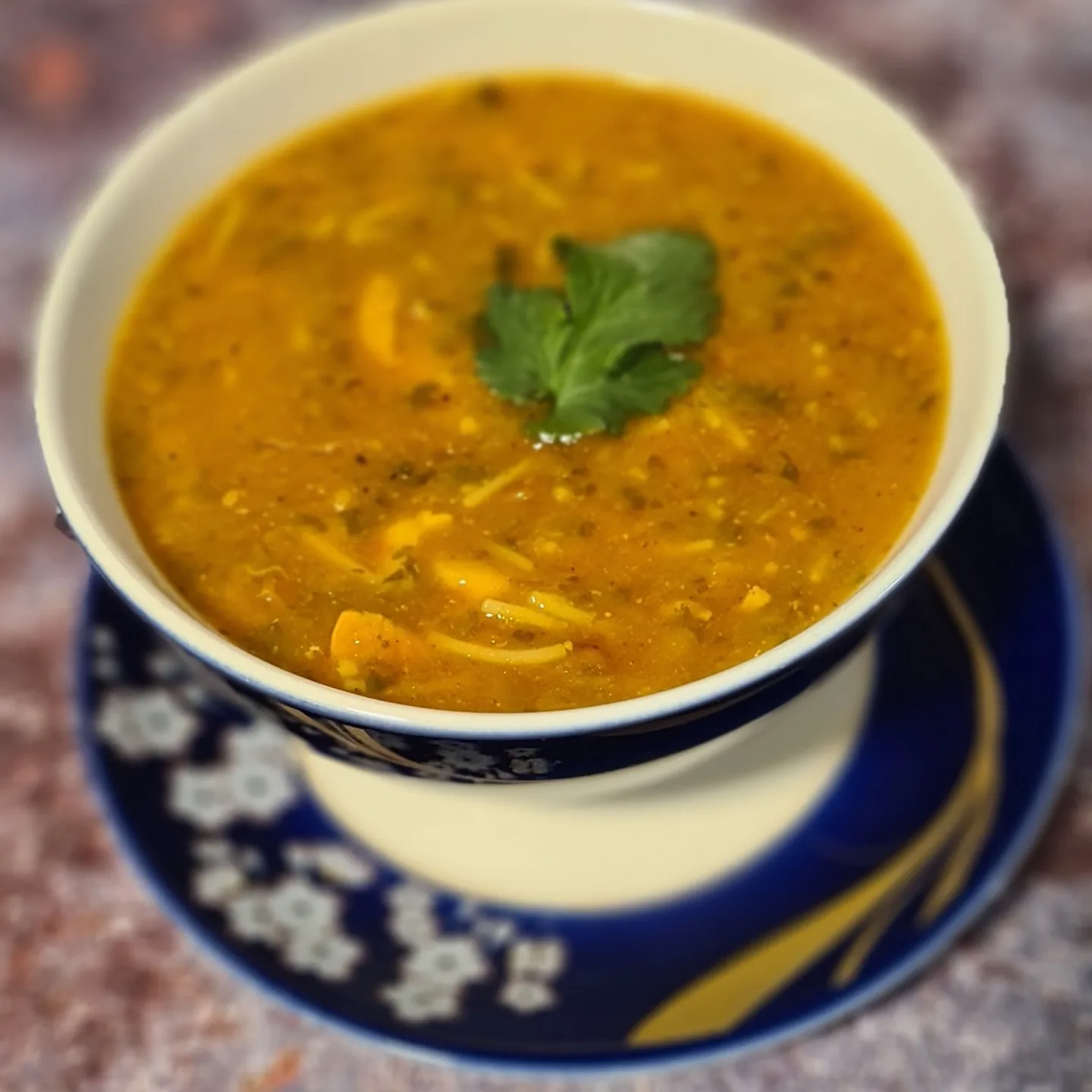
Harira is Morocco’s beloved tomato, lentil, and chickpea soup — traditionally including lamb. However, many restaurants and homes prepare a meat-free version that is equally rich and complex. Always specify bla lhem (without meat) when ordering.
How to Order Vegetarian Food in Morocco Back
Ordering vegetarian food in Morocco requires a little strategy, particularly in traditional restaurants where meat-free options may not be listed separately. Here is how to do it effectively:
- Be explicit about broths. Even dishes labelled as “vegetarian” may be cooked in chicken or lamb broth. Ask: “Is the broth made without meat?” — in Darija: Wash l-merqa bla lhem?
- Name your dishes. Instead of asking “Do you have vegetarian food?”, ask directly for bissara, zaalouk, or vegetable tagine by name. This removes ambiguity and shows you know what you want.
- Choose medina restaurants carefully. Tourist-facing riads and restaurants in medinas are generally very accommodating. Traditional neighbourhood restaurants may have fewer options but will often cook something fresh if you ask.
- Visit local markets. Souks and markets sell an extraordinary variety of fresh produce, olives, preserved lemons, dried legumes, and bread. Assembling your own picnic lunch is a genuine pleasure in Morocco.
- Use a licensed guide. A knowledgeable local guide can translate your dietary needs accurately, recommend the right restaurants, and help you navigate menus written in Arabic or French. This makes a significant difference to your experience.
Vegetarian Guide: Marrakech & Fes Back
Morocco’s two most visited medina cities have different vegetarian landscapes. Here is what to expect in each.
Other destinations that are particularly welcoming for vegetarians include Essaouira (a laid-back coastal town with a thriving café scene), Chefchaouen (the blue city, where the relaxed vibe and many vegetable-based tagines make it a favourite), and Agadir (resort-style dining with clear international labelling).
Vegan in Morocco 2026: What Has Changed? Back
Veganism in Morocco has grown from a niche curiosity to a recognised dietary preference. In 2026, the situation is meaningfully better than just a few years ago:
- Menu labelling has improved — many tourist restaurants in Marrakech, Chefchaouen, and Essaouira now mark vegan dishes with a leaf or “V” symbol.
- Plant-based milk is widely available in cities — oat milk and almond milk are offered at most specialty coffee shops in Marrakech and Casablanca.
- Argan oil products — a Moroccan signature — are universally vegan and sold everywhere. Stock up on cooking argan oil from cooperative shops for a genuinely Moroccan flavour at home.
- Smen and butter are still widely used in traditional cooking, so strict vegans should always ask whether butter has been added to couscous or pastries like msemmen.
The most reliably vegan dishes are the cooked salads, bissara, loubia, addas, zaalouk, and taktouka — all of which are made with olive oil as the primary fat and contain no animal products in their traditional form.
Practical Tips for Plant-Based Travellers Back
- Breakfast is almost always vegetarian. Moroccan breakfasts are a pleasure — smen (a type of aged butter), amlou (almond and argan dip), khobz bread, msemmen, beghrir (semolina pancakes), honey, olive oil, and mint tea. No meat, no stress.
- Bread is your friend. Moroccan khobz (round flatbread) is freshly baked, inexpensive, and vegan. Combined with zaalouk or loubia, it makes a complete and satisfying meal.
- Spice markets are treasure troves. Cumin, coriander, turmeric, ras el hanout — pick up Moroccan spice blends at any souk and recreate the flavours at home.
- Freshly squeezed orange juice is sold on every street corner. It is cheap, delicious, and made to order — one of Morocco’s great simple pleasures.
- Download HappyCow before you travel — it has a growing database of vegetarian and vegan-friendly restaurants across Morocco’s major cities.
Useful Phrases to Order Meat-Free in Morocco Back
Most Moroccans in tourist areas speak French and some English, but knowing a few words in Darija (Moroccan Arabic) is always appreciated and often more effective.
| What you need to say | French | Darija (Moroccan Arabic) |
|---|---|---|
| I am vegetarian | Je suis végétarien(ne) | Ana nabati / Ma kanakoulch lhem |
| Without meat | Sans viande | Bla lhem |
| Without chicken | Sans poulet | Bla djaj |
| Is the broth made with meat? | Le bouillon est avec viande? | Wash l-merqa fiha lhem? |
| No dairy, no eggs | Sans produits laitiers, sans œufs | Bla hlib, bla bid |
| Vegetable tagine, please | Tagine de légumes, s’il vous plaît | Tajin khodar, afak |
| Harira without meat | Harira sans viande | Harira bla lhem |
Frequently Asked Questions Back

Navigating dietary needs in a foreign country is always easier with a knowledgeable local by your side. Mouhssine is a certified guide authorised by the Moroccan Ministry of Tourism, with deep knowledge of the country’s food culture and the best spots for vegetarian and vegan travellers in Marrakech, Fes, and beyond. Contact him directly on WhatsApp for personalised advice, restaurant recommendations, or to plan your trip.
Chat on WhatsApp