Morocco Travel Requirements for US Citizens
Planning a trip to Morocco? You are in for an extraordinary experience. From the labyrinthine medinas of Fez and Marrakech to the vast dunes of the Sahara and the dramatic Atlantic coast, Morocco offers a depth of culture and landscape that few countries can match. The good news for American travelers is that the entry process is refreshingly simple. Understanding the Morocco travel requirements for US citizens before you leave home will help you focus entirely on the adventure ahead.
This guide covers everything you need to know: passport validity, visa policy, health requirements, customs rules, and the practical details that make the difference between a smooth arrival and an unnecessary headache at the border.
Passport Requirements ↑ Back to top
Your US passport is the single most important document for entering Morocco. Moroccan border authorities require that your passport remains valid for at least six months beyond your intended date of entry. If your passport expires within six months of your planned arrival, renew it before booking your trip.
You should also ensure you have at least two blank pages available for entry and exit stamps. Morocco stamps both on arrival and departure, so running short on space can create complications.
- Passport validity: minimum 6 months beyond arrival date
- Blank pages: at least 2 for immigration stamps
- Keep a digital and physical copy stored separately from the original
- US passport cards are not accepted for international air or sea travel to Morocco
Visa Policy for US Citizens ↑ Back to top
This is the part most Americans are happy to hear: US citizens do not need a visa to enter Morocco. The United States and Morocco have maintained a bilateral visa-exemption agreement for decades, and it remains fully in effect in 2026. You can enter Morocco as a tourist simply by presenting your valid US passport at the port of entry.
Upon arrival, you are automatically granted permission to stay for up to 90 days. This is more than enough time for most travelers, whether you are spending two weeks exploring the major cities of Morocco or embarking on a longer multi-region journey across the country’s diverse landscapes.
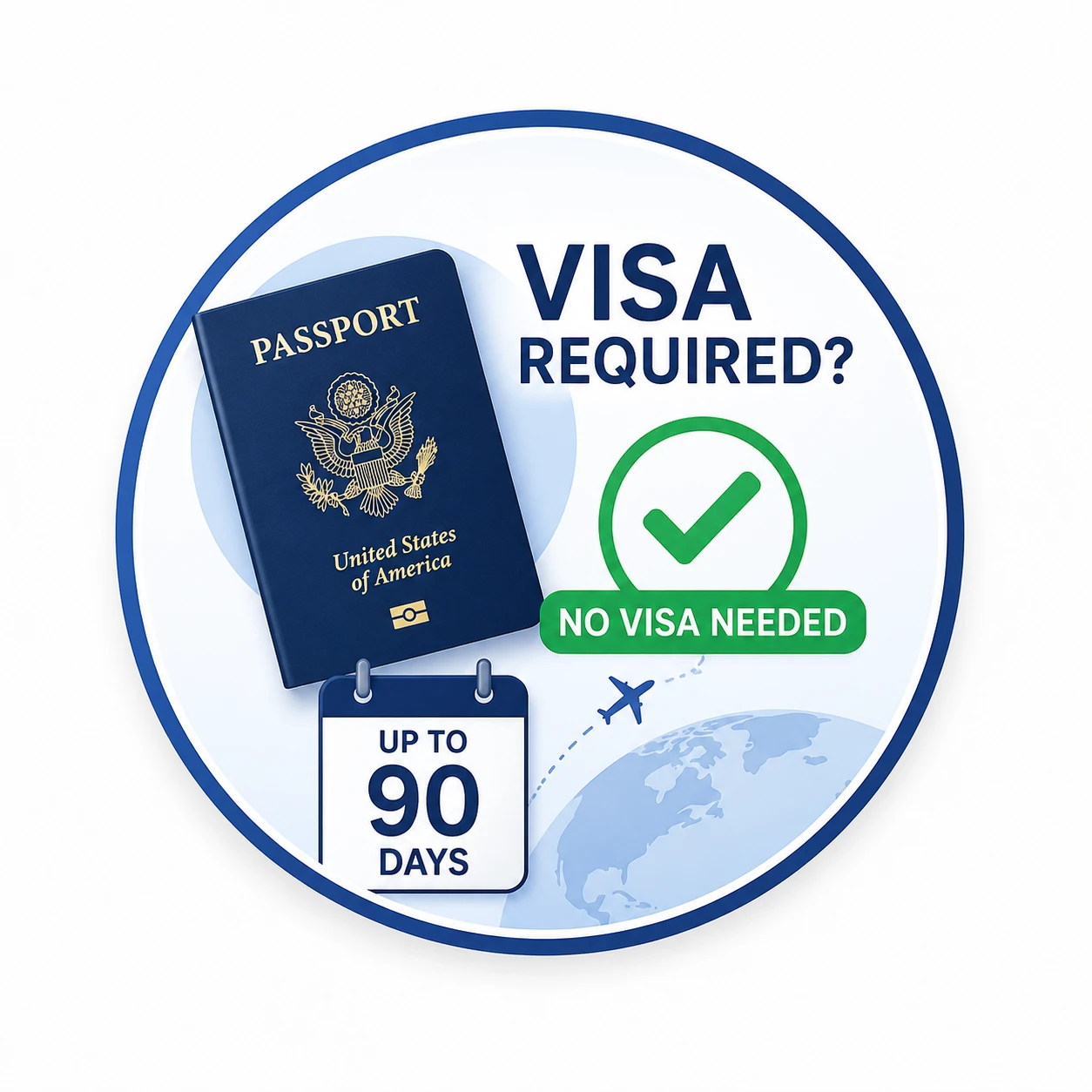
Visa Required?
No visa needed for US passport holders for stays up to 90 days.
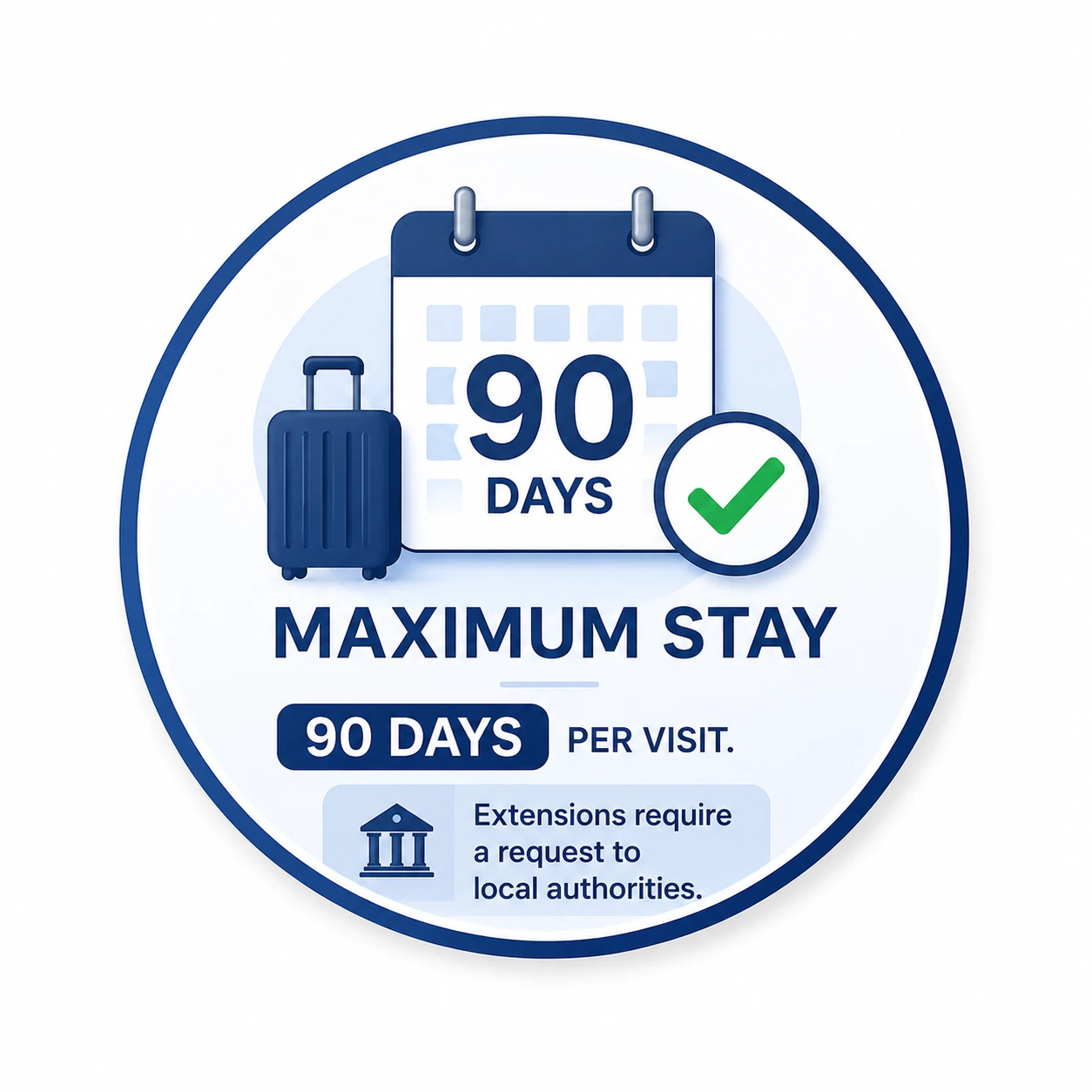
Maximum Stay
90 days per visit. Extensions require a request to local authorities.
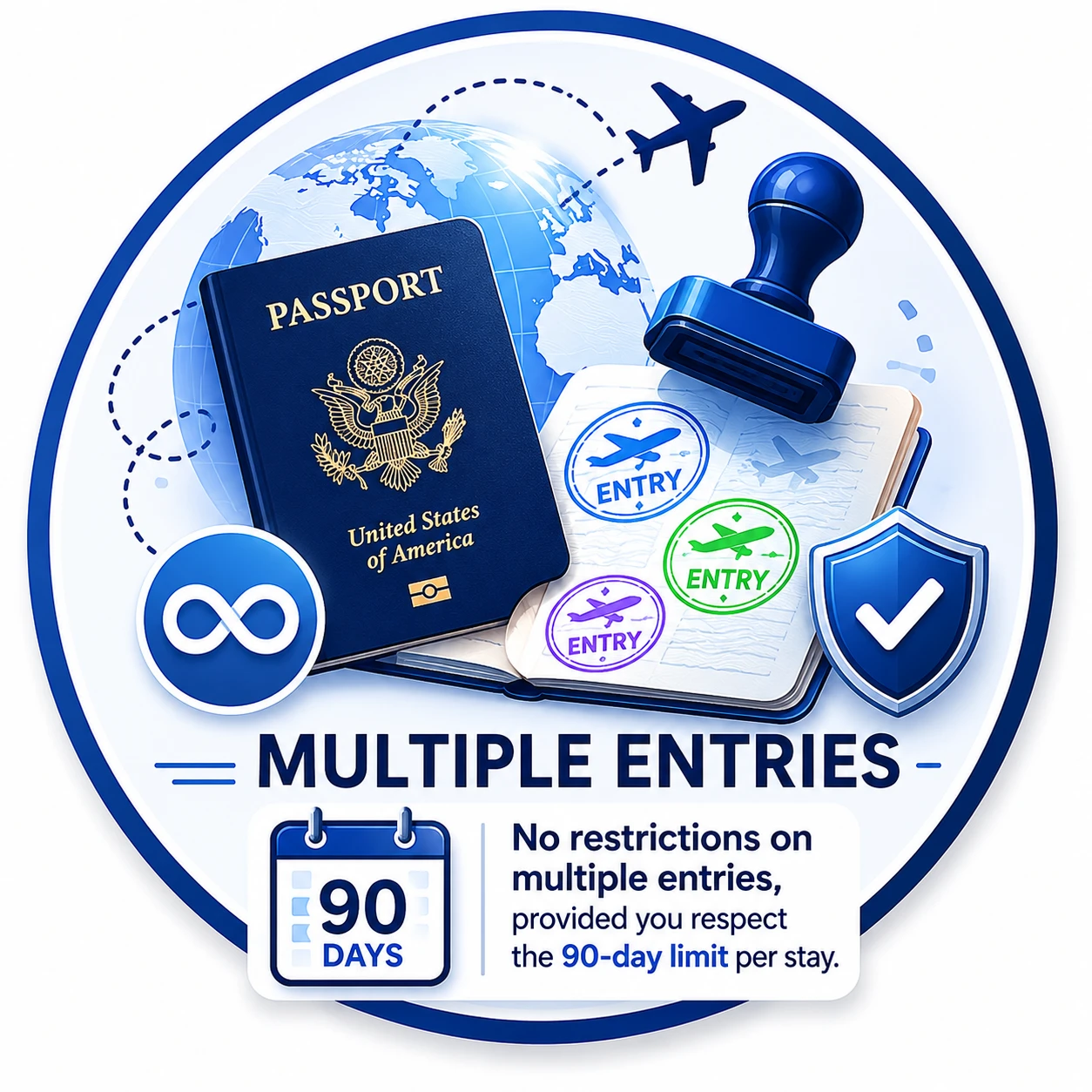
Multiple Entries
No restrictions on multiple entries, provided you respect the 90-day limit per stay.
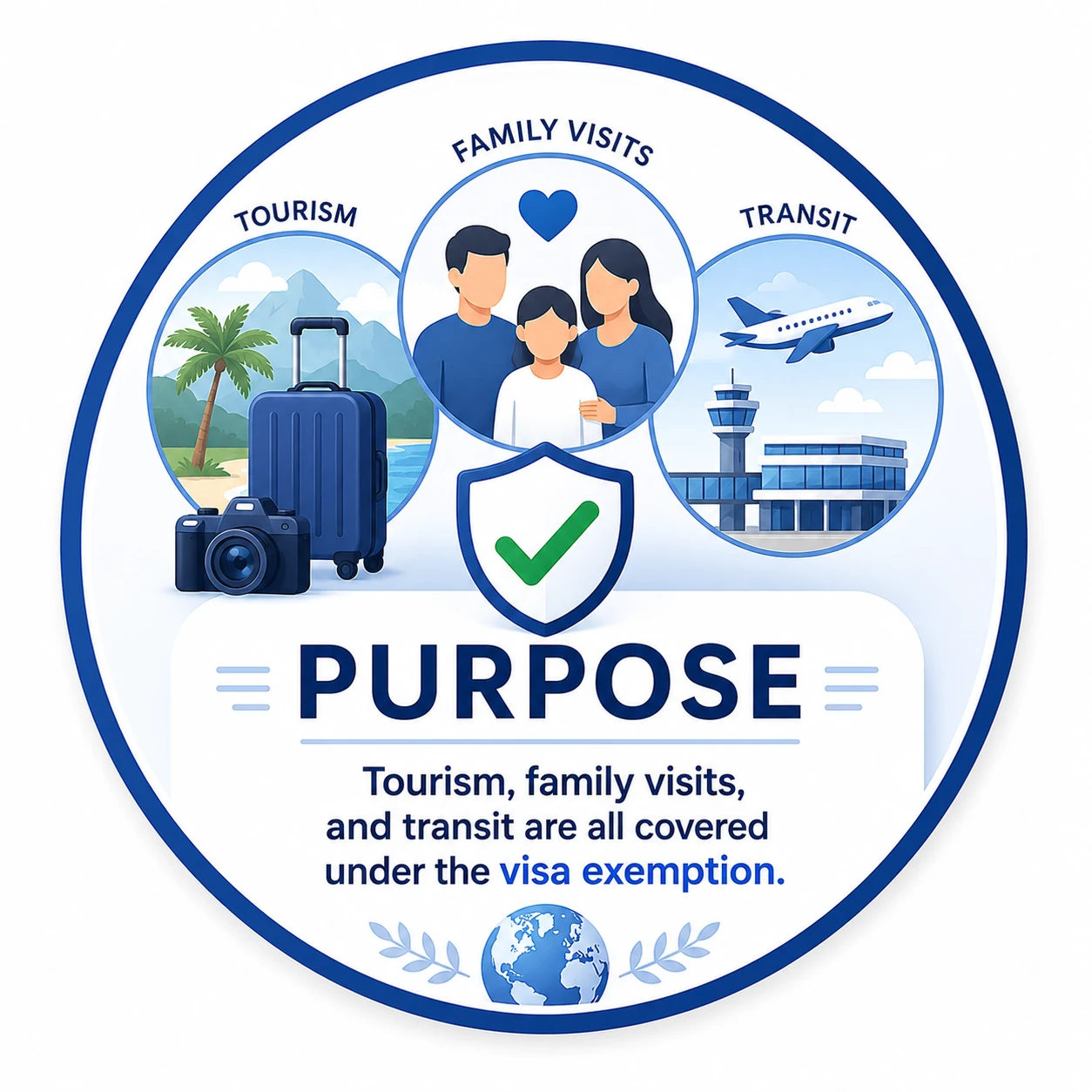
Purpose
Tourism, family visits, and transit are all covered under the visa exemption.
Entry Requirements at the Border ↑ Back to top
Arriving at Mohammed V International Airport in Casablanca, Marrakech Menara Airport, or any other Moroccan port of entry, the process is generally quick and orderly. Here is what to expect and what to have ready.
| Document / Requirement | Details | Required? |
|---|---|---|
| Valid US Passport | 6+ months validity, 2+ blank pages | ✅ Mandatory |
| Return or Onward Ticket | Proof you plan to leave within 90 days | ✅ Strongly recommended |
| Proof of Accommodation | Hotel booking, riad reservation, or host invitation | ✅ Strongly recommended |
| Proof of Sufficient Funds | Bank statements or credit card; no fixed minimum set | Occasionally requested |
| Visa | Not required for US citizens | ❌ Not needed |
| Arrival Card (Fiche de police) | Filled out on arrival or at accommodation check-in | ✅ Yes (usually handled by hotel) |
Moroccan immigration officers may ask to see a return ticket and proof of accommodation, particularly if you appear to be traveling without a clear itinerary. While these are not strictly mandatory documents under the visa exemption treaty, having them ready will ensure you move through passport control without delay.
When checking in at any hotel, riad, or guesthouse in Morocco, you will be asked to complete a fiche de police (police registration form). This is a standard administrative requirement and is handled routinely by all accommodation providers throughout the country.
Health & Vaccination Requirements ↑ Back to top
As of 2026, Morocco imposes no mandatory vaccination requirements for travelers arriving from the United States. There is no requirement to present a yellow fever certificate, vaccination card, or any health documentation at the border for most travelers.
Recommended Vaccinations
While nothing is compulsory, the US Centers for Disease Control and Prevention (CDC) and travel health professionals generally recommend being up to date on the following before visiting Morocco:
- Routine vaccinations: MMR, DTaP, influenza, COVID-19
- Hepatitis A: recommended for all travelers, especially those eating local food and water
- Hepatitis B: recommended for extended stays or travelers with potential medical exposure
- Typhoid: particularly relevant if you plan to eat street food or travel to rural areas
- Rabies: consider if you plan activities in remote areas with potential animal contact
Travel Health Insurance
Morocco has good medical facilities in major cities, but healthcare costs can be significant for uninsured foreigners. Comprehensive travel health insurance that includes emergency evacuation coverage is strongly advised for all American visitors. Check whether your existing US health insurance provides international coverage before purchasing a separate policy.
Customs Rules & Currency ↑ Back to top
Understanding Morocco’s customs and currency regulations will save you from complications at the border and during your stay.
Currency & Money
Morocco’s official currency is the Moroccan Dirham (MAD). The dirham is a controlled currency, meaning you cannot import or export it in significant quantities. You are permitted to bring in up to 1,000 MAD and take out up to the same amount upon departure. Beyond that, any excess dirhams should be converted back to foreign currency before leaving, using official receipts from authorized exchange bureaux.
US dollars and euros are widely accepted for exchange at banks, official bureaux de change, and major hotels. ATMs are readily available in cities and tourist areas and generally offer competitive rates.
Customs Allowances
- Cash over USD 10,000 (or equivalent): must be declared upon entry
- Alcohol: up to 1 litre of spirits and 1 litre of wine for personal use
- Tobacco: up to 200 cigarettes or 50 cigars or 250g of tobacco
- Gifts and personal items: reasonable quantities for personal use permitted
- Prohibited items: narcotics, drones without prior permit, certain electronic equipment
Safety Considerations for Americans ↑ Back to top
Morocco is widely regarded as one of the most welcoming and accessible destinations in Africa and the Arab world for Western travelers. The question is Morocco safe for Americans is one we hear often, and the straightforward answer is yes, with the same awareness you would bring to any international travel.
The country has made significant investments in tourism security over the years. Tourist police (brigade touristique) are present in major medinas, and the overall crime rate in tourist zones is low. That said, petty theft, scams targeting tourists, and persistent touts in busy souks are realities to be prepared for.
For a broader perspective on safety across different traveler profiles, our detailed guide on whether Morocco is safe to visit for tourists covers specific advice for solo travelers, female travelers, and families.
US Embassy in Morocco
The US Embassy is located in Rabat, with a consulate in Casablanca. American citizens are encouraged to register their trip with the Smart Traveler Enrollment Program (STEP) at travel.state.gov before departure. This allows the embassy to contact you in case of emergencies and ensures you receive updated travel advisories.
- US Embassy Rabat: +212 537-637-200
- US Consulate Casablanca: +212 522-642-099
- Emergency after hours: +212 537-637-200
- STEP registration: travel.state.gov/step
Where Is Morocco & Getting There ↑ Back to top
If you have ever wondered where exactly Morocco is located, it sits at the northwestern tip of Africa, separated from Spain by just 14 kilometers across the Strait of Gibraltar. This unique position at the crossroads of Europe, Africa, and the Arab world gives Morocco its remarkable cultural richness and makes it one of the most geographically varied countries on the continent.
From the fertile Atlantic coast to the High Atlas mountain range and the dramatic desert expanse of the Sahara, the physical features of Morocco make it a destination where a single trip can feel like several countries rolled into one.
Main Entry Points from the US
There are no direct flights from the United States to Morocco operated by US carriers, though Royal Air Maroc operates seasonal direct services between New York JFK and Casablanca (Mohammed V International Airport). Most American travelers connect through European hubs such as Paris CDG, Madrid MAD, London LHR, or Amsterdam AMS. Flying time from the US East Coast, including a connection, is typically 10 to 14 hours.
- Mohammed V International Airport, Casablanca (CMN): main international hub
- Marrakech Menara Airport (RAK): popular gateway for southern Morocco
- Fez-Saïss Airport (FEZ): useful for travelers focusing on the north
- Agadir Al Massira Airport (AGA): convenient for the Atlantic coast and Sahara region
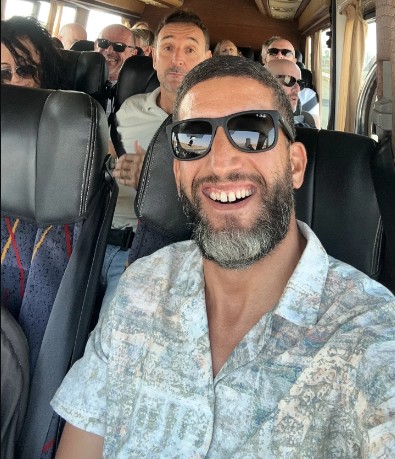
Mouhssine Eliouj
Official License No. 2898 — Ministère du Tourisme, Maroc
Navigating Morocco’s entry requirements is one thing; experiencing the country at its finest is another. Mouhssine is a Ministry of Tourism-certified guide with deep expertise in Moroccan history, culture, and off-the-beaten-path experiences. Whether you need help planning your itinerary, arranging transfers, or simply want a knowledgeable companion for your journey, he is available to assist American travelers directly via WhatsApp.
Chat on WhatsAppFrequently Asked Questions ↑ Back to top
No. American citizens do not need a visa to enter Morocco. Under the bilateral visa-exemption agreement between the United States and Morocco, US passport holders are granted entry for up to 90 days without any prior visa application.
US citizens can stay in Morocco for up to 90 days per visit under the visa exemption. If you wish to stay longer, you must apply for a residence permit before your initial 90-day period expires.
The primary document required is a valid US passport with at least 6 months of validity remaining beyond the date of entry and at least two blank pages. A return or onward ticket and proof of accommodation are also strongly recommended, as border officers may request them.
As of 2026, Morocco has no mandatory vaccination requirements for travelers arriving from the United States. No vaccine certificates are required at the border. However, the CDC recommends being up to date on routine vaccines and considering Hepatitis A and Typhoid vaccinations before travel.
Yes. US dollars can be brought into Morocco freely, though amounts over USD 10,000 (or equivalent) must be declared at customs. Dollars can be exchanged at banks, official bureaux de change, and major hotels. The local currency is the Moroccan Dirham (MAD), which cannot be imported or exported in significant amounts.
Morocco is generally considered safe for American tourists. The country has a well-developed tourism infrastructure and a low rate of violent crime in tourist areas. As with any destination, standard travel precautions apply: be aware of petty theft, avoid displaying valuables openly, and research your specific destinations in advance.