Morocco In Context · 2026
Is Morocco a Third World Country?
A Straight, Honest Answer
Step off a plane in Casablanca and you are greeted by a glass-and-steel terminal that could sit comfortably in any major European capital. Board the Al Boraq train and you are doing 320 km/h across rolling plains — on the only high-speed rail line in Africa. Then lose yourself in a 1,000-year-old medina a couple of hours later, and the question forms almost on its own: Is Morocco a third world country? The answer is worth unpacking carefully, because it says as much about the label as it does about Morocco itself.
Where the Label Comes From — and Why It No Longer Fits
The phrase “Third World” was invented by French demographer Alfred Sauvy in 1952, during the Cold War. It described countries that refused to align with either the US-led Western bloc (the “First World”) or the Soviet-led Eastern bloc (the “Second World”). Morocco, as a non-aligned kingdom, technically belonged to that third group — as did most of Africa, Asia, and Latin America.
That geopolitical context collapsed with the Soviet Union in 1991. Since then, “third world” has drifted into everyday speech as shorthand for poor, unstable, or underdeveloped — which is both inaccurate and unfair when applied without context. The World Bank, United Nations, and IMF long ago replaced these Cold War labels with income-based classifications: low-income, lower-middle-income, upper-middle-income, and high-income. These tell you far more about a country’s actual situation, and Morocco’s place in that framework is clear.
Where Morocco Actually Stands: The Numbers
The World Bank officially classifies Morocco as a lower-middle-income country, with a Gross National Income (GNI) per capita of approximately $3,800 USD (2023 Atlas method data).World Bank ↗ That places it well above the low-income threshold and closer in profile to countries like Egypt, Vietnam, or Bolivia than to the sub-Saharan African nations most people picture when they hear “third world.”
Morocco consistently ranks among Africa’s five largest economies by nominal GDP, alongside Nigeria, Egypt, South Africa, and Ethiopia.IMF World Economic Outlook ↗ Its economy is genuinely diversified: phosphate exports (Morocco controls an estimated 70% of global phosphate reserves),USGS ↗ tourism, automotive manufacturing, renewable energy, agriculture, and financial services all play meaningful roles.
Geography and Its Role in Morocco’s Development
You cannot fully understand Morocco’s economic story without looking at a map. Morocco is positioned at the northwestern corner of Africa, separated from Spain by just 14 kilometres of water at the Strait of Gibraltar. That proximity to Europe is not a coincidence of history — it has been a driving force in commerce, diplomacy, and cultural exchange for centuries, and it remains central to Morocco’s economic model today.
The country’s physical landscape is just as consequential. The Atlas Mountain range creates climatic diversity across the country, supporting wheat, citrus, and olive production in the lowlands while offering ski resorts and trekking at altitude. The Sahara Desert in the south draws hundreds of thousands of tourists each year. A 3,500-kilometre Atlantic and Mediterranean coastline sustains one of Africa’s most active fishing industries. These physical assets give Morocco a degree of natural resilience that purely industrial economies simply do not have.
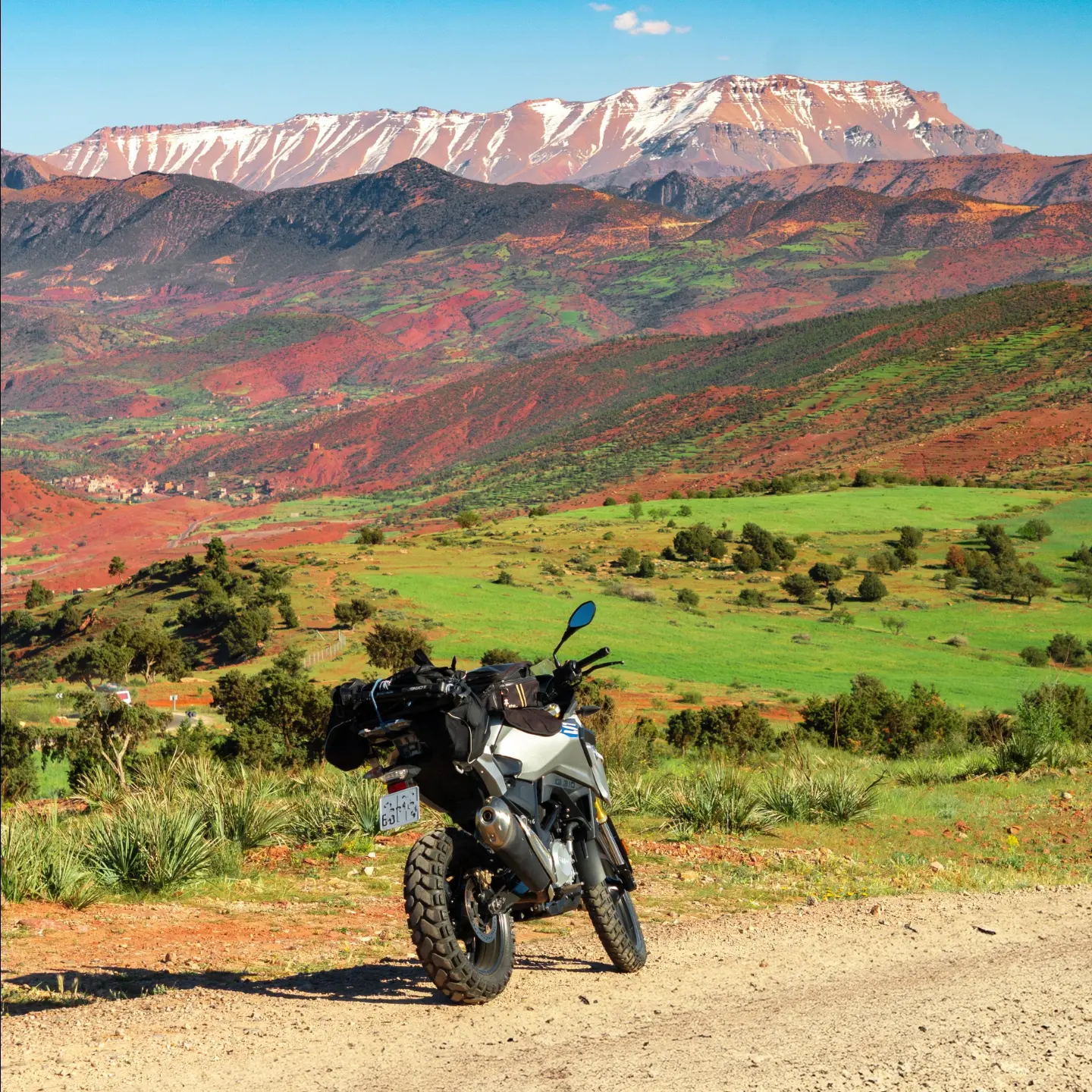
The High Atlas Mountains create the ecological and climatic diversity that underpins Morocco’s agricultural exports and adventure tourism sector.
What Morocco Has Built: A Record Worth Knowing
Infrastructure That Competes Globally
In 2018, Morocco opened Africa’s first high-speed rail line, the Al Boraq service, connecting Casablanca and Tangier at speeds of up to 320 km/h — a project developed in partnership with SNCF (France’s national rail operator) and financed partly by the French Development Agency.ONCF ↗ Tanger Med port has grown into the largest container port in Africa and across the Mediterranean, processing over 9 million TEUs annually and connecting Morocco to more than 180 world ports.Tanger Med ↗
A Renewable Energy Transition That Turns Heads
The Noor Ouarzazate Solar Complex is one of the world’s largest concentrated solar power facilities, with an installed capacity of over 580 MW.IRENA ↗ Morocco’s national plan targets 52% of electricity from renewable sources by 2030.Ministry of Energy, Morocco ↗ That ambition outpaces several wealthier European nations and has made Morocco a reference point for climate-focused investment across the African continent.
Manufacturing That Attracts Multinationals
Renault, Stellantis, Boeing suppliers, and Airbus component makers have all established manufacturing bases in Morocco, drawn by its logistics position, free trade agreements, and improving labour force. The country’s automotive sector alone generated over $9 billion in export revenue in 2023, making it Morocco’s single largest export category.AMICA Morocco ↗
Tourism That Speaks for Itself
Morocco welcomed over 14.5 million international tourists in 2023, generating tourism revenues exceeding $9.7 billion — both record figures at the time.ONMT ↗ With nine UNESCO World Heritage Sites, Morocco draws visitors who return again and again. If you are thinking about making the trip, a good starting point is figuring out the best time to visit Morocco — the climate varies significantly by region and season.
✦ Where Morocco Leads
- Political stability and institutional continuity
- Africa’s largest container port (Tanger Med)
- Only high-speed rail network in Africa
- Top-tier renewable energy infrastructure
- Expanding automotive and aerospace exports
- $9.7 billion annual tourism receipts
- ~70 % of global phosphate reserves
◆ Where Work Remains
- Persistent rural-urban income gap
- Youth unemployment near 26 %
- Growing water scarcity and drought cycles
- Large informal sector limiting tax revenue
- Female labour participation below potential
- Uneven healthcare access outside major cities
The Challenges That Remain — Honestly Stated
None of the progress above erases genuine structural difficulties. Morocco’s Human Development Index (HDI) score of 0.698 (2022 data) places it in the medium human development tier — ranked 123rd out of 193 countries.UNDP HDR ↗ That is a creditable position for an African economy, but it means there is still meaningful distance between Morocco and upper-middle-income peers in Southeast Asia or Latin America.
Regional inequality is one of the most visible tensions. Spend a week in central Casablanca or the new quarters of Rabat and you would not feel out of place in Lisbon or Valencia. Drive into the Rif Mountains or parts of the deep south and the gap in services, road quality, and school infrastructure becomes apparent. The government’s New Development Model, adopted in 2021 and scheduled through 2035, directly addresses these imbalances with targeted investment, but economic geography does not change overnight.CSMD Morocco ↗
Youth unemployment, running at around 26% nationally among those aged 15–24,HCP Morocco ↗ is perhaps the most pressing social challenge. A fast-growing young population needs an economy that can absorb graduates at scale — and while the manufacturing and services sectors are expanding, the match between university output and market demand remains imperfect.
A Note for Anyone Planning to Visit
The contrast you read about is real — and most travellers find it fascinating rather than off-putting. Marrakesh’s five-star riads, Casablanca’s buzzing restaurant scene, and the rural Atlas villages can all be experienced within days of each other. Morocco’s complexity is precisely what makes it one of the world’s most rewarding travel destinations. Understanding the country’s context makes for a richer trip than arriving with assumptions.
Is Morocco Safe for Tourists?
Closely connected to questions about development is the question of safety — and here Morocco has a genuinely strong record. The US State Department, UK Foreign Office, and most European travel advisories rate Morocco at their lowest risk level for general travel, with standard precautions advised rather than warnings.US State Dept ↗
Tourist police are present in significant numbers in Marrakesh, Fes, Tangier, and other high-traffic areas. Violent crime directed at tourists is rare by any comparative measure. The country’s long relationship with international tourism — which predates independence — has created a cultural and logistical infrastructure built around welcoming visitors. For a comprehensive, up-to-date guide, read our dedicated page on Is Morocco Safe to Visit for Tourists.
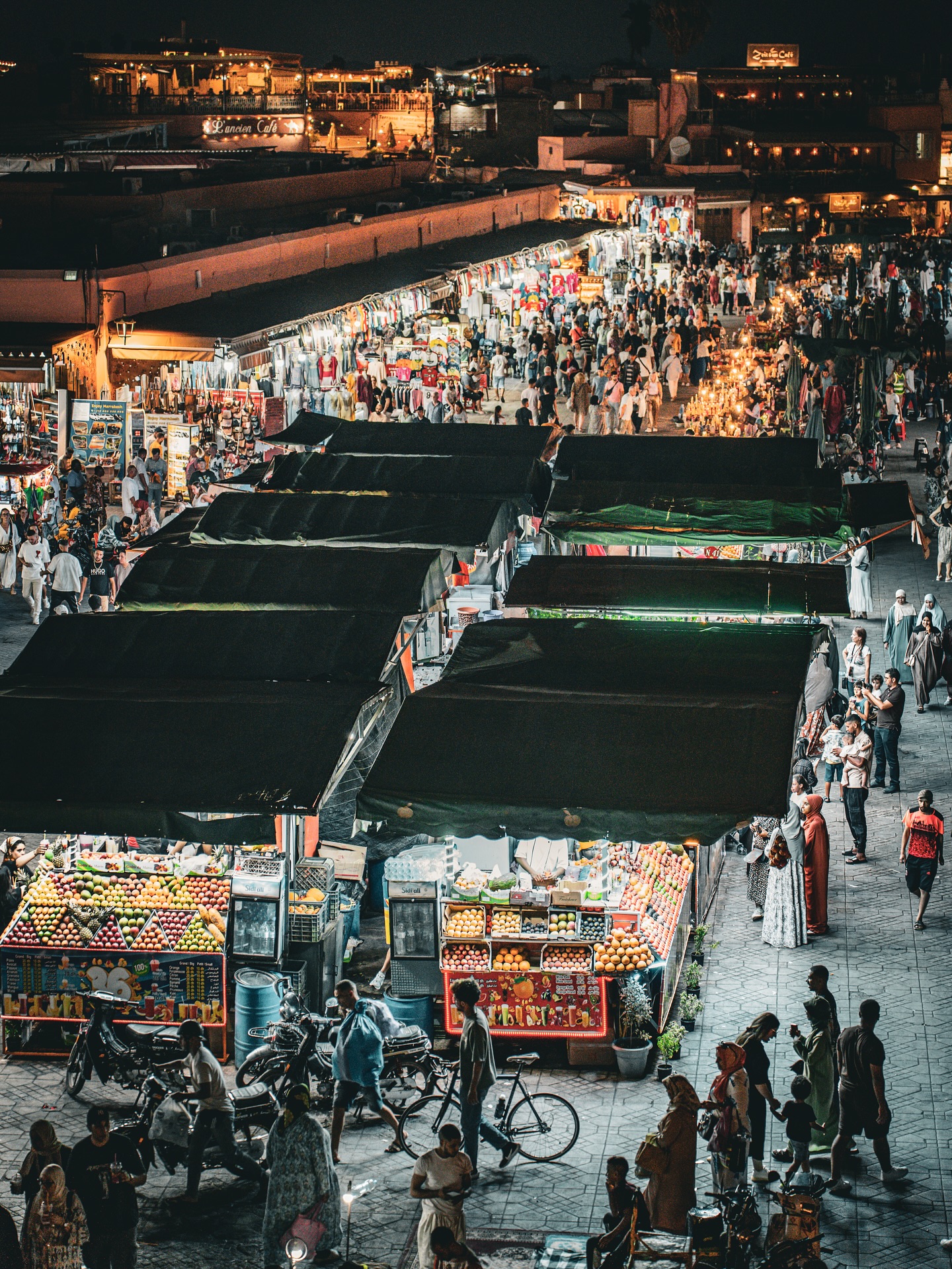
Jemaa el-Fna square in Marrakesh — listed as UNESCO Intangible Cultural Heritage since 2001 — draws millions of visitors each year in a setting that is lively, bustling, and overwhelmingly safe.
The Dirham and What It Tells You About Morocco’s Economy
A country’s currency policy is a quiet but telling indicator of institutional maturity. The Moroccan Dirham (MAD) is managed by Bank Al-Maghrib under a widened exchange rate band introduced in 2018, replacing the previous strict peg to a euro-dollar basket.Bank Al-Maghrib ↗ This deliberate, staged move toward greater flexibility — rather than a forced devaluation — signals a central bank with genuine reserves, credible governance, and confidence in its macroeconomic fundamentals.
For travellers, the practical picture is straightforward: ATMs are widely available in all cities and most tourist towns, card acceptance has grown rapidly, and exchange rates at banks and authorised bureaux are transparent and fair. Everything you need to know about exchange, fees, and local payment customs is covered in our guide on what currency Morocco uses.
Putting It All Together: What Morocco Actually Is
If someone uses “third world country” to mean poor, unstable, or stuck, then no — Morocco does not fit that picture. If they are using the strict Cold War definition of non-alignment, then technically the label once applied — but it has been historically obsolete for 35 years and tells you nothing useful about the Morocco of 2026.
What Morocco actually is, by the best available evidence: a lower-middle-income, rapidly developing country that leads Africa in port logistics, high-speed rail, solar energy, and tourism — while still carrying real challenges in rural access, youth employment, and the distribution of its growing wealth. The World Bank and IMF see it as one of the continent’s most stable and investable economies. Millions of tourists who visit each year experience a country with world-class hospitality, layered history, and infrastructure that routinely surprises those arriving with outdated assumptions.
Morocco is not a finished story. It is a country in motion — and by every credible metric, that motion has a clear direction.
Questions People Often Ask
Is Morocco a developing country in 2026?
Yes, Morocco is classified by the World Bank as a lower-middle-income developing country. That said, it is one of Africa’s most advanced and stable economies, with a diversified GDP, modern infrastructure, and a long-term development plan running through 2035. The “developing” label describes where Morocco is on a trajectory — not a ceiling.
How does Morocco compare to other African countries economically?
Morocco is consistently ranked among Africa’s five largest economies by nominal GDP, according to IMF data. It scores above the continental average on infrastructure quality, political stability, foreign investment inflows, and human development indicators. Its closest economic peers on the continent are Egypt and South Africa.
What is daily life and the standard of living like in Morocco?
It varies considerably. Major cities like Casablanca, Rabat, Tangier, and Marrakesh offer a quality of life broadly comparable to parts of Eastern Europe — with good private hospitals, international schools, modern retail, and reliable utilities. Rural and mountainous regions have less developed services, an urban-rural gap the government is actively working to close through targeted infrastructure investment.
Does Morocco’s development status affect the experience of visiting?
For most visitors, not in any negative way. Morocco welcomed over 14.5 million international tourists in 2023 — a record — and the country’s tourism infrastructure is extensive and well-maintained. Knowing the best time to visit Morocco is a more practical concern than its development classification.
Is Morocco safe to travel to?
Morocco is rated low-risk by US, UK, and EU travel advisories. It is considered one of Africa’s safest destinations, with dedicated tourist police in major cities, low rates of violent crime against visitors, and a well-developed hospitality culture. Standard travel precautions apply, as they do anywhere.
What currency do you use in Morocco and is it easy to manage as a tourist?
Morocco uses the Moroccan Dirham (MAD), a managed currency overseen by Bank Al-Maghrib. ATMs are widely available, card payments are accepted in hotels, restaurants, and many shops, and bureau de change offices operate transparently in cities and airports. The full practical guide is on our page covering what currency Morocco uses.
The Takeaway
Morocco is not a “third world country” in any meaningful, current sense of those words. It is a lower-middle-income nation with a record of real achievement — Africa’s fastest train, its busiest port, one of the world’s most ambitious solar programmes — and honest, unresolved challenges around equality and opportunity. That combination makes it one of the most interesting countries on the planet to watch, visit, or invest in.
Whether you are looking for the best time to visit Morocco, trying to understand its geography through its physical features, or simply want to understand the country on its own terms — start by setting aside the Cold War labels, and you will see Morocco far more clearly.
Sources & References
- World Bank — Morocco Country Data, GNI per capita (Atlas method), 2023
- International Monetary Fund — World Economic Outlook Database, October 2024
- UNDP — Human Development Report, Morocco HDI 2023/2024
- USGS — Phosphate Rock Statistics and Information, 2024
- IRENA — Renewable Energy Statistics, Morocco, 2024
- Tanger Med Group — Annual Traffic Report, 2023
- Office National Marocain du Tourisme (ONMT) — Tourism Statistics, 2023
- Haut-Commissariat au Plan (HCP) Morocco — Labour Force Survey, 2024
- Commission Spéciale sur le Modèle de Développement (CSMD) — New Development Model Report, 2021
- Bank Al-Maghrib — Exchange Rate Policy Documentation, 2024
- AMICA — Moroccan Automotive Industry Export Data, 2023
- US Department of State — Morocco Travel Advisory, 2024