Is Casablanca Safe to Visit?
A Complete, Honest Safety Guide for Tourists
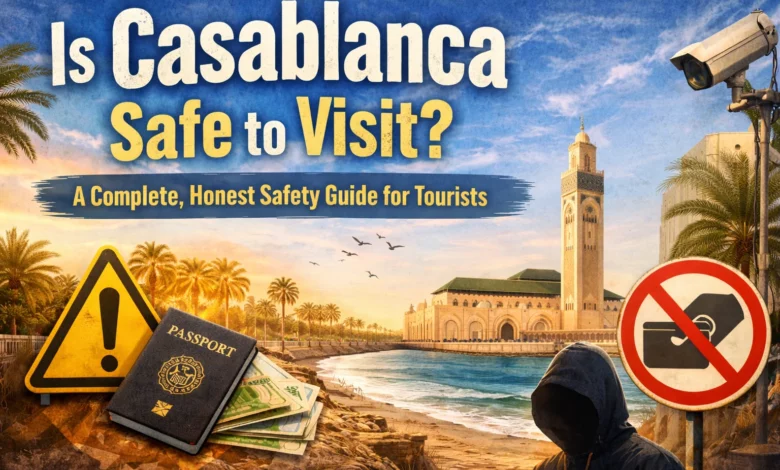
Casablanca is Morocco’s most populous city and its undisputed economic capital — but first-time visitors often ask the same question before booking their trip: is Casablanca safe for tourists? The short answer is yes, Casablanca is generally safe to visit, especially if you stay informed, choose your neighborhoods wisely, and approach the city with a bit of common sense.
That said, like any large metropolitan area, Casablanca has its nuances. Petty theft, occasional harassment, and certain areas that deserve extra caution are real considerations you should know about before you arrive. This guide covers everything honestly — the safe zones, the less-safe ones, practical safety tips, and how to enjoy one of Morocco’s most dynamic cities without unnecessary worry.
1. Overall Safety Level in Casablanca ↑ Contents
By any measurable standard, Casablanca is considered a moderately safe destination for international tourists. Morocco as a whole maintains a stable security environment, and Casablanca benefits from a significant police and tourist police (Brigade Touristique) presence in visitor-heavy areas.
The Moroccan government has invested heavily in tourism security since the mid-2000s, and major Western governments — including those of the US, UK, France, and Germany — do not advise against travel to Casablanca. Violent crimes against tourists are rare. The more realistic concerns are opportunistic theft and common scams — things that are avoidable with a bit of preparation.
If you’re wondering whether Morocco as a whole is safe for tourists, the answer is similarly reassuring — Casablanca is actually considered one of the more manageable entry points given its modern infrastructure and international atmosphere.
Casablanca is safe enough for the vast majority of tourists, including families, solo travelers, and first-timers. Exercise the same situational awareness you would in any large European or North American city, and you’ll be fine.
2. Safest Neighborhoods for Tourists ↑ Contents
One of the most important things to know about Casablanca safety is that the city is not uniformly safe or unsafe — your experience depends greatly on which part of the city you spend time in.
| Neighborhood | Safety Level | Why Visit |
|---|---|---|
| Maarif & Gauthier | Very Safe | Upscale residential, great restaurants, shopping |
| Anfa & CIL | Very Safe | Wealthy villa district, embassies, calm atmosphere |
| Boulevard de la Corniche | Very Safe | Oceanfront strip, beach clubs, hotels, cafés |
| Place Mohammed V (Centre-Ville) | Safe | Colonial architecture, Hassan II Mosque area, museums |
| Bourgogne | Safe | Trendy bars, restaurants, young professional crowd |
| Old Medina | Moderate | Authentic souks, historic architecture — stay alert |
| Derb Omar (wholesale district) | Moderate | Busy commercial area, not tourist-oriented |
| Hay Mohammadi | Caution advised | Working-class area — avoid at night |
The Corniche: Casablanca’s Safest Tourist Strip
For most visitors, the Boulevard de la Corniche is where they feel safest and most at ease. Stretching along the Atlantic coast, it’s lined with modern hotels, beach clubs, seafood restaurants, and cafés. Police are visible, crowds are cosmopolitan, and the general vibe is relaxed. It’s especially lively in summer evenings and during weekends.
Maarif & Gauthier: Urban Comfort Zone
The Maarif and Gauthier districts are the modern heart of the city. Boutiques, international restaurants, coffee shops, and a lively nightlife scene make this area a favourite among expats and local professionals. Walking around here at night is generally fine and feels no different from many European city centres.
3. Areas to Approach With Caution ↑ Contents
Casablanca, as a city of over 4 million people, naturally has areas where tourists are advised to be more careful. This doesn’t mean dangerous in the way some global cities can be — it simply means exercising more awareness.
The Old Medina at Night
The Old Medina of Casablanca — while fascinating by day — can feel disorienting after dark. The narrow alleyways are poorly lit in spots, and the number of people who approach tourists (sometimes insistently) increases after sunset. We recommend visiting the medina during daylight hours only, ideally with a knowledgeable licensed local guide.
The Train Station Area (Gare Casa-Port & Gare Voyageurs)
Like most major train stations worldwide, the area around Casablanca’s main stations attracts a mix of people and can be a hotspot for petty theft and opportunistic vendors. Keep your bags secure, be firm with unsolicited “helpers,” and have your transport arranged before you step outside.
The areas of Hay Mohammadi, certain parts of the port district, and the outer ring neighborhoods are not designed for tourists and can be uncomfortable to navigate at night without a local guide. There’s no need to go there as a visitor — most of Casablanca’s highlights are in the safer western and central districts.
For a broader picture of risks across Morocco, this list of common tourist scams in Morocco is essential pre-trip reading.
4. Common Risks & How to Avoid Them ↑ Contents
Bag Snatching & Pickpocketing
Most common in crowded markets and the medina. Use a crossbody bag, keep phones out of back pockets, and stay alert in large crowds.
Fake Guides & Commissions
Unofficial guides offering to “help” often steer you toward shops where they earn commissions. Always hire a licensed guide from an official tourism office.
Taxi Overcharging
Always insist on the meter in petit taxis. For fixed-fare routes, agree on the price before entering. Apps like Careem are reliable alternatives.
Persistent Vendors
A firm but polite “La shukran” (no, thank you) is your best tool. Don’t feel pressured to engage or explain yourself repeatedly.
ATM & Card Fraud
Use ATMs inside banks rather than standalone ones in the street. Check for card skimmers and shield your PIN. Read more about what currency Morocco uses before you travel.
Accommodation Scams
Book via established platforms (Booking.com, Airbnb). Verify addresses independently. Fake “riad” listings do exist on unregulated platforms.
Download offline maps (Google Maps or Maps.me) before arriving. Wandering without direction is when most tourist scams gain traction — confidence and a clear sense of where you’re going dramatically reduces unwanted attention.
5. Is Casablanca Safe for Solo Female Travelers? ↑ Contents
This is one of the questions we receive most often, and it deserves a thoughtful answer. Solo female travelers can and do visit Casablanca safely every year. However, there are practical realities to acknowledge.
Street Harassment
Verbal harassment — catcalling, unsolicited comments, or persistent attempts at conversation — is more common in Casablanca than in most European cities. It is generally more annoying than threatening. Walking with purpose, avoiding eye contact with aggressors, and dressing modestly (not covering up entirely, but opting for less revealing clothing) significantly reduces unwanted attention.
Safe Practices for Women
- Stick to busy, well-lit streets in the evenings, especially in Maarif and Gauthier.
- Take Careem or licensed petit taxis rather than hailing random vehicles at night.
- Arrange airport transfers in advance with your hotel or a trusted contact.
- The Corniche and upscale areas are generally comfortable even for solo women.
- Consider travelling with a licensed guide on your first day to build confidence navigating the city.
Casablanca’s cosmopolitan nature does make it more relaxed than some other Moroccan cities — you will see Moroccan women out alone, in cafés, and working in shops, which contributes to a more inclusive street culture than in smaller traditional towns.
6. Transportation Safety in Casablanca ↑ Contents
Petit Taxis (Red Taxis)
The iconic red petit taxis are the go-to for short trips within the city. They are generally safe, though overcharging tourists is common when the meter is avoided. Simply say “compteur, s’il vous plaît” (meter, please) upon entering. If a driver refuses to use the meter, exit and find another taxi.
Grand Taxis
White grand taxis operate on fixed routes and are shared with other passengers. They are safe but can be confusing for visitors unfamiliar with routes. Better used once you’ve got some local knowledge.
Tramway (Casa Tram)
The Casablanca tramway is modern, air-conditioned, and generally safe. Keep your bag on your lap rather than overhead, especially during busy rush hours. It connects several key tourist zones including the Hassan II Mosque and the city centre.
Careem & Ride-Hailing
Careem (the Middle East and North Africa equivalent of Uber) is available in Casablanca and is widely recommended for its fixed pricing and accountability. For women and solo travelers at night, it’s the preferred option over hailing street taxis.
The Mohammed V International Airport is about 30km from the city centre. The ONCF train (Supratours line) connects the airport directly to Casa-Voyageurs station — it’s the safest, most reliable option. Avoid unlicensed drivers offering “cheap transfers” inside the terminal.
7. Health & Emergency Information ↑ Contents
Important Emergency Numbers
- Police: 19
- Gendarmerie: 177
- Ambulance / SAMU: 15
- Fire Brigade: 15
- Tourist Police (Brigade Touristique): Available at major tourist sites — ask any officer.
Medical Facilities
Casablanca has the best medical infrastructure in Morocco. The Clinique Ghandi, Clinique Ibn Tofail, and CHU Ibn Rochd (public university hospital) are among the main facilities. Private clinics in Maarif and Anfa serve expatriates and tourists well. Travel insurance with medical repatriation cover is strongly recommended.
Tap Water
Tap water in Casablanca is technically treated, but most visitors and residents drink bottled water as a precaution. Stick to bottled still water throughout your stay.
Before arriving, it’s also worth familiarising yourself with Morocco’s physical geography — the country spans dramatic climate zones, and coastal Casablanca can be surprisingly cool and humid, especially in winter.
8. Explore Casablanca With a Licensed Local Guide ↑ Contents
One of the best decisions any visitor to Casablanca can make — especially if this is your first time in Morocco — is to spend at least half a day with a licensed, official guide accredited by the Moroccan Ministry of Tourism. A real guide doesn’t just point at buildings; they open doors to authentic experiences, help you avoid scams, and navigate the city’s complexities with ease.
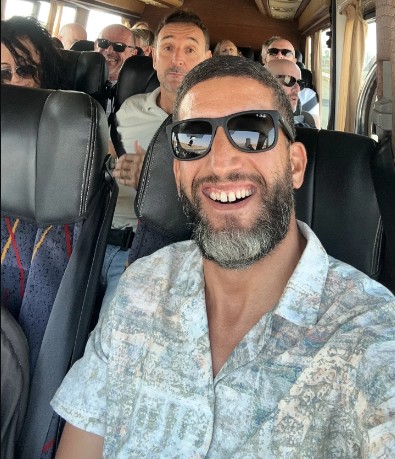
Mouhssine speaks English, French, and Arabic fluently. Whether you’re visiting Morocco for the first time or returning to explore Casablanca more deeply, he can tailor a private tour to your interests — from the Hassan II Mosque and the Old Medina to the art deco architecture of the city centre and the best local restaurants the guidebooks haven’t discovered yet.
9. Frequently Asked Questions ↑ Contents
Casablanca is one of Africa’s most modern, welcoming, and navigable cities for international tourists. Like any major urban destination, it rewards those who come prepared — knowing which neighbourhoods to prioritise, understanding the common risks, and having the right contacts makes all the difference.
If you plan to explore beyond Casablanca into the rest of Morocco’s stunning geography and vibrant cities, use Casablanca as your confident starting point. And for the richest, safest experience, consider spending your first day with a licensed local guide who knows every corner of the city.
Safe travels — and welcome to one of Africa’s most extraordinary cities. 🇲🇦