
Three Days in the Sahara
Myriam’s Journey to Merzouga
Some roads don’t just take you somewhere they change how you look at the road behind you. In June 2026, Myriam Van den Berge left Marrakech before sunrise and came back three days later having crossed the High Atlas twice, walked inside a UNESCO ksar, slept between sand dunes under a sky that had no business being that full of stars, and taken a camel ride at sunset that no photograph will ever quite do justice to.
This is a record of that trip. The places, the light, and the moments in between.
Departure was early, before the city fully woke. The road out of Marrakech climbs without much warning, and within an hour the red rooftops had given way to the granite flanks of the High Atlas. At 2,260 metres, the Tizi n’Tichka pass stretches the view far enough that conversation tends to stop by itself.
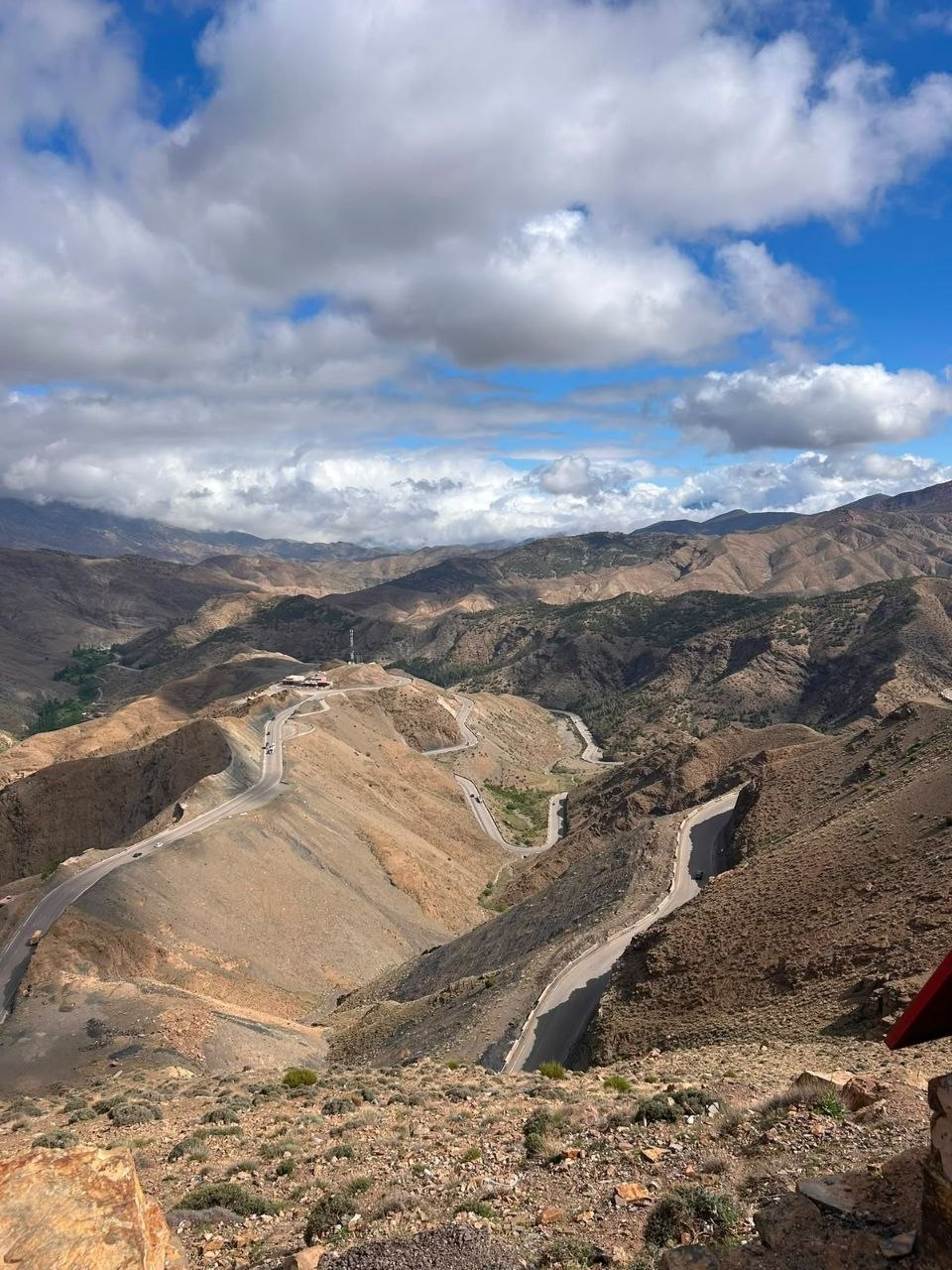
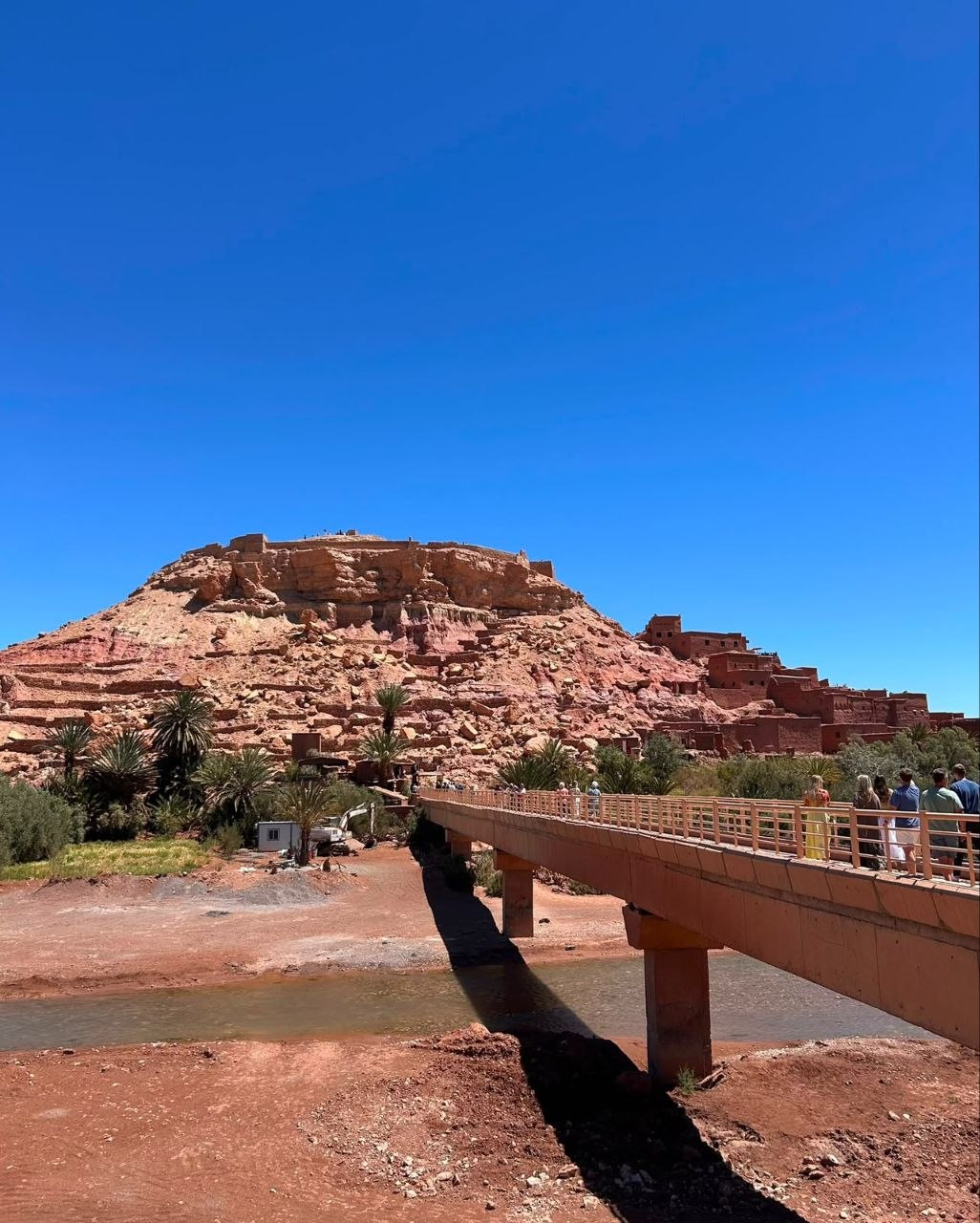
Tizi n’Tichka at 2,260 m · and the Ksar of Ait Ben Haddou below the pass
The descent into the pre-Saharan south brought the first pise walls: mud brick the colour of the earth it came from. Ait Ben Haddou was the first real stop. The ksar has stood in roughly the same form since the 11th century, and walking its narrow passages you understand why filmmakers keep coming back. It doesn’t look like a set. It looks like history that forgot to stop.
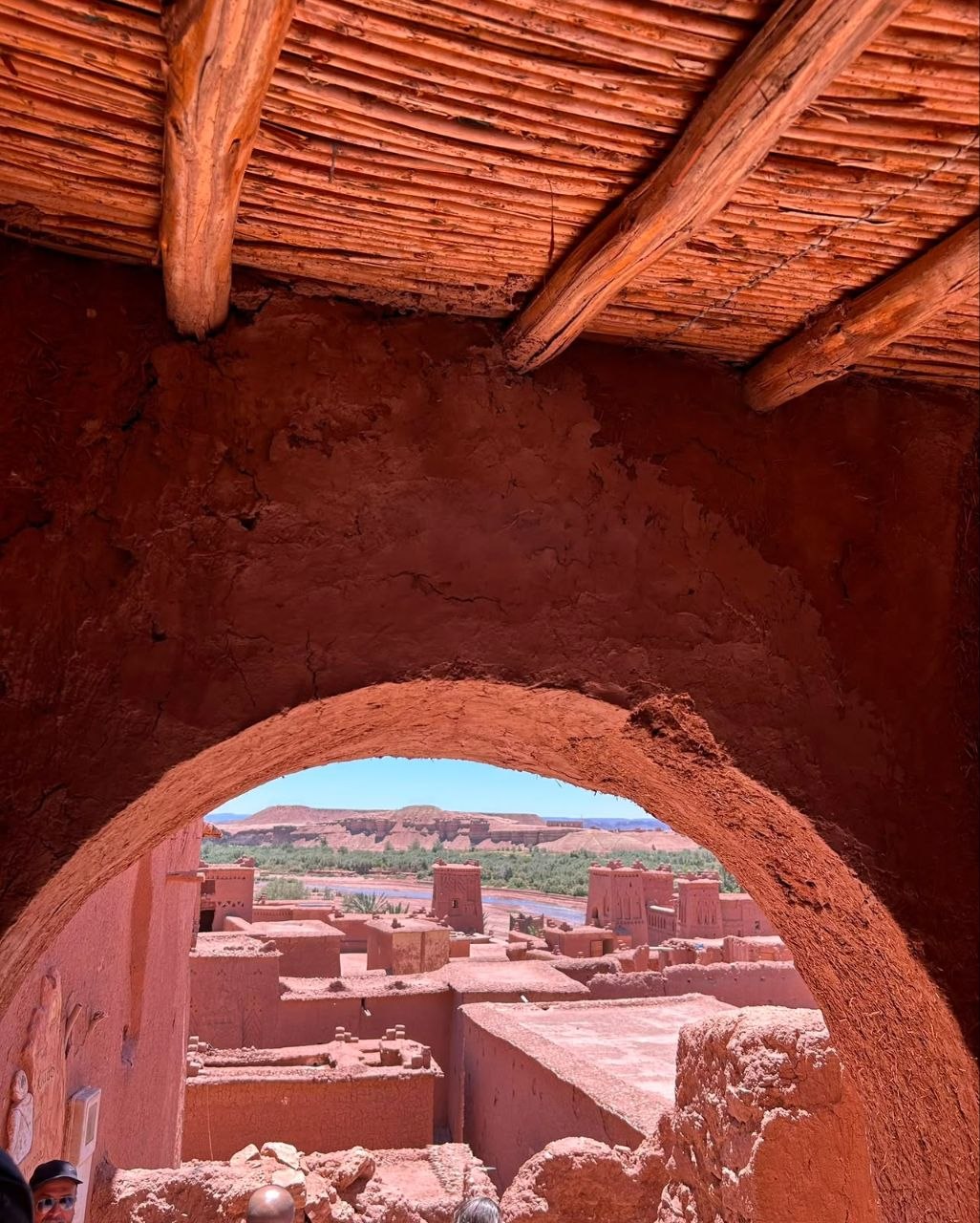
The view from the top of the ksar — the palmery and the dry riverbed below
After a visit to the Kasbah Taourirte in Ouarzazate, the road pushed east through the Valley of Roses and the Route of a Thousand Kasbahs — a stretch of landscape that earns its name. The day closed at the Todra Gorges, with dinner served beside the river and cliffs rising 300 metres on both sides.
Morning inside Todra is best before the coaches arrive. The canyon channels early light into long diagonal shafts, and the walls catch colours that shift every few minutes. Myriam walked the full length of the gorge before breakfast. The right way to see it.
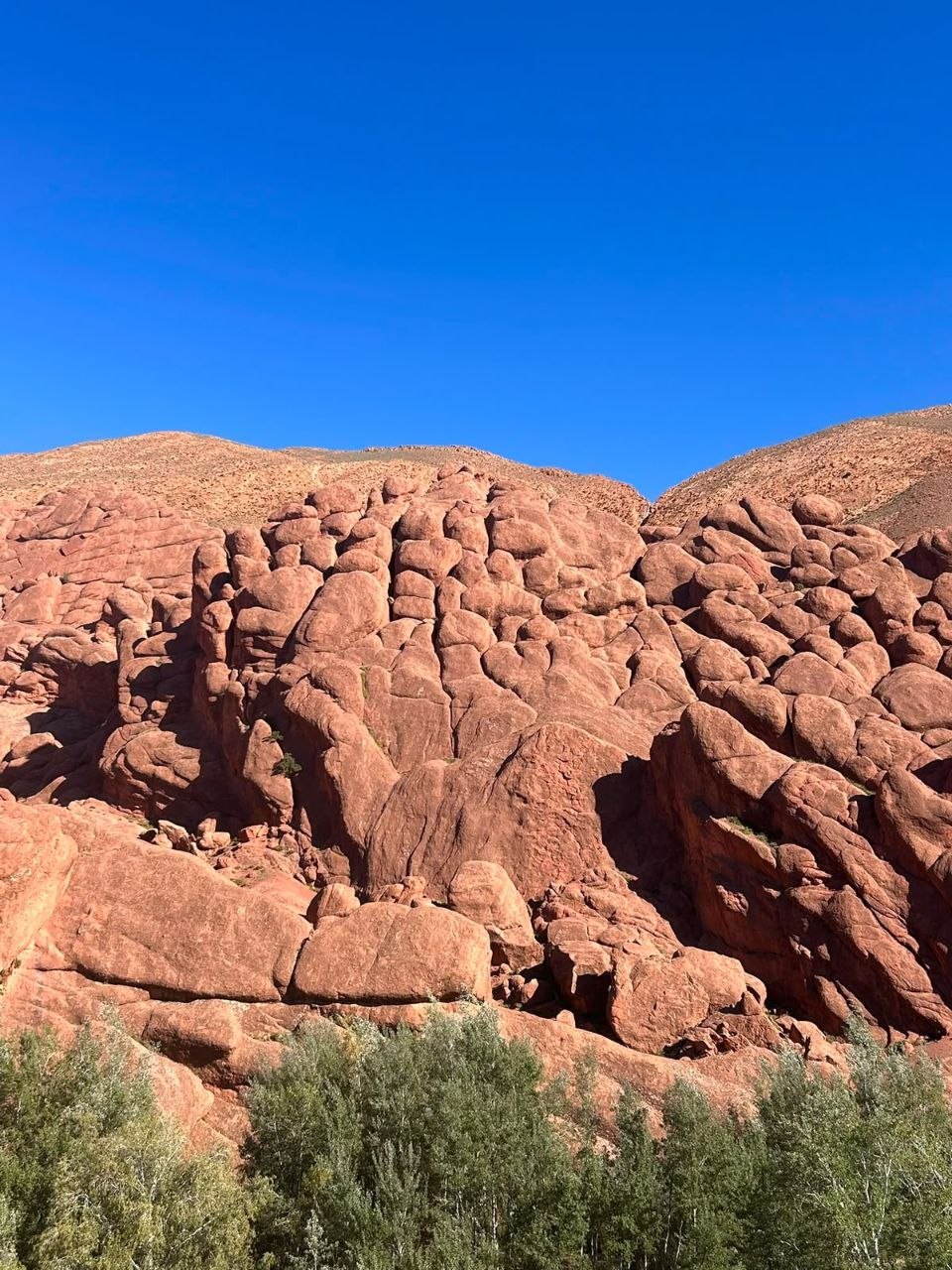
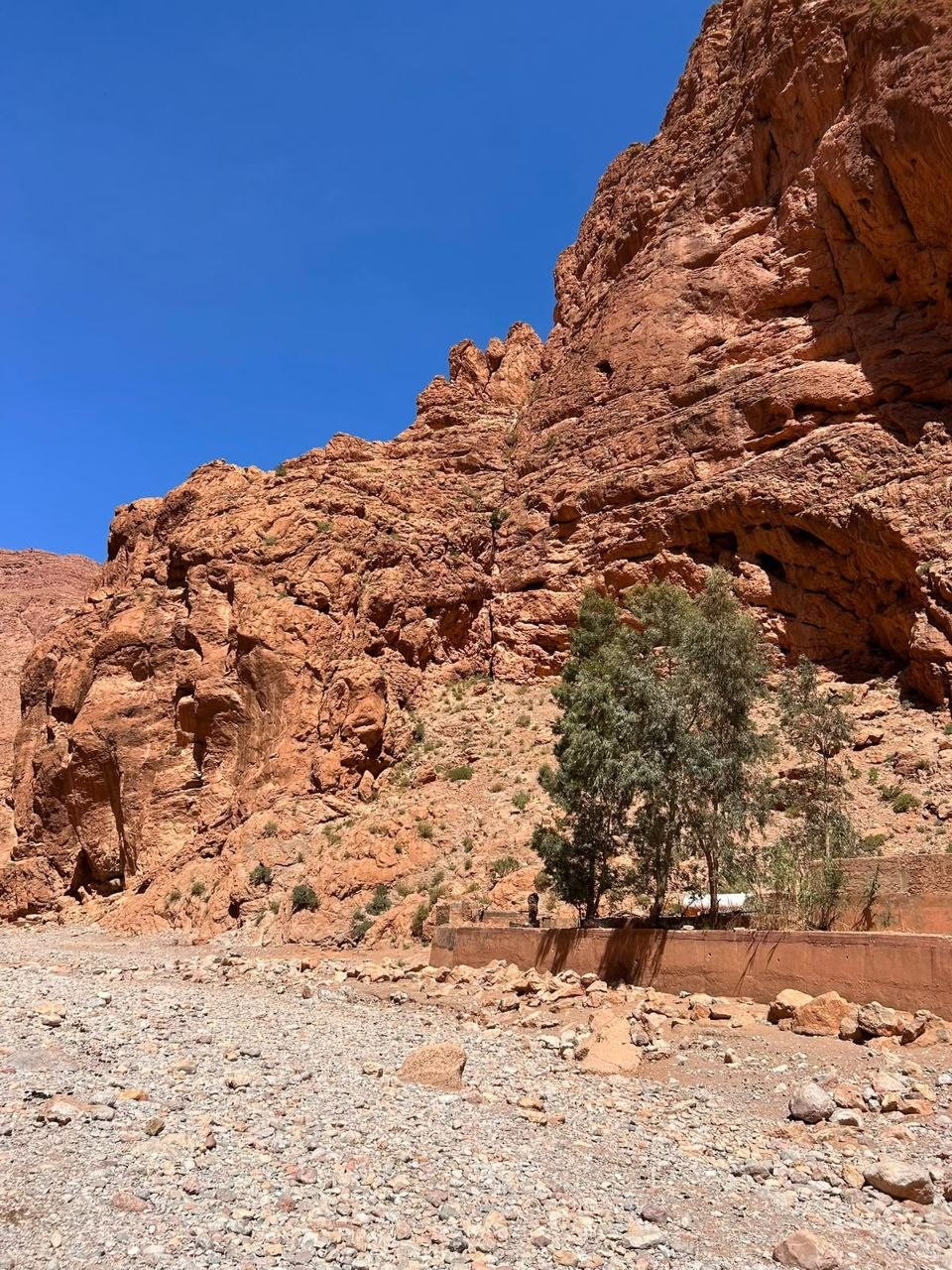
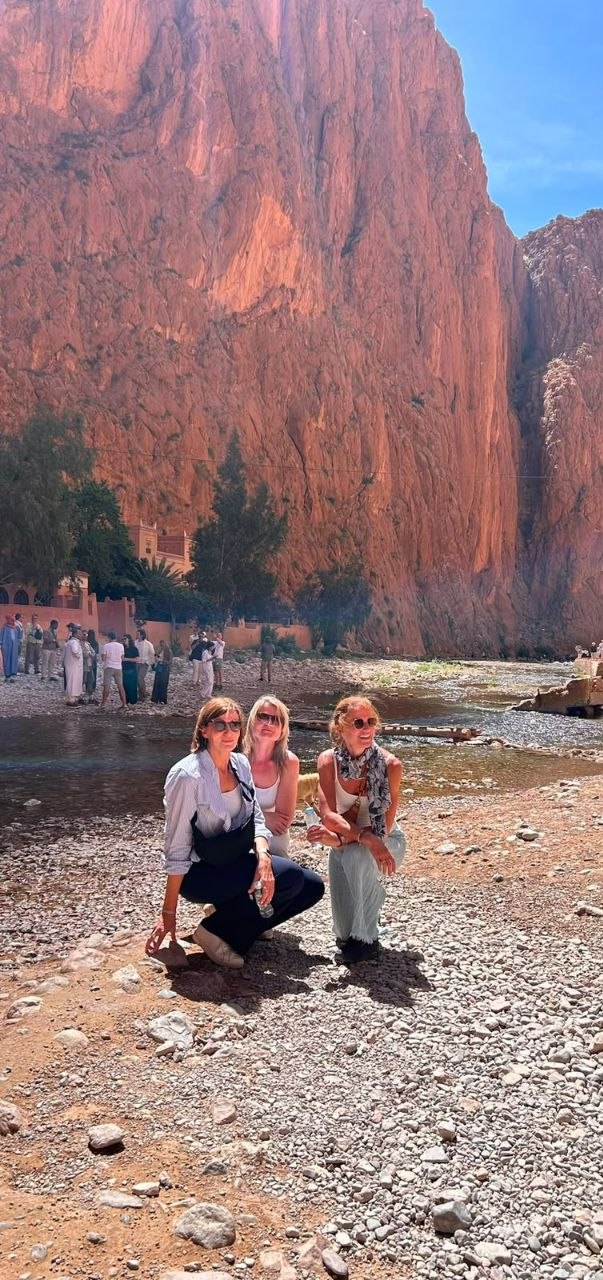
The Todra Gorges at their narrowest — 300 m of limestone carved by centuries of water
The route to Merzouga passed through Tinjdad and Erfoud before reaching Rissani for lunch, where the mausoleum of Moulay Ali Cherif — founder of the Alaouite dynasty — sits quietly in the old medina. Not every stop needs to be dramatic to leave an impression.
By the time the first dunes appeared on the horizon, they were bigger than expected. Erg Chebbi doesn’t build gradually. It simply rises out of the flat stone desert, a ridge of ochre that keeps getting taller the closer you get.
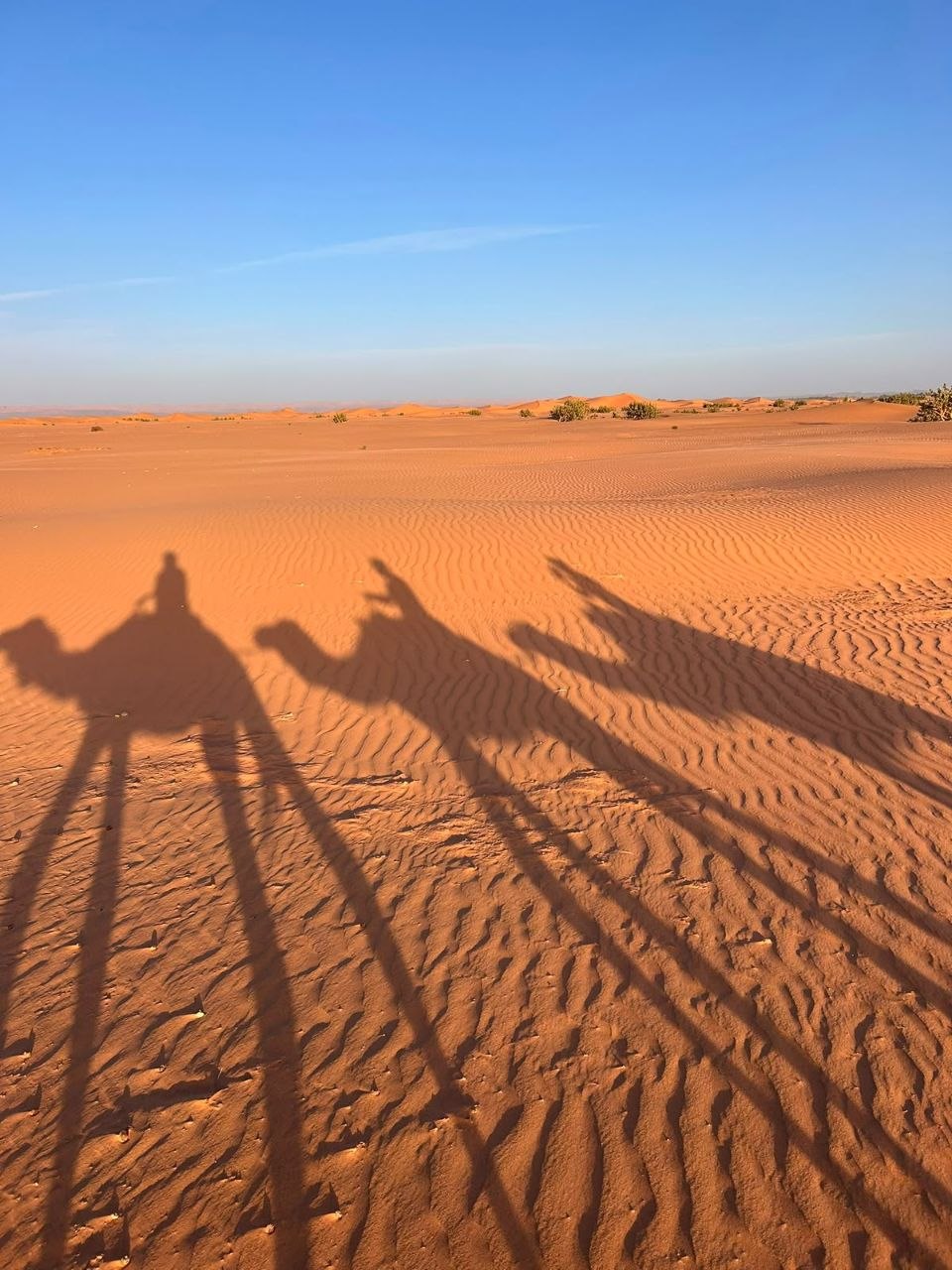
The approach to Erg Chebbi — dunes reaching up to 150 metres at their peak
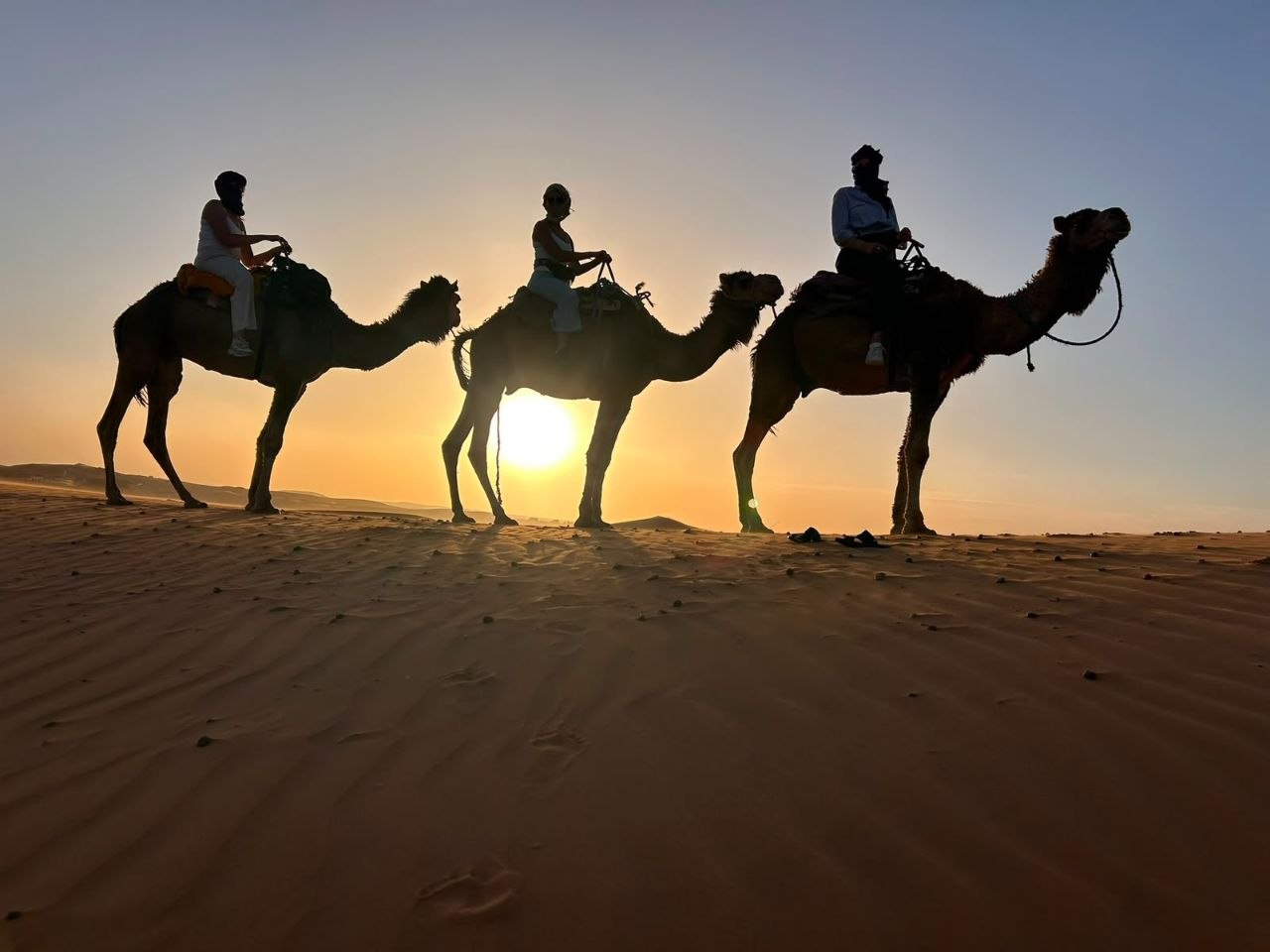
The camel ride was timed to reach the dune’s ridge as the sun descended. Late afternoon light in the Sahara is its own phenomenon: it turns everything copper and shadow, makes the crests of the dunes look sharp as knife edges, and produces photographs that look nothing like what your phone was pointing at.
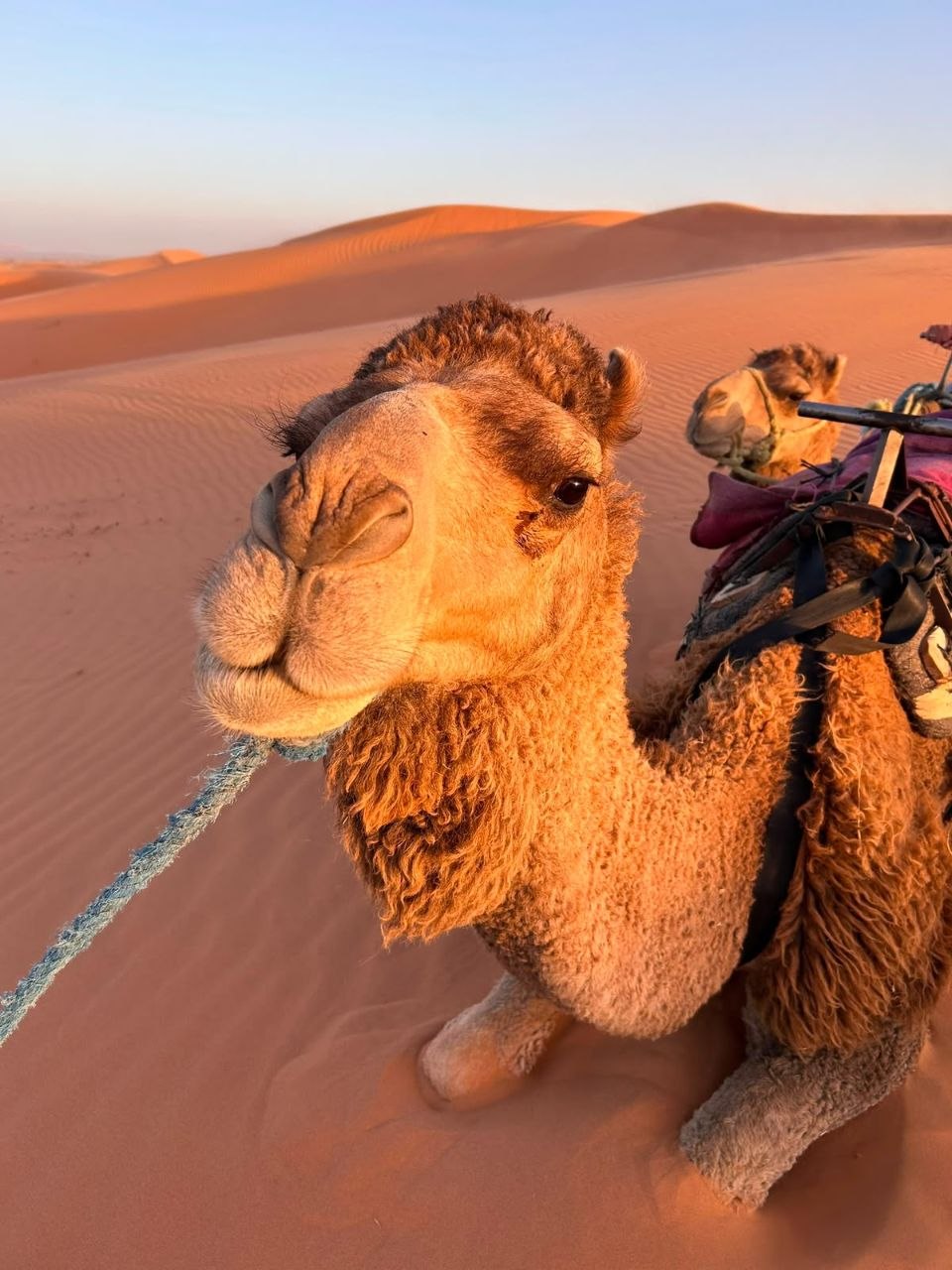
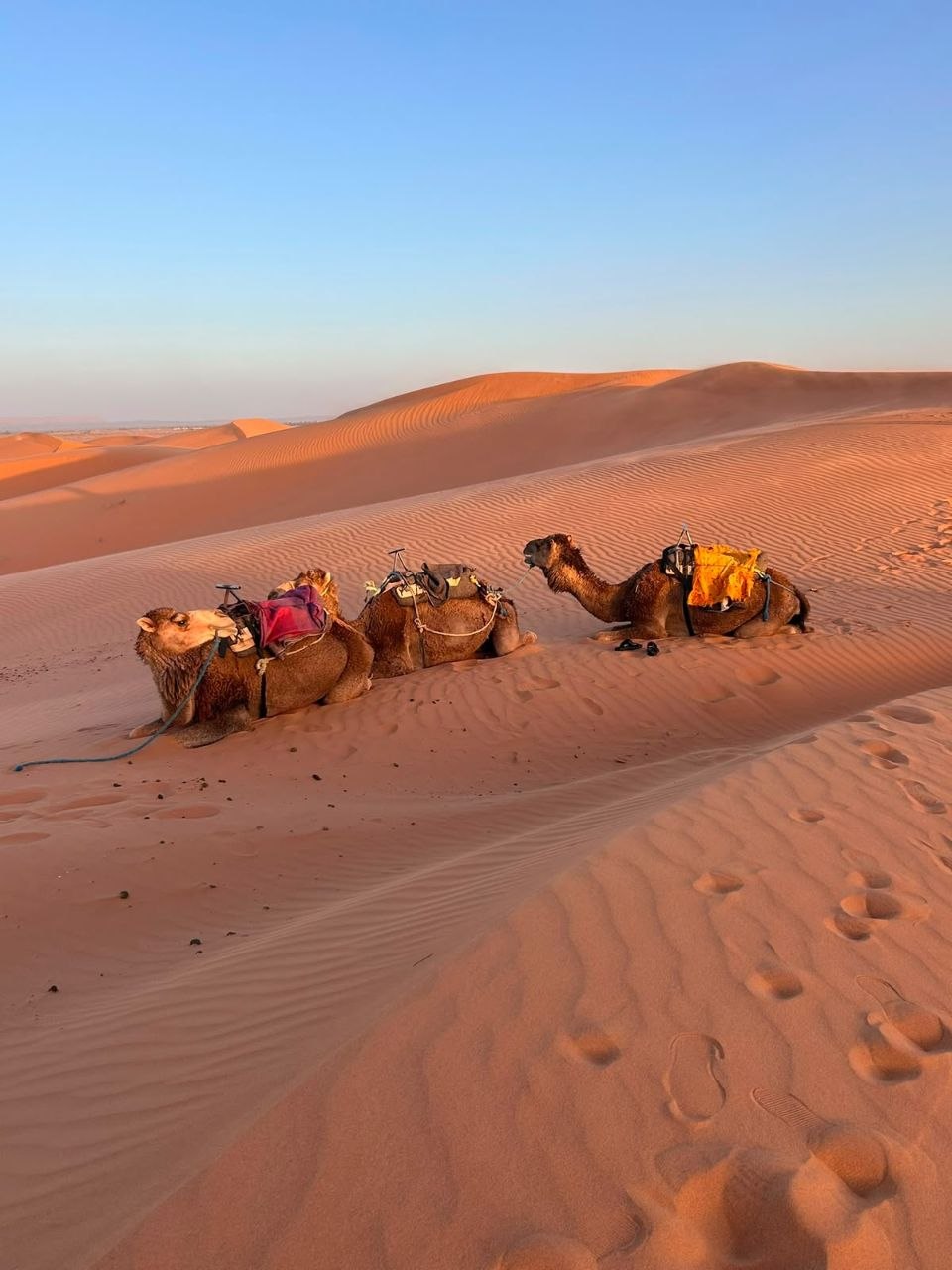
The camel ride into Erg Chebbi — the traditional route to reach the camp
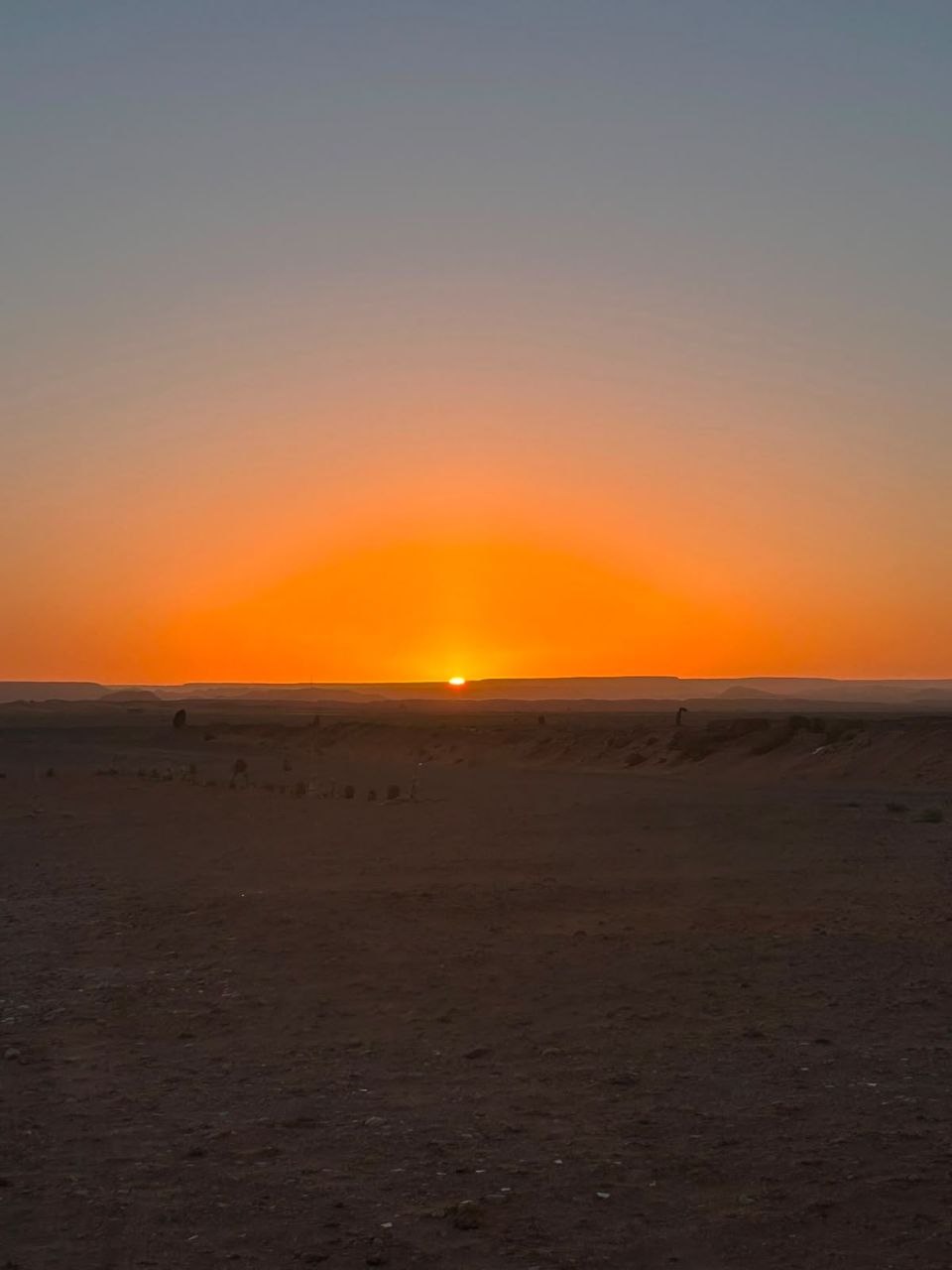
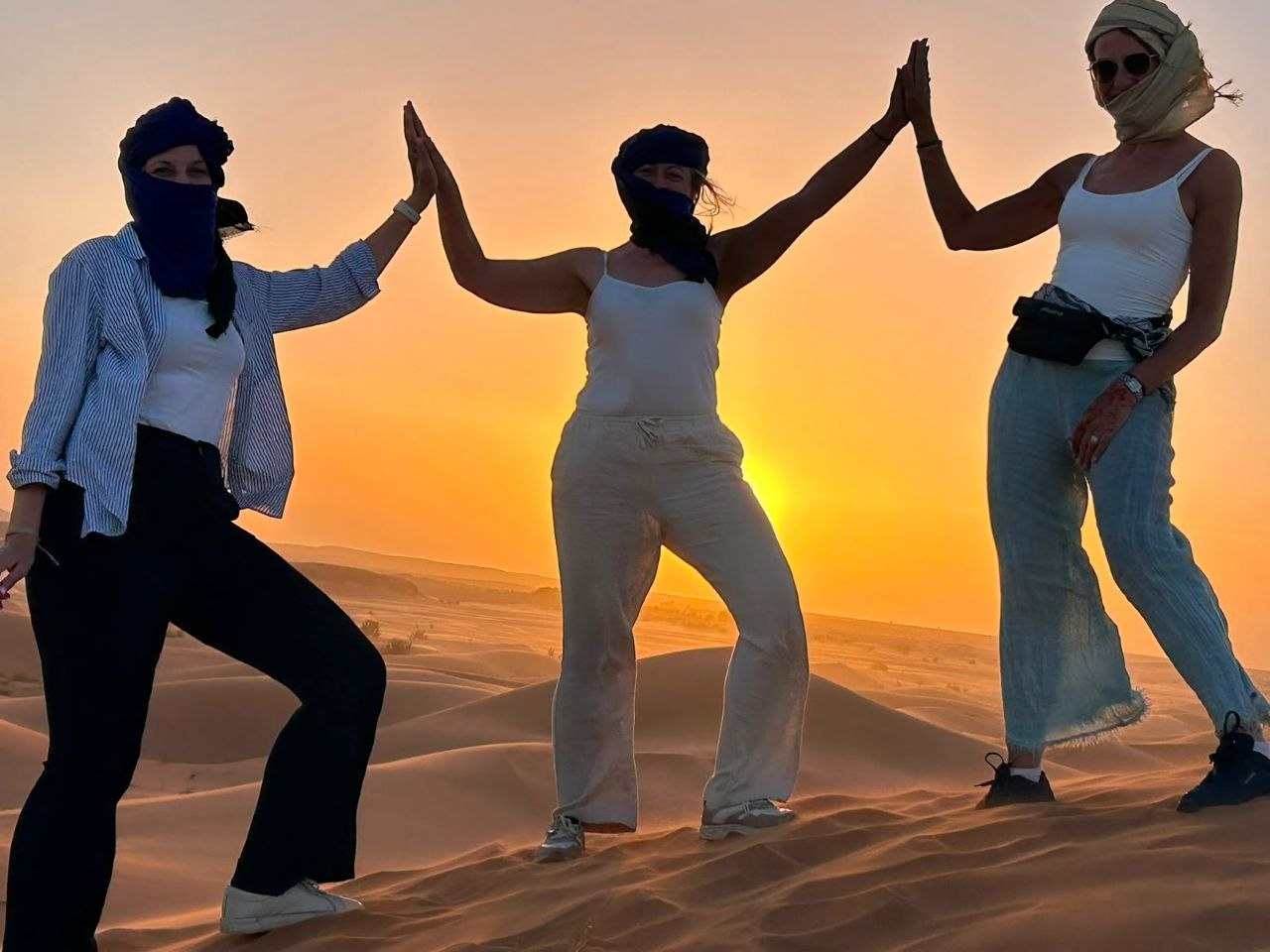
Sunset over Erg Chebbi — the moment the desert earns every kilometre it took to reach it
Night in the nomad camp was warm, starlit, and genuinely quiet. No city sounds, no signal, nothing that competes with the sky. Dinner, tea, music from instruments that belonged to the desert long before tourism did.
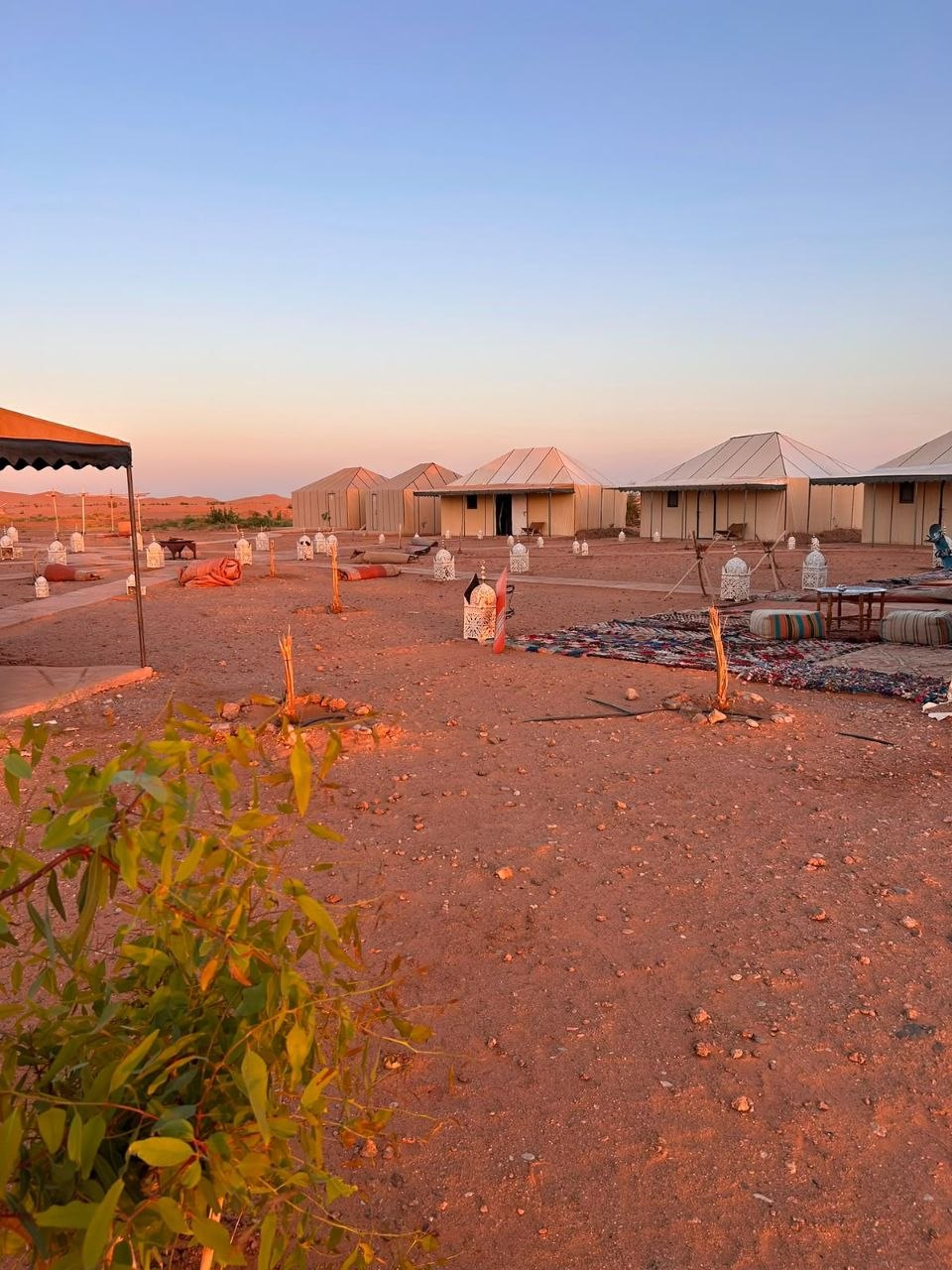
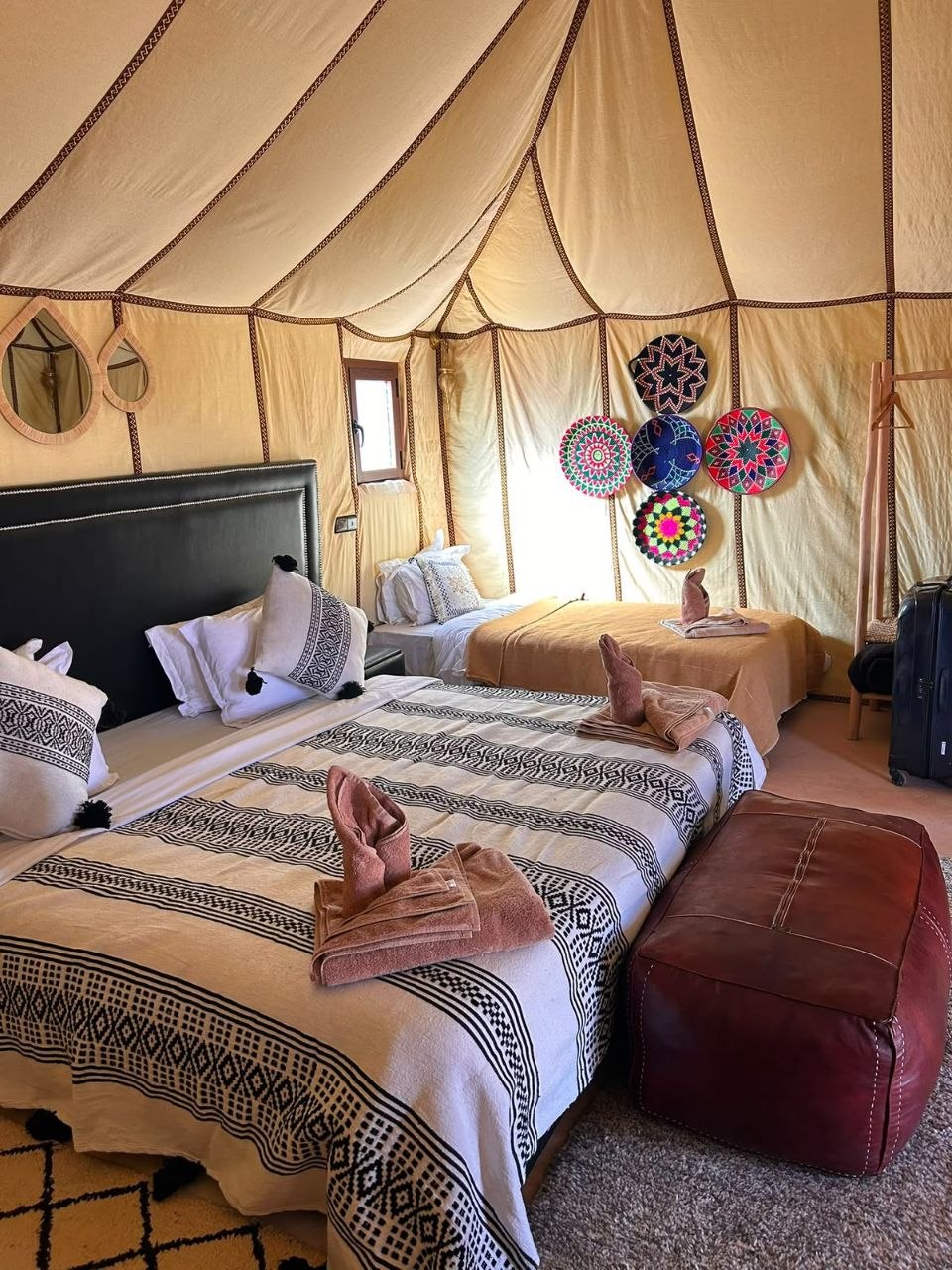
The camp at Erg Chebbi — traditional Touareg tents, fully equipped for the night
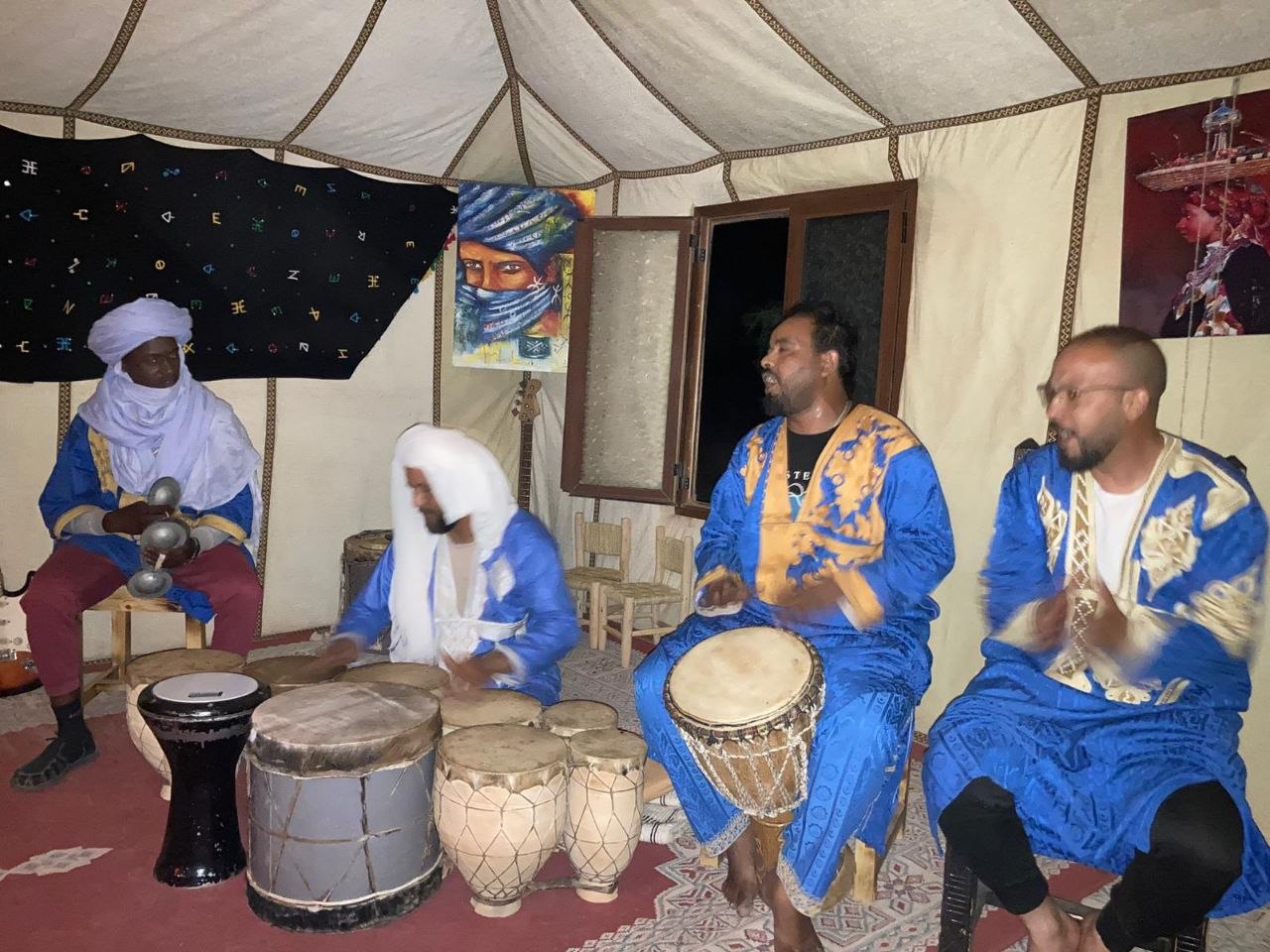
Evening in the camp — music that fits a place with no electricity and no noise to compete with
The return was not the same road. The Draa Valley corridor — through Alnif, N’qob, Tazarine and Agdez — is a full day of hammada plateaux, date-palm oases appearing without warning, and the Draa river, Morocco’s longest, threading green through the stone. A different kind of landscape, just as worth seeing.
Lunch in Ouarzazate, then the final climb back through the Atlas. The mountains look different going north. Marrakech reappeared in the early evening. Three days out, the journey complete.
What This Trip Includes
3 Days / 2 Nights- Private transport from your hotel or riad — and back — with a French-speaking professional driver
- Breakfasts and dinners throughout the trip
- Camel ride into the dunes and back to the camp (both ways)
- One night in a hotel at the Todra Gorges, one night in a Touareg tent at Erg Chebbi
- Complimentary visit to a genuine women’s Argan oil cooperative
- Air-conditioned 4×4 or minibus throughout
- Lunches, drinks and personal expenses
- Entry fees for the film studios and the Kasbah
Based in Marrakech · French, English & Arabic
WhatsApp: +212 671 437 971
Documented by Moroccan Travel Trips