
What Makes Marrakech Special Back to top
There are cities that look impressive in photographs and cities that genuinely change something in you when you walk through them. Marrakech tends to fall into the second category. Known as the Red City for its distinctive rose-tinted walls, it sits at a crossroads between the Sahara Desert, the Atlas Mountains, and the Atlantic coast, and that geography has shaped everything from its cuisine to its culture.
Marrakech is one of Morocco’s four Imperial Cities, with a history stretching back to the 11th century. Its medina, a UNESCO World Heritage Site, is a labyrinth of alleyways where tanneries, spice souks, and Koranic schools exist side by side in an arrangement that has barely changed for centuries. That contrast between the ancient and the contemporary is what makes Marrakech so difficult to forget.
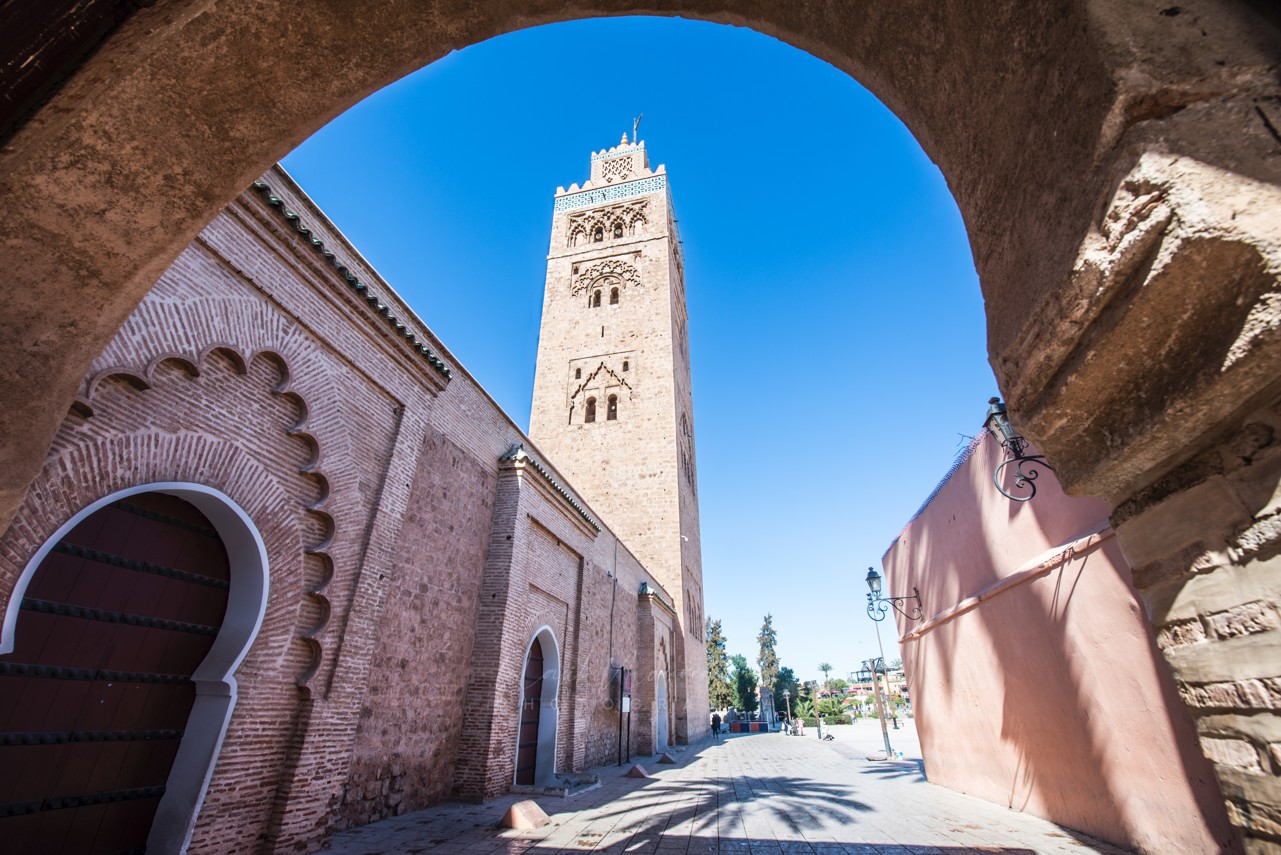
Koutoubia Mosque, the iconic symbol of Marrakech, visible from nearly every corner of the city.
Is Marrakech Worth Visiting in 2026? Back to top
The short answer is yes, unequivocally. But the more useful answer is: it depends on what you’re looking for. Marrakech is worth visiting in 2026 if you want a destination that overwhelms all five senses at once, where a single afternoon can include a conversation with an elderly carpet merchant, a bowl of harira at a street stall, and a rooftop view of the Atlas Mountains at dusk.
Tourism infrastructure has improved considerably in recent years. The Menara airport now handles more international routes than ever, high-speed trains connect Casablanca and Marrakech comfortably, and a growing number of boutique riads offer accommodation that ranks with the finest in the Mediterranean world. At the same time, the city has retained the texture and chaos that draw people here in the first place.
Our Verdict: Marrakech is absolutely worth your time
Rich culture, world-class food, stunning architecture, desert access, and mountain scenery, all within a compact, walkable city that rewards those willing to explore beyond the obvious.
If you’re asking whether Marrakech is worth visiting for first-timers, the answer is a particularly strong yes. Few cities in the world pack this level of atmosphere, history, and sensory variety into such an accessible package. You do not need to be a seasoned traveler to navigate Marrakech, though a little preparation goes a long way.
Is Marrakech Safe? Back to top
Safety is one of the first questions travelers ask, and with good reason. The honest answer is that Marrakech is safe for the vast majority of visitors. Morocco’s tourism sector is a national priority, and the government invests meaningfully in tourist safety. The medina is well policed, and violent crime against visitors is genuinely rare.
That said, petty hassles exist. Touts and unofficial “guides” who approach you near the main square and offer directions, only to expect payment afterward, are the most commonly reported frustration. The best defense is to hire a local licensed guide in Marrakech before you arrive, so you are never navigating the medina alone and unprepared.
Women traveling alone often wonder whether Marrakech is manageable. The experience varies, and some unwanted attention in busy areas is possible, but the city sees a high volume of female solo travelers every year. For a thorough, experience-based look, this guide on Is Marrakech Safe for Solo Female Travelers covers the topic in useful detail.
A quiet corner of the medina, away from the crowds, where the city reveals its more contemplative side.
Practical tip: Getting around safely and affordably is easier when you know the basics. Read these Taxi Tips in Marrakech before your first ride, and check whether Marrakech is cashless so you know how much cash to carry.
Is Marrakech Expensive for Tourists? Back to top
Marrakech can be as affordable or as indulgent as you want it to be. On a tight budget, you can eat extremely well (a bowl of bissara or a plate of kefta at a local stall costs next to nothing), sleep in a clean guesthouse in the medina, and walk to most major sights without spending much at all. On the other end of the scale, palatial riads with private plunge pools and Michelin-calibre restaurants are plentiful.
| Budget Type | Accommodation | Food per Day | Activities |
|---|---|---|---|
| Budget traveler | Guesthouse / hostel: from 150 MAD/night | From 80 MAD | Most gardens and souks are free or very cheap |
| Mid-range | Comfortable riad: 400–900 MAD/night | From 200 MAD | Guided tours, cooking classes, day trips |
| Luxury | Boutique riad or hotel: 1,500+ MAD/night | Unlimited | Private tours, desert camps, spa treatments |
One practical note: admission prices at major sites such as the Bahia Palace, Saadian Tombs, and Majorelle Garden have risen in recent years. Budget around 200 to 400 MAD per person per day for entry fees if you plan to visit several attractions.
Best Things to Do in Marrakech Back to top
The question of what to do in Marrakech is almost the wrong question, because the city itself is the activity. Simply walking in the right direction, through a dye souk, past a centuries-old fountain, into a shaded courtyard, delivers more than any checklist can capture. That said, some places genuinely should not be missed.
For a curated list of the most rewarding spots, visit our guide to the 7 Best Places to Visit in Marrakech, and also explore the full range of Things to Do in Marrakech Morocco for a deeper itinerary.
Jemaa el-Fnaa
The central square of the medina, alive with snake charmers, acrobats, henna artists, and food stalls from morning until long after midnight. There is nowhere else quite like it.
Majorelle Garden
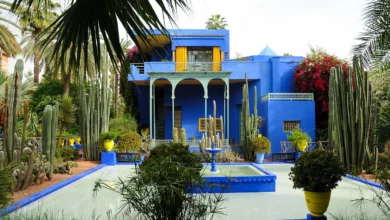
A striking botanical garden designed in the 1920s and later rescued by Yves Saint Laurent. Its cobalt blue structures and rare cacti make it one of the most photographed spots in Africa.
Bahia Palace
A 19th-century palace of extraordinary craftsmanship, with hand-painted ceilings, carved stucco, and a sequence of courtyards that open into one another like a dream.
Le Jardin Secret
A hidden garden in the heart of the medina that was recently restored to its original 16th-century Islamic garden design. Serene, beautiful, and genuinely surprising.
Hammam Experience
A traditional Moroccan bath is not optional; it is an experience in itself. The combination of steam, black soap, and vigorous scrubbing leaves you feeling entirely new.
Rooftop at Sunset
Find any terrace with a view over the medina at the hour before dusk. The call to prayer echoes across the rooftops, the light turns amber, and the city shifts into something cinematic.
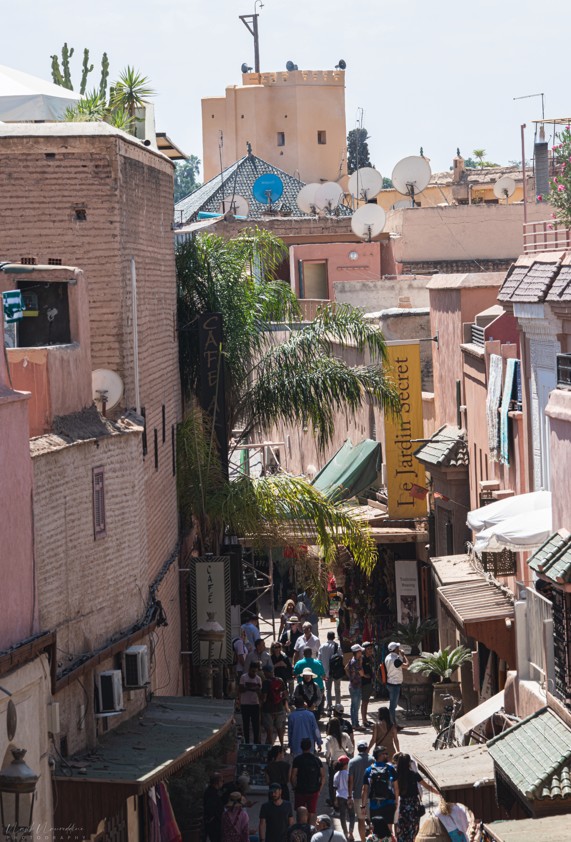
Le Jardin Secret, one of the medina’s most beautifully restored Islamic gardens, tucked away from the noise of the souks.
Marrakech Medina and Markets Back to top
The Marrakech medina is a UNESCO-listed old city that covers around 600 hectares and contains one of the largest car-free urban areas in the world. Navigating it without a plan is both the challenge and the reward. Alleyways that seem identical eventually open onto unexpected squares, workshops, and fountains that make the confusion feel worthwhile.
The souks are organized loosely by trade, and finding the right section for textiles, leather, spices, lanterns, or ceramics takes practice. Bargaining is expected in most souk shops and is part of the cultural experience rather than an inconvenience. Start lower than you want to pay, be friendly about it, and enjoy the conversation.
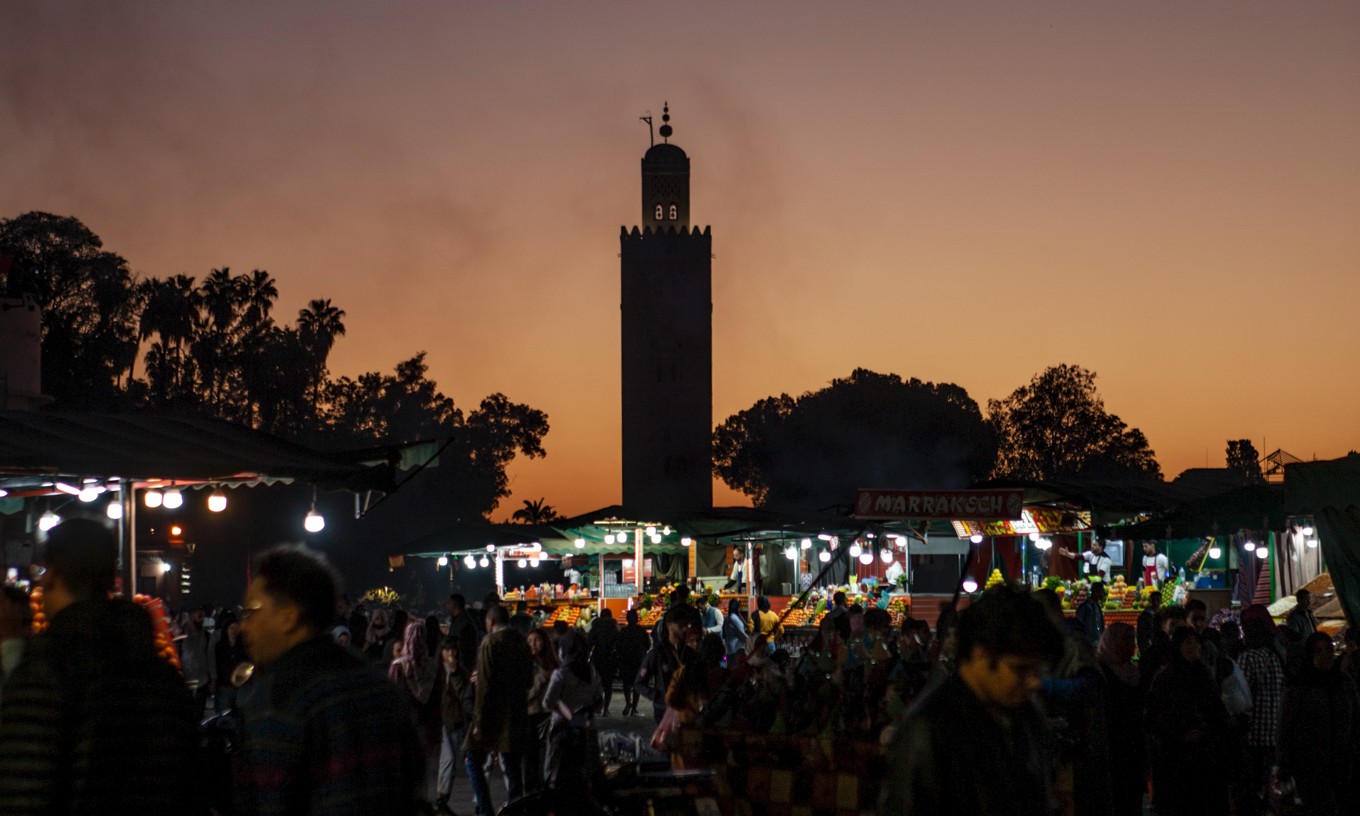
Jemaa el-Fnaa, the soul of Marrakech, as it comes alive in the evening hours.
Marrakech Riads and Where to Stay Back to top
A riad is a traditional Moroccan townhouse built around a central courtyard, often featuring a garden, fountain, and a series of elegantly decorated rooms. Staying in a riad in Marrakech is not just a place to sleep; it is part of the experience itself. You enter through an unmarked wooden door in the medina wall and find yourself inside a world of mosaic tile, carved cedar, and utter calm.
There are hundreds of riads in Marrakech ranging from budget guesthouses to genuinely exceptional boutique hotels. The best ones book up months in advance during peak season, so securing accommodation early is advisable. Staying inside the medina puts you within walking distance of almost everything, while the Hivernage and Gueliz neighborhoods offer more contemporary options closer to the new city.
Marrakech Food Scene Back to top
Moroccan cuisine is one of the great culinary traditions of the world, and Marrakech is one of the best places to experience it. Tagines slow-cooked with preserved lemon and olives, bastilla pastries dusted with powdered sugar and cinnamon, fresh-baked msemen griddle bread with honey, a glass of fresh-squeezed orange juice from one of the square’s famous juice stands. Food in Marrakech is not a side note to culture; it is culture.
The city has also seen a wave of contemporary Moroccan restaurants in recent years that reinterpret traditional dishes with modern technique, without losing the depth and warmth that makes Moroccan food so comforting. Budget meals at souk stalls cost almost nothing; a spectacular dinner at a good restaurant in the Gueliz district is still very affordable by European standards.
A cooking class is one of the most memorable things you can do in the city. Most include a market visit in the morning followed by a shared meal at midday, and they give you a practical understanding of spice combinations and technique that you can take home with you.
Day Trips from Marrakech Back to top
Marrakech’s position in central Morocco makes it one of the best bases for day trips and excursions on the entire continent. The variety of landscapes accessible within a few hours is extraordinary.
Atlas Mountains
The High Atlas is less than an hour from the city. Toubkal, North Africa’s highest peak, is a two-day trek from the trailhead at Imlil. Even a morning drive through Ourika Valley reveals terraced fields, Berber villages, and views that feel remote and magnificent.
Essaouira
A beautiful Atlantic port city of whitewashed walls and blue shutters, about three hours west. The wind that makes it a world-class kitesurfing destination also keeps it refreshingly cool even in summer.
Sahara Desert
Reaching the dunes of Erg Chebbi or Erg Chigaga requires an overnight journey, but no Moroccan experience rivals spending a night under the desert sky in a traditional camp. A licensed guide can arrange everything seamlessly.
Ait Benhaddou
A UNESCO-listed ksar (fortified village) used as a backdrop for countless films and television productions. It sits at the edge of the pre-Saharan steppe and is visually extraordinary at any hour of the day.
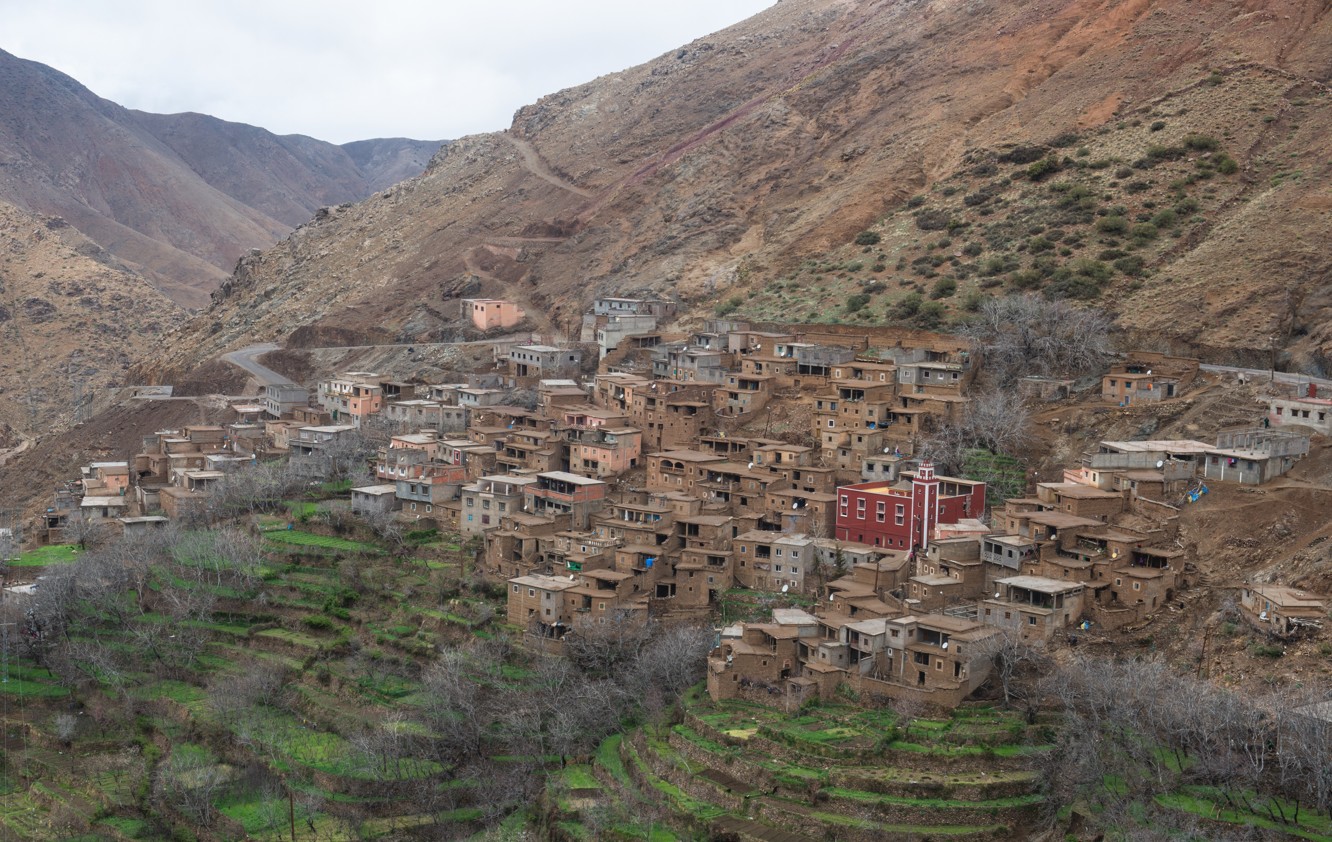
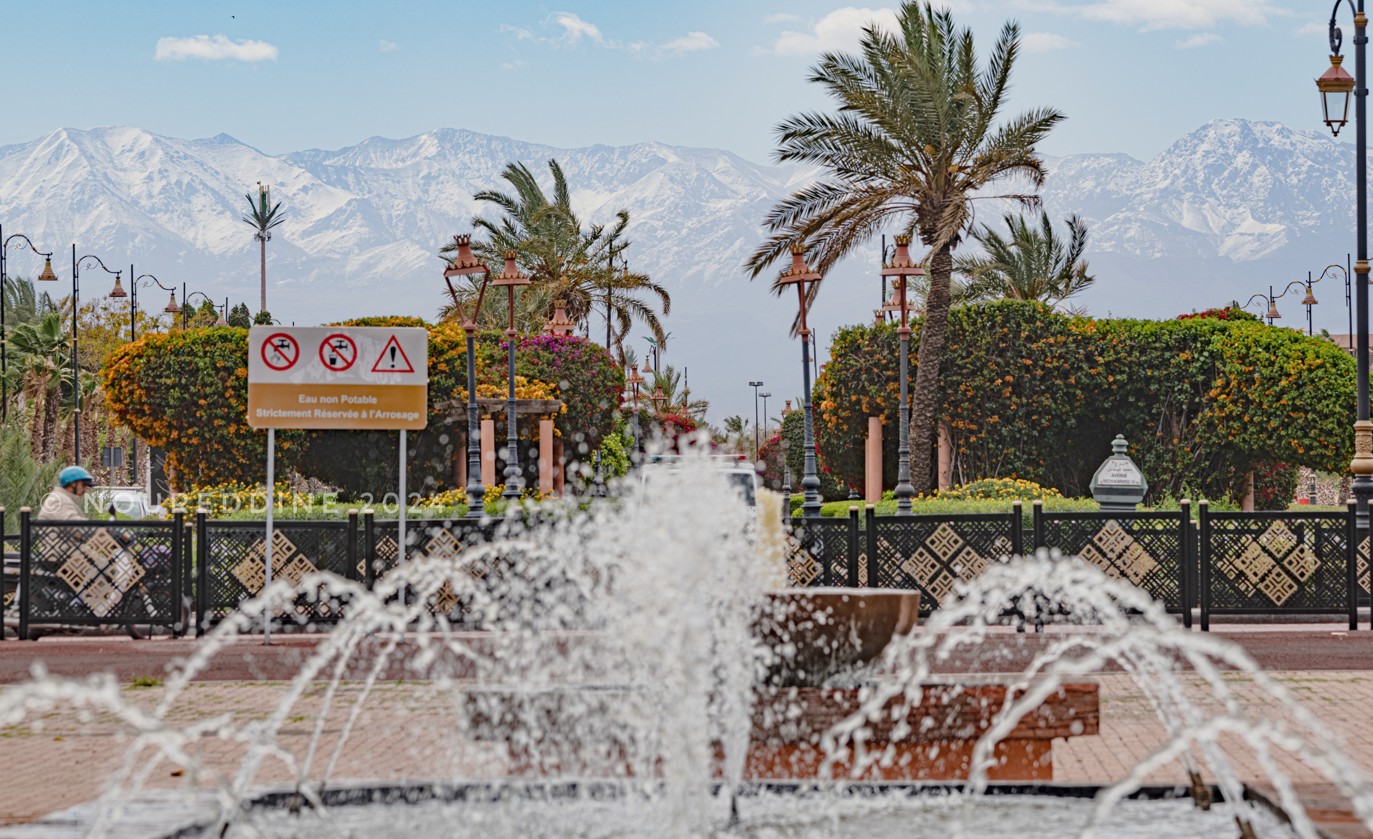
The High Atlas Mountains, visible from the rooftops of Marrakech and reachable in under an hour by car.
How Many Days in Marrakech? Back to top
Three full days is the minimum to feel like you have properly seen the city rather than rushed through it. That allows one day for the medina and Jemaa el-Fnaa, one day for gardens, palaces, and the new city, and a third day for a half-day excursion and unhurried wandering.
Four to five days is the sweet spot for most travelers. It gives you room for a day trip to the Atlas Mountains or Essaouira, time to revisit places you enjoyed, and space for the kind of unplanned discoveries that make travel genuinely memorable. If you want to combine Marrakech with a Sahara Desert tour, budget at least seven days in total.
Best Time to Visit Marrakech Back to top
The most comfortable months to visit are March to May and September to November. Spring brings warm days, blooming gardens, and manageable crowds. Autumn offers similar temperatures after the summer heat breaks and tends to be quieter than spring.
Summer in Marrakech is genuinely hot. July and August regularly exceed 40°C in the afternoon, and outdoor exploration becomes difficult between midday and late afternoon. That said, the city remains open and functional, mornings and evenings are pleasant, and prices are lower than peak season.
Winter is underrated. December through February offers cool, sunny days ideal for walking, and the holiday period brings a festive atmosphere to the city without the extreme crowds of peak spring. For a complete breakdown of when to go, see the Best Time to Visit Marrakech guide.
Who Is Marrakech For? Back to top
One of the things that makes Marrakech genuinely worth visiting is how effectively it works for different types of travelers. The city adapts to you rather than demanding you adapt to it.
Marrakech for Couples
Romantic in a way that few cities can match. Private riad courtyards, candlelit rooftop dinners, hammam treatments for two, sunset camel rides in the Palmeraie. Marrakech for couples feels like a scene from a film you did not know you wanted to be in.
Marrakech for Families
Children are warmly welcomed across Morocco. Marrakech for families works well because there is always something visually spectacular happening at street level, from acrobats to orange juice vendors to horse-drawn carriage rides through the city.
Marrakech Solo Travel
Solo travelers find Marrakech a genuinely good destination. The medina is walkable, guesthouses are sociable, and the city rewards curiosity. Marrakech solo travel is best approached with some planning and a little confidence at the negotiating table.
Marrakech Nightlife
The city has two entirely different night modes. The medina buzzes with food stalls and live music around Jemaa el-Fnaa until midnight. The Hivernage and Gueliz areas host a separate contemporary scene of cocktail bars, rooftop lounges, and live DJs.
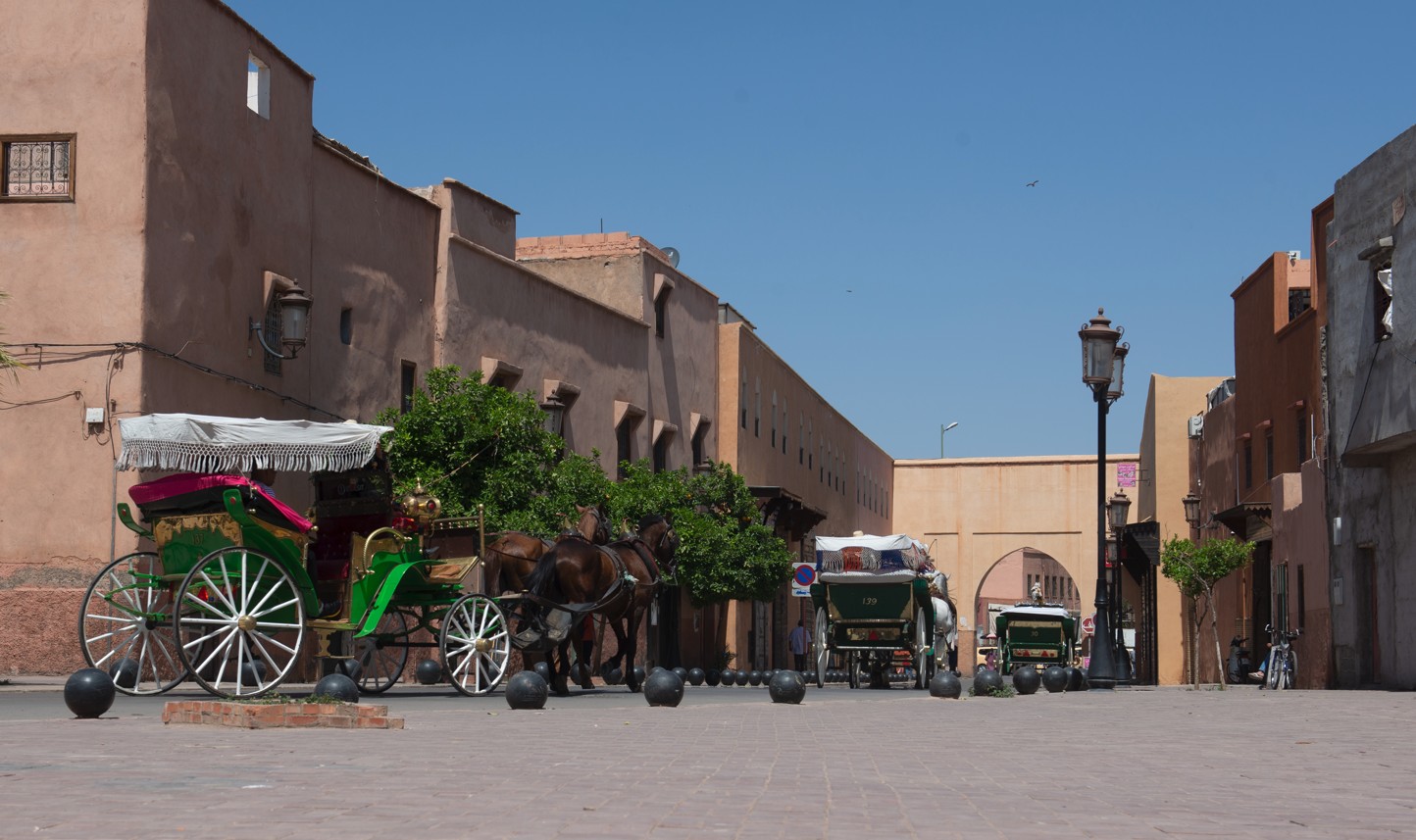
Horse-drawn carriage rides along the ramparts are a highlight for families and a romantic evening option for couples.
Is Marrakech Overrated or Overly Touristy? Back to top
Honestly? Jemaa el-Fnaa can feel very touristy, particularly in the hours when cruise day-trippers and group tours are all in the same square at the same time. The main souk alleyways near the square see a high density of visitors, and prices in those areas reflect it.
But Marrakech is also enormous. The medina alone covers an area large enough that most visitors see only a fraction of it. Walk fifteen minutes in any direction from the obvious tourist circuit and you will find yourself in residential alleyways where children play, women hang laundry, and nobody is trying to sell you anything. The authentic city is not hidden; it is simply not where the crowd is standing.
Is Marrakech overrated? Not really. It is occasionally misunderstood by visitors who arrive expecting a calm, photogenic backdrop and find instead a loud, layered, demanding city. Travelers who approach it with curiosity and patience tend to leave converted. The key is knowing what kind of experience you are signing up for.
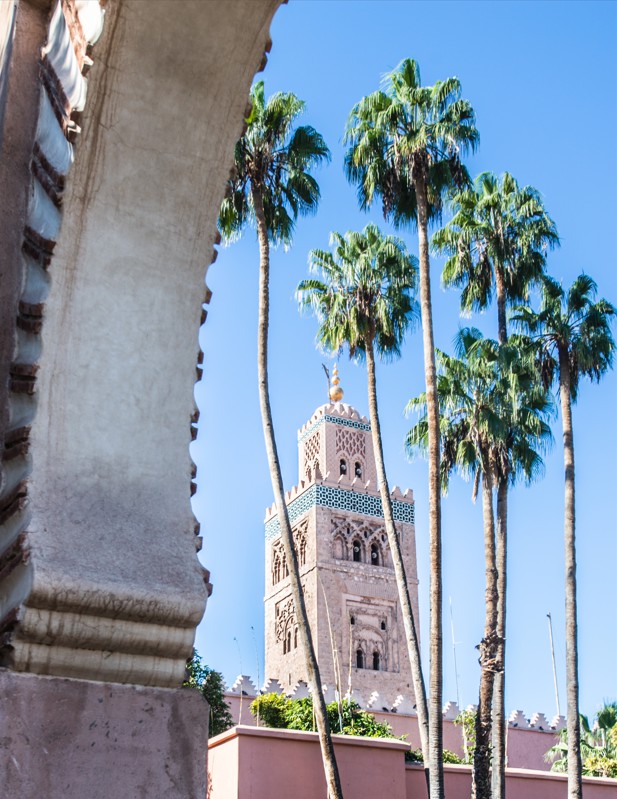
Beyond the tourist circuit, Marrakech reveals a quieter, more intimate version of itself.
Pros and Cons of Visiting Marrakech Back to top
A fair assessment of any destination includes both sides of the ledger. Here is an honest breakdown of the pros and cons of visiting Marrakech.
Pros
- Extraordinary cultural and historical depth
- World-class food at every price point
- Stunning architecture and garden design
- Excellent access to mountains and desert
- Warm, hospitable culture
- Strong value for money compared to Europe
- Well-developed tourism infrastructure
- Year-round destination with very few rainy days
Cons
- Aggressive touts near main tourist areas
- Can be extremely hot in summer
- Navigating the medina can be disorienting
- Some popular sites are expensive to enter
- Traffic and motorbikes inside the medina
- Bargaining can be tiring if you are not used to it
Marrakech vs Fes vs Agadir Back to top
The question of whether Marrakech is better than Fes or Agadir depends entirely on what you want from your trip. These are three very different cities serving very different appetites.
| City | Best For | Drawbacks |
|---|---|---|
| Marrakech | Culture, food, nightlife, desert access, couples, families | Touristy in central areas, summer heat |
| Fes | Deeper medina authenticity, Islamic scholarship, crafts | Harder to navigate, less international tourism infrastructure |
| Agadir | Beach holidays, family resorts, calm environment | Little cultural depth, modern resort feel |
Marrakech is better than Agadir for anyone interested in culture, history, or authentic Moroccan life. It is arguably more accessible than Fes for first-time visitors to Morocco, while offering a slightly different character: more international, more dynamic, and more immediately visual. If time allows, combining Marrakech with Fes on a longer itinerary gives you the full range of what Morocco’s Imperial Cities can offer.

Great content! Keep up the good work!
ok
ok, thanks i will visit Marrakech