Is Morocco good for solo travel? For most people, yes, and the travellers who come home disappointed usually made the same two choices: they started in the busiest medina in the country, and they treated the Sahara as something to improvise. Landing alone in Marrakech after dark, with no mobile data and a riad address the taxi driver cannot find, is a hard first hour anywhere. Arriving somewhere calmer, with the first night booked and someone waiting for you, changes the whole trip.
Short answer. Yes. Morocco works well alone if you can handle attention in the busy medinas and you plan the first two days properly. Trains and coaches link the main cities, riads make it easy to meet people, and the desert and the mountains are simple to join on a shared tour.
Go, but do not make Marrakech your first night unless someone is meeting you. Start in Rabat, or wherever you land, book an airport pickup and a riad whose host answers messages. Put the Sahara on a shared tour rather than stitching buses together. And if being approached every few minutes in a souk already sounds exhausting, make your first trip a short one built around the coast and the north.
Who Morocco suits alone, and who should wait↑
The country rewards a particular kind of solo traveller: curious, patient with noise, able to say no politely ten times a day and still enjoy the eleventh conversation. It is harder on people who need quiet to recharge, or who find being noticed tiring, because in the big medinas a person on their own is always noticed.
- like exploring cities on foot and getting a little lost
- are happy eating alone at a busy counter
- want to meet people through riads and shared tours
- have a week or more
- this is your first trip abroad on your own
- you have four days and want Marrakech, Fes and the desert
- haggling makes you miserable
- you expect to stay anonymous in a souk
None of these rule you out. They tell you where to start, which is most of what the rest of this guide is about.
How safe Morocco is when you travel alone↑
Most foreign governments let their citizens travel to Morocco with normal or increased caution. The US State Department rates it Level 2, exercise increased caution, and the reason it gives is the risk of terrorism rather than everyday crime. Advice changes, so read your own government’s page before you book.
What solo travellers actually run into is smaller and more tiring than dangerous: pickpockets in crowds, people who give directions and then ask for money, a friendly stranger who walks you to his cousin’s shop, a taxi driver who forgets the meter. Our list of common tourist scams goes through each one, and the wider question has its own page on whether Morocco is safe for tourists.
Two habits genuinely reduce risk when you are on your own. Know where you are sleeping before dark on the first night, and carry a phone with data, so a wrong turn is a two-minute problem rather than a reason to accept a stranger’s help. In an emergency, dial 19 for the police and 15 for an ambulance.
The first 48 hours: what catches people out↑
Almost every solo trip that goes wrong goes wrong early. The flight lands in the evening, the taxi stops at the edge of the medina because cars cannot go further, and the last stretch to the riad is a maze of unlit lanes. Within a minute someone offers to show you the way. Some are simply kind. Some will ask for money at the door, and a few will tell you the street ahead is closed and steer you somewhere else.
The fix is boring and it works. Book the first night with a riad that will send someone to meet you at the drop-off point, or arrange an airport pickup. Save the riad’s location on an offline map, and keep small notes for the first taxi. Our guide on how to avoid getting lost in Moroccan medinas covers the rest.
By the second day most people find their rhythm. The lanes start to repeat, you recognise the same juice seller, and the attention feels more like background noise than pressure. That is the moment to start enjoying the place, not the moment to judge the whole country.
In Jemaa el-Fna, musicians and snake charmers expect payment for a photo, around 20 dirhams in our experience. Ask the price before you lift your phone. Many will refuse at first or name a high figure, and it is fine to negotiate or walk on. Taking the picture first and arguing afterwards is how most disputes on the square start.
Where to start a solo trip, city by city↑
The city you begin in shapes how the rest of the trip feels. This is how the main stops compare for someone arriving alone, from the gentlest to the most demanding.
- RabatEasiest start
- The capital is calm, walkable and well connected by train. The Kasbah of the Udayas and the medina are quiet by Moroccan standards, and nobody follows you down the street.
- EssaouiraEasy
- Small, breezy and simple to walk end to end. There is no train, so you arrive by coach from Marrakech, which makes it a good second stop rather than a first.
- ChefchaouenEasy
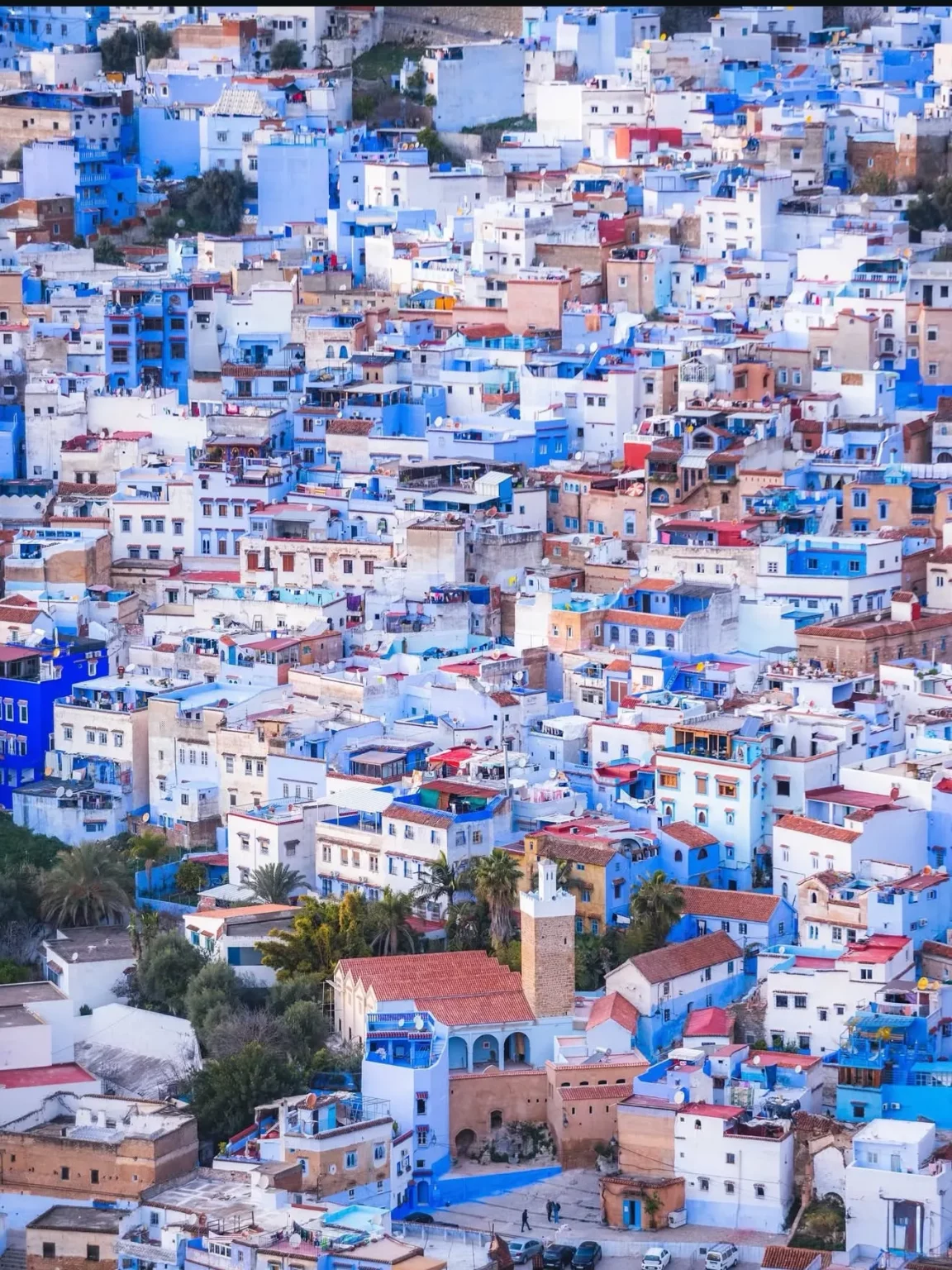
- A relaxed mountain town that rewards a slow day or two. It is about four hours by road from Fes, so stay at least one night instead of rushing a day trip.
- TangierModerate
- A port city with an intense old medina and a calm modern centre, and the fast train south. If you arrive by ferry from Spain, check which of its two ports your boat uses.
- MarrakechDemanding
- The most intense city in the country, and brilliant once you have your bearings. Better as a second stop, or a first one only with a pickup booked.
- FesDemanding
- The hardest medina to read on your own. A guide for the first morning saves most people a day of wrong turns.
- MerzougaPlan ahead
- The Sahara is not a place to improvise alone. Go on a tour, or with your transport and camp booked before you leave.
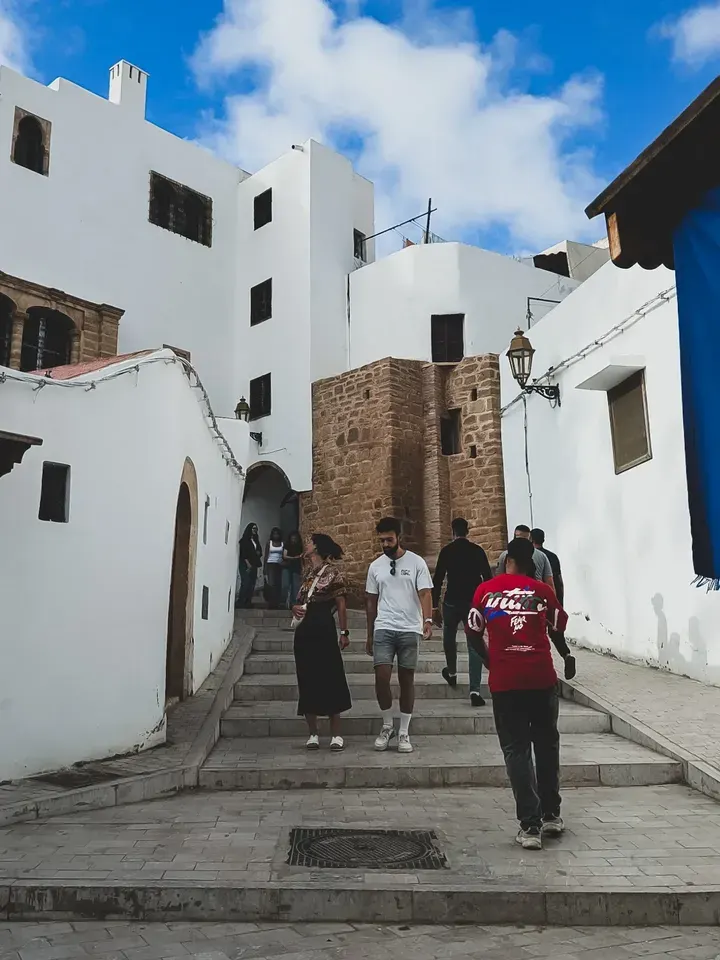
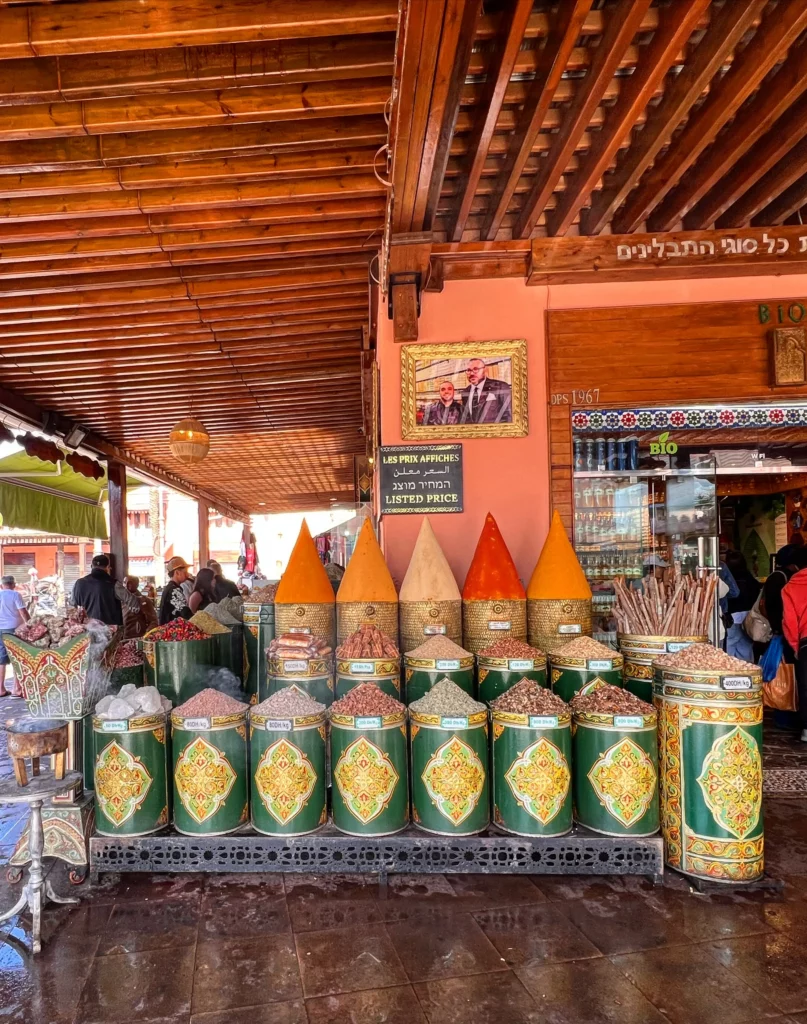
Two first mornings that feel nothing alike: a lane in Rabat’s kasbah, and a spice stall in the souks of Marrakech.
For a first week, starting in Rabat or Tangier, then heading to Chefchaouen and Fes, and leaving the desert and Marrakech for the end gives you a route that gets easier rather than harder as you go.
Getting around on your own↑
Morocco is easier to cross alone than people expect. The national rail network links Tangier, Rabat, Casablanca, Meknes, Fes and Marrakech, and the Al Boraq high-speed line makes Tangier to Casablanca a short morning. Our guide to travelling by train in Morocco explains tickets and classes.
Where the rails stop, CTM and Supratours coaches take over, to Essaouira, Chefchaouen, Ouarzazate and the south. Shared grand taxis run between nearby towns and leave when they are full. They are quick and cheap, but you share the back seat with strangers, and on longer runs some travellers simply pay for an extra seat.
Inside the cities, small taxis are the norm. Ask for the meter before you set off, or agree the fare first. The desert is the one place where going alone on public transport costs more than it saves: arranging the coach, the camp, the camel and the road back separately adds up fast for one person.
Travelling alone as a woman↑
Women do travel Morocco alone, and many come back more than once. It is also true that a woman on her own hears more comments in the busy medinas than a man does: mostly words, mostly in the tourist lanes of Marrakech and Fes. It rarely goes further than that, and walking on without engaging ends most of it. Sexual harassment in public spaces has been a criminal offence in Morocco since 2018, and a firm “la shukran” (no, thank you) is understood everywhere.
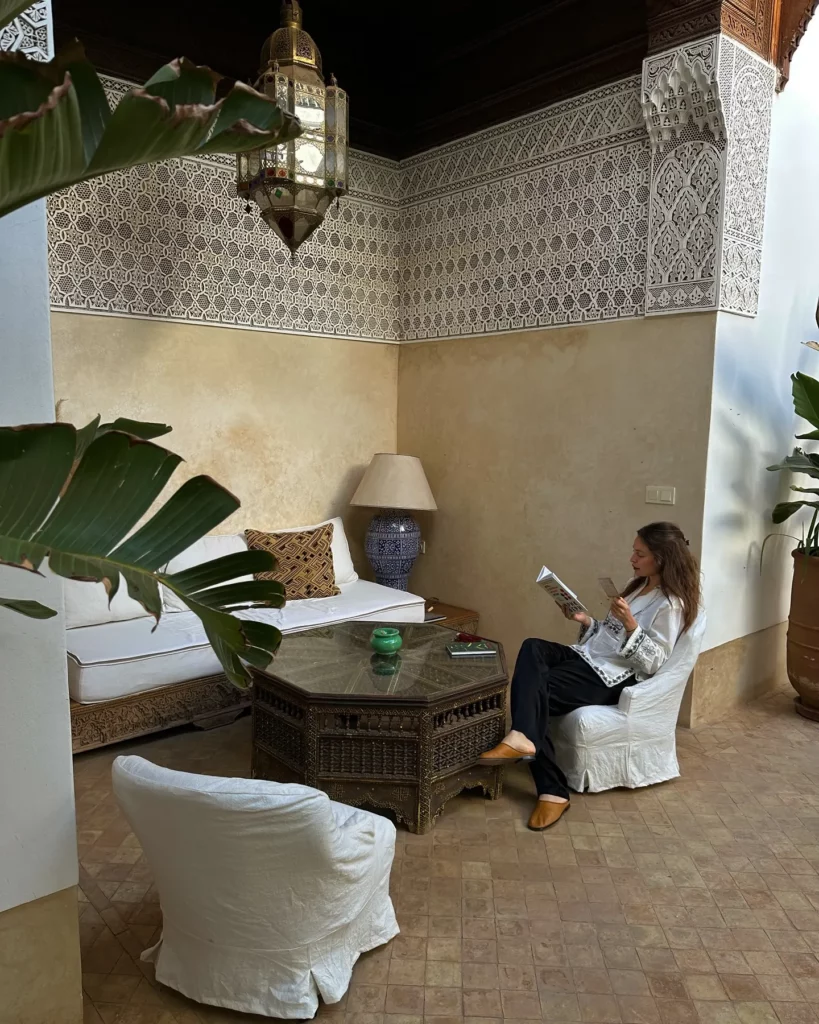
What helps most is simple. Wear clothes that cover shoulders and knees, which also keep you cooler in the sun. Choose a riad with a host you can message at any hour. Eat where families eat, and save your first evening walk in a big medina for when you already know the way back. Essaouira, Chefchaouen and Rabat are where women travelling alone tend to feel most at ease. For Marrakech in detail, read our guide on whether Marrakech is safe for solo female travellers.
Money: what costs more when you are alone↑
Morocco is not an expensive country, but it charges a single supplement in quiet ways. A double room in a riad usually costs the same for one person as for two. A private tour is priced around the car and the guide, so one traveller pays what a couple would split: on the private tours listed on this site, one traveller often pays 1.7 to 1.8 times the per-person rate of a couple.
Shared tours are where solo travellers save, because you pay for a seat and there is no single supplement. Street food is good and cheap, and most cities have hostels and riads with single rooms. A neighbourhood hammam starts at about 20 dirhams, or about 30 with a kessal, the attendant who scrubs you, depending on the hammam; the spa hammams aimed at visitors are a different product at a different price.
Service is already included in Moroccan menu prices, so a tip is a thank-you rather than an obligation. Our guide to tipping in Morocco gives amounts in dirhams for guides, drivers and riads. Carry cash for small purchases: cards work in hotels and larger shops, rarely at a stall.
Habits that make solo travel easier↑
None of this is complicated, and all of it matters more when there is nobody beside you to check the map.
- Buy a local SIM or an eSIM on arrival. Messages to your riad, maps and ride details all depend on it.
- Download offline maps before you enter a medina, and note landmarks as you walk: GPS drifts in narrow lanes.
- Learn three words: salam (hello), shukran (thank you) and la shukran (no, thank you).
- Keep small notes and coins apart from the rest of your money.
- Share your route with someone at home, and tell your riad when you expect to be back.
- Expect the rhythm to change on Friday around midday prayers and during Ramadan, when some shops close and evenings get busier.
Arabic and Amazigh are the official languages, people speak Darija day to day, French is widely used in shops and offices, and Spanish is common in the north. English goes a long way in riads and tourist businesses, and less far once you step outside them.
When a guide is worth it, and when it is not↑
You do not need a guide for Morocco. You may want one for a morning. Fes is the clearest case: three hours with someone who knows its medina saves a day of dead ends. The Sahara and the High Atlas are the other two places where going with a professional is simply the sensible choice. Rabat, Essaouira, Chefchaouen and Tangier are easy without one.
Guiding is a licensed profession in Morocco. The man who offers to show you around in the street is not a guide, however friendly he is. Our article on how to hire a licensed local guide explains how to check.
Marrakech to Merzouga: 3-day group desert tour
- Shared air-conditioned minibus with a licensed driver-guide working in English and French.
- Groups of 6 to 17 travellers, with a departure every day of the year.
- A night in a desert camp at Erg Chebbi, with camel rides at sunset and sunrise.
- From €95 per person, with no single supplement.
- The limit: long road days, about ten hours of driving on the way back, and the group sets the pace.
Questions people ask before going alone↑
Is Morocco a good first solo trip?
It can be, if you start somewhere calm and book your first two nights before you land. If you have never travelled alone at all, a short first trip to Rabat, Essaouira or Chefchaouen is a gentler test than a week that opens in the Marrakech medina. People who struggle usually tried to see too much, too fast, in the most intense places.
How many days do I need to travel Morocco alone?
A week covers two or three cities and a desert tour without rushing. Ten days lets you add the north or the coast. With four or five days, pick one region rather than crossing the country, because travel days are long and tiring when nobody shares the driving or the planning.
Can I visit the Sahara without a tour?
Yes. Long-distance coaches reach Merzouga, and you can book a camp yourself. For one person, though, it rarely costs less than a shared tour, and it takes far longer to arrange. Going independently makes more sense if you have a car, plenty of time, or want to stay several nights in the dunes.
Do I need to speak French or Arabic?
No. English is enough in riads, tour companies and most places used to visitors. French helps a lot once you leave the tourist circuit, in taxis, markets and small towns. A few words of Darija, even just shukran, change the tone of almost every conversation.
Is it easy to meet other travellers?
Easier than in many countries. Riad breakfasts and rooftop terraces, cooking classes, hostels and shared desert tours all put you in front of people without effort. Smaller riads are better for this than large hotels, where you can go days without a real conversation.
What should I do if someone keeps following me in the medina?
Say no once, clearly, and keep walking towards a busy street, a shop or a café. Do not follow anyone into a side lane. If it continues, step inside a shop and ask for help, or ask your riad to send someone. Most persistence stops the moment you look sure of where you are going.
Planning your first solo trip to Morocco↑
Pick a calm first stop, book the first night with someone meeting you, put the desert on a shared tour, and give Fes and Marrakech the time they ask for. Do that, and travelling Morocco alone stops being a question of whether you can cope and becomes a question of how long you want to stay. When you are ready to sketch dates and a route, our trip planner is the simplest next step.
Moroccan Travel Trips, operated by PROMYTHIC TOURS SARL AU, offers licensed tourist guide services in Morocco. The advice above comes from organising trips for travellers, many of them on their own.