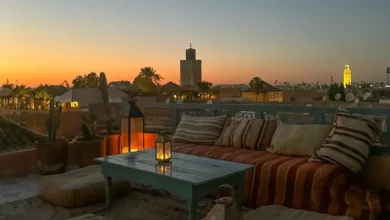
Morocco dresses its landscapes in saffron, cobalt, and rose gold — and the women who visit deserve to look equally striking. This is not a list of prohibitions. It is an invitation to dress with intention, honoring a culture that takes beauty seriously while expressing every bit of your personal style. Whether you are sipping mint tea on a riad terrace in Marrakech, navigating the blue alleys of Chefchaouen, or watching the Sahara turn amber at dusk, this guide covers what to pack, how to wear it, and how to carry yourself.
Before diving into specifics, context matters. Morocco sits at a remarkable crossroads — between Europe and sub-Saharan Africa geographically, between the Arab world and Amazigh traditions culturally, and between a cosmopolitan modernity and deeply rooted Islamic values socially. Understanding the Morocco female dress code is less about strict rules and more about reading the room elegantly.
At a Glance: Morocco Dress Code by Location
Use this quick reference before you pack. Every female tourist following Morocco dress code female tourists guidelines will find this table indispensable.
| Location | Shoulders | Legs | Head Cover | Swimwear | Shoes |
|---|---|---|---|---|---|
| 🕌 Medina / Souk | Covered | Below knee | Optional | N/A | Flats only |
| 🏨 Luxury Riad | Relaxed | Any length | Not needed | Bikini OK | Mules / sandals |
| 🏜 Sahara Desert | Covered | Maxi preferred | Scarf / turban | N/A | Closed-toe |
| 🌊 Atlantic Beach | On beach OK | Shorts OK | Not needed | Bikini OK | Sandals |
| 🕌 Hassan II Mosque | Must cover | Full length | Required | N/A | Remove at door |
| ⛰ Atlas Mountains | Cover in villages | Long trousers | Sun hat fine | N/A | Trail shoes |
| 🍽 Restaurant / Rooftop | Relaxed | Any length | Not needed | N/A | Block heels fine |
| 🌙 Ramadan (daytime) | Must cover | Below knee | Respectful choice | Private only | Any |
Real Traveller Experience: What Women Actually Say
Guidebooks are useful, but nothing beats the honest account of a woman who has just returned from the souks of Marrakech. This experience — representative of dozens of discussions found in the r/Morocco community on Reddit — captures the kind of nuanced, real-world wisdom that most travel articles overlook.
Location-by-Location: Your Morocco Outfit Ideas
The best outfits for Marrakech, the desert, and beyond share one quality: they are built with intention. Here is how to dress for each iconic setting, covering the Morocco dress code female expectations at every stop.
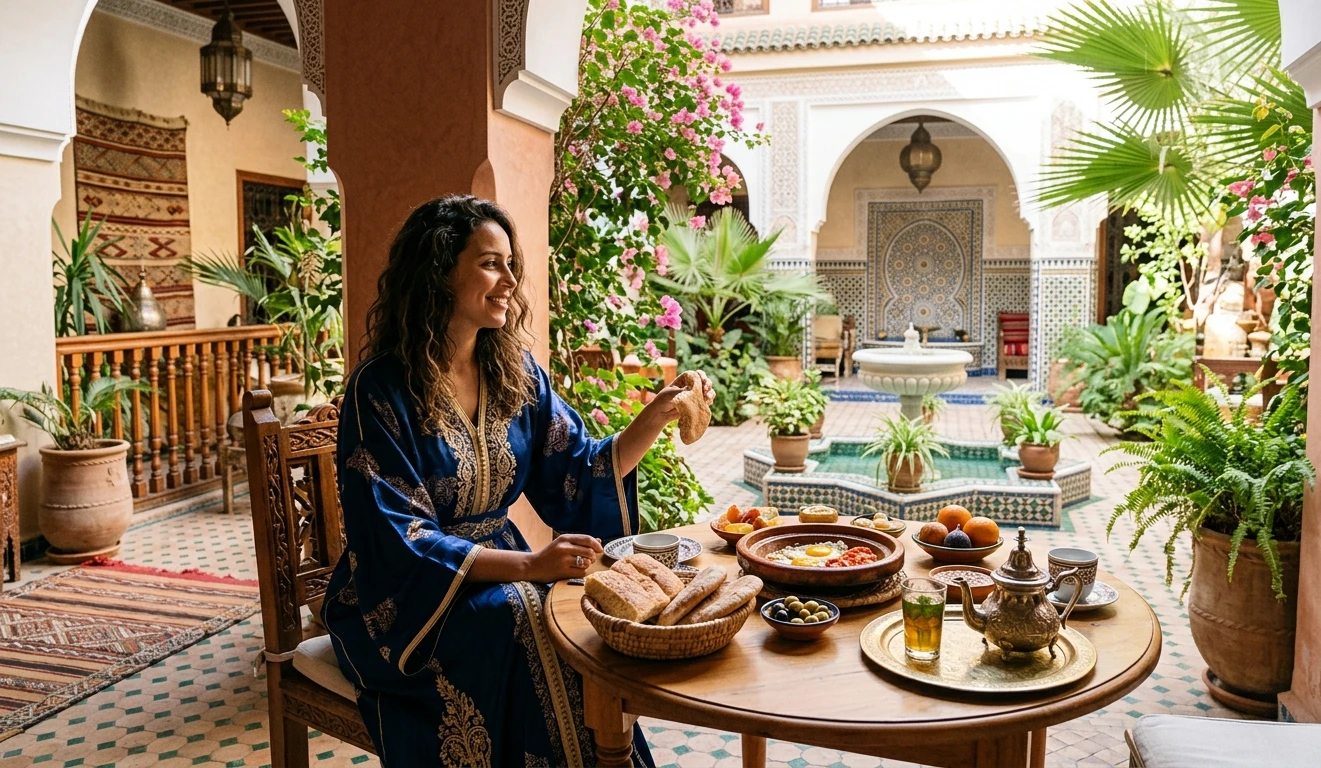
Inside a riad or five-star hotel, elegance is the only dress code. This is where your most beautiful pieces earn their place.
- Flowing midi or maxi dresses in jewel tones or warm neutrals
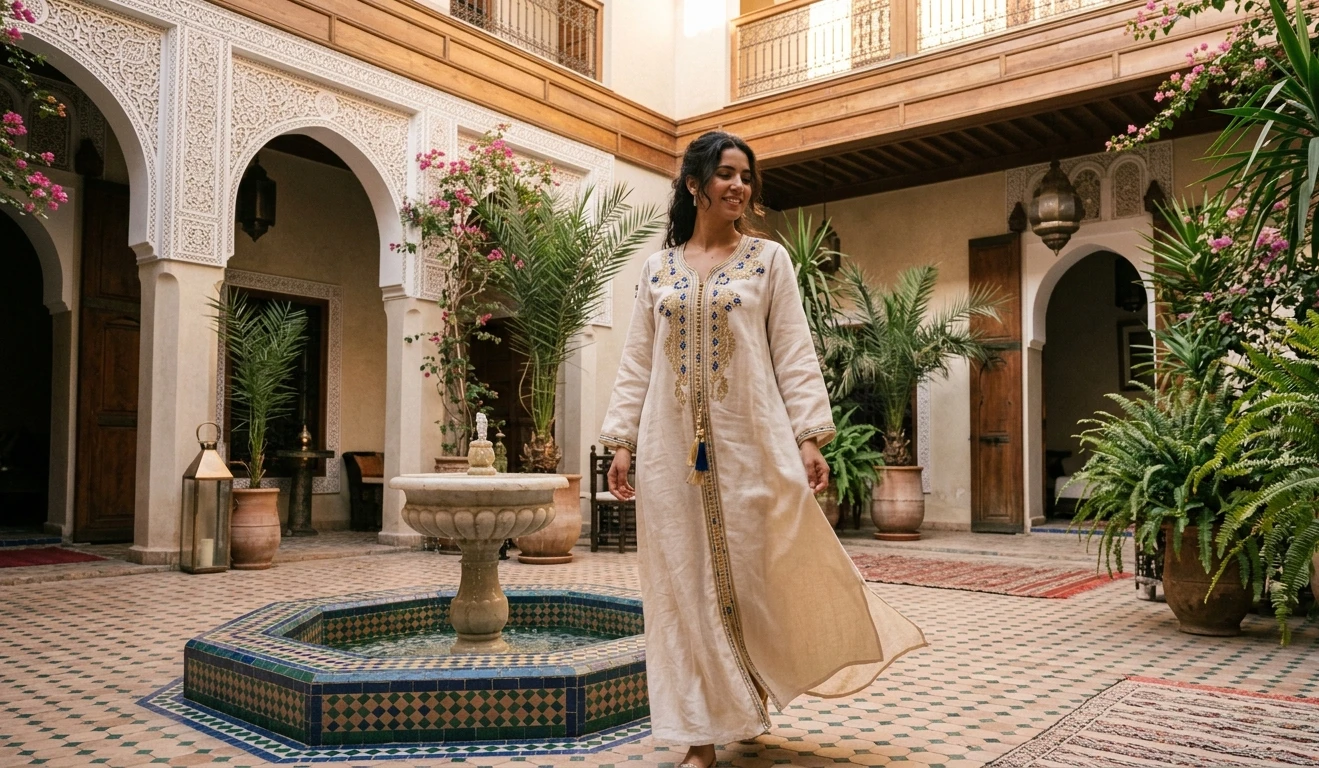
- Embroidered kaftans as cover-ups or evening dresses
- Modest one-piece or bikini at the private pool
- Block-heel mules or embellished leather flats
- Statement gold jewellery — oversized hoops, layered chains
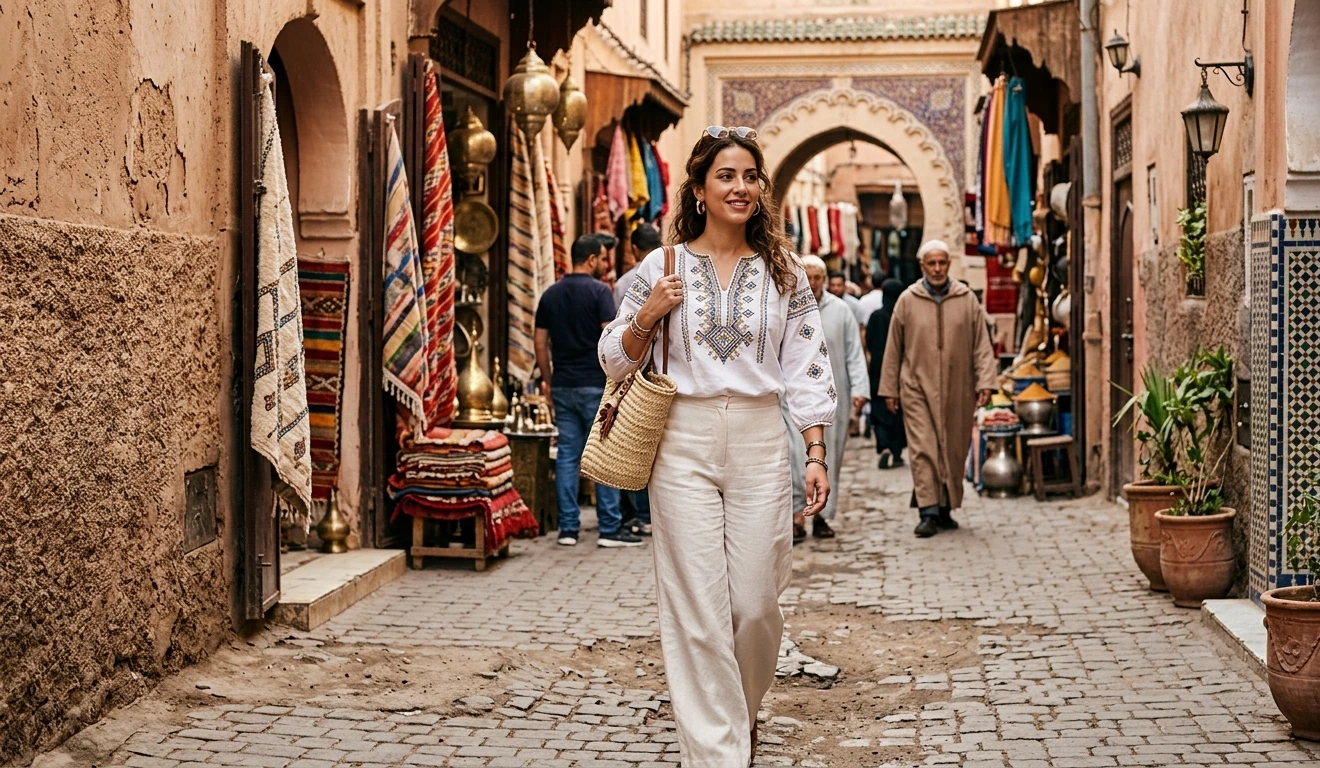
The medina demands an outfit that is practical, respectful, and completely photogenic. Think of the Morocco outfit ideas female travellers love most: layered, loose, effortlessly chic.
- Wide-leg linen trousers + loose embroidered blouse (lightly tucked)
- A-line or wrap midi skirt falling below the knee
- Light cotton scarf in your bag at all times
- Flat leather sandals or clean neutral sneakers
- Structured crossbody bag — keeps hands free for exploring
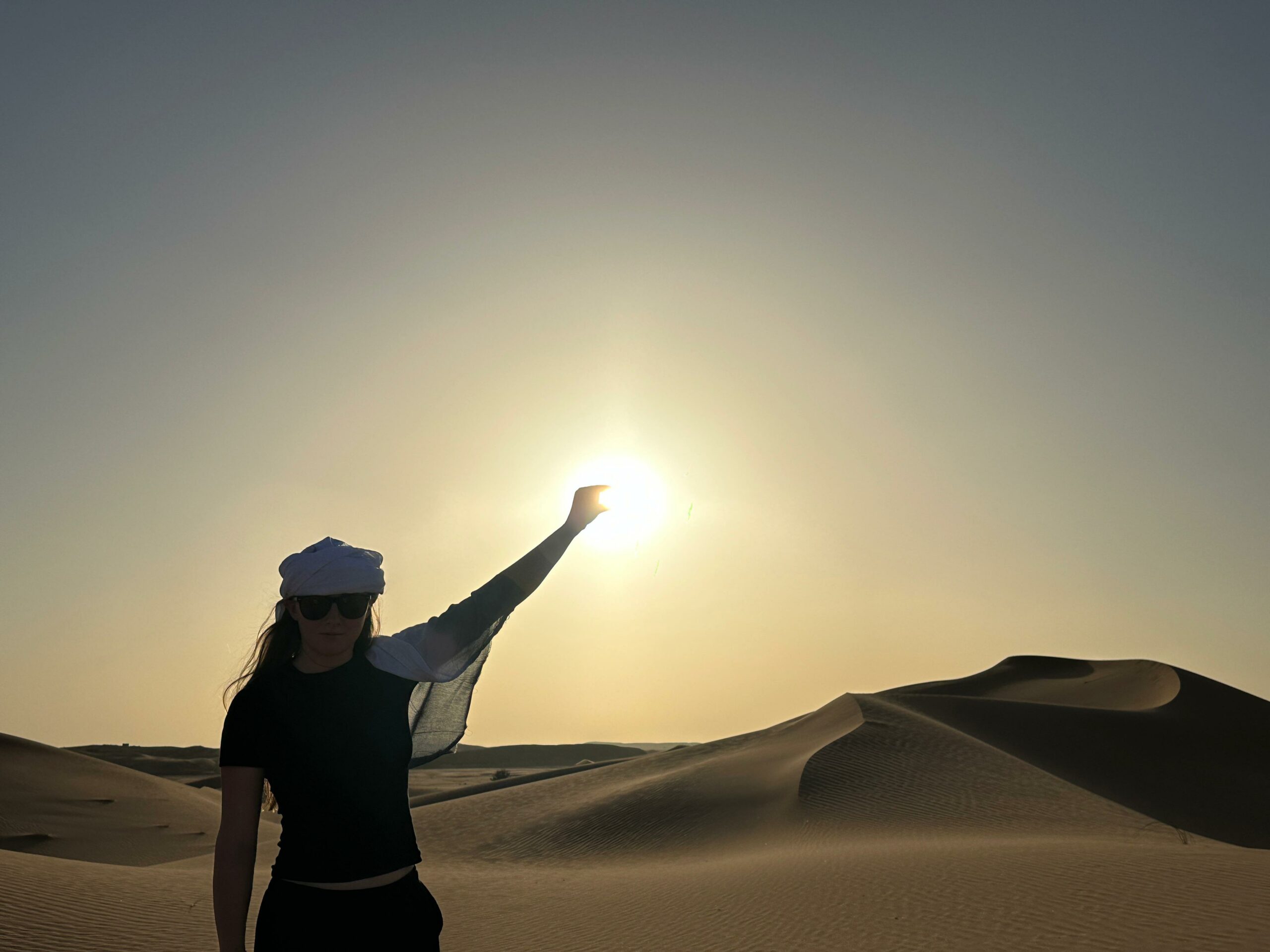
A Sahara sunrise is as cinematic as it sounds. Your outfit should match that backdrop while managing a 20 °C day-to-night temperature swing.
- Sand-toned or cream linen maxi dress — flowing for camel trekking photos
- Berber-style turban or oversized scarf for sun and sand
- Closed-toe ankle boots (sand invades open sandals)
- Warm fleece or denim jacket for bonfire evenings
- Light thermal base layer for October–March visits
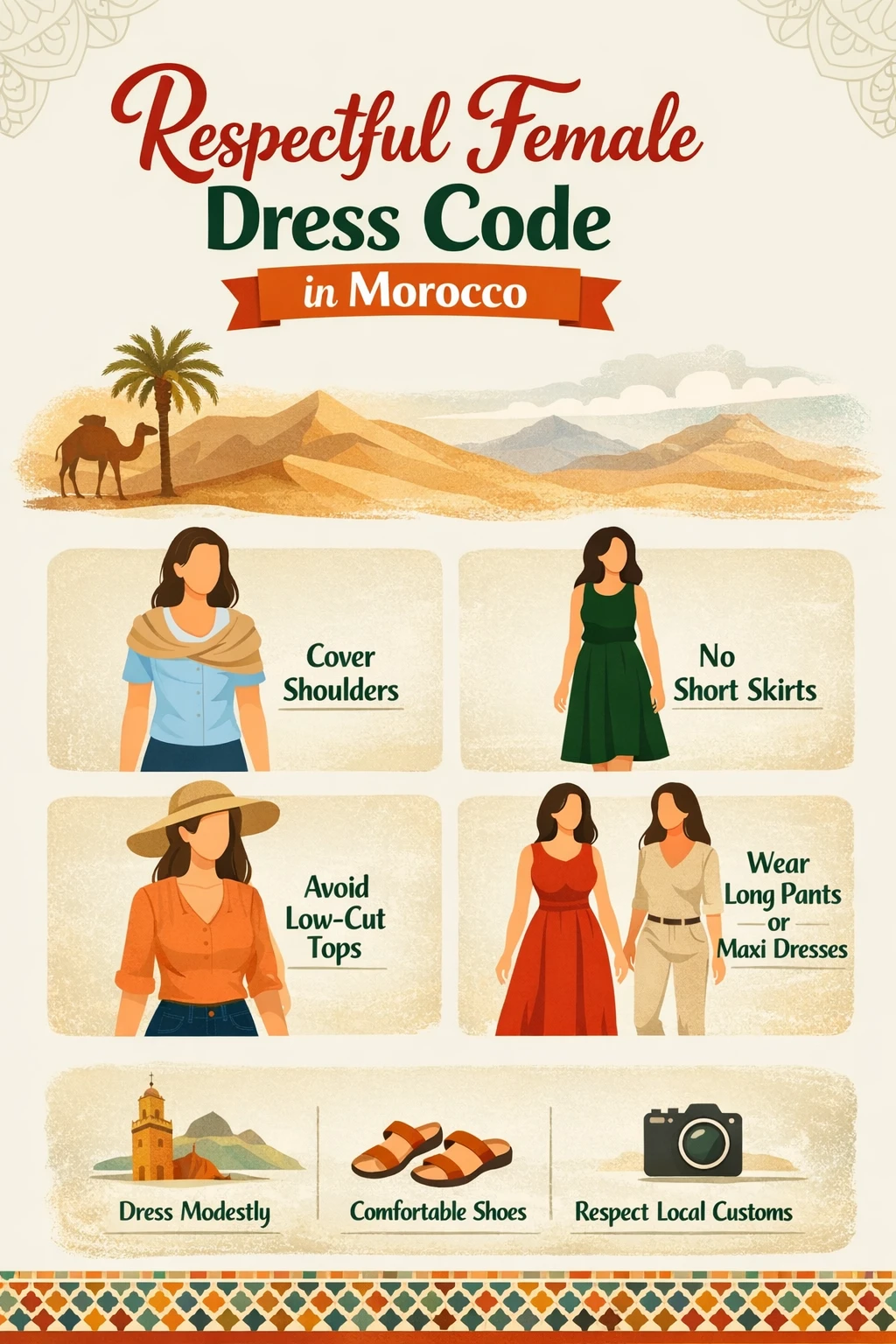
Hassan II Mosque Dress Code for Women
The Hassan II Mosque dress code for women is the strictest in the country and the most important to get right. This iconic Casablanca mosque — one of the largest in the world and among the very few open to non-Muslim visitors — requires an ankle-length dress or skirt, covered shoulders and arms, and a headscarf for entry. This is enforced at the door. A large silk pashmina (180 × 90 cm) solves all three requirements in one elegant piece. For a broader Casablanca itinerary, explore our complete guide to Morocco’s cities.
Always carry a large lightweight scarf in your bag throughout Morocco. It functions as headscarf for mosque visits, a shoulder cover in medinas, sun protection in the desert, and a warm layer on cool evenings. One accessory, infinite utility — the cornerstone of every smart Morocco packing list for women.
Modest Swimwear & Coastal Dressing
Morocco’s Atlantic coast — Agadir, Essaouira, Taghazout — is noticeably more relaxed than the interior. Bikinis are entirely the norm on the sand. For hotel pools at luxury properties, any swimwear is appropriate. At mixed community pools or family riads, modest swimwear for Morocco hotels — a one-piece with a sarong — is the thoughtful and stylish choice. Step away from the sand and toward town streets and a linen cover-up is the right call: not because of rules, but because it is the elegant and respectful thing to do.
Hiking Clothes for Atlas Mountains Female Travellers
The High Atlas has a cooler, quieter energy, with Amazigh villages that hold a strong sense of cultural identity. When choosing hiking clothes for Atlas Mountains female travellers, the goal is modest and performance-driven simultaneously. Moisture-wicking full-length leggings paired with a longline tunic falling to the hip strikes the right balance on the trail. For village stops and tea with local families, swap into full-length trousers or a long skirt — this small gesture is always noticed. A fleece zip-up and packable windproof shell are non-negotiable at altitude.
What to Wear During Ramadan in Morocco
Visiting during Ramadan is a genuinely special experience that asks a little more of visitors. During daylight hours, cover shoulders and legs below the knee in public spaces and markets. A simple linen dress instead of a sundress is the minimal adjustment required. After iftar (the sunset meal), the atmosphere lifts dramatically and standard evening dressing is perfectly appropriate. The intention matters as much as the garment.
What NOT to Wear in Morocco: 7 Common Mistakes
Even well-intentioned travellers make wardrobe missteps. Here are the most frequently cited errors in the Morocco dress code female conversation — learning what not to wear in Morocco is as valuable as knowing what to reach for.
Exposed midriffs attract unwanted attention in traditional quarters. Reserve crop tops entirely for beach resorts or private hotel terraces.
Shorts are fine on Atlantic beaches but look jarring — and invite staring — in medinas, religious neighbourhoods, and smaller towns inland.
Cobblestone alleys and uneven pavement make medina streets actively hostile to heels. Flat leather sandals or sneakers are both more comfortable and more appropriate.
Bold graphic prints and neon colours can read as disrespectful in traditional settings. Earthy tones, muted jewel shades, and classic neutrals photograph beautifully against Morocco’s palette anyway.
Form-fitting leggings without a long tunic or dress covering the hips are the most frequently cited mistake in female traveller communities. Fine at the hotel gym — not for navigating the Djemaa el-Fna.
Busy medinas have pickpockets. An open tote is a risk. Pair it with a secure crossbody or zipped belt bag for valuables while keeping the tote for souk shopping.
Sahara days can exceed 38 °C while nights drop to 10 °C. Packing only light summer dresses without a warm layer is a very common — and very uncomfortable — oversight.
Whatever you wear, always carry a large scarf. It is the single most important item in your Morocco wardrobe — solving every unexpected situation from an impromptu mosque visit to a sudden sandstorm in the Erg Chebbi dunes.
Beyond Clothing: How to Carry Yourself in Morocco
Dressing well is only part of the picture. How you move through Morocco — how you make eye contact, interact with vendors, navigate streets, and communicate with strangers — shapes your experience just as profoundly as what you wear.
Sustained direct eye contact with male strangers — especially in the medina — can be read as an invitation. A brief, friendly glance followed by looking ahead signals confidence without invitation. During negotiations in shops, direct eye contact is entirely expected and appropriate.
Moroccan souk culture is built on negotiation — it is an art form, not a confrontation. Enter every transaction with warmth and a smile. A firm, friendly “la shukran” (no, thank you) is always respected. Never feel obligated to buy after accepting tea — it is genuine hospitality, not pressure.
Walk with purpose and direction, especially in busy medinas. Looking lost invites attention — check your map before turning into a new alley rather than pausing mid-street. In quieter villages and small towns, a slower, appreciative pace shows genuine curiosity and is perfectly comfortable.
A simple “as-salamu alaykum” or even “bonjour” opens almost every door. In more traditional areas, wait for a man to extend his hand first before offering yours — some observant men prefer not to shake hands with women they don’t know, and that preference deserves easy respect.
Always ask permission before photographing people — a smile and a gesture toward your camera is usually enough. In mosques, shrines, and cemeteries, put the camera away unless explicitly invited. The most extraordinary portraits come from genuine connection, not stealth shots.
Traditional street-side cafés in medinas are predominantly male spaces. Rooftop cafés and restaurant terraces are much more mixed and relaxed. Riad restaurants offer the same excellent mint tea in an entirely comfortable setting — a good fallback whenever a café feels uncomfortable.
For a broader look at personal safety and city-by-city recommendations, our dedicated guide on the safest cities in Morocco for women and our overview of tourist safety in Morocco are essential pre-trip reading.
The Ultimate Packing List for Morocco Female Travellers
This interactive packing list for Morocco female travellers is built around the Morocco outfit ideas approach: versatile, elegant, and culturally informed. Tick items as you pack them, switch between destination tabs, and print a clean copy to take with you.
✦ Morocco Packing Checklist for Women
Dressing by Season
Near-perfect temperatures. Light linen dresses, a cardigan for evenings. Ideal photography conditions.
Intense heat inland. Ultra-light natural fibres only. Always carry your scarf. The Atlantic coast stays refreshing.
Arguably the finest time to visit. Layer a trench coat over maxi dresses. Golden-hour light is extraordinary.
Cold at altitude, mild on the coast. Knitwear, leather boots, and a proper coat for Fes or Marrakech nights.
Quick Answers: Common Questions About the Morocco Female Dress Code
Yes, in the right settings. Shorts are perfectly appropriate on Atlantic beach resorts — Agadir, Taghazout, Essaouira beach zones — and around private hotel pools. In medinas, city souks, smaller towns, and anywhere near mosques or religious sites, trousers or skirts below the knee are strongly preferred. The simple rule: shorts belong at the beach, not the bazaar.
No — with one important exception. International women are not expected to cover their hair in everyday Moroccan life. The sole exception is formal religious visits: the Hassan II Mosque in Casablanca requires a headscarf as a condition of entry. A large light scarf in your bag at all times is the simplest solution — it handles mosque visits and doubles as excellent sun protection.
Slightly more modest than your usual Morocco wardrobe during daylight hours — covered shoulders and legs below the knee in public spaces and markets. A lightweight linen dress instead of a sundress is often the only adjustment needed. After iftar (the sunset meal), the atmosphere lifts and regular evening dressing is entirely appropriate. Locals always notice and appreciate the effort, however small.
Marrakech rewards colour and artisanal texture. The best outfits for Marrakech in the medina are wide-leg linen trousers paired with an embroidered blouse, or a flowing midi dress in terracotta, dusty rose, or ochre — tones that photograph beautifully against the city’s pink walls. For riad dinners and rooftop terraces, an embroidered kaftan is your single most versatile Marrakech garment. Flat leather sandals or babouche slippers complete the look perfectly.
Morocco is visited by millions of women travelling solo every year, and the vast majority report overwhelmingly positive experiences. Thoughtful dressing and confident, purposeful behaviour contribute enormously to a comfortable trip. For city-by-city recommendations, read our guide to the safest cities in Morocco for women, and our broader look at tourist safety in Morocco.
Shopping Your Morocco Wardrobe Locally
One of the genuine joys of Morocco is that you can build your ideal travel wardrobe inside the souks themselves — often more beautifully and affordably than anything you packed from home. Genuine hand-woven kaftans, embroidered djellabas, leather babouche slippers, and hand-blocked cotton fabrics are available at every price point. Budget a specific amount in local dirhams (see our guide to what currency Morocco uses) specifically for textile shopping. A hand-stitched kaftan from a Fes artisan is not only the most versatile piece in your suitcase — it will be the story you tell most when you get home. Our complete guide to Morocco’s cities helps you plan which city offers the best shopping for each craft. And for anyone wanting to understand Morocco beyond the tourist trail, our article on Morocco’s development and modern character reshapes how you see everything — including the remarkable artisan traditions behind Moroccan fashion.
Style Is the Best Souvenir
The women who travel Morocco most confidently are not the ones who stripped their wardrobe to the safest possible choices. They are the ones who engaged with the culture, bought a kaftan on day two, wore it to dinner on the riad rooftop, and wore it again on the last evening in the Sahara. Understanding what to wear in Morocco for women — and what NOT to wear — is ultimately about reading the landscape, honouring the people, and letting Morocco’s extraordinary sense of colour and craft shape your own aesthetic.
Pack the linen. Carry the scarf. Wear the jewellery. Morocco is one of the most visually spectacular countries on Earth — and you deserve to look exactly the part.