What to Eat in Morocco
(and What to Avoid)
From slow-cooked tagines in the medina to sizzling street food in Jemaa el-Fna — your complete, honest guide to Moroccan cuisine.
Moroccan cuisine is one of the most celebrated in the world — layered with centuries of Berber, Arab, Andalusian, and French influence. But knowing what to eat in Morocco — and what to give a wide berth — can make the difference between a truly unforgettable culinary adventure and an uncomfortable few days. This guide covers everything: the iconic dishes on every traveler’s list, the hidden street-food gems, the regional specialties worth a detour, and the honest warnings most travel blogs are too polite to mention.
Why Moroccan Food Is Extraordinary Top
Step inside any home or riad kitchen in Morocco and you’ll immediately sense that food here is never casual. It is deliberate, patient, and deeply personal. The country sits at a crossroads of civilizations — Morocco’s geography has made it a meeting point of Saharan trade routes, Mediterranean coast, and Atlantic shores — and that diversity pours straight onto the plate.
Berber communities introduced the clay-pot cooking and the earthy use of wild herbs. Arab traders brought saffron, preserved lemons, and complex spice blends. Andalusian refugees fleeing 15th-century Spain layered in sweetness — dried fruits, honey, orange-blossom water — giving Moroccan food its signature contrast between savory and sweet. French and Spanish colonial presence added café culture and a love of fresh bread.
The result is a cuisine of contradictions that somehow always works: sweet and salty, warm and cold, rustic and refined.
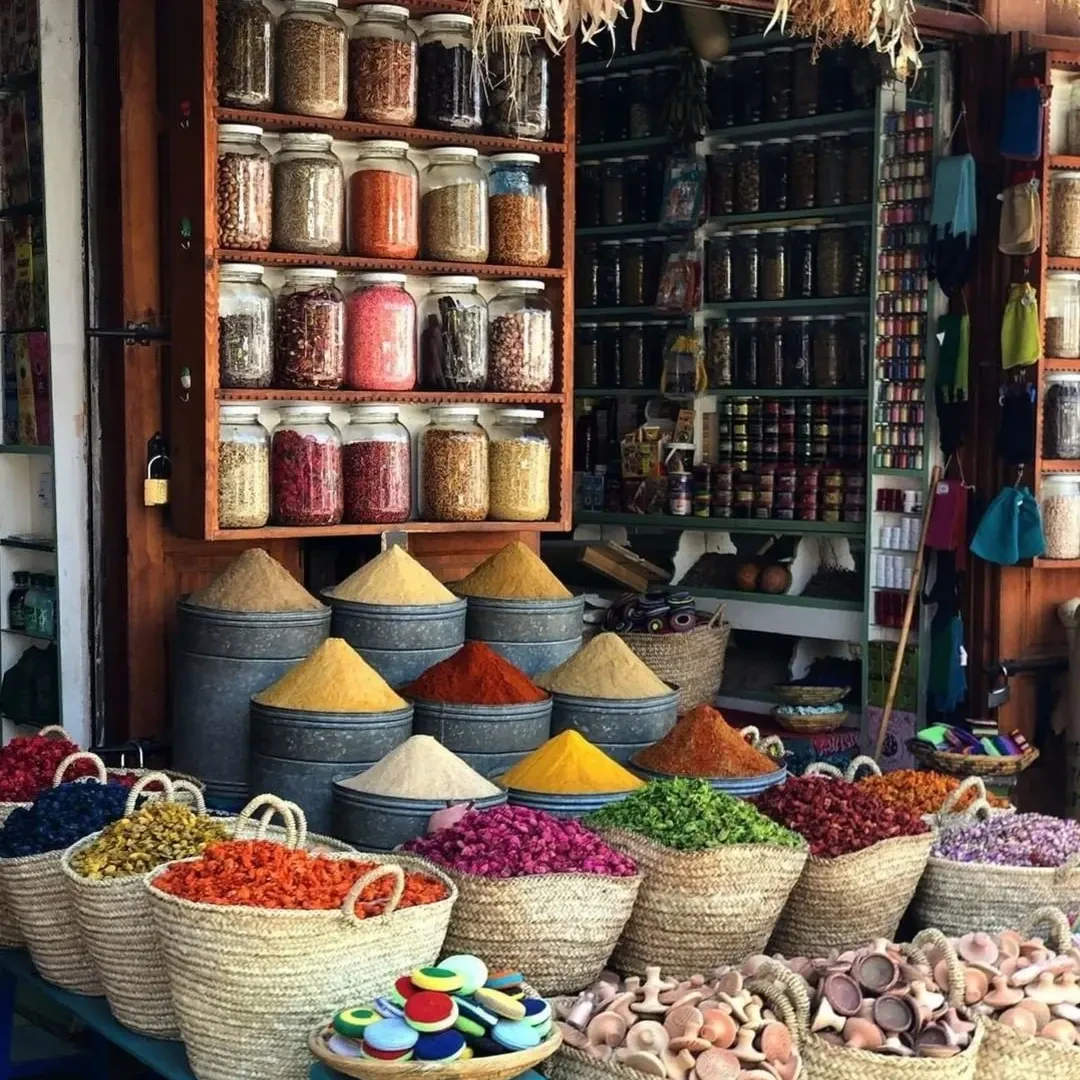 The spice souks of Marrakech and Fès are a sensory introduction to Moroccan flavors.
 The Famous Food of Morocco — A Complete List Top
Below is a curated list of Moroccan food every traveler should seek out. These aren’t just tourist favorites — they are dishes Moroccans eat daily, cook for celebrations, and take genuine pride in.
Morocco Traditional Food Tagine — Everything You Need to Know Top
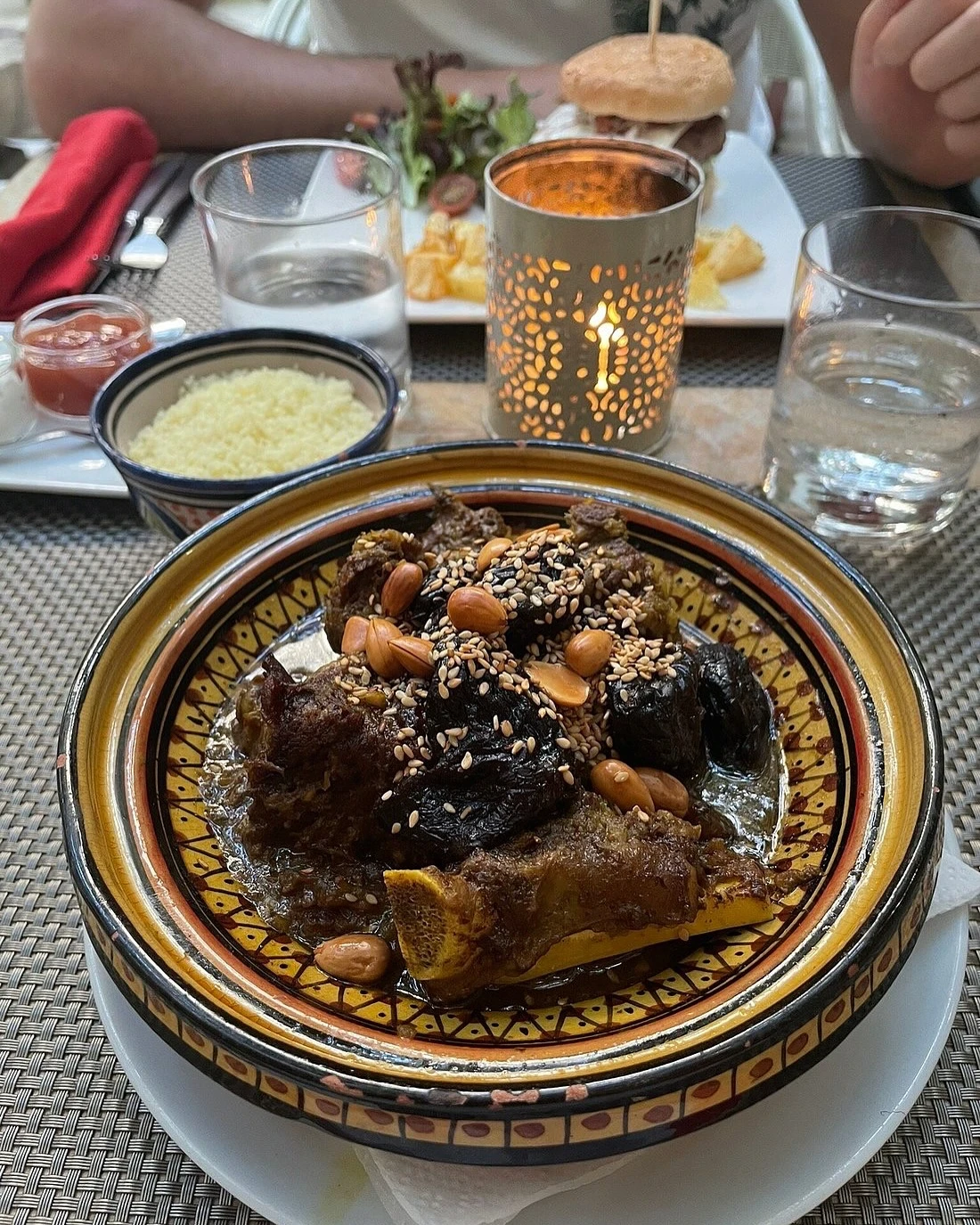
If there is one dish that defines what to eat in Morocco, it is the tagine. Both the name of the dish and the distinctive conical clay pot in which it cooks, the tagine is more philosophy than recipe. The cone-shaped lid traps rising steam and recirculates moisture down onto the ingredients below, effectively braising everything in its own juices — no added water needed.
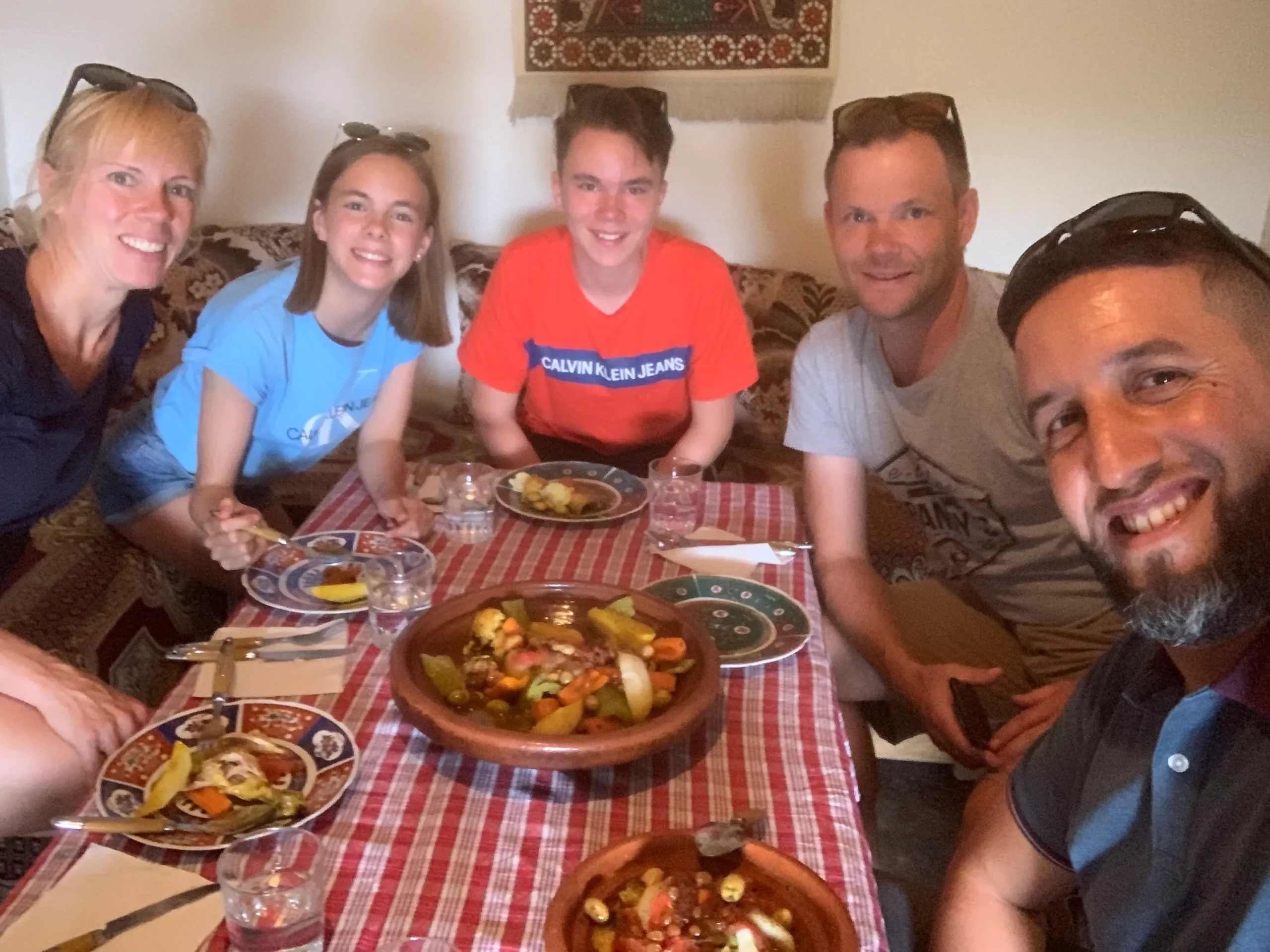 A real tagine is cooked low and slow over charcoal — the process itself is part of the ritual.
 The beauty of Morocco traditional food tagine is its infinite variation. No two families cook it the same way. Here are the most beloved versions you’ll encounter:
Classic Tagine Varieties
- Lamb with prunes & almonds — the sweet-savory masterpiece, slow-cooked with cinnamon and honey
- Chicken with preserved lemon & olives — bright, aromatic, and arguably the most popular with visitors
- Kefta (meatball) tagine — spiced ground beef in a tomato sauce, finished with poached eggs
- Mrouzia — a festival tagine of lamb with raisins, almonds, honey, and ras el hanout
- Vegetable tagine — chickpeas, potatoes, carrots, and zucchini cooked in a saffron-infused broth
Tagine Eating Etiquette
- Traditionally eaten communally — everyone eats from the same pot
- Use your right hand or a piece of bread (khobz) to scoop — no utensils needed
- Eat from your own side of the pot; reaching across is considered rude
- The host presents the best cuts of meat — don’t refuse
- Always leave a little in the pot; finishing everything implies the host didn’t provide enough
Couscous — What Is the National Food of Morocco? Top
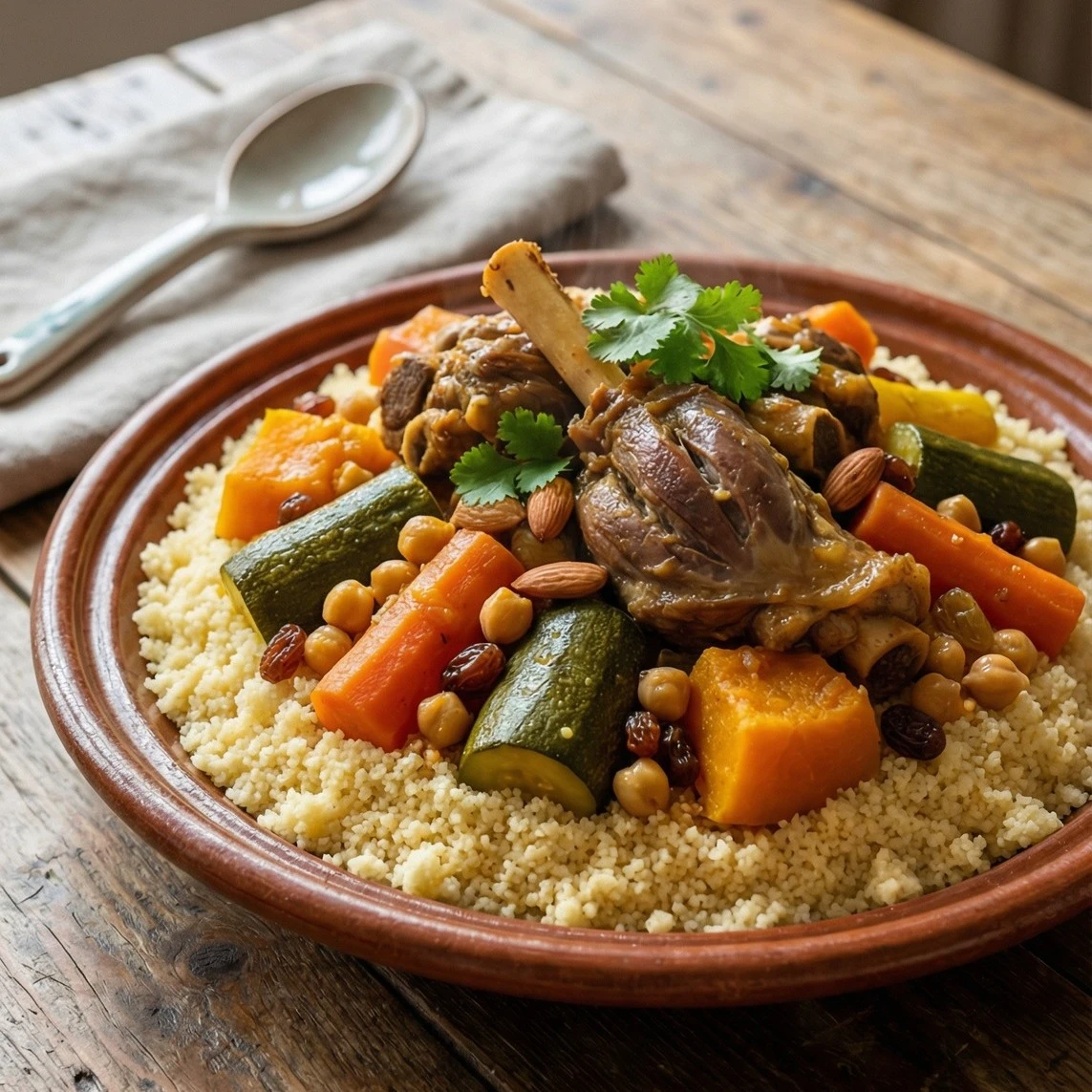
Ask any Moroccan what Morocco’s most popular food or national dish is, and couscous will almost certainly be the answer. Technically a semolina grain rather than a pasta, authentic Moroccan couscous is hand-rolled and steamed three times over a fragrant, long-simmered broth — a labor of love that can take an entire morning.
Friday is couscous day in Morocco. After prayers, families gather around a communal mound of couscous topped with a stew of lamb or chicken, seven vegetables (the traditional number), caramelized onions, and raisins. It is simultaneously a meal and a ritual, a reason to come home.
If you’re visiting one of the cities in Morocco on a Friday, make a point of finding a home-cooking restaurant or a traditional dar that serves the real thing — not the quick-hydrated version found at tourist spots.
Street Food & Casual Eats Top
Moroccan street food is arguably where the cuisine shines brightest. The list of Moroccan food you can eat standing at a cart — for the equivalent of a few coins — is long and glorious. Jemaa el-Fna square in Marrakech is the world’s most famous open-air food market for good reason: at dusk it transforms into a smoke-filled carnival of snail broth, grilled brains, and whole roasted sheep heads — alongside perfectly safe and delicious staples.
The Street Food You Must Try
- Bocadillo — a baguette stuffed with sardines, olives, preserved lemon, and harissa. Pure coastal Morocco in a bite
- Khobz with everything — Morocco’s round flatbread goes with literally everything; eat it warm from a communal oven (farran)
- Bissara — a thick, warming soup of fava beans drizzled with olive oil and cumin. The classic working-man’s breakfast in northern cities
- Makouda — fried potato fritters, often stuffed into a sandwich with harissa. Incredibly addictive
- Sfenj — Morocco’s answer to the doughnut — yeasted, ring-shaped, fried — best eaten warm from the fryer with honey or sugar
- Grilled merguez — spiced lamb or beef sausages on a charcoal grill. Found at markets across the country
- Snail broth (Ghlal) — spiced broth with whole snails, served in a cup. An acquired taste — but genuinely worth trying in Marrakech
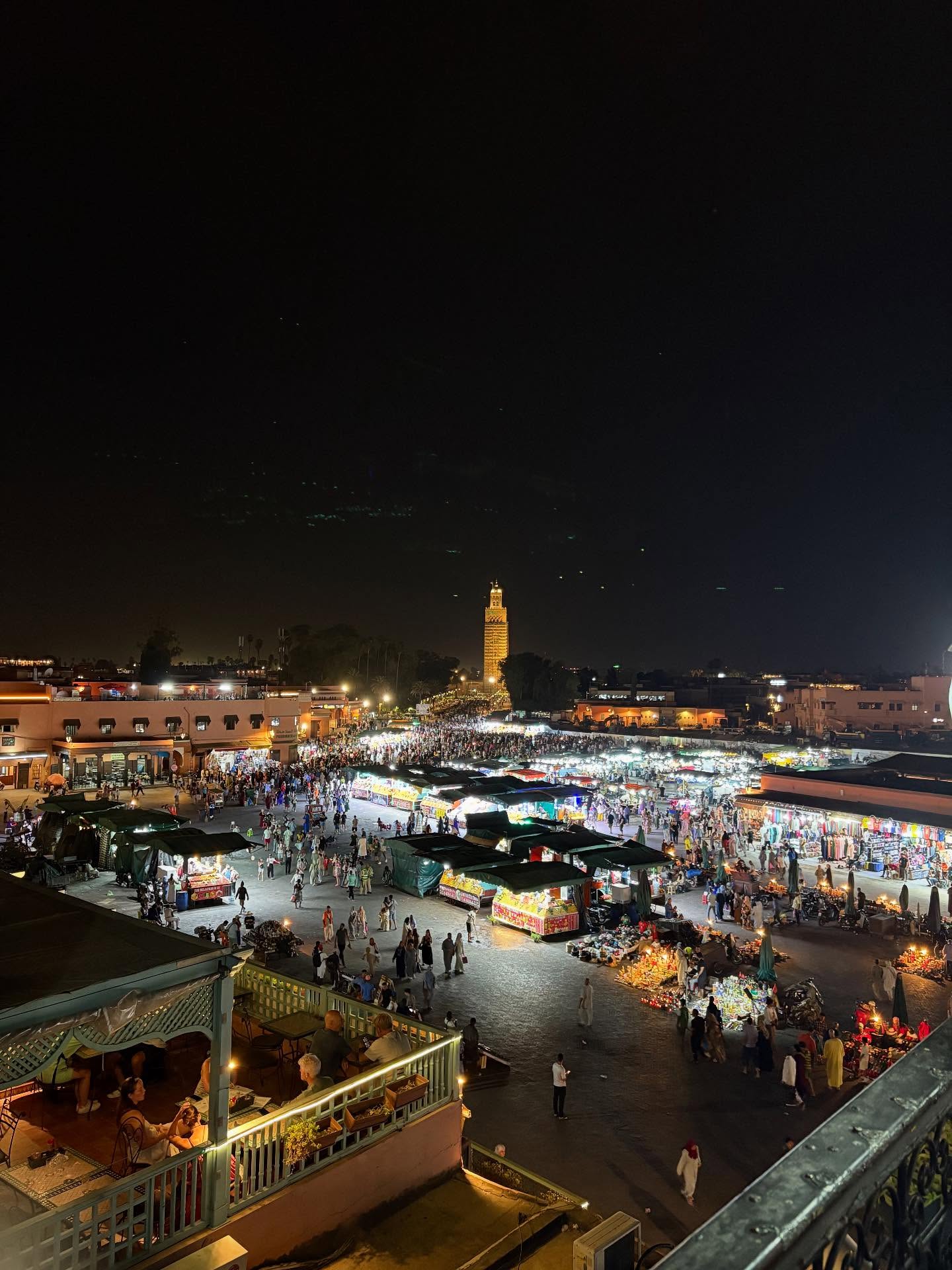 Jemaa el-Fna at dusk — arguably the world’s greatest open-air food market.
 Moroccan Pastries, Sweets & Drinks Top
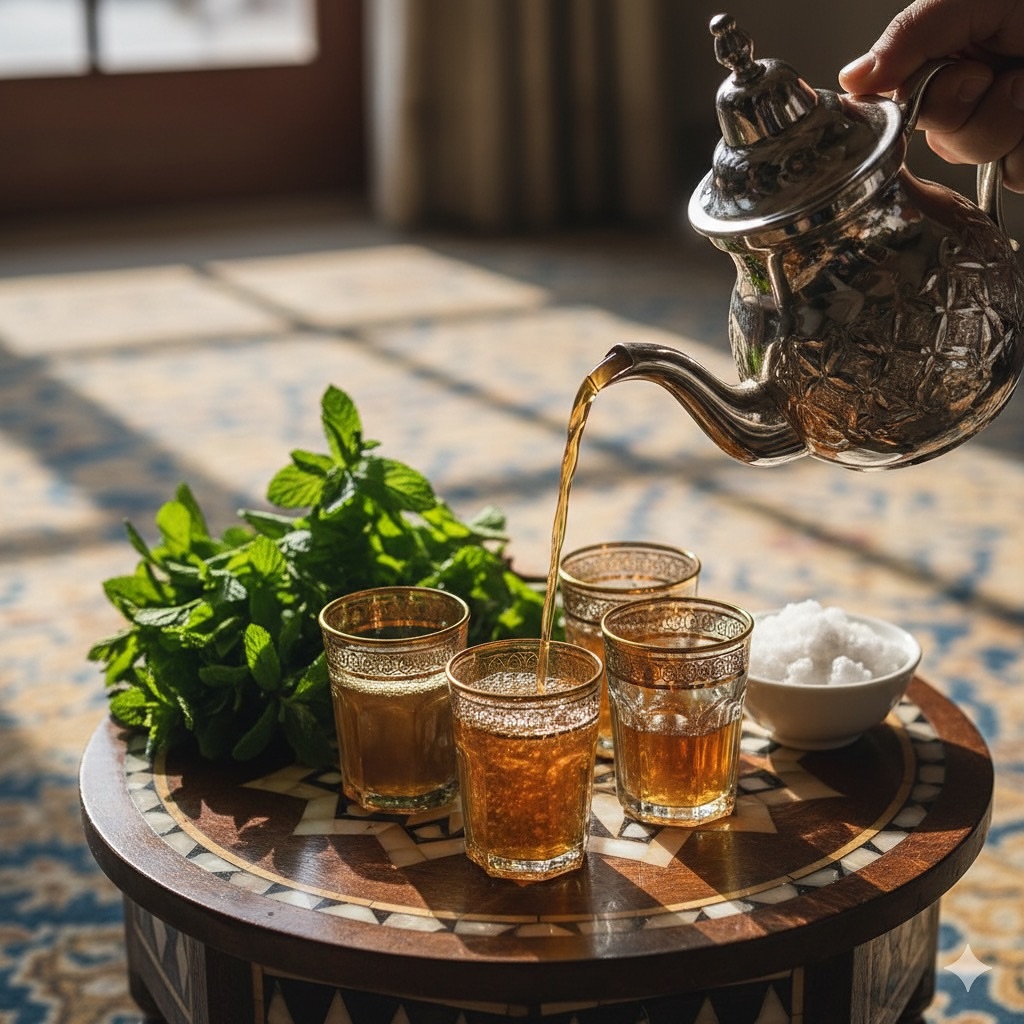
Moroccan sweets are a world of their own — delicate, often perfumed with orange-blossom or rose water, and almost always served with the country’s most important drink: mint tea.
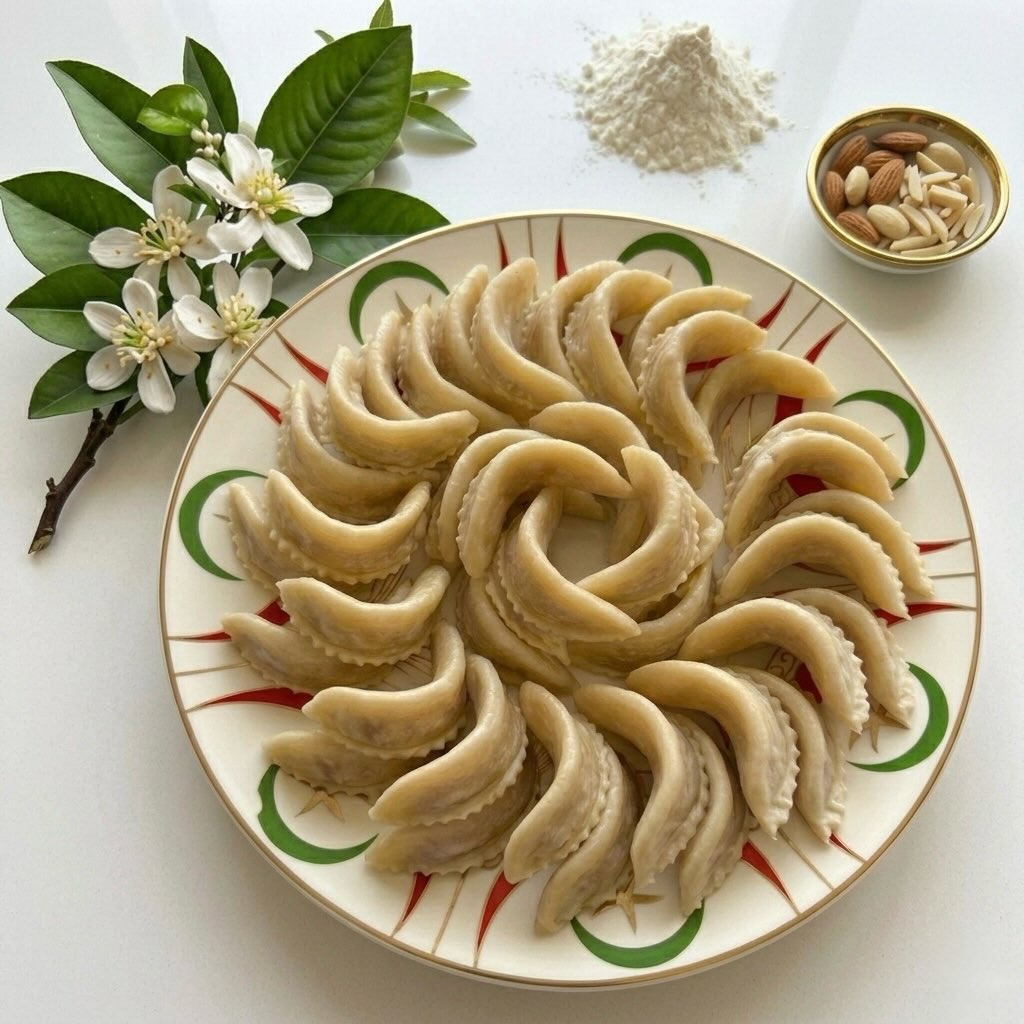
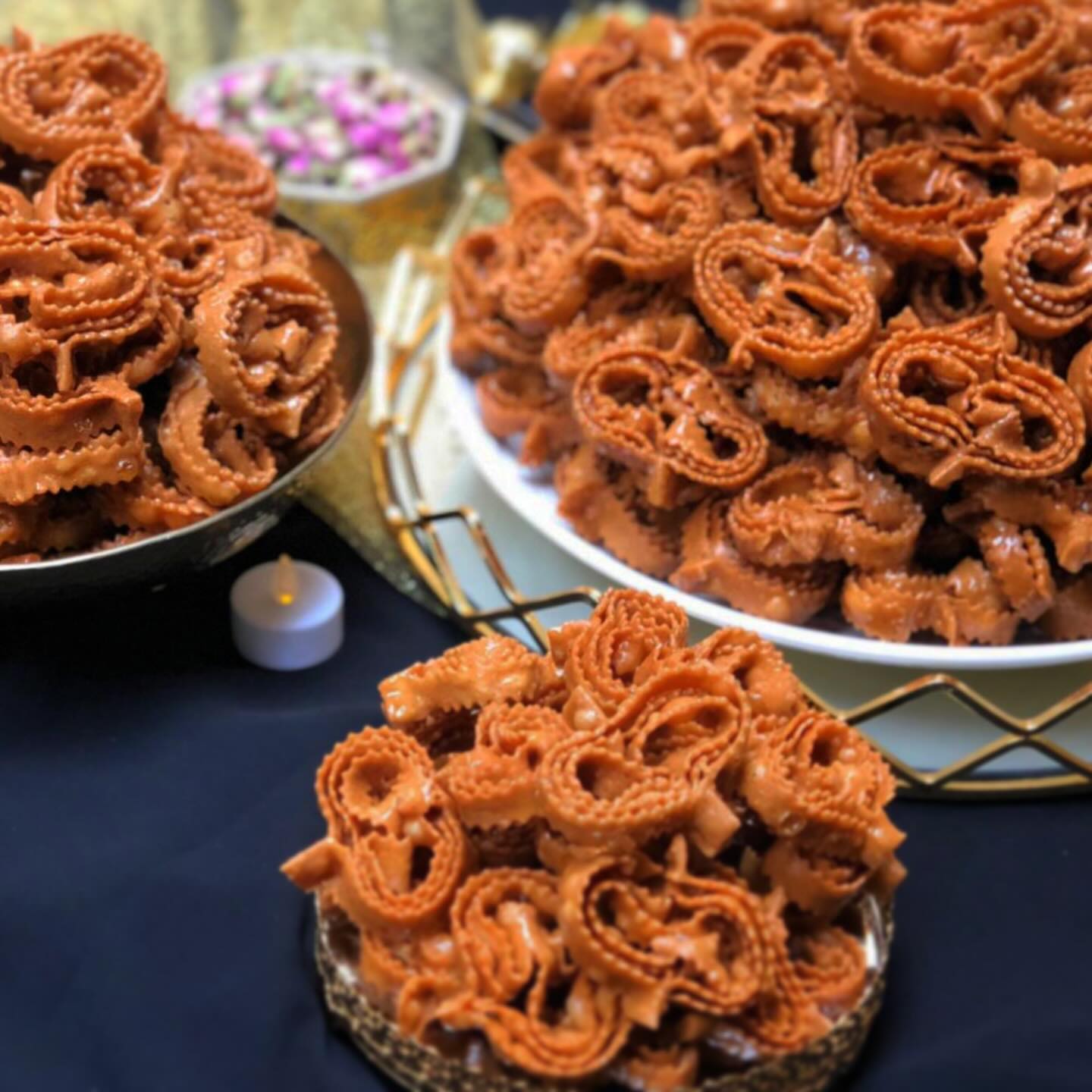
Amlou deserves special mention — a thick paste of roasted almonds, argan oil, and honey that is spread on bread at breakfast. It is deeply nutritious and deeply Moroccan, produced mainly in the Souss region near Agadir. Given the unique physical geography of Morocco, the argan tree grows only in this part of the world, making amlou a genuine culinary souvenir.
Regional Specialties — Famous Food of Morocco by City Top
Morocco is not one cuisine — it is dozens. Each city and region carries its own culinary identity, shaped by geography, history, and the communities that settled there. Here is what to seek out by destination:
| City / Region | Signature Dish | Why It’s Special |
|---|---|---|
| Marrakech | Tanjia Marrakchia | Slow-cooked lamb sealed in a clay urn and left in the embers of a hammam furnace — a uniquely Marrakchi bachelor’s dish |
| Fès | Pastilla & Rfissa | Fès is considered Morocco’s culinary capital; Rfissa (chicken over msemen with lentils and fenugreek) is a post-birth celebration dish |
| Essaouira & Coast | Grilled seafood & sardines | The freshest Atlantic fish grilled with cumin and charmoula marinade — best eaten at the port market stalls |
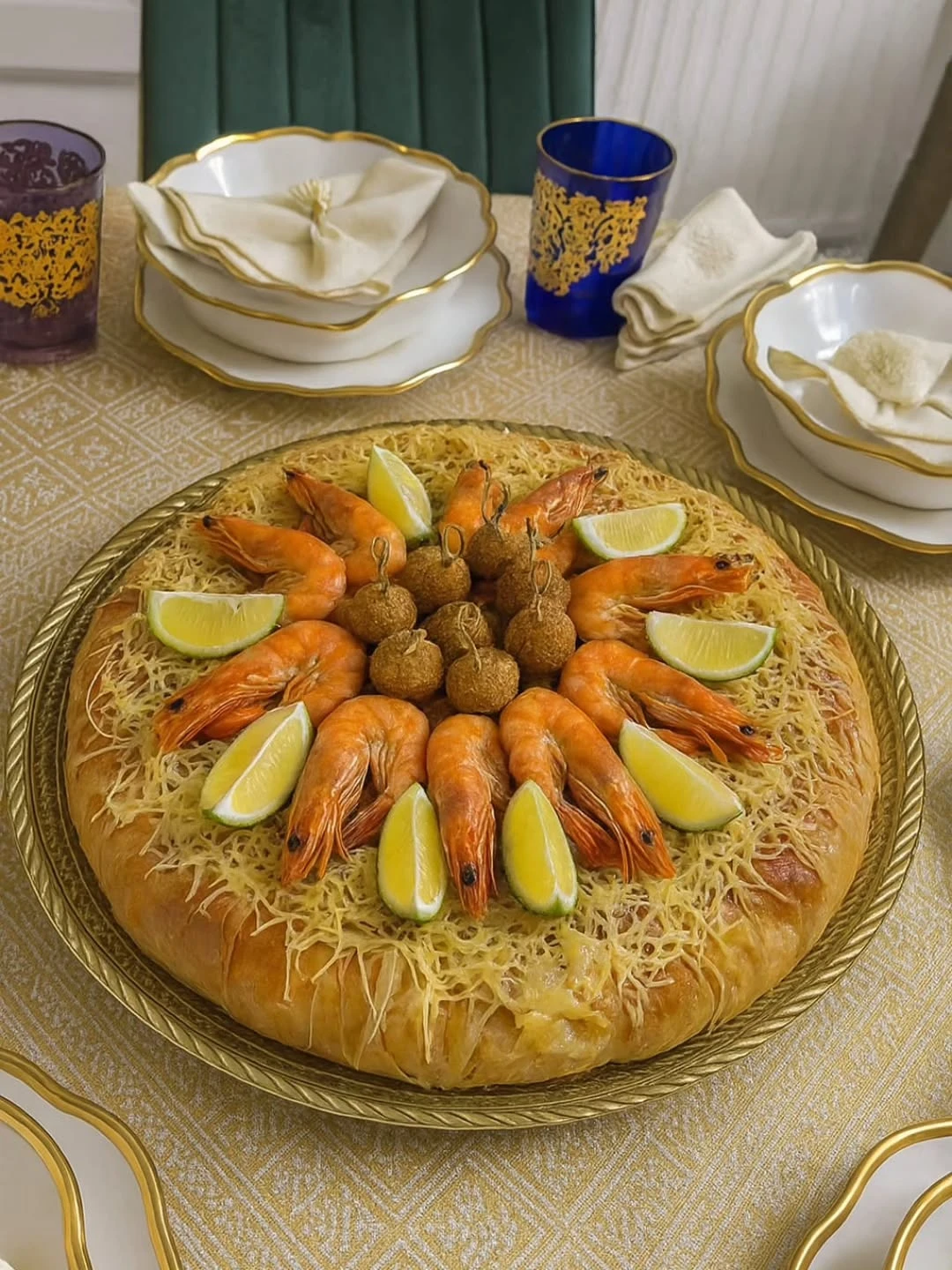
| Casablanca | Seafood pastilla & Medfoun | Casablanca’s coastal influence gives it an outstanding seafood bastilla; Medfoun is buried and slow-cooked lamb with rice |
| Chefchaouen | Goat cheese & Milouka | Mountain Rif cooking uses more dairy and fresh herbs; goat cheese with honey is a local specialty |
| Souss–Agadir | Amlou & Argan dishes | The heartland of argan oil — used in cooking savory dishes, not just cosmetics |
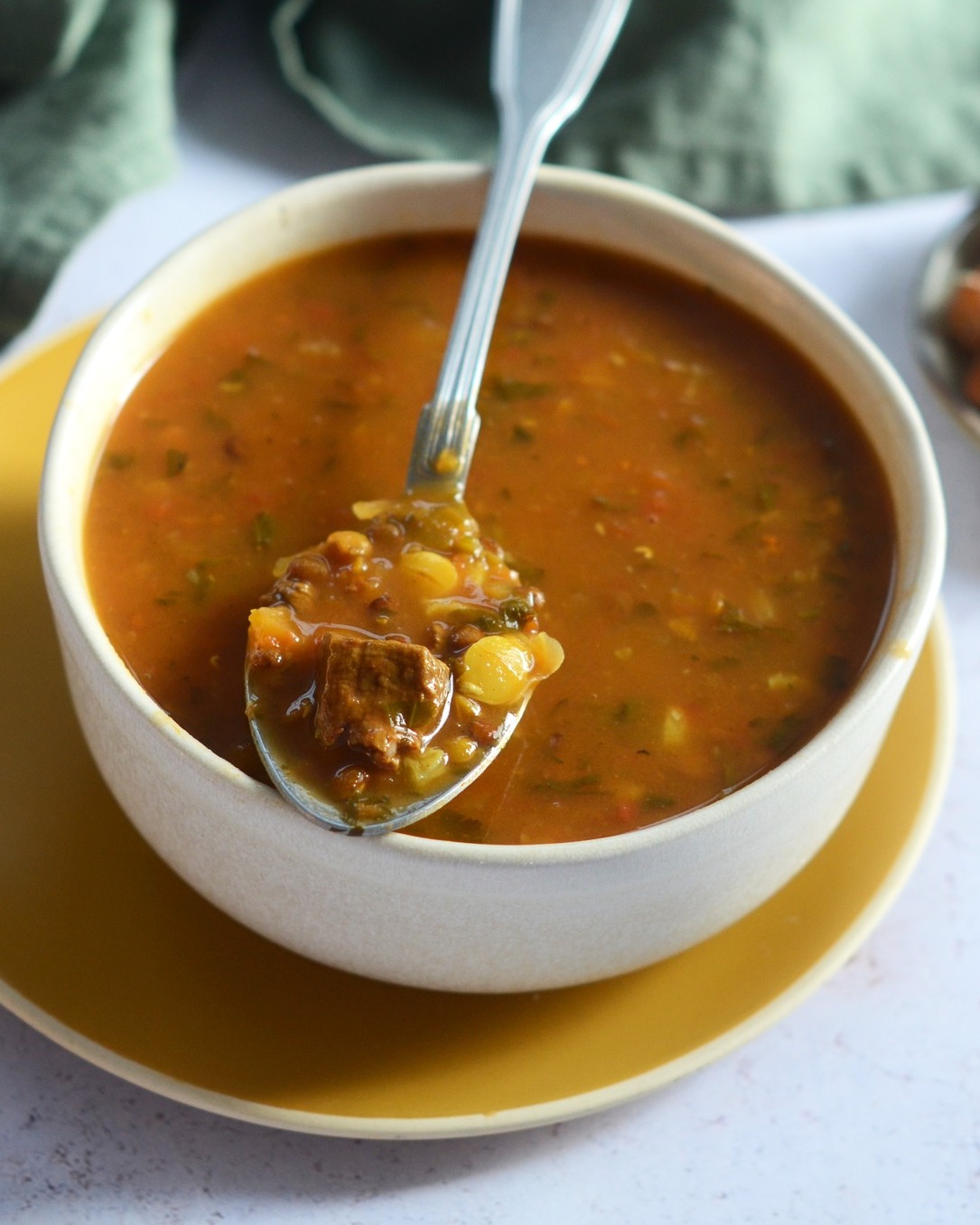
| Tangier | Briouat & Lentil soup | Tangier’s position as a crossroads city means Andalusian flavors are still very present in its cooking |
| Sahara / South | Camel meat tagine & Barley bread | Nomadic Berber cooking relies on desert ingredients — dried meats, barley, and date-based dishes |
What to Avoid Eating in Morocco Top
Morocco’s food scene is overwhelmingly safe — but a few sensible precautions will prevent the kind of digestive misery that derails a holiday. None of this is cause for anxiety; it is simply about choosing wisely, as you would anywhere.
- Tap water — Morocco’s tap water is technically treated but can cause stomach upset in visitors unaccustomed to it. Stick to sealed bottled water, especially outside major cities.
- Raw salads at low-traffic stalls — leafy greens that haven’t been thoroughly washed are a common source of mild stomach trouble. At reputable restaurants this is rarely an issue.
- Unpeeled fruit from market stalls — wash or peel everything you eat fresh. Fruit bought from markets is wonderful — just be careful with the rind or skin.
- Ice in drinks — outside of established hotels and restaurants, ice may be made from tap water. Ask if you’re unsure; most places in tourist areas now use bottled water ice.
- Shellfish inland or off-season — bivalves like oysters and mussels are extraordinary on the Moroccan coast (Oualidia oysters are world-class) but should be avoided inland or during summer months when refrigeration standards can vary.
- Heavily discounted “tourist restaurant” set menus — near major squares, some restaurants pitch aggressively at tourists with inflated prices for average food. Be especially cautious about common scams targeting tourists in Morocco.
- Street-side meat that’s been sitting out — at larger markets, choose cuts cooked to order over those kept warm for hours in the sun. The smell is usually a reliable guide.
- Alcohol assumptions — Morocco is a Muslim country; alcohol is available in licensed restaurants, hotels, and some medina establishments, but it is not ubiquitous. Don’t expect it everywhere.
For broader peace of mind before your trip, it’s worth reading about whether Morocco is safe for tourists — the answer is a reassuring yes, with standard awareness.
Practical Dining Tips for Morocco Top
Dining Culture
- Lunch is the main meal of the day — restaurants often serve their best food between 12:30 and 14:30
- Dinner is eaten late: most locals sit down between 20:00 and 22:00
- Meals begin with a spread of cold salads and bread — pace yourself before the main arrives
- Tipping is not mandatory but greatly appreciated; 10% is considered generous
- During Ramadan, restaurants may have reduced hours during the day but spectacular iftar spreads at sunset — worth experiencing if your visit coincides
Budget & Payments
- Know what currency Morocco uses — the Moroccan Dirham (MAD) is the only legal tender; always pay in local currency
- A hearty street meal costs 15–40 MAD; a sit-down restaurant 80–200 MAD; a fine-dining experience 300–600 MAD
- Haggling on food prices is unusual and generally inappropriate — prices are fixed at most eating establishments
- Most medina restaurants are cash-only; larger establishments in new cities accept cards
- Avoid restaurants that don’t display a menu with prices — confirm the cost before sitting down

Want to taste the real Morocco — not the tourist version? Mouhssine is a licensed guide certified by the Moroccan Ministry of Tourism, available to take you through the hidden food alleys of the medina, connect you with family kitchens, and help you discover the authentic dishes that never make it onto the main-square menus. Contact him directly on WhatsApp for personalized food tours, day trips, and custom itineraries.
Chat on WhatsApp