The Hand of Fatima in Morocco
From ancient amulet to contemporary design icon, discover one of Morocco’s most recognizable symbols and what it means to the people who have kept it alive for centuries.
What Is the Hand of Fatima? ⇧
The Hand of Fatima in Morocco is an open palm-shaped symbol, most often depicted with five outspread fingers and a single eye at its center. Locally called the Khamsa, meaning “five” in Arabic, this motif appears on doorways, woven into rugs, engraved onto jewelry, and painted onto pottery across the country. Travelers who spend even a few days in Marrakech or the medinas of Fes will see it dozens of times before they even begin to look for it.
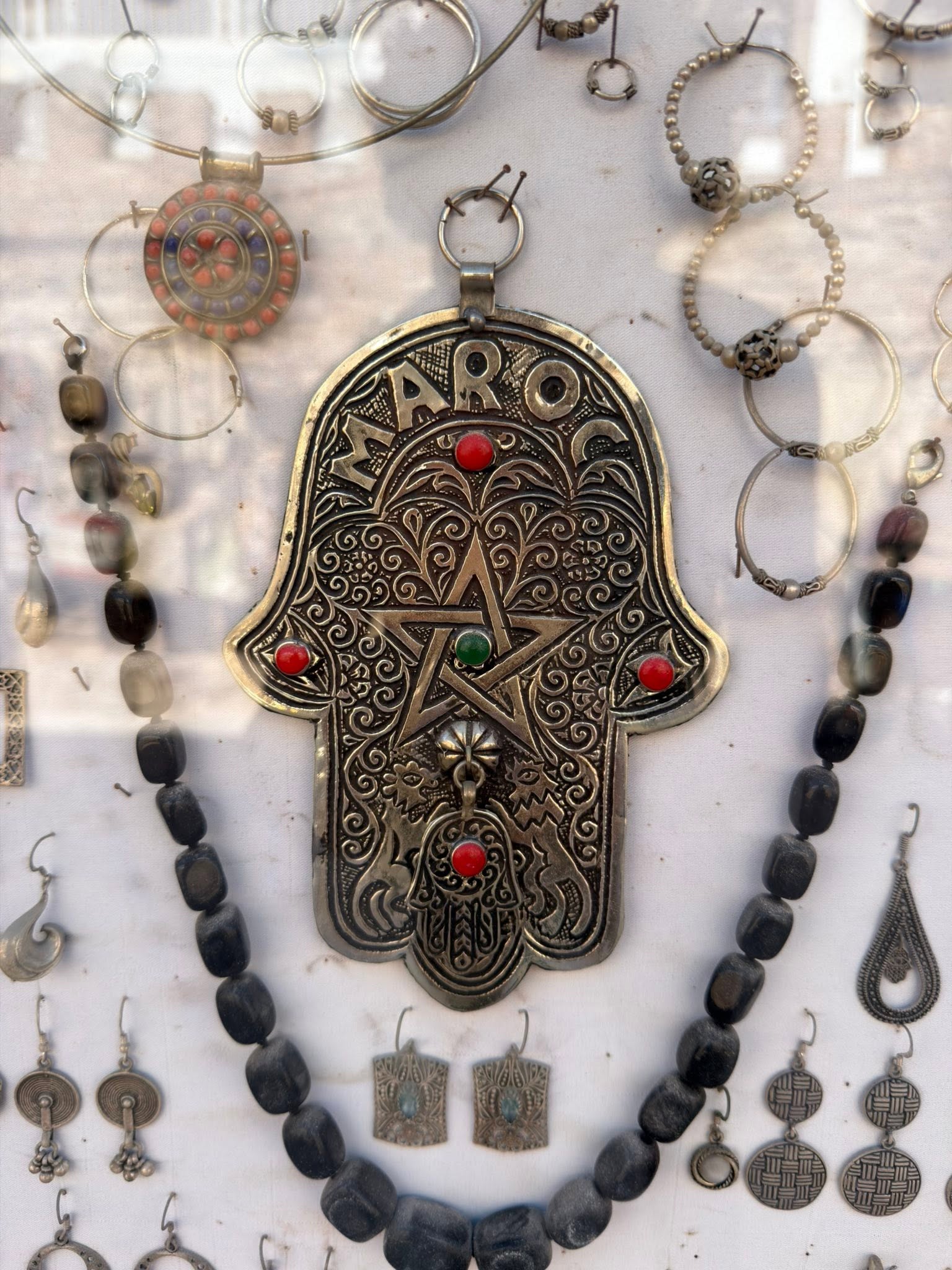
The name links the symbol to Fatima al-Zahra, the daughter of the Prophet Muhammad. In popular Moroccan tradition, the five fingers represent the Five Pillars of Islam, though the hand as an amulet predates the arrival of Islam in Morocco by a significant margin. Today, whether hanging above a shopkeeper’s door or printed on a linen cushion in a riad, the Hand of Fatima has become one of the defining images of Moroccan crafts and artisan culture.
A Brief History of the Symbol ⇧
The open hand as a protective emblem is one of the oldest recurring motifs in human visual culture. Archaeological evidence places it across the ancient civilizations of the Mediterranean and North Africa, long before any of the monotheistic religions had taken hold in the region. Phoenician traders carried variants of the symbol westward, and Berber communities across North Africa incorporated it into their own decorative vocabulary.
When Islam arrived in Morocco in the seventh century, existing amulet traditions did not simply disappear. They adapted. The hand absorbed Islamic symbolism and acquired the name Khamsa, and later became associated with Fatima through the oral traditions of North African Muslims. Jewish communities in Morocco, many of whom had lived alongside Berber and Arab populations for centuries, adopted the symbol as well, recognizing its universal appeal rather than its specific religious content. The Hand of Fatima history in Morocco is therefore a layered story of cultural borrowing, faith, and artistic continuity across millennia.
Morocco sits at one of the great crossroads of human history. The same physical geography that made it a meeting point for trade routes also made it a place where symbols, ideas, and artistic traditions accumulated over centuries. The Hand of Fatima is one of the most visible results of that long process.
What Does the Hand of Fatima Symbolize? ⇧
Hand of Fatima symbolism is layered and personal in the way that most traditional emblems tend to be. The most widely held meaning connects the five fingers to the five pillars of Islam: the declaration of faith, prayer, fasting, almsgiving, and pilgrimage. The eye at the center of many versions is read as a watchful gaze, a visual shorthand for protection against harm and misfortune.
In Moroccan homes, the Khamsa often hangs near entrances and windows. This placement is practical and intentional: the threshold of a home is traditionally understood as a point of vulnerability, a passage between the familiar interior and the unpredictable outside world. The hand, displayed openly, signals welcome while also marking the boundary.
For many Moroccan families, however, the symbolism is less doctrinal and more emotional. The hand is simply part of how a home has always looked, inherited alongside the furniture and the cooking pots. Its meaning is carried more through feeling and continuity than through active interpretation.
Is the Hand of Fatima the Same as the Hamsa? ⇧
Yes, essentially. The terms Hamsa, Khamsa, and Hand of Fatima all refer to the same palm-shaped symbol, though the name used shifts depending on context and community. In Morocco, Khamsa is the word most commonly heard in daily conversation. Hamsa is the wider transliteration used in English-language writing and across the Middle East. The name Hand of Fatima reflects the Islamic tradition connecting the symbol to the Prophet’s daughter.
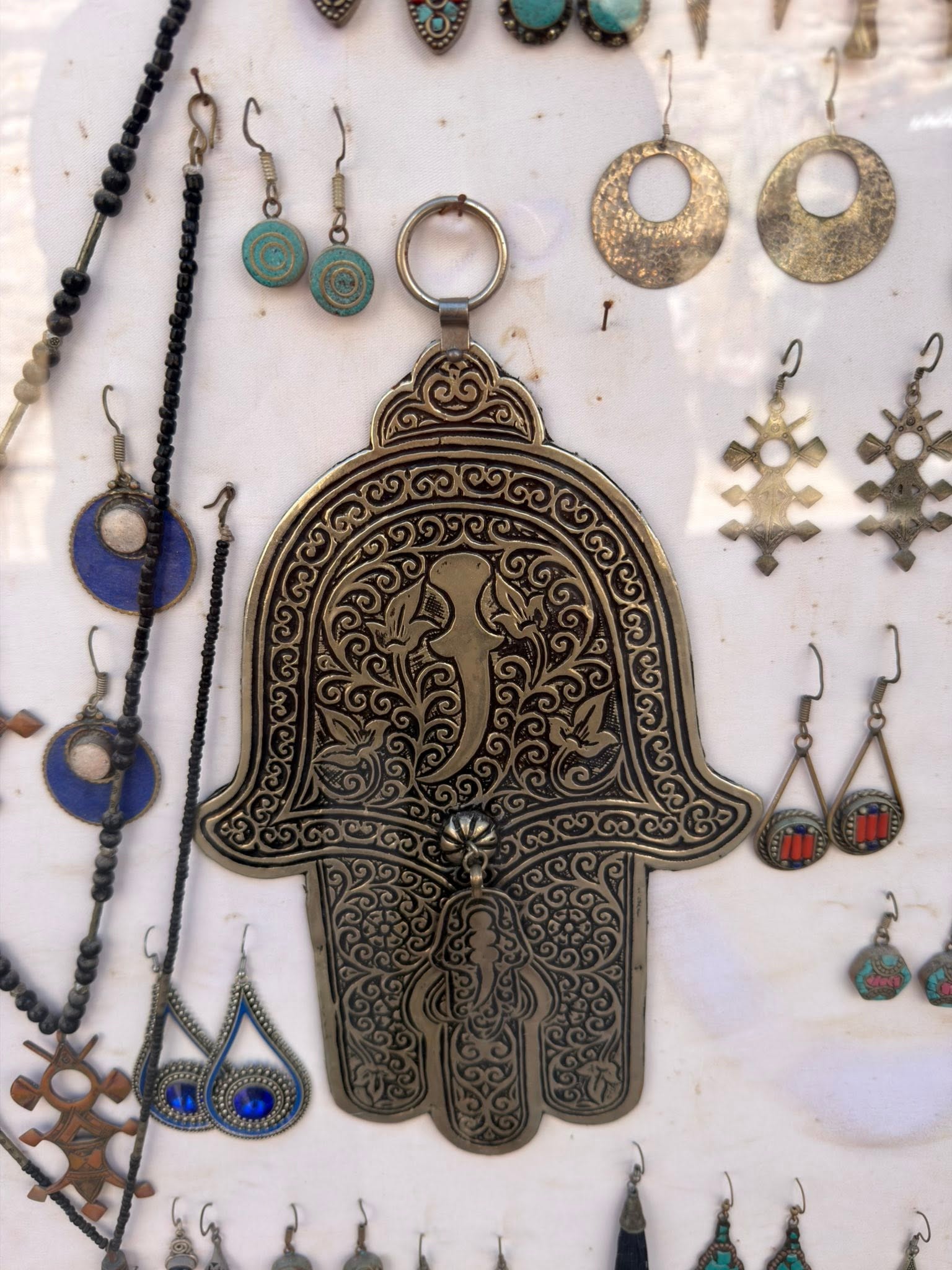
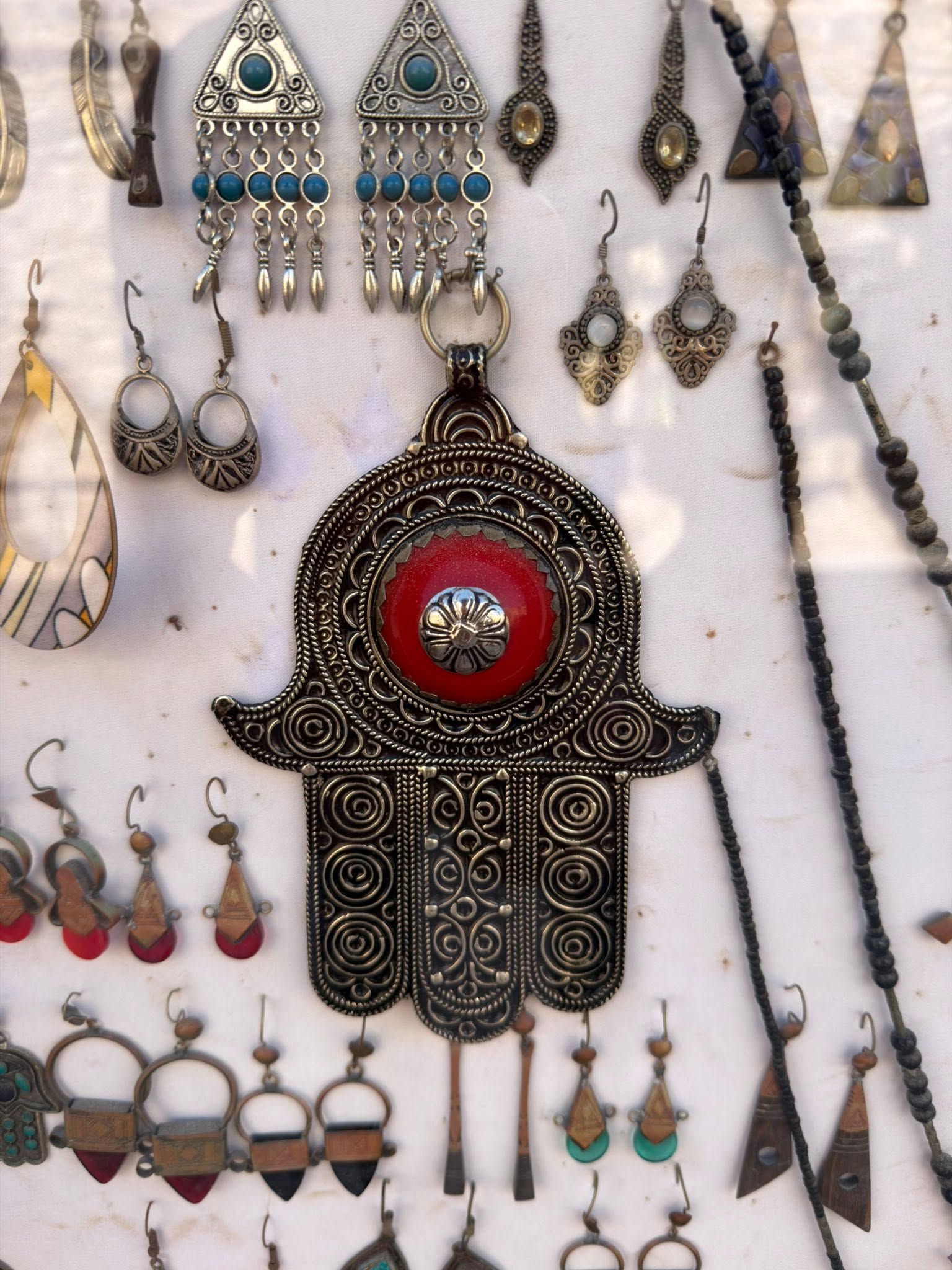
The Hamsa meaning in Morocco overlaps substantially with how the symbol is understood elsewhere in North Africa and the Levant, though Moroccan artisans have developed their own visual language around it. A Moroccan Hamsa tends to be more symmetrical than versions found further east, and the decorative treatment, whether in silver filigree, tile inlay, or painted ceramics, follows distinctly Moroccan aesthetic conventions.
A Symbol Beyond One Faith ⇧
One of the more interesting aspects of the Hand of Fatima in Morocco is how it has always moved between communities rather than belonging exclusively to one. Moroccan Jews used the Khamsa as readily as Muslim Moroccan families did, sometimes calling it the Hand of Miriam (Moses’s sister) rather than the Hand of Fatima. Berber communities wove it into textiles alongside other pre-Islamic Amazigh geometric motifs.
This shared ownership reflects something true about Moroccan culture across its cities and regions: the lines between tradition, religion, and art have never been sharp. A symbol can carry multiple meanings simultaneously without contradiction, and that flexibility has allowed the Khamsa to survive and remain relevant across radically different historical moments.
Today, international travelers arrive in Morocco familiar with the Hamsa primarily as a wellness or spiritual image, often encountered in yoga studios and boutique shops in Europe or North America. In Morocco itself, the context is more grounded: the hand is simply a part of daily visual life, as ordinary as it is beautiful.
Materials and Craftsmanship ⇧
Moroccan artisans have always worked the Khamsa in whatever materials their region and trade made available. The range is wider than most travelers expect, and exploring it gives a genuinely detailed picture of the country’s craft traditions.
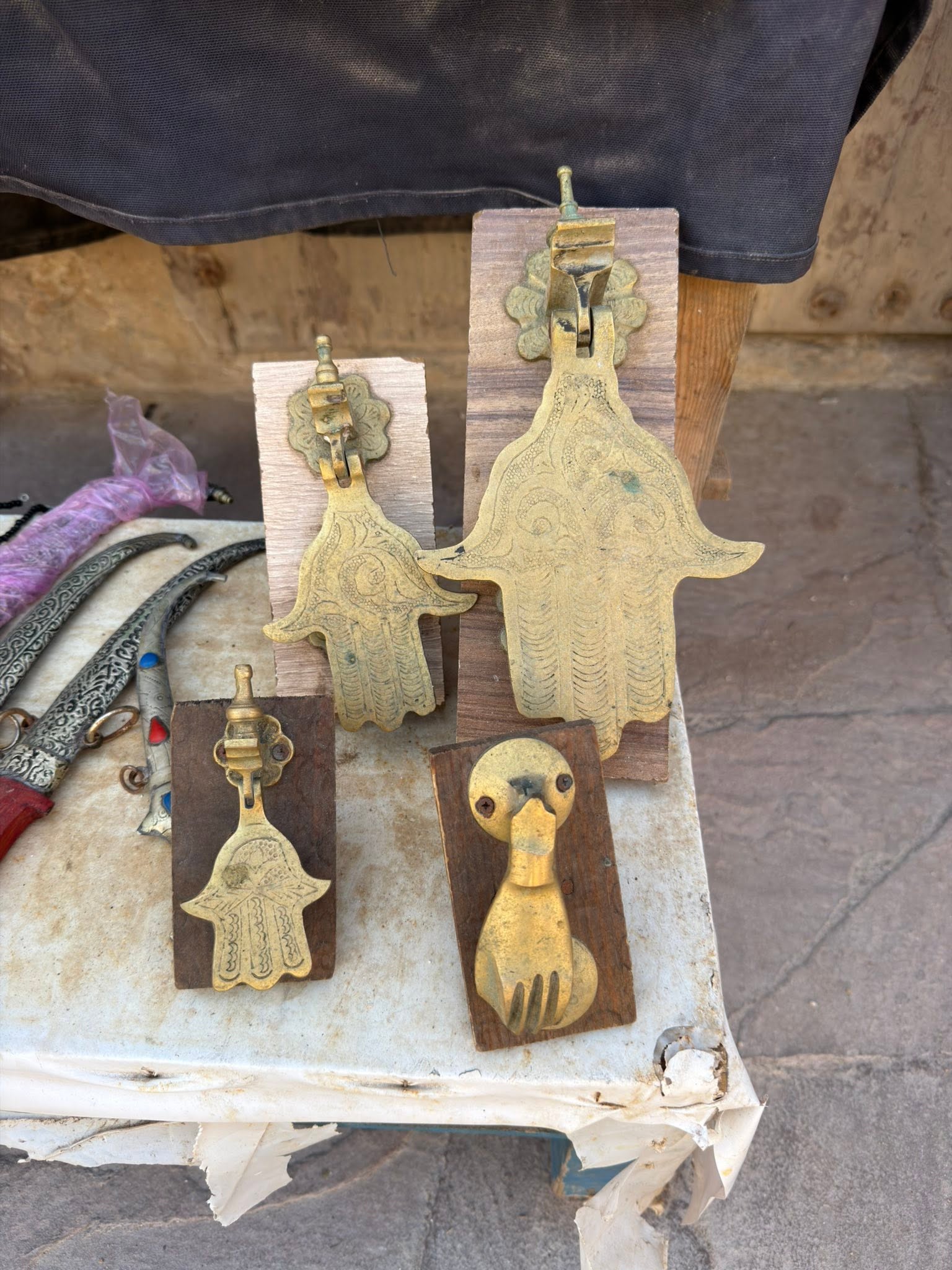
Forged iron Khamsa pieces are often made for outdoor display, hung on painted wooden doors in medinas where the contrast of dark metal against deep blue or ochre paint is deeply deliberate. Brass and copper versions are common in the souk, ranging from small pendants sold by the dozen to substantial wall pieces that reward close inspection. Bone-carved examples carry a different weight entirely, both literally and visually:
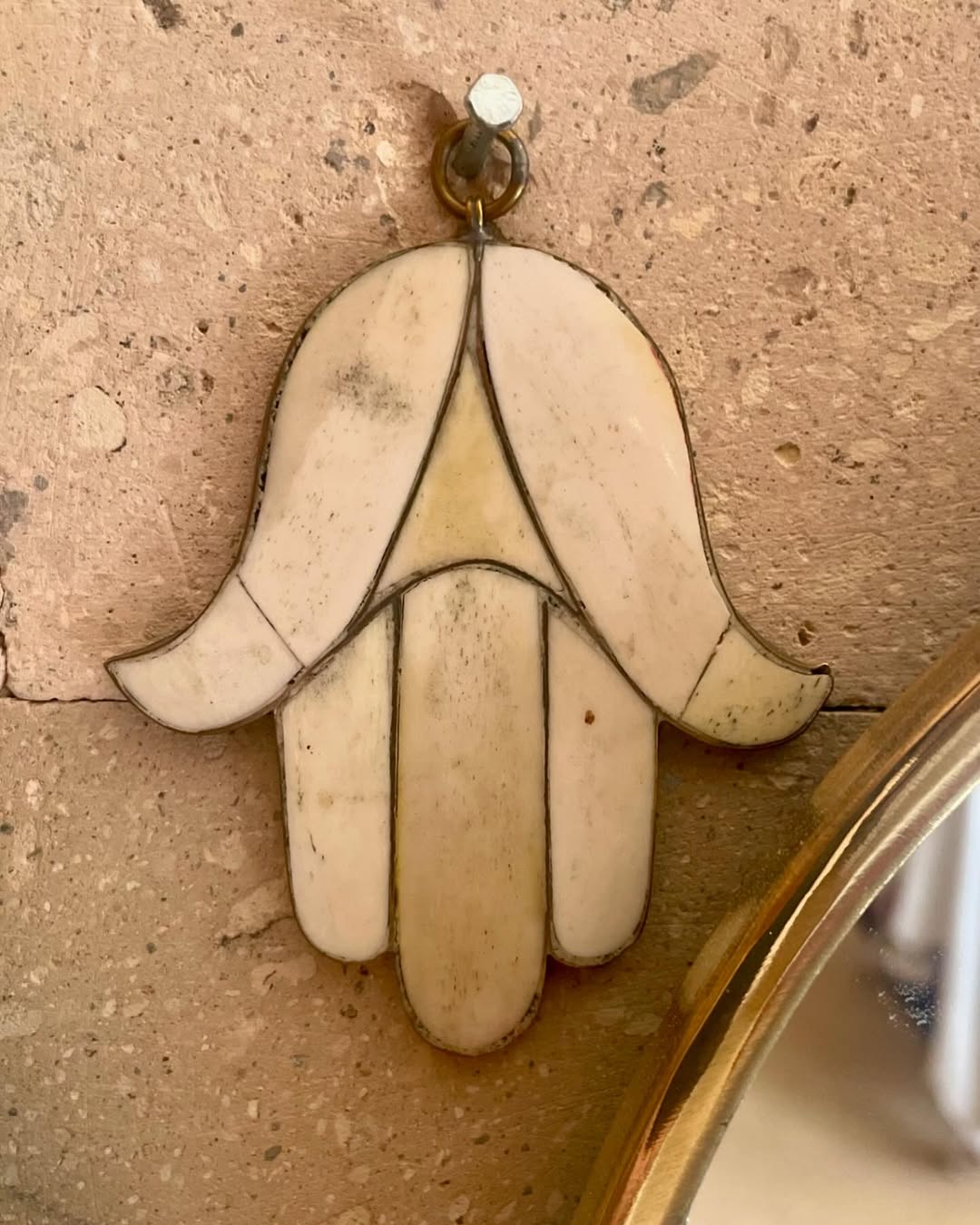
Hand of Fatima carved from bone, a traditional Moroccan artisan technique
Silver is the most enduring material for wearable Khamsa jewelry. Moroccan silver work, particularly from the Tiznit and Essaouira traditions, uses complex filigree and engraving techniques that take years to master. For those with a larger budget, gold Khamsa pendants and rings are available from jewelers in the major cities, particularly in Casablanca, Rabat, and Marrakech.
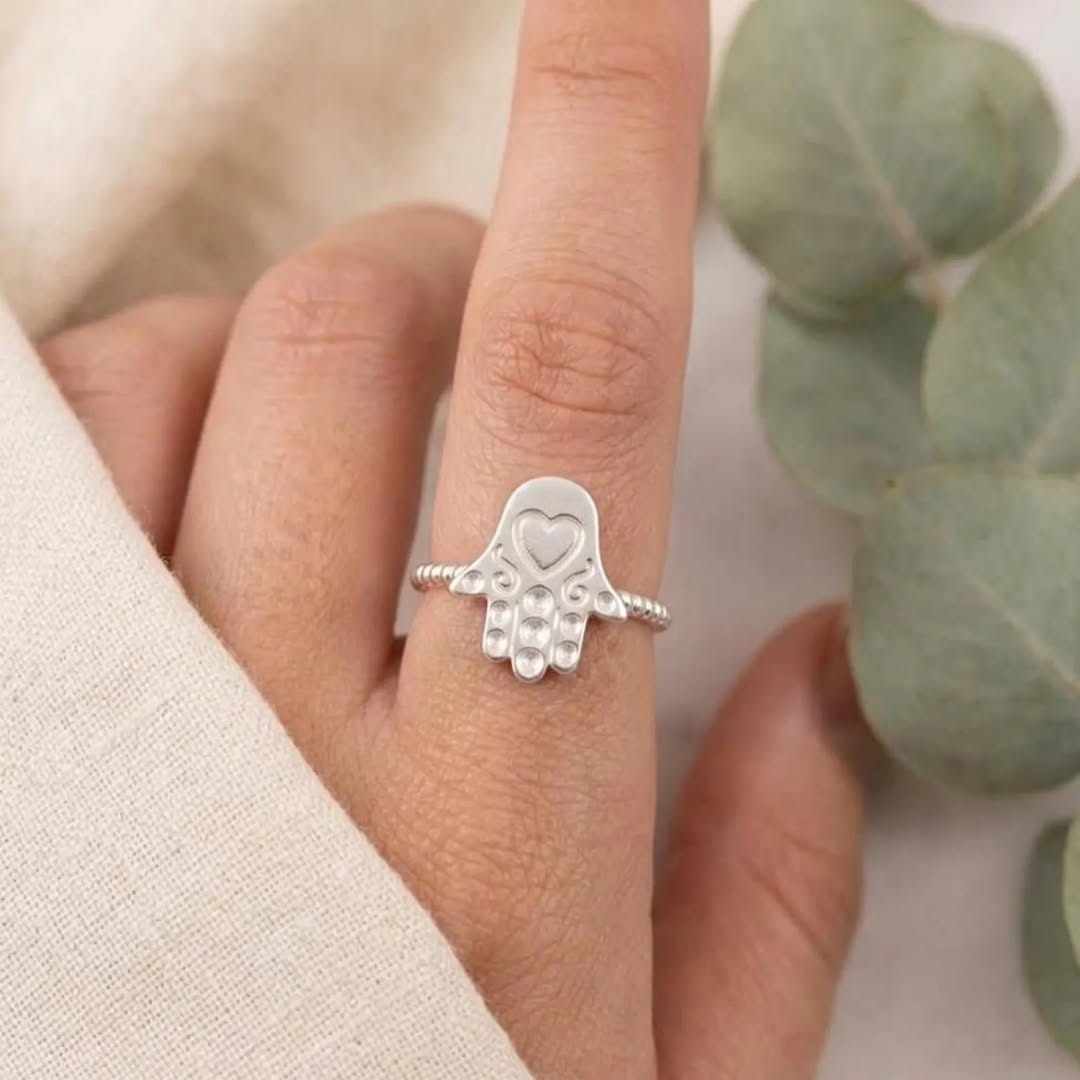
A Moroccan gold ring featuring the Hand of Fatima, available from specialty jewelers
Zellige, the traditional Moroccan cut-tile mosaic technique, has been used to incorporate the Khamsa into interior architecture for centuries. Contemporary artisans continue this tradition, producing zellige panels designed for wall display:
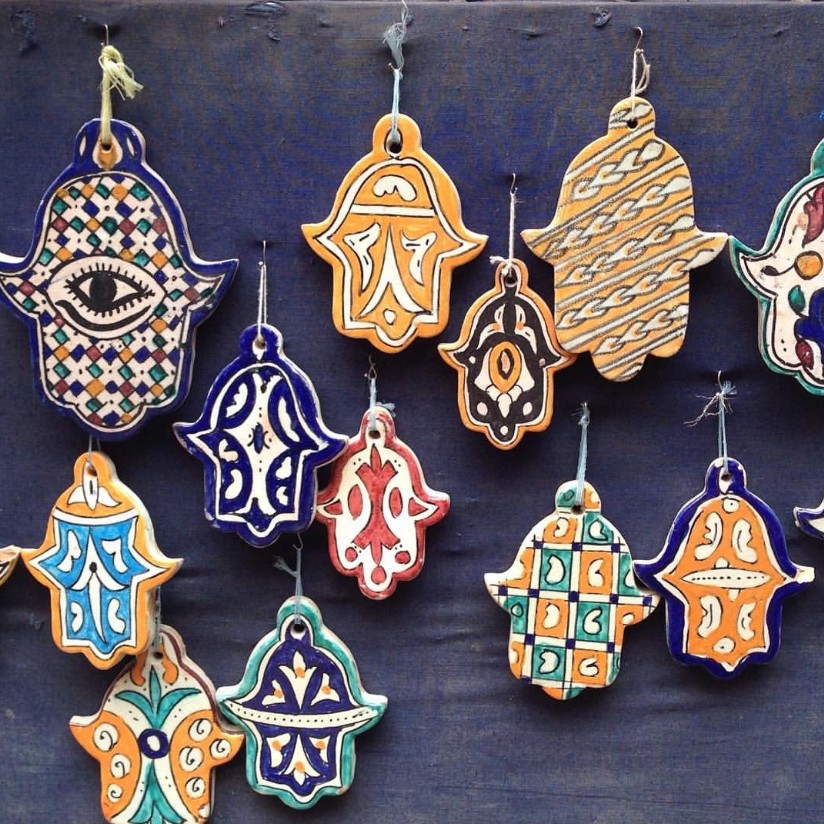
A zellige mosaic interpretation of the Khamsa, blending two of Morocco’s great craft traditions
The Hand of Fatima in Modern Moroccan Design ⇧
The past two decades have seen the Moroccan Hamsa migrate from purely functional or devotional objects into the full range of contemporary design. Moroccan fashion designers, ceramicists, and textile artists have adopted the symbol as a point of visual identity, sometimes rendering it in traditional ways and sometimes abstracting it dramatically.
In ceramics, the Khamsa now appears on pieces that balance traditional forms with modern table settings. The following pieces show how the symbol integrates naturally into everyday objects without losing its visual character:
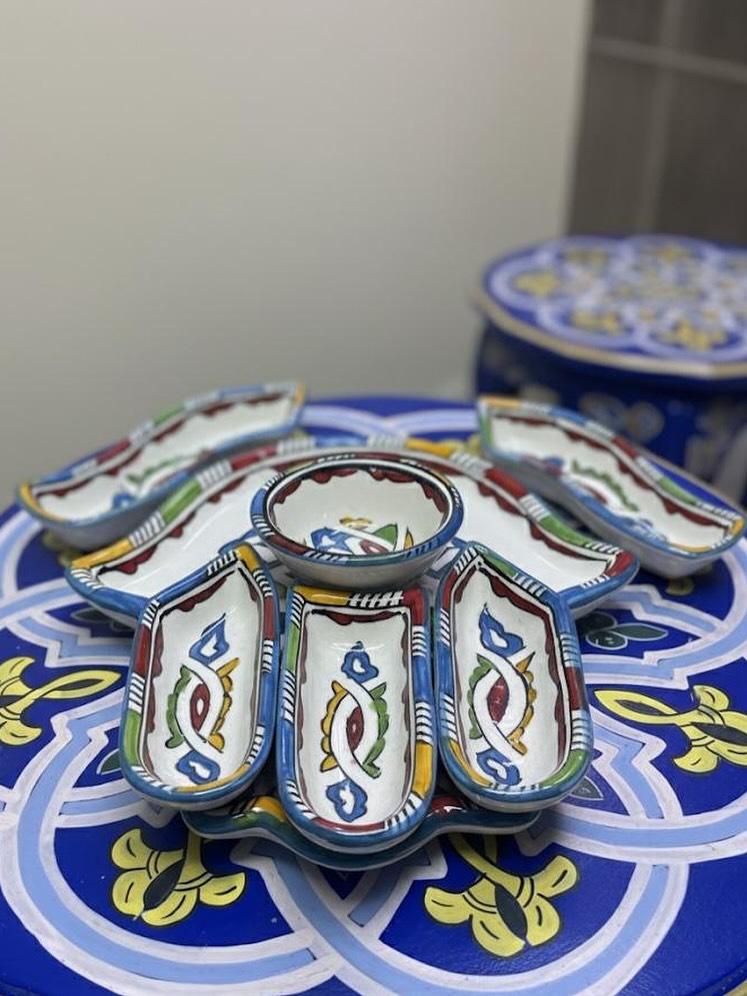
Ceramic dipping bowls with Khamsa decoration
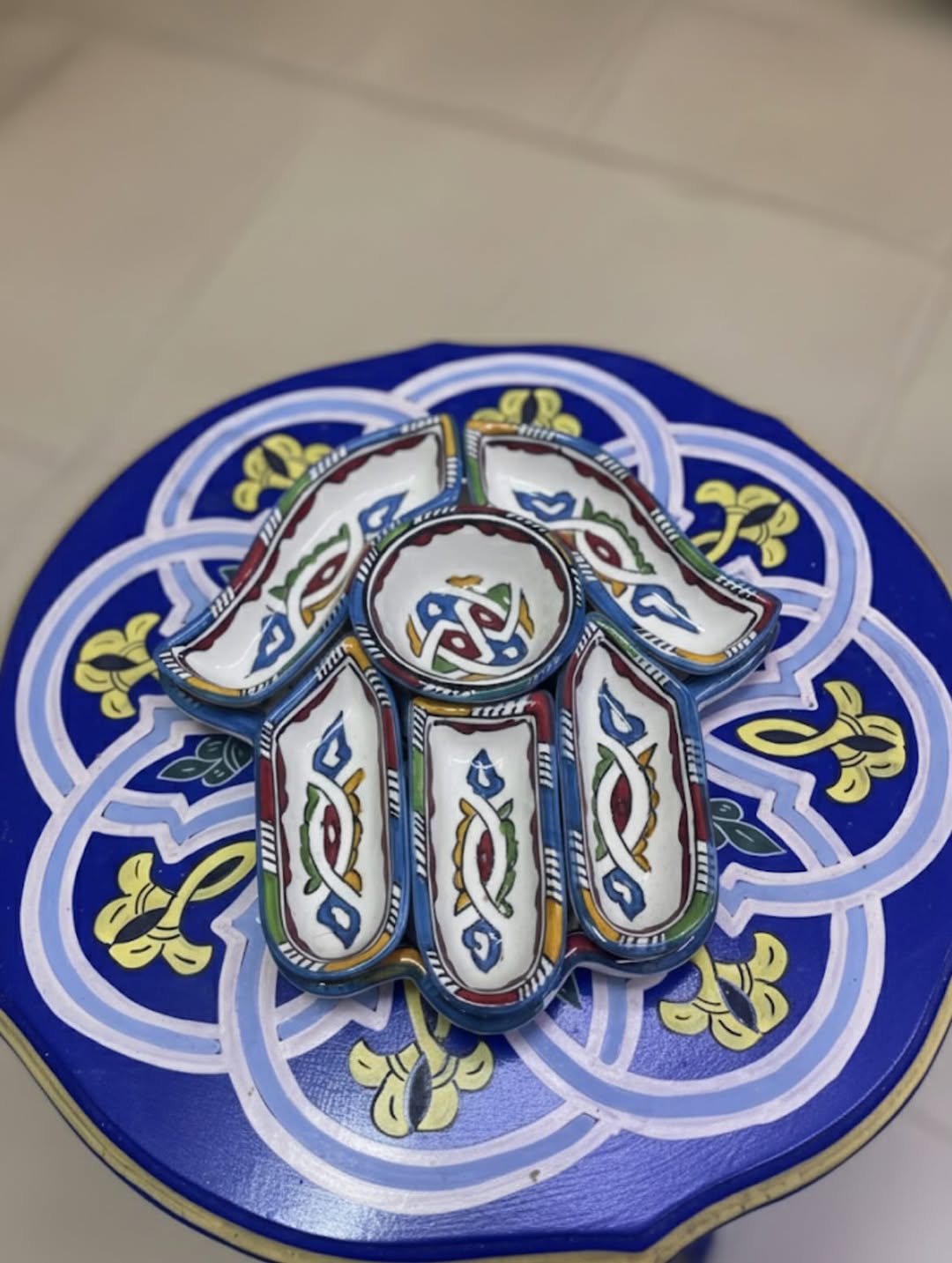
Hand-painted Moroccan pottery featuring the symbol
In fashion, the Khamsa has become a recurring motif in Moroccan ready-to-wear and couture alike, printed onto kaftan fabric, embroidered onto jackets, and used as the central image in print collections. The following examples show how naturally the symbol translates into wearable design:
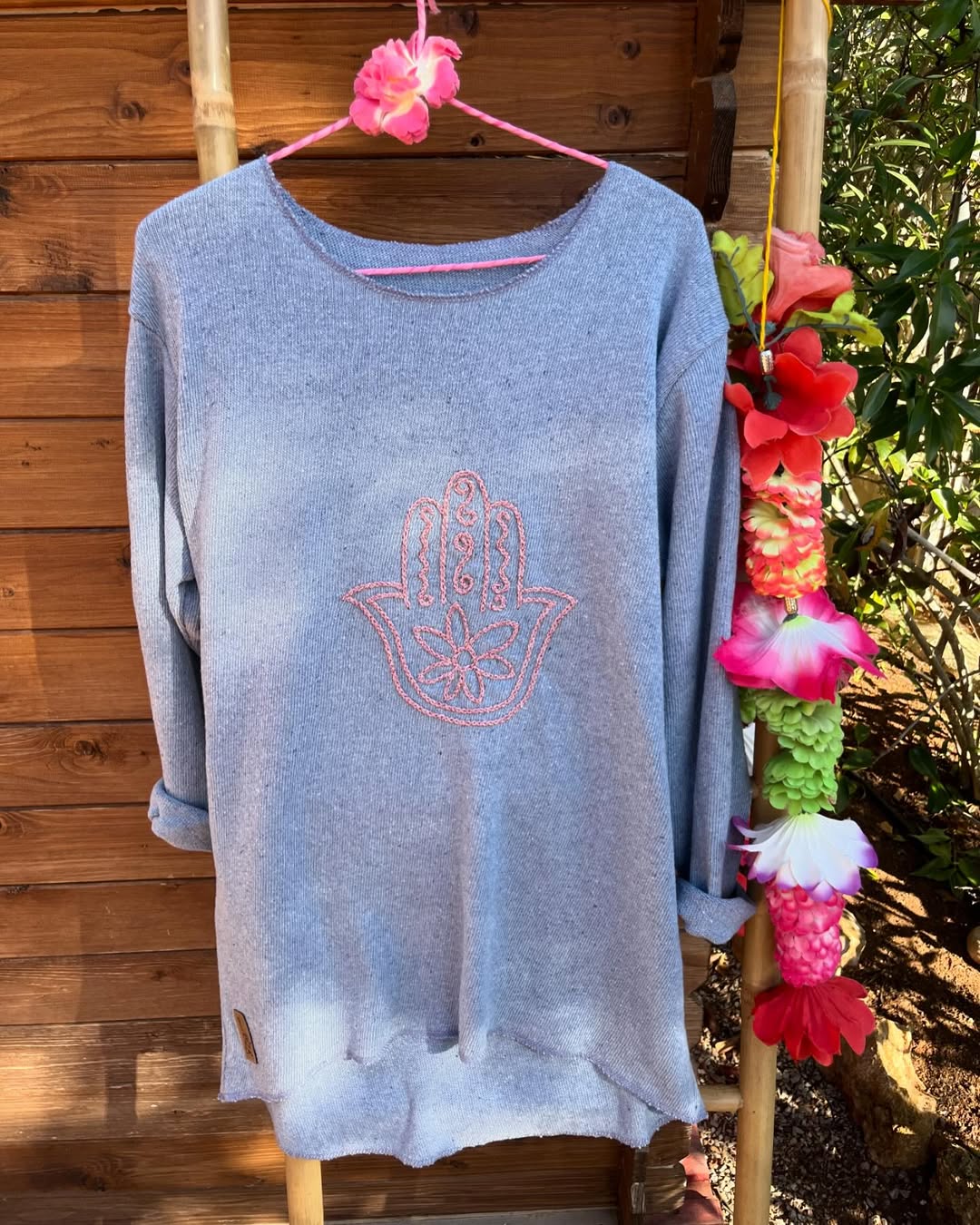
Hand of Fatima motif on a Moroccan dress
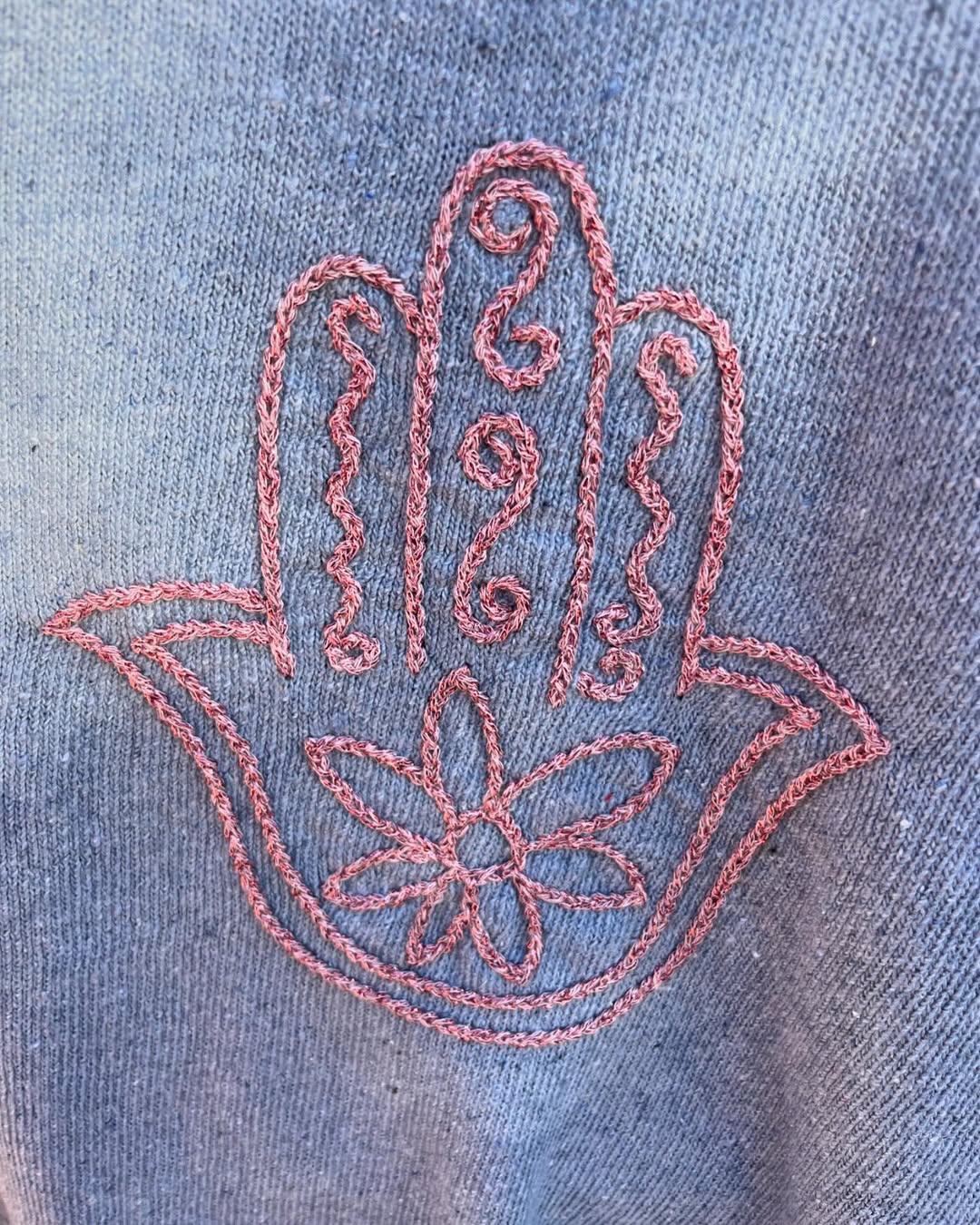
Contemporary Moroccan fashion incorporating the Khamsa
This expansion into fashion and decorative arts means that travelers today can find the Moroccan Hamsa across a very wide price range and in a very wide variety of formats. The challenge is less finding the symbol and more finding the version that genuinely reflects Moroccan artisan skill rather than mass-produced imports.
Where to Buy an Authentic Hand of Fatima in Morocco ⇧
The question of where to buy genuine Moroccan Hamsa pieces is one that many visitors raise, and the answer requires a bit of nuance. Morocco’s souks contain genuine artisan-made pieces alongside factory-produced goods that may have been manufactured outside the country entirely. Distinguishing between them takes either trained eyes or a trusted local guide.
Best places to shop for Hand of Fatima pieces
Medina souks in Fes and Marrakech remain the most rewarding destinations for Moroccan handicrafts, though they require patience and ideally some local guidance. The artisan quarters (known as quarters of a specific craft, such as the coppersmiths’ quarter or the silversmiths’ lane) are where you will most reliably find pieces made on-site by craftspeople who have inherited the techniques from previous generations.
Ensemble Artisanal shops, found in major Moroccan cities, are government-affiliated craft outlets with fixed prices. They are useful as a reference point for understanding fair value before shopping in the open souk.
Gold and silver jewelry shops in the main cities carry high-quality Khamsa pieces in precious metals. If you are looking for a gold Khamsa ring or pendant to bring home, these shops offer assurance of material quality that open-market vendors cannot always provide.
Cooperative workshops in towns like Tiznit (famous for silver) or Safi (ceramics) often allow visitors to watch artisans at work before purchasing. These are among the most satisfying places to buy Moroccan souvenirs of any kind.
If you are visiting Morocco for the first time, it helps to know the country’s geography before planning which cities to visit. You can start with this overview of where Morocco is located and what makes each region distinct, and then use a list of Moroccan cities to plan your route and shopping stops.
For Travelers: What the Khamsa Means as a Souvenir ⇧
The Hand of Fatima for travelers to Morocco has taken on a meaning that is distinct from its historical and religious associations. For most visitors, the Khamsa is above all a memory object: a tangible piece of Morocco that sits on a shelf at home and conjures, reliably and vividly, the smell of cedar wood in a medina workshop, the sound of a silversmith’s hammer, or the filtered light of a late afternoon in a Saharan town.
That associative power is actually what makes the best Khamsa pieces worth buying carefully. A cheaply made one that tarnishes within a year carries less of Morocco home than a well-made copper or silver piece that ages with its owner. Morocco’s craft traditions are deep and varied, and the Khamsa is one of the most accessible entry points into understanding them.
Travelers sometimes ask whether it is culturally appropriate to purchase and display the Hand of Fatima. The short answer is yes. The symbol has always circulated across communities and contexts, and Moroccan artisans and vendors actively welcome interest from foreign visitors. Buying a quality piece supports local craft traditions directly. Knowing a little about what you are buying, as this article hopes to help with, makes the exchange more meaningful for everyone involved.
Morocco is a country that rewards curiosity. Whether you arrive knowing what currency to carry or whether Morocco is safe to visit (it is, consistently rated among the safest destinations in Africa for tourists), the more you engage with what you see around you, the richer the experience becomes.

Want to explore Moroccan artisan culture in person, find authentic Hand of Fatima pieces in the medina, and understand what you are seeing? Mouhssine is a licensed guide certified by the Moroccan Ministry of Tourism who can take you through the craft quarters, explain the history and symbolism behind what you see, and help you shop with confidence. Get in touch directly via WhatsApp.
Chat on WhatsAppFrequently Asked Questions ⇧
The Hand of Fatima in Morocco is many things at once: an ancient amulet, a shared cultural emblem, a living craft tradition, and for the traveler who brings one home, a small and durable piece of Moroccan memory. It has survived the rise and fall of empires, the arrival of new faiths, and the pressures of mass production, and it remains one of the most honest expressions of what Moroccan culture looks like when it is given form by human hands. Whatever you bring home from Morocco, a Khamsa made by someone who knows the tradition is worth every dirham you spend on it.