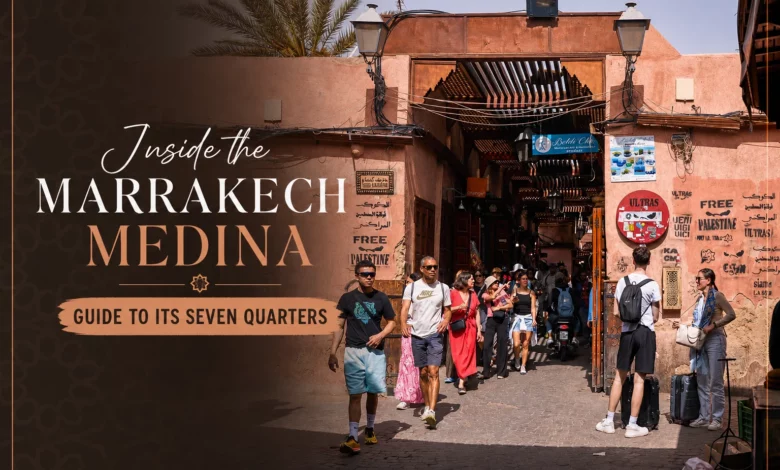
The Marrakech medina is not one place. It is roughly a dozen quarters pressed against each other inside the same set of walls, and each one has its own hours, its own trade and its own temperament. Visitors who treat it as a single maze spend three days walking in circles between the same four streets. Visitors who learn how it is divided see a different city entirely, and they see it in an afternoon.
The Marrakech medina divides into quarters named after their gate, their mosque or their old trade. The ones a visitor actually meets are Mouassine, Rahba Kedima, Dar el Bacha, Kennaria and Riad Zitoun, the Mellah, the Kasbah and Bab Doukkala. Learn those seven names and the walls stop feeling like a maze.
- Walled area
- Roughly 600 hectares
- Historic gates
- Nineteen, of which six matter to a visitor
- Crossing on foot
- About 40 minutes end to end, without stopping
- Best hours
- Early morning, then late afternoon
- Status
- UNESCO World Heritage Site
- Guiding
- Licensed guides only, badge visible
What a quarter actually is here ↑
A quarter in the old city is not a line on a tourist map. It is a functional unit, and it was built around five things: a mosque, a communal bread oven, a hammam, a fountain and a shop that sells the basics. Everything a household needed within a two minute walk. Once you know that, you can read the medina without a map, because those five things are still there and still working.
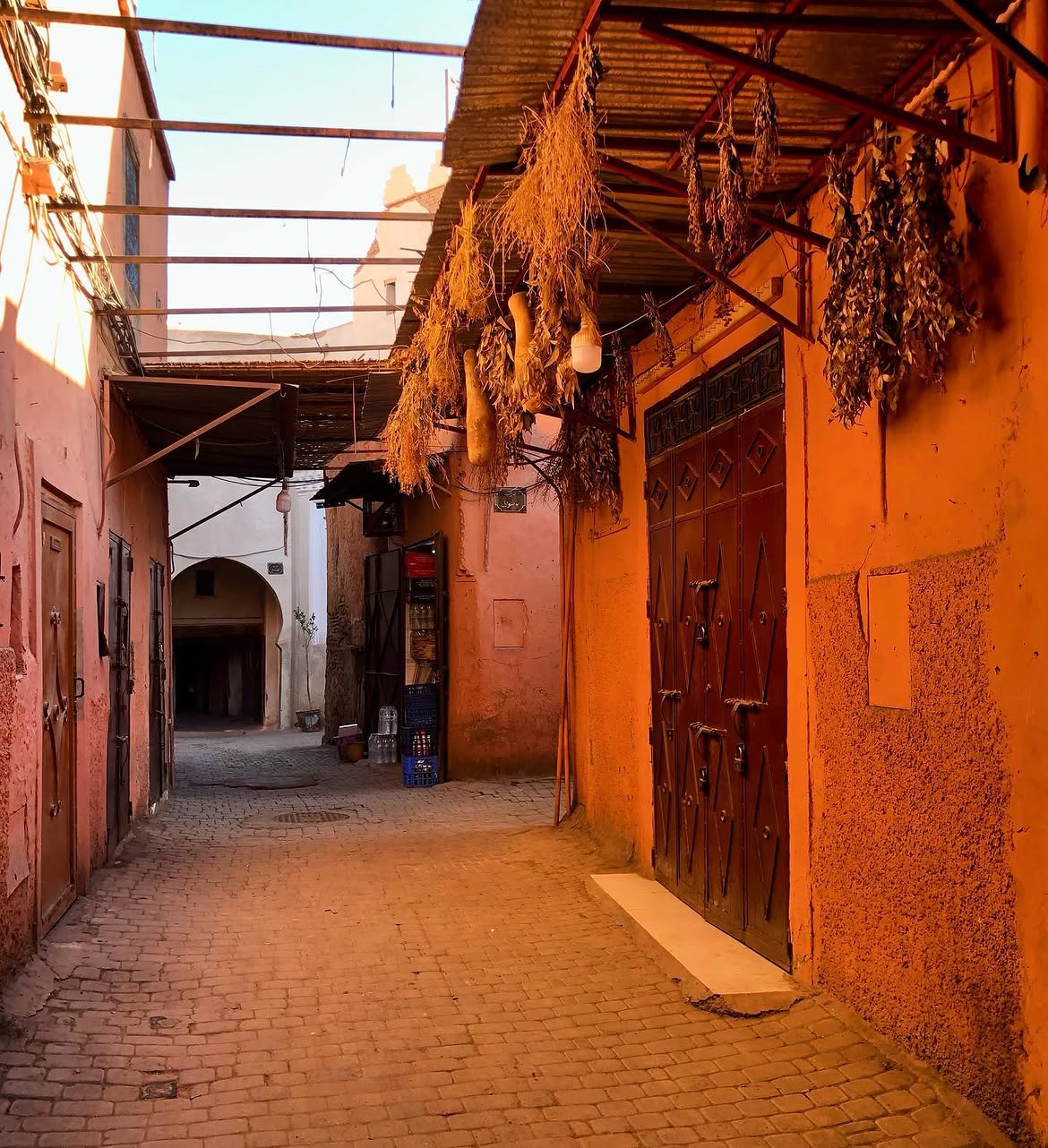
This is also how you know you have crossed a boundary. The alley narrows or widens without warning. The shops change from tourist goods to plastic buckets and school notebooks. You pass an open doorway with the smell of wood smoke and a man carrying a tray of unbaked loaves, and you are now in somebody’s neighbourhood rather than in the souk. Nothing announces it. That is the point.
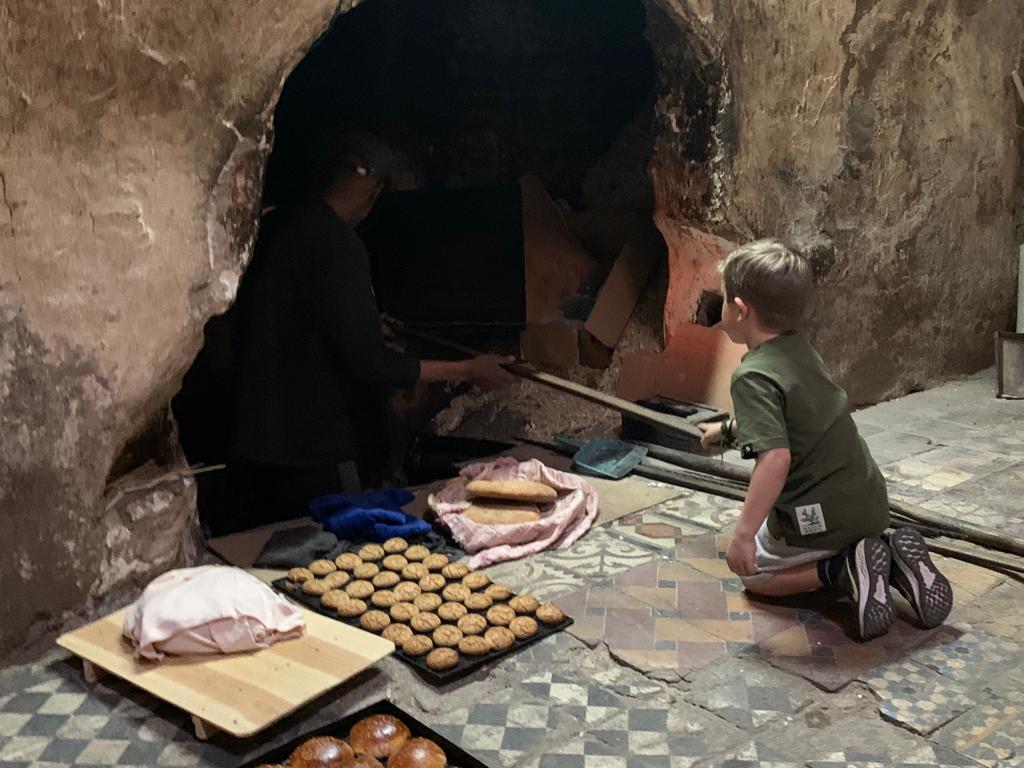
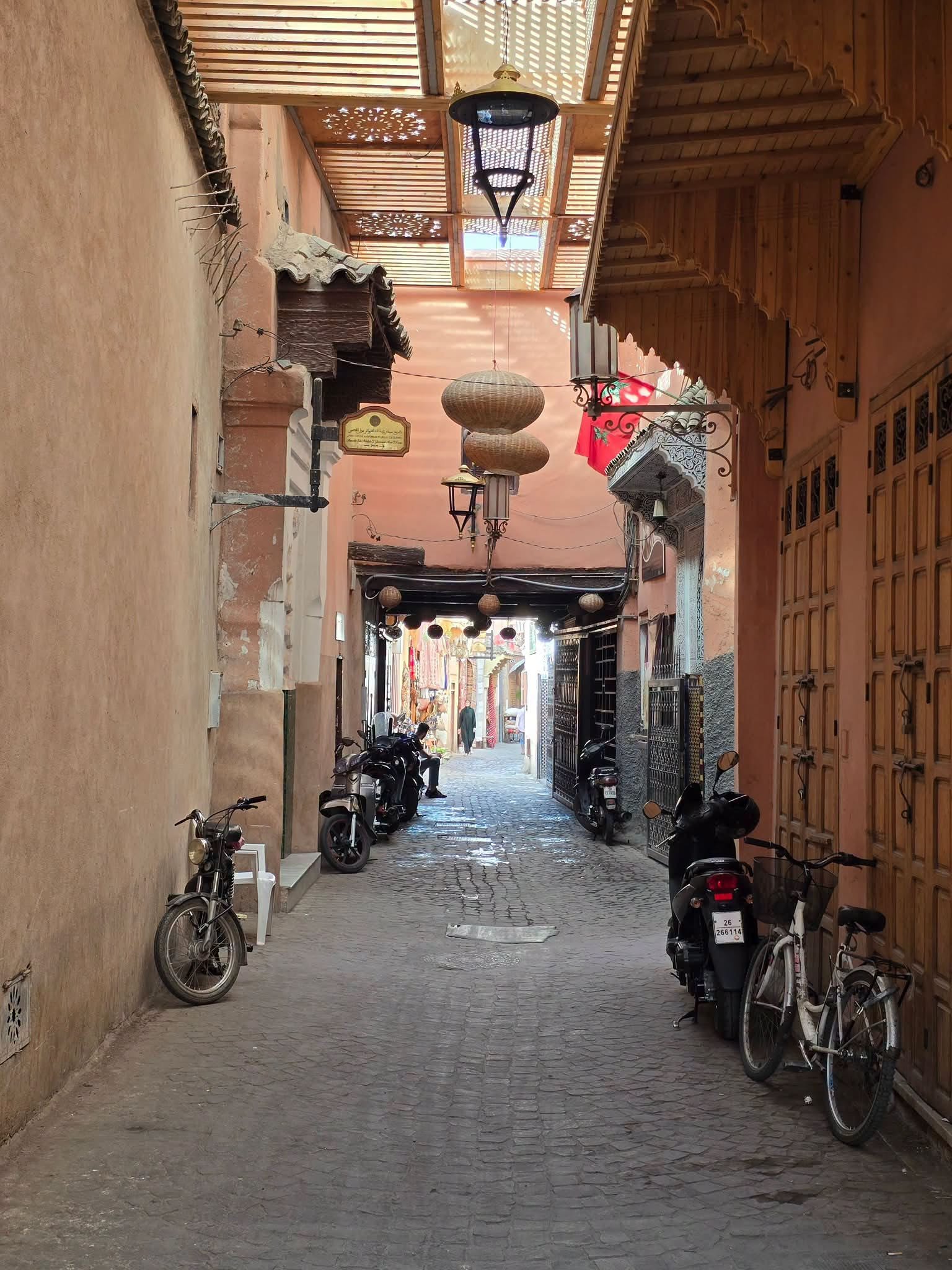
Residential alleys are called derb, and most of them are dead ends by design. If the street you are on gets quieter, narrower and has children playing in it, you have left the through route. Turn back rather than pushing on, because it very probably ends at somebody’s front door.
The gates are the filing system ↑
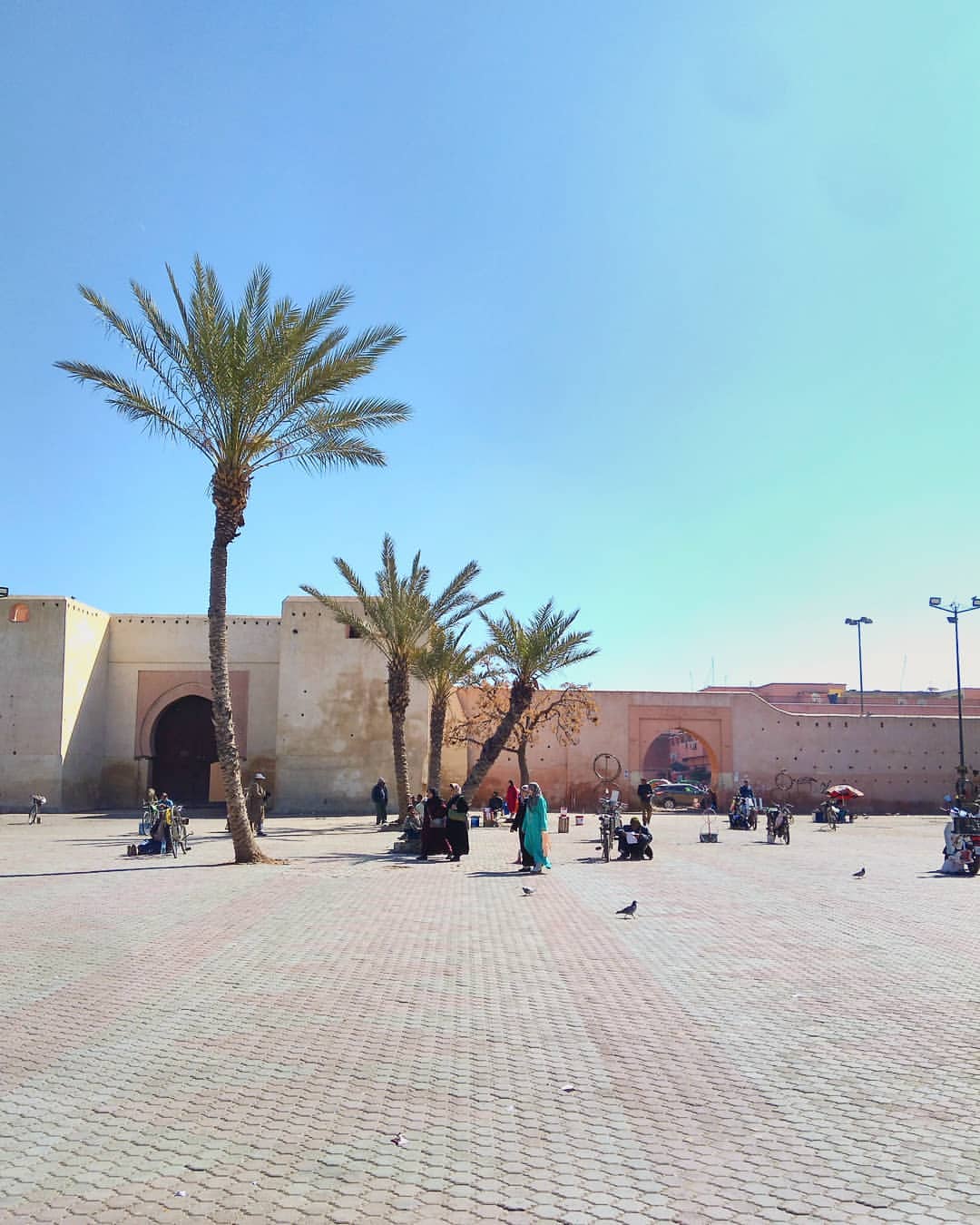
Marrakech has nineteen historic gates in its walls, and each one is named after the quarter behind it, the trade practised there or the road it leads to. Bab means gate. Learn six of them and you can direct a taxi, meet a driver, or describe where you are to a hotel on the phone, which is more useful in practice than any street name, because most alleys inside are not signposted at all.
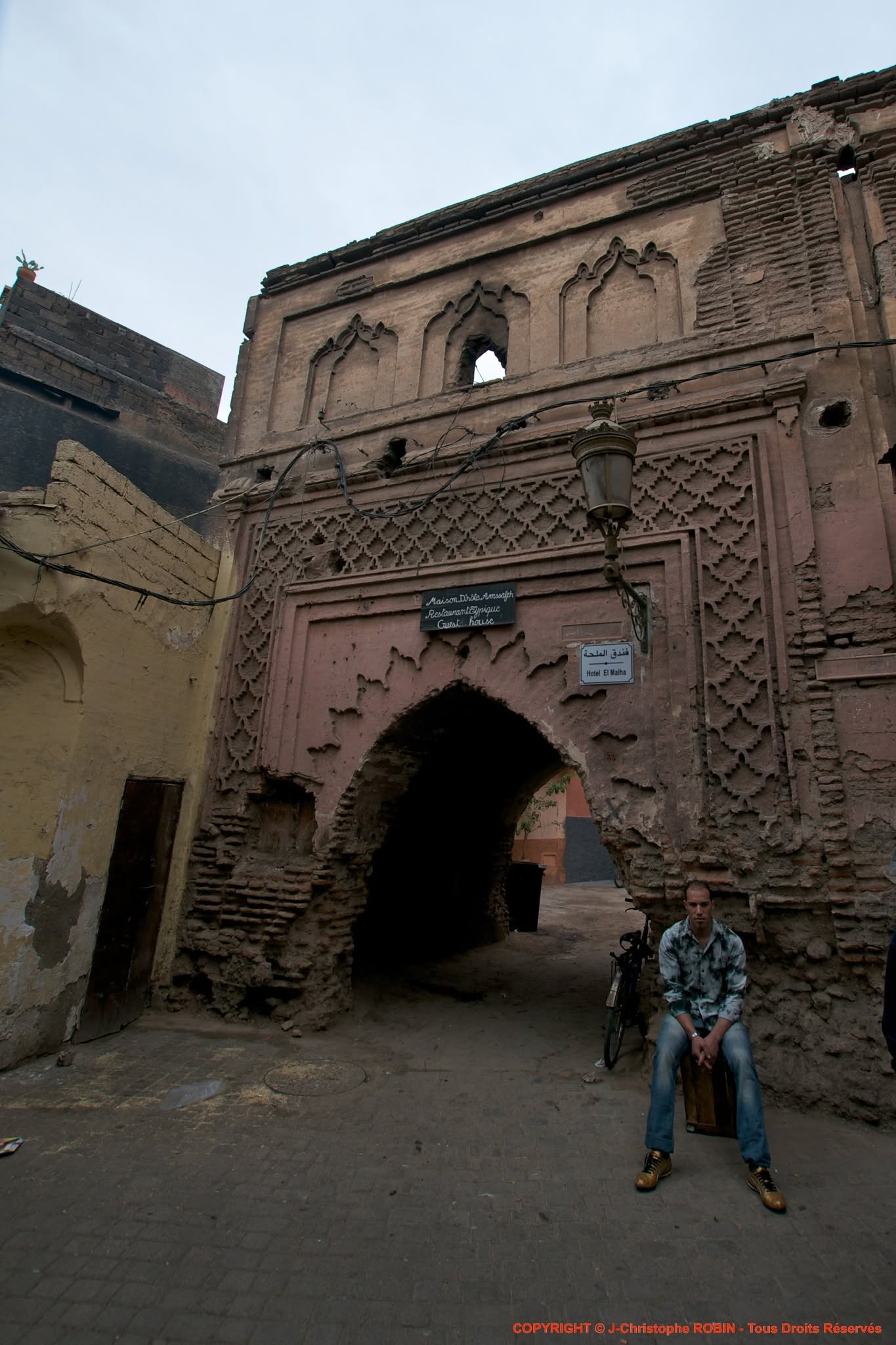
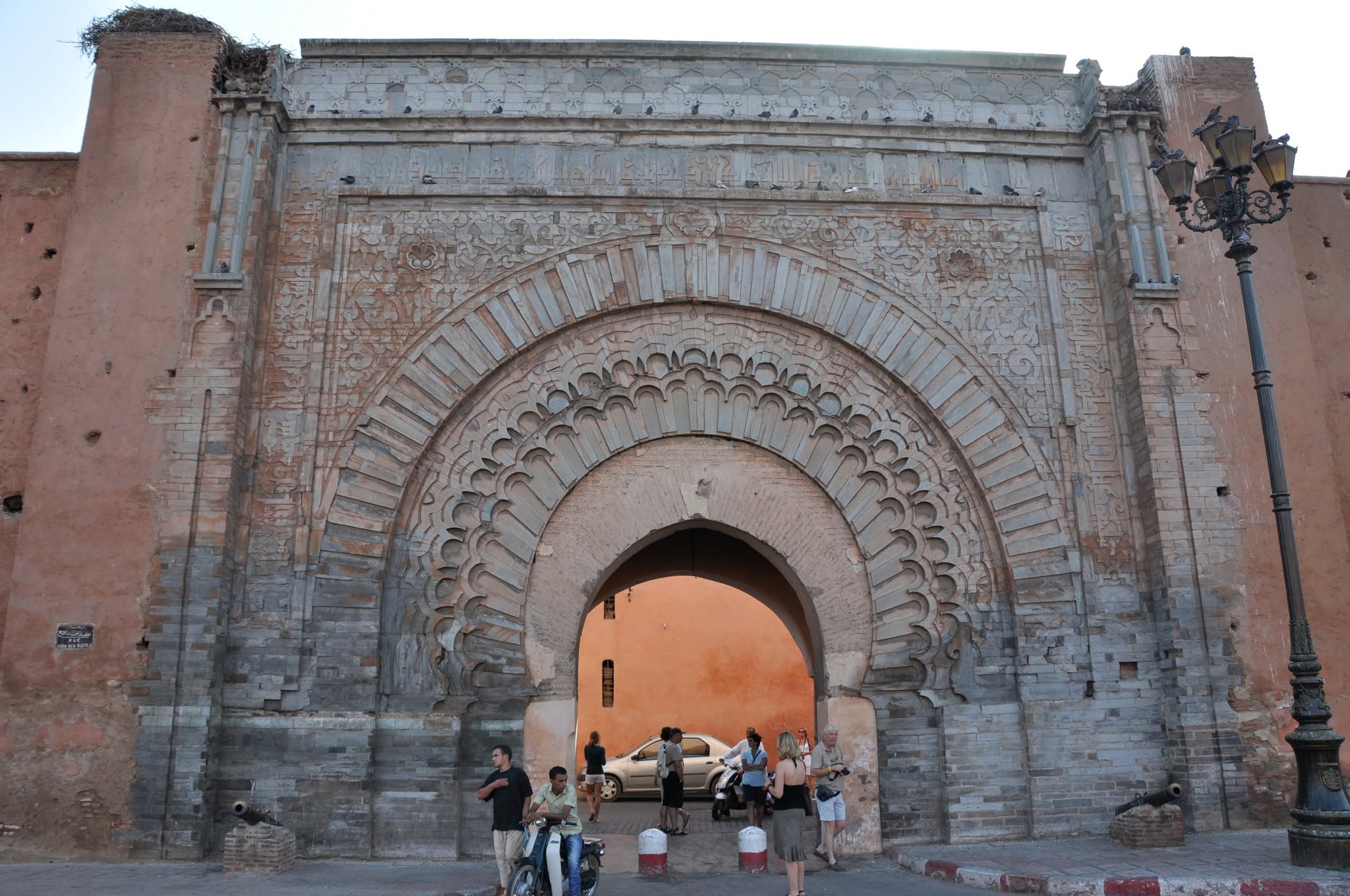
Several of the oldest gates use a bent entrance: you walk in, turn ninety degrees, then walk out the other side. It was built that way to stop a cavalry charge, and it is the reason a gate can feel like a short tunnel rather than an archway.
| Gate | Where it opens | Useful for |
|---|---|---|
| Bab Doukkala | North west of the medina | Arriving by bus or taxi, riads in the north |
| Bab Agnaou | Entrance to the Kasbah | Saadian Tombs, El Badi Palace |
| Bab er Robb | South, beside Bab Agnaou | The road out to Asni and the Atlas |
| Bab Debbagh | East, at the tanneries | The tanners’ quarter, leather workshops |
| Bab el Khemis | North east | The flea market, Thursday in origin |
| Bab el Jdid | South west, near Hivernage | Crossing between the old and new city |
A warning about the name Bab Marrakech ↑
This one trips up a surprising number of people planning a trip. Search for Bab Marrakech and you will find plenty of results, photographs and reviews. Almost all of them are in Casablanca.
Bab Marrakech is the best known gate of Casablanca’s old medina, on its southern side, next to Place des Nations Unies. It is called that because it faced the road towards Marrakech, in the same way Bab Doukkala in Marrakech is named after the region its road led to. There is no gate called Bab Marrakech in Marrakech, and asking a taxi driver in Marrakech to take you there will get you a puzzled look at best.
If a listing, a hotel description or a walking route mentions Bab Marrakech, check which city it is in before you build a day around it. The two medinas are about 240 kilometres apart.
Mouassine ↑
North west of the main souks, Mouassine is the quarter most first time visitors end up liking best without knowing its name. It is built around a sixteenth century mosque and its fountain, and the streets around it hold the concentration of workshops, small galleries and courtyard houses that most people picture when they imagine the medina.
It is also where the city’s Jewish community lived before the Mellah was created further south, which is why the district feels older than its buildings suggest. Walk it in the morning, when the light drops into the narrow sections and the workshops have their shutters up but the crowds have not arrived.
Rahba Kedima and the souk core ↑
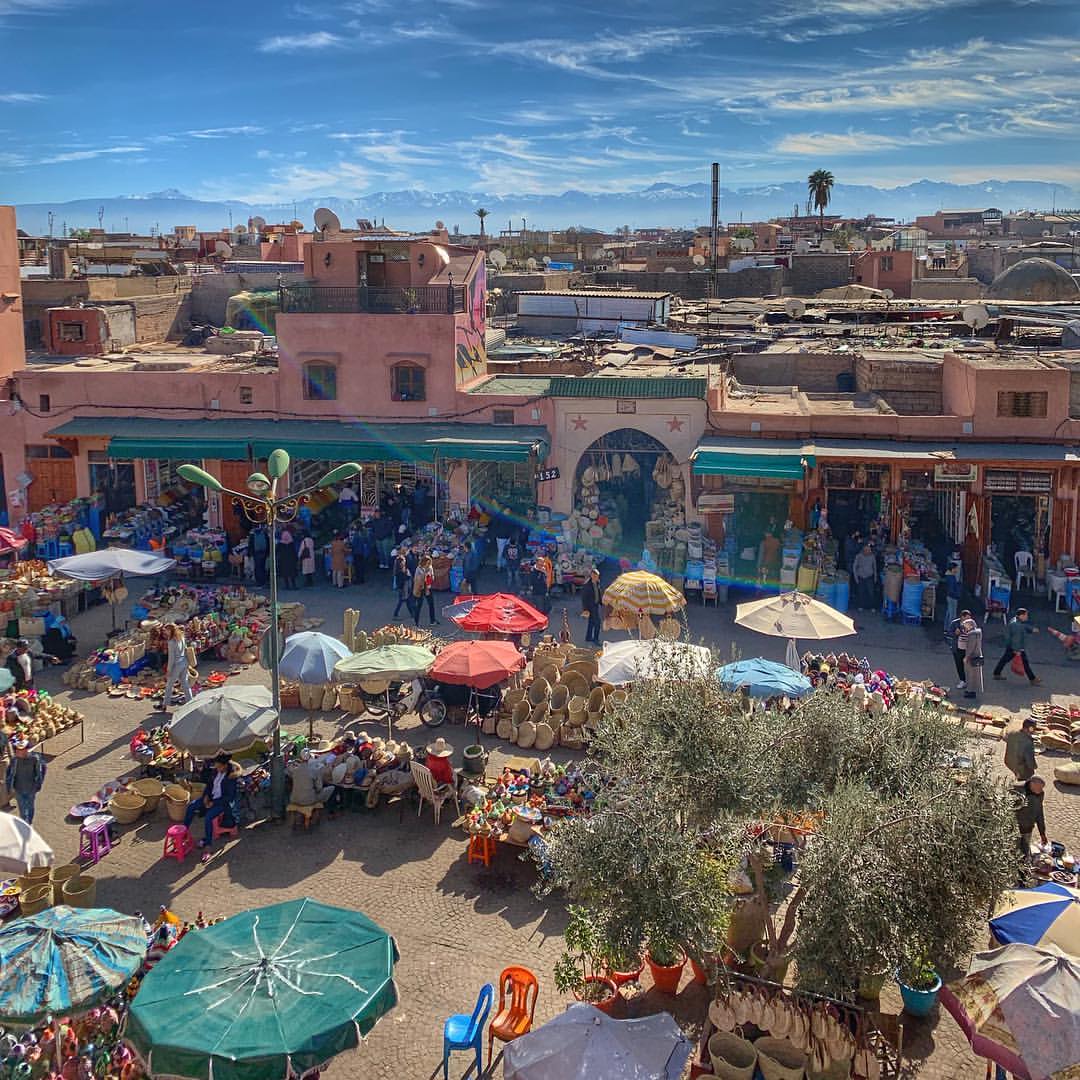
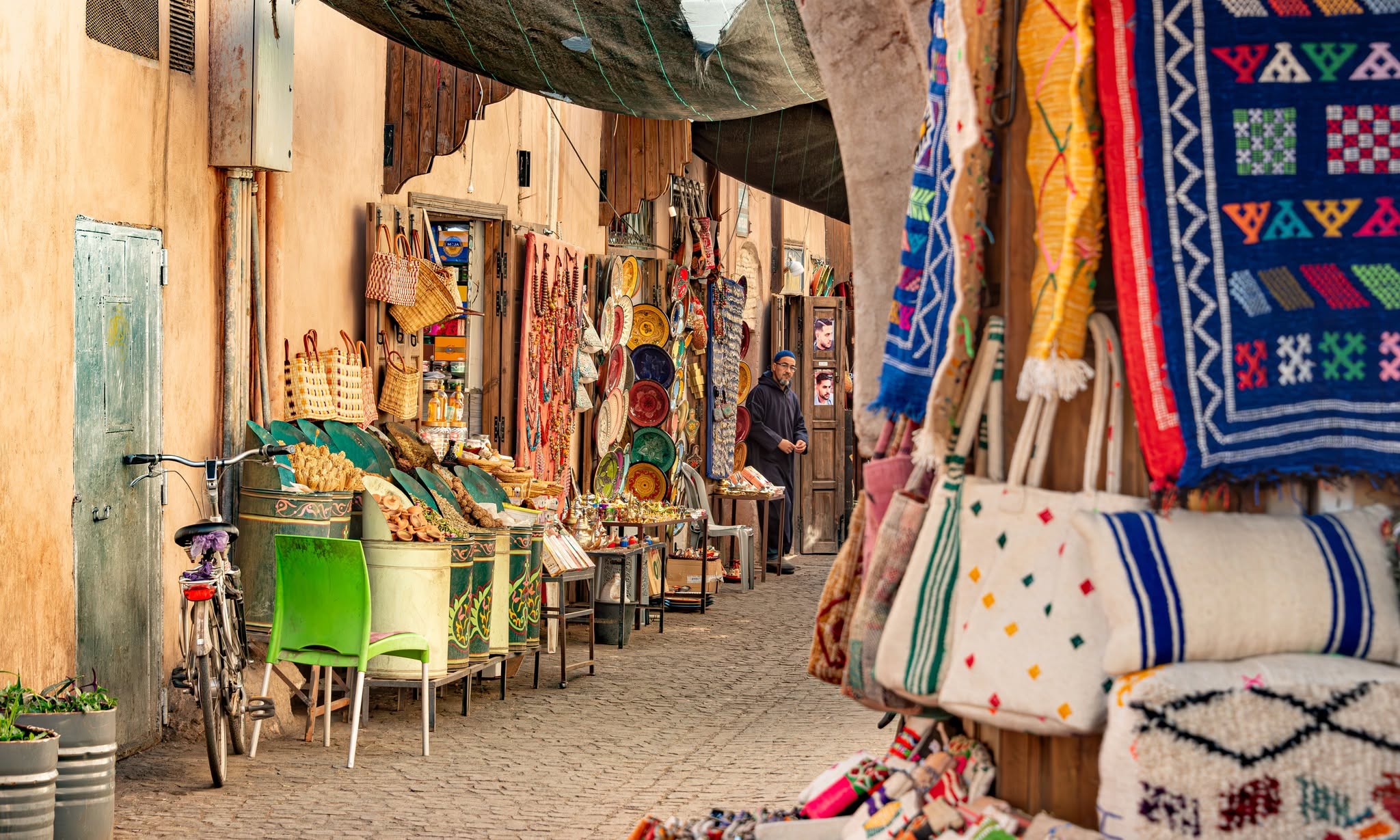
Rahba Kedima, the old square, is the small open space in the middle of the souks where spice sellers, basket weavers and herbalists have traded for centuries. It is one of the few places in the covered market where you can stand still, get your bearings and see the sky, which makes it the single most useful landmark in the whole souk system.
The stalls around it will hand you an explanation of what every jar is for, and some of those explanations are more commercial than medicinal. Treat the herbalists as shopkeepers, not pharmacists. If you want to understand what is actually worth buying here, our guide to the authentic souks of Marrakech separates the real trades from the tourist stock.
Dar el Bacha and the northern approach ↑
The stretch between Bab Doukkala and the souks is calmer, wider and easier to walk than anything further in, which is why so many riads sit along it. Its anchor is Dar el Bacha, the early twentieth century residence of Thami El Glaoui, restored and reopened as a museum. The building is the reason to go: carved cedar, painted columns, zellij and a courtyard that stays cool in July.
One practical caution. Published listings disagree about which day of the week it closes, and about opening hours, so check on the day rather than trusting a guide written two years ago. Our page on visiting Dar el Bacha covers what is inside and what to look for.
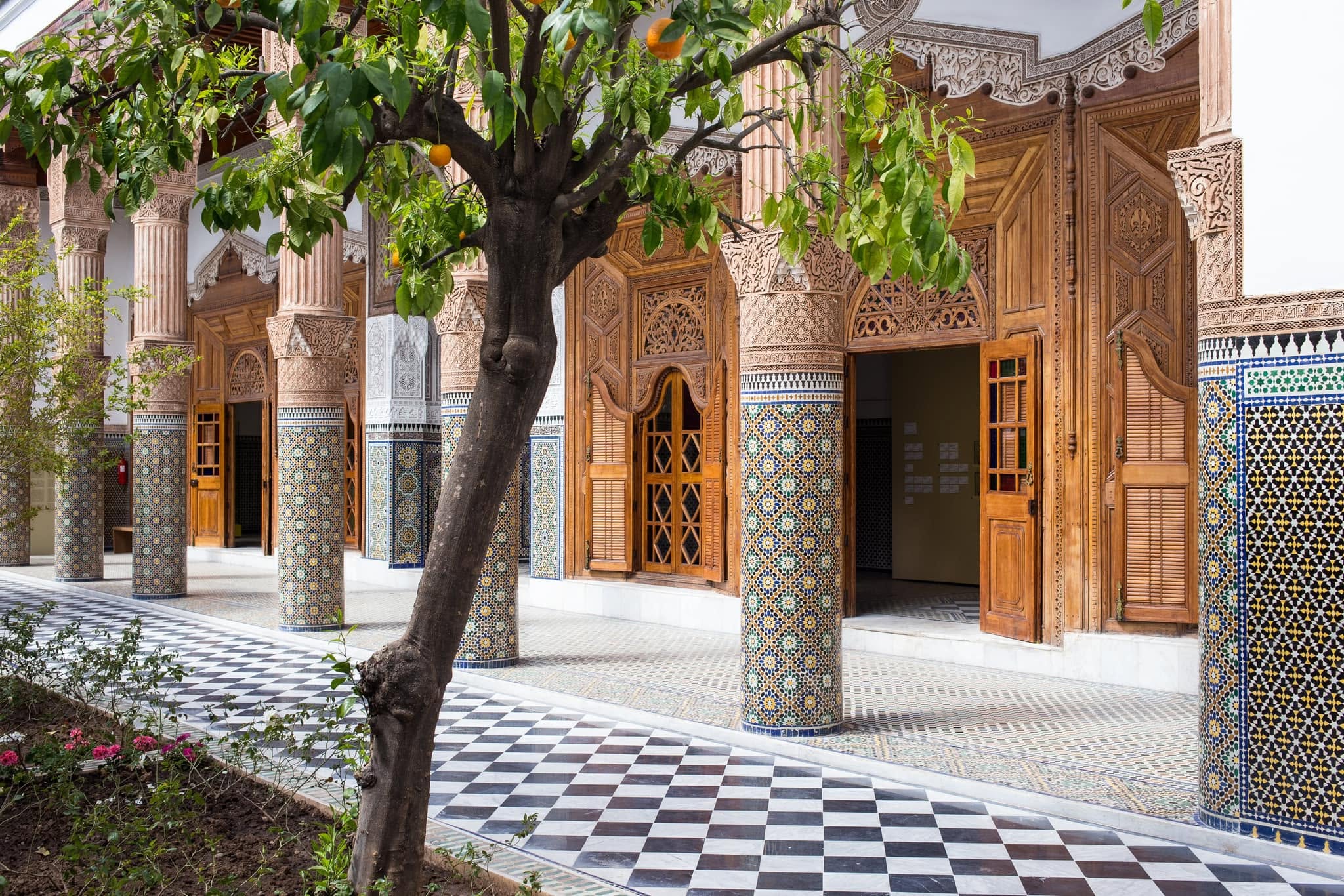
Kennaria and Riad Zitoun ↑
South east of Jemaa el-Fna, Kennaria and the two Riad Zitoun streets form the corridor between the square and the palaces. Riad Zitoun el Kedim is a pedestrian street rather than an alley, lined with metalworkers, tyre-rubber craftsmen and small cafes, and it is the simplest walking route between the square and the Bahia Palace or the Mellah.
This is a good area for a first walk with children or with anyone nervous about getting lost, because the street runs more or less straight and always leads somewhere recognisable. The quarter behind it is residential and quiet within twenty metres of the main line.
The Mellah ↑
The Mellah, the historic Jewish quarter, was created in the mid sixteenth century under the Saadians, when the community was moved here from the Mouassine area. It was a walled district of around eighteen hectares with its own market, ovens, synagogues and cemetery, and it looks unlike the rest of the medina: the streets run in straighter lines, the houses are taller, and balconies face outwards rather than inwards onto a courtyard.
Almost nobody from the original community still lives here. What remains is the architecture, the Lazama synagogue, the Miaara cemetery and the spice trade around the edges. The usual entrance is Place des Ferblantiers, the tinsmiths’ square, and you will hear the metalworkers before you see the gate. For the wider story, see our guide to Moroccan Jewish heritage.
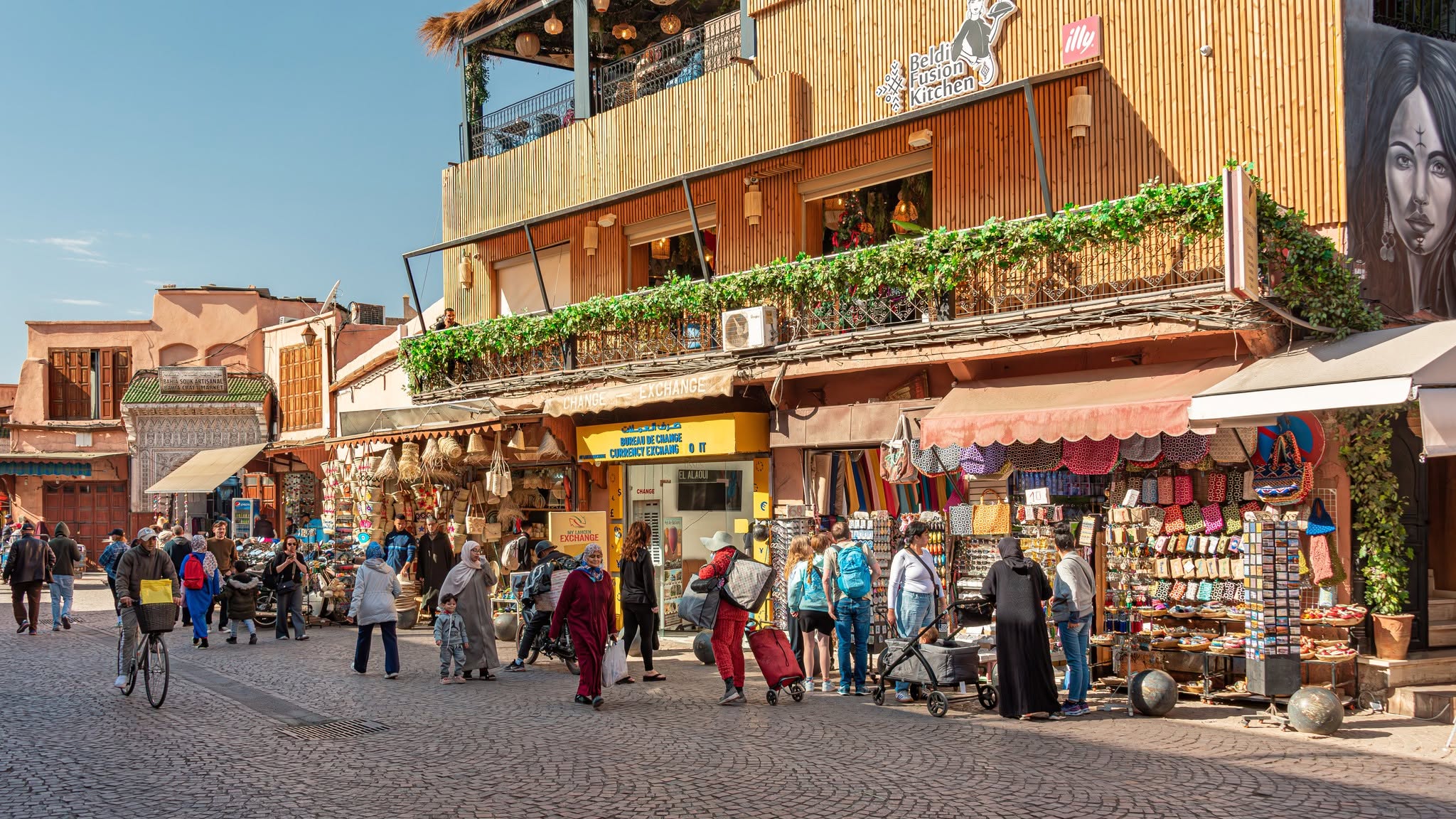
The Kasbah and the Mechouar ↑
The southern end of the medina was the royal quarter, and it still reads that way. The Kasbah holds the Saadian Tombs, the ruins of El Badi Palace and the Kasbah mosque, and its formal entrance is Bab Agnaou, the twelfth century Almohad gate whose carved stone has turned from blue grey to red under centuries of desert wind.
Beside it lies the Mechouar, the wide ceremonial ground in front of the royal palace. It is the emptiest space inside the walls and the only place in the medina where you get distance, which after a morning in the souks is worth more than it sounds.
Bab Doukkala ↑
The north western quarter takes its name from its gate, which in turn takes it from the Doukkala plains, the agricultural region its road once served. It is the least touristic of the quarters covered here and the most useful to understand, because it is where a large part of the medina does its actual shopping. The covered market inside the gate sells vegetables, fish and meat to people who live here, at prices nobody negotiates.
It is also the practical arrival point for a lot of visitors. Buses stop nearby, cars can get close, and the walk from the gate into the riad district is short and level. If you are wheeling a suitcase, this matters more than the view.
The people are the point ↑
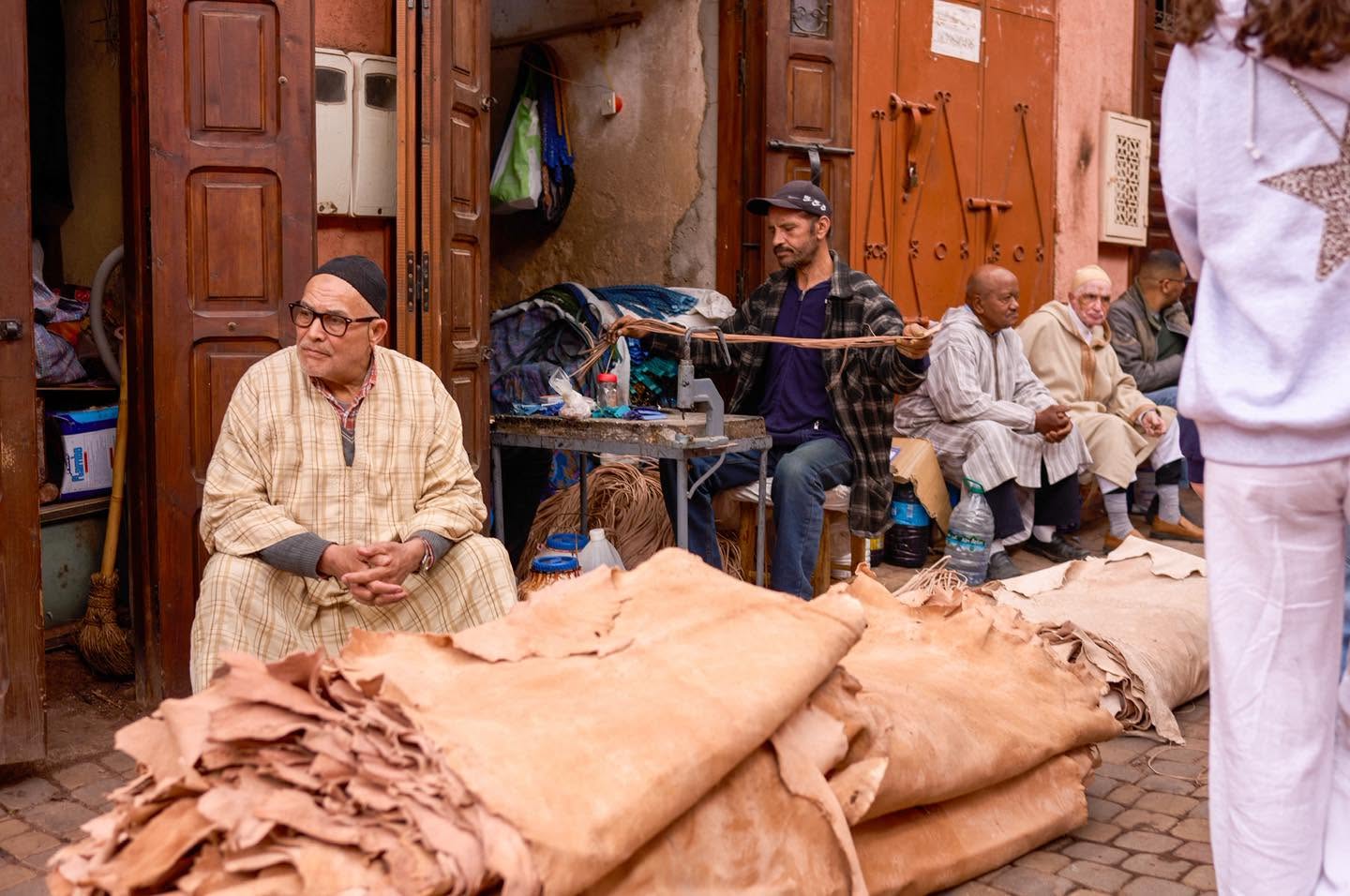
You can learn the quarters, the gates and the trades and still miss what makes the medina worth the trip. Marrakech was built as a meeting point for traders coming off the Atlas passes and up from the Sahara, and the city still behaves like one. Merchants call out to you because that is the job and always has been. Craftsmen work leather, wood and metal in doorways barely wider than their benches, and most of them will let you watch if you stop and greet them properly first.
The habits that come with that history are worth noticing. Tea appears constantly, and refusing it is harder than accepting it. Families receive guests in a courtyard rather than a living room. In the evening the storytellers, musicians and food stalls take over Jemaa el-Fna and the sound carries into the surrounding alleys, which is a good reason to see the square at night with someone rather than alone. Our guide to Marrakech after dark covers what changes once the light goes.
Monuments explain the city’s past. The people explain why it is still standing, still trading and still worth several days rather than an afternoon.
Two mistakes that spoil the medina ↑
Accepting help from an unlicensed guide. Somebody offers to show you the way, or tells you the souk is closed and the tanneries are this way, and forty minutes later you are somewhere you did not intend to be, being asked for a sum of money nobody agreed. This is the most common bad experience visitors report in the old city, and it is entirely avoidable. Guiding is a regulated profession in Morocco. A licensed guide carries a badge with a number and will show it before you ask. Our list of the scams visitors run into covers the usual openings word for word.
Wandering the alleys at night. The medina at night is not the medina in daylight. The alleys interlock, the landmarks disappear, the shops that would have pointed you back to the square are shuttered, and phone maps behave badly between high walls. In daylight you have options: a shopkeeper, a doorway, a sightline. After dark you have fewer of all three. Walk the lit main routes, keep the square as your reference point, and save the small alleys for the morning. Better still, walk them with someone who knows them.
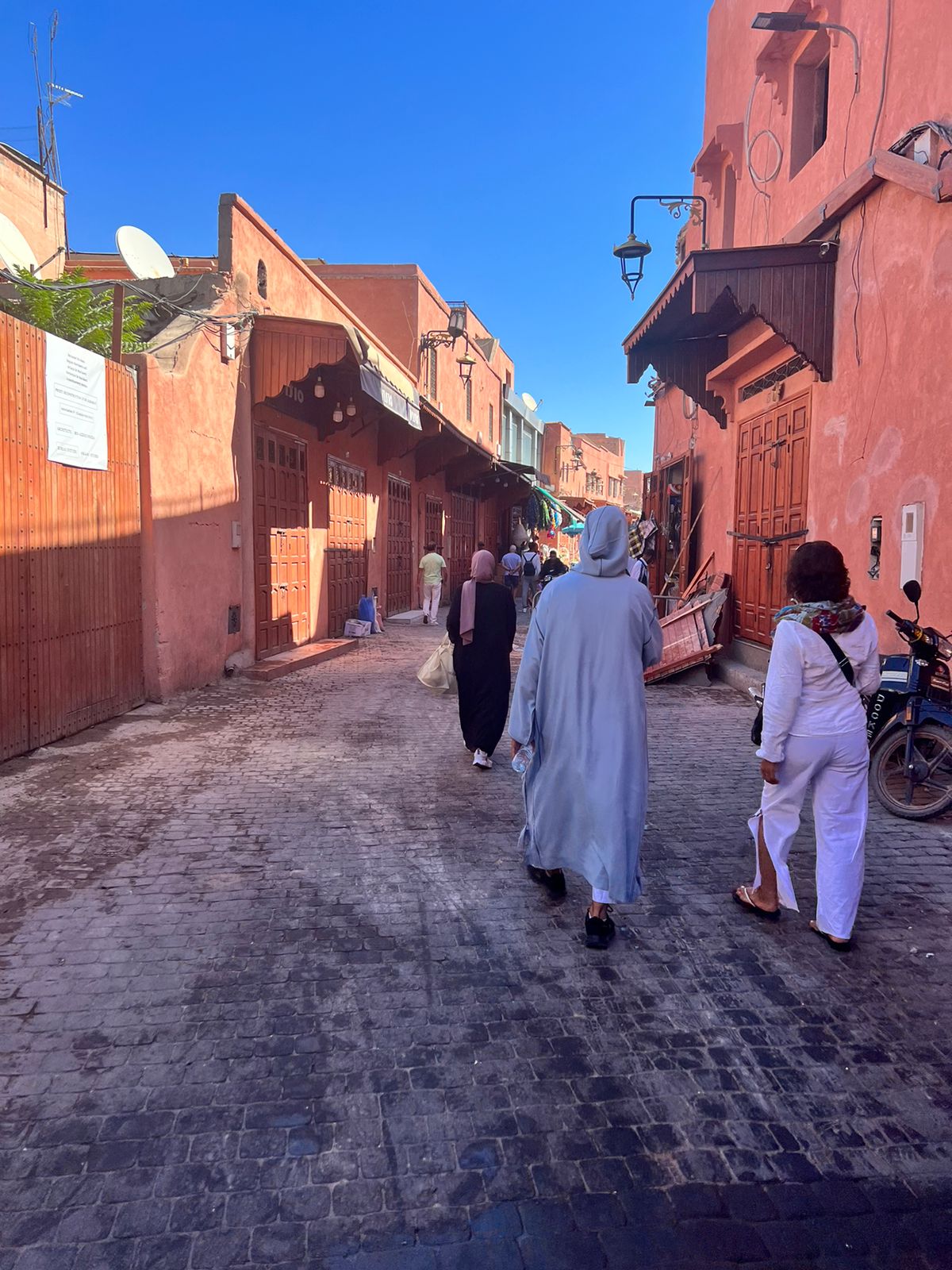
Medina walk with the basics of Moroccan Darija
A short guided walk does two things at once: it fixes the geography in your head so the following days are easier, and it gives you the twenty words that change how shopkeepers respond to you. Most visitors find the second part matters more than they expected.
See the medina walkWhich quarter to sleep in ↑
Quarter matters more than property here, because it decides how your day starts and ends. Mouassine and Dar el Bacha give you the medina you came for with alleys wide enough to reach on foot without a struggle. Kennaria and Riad Zitoun put you a straight walk from Jemaa el-Fna, which suits a short stay. Bab Doukkala is the least atmospheric and the easiest to arrive at, which is the right trade for families and heavy luggage.
Two things to check before booking, whatever the photographs promise: how far from the nearest gate or vehicle drop, and whether the last stretch is walkable with a suitcase. Some of the most beautiful riads in the city sit at the end of eight minutes of narrow alley. Our guide to choosing a riad in Marrakech goes through the rest.

Common questions ↑
Which gate should I give a taxi driver?
The one nearest your riad, and ask the riad which it is before you arrive. Alley names mean little to drivers, gate names mean everything. Bab Doukkala, Bab Agnaou and Bab el Jdid are the ones most often used for drop-offs.
Do I really need a guide for the medina?
Not for the whole stay, but one guided morning at the start pays for itself. You stop losing time on wrong turns and you learn which alleys lead somewhere. After that most visitors are comfortable walking the main routes alone in daylight.
Is it safe to walk the medina at night?
The lit main streets and the square area are busy well into the evening and most visitors walk them without trouble. The small residential alleys are a different matter, mainly because getting properly lost there after dark is easy and unpleasant. Keep to the routes you walked in daylight.
Is Bab Marrakech in Marrakech?
No. Bab Marrakech is a gate and quarter of Casablanca’s old medina, named after the road that led to Marrakech. Marrakech has nineteen gates and none of them carries that name.
Can a car reach my riad?
Almost never to the door. A car reaches a gate or a small square, and the rest is on foot, sometimes with a porter and a handcart. Ask your riad for the drop-off point and the walking time before you arrive rather than at midnight with luggage.
How long do I need to see the quarters properly?
Two full days covers the seven quarters in this guide without rushing, and three lets you go back to the one you liked. A single day means the souks and Jemaa el-Fna and very little else, which is how most visitors end up seeing the same streets repeatedly.
What should I avoid photographing?
People at work who have not agreed to it, especially women, and the inside of homes through open doorways. Ask first and expect that some will decline. Craftsmen usually say yes if you have spoken to them before you raise the camera.
Learn seven names, and the maze goes away ↑
Mouassine, Rahba Kedima, Dar el Bacha, Kennaria, the Mellah, the Kasbah, Bab Doukkala. That is the whole framework, and it holds up on the ground because it is how the city is genuinely organised rather than how a map divides it. Add the six gates and you can place yourself anywhere inside the walls within a minute.
The fastest way to make it stick is to walk it once with somebody who lives here, then repeat the same route alone the next morning. The second walk is when it becomes yours.
See the guided Marrakech city tour