There are very few places in Marrakech that manage to be three things at once. Dar El Bacha is a palace, a world-class museum, and one of the most sought-after coffee experiences in the world, all housed inside the same set of hand-carved cedar doors in the heart of the Medina. For most visitors, it becomes the single most memorable stop of their trip, the kind of place that restructures how you think about the city after you leave.
The lines outside the entrance, and there are always lines, tell you something about what awaits inside. This guide, written from direct first-hand experience by the team at MoroccanTravelTrips.com, covers everything: the history, the architecture, the museum, the Bacha Coffee menu and prices, and most importantly, the practical strategies that make the difference between a frustrating wait and a seamless visit.
The History of Dar El Bacha Palace ↑
Dar El Bacha, whose name translates simply as “the House of the Pasha,” was built in 1910 for Thami El Glaoui, one of the most powerful and controversial figures in 20th-century Moroccan history. When Sultan Moulay Youssef appointed him Pasha of Marrakech in 1912, El Glaoui effectively became the ruler of southern Morocco under the French Protectorate, and his palace in the Medina was constructed on a scale that left no ambiguity about that status.
The palace was designed to impress at every level. Its guest list over the following decades reads like a cultural almanac of the era: Colette, Maurice Ravel, Charlie Chaplin, Josephine Baker, and Winston Churchill all passed through its courtyards. Writers and diplomats from across Europe and North Africa were received here, and the building became as much a stage for political theatre as a private residence. El Glaoui died in 1956, the same year Morocco achieved independence, and the palace passed through various phases before its most recent transformation.
In 2017, following a significant restoration by the National Foundation of Museums, Dar El Bacha was opened to the public as the Museum of Confluences, with Bacha Coffee established inside as a tribute to the palace’s era of glamour and international hospitality. The restoration preserved everything that made the building extraordinary while adding the infrastructure for a cultural institution.
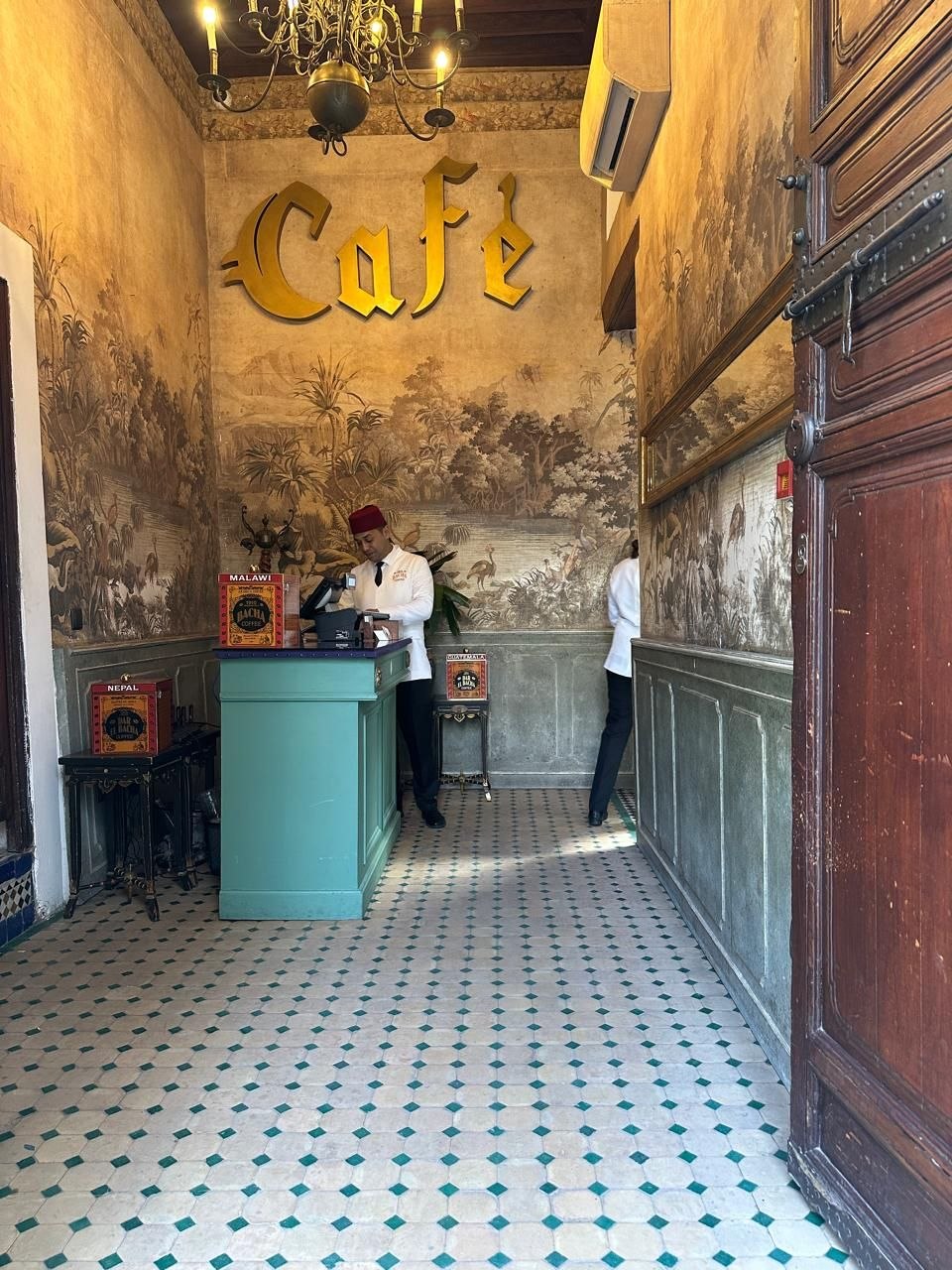
The entrance to Dar El Bacha, where visitors have gathered to enter the palace since 1910.
Dar El Bacha Architecture: A Masterpiece of Moroccan Craft ↑
The Dar El Bacha architecture represents one of the finest surviving examples of early 20th-century Moroccan palatial design, and understanding what you are looking at transforms the experience of walking through it. The palace follows the classic riad layout, built around a central courtyard planted with orange trees and a marble fountain, with rooms arranged symmetrically on all four sides. But the scale and the detail go far beyond a typical riad.
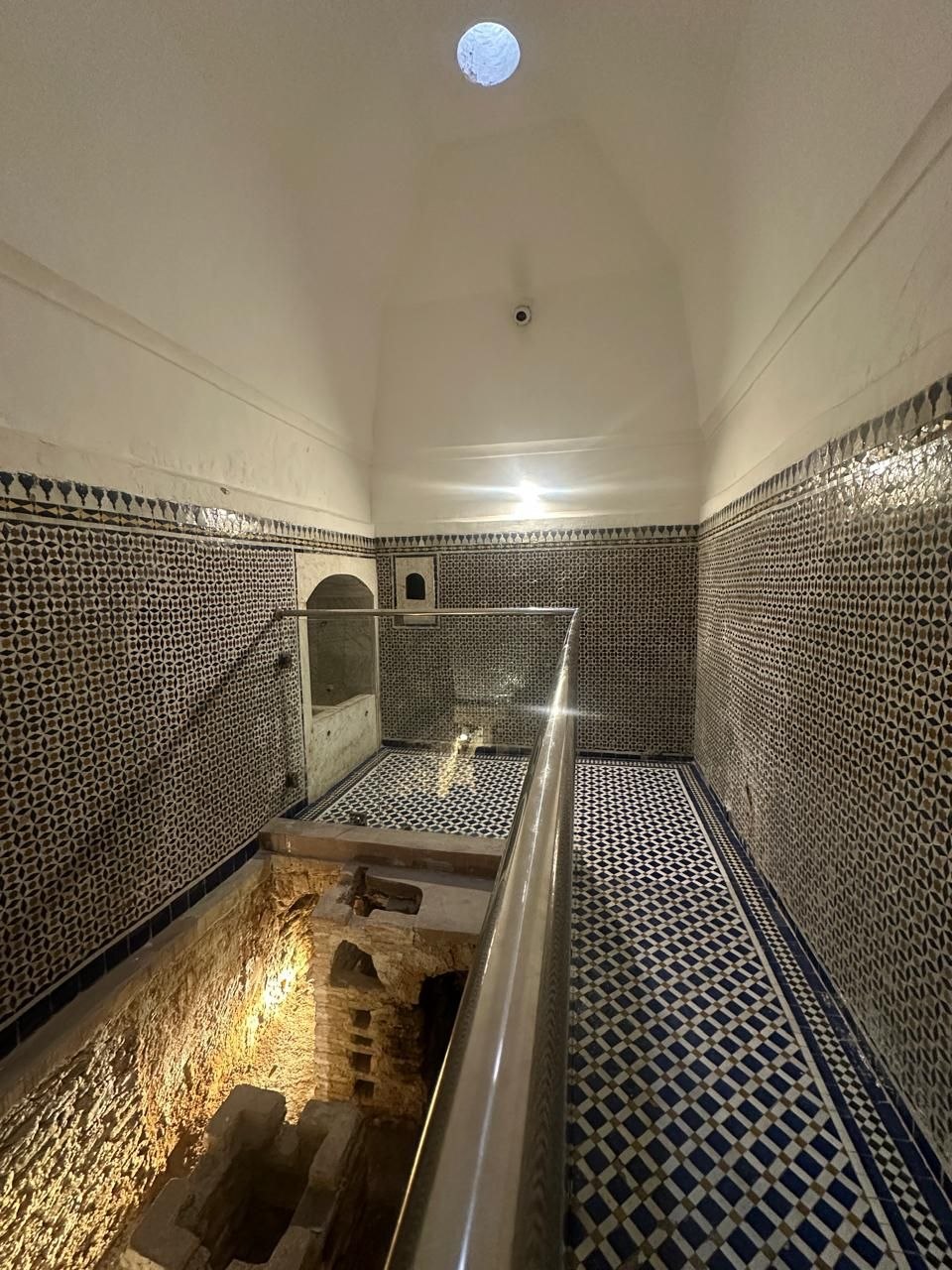
The zellige tilework, those extraordinary geometric mosaics, appears in patterns of unusual complexity and uses colours including a distinctive yellow that sets the palace apart from more conventional examples. Above the tile line, carved gypsum stucco panels cover entire walls from floor to ceiling, each one a separate composition of interlocking geometric and floral patterns worked by hand. The cedarwood ceilings above these panels are painted in a technique that requires multiple layers and considerable time, and in several rooms they are gilded in parts. The columns of the main portico are among the most photographed architectural elements in Marrakech.
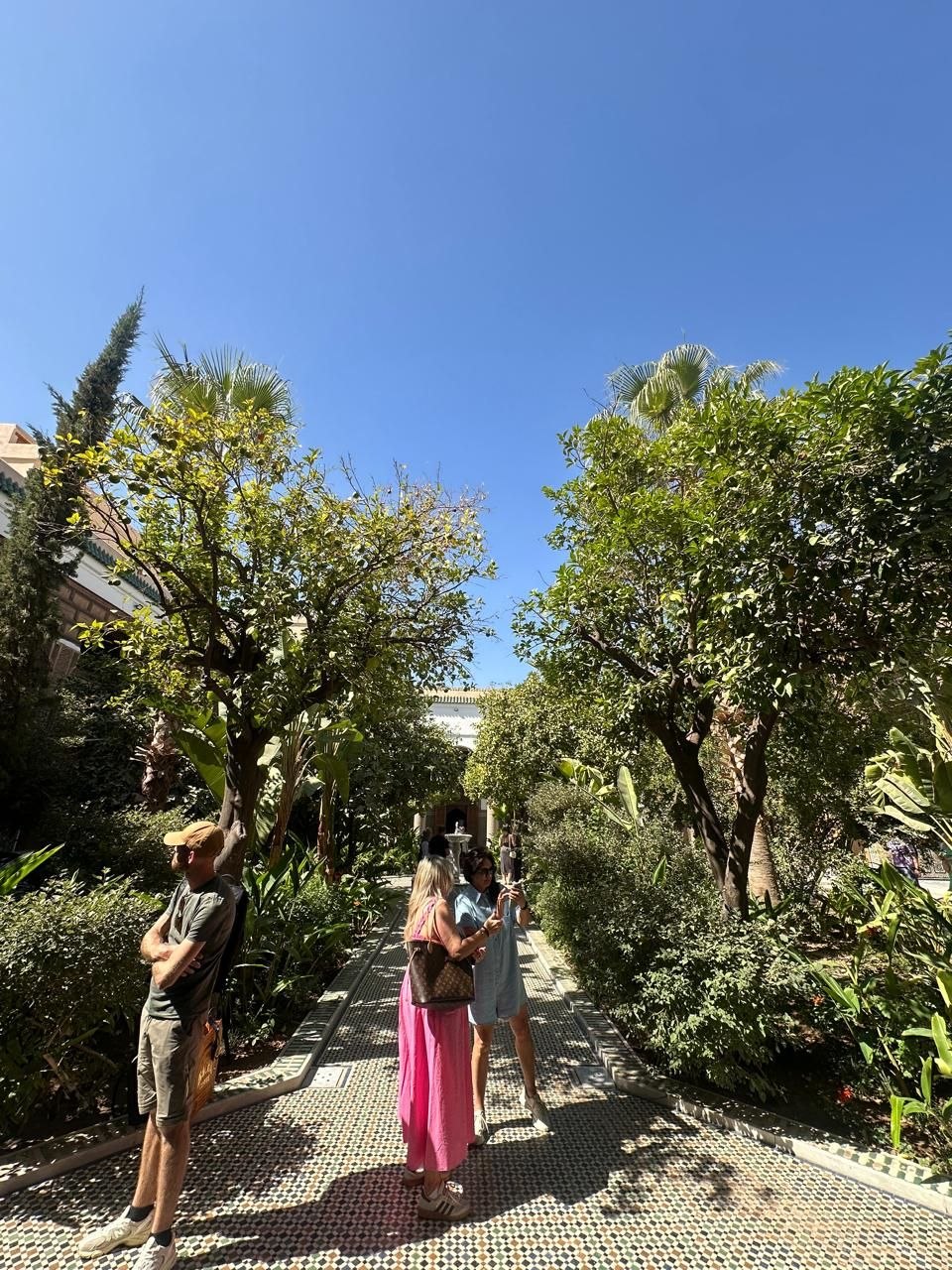
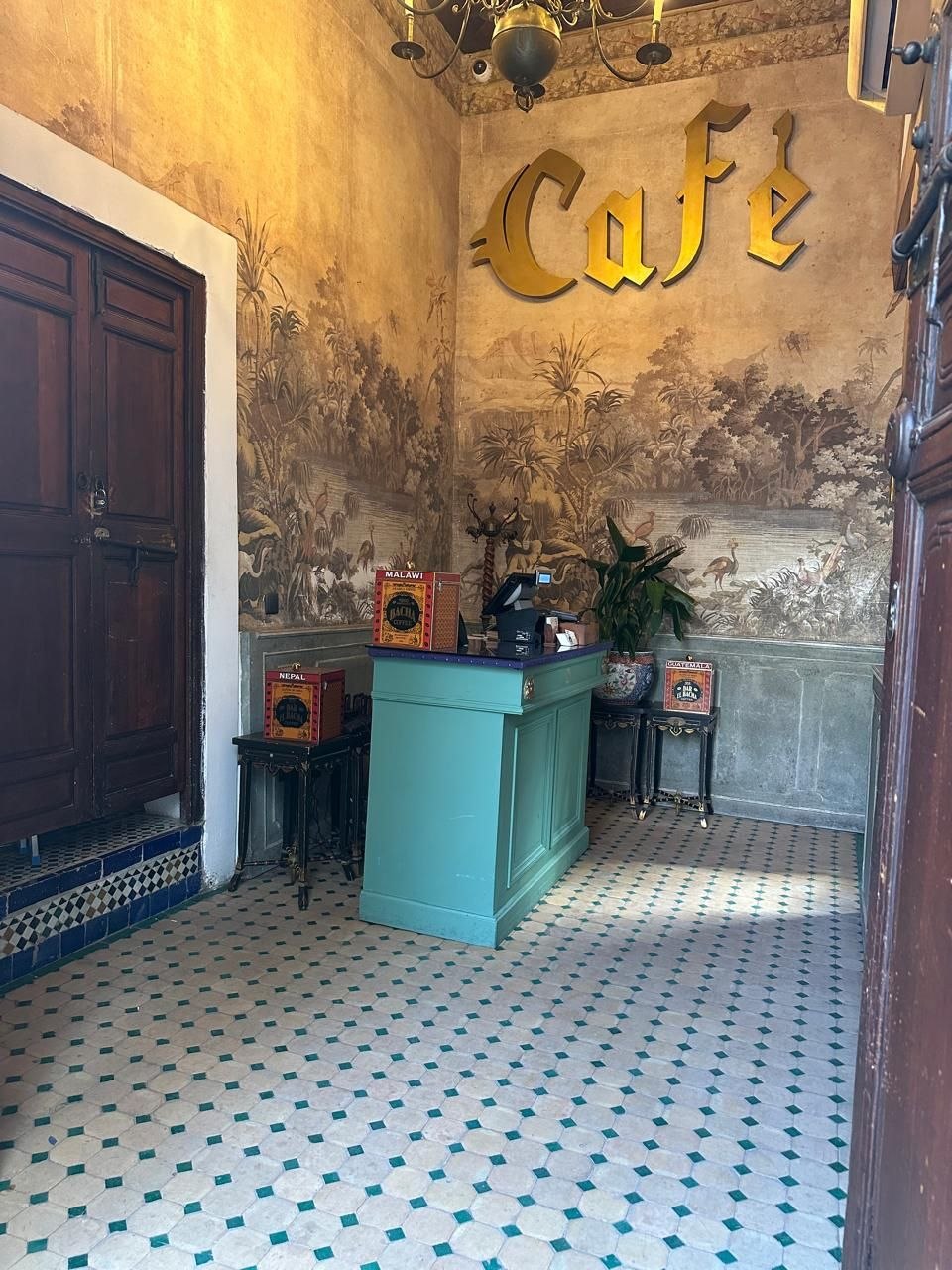
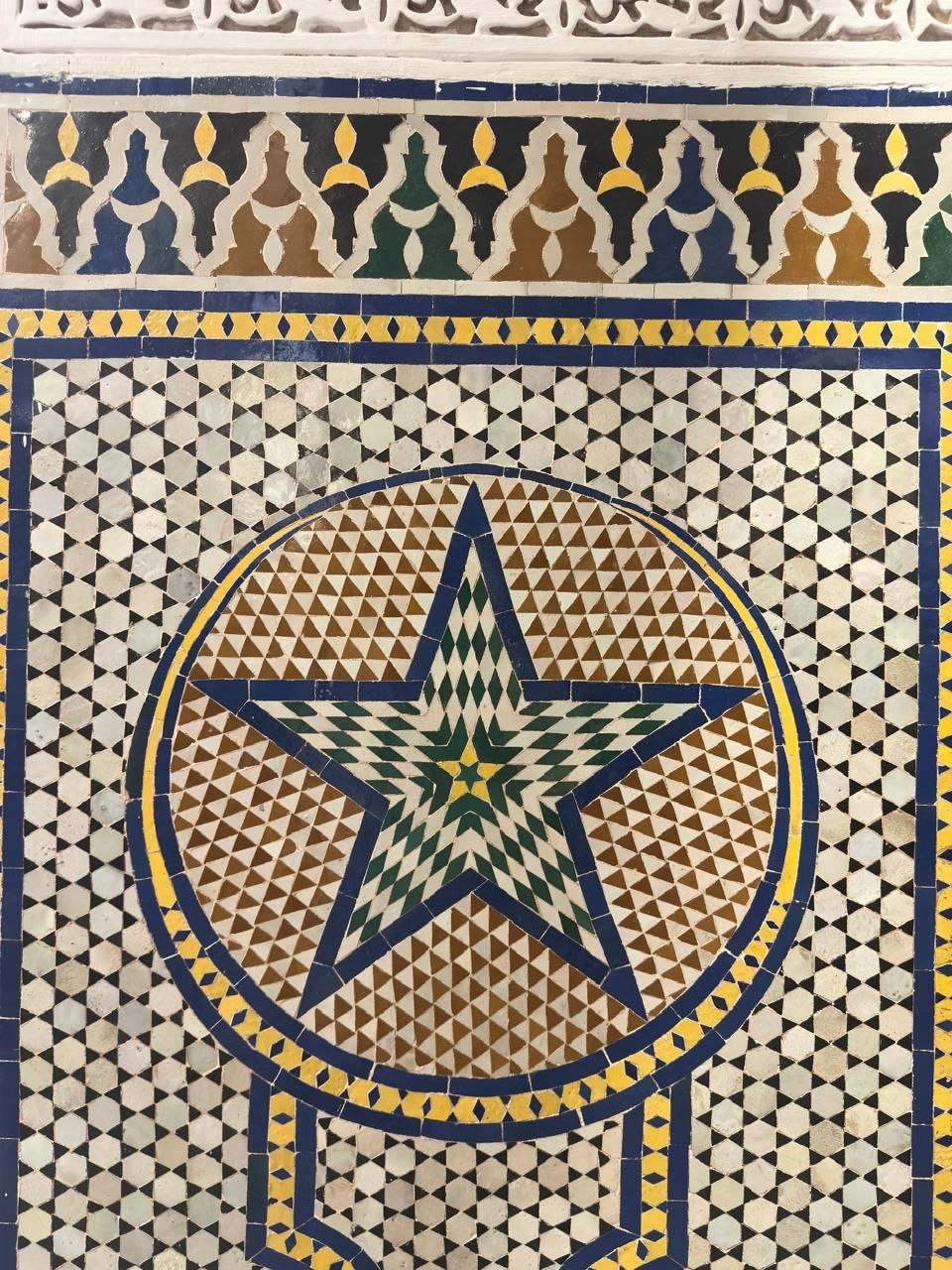
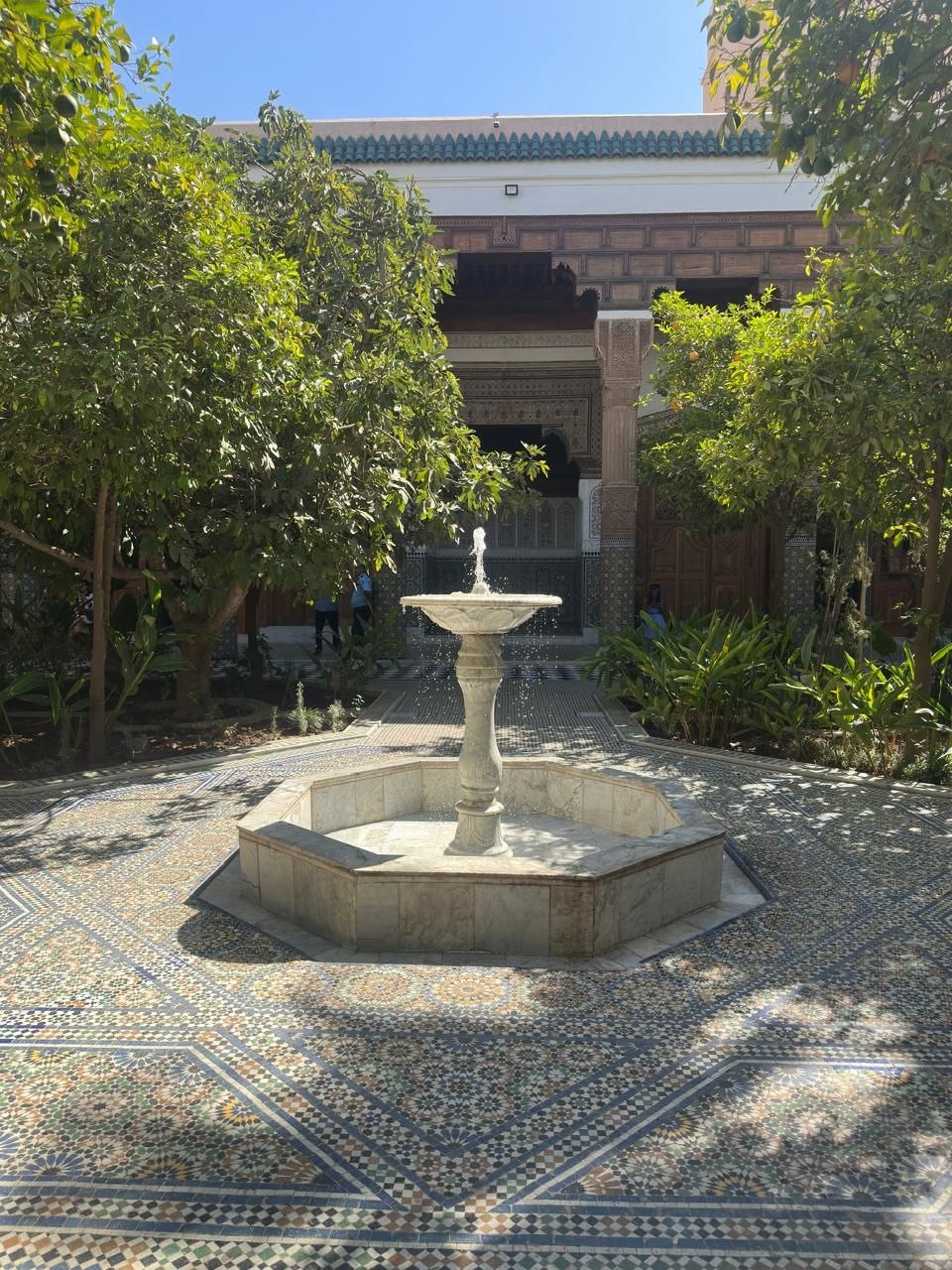
The overall effect is of a building that was never meant to be modest. Every surface has been treated as an opportunity for craftsmanship, and the result is a space that simultaneously overwhelms and focuses attention. Visitors who rush through it miss a significant part of what makes Dar El Bacha unlike any other stop in the Medina.
The inner courtyard of Dar El Bacha, with its orange trees, central fountain, and surrounding portico of carved columns.
Dar El Bacha Confluences Museum ↑
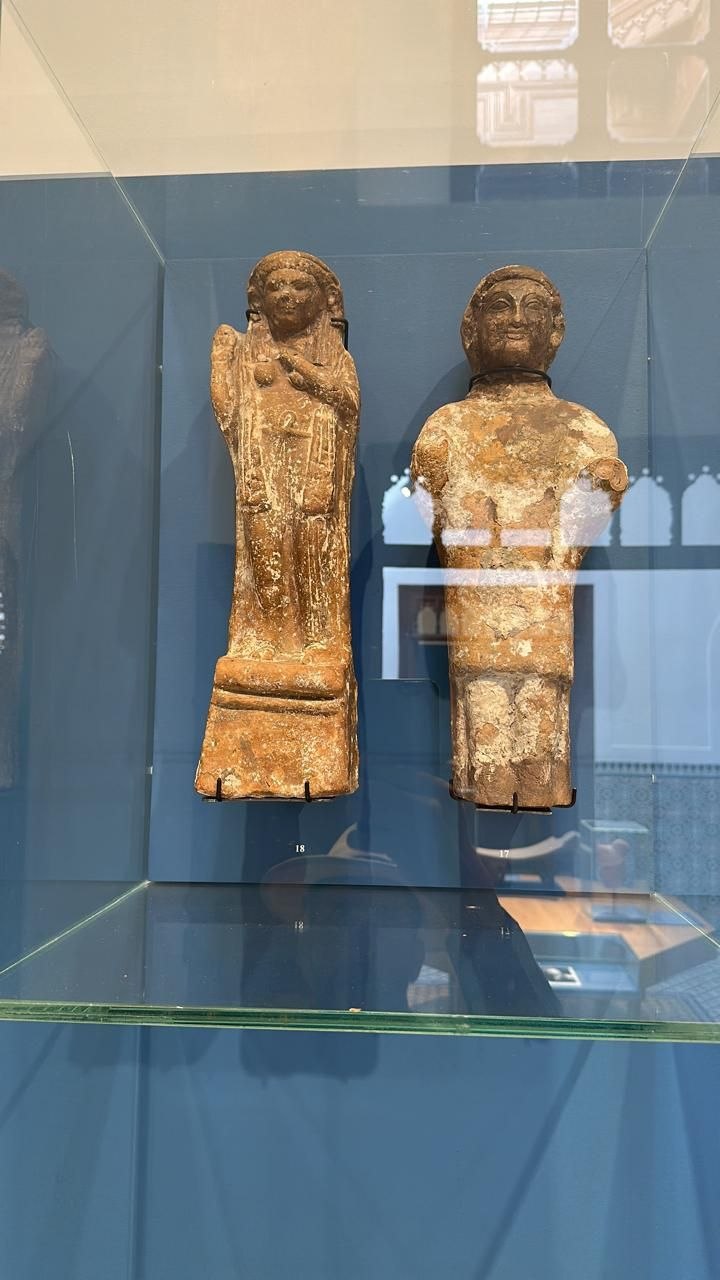
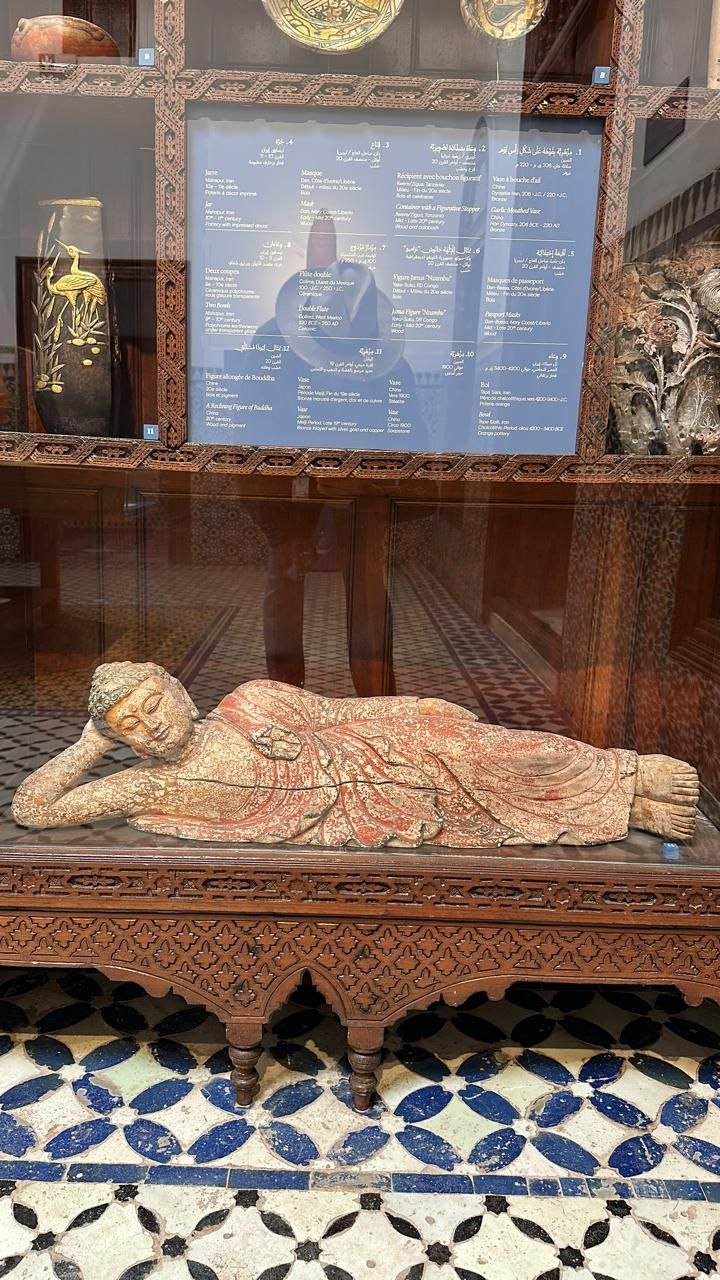
The Dar El Bacha Confluences Museum takes its name from its guiding curatorial idea: the meeting of cultures, religions, and artistic traditions that has always defined Morocco’s position at the crossroads of Africa, Europe, and the Islamic world. The museum’s exhibitions rotate regularly, which means repeat visits always offer something new. Past exhibitions have explored Jewish, Christian, and Muslim sacred objects alongside each other, traced the history of Moroccan craft traditions, and mapped the cultural exchanges that shaped Andalusian art.
The museum itself is worth at least an hour of unhurried attention. The permanent collection of objects related to the palace’s history and the broader context of Moroccan cultural life is supplemented by temporary exhibitions that tend to be thoughtfully curated and visually striking. The entrance fee of approximately 60 MAD is paid separately from the coffee house access, and most visitors who do both find the combination makes for one of the most rewarding half-days available in Marrakech.
Bacha Coffee Marrakech: Inside the Coffee Palace ↑
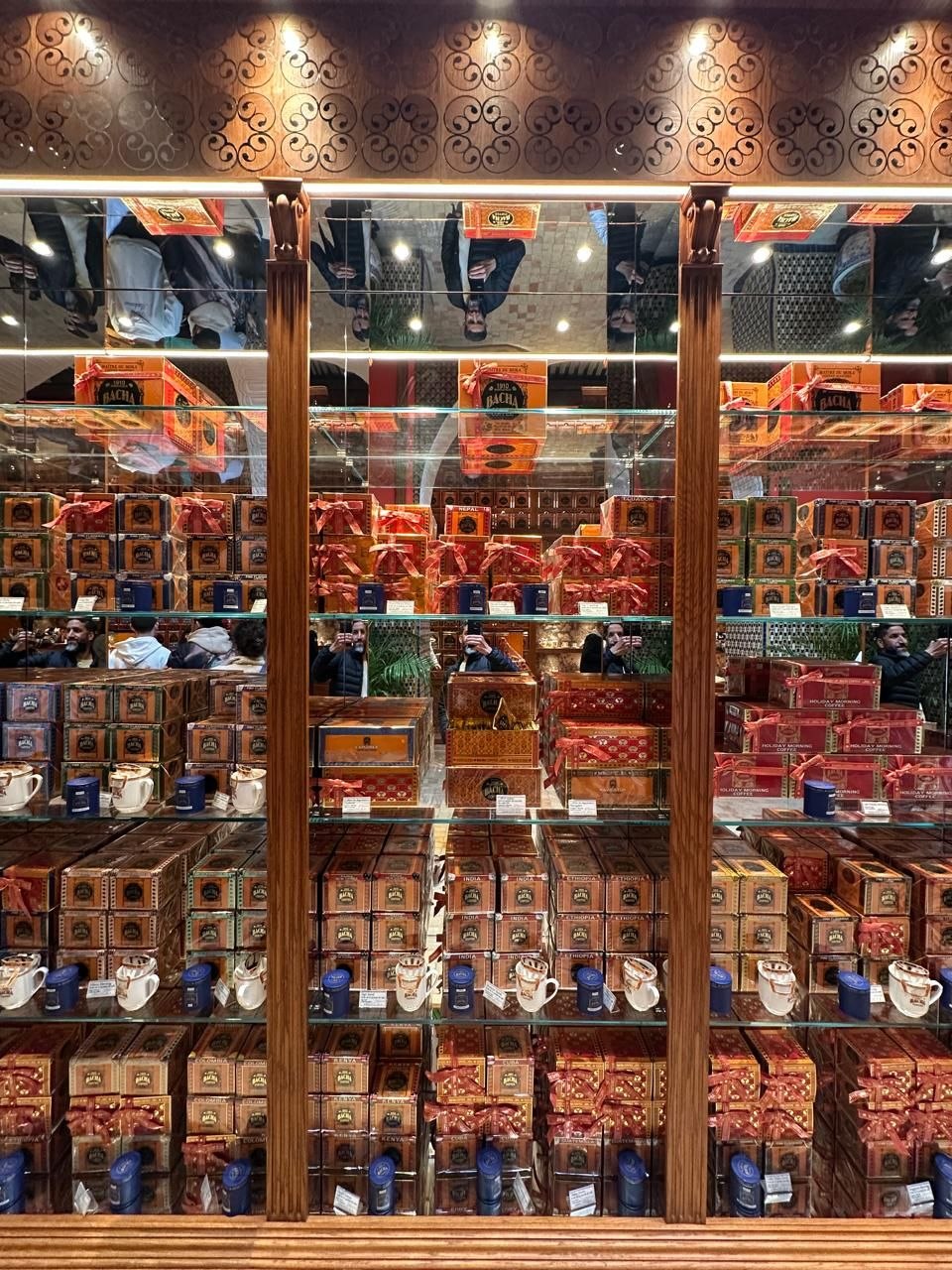
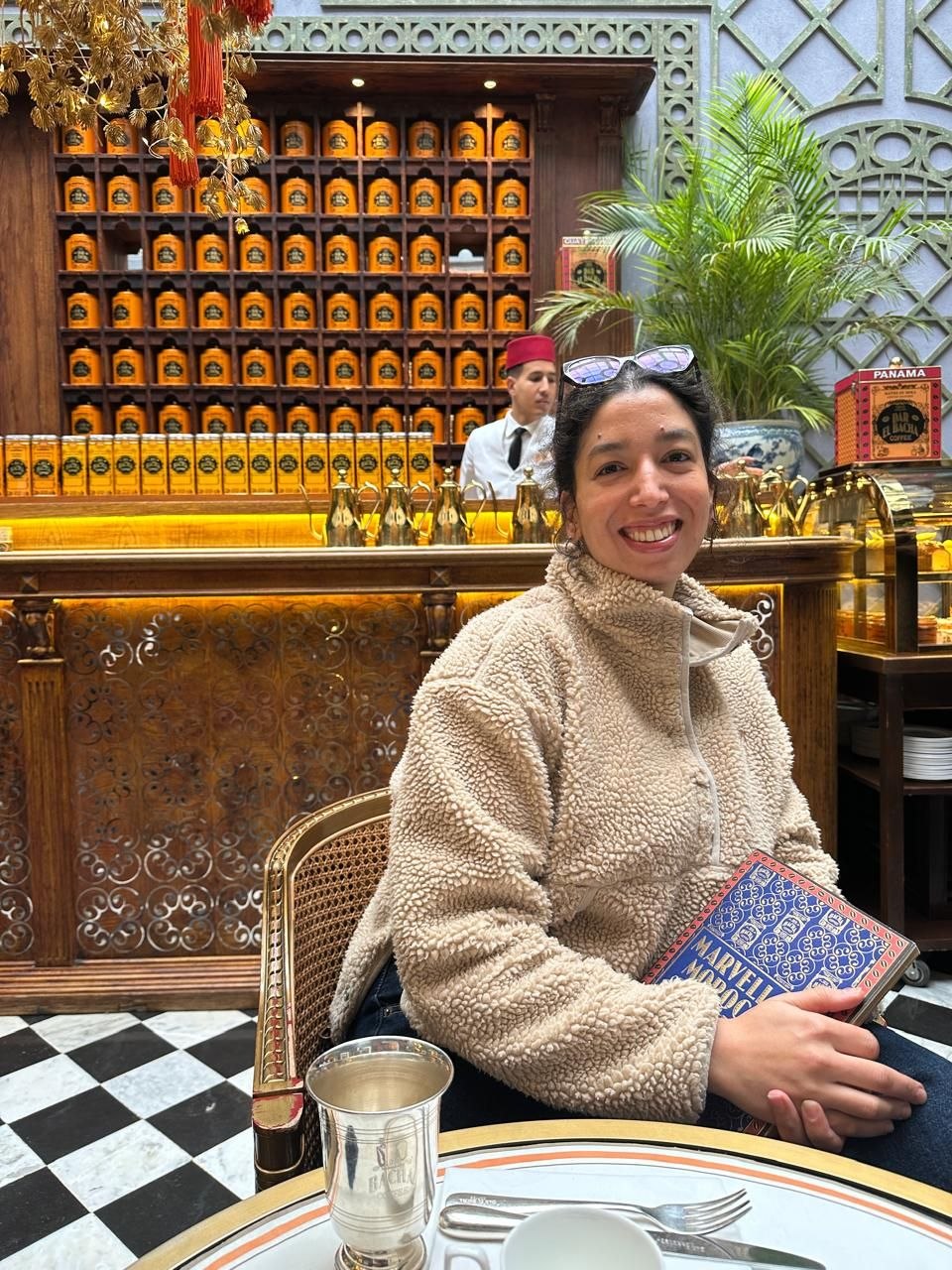
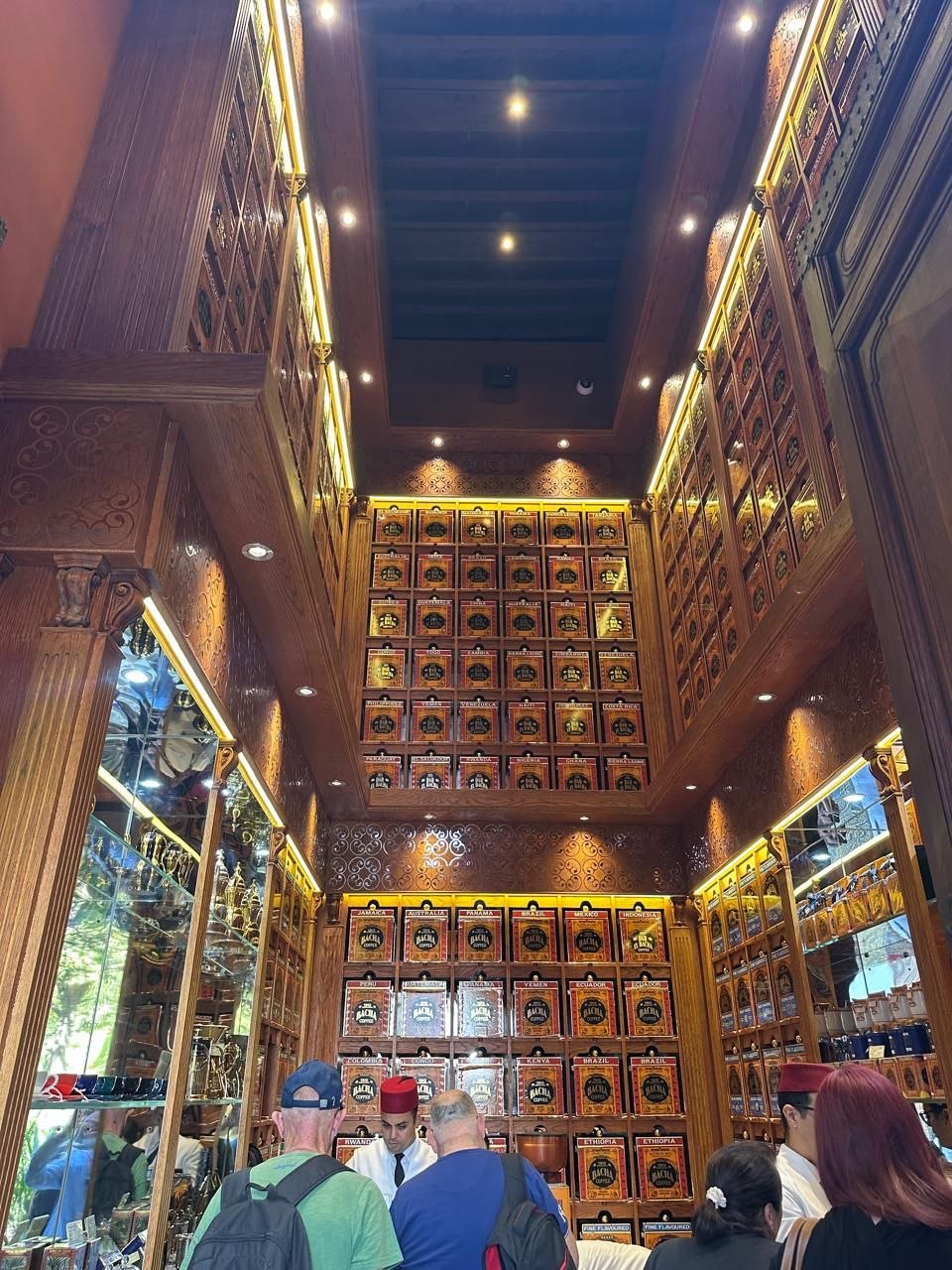
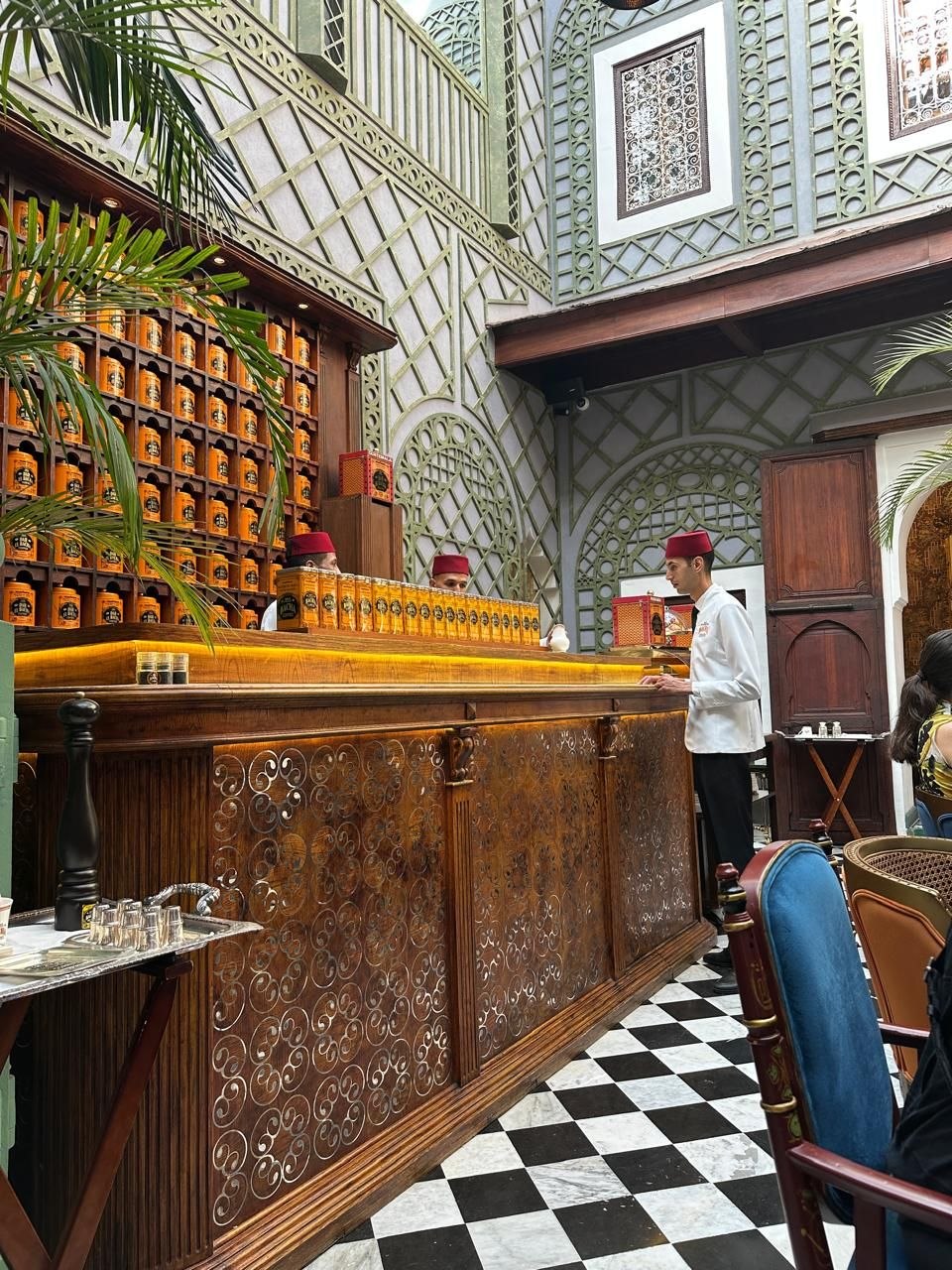
Bacha Coffee draws its identity from the original Dar El Bacha of the 1920s and 1930s, when the palace was a gathering point for the world’s cultural elite. The coffee house recreates that atmosphere with high polished ceilings, warm wood, Art Deco accents, and a menu dedicated entirely to 100% Arabica beans sourced from coffee-growing regions around the world. More than 200 varieties are available at any given time, each with a distinct origin, roast profile, and flavour character. This is not a café: it is a coffee institution housed inside a monument.
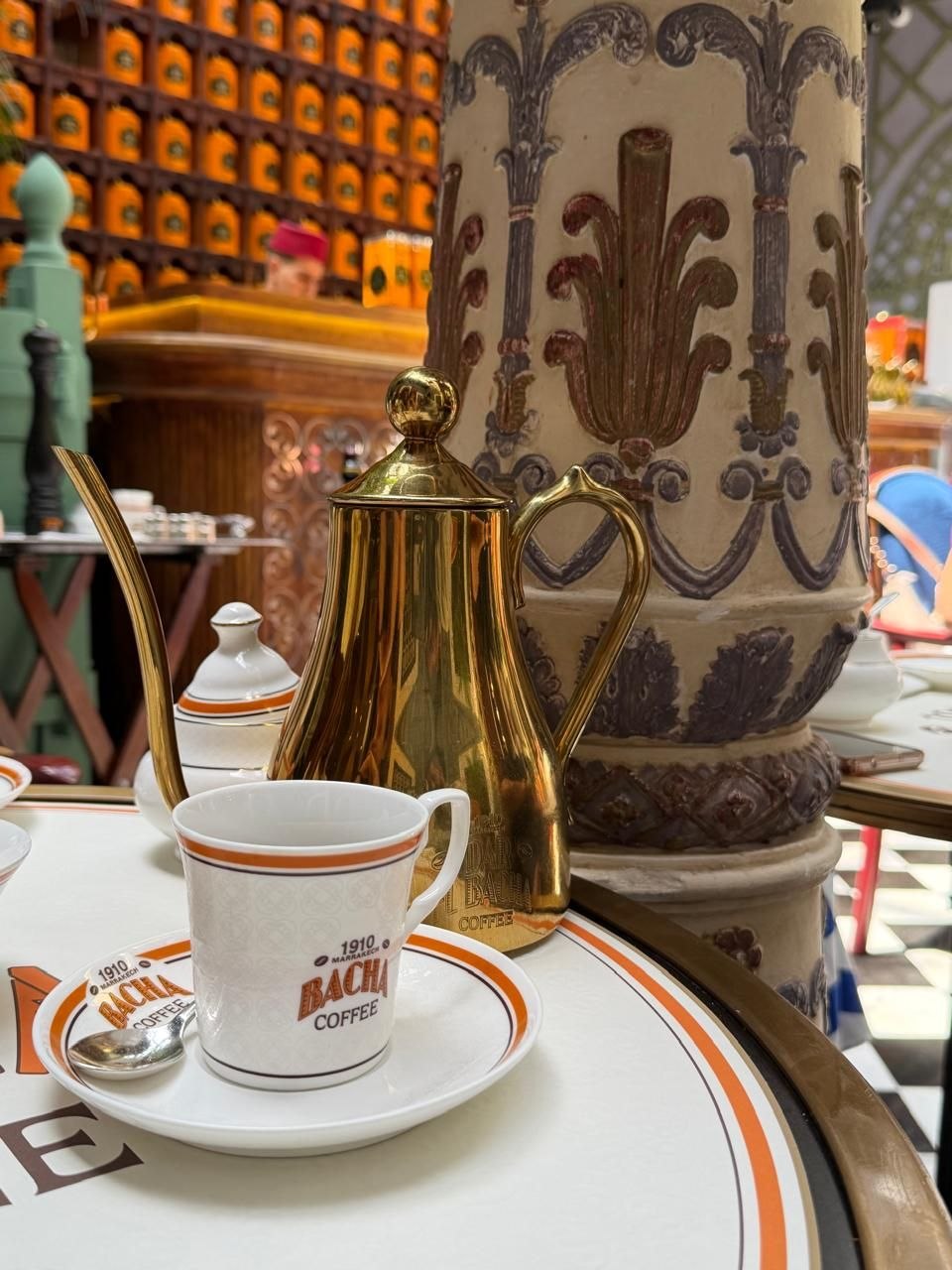
The coffee house occupies a series of rooms within the palace, each decorated with period furnishings and the kind of quiet luxury that makes time slow down. The menu extends beyond coffee to include freshly baked pastries, delicate croissants with raspberry and cinnamon, truffle omelets, and a small selection of food items that complement rather than compete with the coffee. Raspberry and cinnamon croissants in particular have become something of a signature pairing.
Bacha Coffee Marrakech Menu and Prices ↑
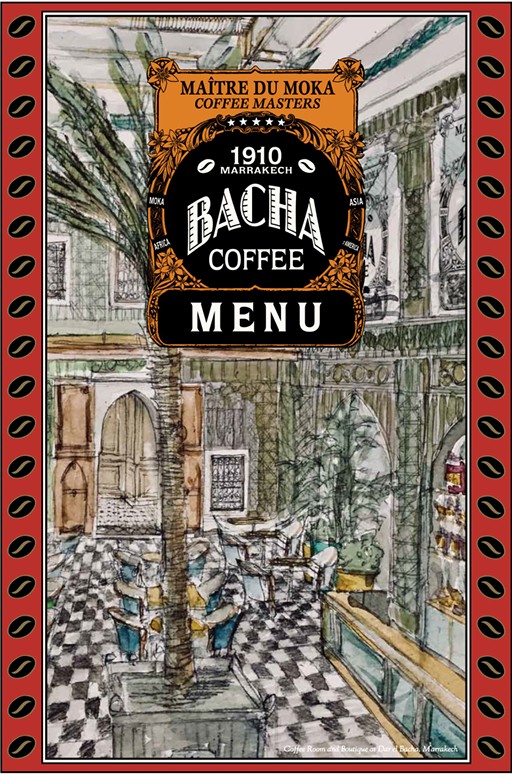
The Bacha Coffee Marrakech menu is built entirely around the coffee selection, with single-origin beans classified by country and region, offering filter, espresso, and cold preparations for most varieties. Staff are trained to guide unfamiliar visitors through the selection based on flavour preferences, which makes the menu considerably less intimidating than its breadth might suggest.
On Dar El Bacha coffee price, visitors should be prepared for a premium experience priced accordingly. A single cup of single-origin Arabica will cost meaningfully more than a café au lait elsewhere in the Medina, but the context here is entirely different: you are drinking 100% Arabica coffee prepared with care in a room that was once the reception hall of one of southern Morocco’s most powerful figures. The price reflects that, and the vast majority of visitors consider it well-spent.
Visiting Bacha Coffee at Dar El Bacha: Is It Worth the Wait? ↑
The honest answer is yes, but only if you approach it correctly. The queue at Dar El Bacha is one of the most discussed aspects of any Marrakech visit, and it generates strong opinions. Visitors who arrive unprepared, particularly on weekend mornings in peak season, sometimes wait over an hour for a table in the coffee house. That experience, standing outside in the narrow Medina street, is genuinely frustrating. But it is entirely avoidable with a small amount of planning.
Once inside, the question of whether it was worth it evaporates almost immediately. The architecture, the coffee, the careful service, and the specific quality of silence that settles over a table in those rooms all add up to something that justifies every minute of any reasonable wait. The experience is genuinely extraordinary and genuinely unrepeatable anywhere else in Morocco.
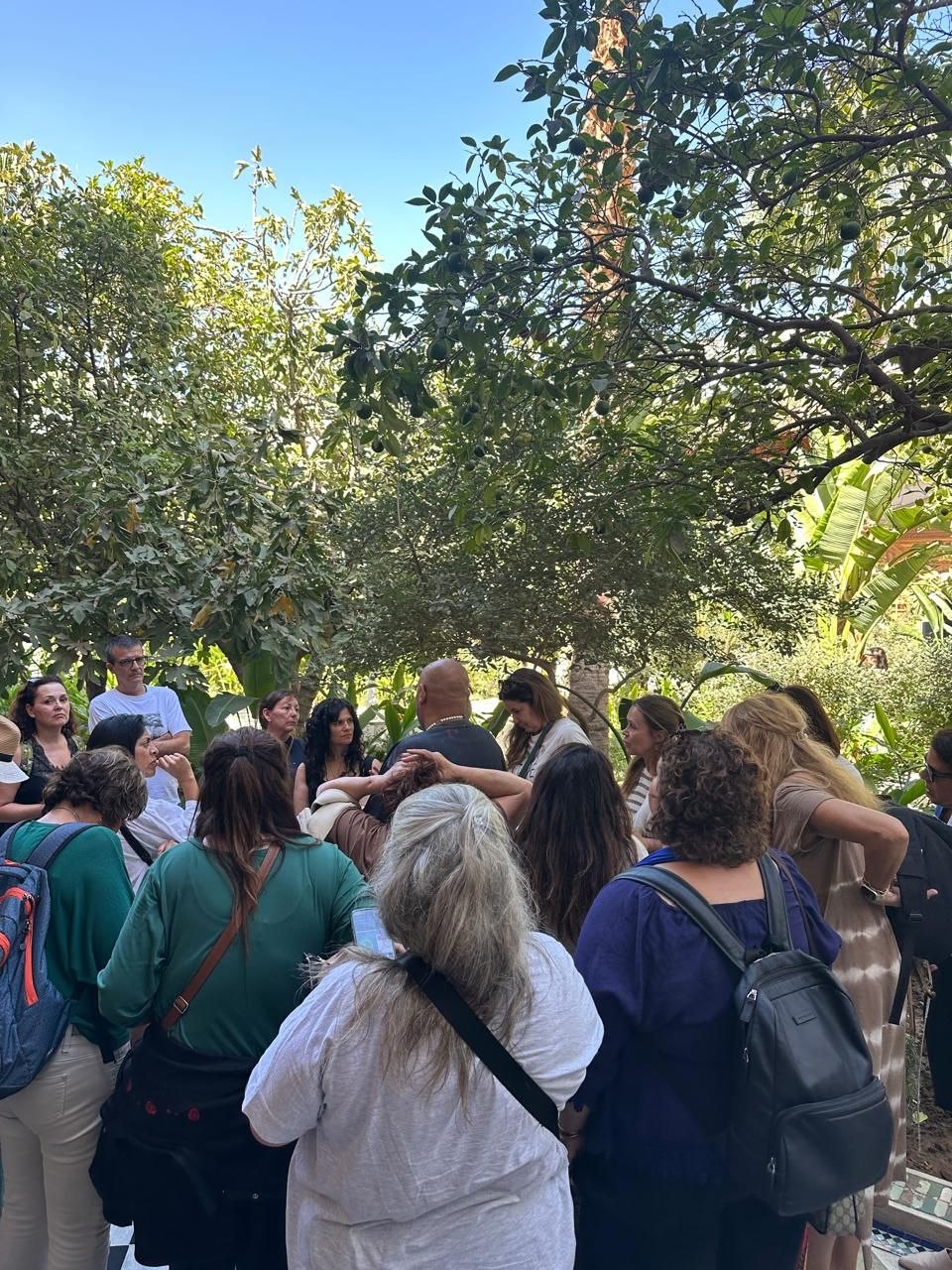
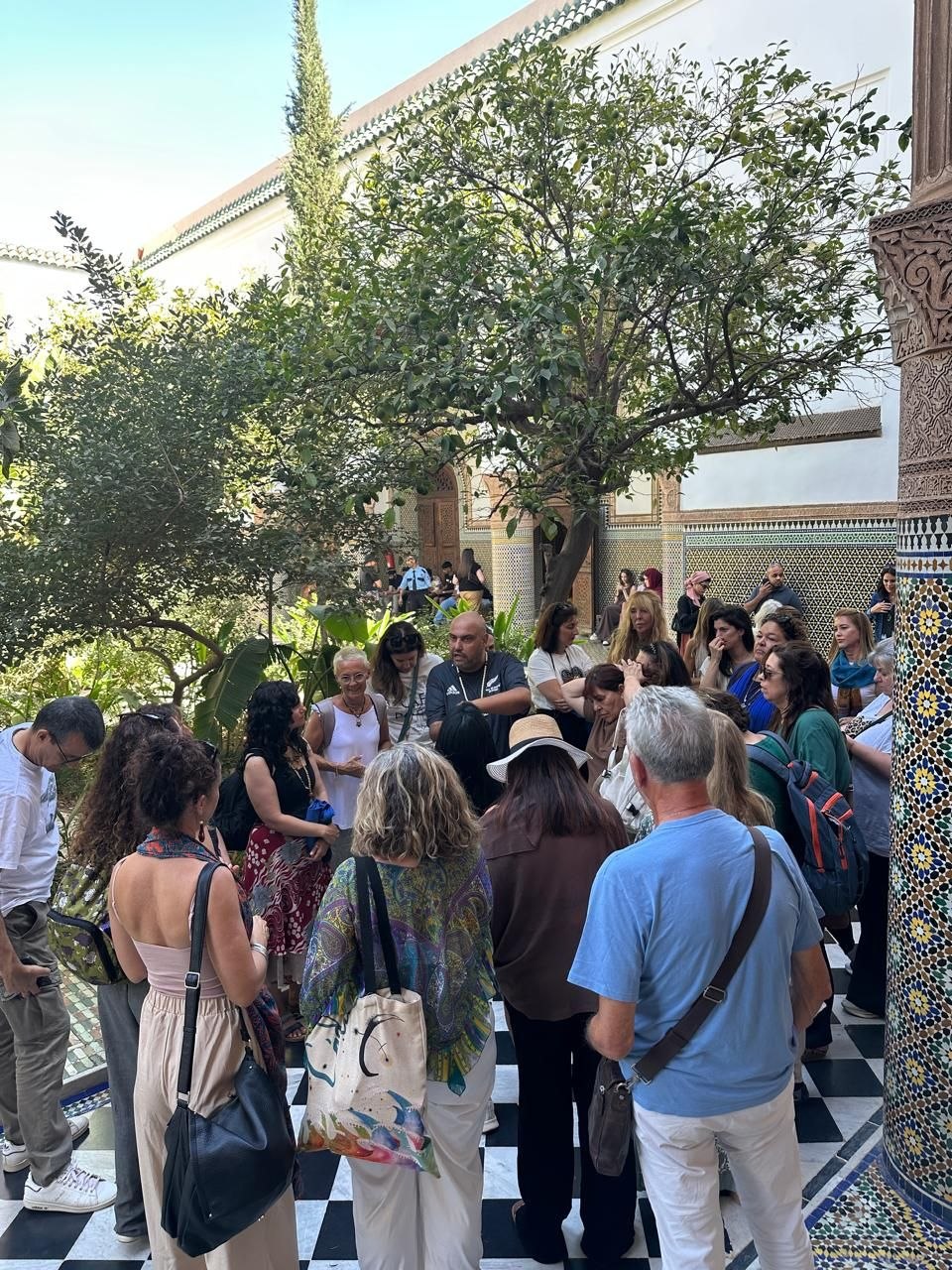
The lines outside Dar El Bacha are real. They are also avoidable with the right timing and local knowledge.
Insider Tips from a Licensed Guide: How to Avoid the Long Lines at Bacha Coffee ↑
This is the question visitors ask more than almost any other about Dar El Bacha, and it is one where a licensed local guide makes a tangible difference. After accompanying dozens of visitors to Bacha Coffee across different seasons and different days, guide Mouhssine ELIOUJ has developed a clear picture of when the experience is at its best and how to position a visit for the smoothest possible entry.
Book our Private Luxury Food and Culture Tour and let an officially licensed guide handle your Dar El Bacha visit, from timing and access to the museum tour and coffee selection. No waiting, no guesswork, no navigating the Medina alone.
→ Book the Private Luxury TourOur Review: Is Dar El Bacha and Bacha Coffee Worth It? ↑
The editorial team and licensed guides at MoroccanTravelTrips.com have accompanied visitors to Dar El Bacha many times across different seasons. Our assessment has never wavered.
 Editorial Review
 Practical Information: Hours, Tickets, and Dress Code ↑
| Opening days | Tuesday to Sunday. Closed every Monday. |
| Opening hours | 10:00 AM to 6:00 PM. Verify before visiting on public holidays. |
| Museum entry | Approximately 60 MAD per person. Cash is recommended as card acceptance can vary. |
| Bacha Coffee access | Separate from museum entry. Inform staff at the entrance that you are visiting the coffee house and you will be directed accordingly. |
| Dar El Bacha dress code | Smart casual minimum. As a restored palace and museum, modest and respectful clothing is appropriate. Shoulders and knees covered. The coffee house setting rewards dressing with a degree of care. |
| Photography | Generally permitted throughout the palace and museum, including inside the coffee house. Avoid disrupting other guests. |
| Time required | Allow a minimum of two hours for the combined museum and coffee experience. Three hours is more comfortable if you want to move without feeling rushed. |
| Alcohol | Not served. The coffee house is non-alcoholic. |
Visit Dar El Bacha with a Licensed Marrakech Guide ↑
A visit to Dar El Bacha with a licensed guide is a fundamentally different experience from arriving independently. The architecture tells stories that require context to make sense, and without that context, even the most attentive visitor will walk past significant details without understanding what they are seeing. A guide who knows the palace well transforms the visit from a series of beautiful rooms into a coherent narrative about power, Moroccan history, craftsmanship, and the particular moment in the early 20th century when this building was at the centre of everything.

Mouhssine is a Ministry of Tourism certified guide based in Marrakech with extensive knowledge of the Medina’s heritage sites, including Dar El Bacha, its history, and the best strategies for making the Bacha Coffee visit as smooth as possible. He is available for private half-day Medina tours that include Dar El Bacha, the Museum of Confluences, and the coffee house, as well as broader food and culture itineraries across the city.
Contact him directly on WhatsApp to ask about timing, availability, and to build a Marrakech itinerary that takes the guesswork out of every stop.
WhatsApp: +212 671 437 971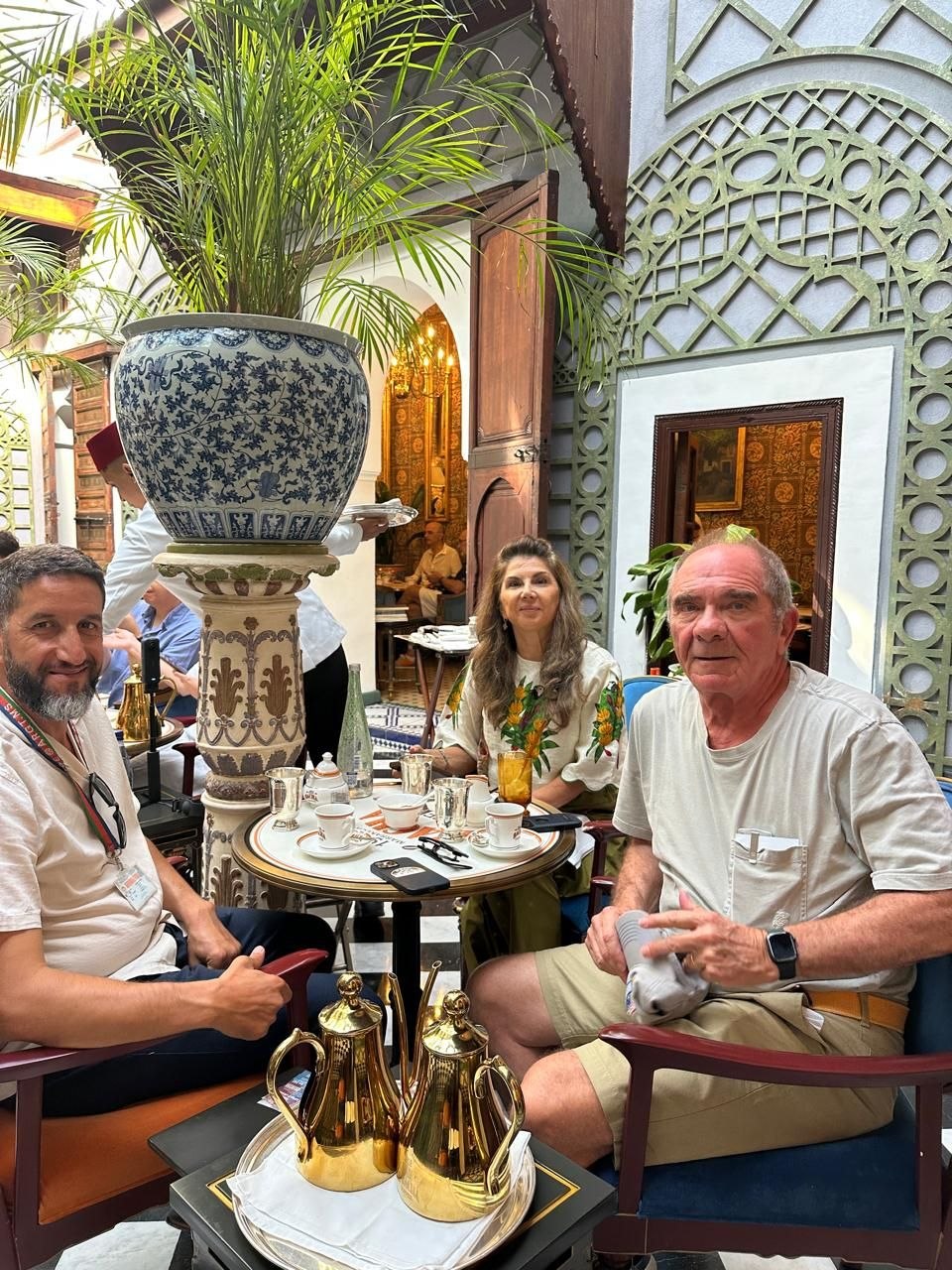
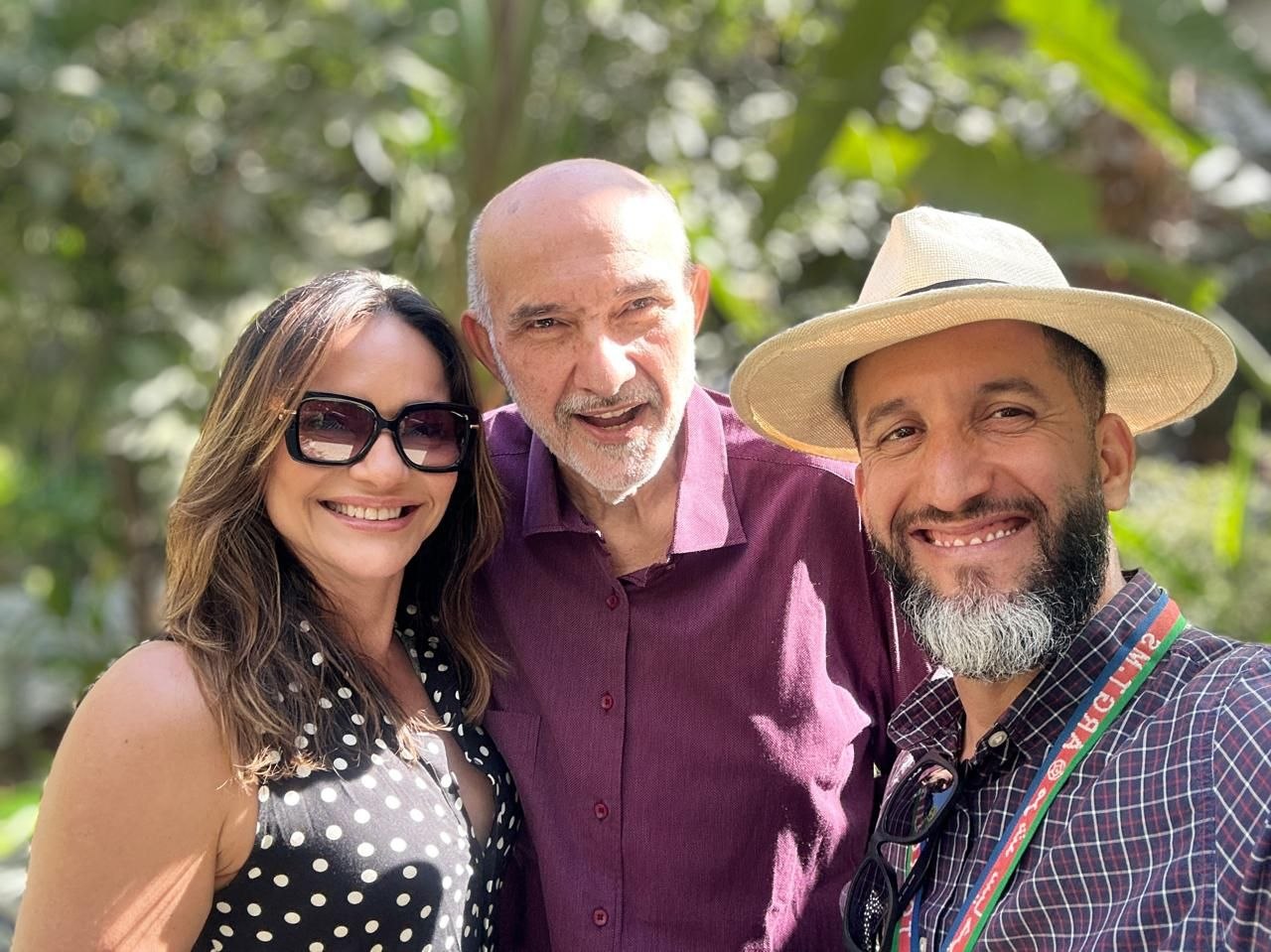
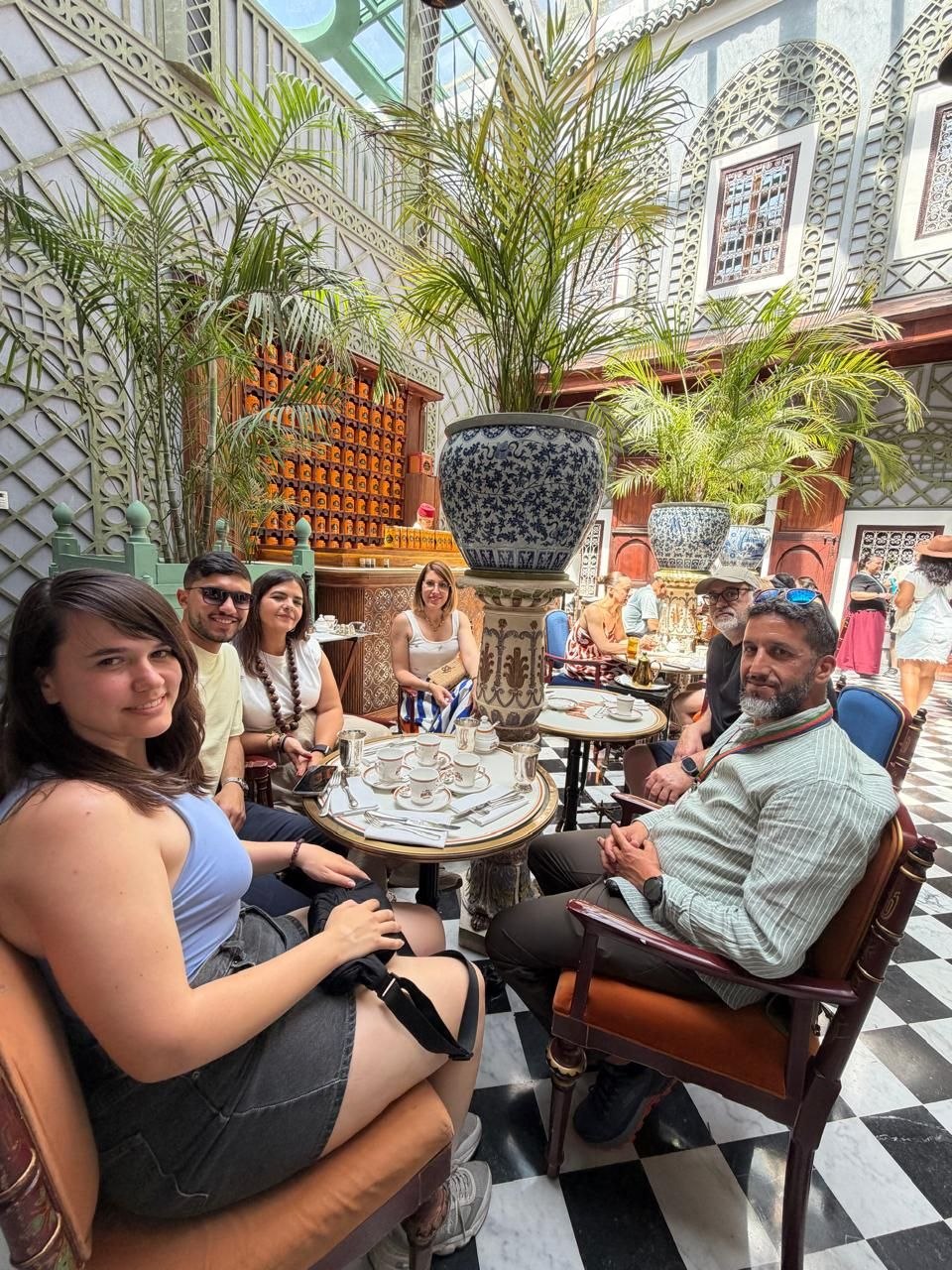
Our Private Luxury Food and Culture Tour combines Dar El Bacha, Bacha Coffee, the Medina souks, and Marrakech’s finest food experiences into a single seamlessly managed day. An officially licensed guide handles every detail so you can focus entirely on the experience.
→ Book the Private Luxury Food and Culture TourLocation and Getting There ↑
Dar El Bacha is located at 2 Rue Fatima Zohra in the northern part of the Medina, roughly a 10 to 15-minute walk from Jemaa El Fna. The route passes through the northern souk quarter, which is among the most historically rich and visually interesting parts of the old city. Taxis cannot reach the entrance directly due to the pedestrian Medina streets, so plan the final segment on foot. A licensed guide familiar with the area navigates this efficiently and turns the walk into an additional layer of the experience.