Most lists of things to do in Morocco are written as if the country were one city: a medina, a desert, a blue town and a beach, ticked off in a week. The real question is how to choose when the dunes, the Fes medina and the Atlantic coast sit days apart by road. This guide is organised the way we plan trips for people every week, region by region, with what each place is genuinely good for and how long it needs.

The best things to do in Morocco are a guided day in the Fes medina, a night in the Sahara dunes at Merzouga or Erg Chigaga, Marrakech’s souks and palaces, walking in the High Atlas around Imlil, Chefchaouen’s blue lanes and the Atlantic town of Essaouira. One week covers two of these regions properly, not all six.
For a first trip of seven to ten days, pick Marrakech, the desert and Fes, and cross the Atlas between them instead of flying back and forth. Keep Chefchaouen and the north for a second visit unless you have twelve days or more. If you travel in July or August, swap the desert for the coast.
Plan by region, not by list Contents ↑
Morocco rewards slow travel and punishes long checklists. The train runs between Tangier, Rabat, Casablanca, Marrakech, Meknes and Fes, and that line covers the cities well. Chefchaouen, Essaouira, the Atlas villages and the desert have no railway at all, so everything off that axis means road time. Our guide to travelling by train in Morocco explains which legs it handles.
So start with the base, not the attraction. The table below is the version we sketch for clients before anyone talks about hotels.
| Region | Base | Best for | Give it | Reached by |
|---|---|---|---|---|
| The north | Tangier or Chefchaouen | Medinas, Rif walks | Two nights | Train to Tangier, then road |
| Fes and Meknes | Fes | Medina, crafts, Roman ruins | Two full days | Train |
| Marrakech | Marrakech | Souks, palaces, day trips | Three nights | Train or flight |
| High Atlas | Imlil | Walking, Toubkal | One or two nights | Road from Marrakech |
| The Sahara | Merzouga or Erg Chigaga | Dunes, a camp night | Three days round trip | Road only |
| Atlantic coast | Essaouira | Ramparts, port, sea air | One or two nights | Road from Marrakech |
If you are still deciding on trip length, our breakdown of how many days Morocco really needs works through five, seven, ten and fourteen days.
Tangier and Chefchaouen: the north Contents ↑
Base Chefchaouen · Give it two nights · Skip if you have under ten days
Chefchaouen was founded in 1471 as a mountain stronghold in the Rif, and it still feels like one: steep lanes, a small kasbah on the main square and a medina compact enough to learn in an afternoon. The blue is the reason people come, and the reasons behind it are less settled than most guides admit; we cover the competing stories in why Chefchaouen is blue.
What to do there is simple and slow. Walk the medina early, before the day visitors arrive from Fes and Tangier. Follow the stream at Ras El Maa, on the edge of town, then climb the path to the Spanish Mosque for the view back over the rooftops in late afternoon. With a second day, the Akchour waterfalls in Talassemtane National Park make a good day of walking.

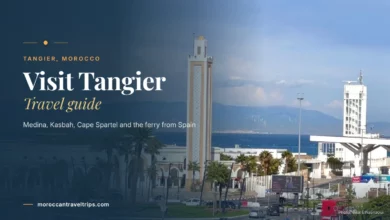
Tangier is the natural gateway if you arrive by ferry or on the high-speed train, and it deserves more than a transit night: the kasbah, Cape Spartel and the Hercules Caves fill a full day. Our Tangier travel guide has the detail.
Fes, Meknes and Volubilis Contents ↑
Base Fes · Give it two full days · Best with a licensed guide on day one
If you only have room for one medina, make it Fes el-Bali. It has been on the UNESCO World Heritage list since 1981, and unlike Marrakech it still works mainly for the people who live there. Donkeys and handcarts carry the goods; most lanes are too narrow for anything else.
The core of a first day: the Bou Inania madrasa, built in the fourteenth century and open to visitors; the Al Quaraouiyine mosque and university, founded in 859, which non-Muslims see only through its doorways; the coppersmiths hammering in Place Seffarine; and the Chouara tannery, watched from the terraces of the leather shops that surround it. Go to the tannery in the morning, when the pits are busiest.
Prices in the souks open high, so it helps to know the rhythm before you start; our guide on haggling without being rude covers it. Spend the second day outside town. The Roman city of Volubilis and the imperial city of Meknes, both UNESCO sites, combine easily in one day, with a stop in the hilltop town of Moulay Idriss between them.
Rabat and Casablanca, if you land there Contents ↑
Many long-haul flights arrive in Casablanca, and the honest advice is a short one. Give Casablanca half a day for the Hassan II Mosque, completed in 1993 on the edge of the ocean and one of the few mosques in the country open to non-Muslim visitors, on guided tours. Then move on.
Rabat, the capital, is calmer than its size suggests and underrated by most itineraries: the Kasbah of the Udayas above the river mouth, the Hassan Tower and the Mausoleum of Mohammed V make an easy day on foot. Both cities sit on the train line, which makes them painless stops between the north and Marrakech.
Marrakech beyond the square Contents ↑
Base a riad in the medina · Give it three nights · Best for first-time visitors
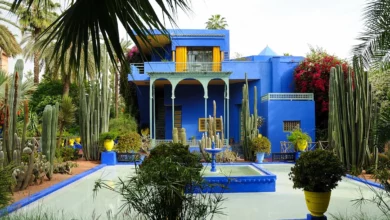
Jemaa el-Fna is the start, not the point. Come at dusk, when the food stalls set up and the storytellers and musicians draw their circles, then walk north into the souks the next morning when the lanes are quieter. The monuments worth your time are the Bahia Palace, the Ben Youssef Madrasa, the Saadian Tombs and Le Jardin Secret, plus the Majorelle Garden, whose tickets are sold online only, so book before you go.
Marrakech is also where most day trips start: the Ourika Valley, Imlil, Essaouira, Aït Ben Haddou. For the city itself, including how to pace three days, our local guide to Marrakech goes street by street.
On the square, a photo with a musician or performer usually costs around 20 dirhams. Many will say no at first or name a higher figure. Ask the price and agree on it before you lift the camera, never after.
The High Atlas: Imlil and Toubkal Contents ↑
An hour or two south of Marrakech, the valleys around Imlil feel like another country: walnut terraces, mule tracks and Amazigh villages built in the colour of the slope. A day walk with lunch in a village house is the gentle version. Jebel Toubkal, at 4,167 metres the highest peak in North Africa, is the serious one: most people climb it in two days from Imlil with a night at the refuge, and the altitude catches out fit walkers who rush it. In winter the upper mountain is under snow and needs proper equipment and experience.
The Sahara: Merzouga or Erg Chigaga Contents ↑
From Marrakech three days minimum · Best months October to April · Avoid July and August
A night in the dunes is the experience people remember longest, and it is also the one most often squeezed into too little time. There are two real choices.
Merzouga and Erg Chebbi
The tall orange dunes of Erg Chebbi are reached by tarmac all the way, which makes Merzouga the easier option and the one with the widest choice of camps. From Marrakech the road crosses the Atlas at the Tizi n’Tichka pass, then follows the Dades and Todra valleys, so the journey there is part of the trip rather than dead time.
Erg Chigaga
Further south, the tarmac ends at M’Hamid and the last stretch to Erg Chigaga is roughly 90 kilometres of open desert by 4×4. There are fewer camps and almost no lights on the horizon. Our three-day private tour to Erg Chigaga shows how the route works in practice, including the long drive home on the last day.
Zagora, in the Draa Valley, is closer to Marrakech but its dunes are modest. If you are unsure whether the desert justifies the road time at all, read whether the Sahara is worth it before you book.
Essaouira and the Atlantic coast Contents ↑
Essaouira is the antidote to Marrakech, about three hours away by road: a walled port with a UNESCO-listed medina, blue fishing boats and a wind that keeps summer temperatures down and kitesurfers busy. Watch the morning catch come in at the port, walk the sea ramparts, and eat grilled fish at the stalls near the harbour. One night is enough to feel the change of pace; two let you slow down. The Gnaoua and World Music Festival fills the town every June, from 25 to 27 June in 2026, so book early for those dates.

Further south, Taghazout, just north of Agadir, is the surf town of the coast, with its best waves between autumn and spring.
What you do everywhere: hammam, food and festivals Contents ↑
Some of the best things to do in Morocco are not tied to a map. The hammam is a weekly habit for many Moroccans, not a spa treatment: steam, black soap and a hard scrub with a kessa glove.
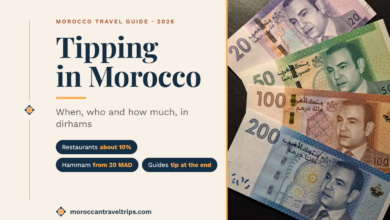
A neighbourhood hammam costs from about 20 dirhams to enter, and from about 30 dirhams if you add a scrub by the attendant, depending on the hammam. A spa hammam in a riad or hotel works differently and costs far more. Bring your own towel and a change of clothes to the local one.
- Eat where people eat. Couscous, inscribed by UNESCO in 2020 as heritage shared by Morocco, Algeria, Mauritania and Tunisia, is traditionally a Friday lunch at home and in small restaurants.
- Accept the tea. Mint tea comes with almost every conversation, including in shops. Accepting a glass does not oblige you to buy.
- Time a festival. Beyond Gnaoua in Essaouira, the Moussem of Tan-Tan, a gathering of nomadic families from the south held around May, is on the UNESCO list of intangible heritage. Dates move each year, so check before you plan around one.
During Ramadan, which moves earlier by about eleven days each year, daytime rhythms change: some restaurants close until sunset outside tourist areas, and evenings come alive instead.
Which season for which trip Contents ↑
Spring and autumn suit almost everything, which is why they are also the busiest. Summer is fine on the Atlantic and in the mountains, and hard work in Fes, Marrakech and the desert in the middle of the day. Winter is a good season for the cities and the desert, with one warning: desert nights are cold, and snow can close the Tizi n’Tichka pass for a few hours. For month-by-month detail, see our guide to the best time to visit Morocco.
Three routes that work Contents ↑
Each of these follows the road rather than fighting it. None of them doubles back on itself.
Four days: Marrakech and one day outFor a long weekend or a first taste
- Day 1
Arrive, settle into a riad, Jemaa el-Fna at dusk.
- Day 2
Souks in the morning, Bahia Palace and the Saadian Tombs after lunch.
- Day 3
One day out: Imlil for walking, or Essaouira for the sea.
- Day 4
Majorelle Garden early, a hammam, departure.
Seven days: Marrakech, the desert, FesThe classic first trip, one way across the Atlas
- Days 1 to 2
Marrakech: medina, palaces, gardens.
- Day 3
Tizi n’Tichka, Aït Ben Haddou, night in the Dades Valley.
- Day 4
Todra Gorge, then Merzouga and a night at a camp in the dunes.
- Day 5
North through the Ziz Valley and the Middle Atlas to Fes.
- Day 6
A guided day in the Fes medina.
- Day 7
Volubilis and Meknes, or departure from Fes.
Fourteen days: north to southFor travellers who want the whole country without rushing
- Day 1
Tangier: kasbah and Cape Spartel.
- Days 2 to 3
Chefchaouen, with a day at Akchour.
- Days 4 to 6
Fes, with a day for Volubilis and Meknes.
- Day 7
A long drive over the Middle Atlas to Merzouga, night in the dunes.
- Days 8 to 9
Todra Gorge, the Dades Valley, then Aït Ben Haddou.
- Days 10 to 12
Marrakech, with a day in the High Atlas.
- Days 13 to 14
Essaouira, then back to Marrakech for the flight.
Marrakech to Chefchaouen: 6-Day Private Morocco Tour
The south-to-north version of the long route in six days: Aït Ben Haddou and the Dades Valley, a night in a camp at Erg Chebbi, a guided day in Fes, Volubilis, and Chefchaouen at the end. Five nights on half board are included; lunches, entrance fees and tips are not. The limitation to know: it is a one-way trip with long driving days, and it finishes in Chefchaouen, with an optional transfer to Casablanca the next day.
See the route and pricesMistakes we see on first trips Contents ↑
- Four cities in one week. Marrakech, Fes, Chefchaouen and Essaouira in seven days means more hours in a car than in the places themselves.
- Chefchaouen as a day trip from Fes. It is around four hours each way by road. Sleep there, or leave it for another trip.
- Calling Agafay the Sahara. The Agafay desert near Marrakech is stony, with no sand dunes. It is a pleasant evening out, not a substitute for Merzouga or Erg Chigaga.
- The desert in high summer. In July and August the dunes are at their hottest. The coast and the mountains are the better choice that time of year.
- Following an unofficial guide in the medina. Guiding in Morocco is a licensed profession. A licensed guide carries an official card; someone who offers to show you the way for free usually ends the walk in a shop.
Questions travellers ask before booking Contents ↑
Is one week enough for Morocco?
It is enough for two regions done well, for example Marrakech plus the desert, or Marrakech plus Fes. It is not enough for the whole country. If you want the north, the imperial cities, the desert and the coast, plan twelve to fourteen days, or accept that a week will feel like a road trip.
Can you see the Sahara on a day trip from Marrakech?
No. The nearest large dunes, at Merzouga or Erg Chigaga, are too far for a day and need at least three days from Marrakech with one night in the desert. Day trips sold as “desert” usually go to Agafay, which is a stony plateau rather than the Sahara, or to Zagora on a two-day trip with small dunes.
Can non-Muslims visit mosques in Morocco?
Mostly not. The big exception is the Hassan II Mosque in Casablanca, which runs guided visits for non-Muslims. Elsewhere you can see a great deal of religious architecture through the madrasas, the old Koranic schools such as Bou Inania in Fes and Ben Youssef in Marrakech, which are open to all visitors.
Is Morocco safe to travel around right now?
Most visits pass without trouble, but no country is risk-free and advice changes. The US State Department advisory for Morocco was at Level 2, “exercise increased caution”, citing terrorism, when it was issued on 4 September 2026. Check your own government’s page before you travel, and again a few days before departure.
Do I need French or Arabic to travel in Morocco?
No, but it helps outside the main towns. The official languages are Arabic and Amazigh; people speak Darija, Moroccan Arabic, day to day, and French is widely used in business and signage. English is common in hotels, riads and tourist areas, much less so in rural villages and with taxi drivers.
Is it better to travel by train or with a driver?
Use the train between the big cities on the line, from Tangier down to Marrakech and across to Fes. For the desert, the Atlas and Chefchaouen, a driver or a tour saves a lot of time, because buses are slower and you lose the stops along the way. Many people combine both.
Where to start Contents ↑
Choose your number of days first, then two or three regions that fit them, and only then the activities. A trip built that way leaves room for the things nobody can schedule: the tea that turns into lunch, the village market you happen to pass, the extra hour on a rooftop. If you want a second opinion on a route, send us your dates and we will tell you what fits.
- US Department of State, travel advisory for Morocco
- UNESCO, Moussem of Tan-Tan on the intangible heritage list
Official advice changes. The institution’s own page is the reference on the day you read it.
Moroccan Travel Trips, operated by PROMYTHIC TOURS SARL AU, offers licensed tourist guide services in Morocco. The routes and timings in this guide come from trips we organise throughout the year.