Morocco Summer Travel Guide 2026: Coast, Mountains and Medinas Done Right
Summer in Morocco rewards travelers who plan around the heat instead of fighting it. This Morocco summer travel guide for 2026 covers where to go month by month, which coastal and mountain escapes stay pleasantly cool, how to enjoy Marrakech and Fes in July, and the practical details that make the season work, written by a team based here on the ground.
Ask ten travelers about visiting Morocco in summer and you will get ten different answers. Some will tell you the heat is unbearable. Others will tell you it was the best trip of their lives. The difference between those two experiences almost always comes down to one thing: the itinerary. If you are still getting oriented, our overview of where Morocco is located explains why this country, sitting between the Atlantic, the Mediterranean and the Sahara, has such dramatically different summer climates within a few hours of driving.
That variety is exactly what makes a Morocco summer trip in 2026 worth planning carefully. While inland cities heat up, the Atlantic coast stays breezy and mild, the High Atlas mountains offer genuinely cool evenings, and the north feels closer to southern Spain than to the desert. This guide walks you through all of it.
Why Visit Morocco in Summer 2026 ↑
Summer is when Morocco feels most alive. Moroccan families take their own holidays in July and August, so the coastal towns fill with local energy: beach cafes stay open late, promenades buzz until midnight, and the atmosphere is festive in a way you simply do not see in winter. For visitors, that means longer days, warm sea temperatures, a packed festival calendar and, in many inland destinations, noticeably better hotel rates than spring or autumn.
There is also a practical advantage that few guides mention. Because many international travelers avoid the season, places that feel crowded in April, like the Fes medina or the Majorelle area of Marrakech, are calmer in the early morning and evening hours when summer sightseeing actually happens. With the right rhythm, early starts, a long midday rest, late evenings outdoors, summer travel here is not a compromise. It is its own experience.

The Atlantic coast is where Morocco spends its own summer.
Summer Weather Region by Region ↑
Morocco’s geography does the heavy lifting here. The country stretches from Mediterranean shores down past the High Atlas to the edge of the Sahara, and that range of physical features creates four very different summer climates. Understanding them is the single most useful piece of planning you can do.
| Region | Typical July Daytime | Evenings | Summer Verdict |
|---|---|---|---|
| Atlantic Coast (Essaouira, Agadir) | 24 to 28°C / 75 to 82°F | Cool, breezy | Ideal all summer |
| Northern Morocco (Tangier, Chefchaouen) | 27 to 32°C / 80 to 90°F | Pleasant | Excellent |
| High Atlas Mountains | 25 to 30°C / 77 to 86°F | Cool, sometimes chilly | Excellent |
| Inland Cities (Marrakech, Fes) | 36 to 42°C / 97 to 108°F | Warm but lively | Doable with strategy |
| Sahara (Merzouga, Zagora) | 40°C+ / 104°F+ | Warm | Short visits only |
Best Coastal Escapes for Summer 2026 ↑
If you only remember one thing from this Morocco summer travel guide, make it this: the coast is the backbone of any great summer itinerary. Morocco has nearly 3,500 kilometers of coastline, and the cities spread along it each have a distinct character.
Essaouira
The summer favorite. Constant trade winds keep temperatures in the mid twenties even in August, the fortified medina is a UNESCO site, and the seafood grills by the port are an experience in themselves. Also a world-class kitesurfing and windsurfing spot.
Agadir & Taghazout
Morocco’s resort coast: long sandy beaches, a modern promenade and reliable sunshine. Just north, Taghazout keeps its laid-back surf village soul, with yoga retreats and beginner-friendly waves through the summer months.
Tangier
Where the Atlantic meets the Mediterranean. Tangier has reinvented itself over the past decade: a restored medina, a stylish marina and easy day trips to the Caves of Hercules and Cap Spartel. Summer evenings on the corniche are wonderful.
Al Hoceima & the Med Coast
Morocco’s best-kept summer secret. Clear turquoise coves, a national park backdrop and a beach culture that is almost entirely Moroccan. Perfect for travelers who want the sea without the international crowds.
Taghazout, north of Agadir, mixes surf culture with classic Moroccan coastal life.
Cool Mountain Retreats: The Atlas and Chefchaouen ↑
Morocco’s second summer secret sits above 1,500 meters. The High Atlas, only an hour and a half from Marrakech, drops the temperature by ten degrees or more, and the valleys are at their greenest after the spring melt.
Imlil and the Toubkal Valley
Imlil is the gateway to Mount Toubkal, North Africa’s highest peak, and summer is precisely the season experienced trekkers choose for the ascent. You do not need to summit to enjoy it, though. Day walks between Berber villages, lunches on riad terraces overlooking walnut groves and cool nights under heavy blankets make Imlil a perfect two-day escape from the Marrakech heat.
Ourika Valley and Ouirgane
Closer still, the Ourika Valley is where Marrakchis themselves go to cool off, with riverside cafes that set their tables directly in the shallow water. Ouirgane, quieter and greener, offers lakeside lodges and gentle hiking with barely another tourist in sight.
Chefchaouen, the Blue City
In the Rif mountains of the north, Chefchaouen pairs its famous blue-washed lanes with genuinely comfortable summer weather. The hike to the Spanish Mosque at sunset, the springs at Ras El Maa and day trips to the waterfalls of Akchour are all at their best in July and August.
Marrakech and Fes in Summer: How to Do It Right ↑
Let’s be honest: the imperial cities are hot in July and August. But hot does not mean off-limits. Moroccans have been living with this climate for a thousand years, and the cities are built for it: deep-walled riads that stay cool without air conditioning, shaded souks, courtyard gardens and a daily rhythm that moves life into the morning and the evening.
- Adopt the local schedule. Sightsee from 8 to 11 in the morning, retreat to your riad pool or a hammam through the midday hours, then head back out after 5 in the afternoon when the medina comes alive again.
- Book a riad with a pool or plunge basin. In summer this is not a luxury, it is infrastructure. Rates are often 30 to 40 percent lower than spring, so your budget stretches further.
- Chase the shade. In Marrakech: the Secret Garden, the Bahia Palace and the olive groves of the Menara. In Fes: the Jnan Sbil gardens and the cool interior of the Bou Inania Medersa.
- Eat late, like everyone else. Jemaa el-Fna food stalls and rooftop restaurants do their best business after sunset, when the air softens and the squares fill up.
Riad courtyards were engineered for exactly this season.
The Sahara in Summer: Yes or No? ↑
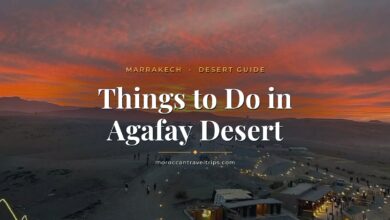
This is the question we get most often about summer trips, so here is the straightforward answer: the Sahara is possible in summer, but it demands respect. Daytime temperatures at Merzouga regularly pass 40°C, and a midday camel trek in July is simply not enjoyable for most people.
That said, a well-designed summer desert visit can still be magical. The formula is short and smart: arrive at the dunes in the late afternoon, ride out at sunset when the sand glows orange and the heat breaks, spend the night at a camp with proper ventilation, wake before dawn for the sunrise, and be back on the road by mid-morning. The night sky in summer, with the Milky Way arching over Erg Chebbi, is arguably the best of the year.
Summer Festivals and Events in 2026 ↑
Summer is festival season in Morocco, and 2026 is shaping up to be a busy year for it. Dates shift slightly from year to year, so confirm before you lock flights, but these are the events worth planning around:
- Gnaoua World Music Festival, Essaouira (typically late June). Four days of Gnaoua masters jamming with international jazz, blues and world musicians on stages by the ocean. One of Africa’s great music gatherings, and much of it is free.
- Festival of World Sacred Music, Fes (usually late spring into early summer). Sufi chants, Andalusian orchestras and global sacred traditions performed in palace gardens and ancient gates.
- Moussem of Moulay Abdellah Amghar, near El Jadida (August). A centuries-old gathering famous for tborida, the thunderous gunpowder horse-charging displays also known as fantasia.
- Imilchil Marriage Festival, Middle Atlas (usually September). If your trip stretches to the end of summer, this Amazigh betrothal moussem high in the mountains is unlike anything else in the country.
A 7-Day Morocco Summer Itinerary ↑
Here is a route we recommend often for first-time summer visitors. It balances culture, coast and mountains while keeping you comfortable the whole way:
| Day | Where | Highlights |
|---|---|---|
| 1 | Marrakech | Arrive, settle into a riad, evening at Jemaa el-Fna |
| 2 | Marrakech | Early medina and palaces, midday hammam, rooftop dinner |
| 3 | Imlil / Atlas | Drive into the High Atlas, village walk, cool mountain night |
| 4 | Essaouira | Cross to the coast via argan country, sunset on the ramparts |
| 5 | Essaouira | Beach morning, medina shopping, fresh seafood at the port |
| 6 | Taghazout / Agadir | Surf lesson or beach day, oceanfront dinner |
| 7 | Agadir or back to Marrakech | Relaxed morning, departure |
With ten days, add Chefchaouen and Tangier in the north, or a carefully timed Sahara night as described above. A local guide can rework this skeleton around your dates, your pace and the 2026 festival calendar.
Practical Summer Tips: Packing, Money and Safety ↑
What to pack
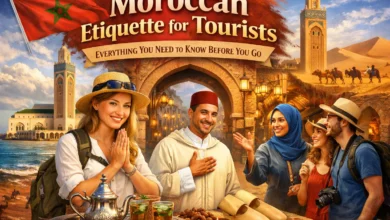
- Light, breathable fabrics: linen and loose cotton beat synthetic activewear in dry heat. Covering shoulders and knees keeps you cooler and is appreciated in medinas and rural areas.
- A real sun kit: high-SPF sunscreen, sunglasses and a hat you will actually wear. The summer sun here is strong even on breezy coastal days.
- A light layer for evenings: Essaouira’s wind and Atlas nights can surprise you.
- A refillable water bottle: aim for two to three liters a day inland.
Money matters
Morocco runs on the dirham, a closed currency you exchange on arrival rather than at home. Cash still rules in souks, taxis and small restaurants, while cards are accepted in most hotels and modern shops. Our full guide to the currency Morocco uses covers exchange rates, ATM tips and how much to budget per day.
Is summer travel here safe?
Morocco is one of the most stable and visited countries in Africa, welcoming over 17 million travelers a year, and summer is its busiest, most family-oriented season. The usual common-sense rules apply, and heat awareness matters more than anything else in July and August: hydrate, pace yourself and rest at midday. For a detailed, honest breakdown, including tips for solo and female travelers, read our guide on whether Morocco is safe to visit for tourists.
Plan Your Summer 2026 Trip with a Licensed Local Guide
Want this guide turned into a real itinerary built around your dates? Mouhssine ELIOUJ is a professional tour guide licensed by the Moroccan Ministry of Tourism. He can tailor routes, arrange trusted drivers and riads, and answer your questions directly on WhatsApp before you book anything.
Official license: No Réf. 2898 · Ministry of Tourism, Kingdom of Morocco
Chat on WhatsAppFrequently Asked Questions ↑
Is summer a good time to visit Morocco?
Yes, if you build the trip around the coast and the mountains. Essaouira, Agadir, Tangier, Chefchaouen and the High Atlas all enjoy comfortable summer weather, while inland cities like Marrakech work well with early mornings, midday rest and late evenings. Hotel prices inland are also at their lowest of the year.
How hot does Marrakech get in July and August?
Daytime highs typically range from 36 to 42°C (97 to 108°F), with occasional hotter spikes. The heat is dry rather than humid, evenings cool into the high twenties, and riads, gardens and hammams are designed to keep you comfortable through the middle of the day.
Which is the coolest place in Morocco during summer?
Essaouira is usually the coolest popular destination, with July averages around 24 to 26°C thanks to constant Atlantic trade winds. High Atlas villages like Imlil and Oukaimeden are similarly comfortable, with mountain evenings cool enough for a light jacket.
Can I visit the Sahara Desert in summer?
Yes, with the right plan: travel in the cooler hours, ride into the dunes at sunset, stay in a well-ventilated camp and leave by mid-morning. Daytime temperatures exceed 40°C, so a short, well-timed visit is far better than a long one. If the desert is your main goal, late September or October offers the same scenery in kinder conditions.
What should I wear in Morocco in summer?
Loose, light-colored cotton or linen that covers shoulders and knees works best: it keeps you cooler in dry heat and fits local norms in medinas and villages. Add sturdy sandals or breathable shoes, a sun hat, sunglasses and a light layer for breezy coastal or mountain evenings. Swimwear is fine at beaches, pools and resorts.
Are prices cheaper in Morocco during the summer?
Inland, yes: Marrakech and Fes riads often drop rates 30 to 40 percent in July and August. Coastal towns are the opposite, as Moroccan families holiday there, so book Essaouira, Agadir and the northern beaches several weeks ahead for the best prices.
Do I need a guide for a summer trip to Morocco?
It is not mandatory, but in summer a licensed local guide adds real value: timing visits around the heat, securing riads with pools, navigating festival dates and adapting plans on the spot. Licensed guides are accredited by the Ministry of Tourism, which guarantees training and accountability.
The bottom line: Morocco in summer 2026 is not a season to avoid, it is a season to plan. Follow the coast, climb into the mountains, treat the imperial cities to early mornings and late nights, and give the desert a short, well-timed visit. Do that, and you will come home wondering why anyone warned you off July in the first place.