Asni Berber Village & Its Saturday Souk: A Slice of Real Morocco an Hour from Marrakech
Every Saturday, a quiet village at the foot of the High Atlas turns into one of the most authentic weekly markets in Morocco. Here is what the Asni Saturday market is like, how to get there, what to eat, what to buy, and why it belongs on your itinerary.
Most travelers who land in Marrakech hear about the Sahara, the coast, maybe Ouarzazate. Very few hear about Asni. And that is exactly why it is worth going. Asni is a Berber (Amazigh) village sitting in the foothills of the High Atlas mountains, on the road that climbs toward Imlil and Mount Toubkal. For six days of the week it is a calm farming community. On the seventh, Saturday, it hosts one of the largest and most genuine weekly markets in the region, a souk that exists for the villagers themselves, not for tourists.
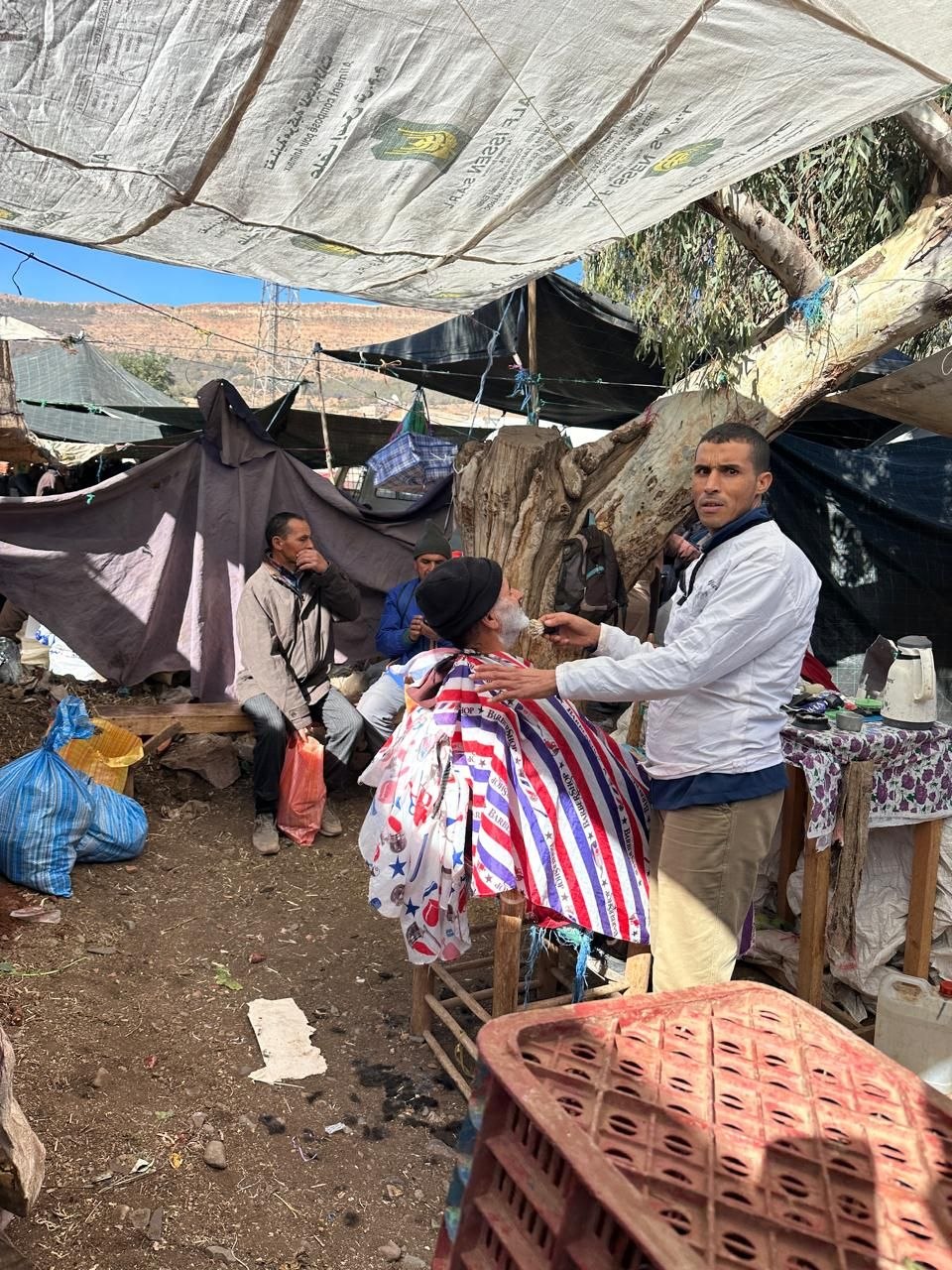
I have walked through plenty of markets in Morocco, and the difference here is immediate. Nobody is performing. Farmers arrive on mules and pickup trucks before sunrise, butchers hang fresh meat under canvas shades, the smell of grilled lamb drifts across rows of tomatoes and mint, and an old-style barber sets up his chair the same way barbers have done at this souk for generations. If you want to understand how rural Morocco actually lives, the Weekly Market in Asni is about as close as you can get in a single morning.
Where Is Asni, and How Far Is It from Marrakech? ↑
Asni sits in the Al Haouz province, tucked into the first folds of the High Atlas. The Marrakech to Asni distance is roughly 47 kilometers (about 29 miles), and the drive takes around one hour along the R203, the scenic mountain road that continues up to Imlil. The route itself is part of the experience: olive groves give way to red-earth hills, and on clear days the snow-capped peaks of Toubkal appear ahead of you long before you arrive.
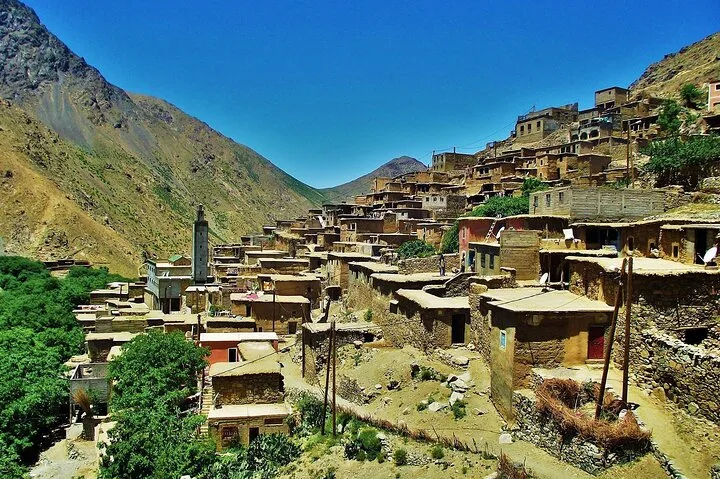
Because Asni is so close, it works beautifully as a half-day or full-day trip. Many travelers combine the Saturday market with a walk through the surrounding valley, or continue another 17 km up the road to Imlil for lunch with a view of Toubkal.
How to Get to Asni from Marrakech ↑
You have three realistic options, depending on your budget and how much comfort you want.
1. Grand taxi from Marrakech to Asni
The local way. Shared grand taxis leave from the station near Bab Er Robb, on the southern edge of the medina, heading toward Asni and Imlil. A seat is inexpensive, but the taxi only departs once all six places are filled. On Saturday mornings they fill quickly with villagers heading to the souk, so early arrival helps. You can also pay for the remaining seats to leave straight away.
One thing worth knowing: the return journey in the afternoon is a different story. By the time the souk winds down, grand taxis heading back to Marrakech are often packed and in a hurry. Seats fill up fast, and if you have not arranged a return in advance, you may find yourself waiting at the roadside longer than you planned. It is an inconvenience that is easy to avoid but unpleasant to run into after a full morning on your feet.
2. Private driver or rental car
The R203 is paved and in good condition all the way to Asni, so driving yourself is straightforward. Parking near the souk on Saturday mornings gets busy by 10:00, so arriving early helps. A private driver removes that headache and gives you freedom to linger as long as you like.
3. A guided day trip (the option I recommend for the souk)
Going with a licensed local guide solves both directions at once. Your guide handles hotel pickup in the morning and return transport in the afternoon, so you never have to think about taxis. More importantly, the souk itself is conducted entirely in Tachelhit (the local Berber language) and Darija; having someone beside you who can translate, introduce you to vendors, and steer you toward the right stalls turns a walk through a market into an experience worth talking about for years.
Inside the Asni Weekly Souk: A Traditional Berber Market ↑
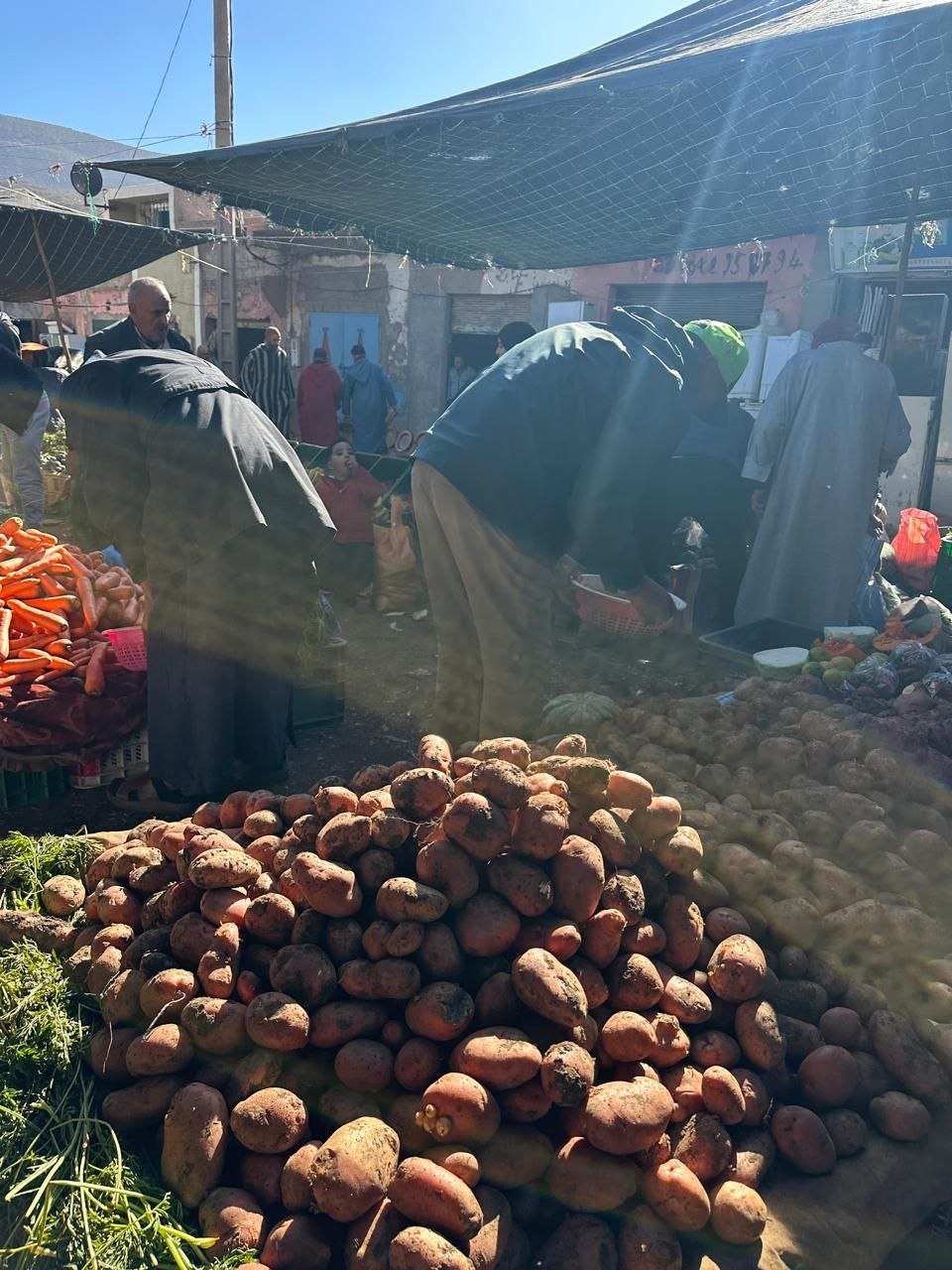
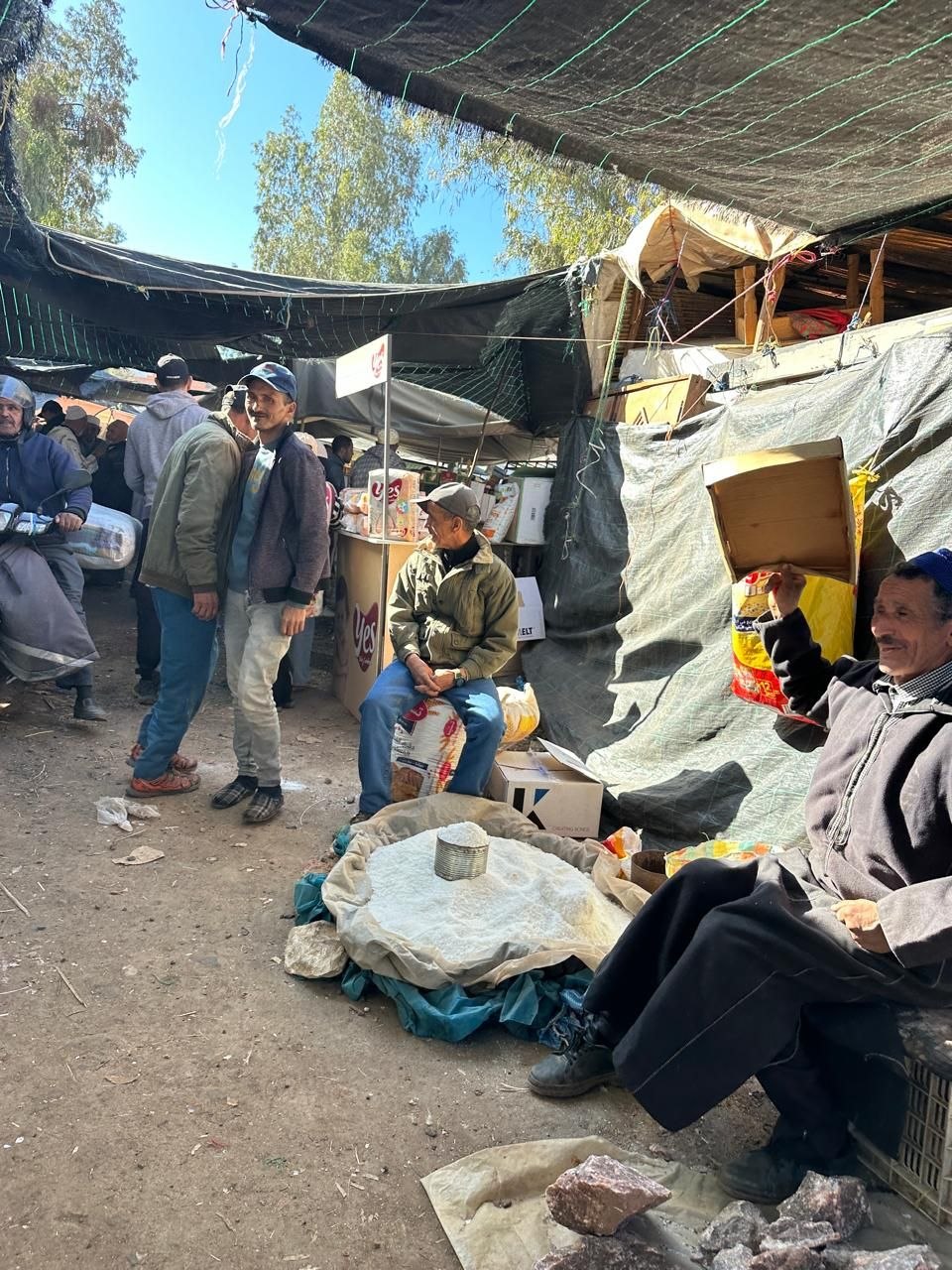
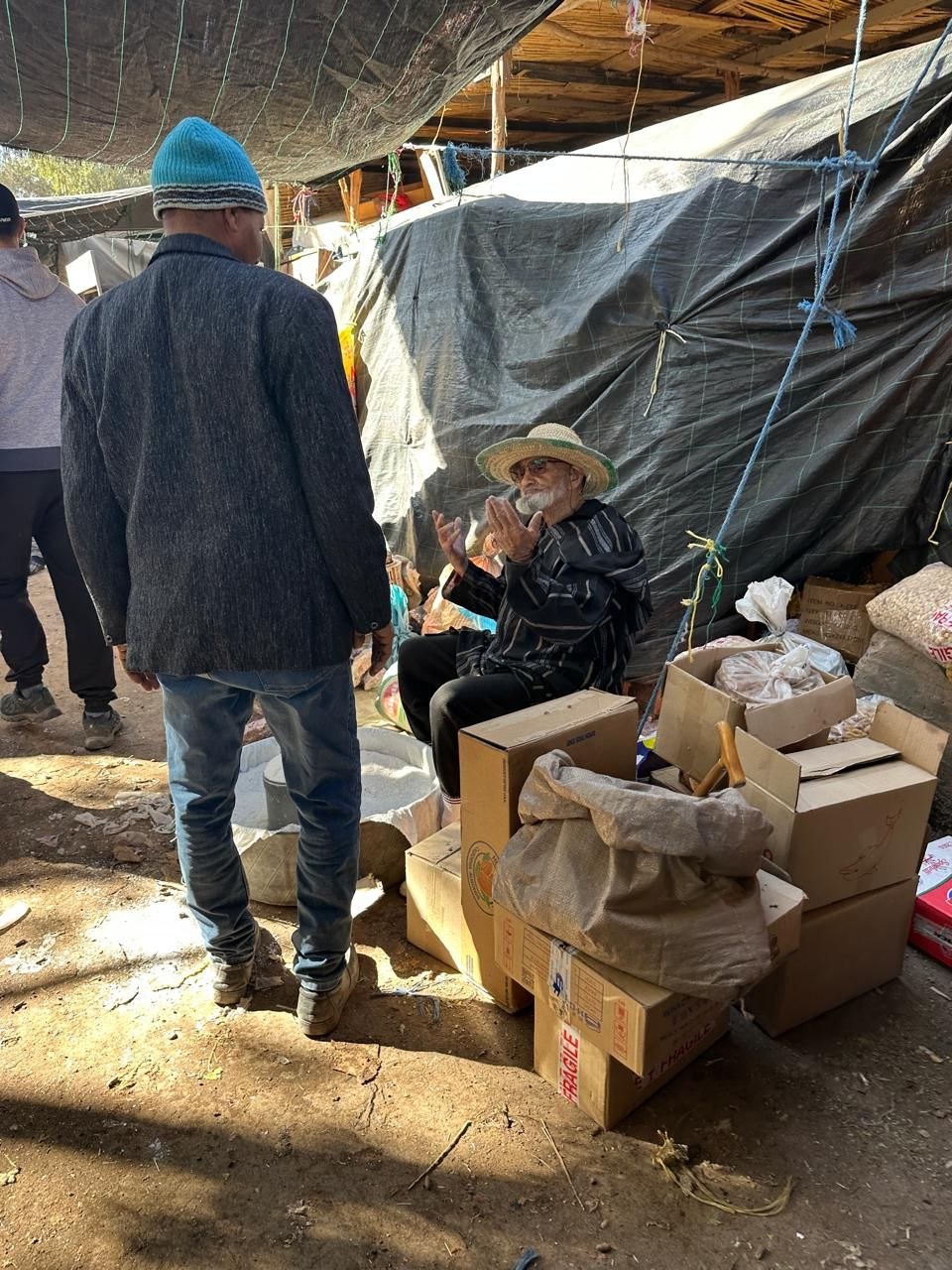
The first thing that strikes you at Souk Asni is the scale. This is not a handful of stalls; it is a sprawling open-air ground where hundreds of sellers from villages across the valley gather once a week to trade everything a rural household could need. Vegetables and fruit piled into bright pyramids, fresh meat, live chickens, sacks of grain and spices, second-hand clothes, tools, rope, mint by the armful, and the donkeys and mules parked at the edge like cars outside a supermarket.
For the people of the valley, this traditional Berber market near Asni is the week’s main social event as much as a place to shop. Friends who live in villages an hour apart meet here, news travels, deals are sealed over glasses of mint tea. Walking through it with someone who can translate the banter is one of the best cultural experiences available within an hour of Marrakech.
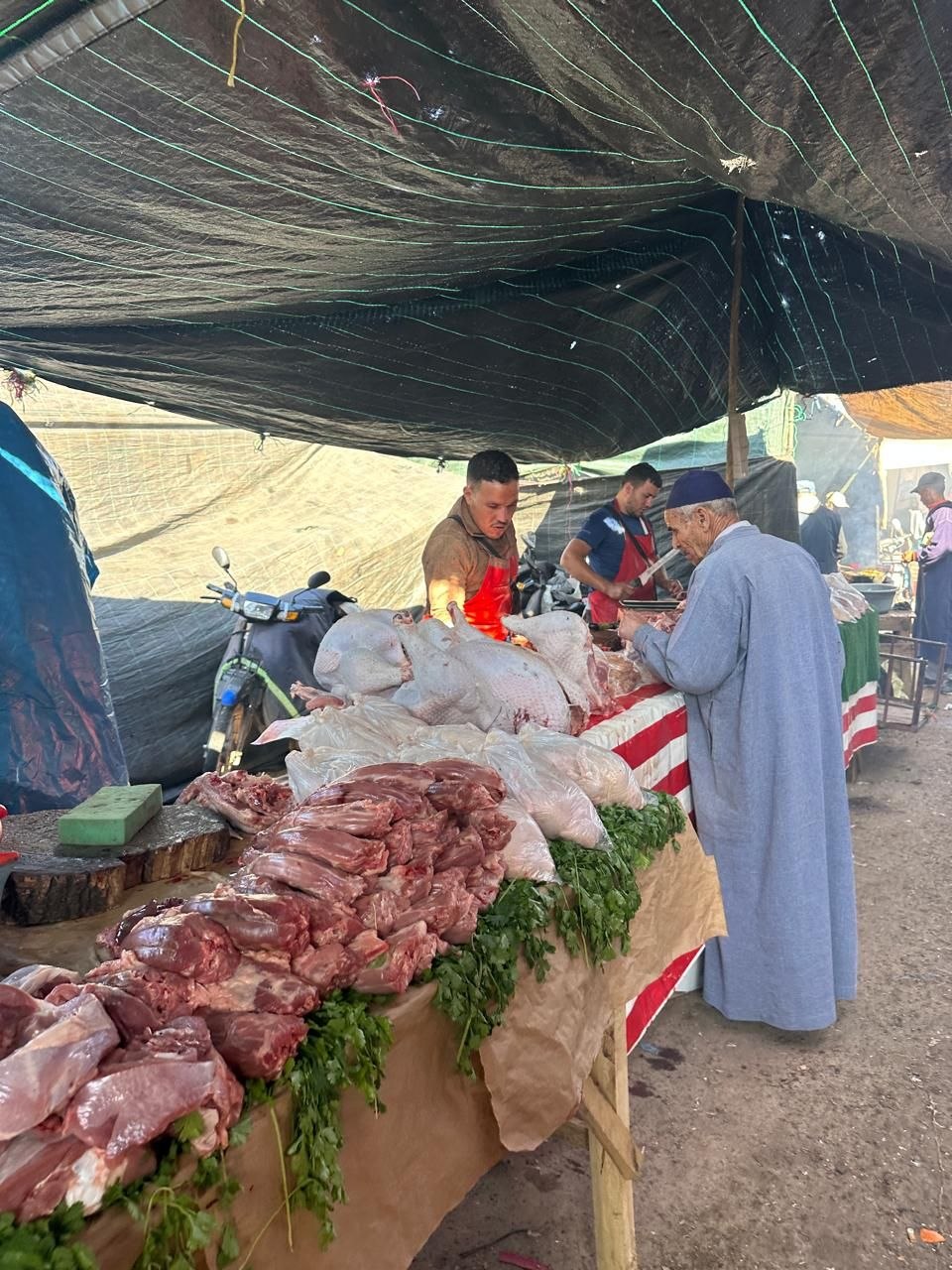
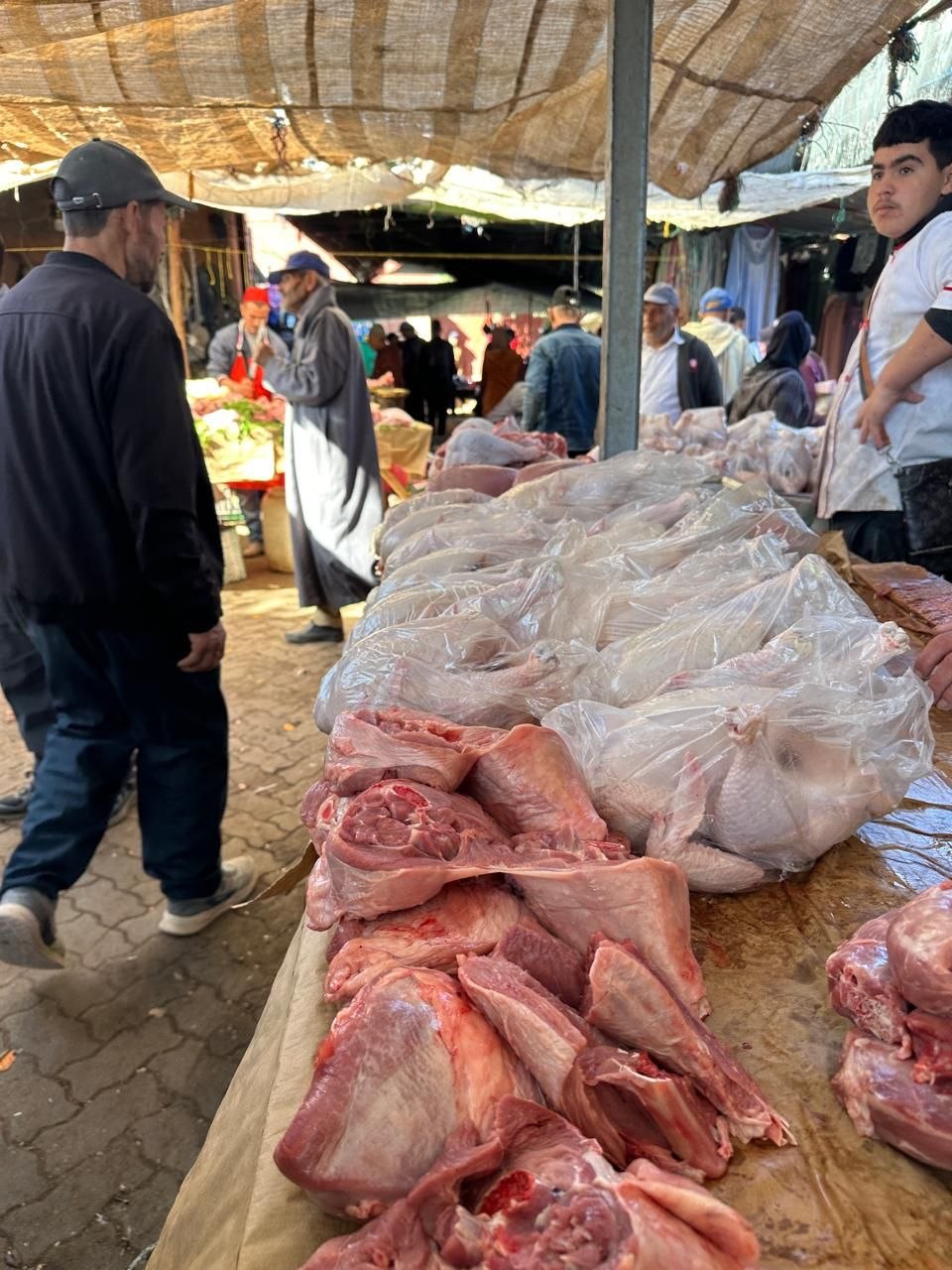
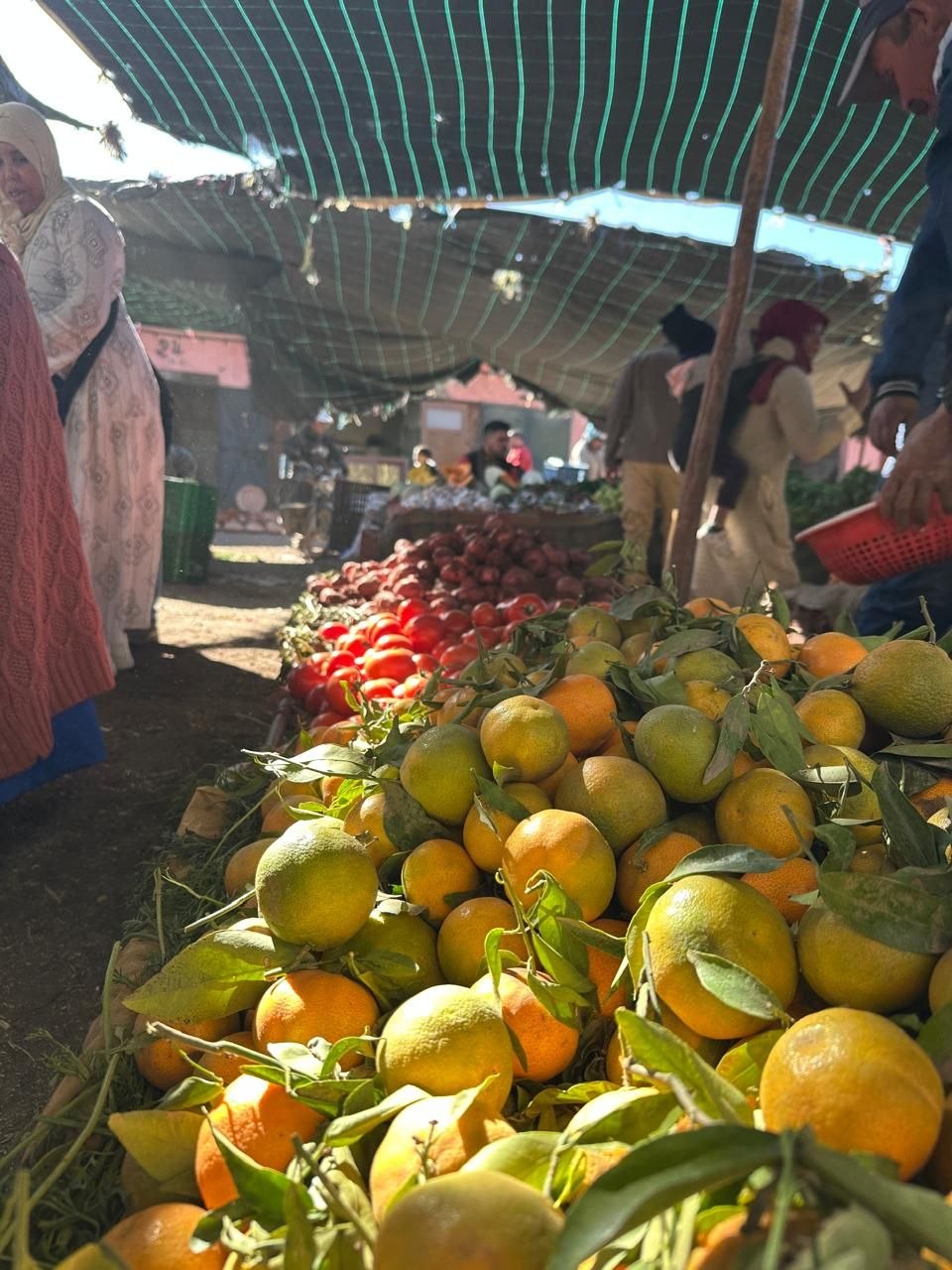
Produce here comes straight from the surrounding terraced farms, often picked the same morning. Depending on the season you will find walnuts and apples from the high valleys, cherries in late spring, pomegranates and quinces in autumn, and herbs whose smell follows you down the aisle.
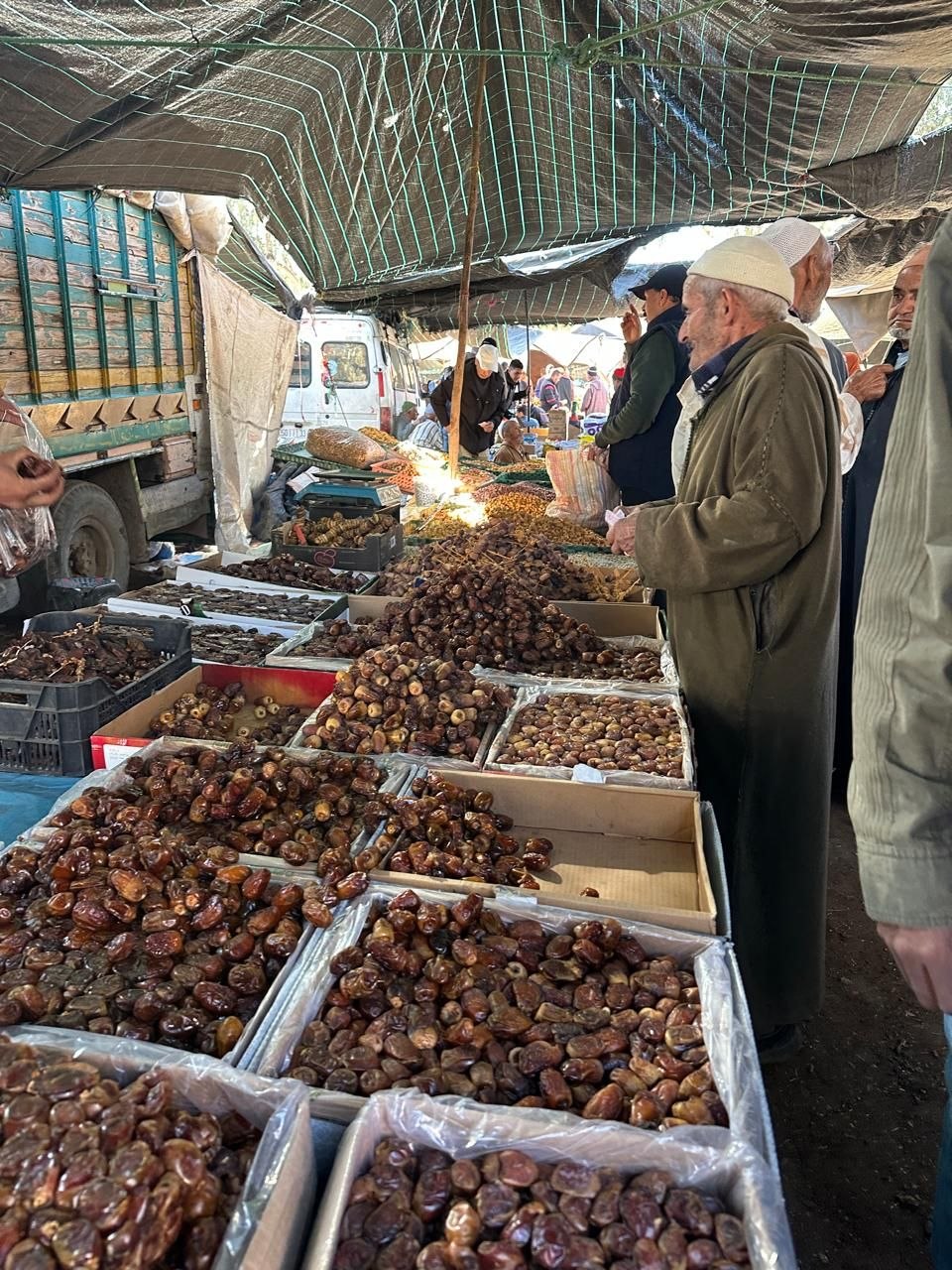
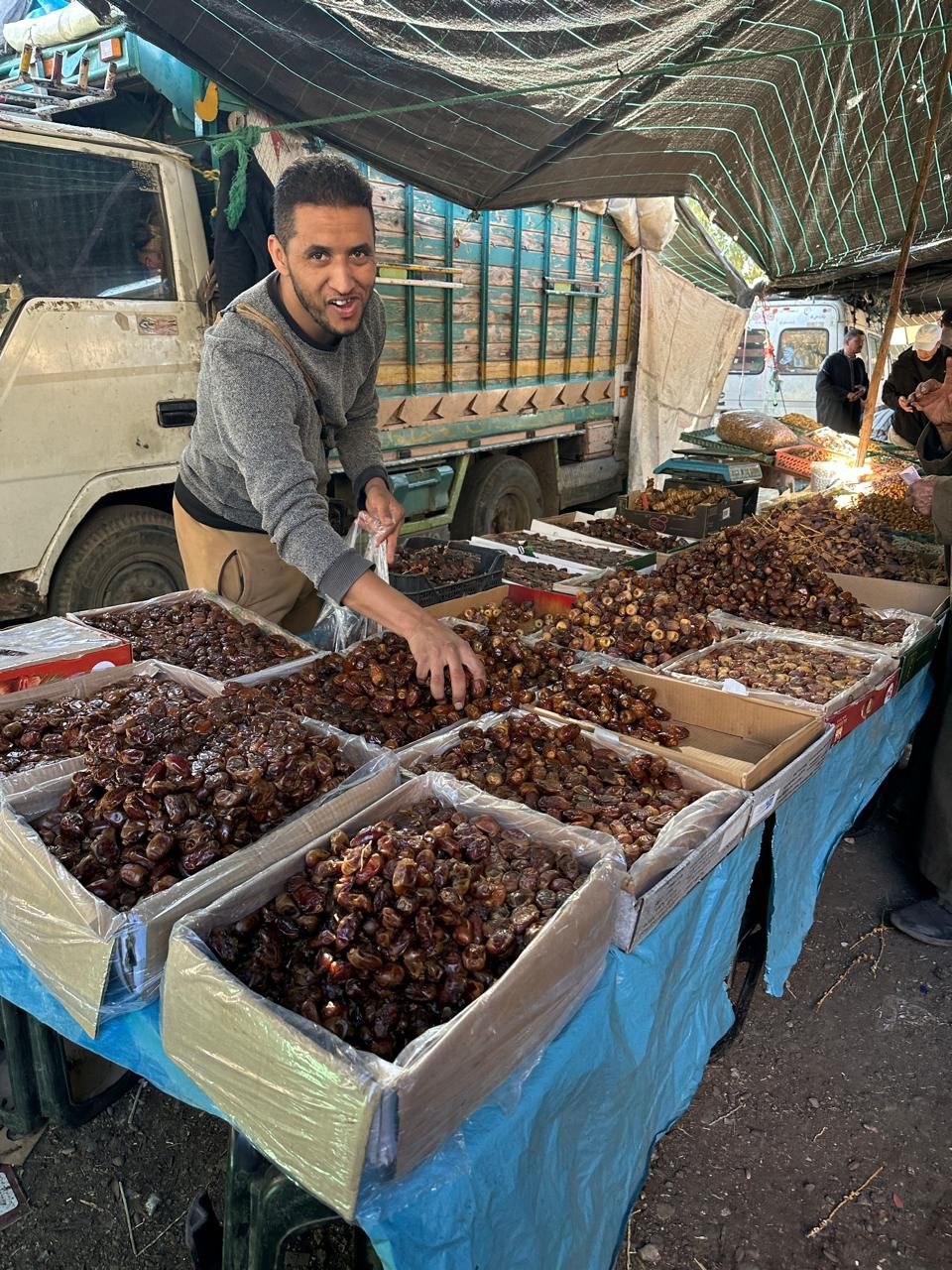
One corner of the souk is reserved for the date sellers, and it deserves a slow visit. Morocco grows dozens of date varieties, and the sellers will happily let you taste before you buy. A kilo of good dates is one of the most satisfying things you can carry home, and prices here are a fraction of what you would pay in a city boutique.
Street Food at Souk Asni: Eat Where the Farmers Eat ↑
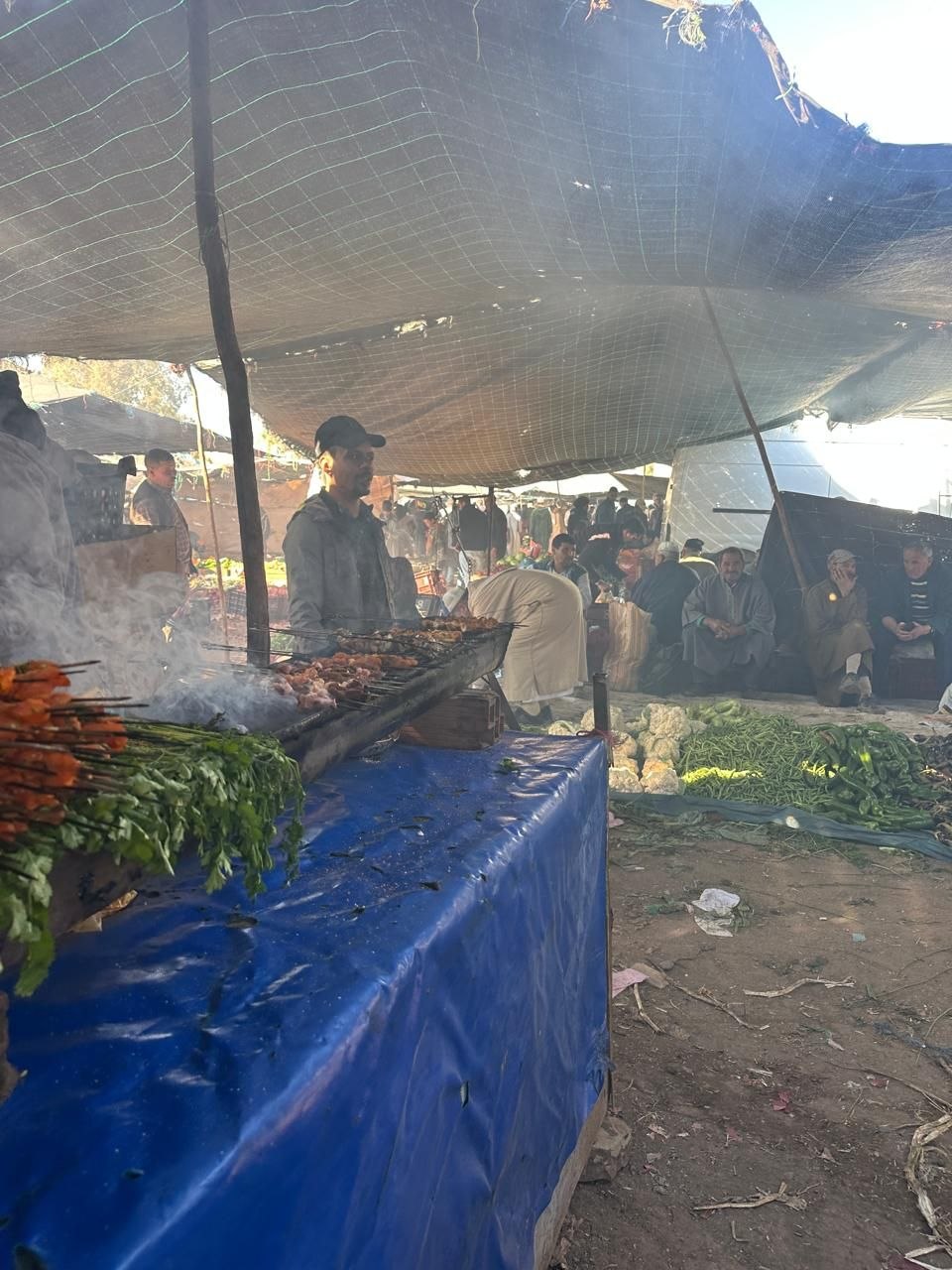
If you love street food, clear your morning and arrive hungry, because the food corner of the Asni weekly souk is an experience you cannot replicate in a restaurant. The cooking here is done for farmers and traders who have been on their feet since dawn, which means it is honest, generous, and very, very good.
Mechoui: slow-roasted lamb
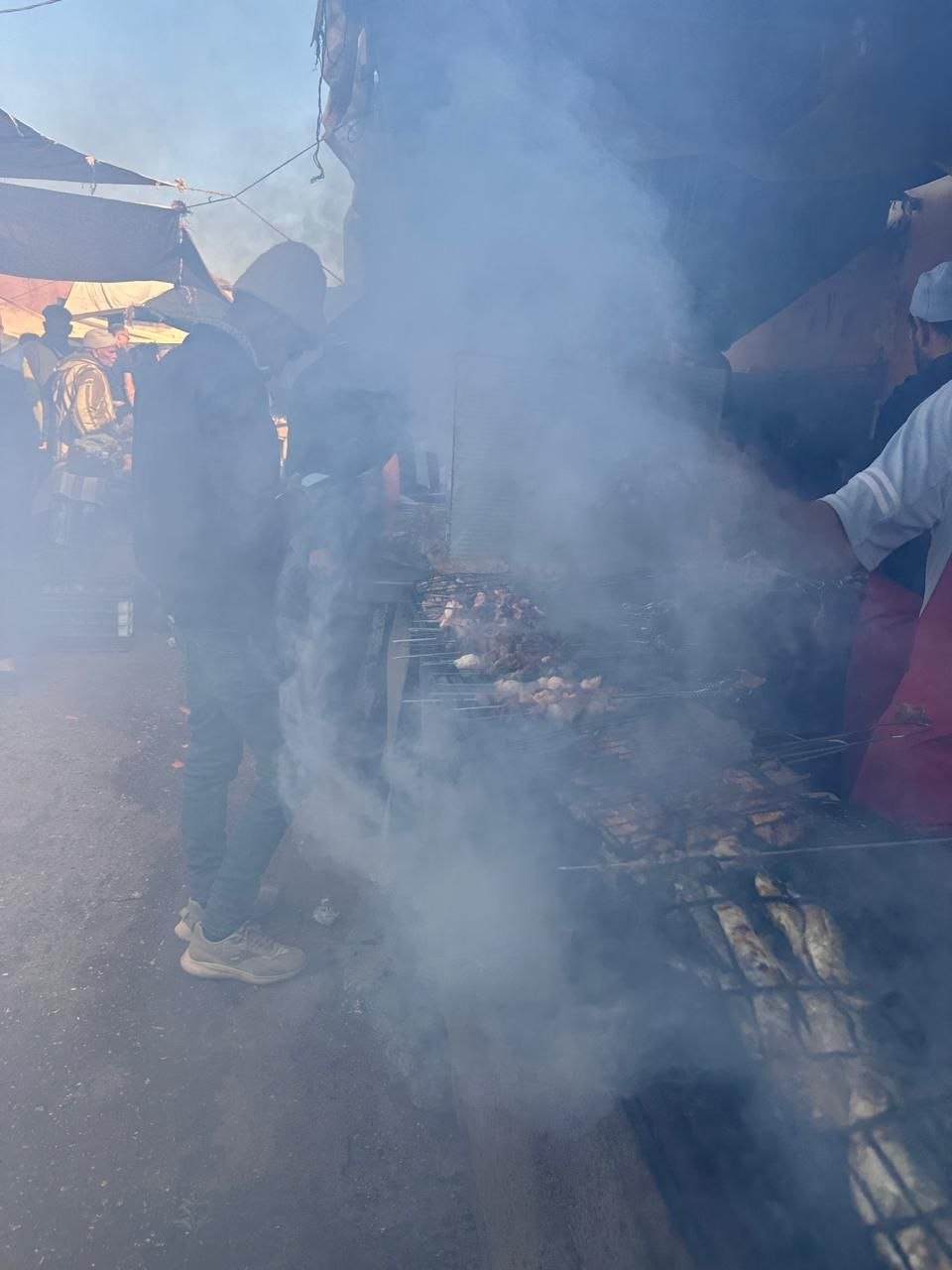
The king of souk food. Whole lamb is roasted slowly until the meat pulls apart with your fingers, then sold by weight and eaten with bread, cumin, and salt. Watching the mechoui master carve at his stall, surrounded by regulars who clearly come every Saturday, is half the pleasure.
Tagine Morocco: cooked over coals in the souk
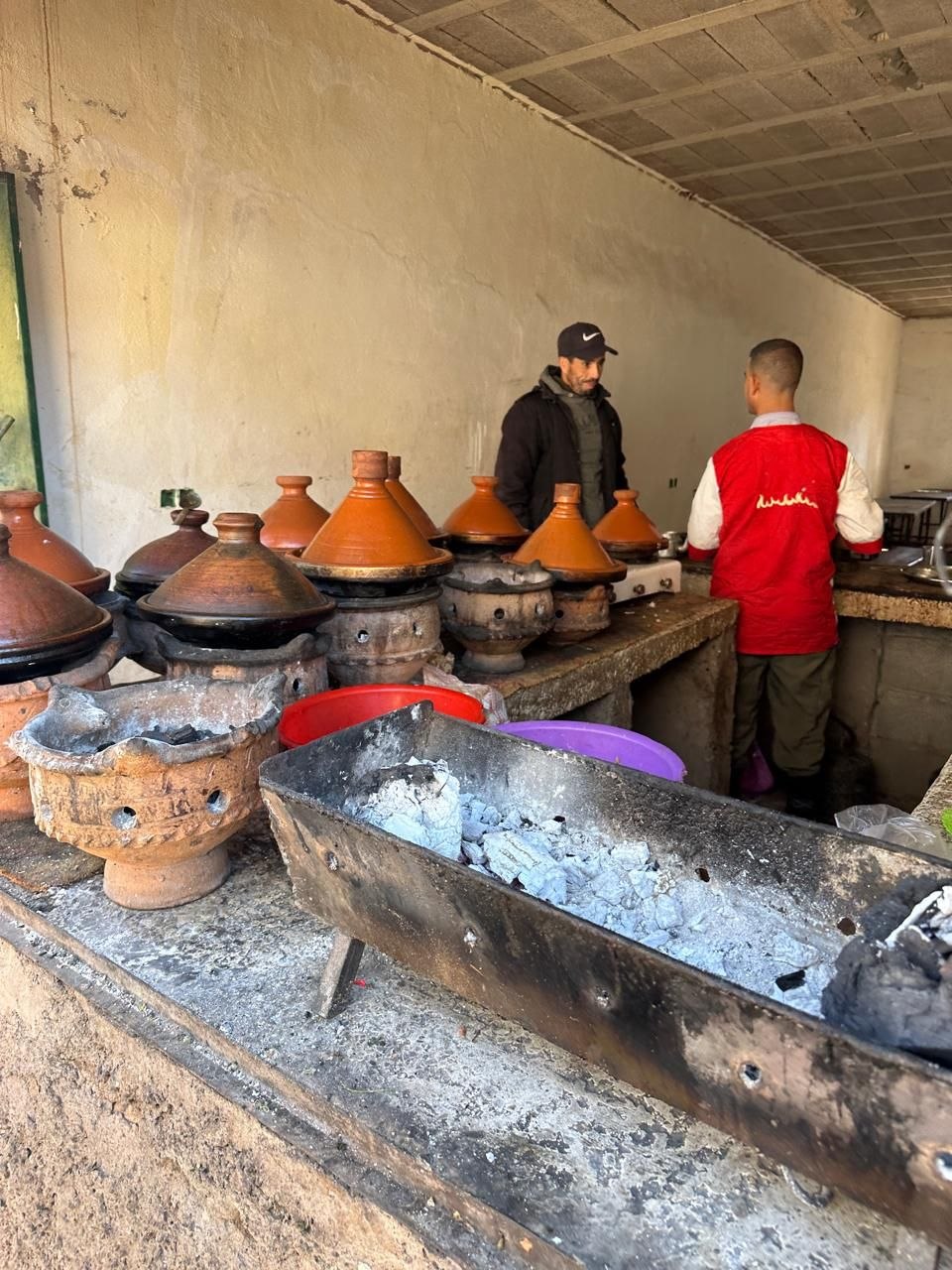
Rows of clay tagines simmer over charcoal from early morning, packed with vegetables, beef or lamb, and the kind of depth of flavor that only hours of slow cooking can produce. You sit on a simple bench, the lid comes off in a cloud of steam, and you eat with bread straight from the pot. It may be the best tagine Morocco has to offer, and it will cost you next to nothing.
Fried fish and grilled chicken
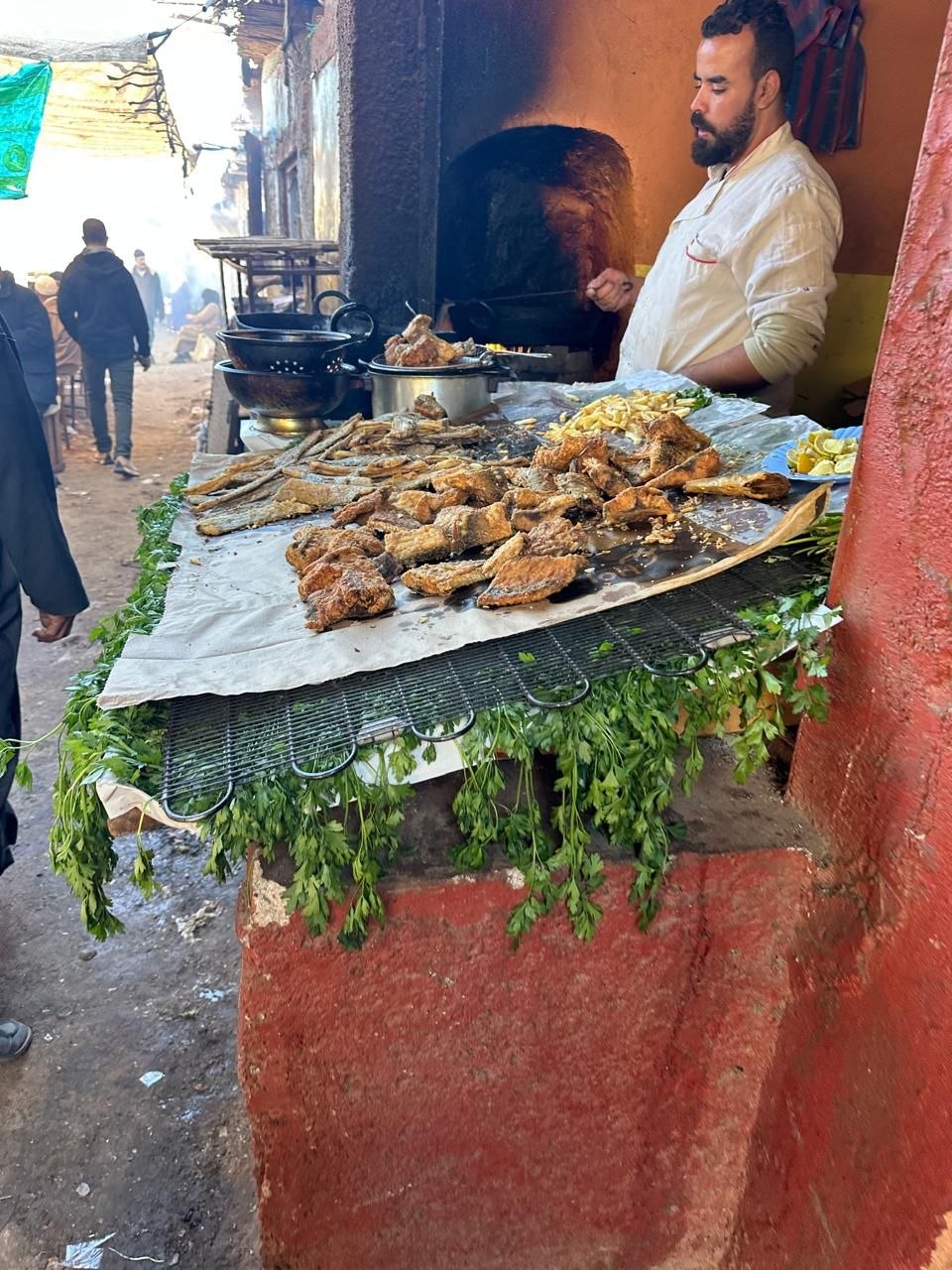
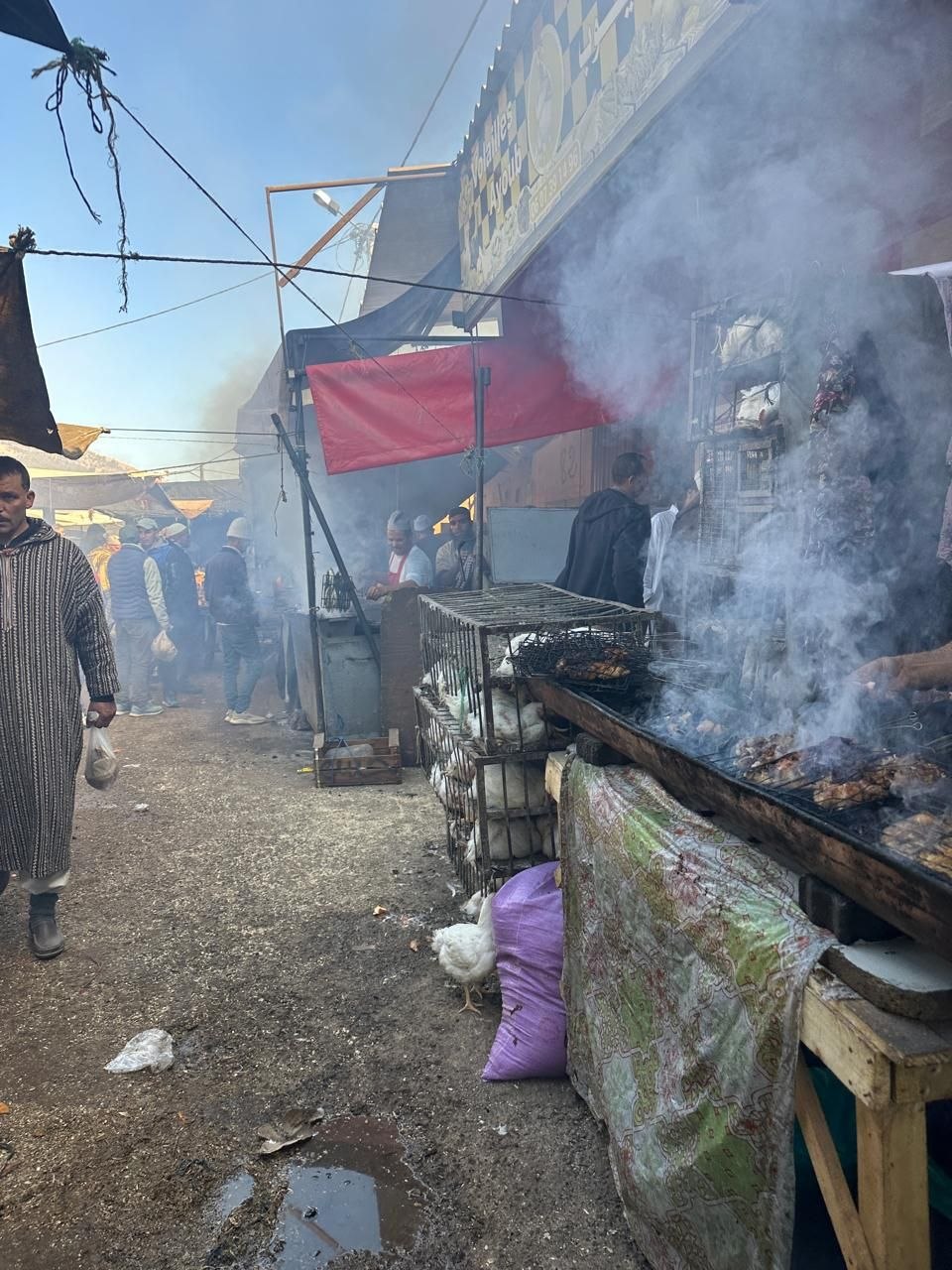
It surprises people to find fresh fried fish at a mountain market, but it arrives from the coast before dawn every Saturday and disappears by lunchtime. Crisp, salted, served with bread and lemon. Next to it, chickens turn on grills and the smoke alone will pull you over.
The Traditional Barber of the Souk: Meet El Hajjam ↑
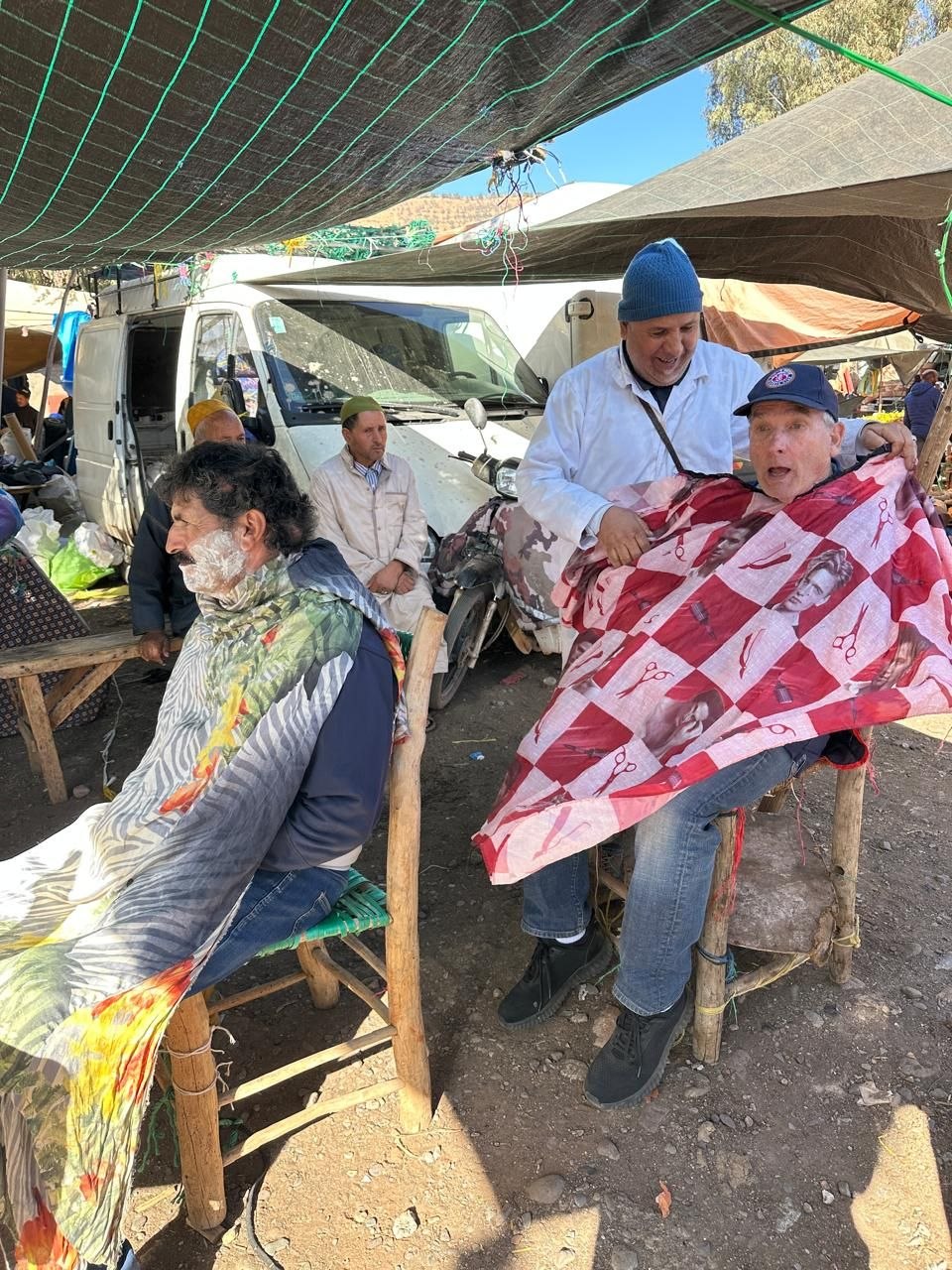
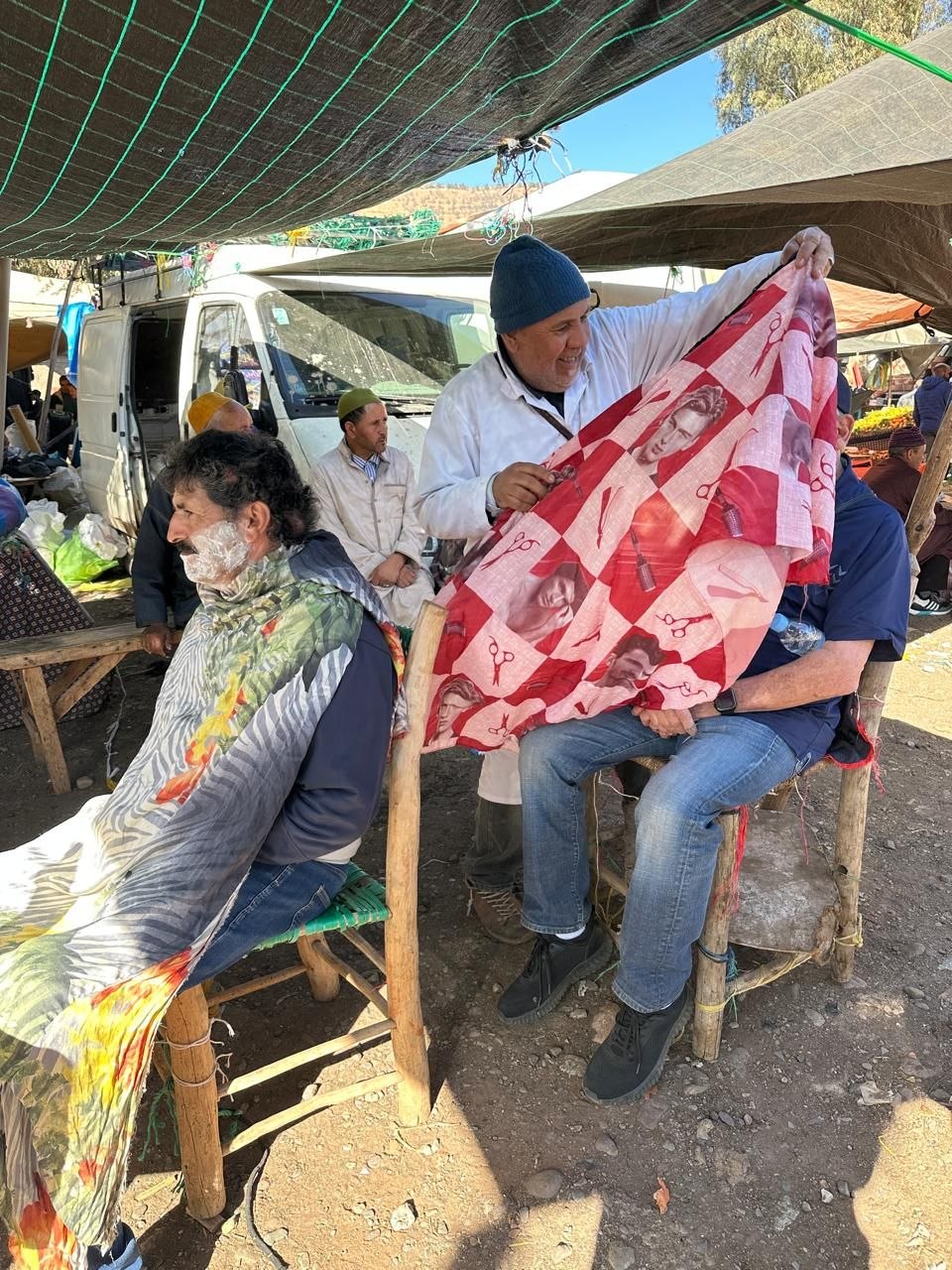
Here is an experience almost no visitor to Morocco even knows exists: getting a haircut the old way, at the weekly souk, in a barber’s stall that looks much as it would have fifty years ago.
In rural Morocco, the barber has traditionally worked at the weekly market rather than from a fixed shop. Villagers would wait for souk day to get a haircut or a shave, and the barber, known in Moroccan tradition as El Hajjam, was a respected and central figure of market life. Historically the hajjam did more than cut hair; he was the village’s informal practitioner for minor ailments and was even known, in the old days, to pull an aching tooth when no other help was at hand.
The haircut, though, is alive and well. Sitting in that chair while the souk hums all around you is a genuinely memorable thing to do. Several guests have tried it with Mouhssine translating and joking along, and it always ends in laughter and a very respectable cut.
What to Buy in Asni Market ↑
Because the souk serves local villagers first, prices reflect local realities, which makes it a genuinely good place to shop for traditional Moroccan goods without the markup of the city souks. Among the things worth looking for:
- Dates and walnuts from the valley, sold by patient sellers who will always let you taste first.
- Spices — cumin, ras el hanout, dried ginger, saffron threads — scooped from open sacks rather than tourist-shop jars.
- Olive oil and amlou, the addictive almond, argan oil, and honey spread that Berber households make at home.
- Handwoven baskets and rope bags, practical pieces crafted in the surrounding villages.
- Berber pottery and clay tagines — the real cooking kind, not the painted decorative ones.
- Wool blankets and woven textiles made for cold mountain winters, in earthy geometric patterns.
Haggling here is gentler than in the Marrakech medina, but knowing what something should cost still matters. This is where having Mouhssine beside you pays for itself: he will point you toward the genuinely good pieces, steer you away from the duds, and make sure you pay a fair local price. If you want to understand what you are looking at before you go, our guide to Moroccan crafts explains the traditional handicrafts you will encounter across the country and how to recognize quality work.
Beyond the Souk: Exploring Asni Village and Its Valley ↑
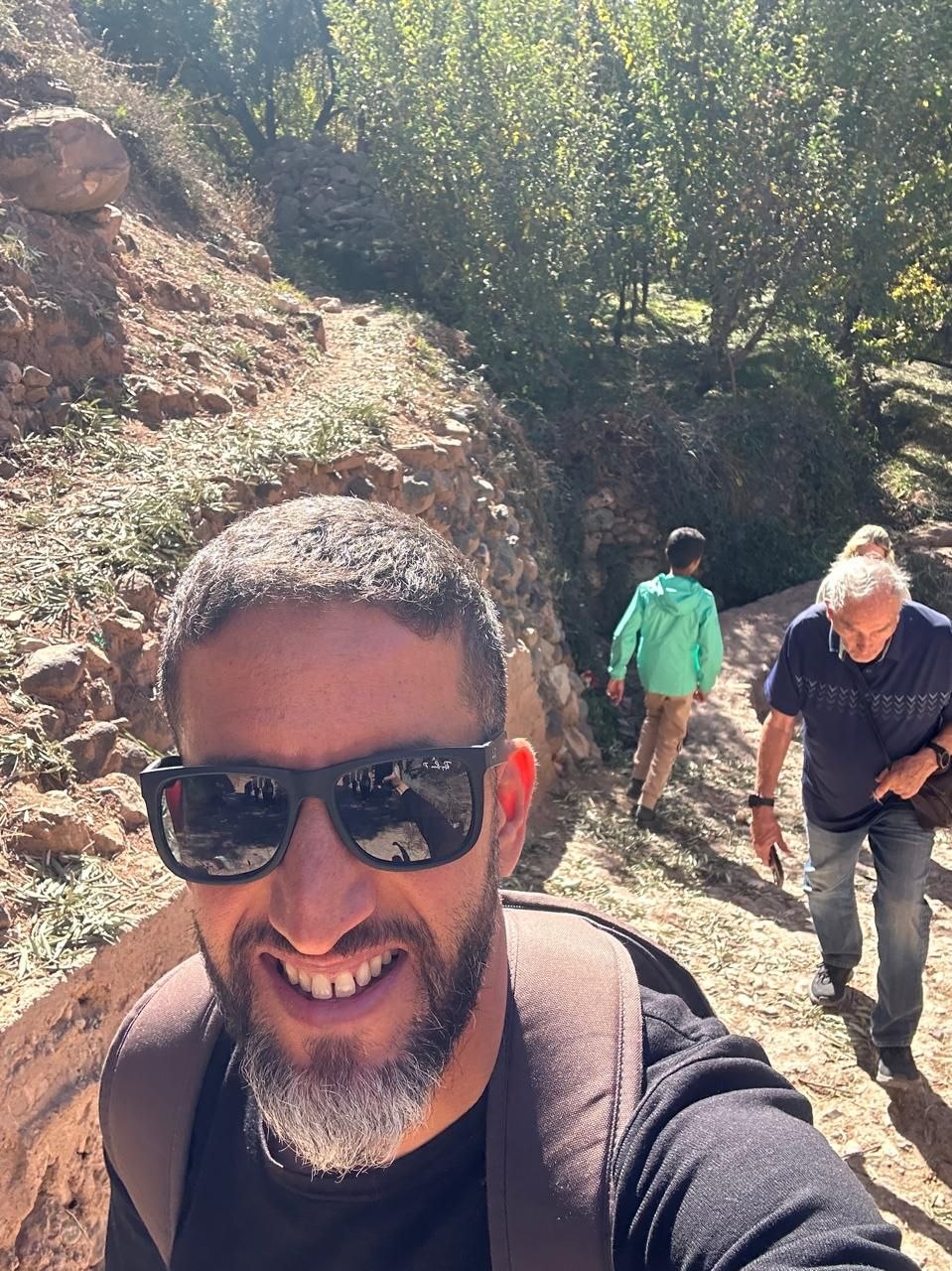
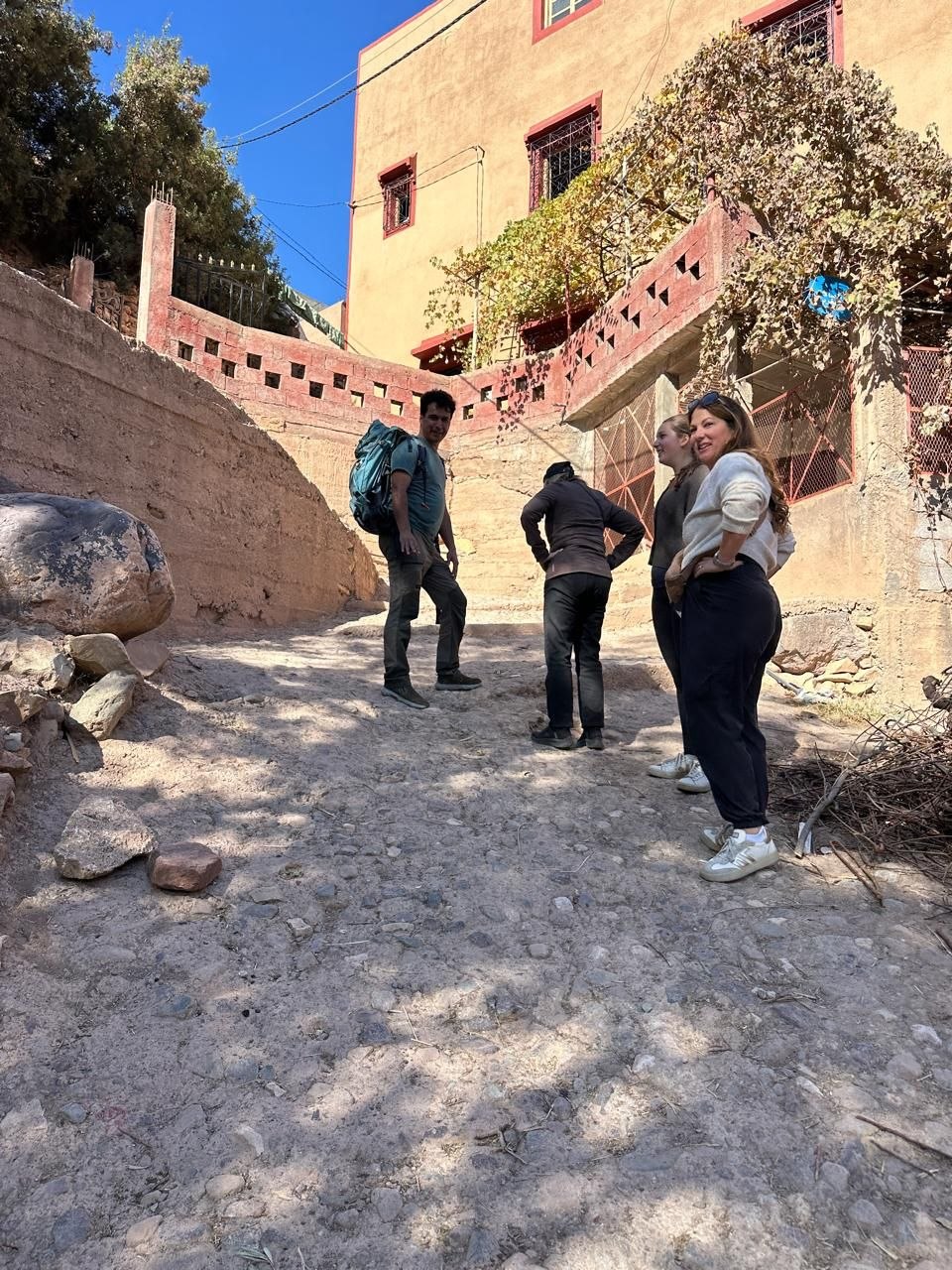
The market is the headline, but Asni itself rewards a slower look. Walk ten minutes out of the souk grounds and you are among walnut trees, terraced fields, and earthen Berber houses stacked along the hillsides, with the Toubkal massif rising behind them. There are easy paths to viewpoints above the village where the whole valley opens up beneath you.
This is where a licensed guide transforms a market visit into a full day worth remembering. Mouhssine knows which paths lead to the best panoramas, has relationships with local families, and genuinely cares that every guest leaves with a story. He adapts the pace entirely to you, whether you want a gentle stroll or a proper leg-stretch above the village.
Ready to Experience the Asni Saturday Souk for Yourself?
Join our day trip from Marrakech to Asni: hotel pickup, the drive through the High Atlas foothills, the full Saturday market experience with a licensed local guide, street-food tastings, and a walk through the village to the viewpoints above the valley. Small group, no logistics to worry about, return transfer included.
Book Your Day Trip from Marrakech to AsniPractical Tips for Visiting the Weekly Market in Asni ↑
- Go on a Saturday. The souk only happens once a week. On any other day Asni is a pleasant but quiet village with nothing to see at the market grounds.
- Arrive in the morning. The market peaks between 9:00 and noon and winds down steadily through the afternoon.
- Plan your return in advance. Grand taxis back to Marrakech after midday are crowded, hurried, and often have no free seats. If you come independently, confirm your return transport before you leave the city.
- Carry small cash in dirhams. Vendors deal in cash and rarely have change for large notes. There is no card payment at the souk.
- Ask before photographing people. A smile and a gesture toward your camera is usually all it takes. Your guide will help smooth the way.
- Dress modestly and bring a light layer. Asni sits above 1,100 meters and mornings are noticeably cooler than Marrakech, even in summer.
- Come hungry. You already know why.
Visit Asni with a Licensed Local Guide ↑

Mouhssine ELIOUJ
Mouhssine is a professional tour guide licensed by the Moroccan Ministry of Tourism (No Réf. 2898), with years of experience guiding travelers through Marrakech, the High Atlas, and villages like Asni. He speaks fluent English and will tailor every detail of your visit, from the souk to the village walk, to what interests you most, whether that is food, crafts, photography, or simply the pleasure of being somewhere genuinely off the tourist circuit.
You can reach him directly on WhatsApp to plan your visit, ask questions, or check Saturday availability:
Chat on WhatsApp: +212 671 437 971Official license: No Réf. 2898 · Moroccan Ministry of Tourism
Frequently Asked Questions ↑
How far is Asni from Marrakech?
Asni is about 47 km (29 miles) south of Marrakech, roughly a one-hour drive along the R203 road toward Imlil and Mount Toubkal.
What day is the Asni weekly souk?
The souk takes place every Saturday, from early morning until mid-afternoon. The liveliest and most photogenic hours are between 9:00 and noon. There is no market on other days of the week.
How do I get to Asni from Marrakech without a car?
Shared grand taxis run from near Bab Er Robb in Marrakech toward Asni and Imlil. A seat is inexpensive, but the taxi only leaves once all places are filled. Bear in mind that the return journey after midday can be difficult: taxis heading back to Marrakech fill up fast and may have no seats available, leaving you waiting longer than expected. Booking a guided day trip with included transport in both directions solves this entirely.
Is the Asni Saturday market suitable for tourists?
Yes. It is a genuine working market rather than a tourist attraction, which is precisely its charm. Visiting with a licensed guide makes the experience far richer, since most trade happens in Tachelhit Berber and Darija, and a guide can introduce you to vendors, food stalls, and traditions you would otherwise walk straight past.
What can I eat at Souk Asni?
The food corner serves mechoui (slow-roasted lamb), Berber tagines cooked over coals, grilled chicken, kebabs, and fresh fried fish brought up from the coast every Saturday morning. It is some of the best and most affordable food you will eat anywhere in Morocco.
What should I buy at the weekly market in Asni?
Local dates, walnuts, spices, olive oil, amlou, handwoven baskets and textiles, and practical Berber pottery are all good choices at honest local prices. A guide can help you identify quality pieces and negotiate fairly.
Can I combine Asni with other places on the same day?
Easily. Many travelers visit the Saturday souk in the morning and continue 17 km up the road to Imlil for lunch with views of Mount Toubkal, or pair Asni with the Kik Plateau or Moulay Brahim gorge.
Asni will not appear on most lists of things to do near Marrakech, and honestly, long may that last. It is the Morocco of mules and mint tea, of farmers shaking hands over sacks of walnuts, of a barber’s chair set up in the open air between a spice seller and a stack of rope. Come on a Saturday, come hungry and curious, and you will leave with a far truer picture of this country than any palace or rooftop café can give you.